Walter Gropius
 Call Kai
 Learn
Learn Practice Test
 Spaced Repetition
 Match
Match Flashcards
 Knowt Play
1/11

There's no tags or description
Looks like no tags are added yet.
Name | Mastery | Learn | Test | Matching | Spaced | Call with Kai |
|---|
No analytics yet
Send a link to your students to track their progress
12 Terms
Who was he?
born in Berlin, 1969 - the 80s
Van der Rohe, Gropius, Le Corbusier - 3 masters of the 20s modernism / considered a great pioneere of MODERN MOVEMENT
He worked in the office of Peter Behrens (Like VdR)→ influence on his design approach (collab between art & technology)
his architectural idea → INDUSTRIAL AESTHETIC at the origin of NEW MONUMENTAL ARCHITECTURE
he was a BAUHAUS DIRECTOR (just like Van der Rohe)
his career can be divided in 2 parts - Germany & US (Like VdR)
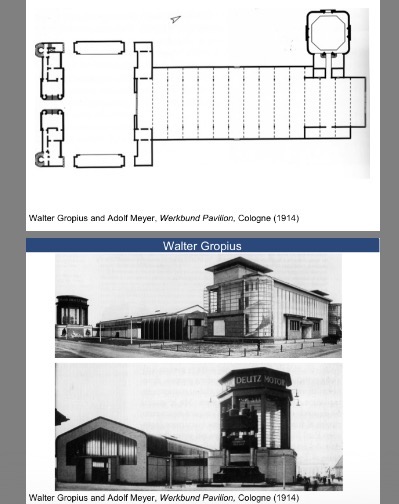
Werkbund Pavilion, Gropius, 1914
Pavilion for Köln Exhibition
Divided into 3 parts → 3 uses (offices, power plant for energy production, industrial site) - FORM FOLLOWS FUNCTION
Modern use of materials + theme of TRANSPARENCY (use of glass in wide surfaces)
* staircase is worth noticing - instead of being on a bearing wall, it is in a transparent cage
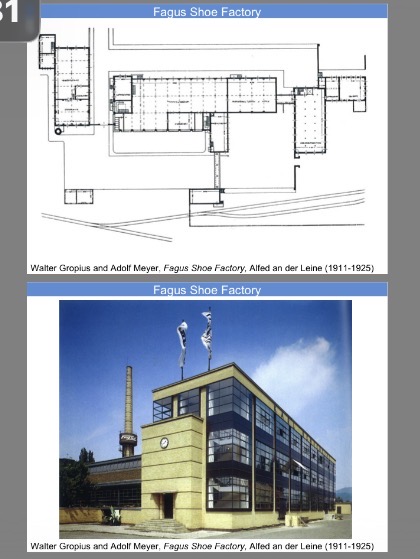
Fagus Shoe Factory, Gropius & Mayer, 1911-25 (PLAN & OUTSIDE)
the plan is a composition of shapes → squares & rectangles VERY GEOMETRICAL
Every volume has a different function for the company → SHAPE FOLLOWS FUNCTION
Idea of regularity that is later broken
DETAIL THAT IS STRANGE → glass up to corners; as they are considered the most important parts for the building balance, however, due to the use of PILLAR SUPPORTS, the edges are freed from building suspension (one of the first times where glass is used not as detail (reinforced concrete support))
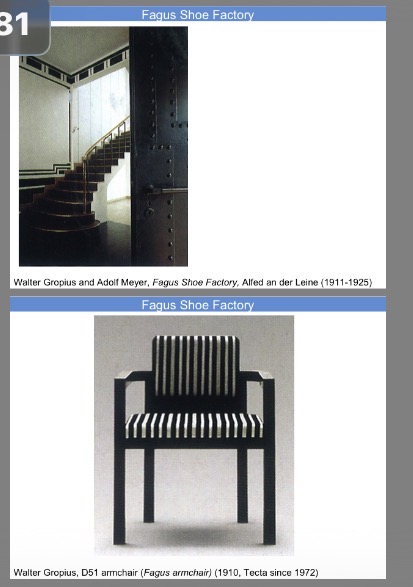
Fagus Shoe Factory, Gropius & Mayer, 1911-25 (INSIDE)
Continuous approach → the stripes. Are both in the outside structure & in objects
Reinvokes the decorative style of ART NOUVEAU of the past
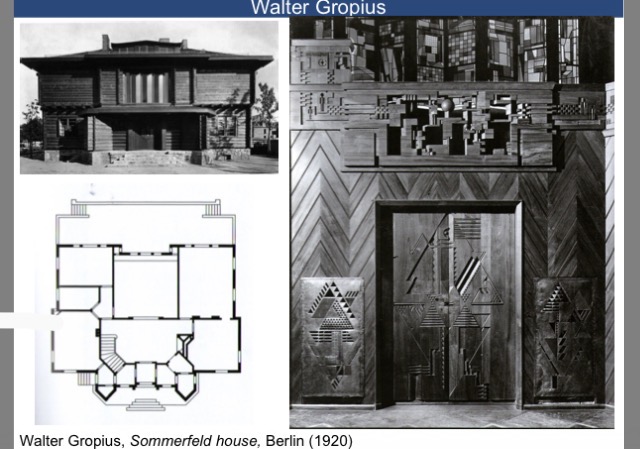
the products in this house were majorly made by the students of bauhaus
Art Nouveau style influence
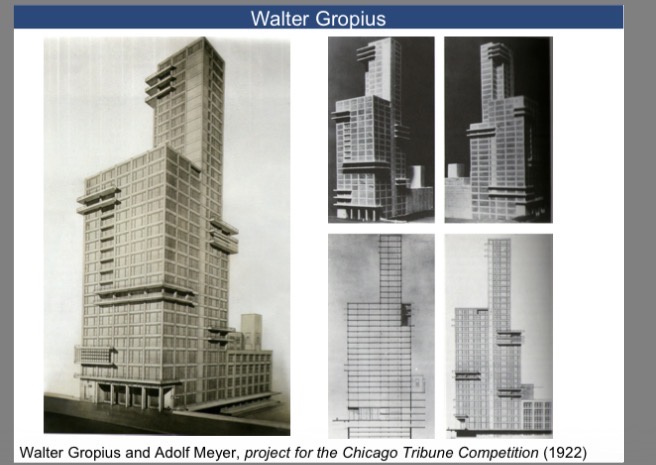
composition of geometrical volumes → flexible style for creating anything (factories, skyscrapers, etc.)
Modern style
Made for one of the 2 IMPORTANT COMPETITION → the Chicago Tribune Tower
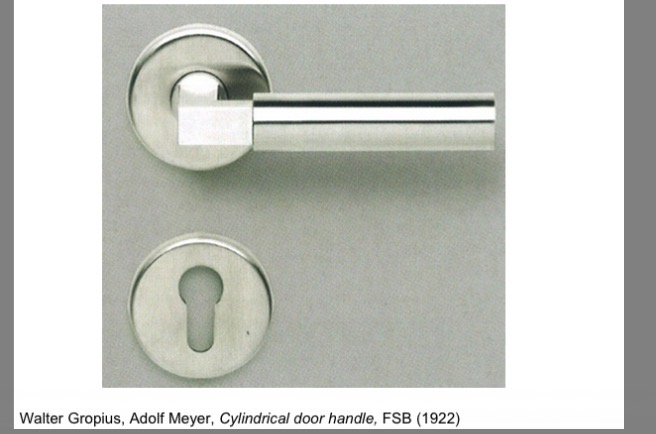
handle that is again a composition of geometrical shapes
Very simple & modern style → easily matches many interior
Modern use of materials
Approach developed in nay kind of scale
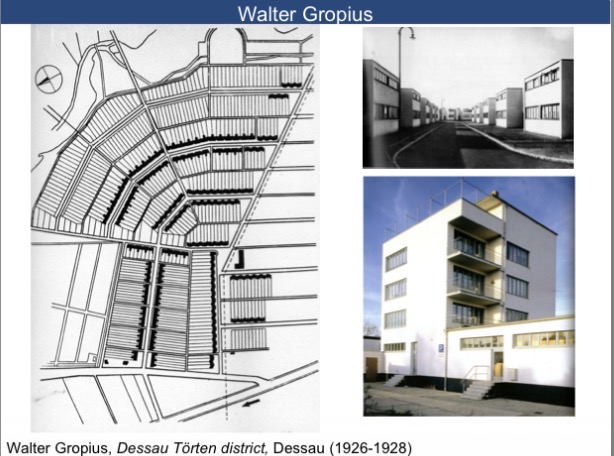
high experimentation
The dream of architects at the time → creating parts of the building outside & later assembling them together (like cars)
All of the houses are mass produced → assembling of the same mass produced pieces
Not a successful project → everything is way too similar, ease of getting lost (LACK OF IDENTITY) (problem with the then current modern architecture)
inspo with the model of TAYLORISM -
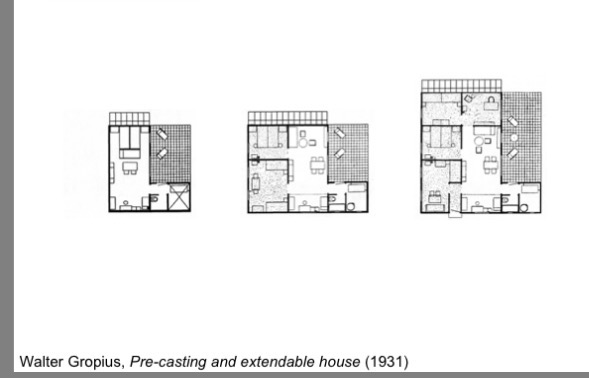
Concept of FLEXIBILITY → the house is created from modular parts allowing for the house’s expansion
Made for the concept of FAMILY EXPANSION → more generations, more space needed
the dimensions of the house are less important than the functionality itself
adding the machines into buildings
This building is NON STATIC - the circular part is able to rotate to create a TRADITIONAL THEATHERE OR ANCIENT
Idea of FLEXIBILITY → The building is multi-functional
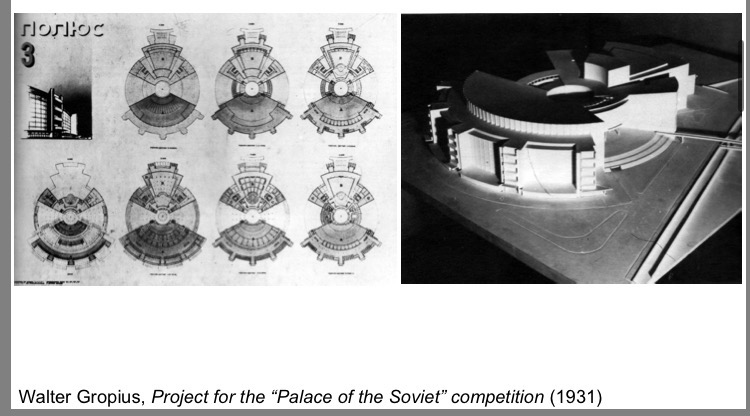
project for another important competition (2nd one) - PALACE OF THE SOVIET
Building based around the idea & aesthetic of machines (did not align with the soviet mindset of celebrating the political movement/belief)
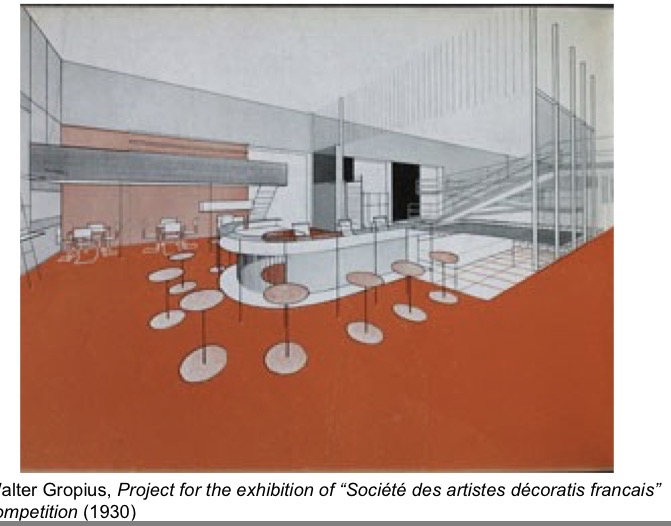
Key ideas of MODERNITY - REPETITION of precast projects, SIMPLICITY that is evident & CONTINUITY of the space