Hearing Loss & Balance Disorders
 Call Kai
 Learn
Learn Practice Test
 Spaced Repetition
 Match
Match Flashcards
 Knowt Play
1/10

There's no tags or description
Looks like no tags are added yet.
Name | Mastery | Learn | Test | Matching | Spaced | Call with Kai |
|---|
No analytics yet
Send a link to your students to track their progress
11 Terms
Hearing loss
Prevalence increases with age and men>women; 50% over the age of 70
Increased incidence with age—presbycusis
Risk factors include exposure to excessive noise levels
Types
Conductive: caused by external of middle ear problem
Sensorineural: caused by damage to the cochlea or vestibulocochlear nerve
Mixed: both conductive and sensorineural
Functional (psychogenic): caused by emotional problem
What are the manifestations of hearing loss?
Early symptoms
Tinnitus: perception of sound; often “ringing in the ears”
Increased inability to hear in a group
Turning up the volume on the TV
Impairment may be gradual and not recognized by the person experiencing the loss
As hearing loss increases, person may experience deterioration of speech, fatigue, indifference, social isolation or withdrawal, and other symptoms
Guidlines for comminicating with hearing impaired persons
Determine how the person prefers to communicate
Use a low-tone, normal voice
Speak slowly and distinctly
Reduce background noise and distractions
Face the person and get their attention
Speak into the less impaired ear
Use gestures and facial expressions
If necessary, write out information or obtain a sign language translator
What are the conditions of the external ear? (skip for exam 3)
Cerumen impaction causing pain/fullness in the ear
Removal may be by irrigation, suction, or instrumentation
Gentle irrigation should be used with lowest pressure, directing stream behind the obstruction. Glycerin, mineral oil, half-strength hydrogen peroxide in glyceryl may help soften cerumen
Foreign bodies
Removal may be by irrigation, suction, or instrumentation
Objects that may swell (e.g., vegetables or insects) should not be irrigated
Foreign body removal can be dangerous and may require extraction in the operating room
External otitis
Inflammation caused by bacteria Staphylococcus or Pseudomonas, or fungal infection from Aspergillus
Manifestations: pain and tenderness, discharge, edema, erythema, pruritus, hearing loss, feelings of fullness in the ear
Therapy is aimed at reducing discomfort, reducing edema, and treating the infection
A wick may be inserted in the canal to keep it open and facilitate medication administration
Malignant external otitis: rare, progressive infection that affects the external auditory canal, surrounding tissues, and skull
Conditions of middle ear (Don’t focus)
Tympanic membrane perforation caused by infection/trauma
Acute otitis media
Most frequently seen in children
Pathogens are most commonly bacterial or viral
Manifestations: otalgia (ear pain), fever, and hearing loss
Treatment
Antibiotic therapy
Myringotomy or tympanotomy
Serous otitis media: fluid in the middle ear without evidence of infection
Chronic otitis media
Result of recurrent acute otitis media
Chronic infection damages the tympanic membrane, ossicle, and involves the mastoid
Treatment
Prevent by treatment of acute otitis
Tympanoplasty, ossiculoplasty, or mastoidectomy
What are the middle ear surgical procedures? (Don’t focus on)
Tympanoplasty
Reconstruction of the tympanic membrane
Ossiculoplasty
Reconstruction of the bones of the middle ear
Prostheses are used to reconnect the ossicles to reestablish sound conduction
Mastoidectomy
Removal of diseased bone, mastoid air cells, and cholesteatoma to create a noninfected, healthy ear
Cholesteatoma: benign tumor, an ingrowth of skin that causes persistently high pressure in the middle ear, which causes hearing loss and neurologic disorders and destroys structures
Nursing interventions for the patient undergoing mastoid surgery
Reduction of anxiety
Reinforce information and patient education
Provide support and allow to discuss anxieties
Relieving pain
Medicate with analgesics for ear discomfort
Note: Occasional sharp, shooting pains may occur as the eustachian tube opens and allows air into the middle ear
Constant throbbing pain and fever may indicate infection
Preventing injury
Safety measures such as assisting with ambulation
Provide antiemetics or antivertigo medications
Improving communication and hearing
Note: Hearing may reduce for several weeks after surgery because of edema, accumulation of blood and fluid in the middle ear, and dressings and packings
Use measures to improve hearing and communication
Preventing infection
Prevent contamination of ear with water from showers, washing hair, and so on
What are some conditions of the inner ear?
Disorders of the vestibular system may increase the risk of falls
Dizziness: any altered sense of orientation in space
Vertigo: the illusion of motion or a spinning sensation
Nystagmus: involuntary rhythmic movement of the eyes associated with vestibular dysfunction
Tinnitus: ringing in the ears
Labyrinthitis: inflammation of the labyrinth
Benign positional vertigo (BBPV)
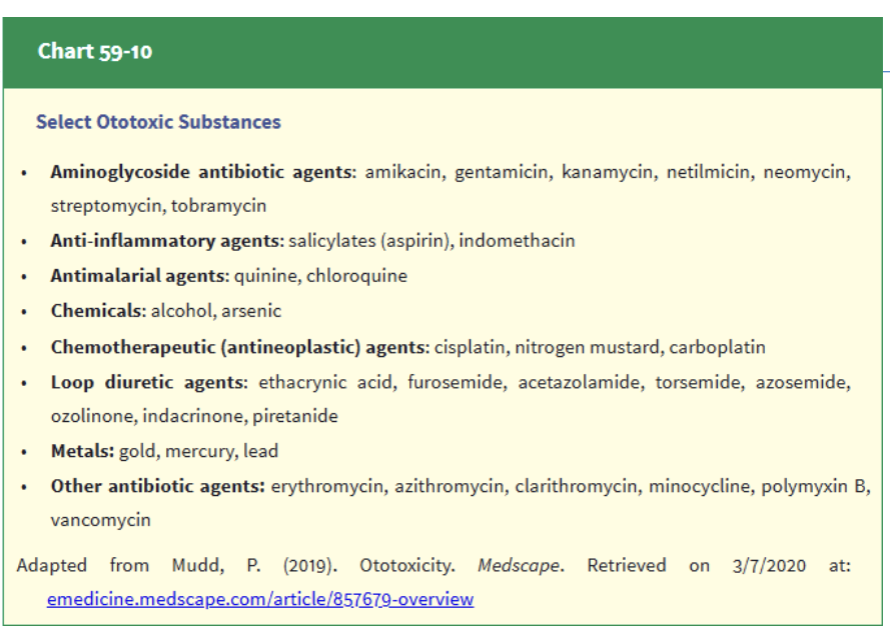
Ototoxicity → “Ear poisioning” caused usally by meds or chemicals
What are the ototoxic meds
Acoustic neuroma: tumor of the VIII cranial nerve
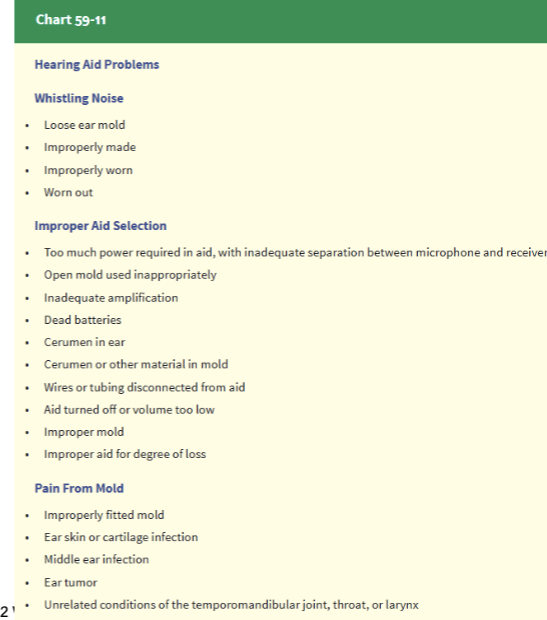
Hearing aids and some common issues
Device through which speech and environmental sounds are received by a microphone, converted to electrical signals, amplified, and reconverted to acoustic signals
Motion sickness (S&S, management)
A disturbance of equilibrium caused by a conflict in motion receptor stimuli
S&S: sweating, pallor, nausea, and vomiting caused by vestibular overstimulation
Management: antihistamines (dimenhydrinate or meclizine); anticholinergics (scopolamine patches) → help with secetions in end of life
Ménière Disease
Abnormal inner ear fluid balance caused by malabsorption of the endolymphatic sac or blockage of the endolymphatic duct; cochlear and vestibular
Manifestations: a triad of symptoms: 1. episodic vertigo, 2. tinnitus, and 3. fluctuating sensorineural hearing loss; feeling of pressure, nausea and vomiting
Treatment
Low-sodium diet (1000 to 1500 mg/day or less)
Antihistamines like Meclizine (Antivert); tranquilizers (diazepam/valium), antiemetics (promethazine), and diuretics (HCTZ, triamterene, spironolactone)
Surgical management to eliminate attacks of vertigo; endolymphatic sac decompression, middle and inner ear perfusion, and vestibular nerve sectioning