W8: Floods
 Call Kai
 Learn
Learn Practice Test
 Spaced Repetition
 Match
Match Flashcards
 Knowt Play
1/16

There's no tags or description
Looks like no tags are added yet.
Name | Mastery | Learn | Test | Matching | Spaced | Call with Kai |
|---|
No analytics yet
Send a link to your students to track their progress
17 Terms
Water Balance
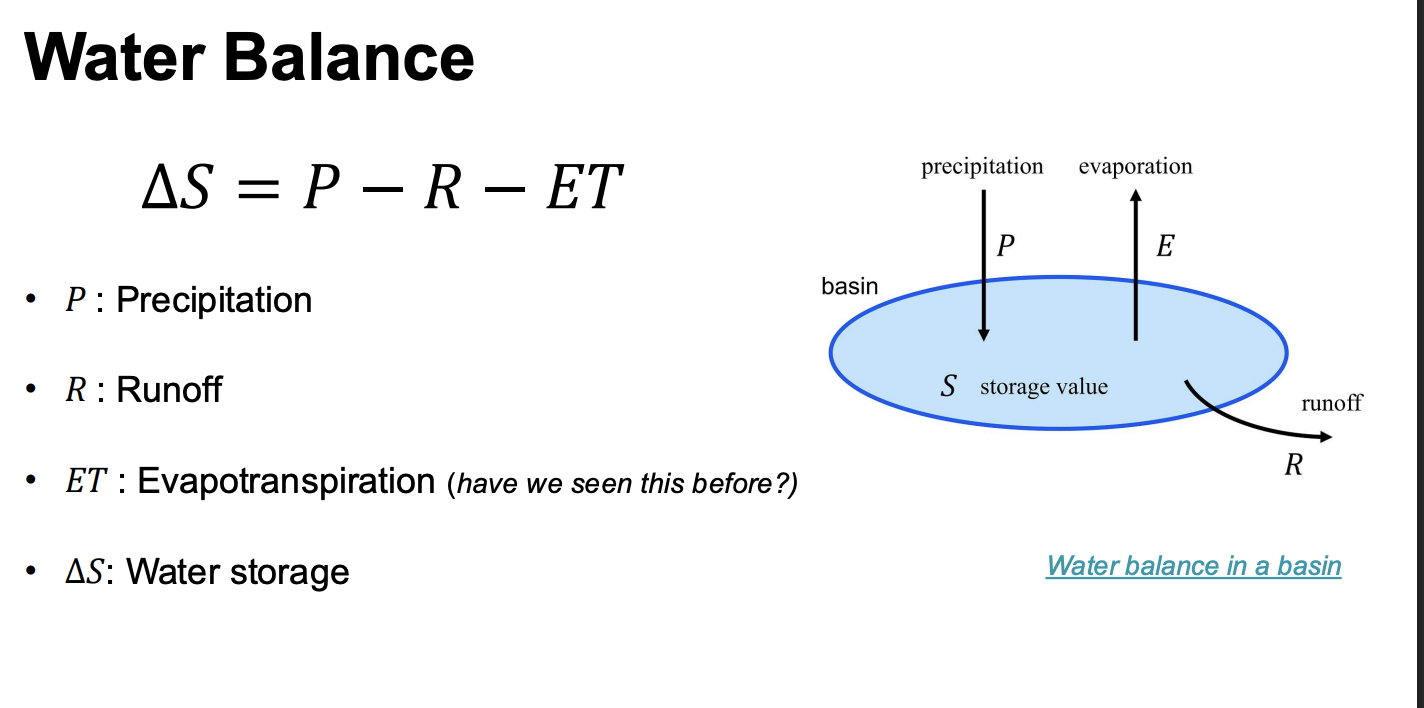
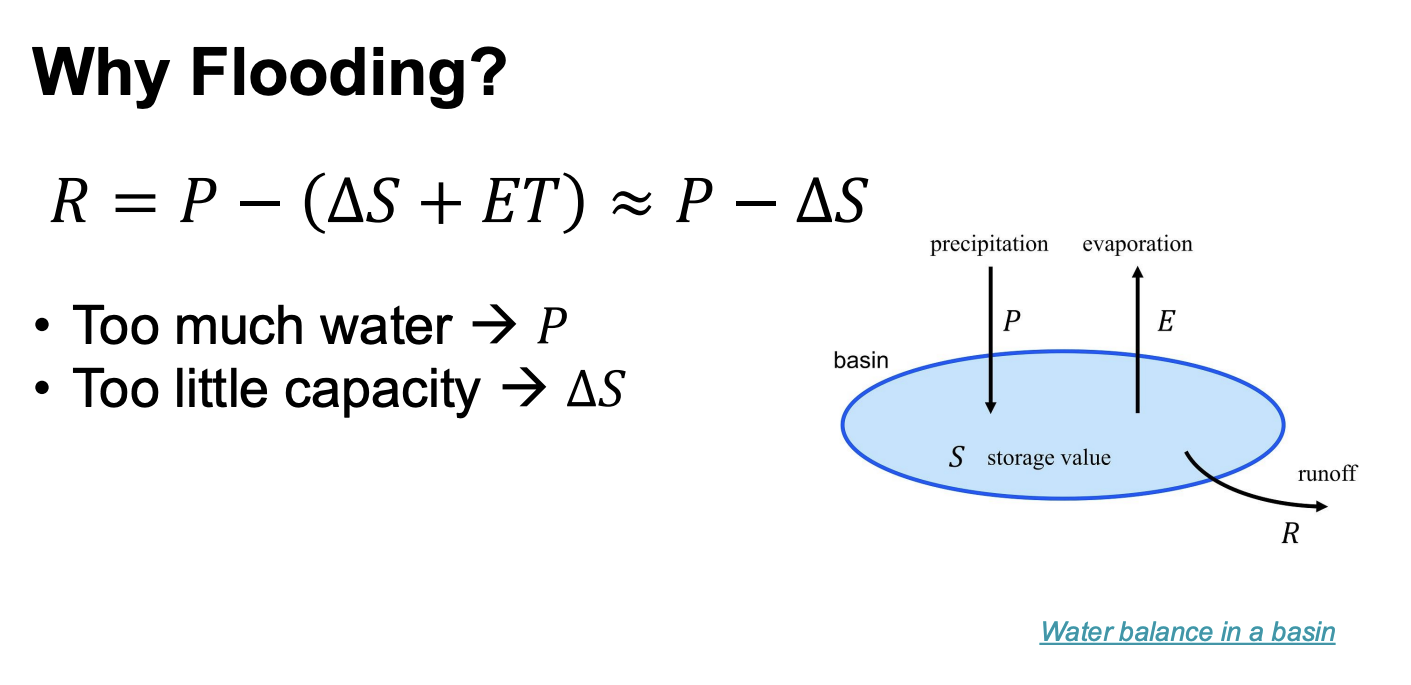
Why flooding?
Types of flooding:
river flooding
groundwater flooding
surface water flooding
coastal flooding
sewer flooding
reservoir flooding
canal flooding
river flooding
also known as fluvial flooding, occurs when the capacity of a rivers channel is exceeded as a result of intense or sustained rainfall across the catchment
groundwater flooding
groundwater flooding occurs when the water table rises up to the surface during a prolonged wet period.
low-lying areas, areas near aquifers and properties with cellars or basements are more likely to experience groundwater flooding
surface water flooding
surface water flooding occurs when the volume of rainfall is unable to drain away through the drainage systems or soak into the land, and instead flows over land. Blocked drains and sewers can increase the risk of surface water flooding as the water has nowhere to go.
coastal flooding
a coastal flood is when the coast is flooded by the sea
sewer flooding
most sewer flooding incidents are the result of overloaded sewers following heavy rainfall, or due to blockages caused by misuse of the sewer system such as flushing unsuitable items down the toilet
reservoir flooding
can be similar to river and surface water flooding if the water escapes slowly. However, in the unlikely event of the dam wall falling, a large amount of water could escape. It could happen with little or no warning and you may need to evacuate immediately.
canal flooding
occurs when the level of water in the canal is too high and overtops - however, this is rare.
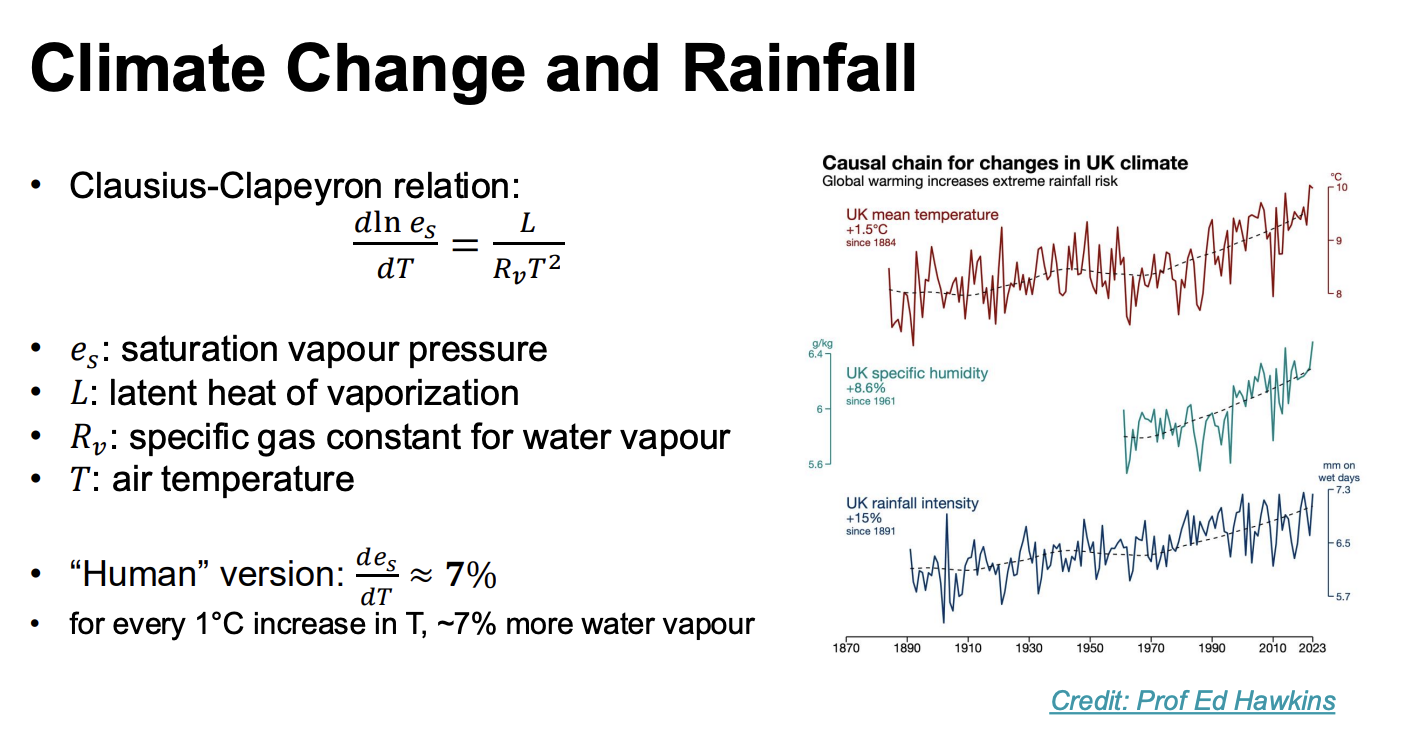
Climate change and rainfall - Clausius-Clapeyron relation
Flooding management
nature-based solutions
gravel management
monitoring
community resilience
nature-based flooding solution
Green roof:
Plant level → growing medium → filter sheet → drainage layer → protection layer → waterproofing → roof construction
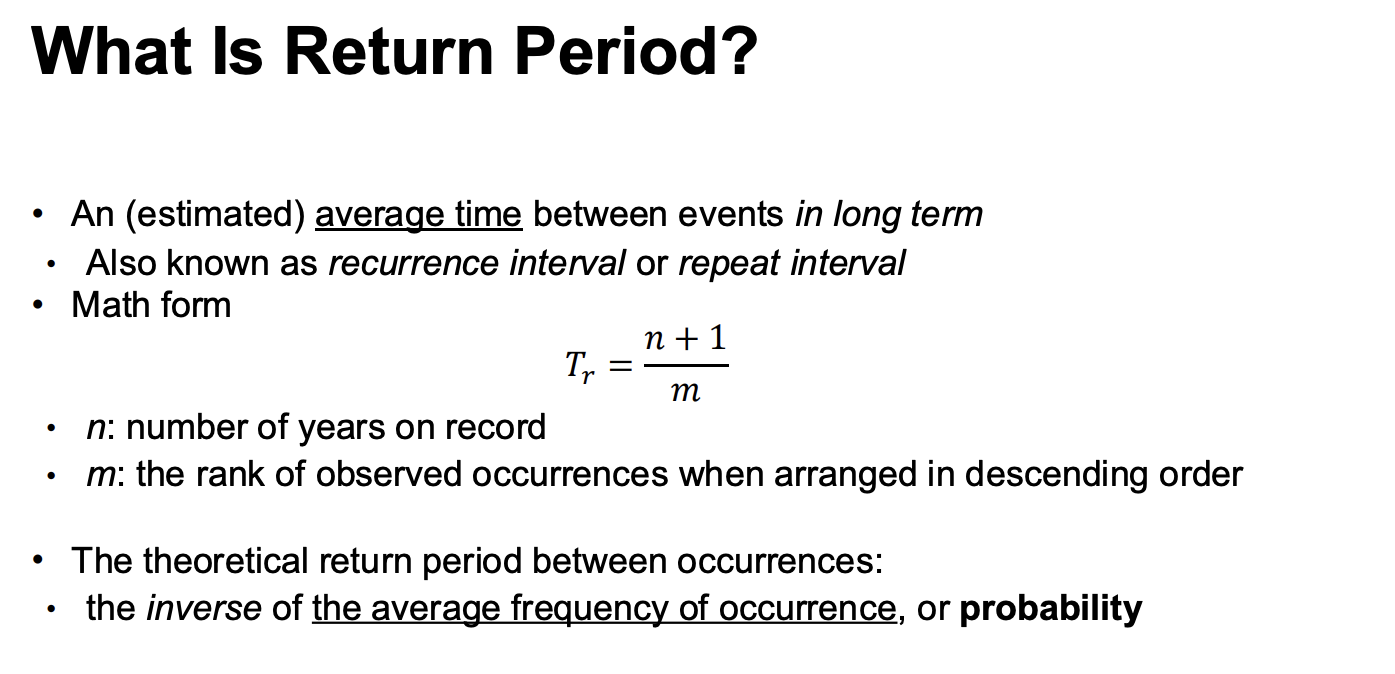
what is return period?
Exceedance probability
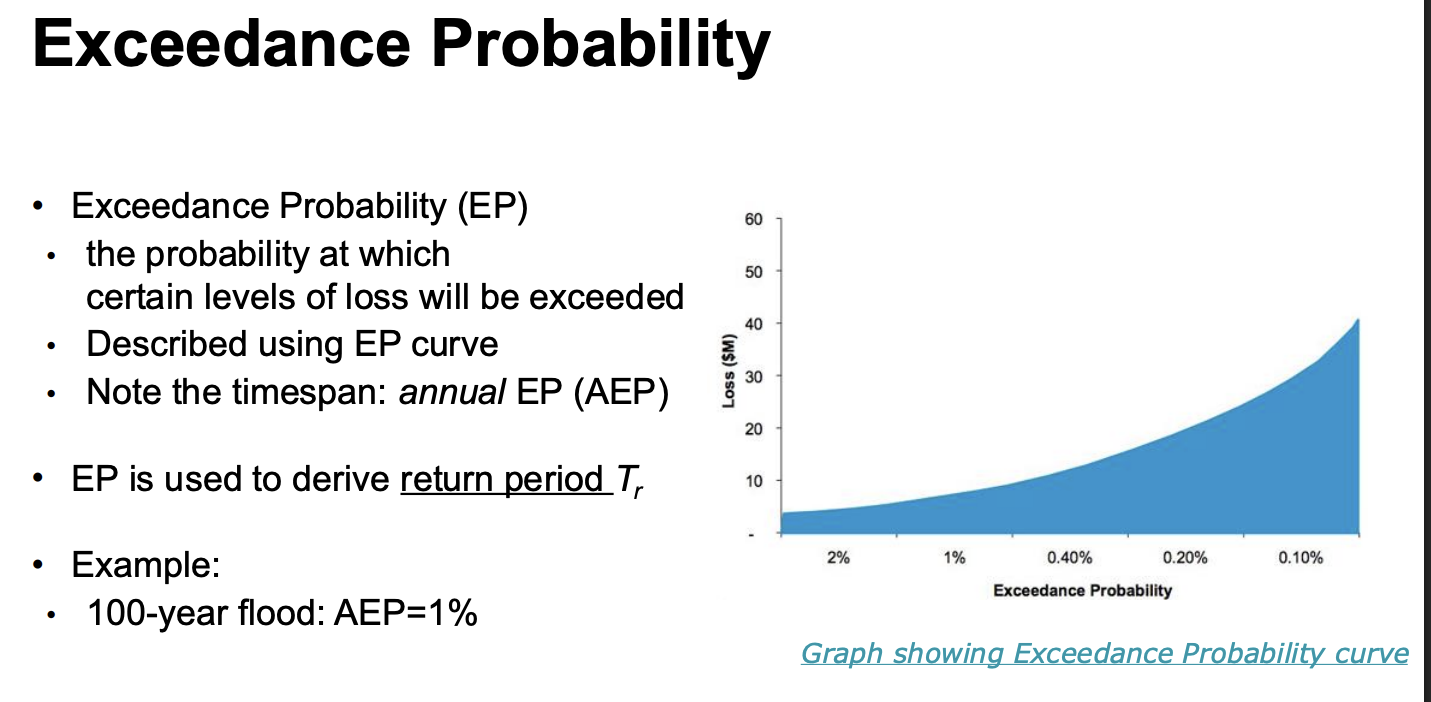
what is a 100-year flood?
A 100-year flood is a highly severe flood event that has a 1% chance of happening or being exceeded in any given year. Also known as a 1% flood, its name is based on statistical probability rather than a strict timeline, meaning such a flood could theoretically occur multiple times in a decade.
controversy over 100-year flood
Easy confusion in communication
Something people think they understand but often don’t
Every year you will read similar explainers on newspaper
The shaky – no-so-sound scientific – foundation
Limited observations – large uncertainty
Changing climate – non-stationarity