bio final exam
 Call Kai
 Learn
Learn Practice Test
 Spaced Repetition
 Match
Match Flashcards
 Knowt Play
1/62

There's no tags or description
Looks like no tags are added yet.
Name | Mastery | Learn | Test | Matching | Spaced | Call with Kai |
|---|
No analytics yet
Send a link to your students to track their progress
63 Terms
Name the clades and what is in them
Osteichthyes: Actinopterygii, Sarcopterygii, and everything below
Tetrapoda: Amphibia, Mammalia, Reptilia, Aves
Amniota: Mammalia, Reptilia, Aves
Chordata share what 4 traits
dorsal hollow nerve chord
notochord
pharyngeal slits
post-anal tail
Chordata- Dorsal hollow nerve cord
fluid filled tube of nervous tissue
Chordata- Notochord
an elongated, flexible, cartilaginous supporting rod
Chordata- Pharyngeal silts
found in pairs, openings for feeding and respiration
what Chordata mean?
Chorda- chord/string/notochord
-ata (bearing, having)
where does the notochord develop
in part of the vertebral column, with remnants contributing to the intervertebral discs
where does the dorsal hollow nerve cord develop
develops into the brain and spinal cord (CNS)
where do pharyngeal silts develop
develop into parts of the ear, jaw, throat, and neck structures
where does post-anal tail develop
mostly reduced before birth, leaving the coccyx (tailbone)
the 3 subphylums of chordata and what species are included
Urochordata: tunicates
Cephalochordata: lancelets
Vertebrata: craniates
subphylum Urochordata general information
Tunicates
only larvae have the 4 characteristics of Chordata
adults only retain pharyngeal slits in a large structures called the pharyngeal basket
adults found attached to pilings, boats, rocks
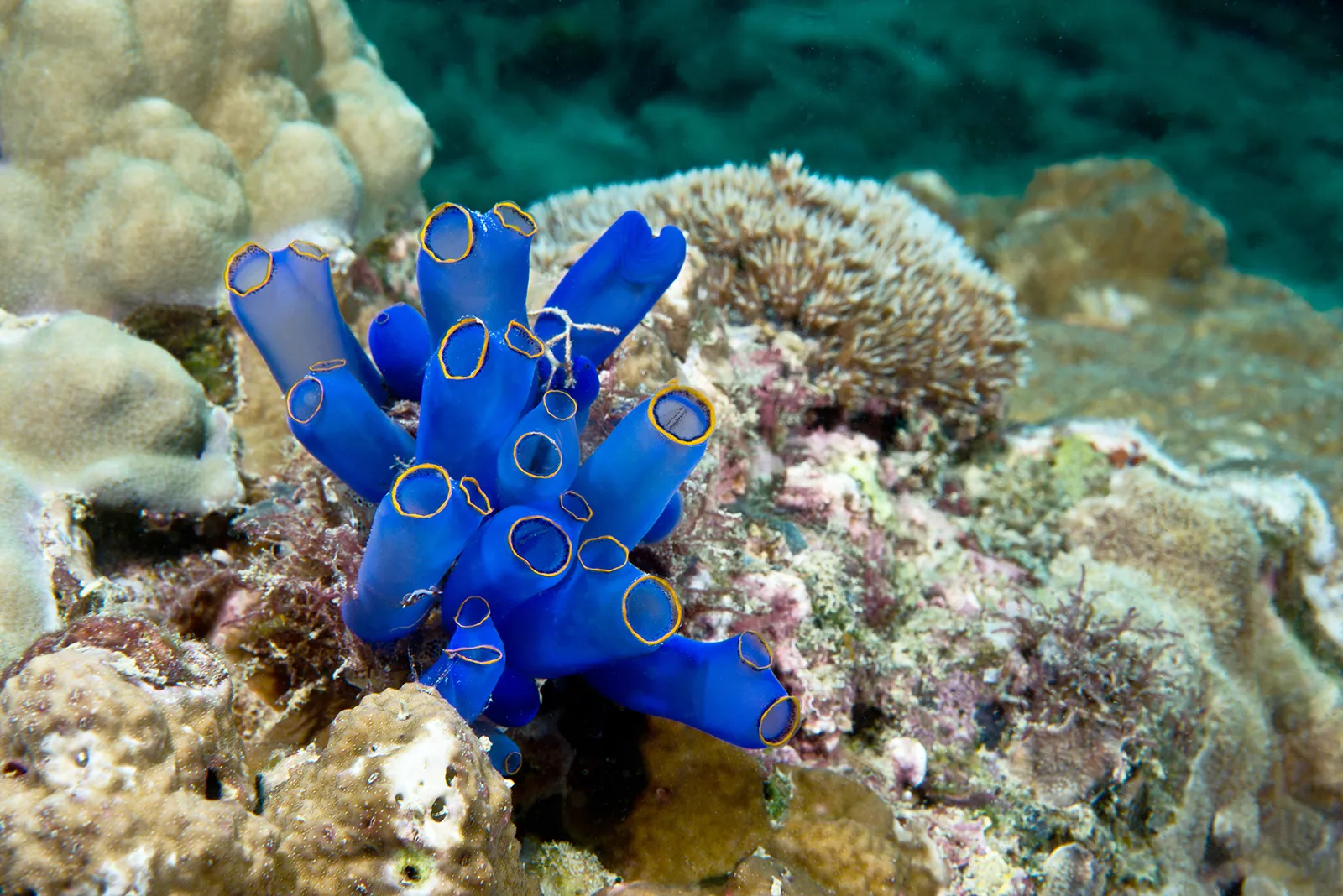
Urochordata-tunic
noncellular covering of adults that gives them the shapeless blob appearance
Urochordata-incurrent and excurrent siphons
used to filter organic material through pharyngeal basket
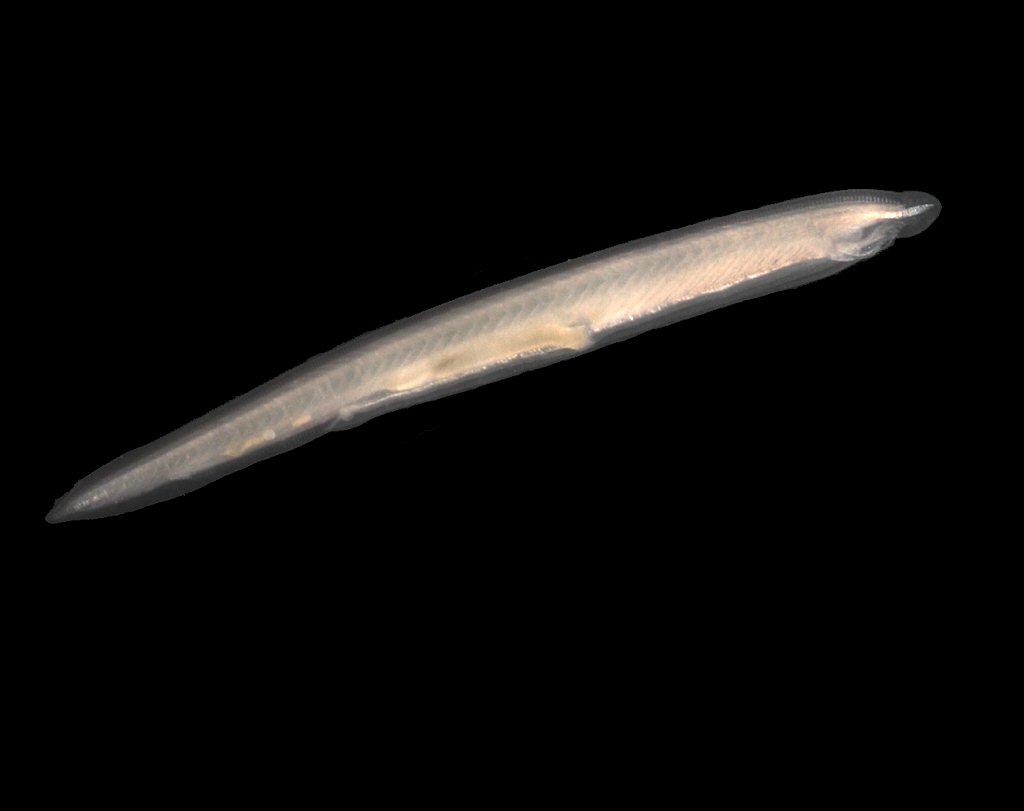
Subphylum Cephalochordata
Lancelets
All 4 chordata traits are present in adults
Subphylum Vertebrata general information
all 4 chordata are present at some stage in the life cycle
the brain is at the anterior end of the nerve cord
enclosed by cranium composed of bone or cartilage
In vertebrates the notochord is replaced by a vertebral column (bone or cartilage) that encloses the dorsal hollow nerve cord
Crainiates
are chordates that have a cranium, a skull-like structure around the brain
Vertebrates
are usually defined as animals that have vertebrae, the repeated bones or cartilages around the spinal cord
Infraphylum- Agnatha general information
lamprey and hagfish
jawless vertebrae
most ancestral living vertebrates are lampreys
lamprey and hagfish have what
eel-like with scaleless skin
lack paired fins
fully functional notochord as adults
cartilaginous skeleton
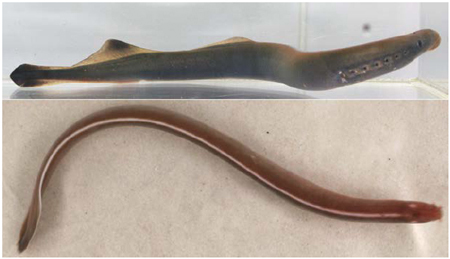
Only lamprey separate characteristics
Parasitic: suck body fluids from other vertebrates
7 gill openings
Mouth structure: cone shaped which creates suction
teeth rasp the flesh of host
Only hagfish separate characteristics
products made: “eel-skin” wallets, purses, belts
produce slime as a defense mechanism against predators
Infraphylum Gnathostomata
Jawed vertebrates
have paired appendages
evolution of jaw allowed major shift from filter feeding toactive feeding
Class Chondrichthyes general information
sharks, rays, guitarfish, ratfish, skate
placoid scales: sandpaper like
heterocercal tail
paired fins
cartilaginous endoskeleton
number of gill slits is reduced to 5
males have claspers: modified pelvic fins
Class Chondrichthyes-lateral line
sense vibrations in the water
clade osteichthyes- operculum
flap that covers 4 internal gill slits to create a single external opening
clade osteichthyes- homocercal tail
dorsal and ventral halves are approximately equal in size
clade osteichthyes- swim bladder
gas-filled sac found on dorsal region of the coelom to provide buoyancy
Class Chondrichthyes- ampullae of lorenzini
sense electrical fields
Class Chondrichthyes- what provides them buoyancy
store oil in liver to increase buoyancy
compensates for lack of swim bladder
superclass Agnatha- rays
cartilaginous support structures in the fins
superclass Agnatha- spines
bone, provide rigid support for fins and protection form, predators
superclass actinopterygii- general informaiton
perch, tuna, salmon
actino=ray
-ptery= in or win
actinopterygii= ray finned fishes
fins supported mainly by rays, spines may also be present
superclass Sarcopterygii general information
sarco- = flesh
-pertyg = fin or win
sarcopterygii= flesh finned (lobe finned) fishes
difference between actinopterygii and sarcopterygii
actinopterygii: fins supported mainly by rays, spines may also be present
sarcopterygii: fins are fleshy/lobed with interal bone and muscle
fish heart have what 2 chambers
atrium and ventricle
Clade tetrapoda
all four legged animals
Class Amphibia general information
frogs, toads, salamanders
smooth, moist skin that lack scales and claws
aquatic larval stage with adults that is at least semi-terrestrial
3 chambered heart
toad is applied to various frogs that have shorter legs, a hopping gait, and bumpy skin
all toads are frogs, but not all frogs are toads
Class Amphibia- feet adaptations
webbed feet: swimming
long back digits: digging
adhesive pads: climbing
Salamander and lizard differences
salamander
no claws or scales
front/anterior foot has 4 digits
lizard
claw and scales present
front/anterior feet have 5 toes
Frog heart chambers
3 chambers= 2 atria, 1 ventricle
Clade amniota
reptiles, mammalia, aves
most forms hatch from a specially adapted amniotic egg
Clade amniota- shell
protection
Clade amniota- yolk sac
nutrition
Clade amniota- allantoin sac
waste disposal
Clade amniota- amnion
sac that houses water environment needed for development
Clade amniota- chorion
gas exchange
Class reptilia general information
scaled
clawed, 5 digits on anterior limbs
tetrapods
turtle shells made: keratin and bone
Snakes are classified as tetrapods, yet they lack legs.
What is the reasoning behind this classification? Are snakes the only limbless tetrapods?
Snakes are most closely related to lizards. Both are amniotes with scales of b-keratin and males of both groups have paired copulatory organs called hemipenes.
The glass lizard (legless tetrapod) is not a snake - it has eyelids and ear openings but snakes never have those.
Difference between venomous and poisonous snake
venomous
vertical pupils
facial pits between eye and nostril
flat scales above eyes
2 sets of scales
Poisonous
round pupils
slender head
Class Reptilia- turtle general information
have no teeth only beak and jaw
M vs. F
Male: long, thicker tail, and concave plastron
Female: shorter, thinner tail, and flatter plastron
Class Reptilia- turtle shell
Shell: bone covered by keratin
bone: formed from expanded ribs and vertebrae fused together
keratin: outer plates covering the shell
Class aves general information
birds
feathers: specialized scales
furcula: wishbone, made of fused clavicles, essential for attachment of flight muscles
have wings
beaks and feet help speculate diet and habitat
Class aves- beaks
long beak: drilling wood for insects
flattened beak: gathering submerged food
nutcracker beak: for seeds
hooked beak: tearing meat
long thin bill: harvesting nectar
Class aves- feet
webbed feet for swimming
long curved talons for grasping prey
Class mammalia- features
hair: some stage of lifecycle
mammary glands: produce milk
enucleated red blood cells: more efficient oxygen transport
muscular diaphragm: separates thoracic and abdominal cavities
dentaries: single pair of bones composing lower jaw (mandible)
endothermic
Class Mammalia- hair length
longer hair: living in colder climate
shorter hair: living in warmer climate
long tail hairs: fly swatter
Class Mammalia- horn and antler difference
horn
grow continuously with annuli (growth rings)
keratin over bone
permanent
Antlers
shed and replaced each year
bone, but when growing it is covered by skin that produces hair
keratin over bone
Order Chiroptera- anatomy
nose leaf: fleshy structure around nostril
uropatagium: membrane between foot and tail
tragus: projection within ear
Ectotherms
body temperature dependent on environment
fishes, amphibians, reptiles
Endotherms
generate body heat internally
birds and mammals
Endothermy
capacity to elevate body temperature physiologically
Ectothermy
relying mainly on the environment to control body temp