RESPIRATORY ZONE - components of the respiratory system and related their structures to their functions
0.0(0)
Studied by 0 people Call Kai
 Learn
Learn Practice Test
 Spaced Repetition
 Match
Match Flashcards
 Knowt Play
Card Sorting
1/27

There's no tags or description
Looks like no tags are added yet.
Last updated 5:14 AM on 5/3/26
Name | Mastery | Learn | Test | Matching | Spaced | Call with Kai |
|---|
No analytics yet
Send a link to your students to track their progress
28 Terms
1
New cards
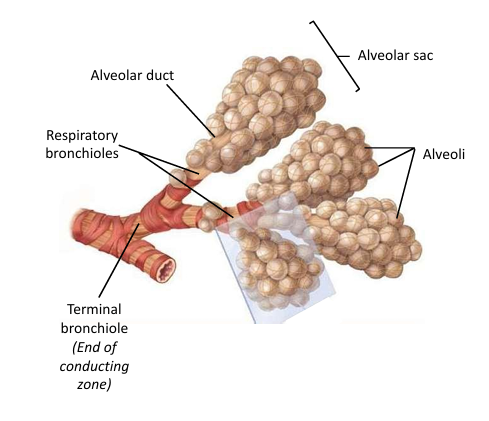
What structures make up the respiratory zone?
respiratory bronchioles, alveolar ducts, alveolar sacs, alveoli
2
New cards
What is the function of the respiratory zone?
site of gas exchange, contains thin-walled alveoli
3
New cards
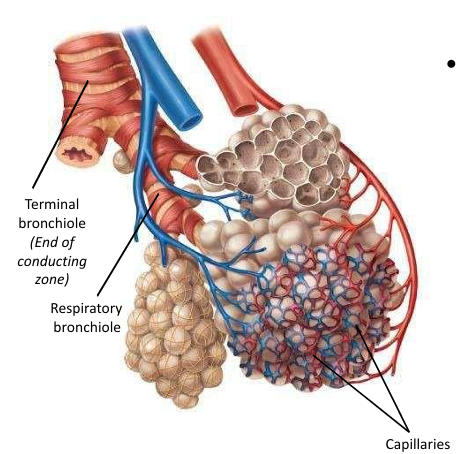
Why do alveoli have a large surface area?
to maximise gas exchange efficiency
4
New cards
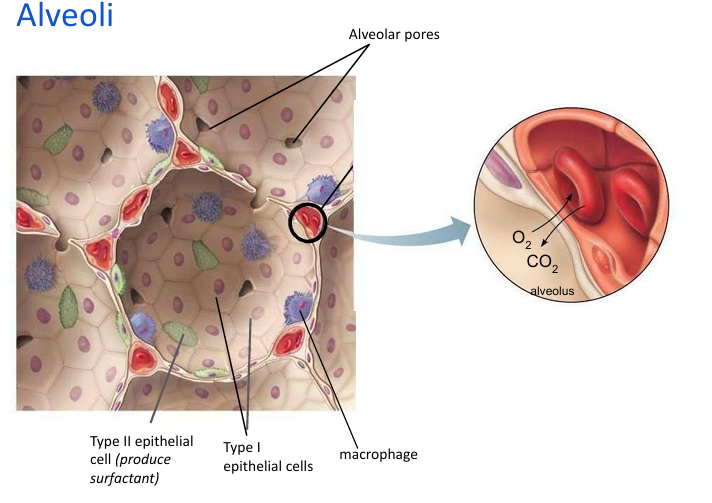
What are alveoli?
tiny air sacs in the lungs, primary site of gas exchange
5
New cards
What are Type I alveolar cells?
thin epithelial cells, form most of the respiratory membrane, allow gas diffusion
6
New cards
What are Type II alveolar cells?
produce surfactant, reduce surface tension, prevent alveolar collapse
7
New cards
What is the function of alveolar macrophages?
remove debris, remove pathogens, keep alveoli sterile
8
New cards
What surrounds alveoli?
dense capillary networks, enable rapid gas exchange
9
New cards
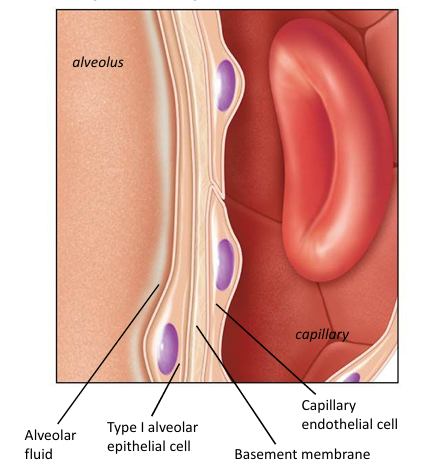
What forms the respiratory membrane?
Type I alveolar cell, fused basement membrane, capillary endothelial cell
10
New cards
Why is the respiratory membrane thin?
facilitates rapid gas exchange, approximately 0.5 micrometres thick
11
New cards
What coats the alveolar surface?
alveolar fluid, prevents damage, facilitates gas exchange, contains surfactant
12
New cards
What is the function of surfactant?
reduces surface tension, prevents alveolar collapse
13
New cards
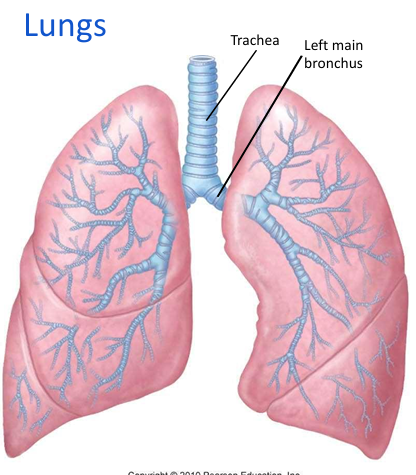
What are the lungs?
large spongy elastic organs for gas exchange
14
New cards
How many lobes does the left lung have?
two lobes
15
New cards
How many lobes does the right lung have?
three lobes
16
New cards
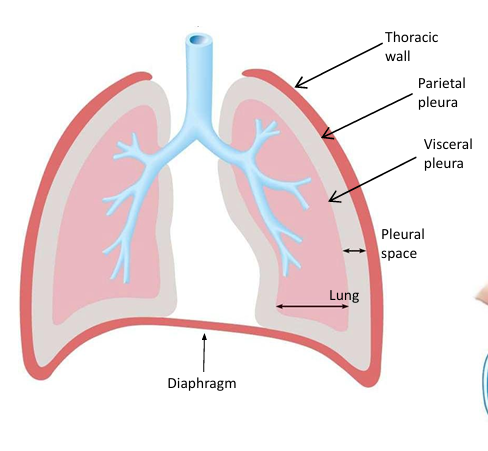
Where are the lungs located?
thoracic cavity, within pleural cavities
17
New cards
What is the visceral pleura?
membrane covering the lung surface
18
New cards
What is the parietal pleura?
membrane lining the thoracic wall
19
New cards
What is the pleural space?
space between pleural layers, contains pleural fluid
20
New cards
What is the function of pleural fluid?
lubricates pleural surfaces, allows smooth lung movement, helps lungs adhere to thoracic wall
21
New cards
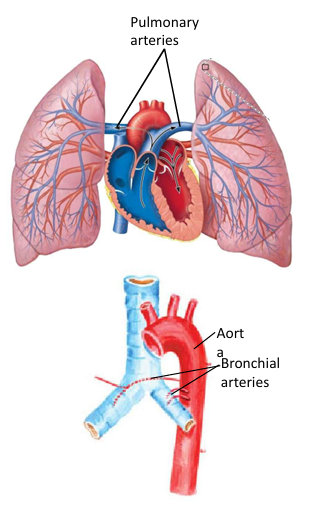
What does pulmonary circulation do?
delivers deoxygenated blood to lungs via pulmonary arteries, returns oxygenated blood via pulmonary veins
22
New cards
What does bronchial circulation do?
delivers oxygenated blood to lung tissue
23
New cards
Which vessels deliver deoxygenated blood to the lungs?
pulmonary arteries
24
New cards
Which vessels return oxygenated blood to the heart?
pulmonary veins
25
New cards
What do sensory fibres in the lungs detect?
stretch, irritants, send signals to respiratory centre
26
New cards
What do sympathetic fibres do in the lungs?
dilate bronchioles, increase airflow
27
New cards
What do parasympathetic fibres do in the lungs?
constrict bronchioles, reduce airflow
28
New cards