Fetal Urogenital System Abnormalities

0.0(0)
Studied by 3 people
call kaiCall Kai
learnLearn
examPractice Test
spaced repetitionSpaced Repetition
heart puzzleMatch
flashcardsFlashcards
GameKnowt Play
Card Sorting

1/35

encourage image

There's no tags or description

Looks like no tags are added yet.

Last updated 6:09 PM on 6/19/26
Name
Mastery
Learn
Test
Matching
Spaced
Call with Kai

No analytics yet

Send a link to your students to track their progress

36 Terms
1
New cards
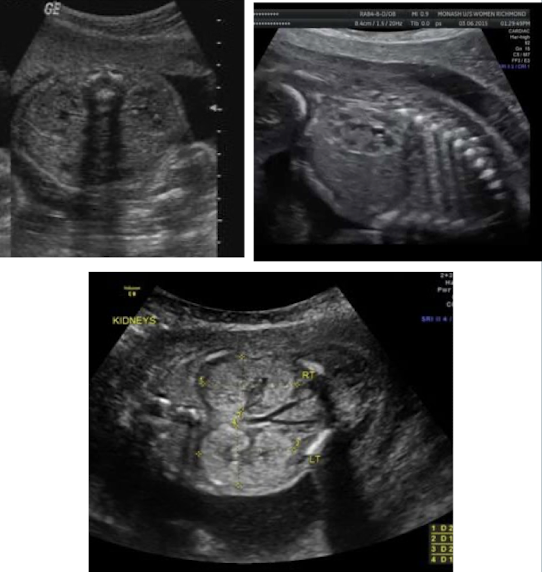
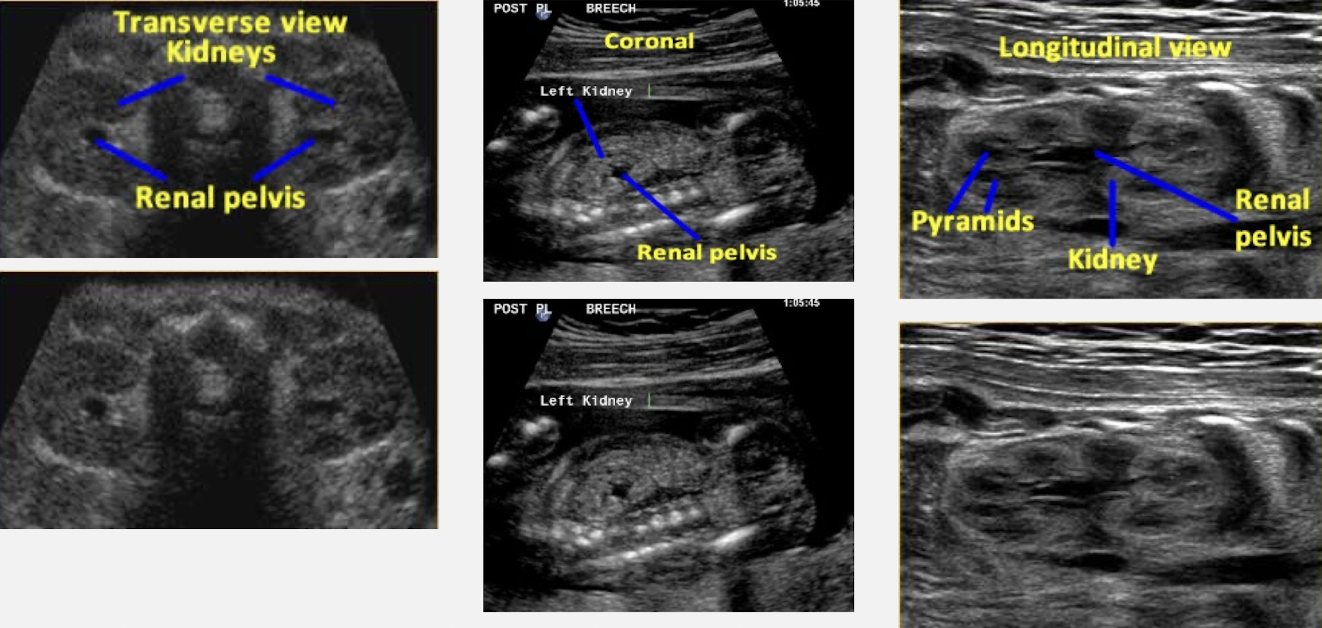
<p>SONO: normal fetal kidneys</p>

SONO: normal fetal kidneys

  • homogeneous corte

  • moderately hypoechoic cortex

  • hypoechoic pyramids and anechoic collecting system

  • kidneys are evaluated for:

    • size

    • collecting system dilation

    • appearance (texture and echogenicity)

<ul><li><p>homogeneous corte</p></li><li><p>moderately hypoechoic cortex</p></li><li><p>hypoechoic pyramids and anechoic collecting system</p></li><li><p>kidneys are evaluated for:</p><ul><li><p>size </p></li><li><p>collecting system dilation</p></li><li><p>appearance (texture and echogenicity) </p></li></ul></li></ul><p></p>
2
New cards

renal agenesis (unilateral and bilateral)

  • complete absence of one or both kidneys due to failure of development

  • associated with genital anomalies and 2VC

  • unilateral agenesis:

    • MC than bilateral

    • excellent prognosis

  • bilateral agenesis:

    • lethal prognosis

    • exhibit classic Potter’s syndrome

    • oligohydramnios

    • pulmonary hypoplasia

    • associated with cardiac defects and MSK disorders

3
New cards

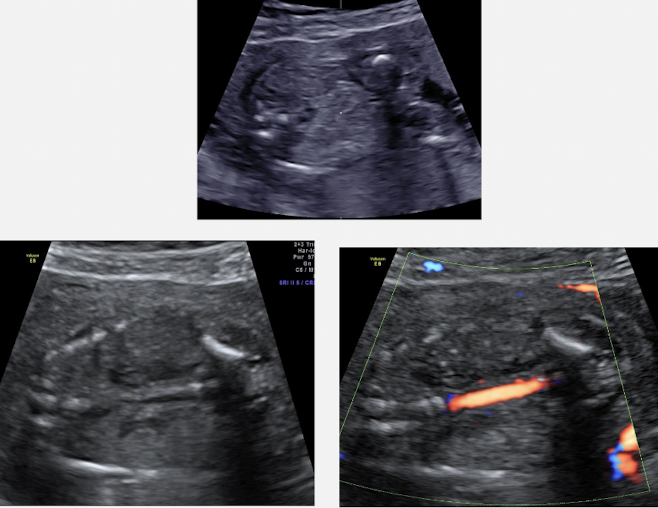
SONO: unilateral renal agenesis

  • absent kidney on one side

  • contralateral kidney → compensatory hypertrophy

  • ipsilateral adrenal: flattened; occupies renal fossa

  • absent ipsilateral renal artery branch

  • normal AFI

  • normal bladder

**sweep from chest to bladder to check for ectopic
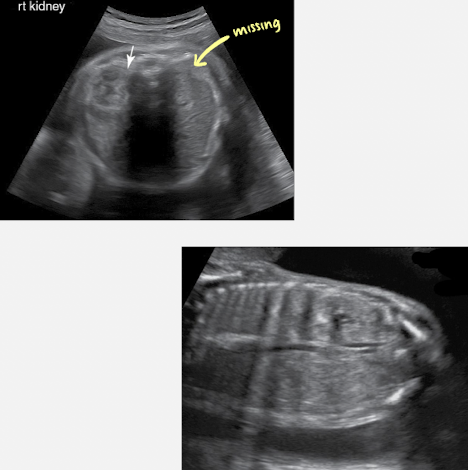
<ul><li><p>absent kidney on one side</p></li><li><p>contralateral kidney → compensatory hypertrophy</p></li><li><p><span style="color: red;">ipsilateral adrenal: flattened</span>; occupies renal fossa</p></li><li><p>absent ipsilateral renal artery branch</p></li><li><p><span style="color: red;">normal AFI</span></p></li><li><p>normal bladder</p></li></ul><p>**sweep from chest to bladder to check for ectopic</p><p></p>
4
New cards

SONO: bilateral renal agenesis

  • absent kidneys

  • adrenals: flattened within renal fossa

  • absent renal artery branches

  • bladder: not visualized; no urine (observe for 1 hours)

  • AFI: oligo- or anhydramnios

<ul><li><p>absent kidneys</p></li><li><p>adrenals: flattened within renal fossa</p></li><li><p>absent renal artery branches</p></li><li><p>bladder: not visualized; no urine (observe for 1 hours)</p></li><li><p>AFI: oligo- or anhydramnios </p></li></ul><p></p>
5
New cards

renal ectopia

  • kidney not positioned within renal fossa

    • usually lies in area of pelvis

  • crossed ectopia: both kidneys may be fused or appear to be fused

    • located on same side (usually right)

    • considered form of horseshoe kidney

  • prognosis: depends on presence of additional anomalies; generally good

  • associated with:

    • skeletal, GYN, GI, and cardiovascular anomalies
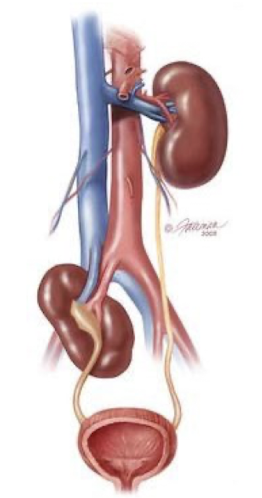
<ul><li><p>kidney not positioned within renal fossa</p><ul><li><p><span style="color: red;">usually lies in area of pelvis</span></p></li></ul></li><li><p>crossed ectopia: both kidneys may be fused or appear to be fused</p><ul><li><p>located on same side (usually right)</p></li><li><p>considered form of horseshoe kidney</p></li></ul></li><li><p>prognosis: depends on presence of additional anomalies; generally good</p></li><li><p>associated with:</p><ul><li><p>skeletal, GYN, GI, and cardiovascular anomalies </p></li></ul></li></ul><p></p>
6
New cards

SONO: renal ectopia

  • absence of kidney in its normal position

  • ipsilateral adrenal gland flattening

  • ectopic kidney is usually in pelvis and may be malrotated

    • crossed ectopia and cross-fused ectopia is possible
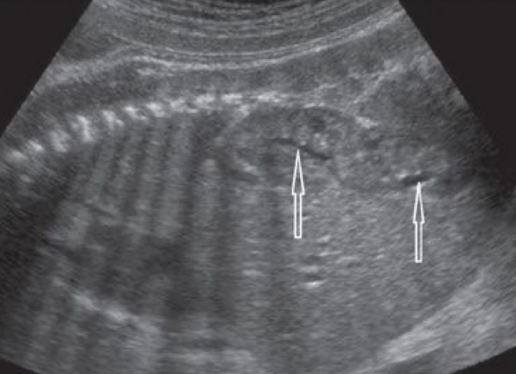
<ul><li><p>absence of kidney in its normal position</p></li><li><p>ipsilateral adrenal gland flattening</p></li><li><p>ectopic kidney is usually in pelvis and may be malrotated</p><ul><li><p>crossed ectopia and cross-fused ectopia is possible</p></li></ul></li></ul><p></p>
7
New cards

horseshoe kidneys

  • inferior poles of kidney fuse while in pelvis

  • may be found as isolated anomaly or be associated with other anomalies or syndromes

  • isolated horseshoe kidneys carry good prognosis

  • incidence of trisomy 18 and 45, X

8
New cards

SONO: horseshoe kidneys

  • bridge of tissue connecting the lower poles

  • if spine down, connecting isthmus may be seen anterior to AO

**coronal view is ideal
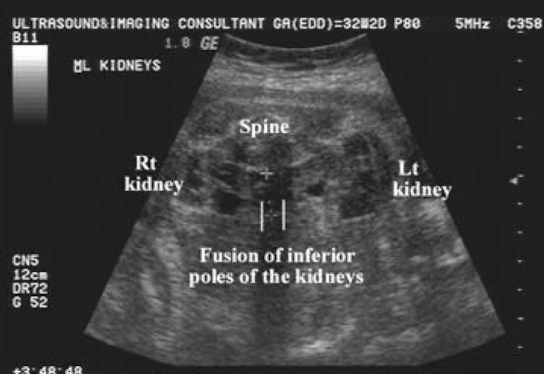
<ul><li><p>bridge of tissue connecting the lower poles</p></li><li><p>if spine down, connecting isthmus may be seen anterior to AO</p></li></ul><p>**coronal view is ideal</p>
9
New cards

autosomal recessive polycystic kidney disease

  • aka infantile PKD

  • autosomal recessive congenital disorder that affects both fetal kidneys and liver

  • characterized by:

    • numerous small cysts in both kidneys and liver

    • enlarged, nonfunctioning collecting tubules within the kidneys=renal failure

  • may be part of genetic syndrome—such as Meckel-Gruber or T13

  • prognosis: poor; decreased renal function and hypertension; death at an early age

10
New cards

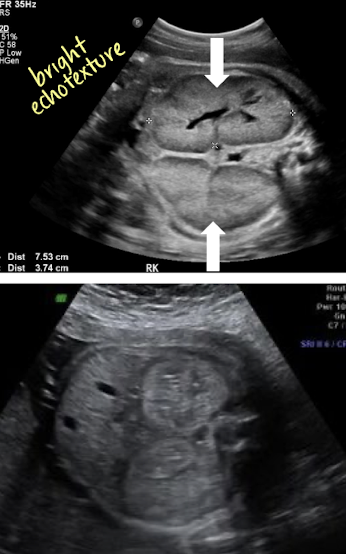
SONO: autosomal recessive polycystic kidney disease

  • bilateral, enlarged, echogenic kidneys

    • individual cysts not identified

  • kidneys are symmetrically enlarged

    • 3-10x normal renal size for GA

  • AC will be large

  • bladder may be present or small

  • oligohydramnios

<ul><li><p>bilateral, enlarged, echogenic kidneys</p><ul><li><p>individual cysts not identified</p></li></ul></li><li><p>kidneys are symmetrically enlarged</p><ul><li><p>3-10x normal renal size for GA</p></li></ul></li><li><p>AC will be large</p></li><li><p>bladder may be present or small</p></li><li><p><span style="color: red;">oligohydramnios</span></p></li></ul><p></p>
11
New cards

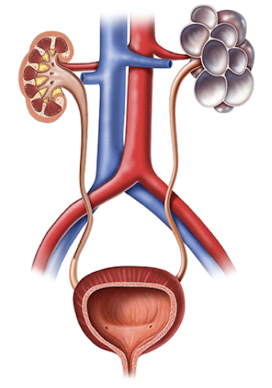
multicystic dysplastic kidney

  • characterized by:

    • cystic lesions that correspond primarily to dilated collecting tubules

    • cysts replace renal tissue (kidney doesn’t function)

    • cysts are nonfunctioning and noncommunicating

  • usually unilateral; can be bilateral

  • MC form of renal cystic disease in childhood

  • associated with Meckel-Gruber; CNS, GI, cardiac, and limb anomalies

  • prognosis

    • unilateral=excellent

    • bilateral=lethal

<ul><li><p>characterized by:</p><ul><li><p>cystic lesions that correspond primarily to dilated collecting tubules</p></li><li><p>cysts replace renal tissue (kidney doesn’t function)</p></li><li><p>cysts are nonfunctioning and noncommunicating</p></li></ul></li><li><p>usually unilateral; can be bilateral</p></li><li><p><span style="color: red;">MC form of renal cystic disease in childhood</span></p></li><li><p>associated with Meckel-Gruber; CNS, GI, cardiac, and limb anomalies</p></li><li><p>prognosis</p><ul><li><p>unilateral=excellent</p></li><li><p>bilateral=lethal</p></li></ul></li></ul><p></p>
12
New cards

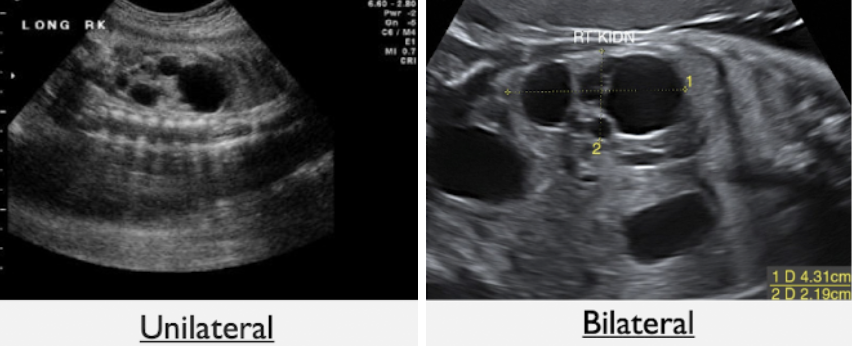
SONO: multicystic dysplastic kidney (unilateral vs bilateral)

unilateral

  • multiple, smooth-walled cysts of varying sizes

  • cysts do not communicate with each other

  • normal appearing contralateral kidney

  • bladder is visible

  • normal AFI

bilateral

  • multiple, noncommunicating renal cysts within both kidneys

  • failure to visualize bladder

  • severe oligohydramnios

<p><strong>unilateral</strong></p><ul><li><p>multiple, smooth-walled cysts of varying sizes</p></li><li><p>cysts do not communicate with each other</p></li><li><p>normal appearing contralateral kidney</p></li><li><p>bladder is visible</p></li><li><p>normal AFI</p></li></ul><p><strong>bilateral</strong></p><ul><li><p>multiple, noncommunicating renal cysts within both kidneys</p></li><li><p>failure to visualize bladder</p></li><li><p>severe oligohydramnios</p></li></ul><p></p>
13
New cards

autosomal dominant polycystic kidney disease

  • aka adult PKD

  • autosomal dominant congenital disorder that causes cystic dilation of nephrons and collecting tubules

    • macrocysts in kidneys, liver, and pancreas

  • may not be detected antenatally since it does not usually manifest until later in life

  • prognosis: variable when found in child
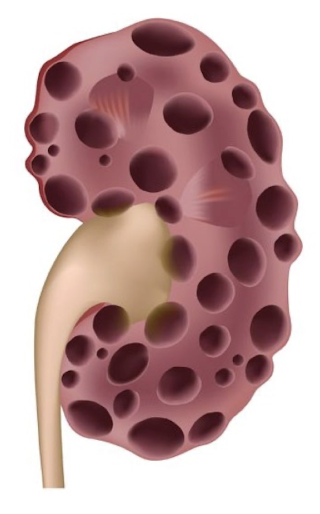
<ul><li><p>aka<span> </span><span style="color: yellow;">adult PKD</span></p></li><li><p>autosomal dominant congenital disorder that causes cystic dilation of nephrons and collecting tubules</p><ul><li><p>macrocysts in kidneys, liver, and pancreas</p></li></ul></li></ul><ul><li><p>may not be detected antenatally since it does not usually manifest until later in life</p></li><li><p>prognosis: variable when found in child</p></li></ul><p></p>
14
New cards

SONO: autosomal dominant polycystic kidney disease

  • bilateral (rare unilateral)

  • similar to ARPKD

  • symmetrically enlarged echogenic kidneys

  • amniotic fluid may be normal

    • unlike ARPKD, which has oligohydramnios

  • visible bladder

  • kidneys may look normal in 2nd trimester; follow up if family hx of ADPKD
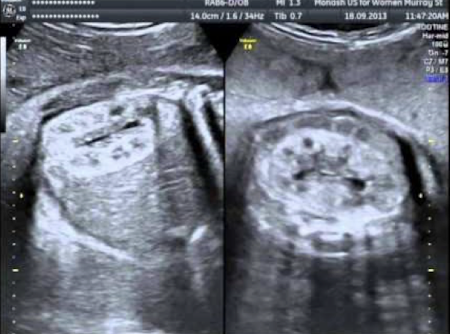
<ul><li><p>bilateral (rare unilateral)</p></li><li><p>similar to ARPKD</p></li><li><p>symmetrically enlarged echogenic kidneys</p></li><li><p><span style="color: red;">amniotic fluid may be normal</span></p><ul><li><p>unlike ARPKD, which has oligohydramnios</p></li></ul></li><li><p>visible bladder</p></li><li><p>kidneys may look normal in 2nd trimester; follow up if family hx of ADPKD</p></li></ul><p></p>
15
New cards

obstructive cystic dysplasia

  • renal dysplasia occurs secondary to long standing kidney obstruction in the 1st/early 2nd trimester

  • leads to fibrosis and cystic replacement of renal tissue

  • if unilateral disease:

    • from UPJ or UVJ obstruction

    • variable prognosis: depends on additional anomalies

  • if bilateral disease:

    • from bladder outlet obstruction

    • poor prognosis b/c no AFI → renal failure and pulmonary hypoplasia
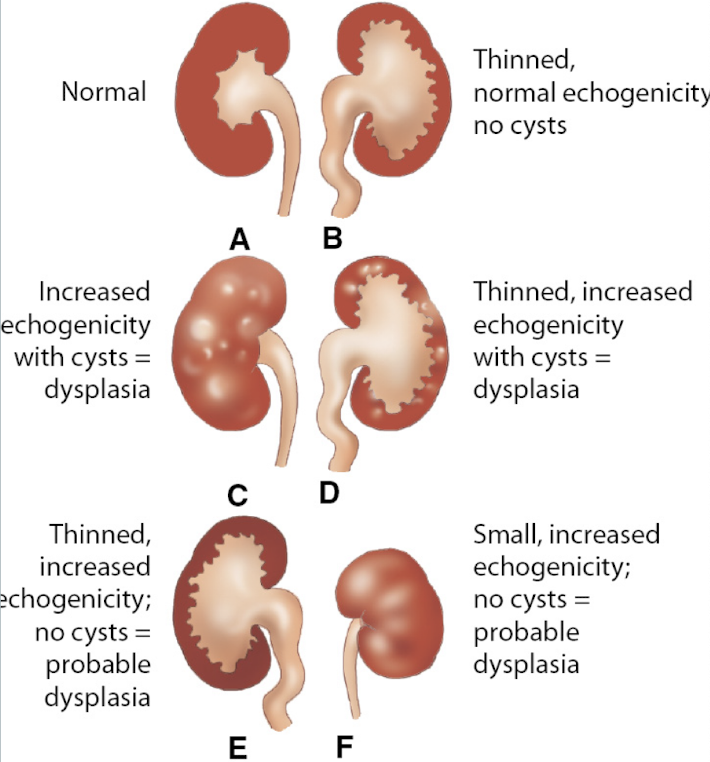
<ul><li><p>renal dysplasia occurs secondary to long standing kidney obstruction in the 1st/early 2nd trimester</p></li><li><p>leads to fibrosis and cystic replacement of renal tissue</p></li><li><p><u>if unilateral disease</u>:</p><ul><li><p>from UPJ or UVJ obstruction</p></li><li><p>variable prognosis: depends on additional anomalies</p></li></ul></li><li><p><u>if bilateral disease</u>:</p><ul><li><p>from bladder outlet obstruction</p></li><li><p>poor prognosis b/c no AFI → renal failure and pulmonary hypoplasia</p></li></ul></li></ul><p></p>
16
New cards

SONO: obstructive cystic dysplasia

  • echogenic kidneys containing peripheral cortical cysts

    • variable number/size of cysts

  • renal size can be small or enlarged

  • if bilateral disease from bladder outlet obstruction

    • thick-walled bladder; severe oligohydramnios

  • early disease may show hydronephrosis/hydroureter
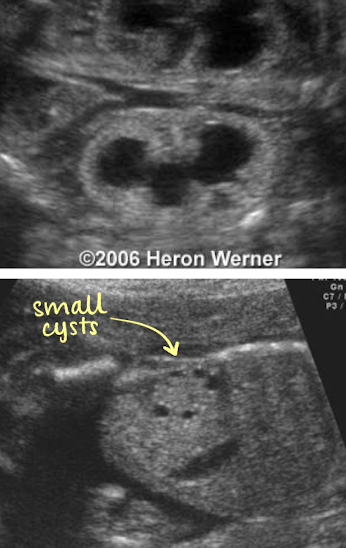
<ul><li><p>echogenic kidneys containing peripheral cortical cysts</p><ul><li><p>variable number/size of cysts</p></li></ul></li><li><p>renal size can be small or enlarged</p></li><li><p>if bilateral disease from bladder outlet obstruction</p><ul><li><p>thick-walled bladder; severe oligohydramnios </p></li></ul></li><li><p>early disease may show hydronephrosis/hydroureter</p></li></ul><p></p>
17
New cards

hydronephrosis

  • dilation of the renal pelvis in response to urine blockage

    • blockage in the ureter, bladder, or urethra

    • fluid-filled renal pelvis and calyces

  • MC fetal anomaly

  • unilateral or bilateral

  • associated with numerous conditions

  • prognosis depends on severity and underlying cause

18
New cards

SONO: hydronephrosis

  • dilated anechoic renal pelvis

  • measurement criteria:

    • measure renal pelvis in AP (TRV image, spine anterior)

    • <7mm=mild hydro

    • 7-10mm=moderate hydro

    • >15mm=severe hydro

**sweep up and down in TRV to prove its kidney
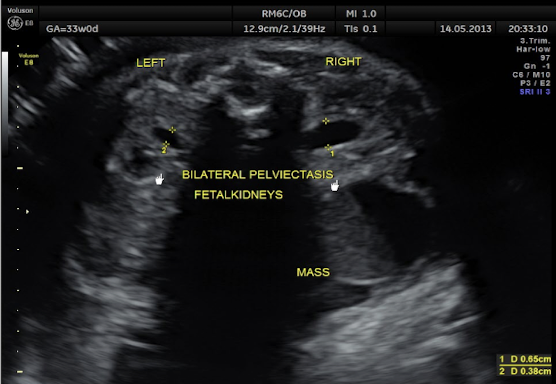
<ul><li><p>dilated anechoic renal pelvis</p></li><li><p>measurement criteria:</p><ul><li><p>measure renal pelvis in AP (TRV image, spine anterior)</p></li><li><p><span style="color: red;">&lt;7mm=mild hydro</span></p></li><li><p><span style="color: red;">7-10mm=moderate hydro</span></p></li><li><p><span style="color: red;">&gt;15mm=severe hydro</span></p></li></ul></li></ul><p>**sweep up and down in TRV to prove its kidney</p>
19
New cards

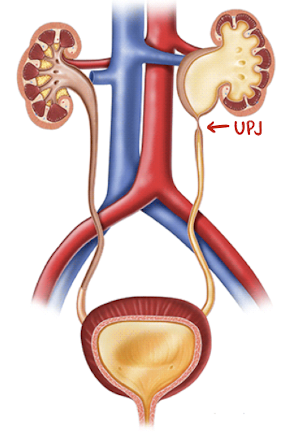
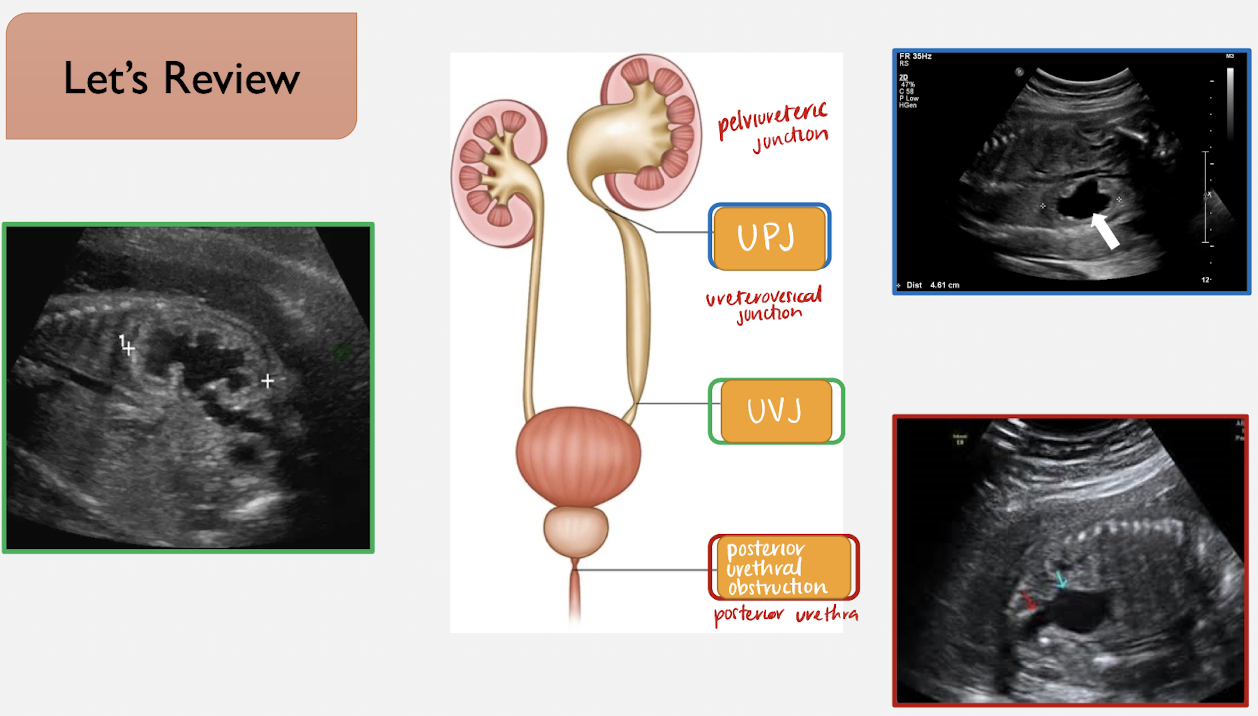
ureteropelvic junction obstruction (UPJ)

  • obstruction at the junction b/w renal pelvis and ureter

  • MC location for renal obstruction

  • MC cause of hydro in neonate

  • considered congenital hydronephrosis

  • MC male

  • usually unilateral

<ul><li><p>obstruction at the junction b/w renal pelvis and ureter</p></li><li><p>MC location for renal obstruction</p></li><li><p><span style="color: red;">MC cause of hydro in neonate</span></p></li><li><p>considered congenital hydronephrosis</p></li><li><p>MC male</p></li><li><p>usually unilateral</p></li></ul><p></p>
20
New cards

SONO: ureteropelvic junction obstruction (UPJ)

  • medial anechoic urine collection within renal pelvis that communicates with calyces (caliectasis)

  • moderate to severe hydronephrosis without hydroureter or bladder dilation

  • distended renal calyces connect with renal pelvis

  • enlarged kidney

  • if unilateral, bladder and AFI are normal

  • if bilateral, bladder will be empty and may have oligohydramnios
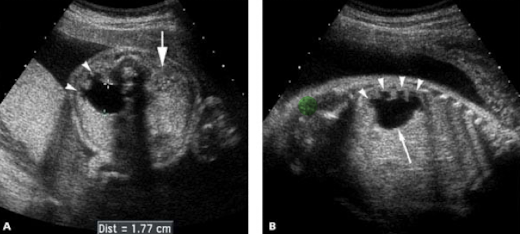
<ul><li><p>medial anechoic urine collection within renal pelvis that communicates with calyces (caliectasis)</p></li><li><p>moderate to severe hydronephrosis without hydroureter or bladder dilation</p></li><li><p>distended renal calyces connect with renal pelvis</p></li><li><p>enlarged kidney</p></li><li><p>if unilateral, bladder and AFI are normal</p></li><li><p>if bilateral, bladder will be empty and may have oligohydramnios </p></li></ul><p></p>
21
New cards

ureterovesical junction obstruction (UVJ)

  • obstruction at the junction of the ureter and bladder

  • hydronephrosis occurs secondary to obstruction

    • dilated ureter also forms: megaureter

  • possibly from ectopic ureterocele within bladder causing obstruction of upper pole of kidney

  • males?females (biological)

  • may be unilateral or bilateral

  • definitive diagnosis is made with VCUG or ceVUS
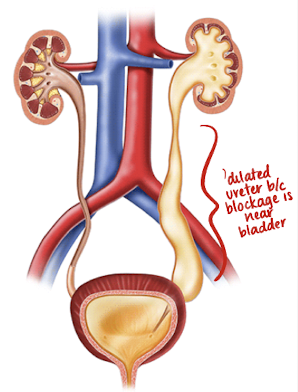
<ul><li><p>obstruction at the junction of the ureter and bladder</p></li><li><p>hydronephrosis occurs secondary to obstruction</p><ul><li><p>dilated ureter also forms: megaureter</p></li></ul></li><li><p>possibly from ectopic ureterocele within bladder causing obstruction of upper pole of kidney</p></li><li><p>males?females (biological)</p></li><li><p>may be unilateral or bilateral</p></li><li><p>definitive diagnosis is made with VCUG or ceVUS</p></li></ul><p></p>
22
New cards

SONO: ureterovesical junction obstruction (UVJ)

  • affected kidney will have dilation of renal pelvis and ureter

  • ureter will appear tortuous

  • if unilateral, bladder and AFI are normal

  • if bilateral, bladder will be empty and may have oligohydramnios
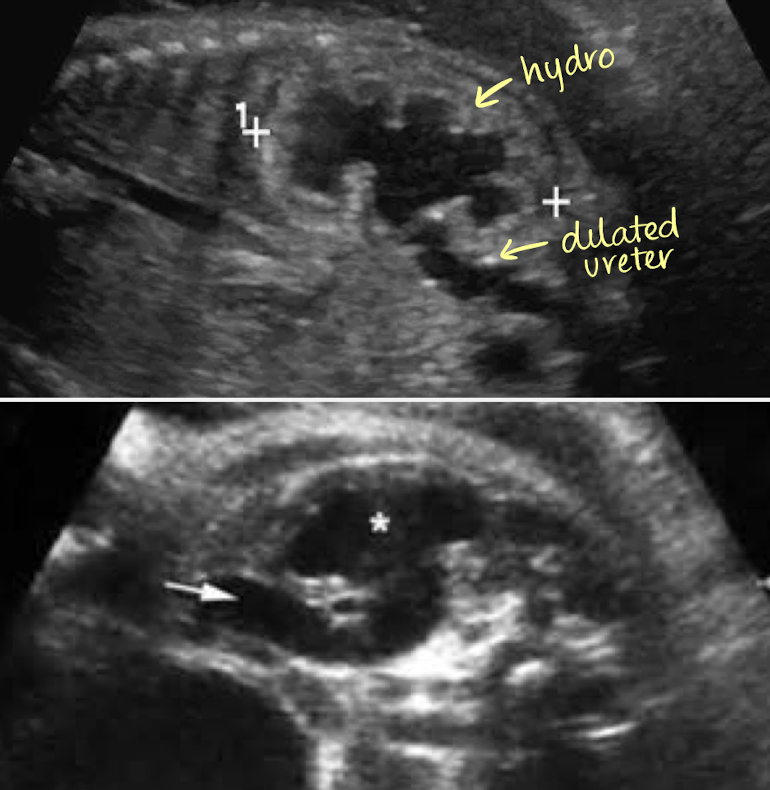
<ul><li><p>affected kidney will have dilation of renal pelvis and ureter</p></li><li><p>ureter will appear tortuous</p></li><li><p>if unilateral, bladder and AFI are normal</p></li><li><p>if bilateral, bladder will be empty and may have oligohydramnios </p></li></ul><p></p>
23
New cards

posterior urethral valve obstruction

  • obstruction produced by abnormal congenital membrane within posterior urethra

    • leads to hydronephrosis, hydroureter, bladder dilation, and dilated proximal urethra

  • degree of obstruction can be complete, partial, or intermittent

  • MC urethral anomaly

  • occurs only in males (biological)

  • prognosis depends on severity of obstruction
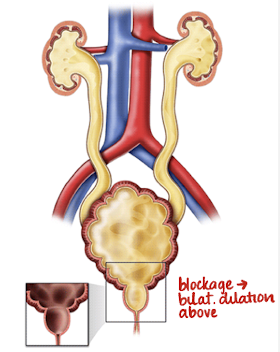
<ul><li><p>obstruction produced by abnormal congenital membrane within posterior urethra</p><ul><li><p>leads to hydronephrosis, hydroureter, bladder dilation, and dilated proximal urethra</p></li></ul></li><li><p>degree of obstruction can be complete, partial, or intermittent</p></li><li><p>MC urethral anomaly</p></li><li><p>occurs only in males (biological)</p></li><li><p>prognosis depends on severity of obstruction </p></li></ul><p></p>
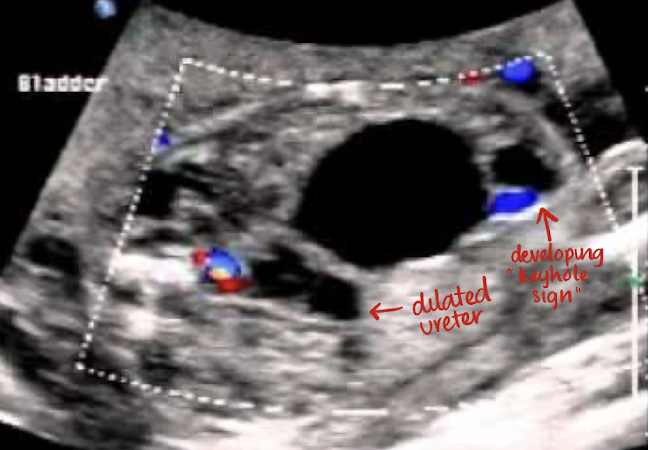
24
New cards

posterior urethral valve obstruction

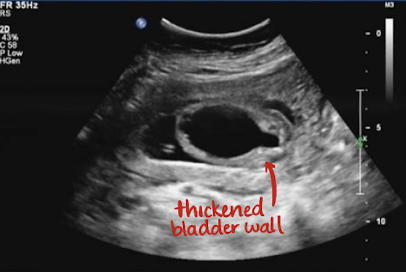
  • bladder wall severely thickened with dilated posterior urethra

  • “keyhole sign”

  • bladder wall thickening

  • marked bilateral hydronephrosis and dilated tortuous ureters

  • occurs only in male fetuses

  • diminishing AFI

<ul><li><p>bladder wall severely thickened with dilated posterior urethra</p></li><li><p><span style="color: red;">“keyhole sign”</span></p></li><li><p>bladder wall thickening</p></li><li><p>marked bilateral hydronephrosis and dilated tortuous ureters</p></li><li><p>occurs only in male fetuses</p></li><li><p>diminishing AFI</p></li></ul><p></p>
25
New cards
<p>what do you see?</p>

what do you see?

knowt flashcard image
26
New cards
term image
27
New cards

prune belly syndrome

  • aka Eagle-Barrett Syndrome

  • rare congenital disorder characterized by:

    • dilation of collecting system, cryptorchidism, and agenesis/hypoplasia of abdominal wall muscles

  • seen mostly in male fetuses

  • associated with megacystitis and posterior urethral valves

  • prognosis depends on severity and renal function
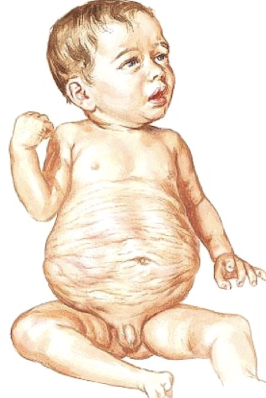
<ul><li><p>aka <span style="color: red;">Eagle-Barrett Syndrome</span></p></li><li><p>rare congenital disorder characterized by:</p><ul><li><p>dilation of collecting system, cryptorchidism, and <span style="color: red;">agenesis/hypoplasia of abdominal wall muscles</span></p></li></ul></li><li><p>seen mostly in male fetuses</p></li><li><p>associated with megacystitis and posterior urethral valves</p></li><li><p>prognosis depends on severity and renal function </p></li></ul><p></p>
28
New cards

SONO: prune belly syndrome

  • hypoplastic/absent anterior abdominal muscles

  • protrusion of anterior abdominal wall

  • massively distended bladder

  • dilated, tortuous ureters

  • cryptorchidism

  • dilated prostatic urethra

  • kidneys may be normal, hydronephrotic, or dysplastic
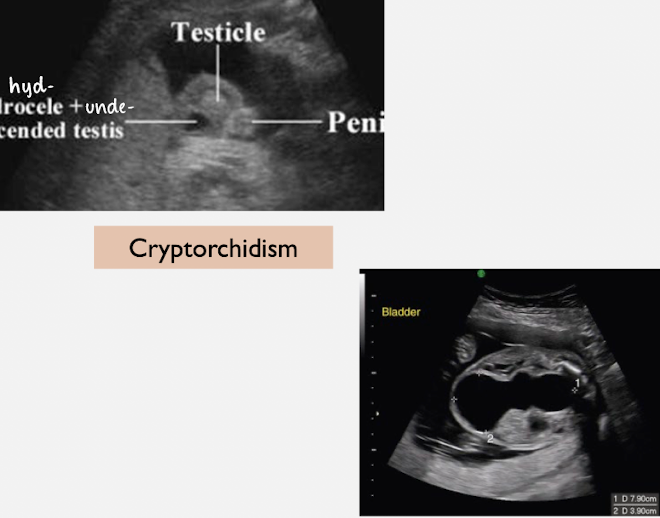
<ul><li><p>hypoplastic/absent anterior abdominal muscles</p></li><li><p>protrusion of anterior abdominal wall</p></li><li><p>massively distended bladder</p></li><li><p>dilated, tortuous ureters</p></li><li><p>cryptorchidism</p></li><li><p>dilated prostatic urethra</p></li><li><p>kidneys may be normal, hydronephrotic, or dysplastic </p></li></ul><p></p>
29
New cards

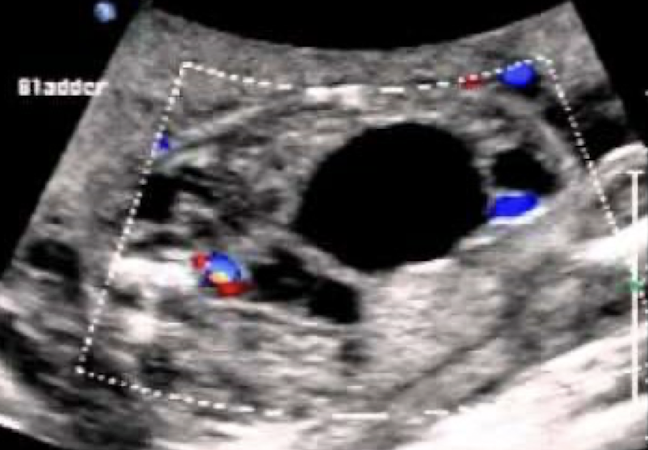
ureterocele

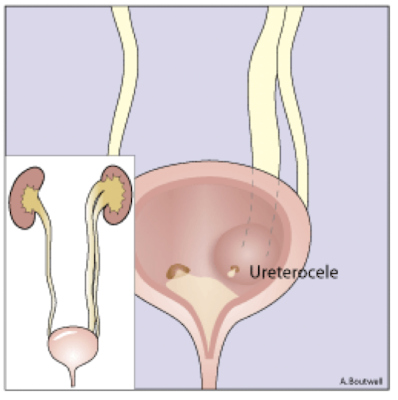
  • cystic dilation of intravesical (bladder) segment of distal ureter

  • often found in duplex collecting systems

    • ureter attached to ureterocele in duplex collecting system drains upper pole of kidney as it enters bladder in more medial and caudal position (ectopic ureter)

  • females are more likely to present with ureteroceles

  • unilateral or bilateral

<ul><li><p>cystic dilation of intravesical (bladder) segment of distal ureter</p></li><li><p>often found in duplex collecting systems</p><ul><li><p>ureter attached to ureterocele in duplex collecting system drains upper pole of kidney as it enters bladder in more medial and caudal position (ectopic ureter)</p></li></ul></li><li><p>females are more likely to present with ureteroceles</p></li><li><p>unilateral or bilateral</p></li></ul><p></p>
30
New cards

SONO: ureterocele

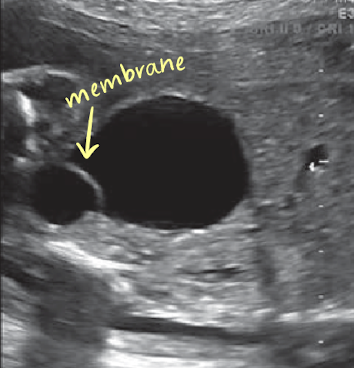
  • best visualized when the bladder is somewhat full

  • anechoic cystic surrounding by a thin echogenic membrane within the bladder

  • if bladder empty, ureterocele may be mistaken for small bladder

  • if bladder too full, ureterocele may be compressed

  • bladder should be evaluated multiple times through examination

  • possible renal duplication

<ul><li><p>best visualized when the bladder is somewhat full</p></li><li><p>anechoic cystic surrounding by a thin echogenic membrane within the bladder</p></li><li><p>if bladder empty, ureterocele may be mistaken for small bladder</p></li><li><p>if bladder too full, ureterocele may be compressed</p></li><li><p>bladder should be evaluated multiple times through examination</p></li><li><p>possible renal duplication </p></li></ul><p></p>
31
New cards

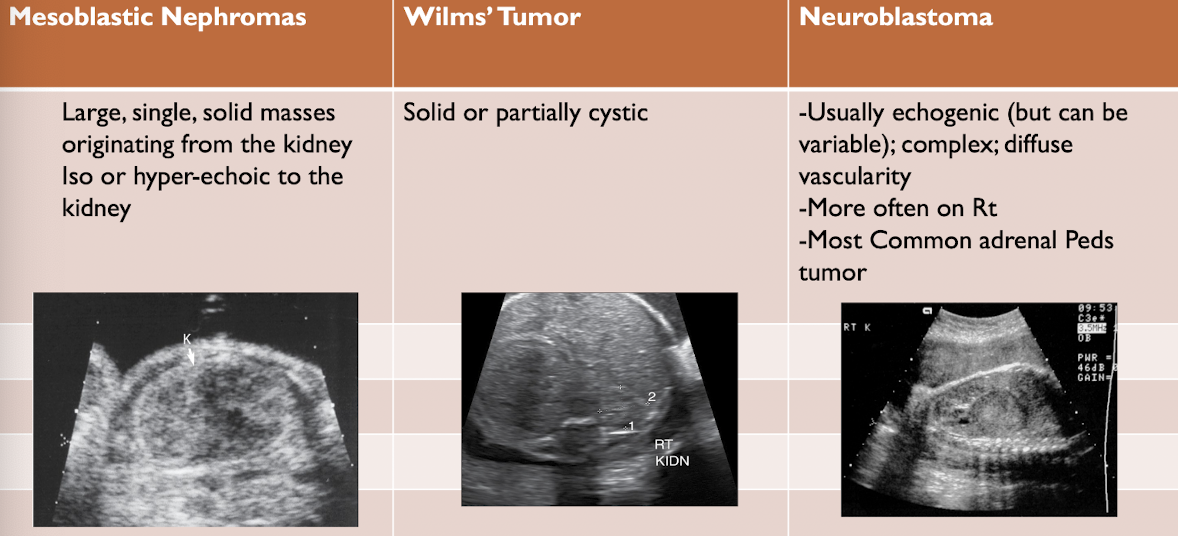
fetal renal tumors

  • tumors of the fetal kidneys are rare

  • MC fetal renal tumor is mesoblastic nephroma (hamartoma)

    • benign tumor

    • composed of oddly arranged indigenous tissue

  • Wilms’ tumor is malignant renal tumor; MC in females

  • neuroblastoma is a malignant adrenal tumor
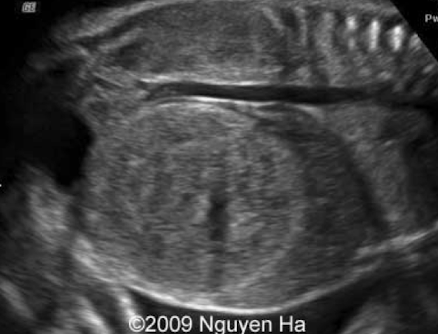
<ul><li><p>tumors of the fetal kidneys are rare</p></li><li><p><span style="color: red;">MC</span> fetal renal tumor is <span style="color: red;">mesoblastic nephroma (hamartoma)</span></p><ul><li><p>benign tumor</p></li><li><p>composed of oddly arranged indigenous tissue</p></li></ul></li><li><p><span style="color: red;">Wilms’ tumor</span> is malignant <span style="color: red;">renal </span>tumor; MC in females</p></li><li><p><span style="color: red;">neuroblastoma</span> is a malignant <span style="color: red;">adrenal</span> tumor</p></li></ul><p></p>
32
New cards
<p>renal tumors</p>

renal tumors

33
New cards

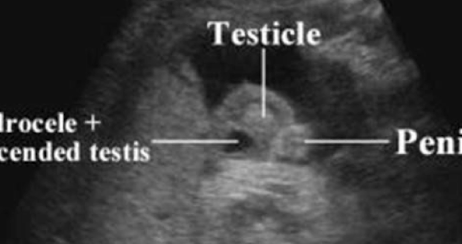
hydrocele

  • accumulation of serous fluid surrounding testicle, resulting from communication with peritoneal cavity

  • SONO: simple or complex

<ul><li><p>accumulation of serous fluid surrounding testicle, resulting from communication with peritoneal cavity</p></li><li><p>SONO: simple or complex</p></li></ul><p></p>
34
New cards

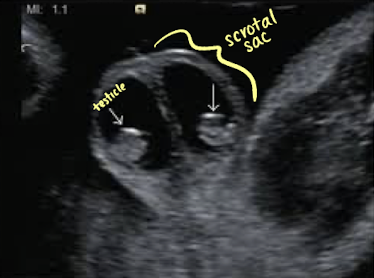
cryptorchidism (undescended testicle)

  • if descent interrupted or stopped testes will remain located within inguinal canal

  • referred to as undescended testes, or cryptorchidism

  • risk of torsion and development of cancer

  • scrotal sac with no testicular tissue

  • SONO: anechoic fluid seen in scrotum

<ul><li><p>if descent interrupted or stopped testes will remain located within inguinal canal</p></li><li><p>referred to as undescended testes, or cryptorchidism</p></li><li><p>risk of torsion and development of cancer</p></li><li><p>scrotal sac with no testicular tissue</p></li><li><p>SONO: anechoic fluid seen in scrotum</p></li></ul><p></p>
35
New cards

hydrometrocolpos

  • obstruction of uterus and vagina resulting in collections of fluid (hydrometrocolpos)

  • from atresia/blockage of vagina or cervix, imperforate hymen, or abnormal membranes within vaginal lumen

  • masses may be predominantly cystic, may contain midlevel echoes, or may be fluid-debris levels

  • SONO: hypoechoic “cyst-like” ovoid mass posterior to bladder in area of uterus
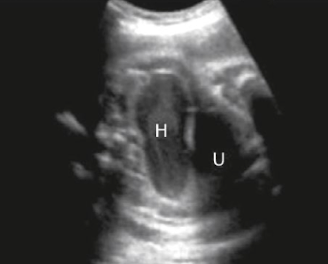
<ul><li><p>obstruction of uterus and vagina resulting in collections of fluid (hydrometrocolpos)</p></li><li><p>from atresia/blockage of vagina or cervix, imperforate hymen, or abnormal membranes within vaginal lumen</p></li><li><p>masses may be predominantly cystic, may contain midlevel echoes, or may be fluid-debris levels</p></li><li><p>SONO: hypoechoic “cyst-like” ovoid mass posterior to bladder in area of uterus</p></li></ul><p></p>
36
New cards

ovarian cyst

  • ovarian cyst that results from maternal hormonal stimulation

  • usually benign

  • typically represent normal functional ovarian cysts

  • MC cystic mass in female fetuses

  • can be unilateral or bilateral

  • most regress in utero or postnatally

  • have the potential to lead to ovarian torsion or rupture
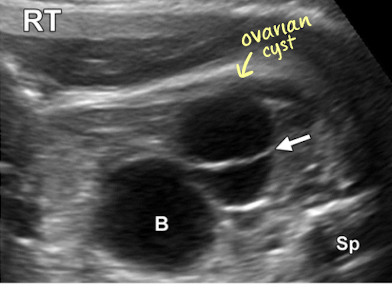
<ul><li><p>ovarian cyst that results from maternal hormonal stimulation</p></li><li><p>usually benign</p></li><li><p>typically represent normal functional ovarian cysts</p></li><li><p>MC cystic mass in female fetuses</p></li><li><p>can be unilateral or bilateral</p></li><li><p>most regress in utero or postnatally</p></li><li><p>have the potential to lead to ovarian torsion or rupture </p></li></ul><p></p>