Era 2, 1450 - 1750 CE: The Safavid Empire + Tokugawa Shogunate in Japan (Quizlet #14)
 Call Kai
 Learn
Learn Practice Test
 Spaced Repetition
 Match
Match Flashcards
 Knowt Play
1/28

There's no tags or description
Looks like no tags are added yet.
Name | Mastery | Learn | Test | Matching | Spaced | Call with Kai | Chat |
|---|
No analytics yet
Send a link to your students to track their progress
29 Terms
1. Era 2 Land- Based Empires, 1450 CE - 1750
During Era 2 1450- 1750 CE, there were several important Land-Based Empires. These empires did not include overseas colonies, unlike the "Maritime" empires that the Europeans had that included territory overseas
The Land Based Empires you are required to know for Era 2, 1450 CE - 1750 CE:
-The Manchu Qing Empire in China
-The Ottoman Empire in the Middle East/North Africa/Southern Europe
-The Safavid Empire in the Middle East
-The Mughal Empire in South Asia (India)
-The Kingdom of Kongo in Sub-Saharan Africa
-These empires all had different techniques of conquering, governing, and taxing, all of which will be covered in Quizlet and you need to know them like the back of your hand!
Twelver Shiism
-A belief that there were 12 infallible imams (religious leaders) after Muhammad and the 12th went into hiding and would return to take power and spread the true religion.
-This was the major religion promoted by the Safavid Empire
3. The Safavid Empire 1501 - 1736 CE
-Land-based empire in the Middle East, present day Iran, Era 2, 1450 - 1750 CE
-Founded by Shah Ishmail
-Islamic Empire. There are two types of Islam we will study--Sunni and Shiite. The Safavids were a Shiite Islamic Empire
-The specific branch of Islam they followed was called Twelver Shiism, named after the 12 most important Imams (religious leaders) that came after the Prophet Muhammad
-They had a very serious and intense rivalry with the neighboring Ottomans, who were Sunni Muslim. They lost a huge battle to them at the Battle of Chaldiran
-Their most famous and powerful leader was Shah Abbas the Great, who restored their power after the defeat at Chaldiran, expanded the empire, encouraged more trade, and modernized the military
4. Shi'a Islam
-As Islam started to develop, it started to split into two major groups
-The second major group was called the ______________ Muslims; they believed that the only people qualified to lead Islam were the direct descendants of Muhammed's son-in-law, Ali
-The Safavids were Shi'a Muslims
-They had a rivalry and fought against the Ottomans and the Mughals, who were Sunni Muslims (the other side)
-There are lots of tension between these two groups!
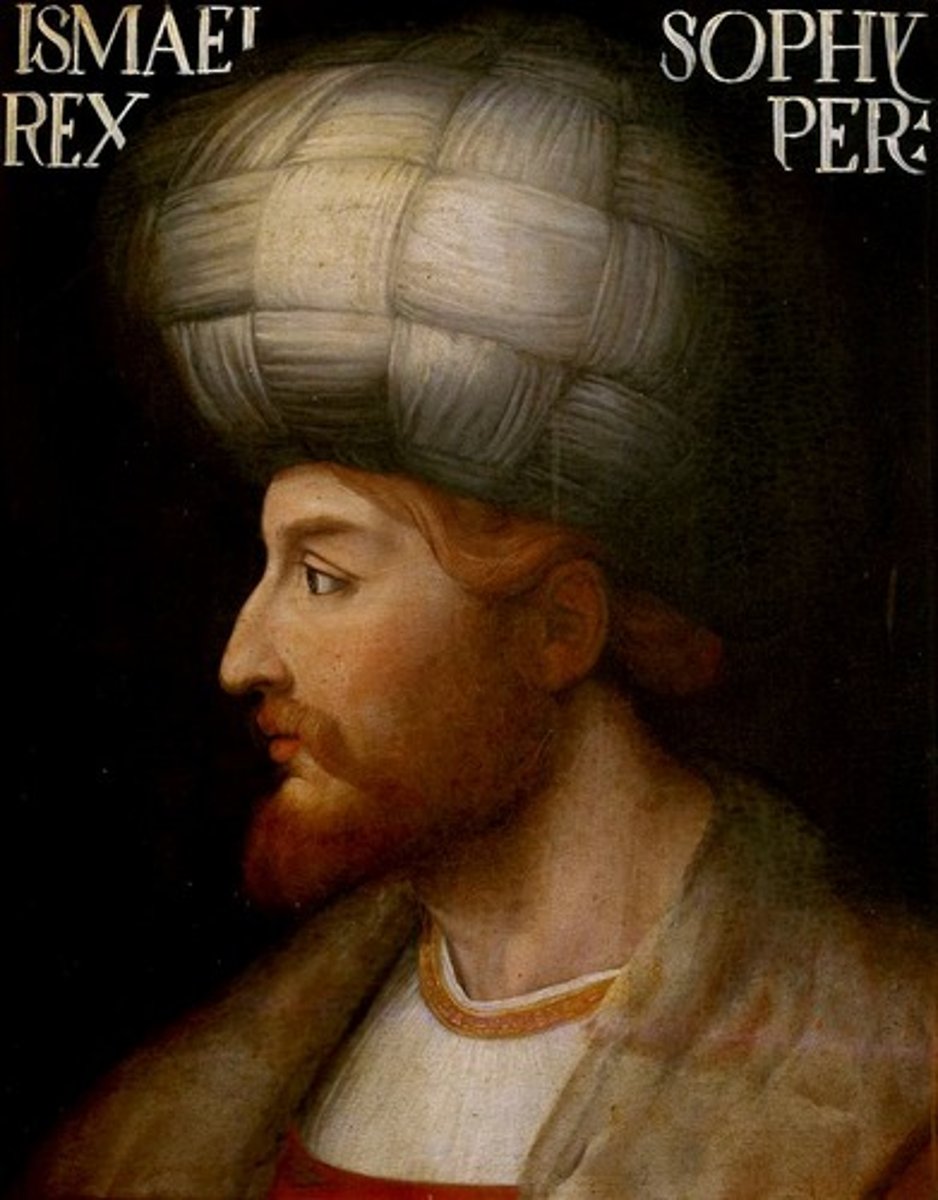
5. Shah Ismail (r. 1501-1524)
-Founder of Safavid Empire in 1501, ruled until 1524; started a rebellion at age 14 and led his Persian army to great victories to establish the Safavid Empire
-made Twelver Shiism the official religion of the empire and imposed it upon his Sunni subjects
-Founded the beautiful cultural center of Tabriz and established it as his first capital city
-his most devoted followers became known as the "Qizilbash," or the "red heads," for the red hats they wore as a sign they followed him; they were fanatically loyal to Ismail and believed he could make them invincible
-Hade a huge rivalry with the Sunni Ottoman Empire, and lost the Battle of Chaldiran to the Sunni Ottomans, as he and his followers refused to embrace gunpowder technology, believing it was "unmanly"; however, the empire survived the defeat and would last more than 200 years
6. Tabriz
-First capital city of the Safavid Empire, in modern day Iran, in the Middle East; established as Capital City by Shah Ismail
-Described by Marco Polo as "a great city surrounded by beautiful and pleasant gardens," known for its beauty and culture
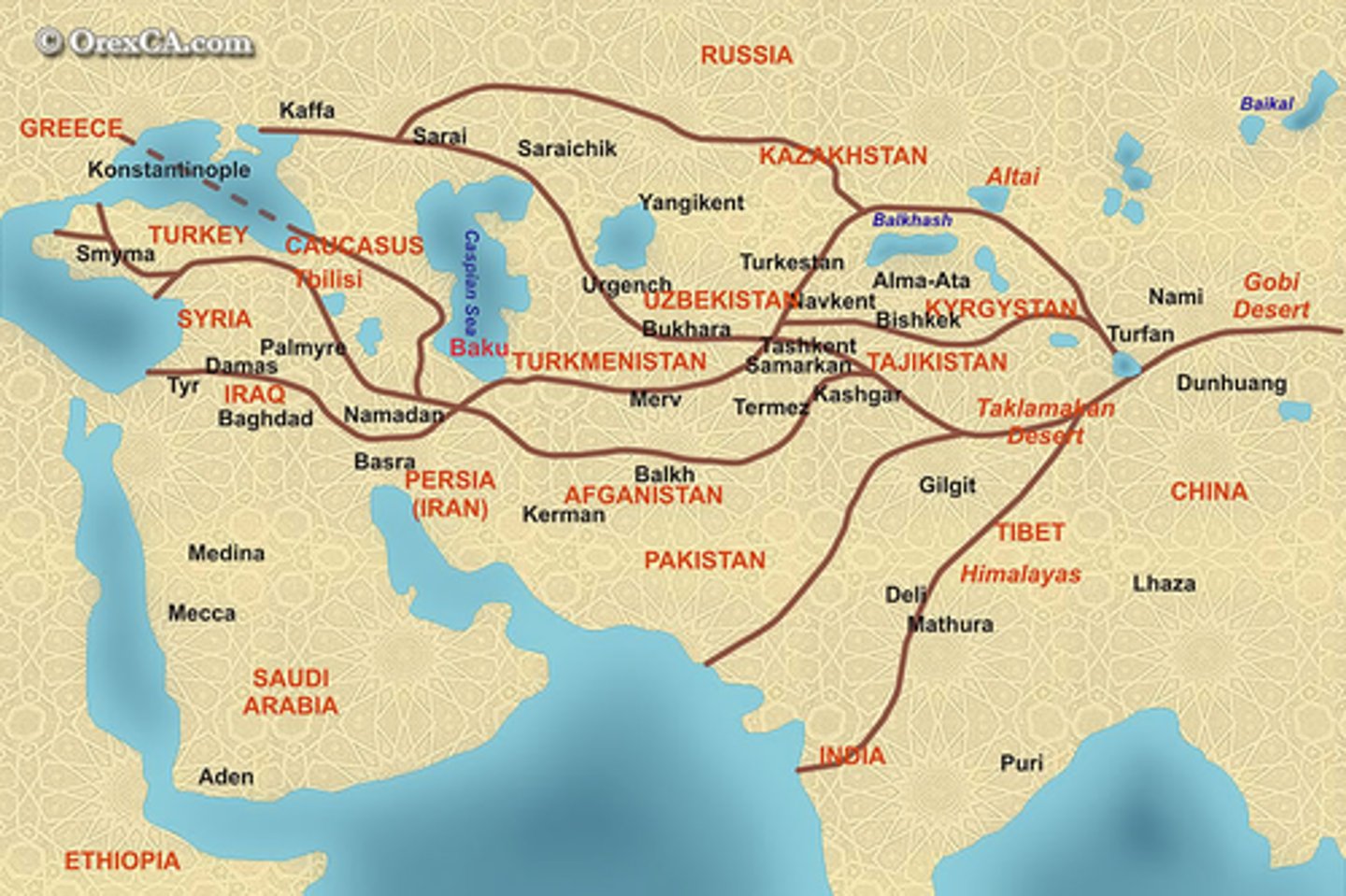
-Huge trade center one of the Western ends of the Silk Roads; would have silk, spices, porcelain, diamonds coming from Asia; wool, olive oil, wines, exotic animals, ivory, and more coming from Europe and Africa
-Temporarily taken over by the Sunni Ottomans after they defeated the Shi'ite Safavids at the Battle of Chaldiran
-Shah Abbas the Great later established the capital at Isfahan, so it lost its status as capital of the Safavid Empire
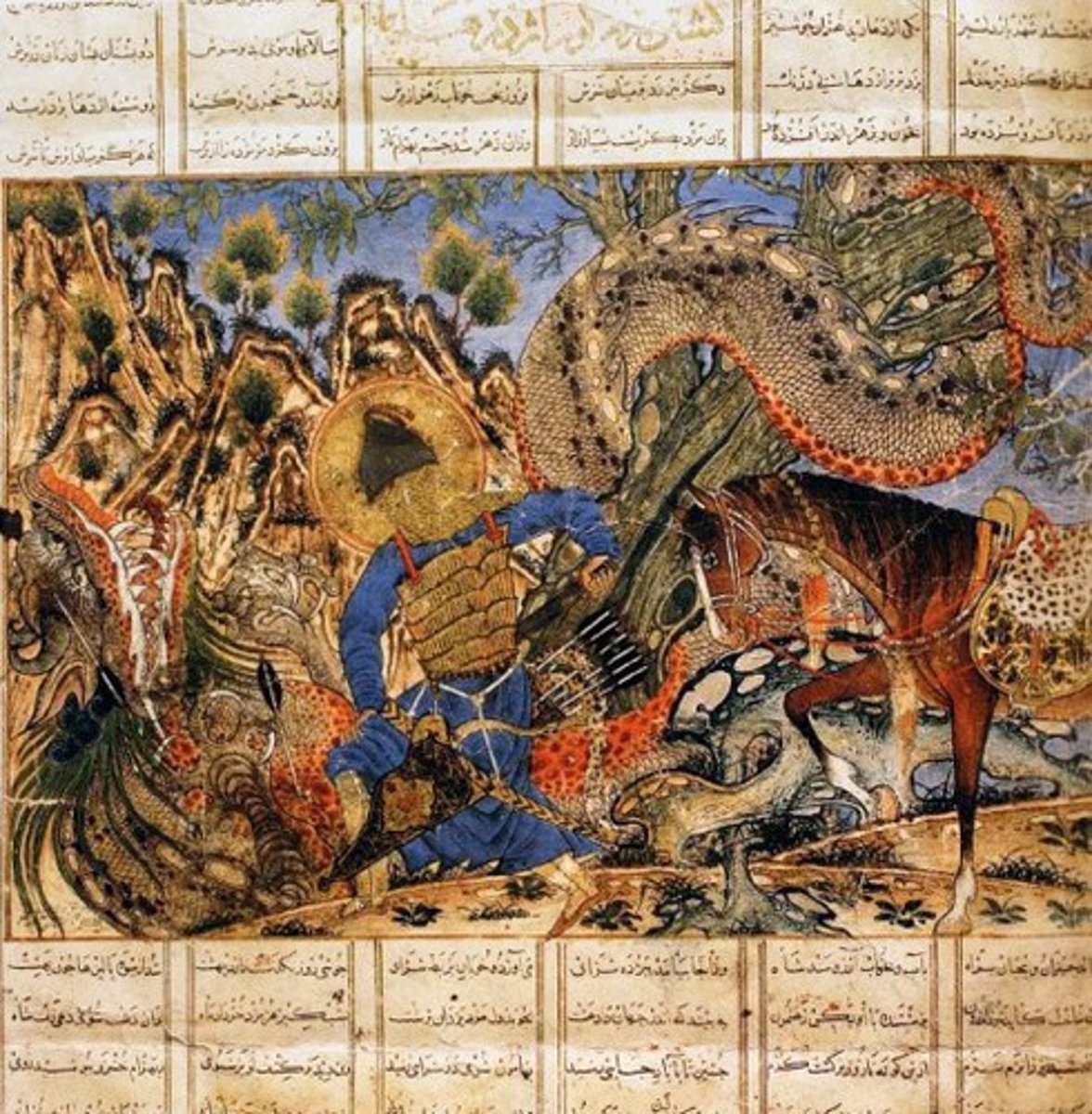
7. Safavid Governing Style and Bureaucracy
-During Era 2, 1450-1750 CE, the Land Based Empires and Maritime empires had various techniques and political styles they used to govern their empires
-The Safavids, along with the other Islamic Empires, the Mughals and the Ottomans, used many of the same ruling techniques as the Mongols before them.
-The first thing they did was use a strong military to conquer and enforce their policies
-They also relied heavily on a class of BUREAUCRATS, or trained scholars who were government officials, that would run the government on a daily basis. They would collect taxes, run government offices, run the courts, etc.
-The Shah or Emperor had absolute, total authority. Their success and respect was based on how strong they were militarily, and how respected they were with regard to his devotion to Islam. They were also judged on how much they spread Islam
-In order to make themselves more popular, and to leave a legacy behind, and to make their rule seem more legitimate, many Safavid rulers promoted the arts and sponsored beautiful architecture projects. This made them seem more powerful, increased their popularity, and made their rule seem justified.
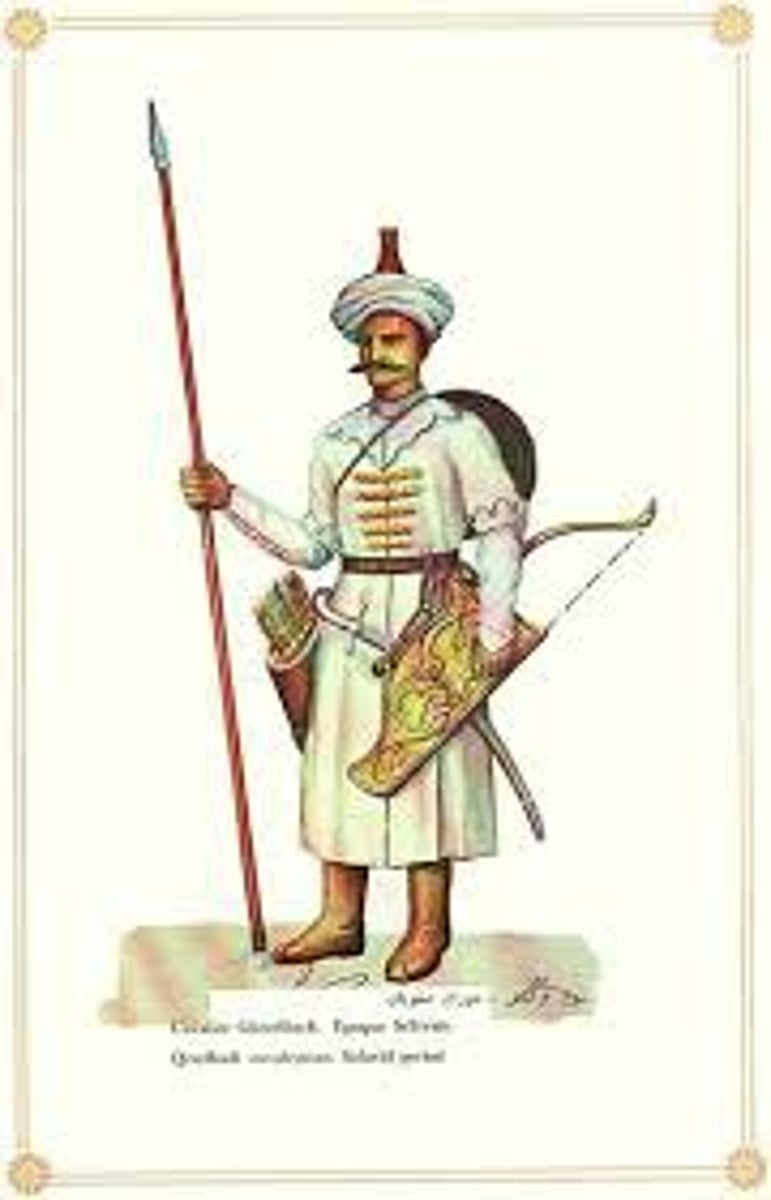
8. Qizilbash
-These were Shi'ite Safavid soldiers who were fanatically loyal to Shah Ismail and the Safavid Empire
-They were called the ______________________________ because of the distinctive red hats they wore; the hats had 12-piece red hats they wore; the 12 pieces referred to the 12 Imams of Twelver Shiism
-They were a militant bunch that helped Shah Ismail conquer vast amounts of territory and start the Safavid Empire
-They suffered a major defeat to the Sunni Ottomans at the Battle of Chaldiran. Believing gunpowder to be "unmanly," and convinced that Shah Ismail could make them invincible, they charged the Ottomans who had guns, and were severely defeated
-The ______________________________ would recover from that defeat and return to glory under the rule of Shah Abbas the Great
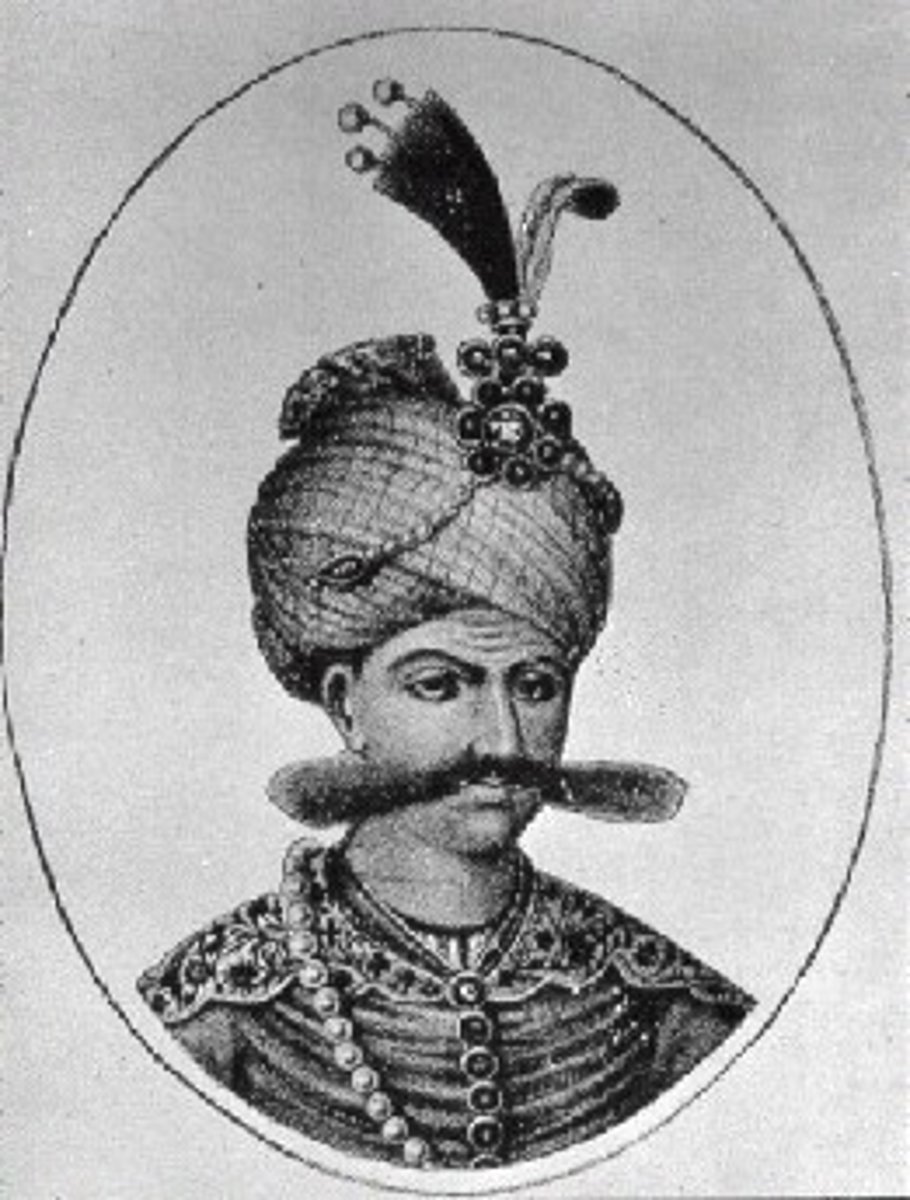
9. Shah Abbas the Great (1588-1629)
-This was the most powerful and famous Safavid ruler, who ruled the Safavids at the peak of their power
-After the Battle of Chaldiran, the Safavids started to decline. Shah Abbas brought them back to greatness
-He increased the use of Gunpowder into his military and allied with European powers to defeat the Ottomans and kick the Portuguese out of the Persian Gulf. With his newly strengthened forces, he led the Safavids to numerous victories, expanding the size of the Safavid Empire
-He also moved the capital city to Isfahan, and made it into a beautiful "jewel" city of the Middle East, while also transforming it into a center for trade with East Asia, South Asia, Europe, and Africa.
-He tolerated non-Muslims in the empire to some extent, bringing Armenian Christians to Isfahan to help with the Silk Trade, and allowing the British East India Company and Dutch East India Company (VOC) to establish trade at Isfahan
10. Isfahan
-The "Crown Jewel" of the Safavid Empire, Shah Abbas the great moved the capital here, so Tabriz was no longer the capital
-Shah Abbas was determined to make this into the "Queen of the Persian Cities." He Made it into one of the most precious jewels of urban architecture in Eurasia
-There were magnificent palaces, beautiful mosques, shaded avenues, and magnificent bridges that made this city stunning and beautiful
-Building this beautiful city made Shah Abbas more popular and made his rule seem more justified and legitimate
-Abbas also made it a vibrant, energetic center for trade! He extended trading privileges to the Europeans, bringing Armenian Christians to_____________________ in order help with the Silk Trade, and allowing the British East India Company and Dutch East India Company (VOC) to establish trade there; as a result, trade flourished in this city
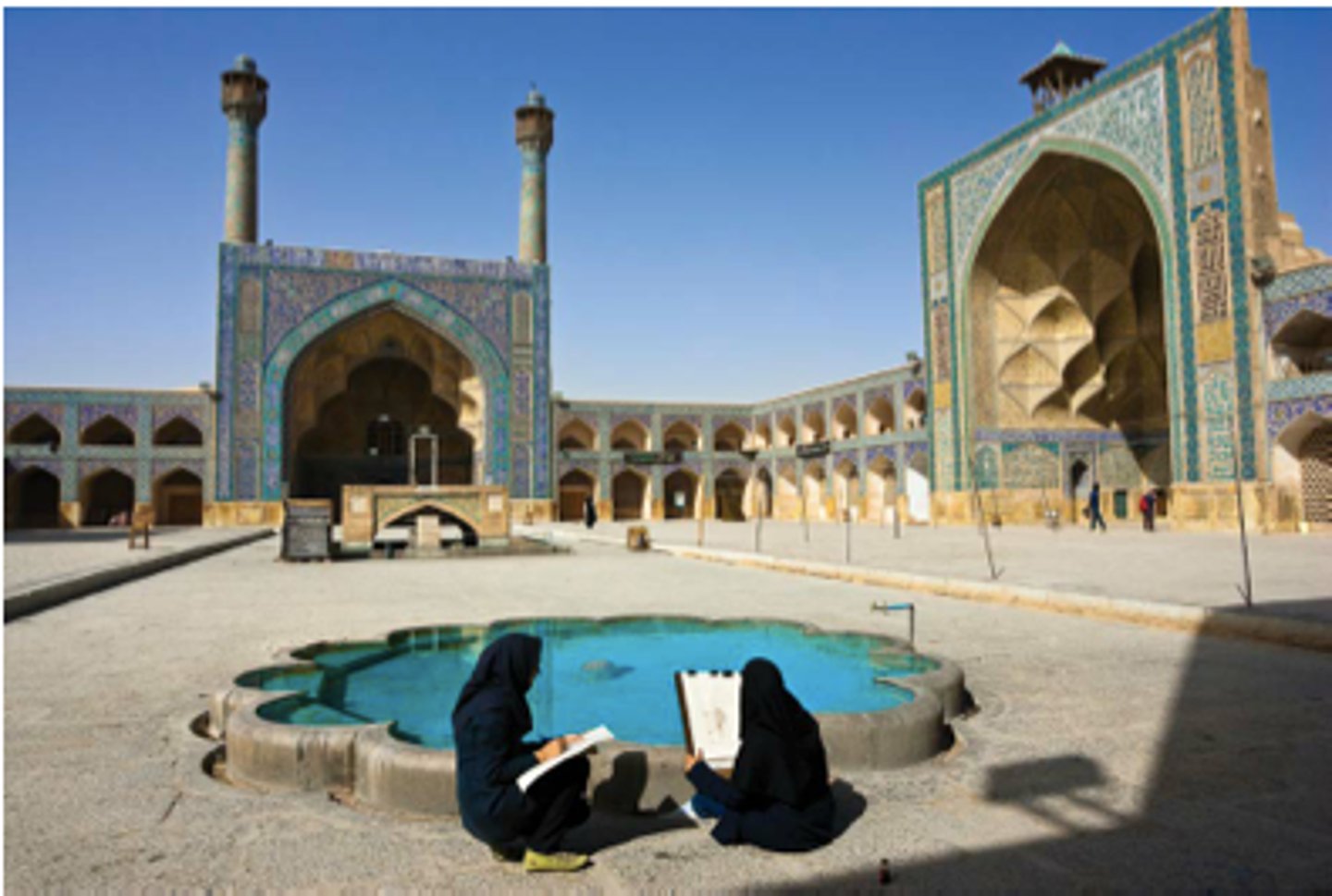
11. Ghilman
-This was similar to the "Devshirme" process in the Ottoman Empire
-The Safavids would conquer people that were non-Muslim
-Many of the young boys and men would be made into enslaved persons [slaves] for the empire. These enslaved persons [slaves] would then be turned into full-time soldiers or bureaucrats (people trained to run the government)
-Shah Abbas used this system to great effect and the __________________ were trained with gunpowder and became his most effective soldiers, helping him to defeat the Ottomans and the Portuguese in battle
-They became more important than the Qizilbash in the army
-Even though they were slave soldiers, they became a powerful group and they could become "king-makers," meaning that if you got them on your side, they could help you seize power
![<p>-This was similar to the "Devshirme" process in the Ottoman Empire</p><p>-The Safavids would conquer people that were non-Muslim</p><p>-Many of the young boys and men would be made into enslaved persons [slaves] for the empire. These enslaved persons [slaves] would then be turned into full-time soldiers or bureaucrats (people trained to run the government)</p><p>-Shah Abbas used this system to great effect and the __________________ were trained with gunpowder and became his most effective soldiers, helping him to defeat the Ottomans and the Portuguese in battle</p><p>-They became more important than the Qizilbash in the army</p><p>-Even though they were slave soldiers, they became a powerful group and they could become "king-makers," meaning that if you got them on your side, they could help you seize power</p>](https://knowt-user-attachments.s3.amazonaws.com/7f714ce7-da84-40ab-baab-8fd9a862aebc.jpg)
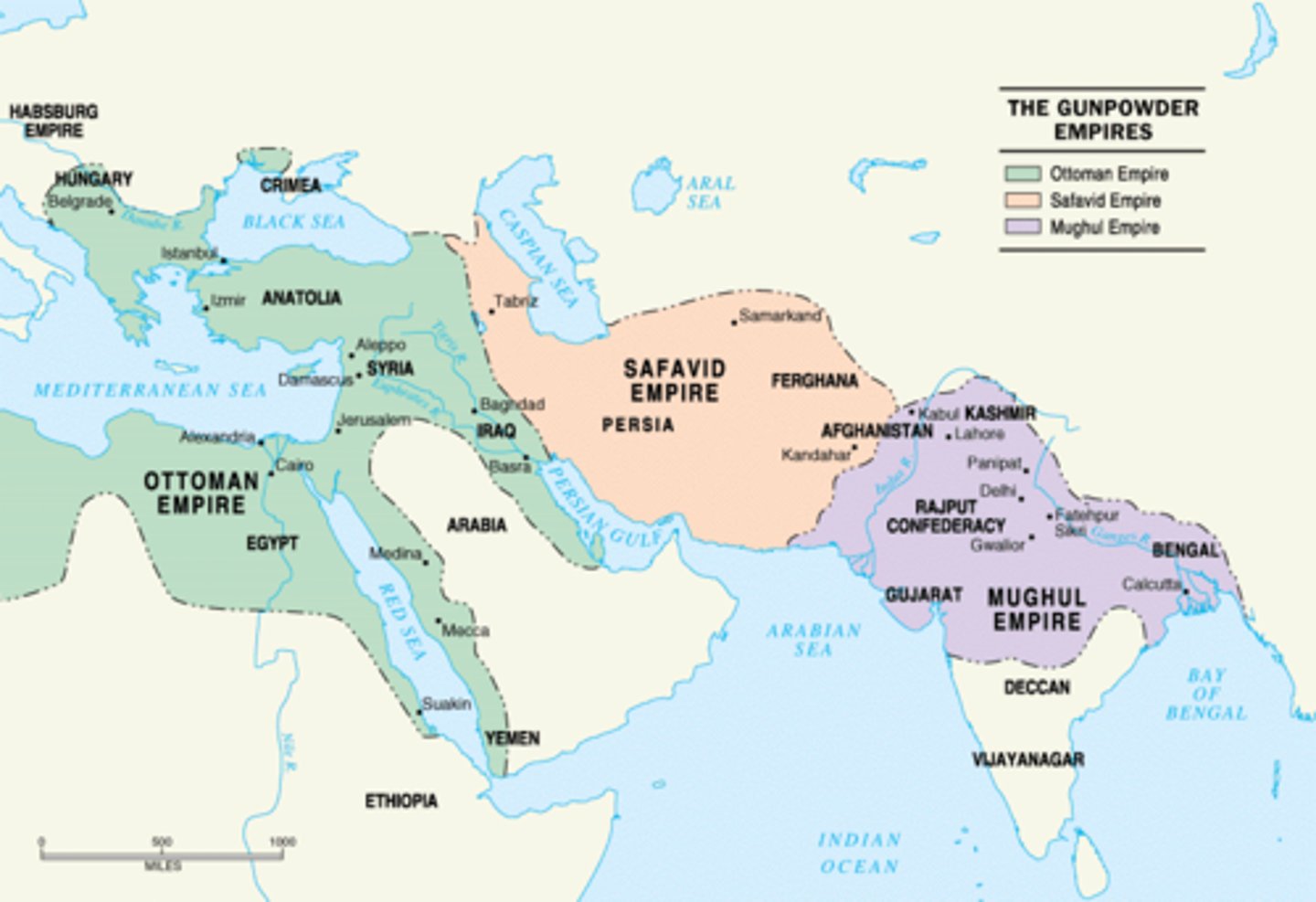
12. Mughal - Safavid War 1649 - 1653 CE
-The Mughals were a powerful empire in India, they were Sunni Muslim, and they fought a major war against the Safavids, who were Shiite Muslim
-This war was fought in modern day Afghanistan
-While the Mughals were distracted fighting someone else, the Safavids seized the opportunity and took one of the Mughal cities/fortresses in Afghanistan, named Kandahar
-When the Mughals realized what happened, they fought a war to attempt to regain the city and the territory they had lost.
-The Safavids had revitalized (rebuilt) their military and modernized with guns, so the Mughals were unable to gain the territory back
-As a result the Shiite Safavids emerged victorious from the conflict, and the Sunni Mughals were defeated
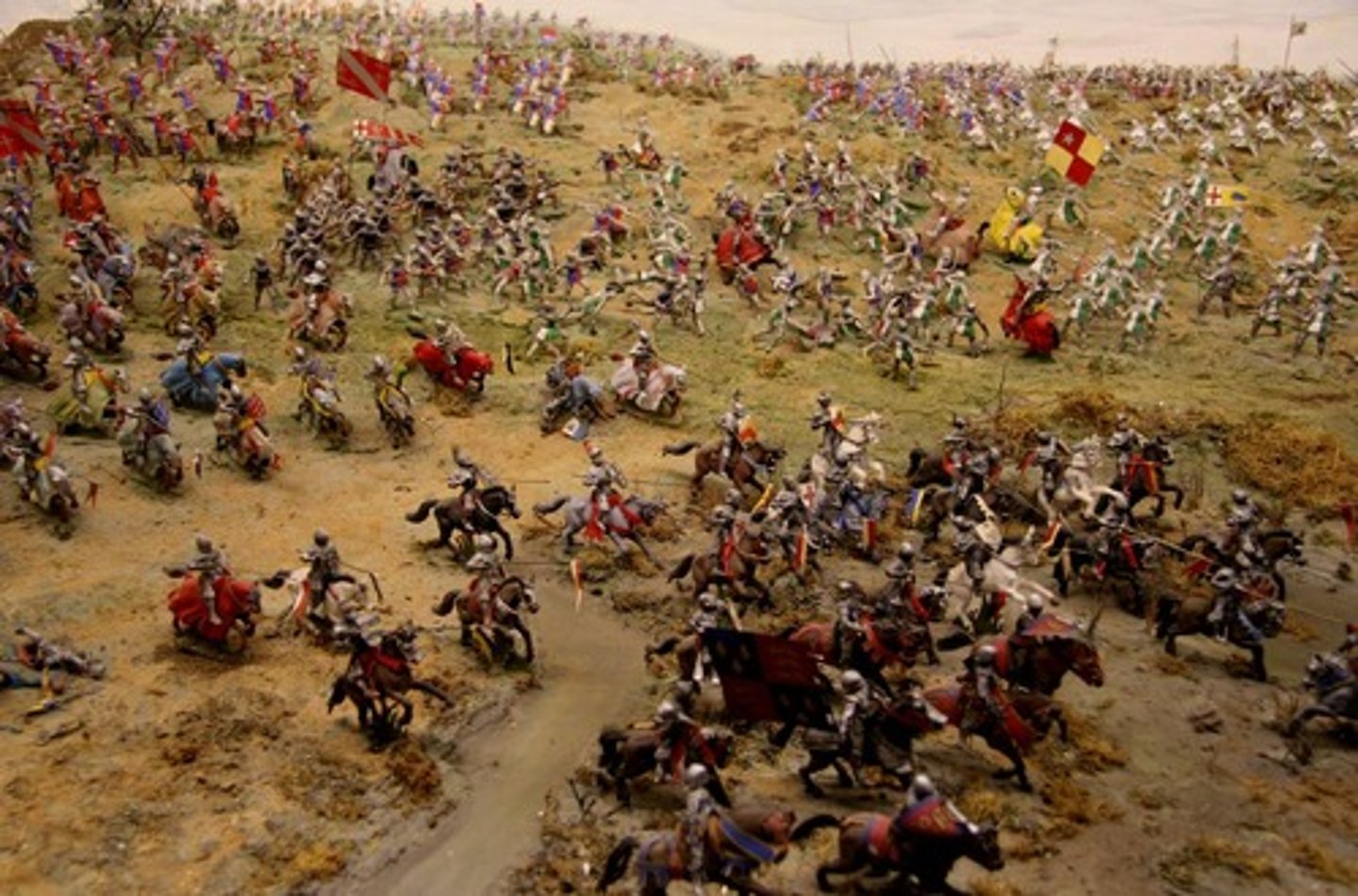
13. Battle of Chaldiran 1514
-This was a massive battle between the Ottomans and the Safavids
-The Ottoman Janissaries were armed with gunpowder and firearms; they hid behind a wooden barrier of carts
-The Safavids believed that firearms were "unmanly" so they didn't use them; they bravely charged at the Ottoman Janissaries
-The Shi'a Safavids were slaughtered and the Sunni Ottomans won the day; this was a huge triumph for gunpowder and modern weaponry
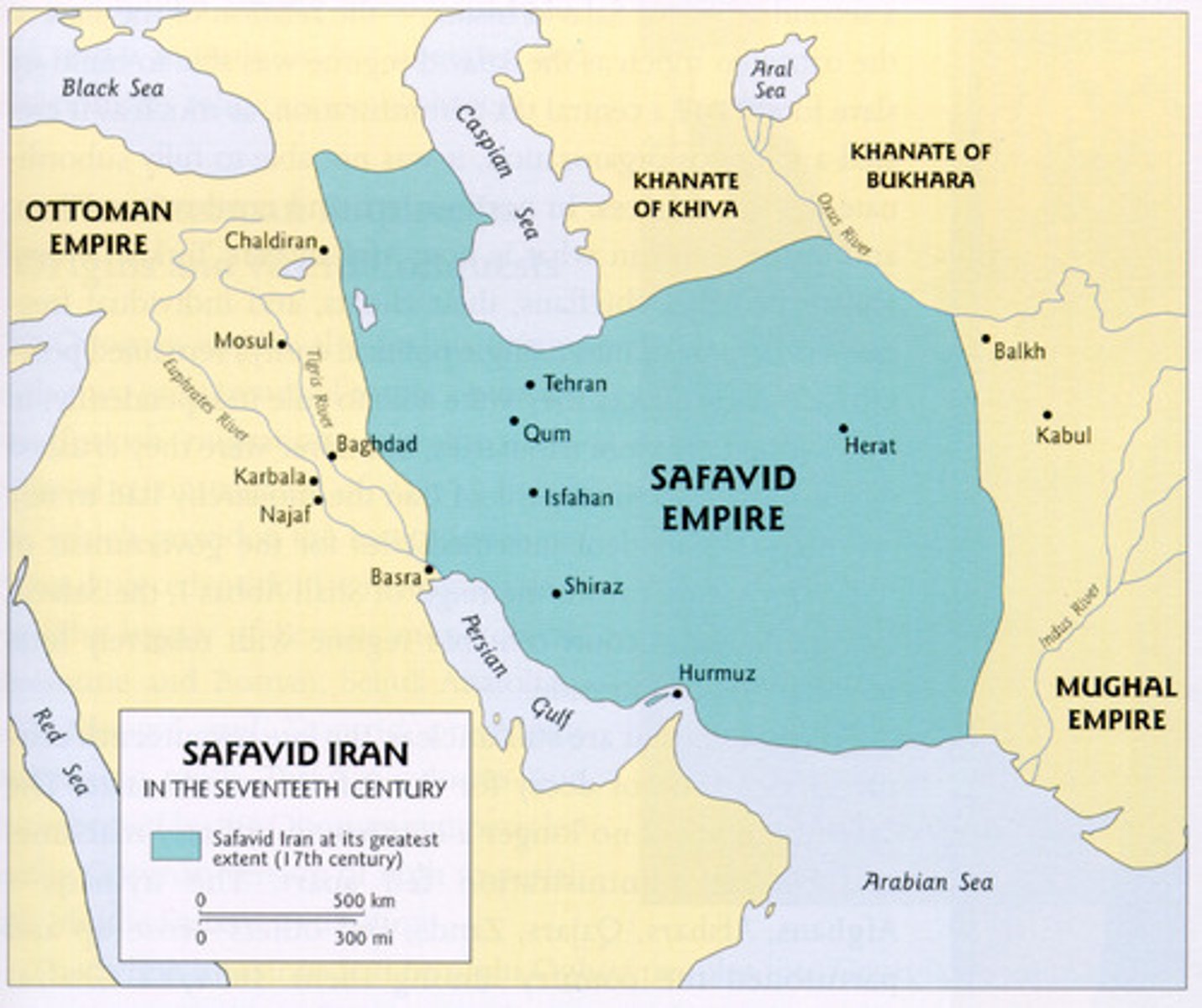
14. Ottoman-Safavid Conflict 1500's
-There was a neighboring Islamic empire that the Shiite Safavids constantly fought with and battled with
-This empire was a Sunni Islamic Empire, the mighty Ottoman Empire in the Middle East/North Africa
-These two empires fought numerous times, with the Ottomans using Gunpowder to great effect and winning a huge battle at the Battle of Chaldiran
-The Safavids recovered from the battle kept fighting the Ottomans for over a hundred more years
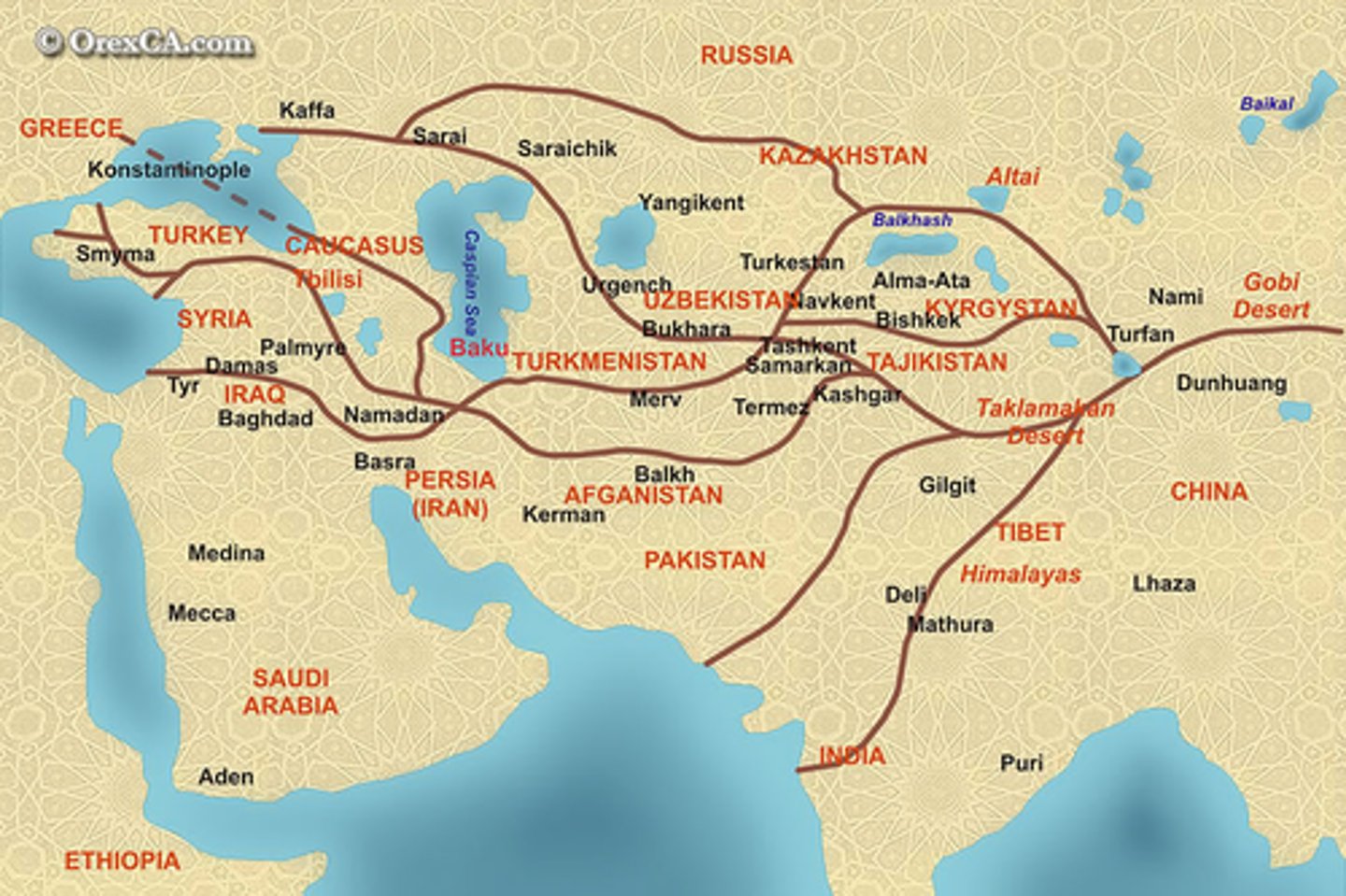
15. Safavid Trade
-The Safavids, and especially Shah Abbas the Great, were determined to participate in trade in a big way
-Shah Abbas extended trading privileges to the Europeans, bringing Armenian Christians to the capital of Isfahan in order help with the Silk Trade, and allowing the British East India Company and Dutch East India Company (VOC) to establish trade there; as a result, trade flourished in this city
-In exchange for trading privileges, the European companies gave the Safavids gunpowder and helped them bring down the Portuguese in the Persian Gulf
-They also helped them defeat their arch-nemeses, the Sunni Ottomans
-The major product the Safavids focused on producing was silk; they brought the Armenian Christians in to help with Silk Production, and then sold it to the Europeans for the silver and gold that was coming in from the Americas
16. Decline of the Safavids (1736 fall)
-The Safavids began to decline in the 1600's and 1700's
-one factor was poor leadership and rulers, as rulers spent vast amount of money on personal pleasures and leisures rather than the affairs of the state
-There was also fighting within the dynasties, as "ghilman" enslaved [slave] soldiers had rebellions and there was also religious tensions and fighting in the empire that led to its downfall
-Shiite leaders pressured the Safavids to become less religiously tolerant and to persecute Sunni, non-Muslims, and even the Sufi Mystics that had helped establish the dynasty
-The Safavids, along with the other two Islamic empires, the Mughals in India and the Ottomans in the MIddle East, were also Culturally Conservative. This meant they felt they had little to learn from other cultures, including the Europeans. So they fell behind the pace of the European militaries and lost out on many European technologies.
-By 1736 they complete collapsed due to poor leadership and pressure from numerous outside invaders, and the Safavid Dynasty was over
![<p>-The Safavids began to decline in the 1600's and 1700's</p><p>-one factor was poor leadership and rulers, as rulers spent vast amount of money on personal pleasures and leisures rather than the affairs of the state</p><p>-There was also fighting within the dynasties, as "ghilman" enslaved [slave] soldiers had rebellions and there was also religious tensions and fighting in the empire that led to its downfall</p><p>-Shiite leaders pressured the Safavids to become less religiously tolerant and to persecute Sunni, non-Muslims, and even the Sufi Mystics that had helped establish the dynasty</p><p>-The Safavids, along with the other two Islamic empires, the Mughals in India and the Ottomans in the MIddle East, were also Culturally Conservative. This meant they felt they had little to learn from other cultures, including the Europeans. So they fell behind the pace of the European militaries and lost out on many European technologies. </p><p>-By 1736 they complete collapsed due to poor leadership and pressure from numerous outside invaders, and the Safavid Dynasty was over</p>](https://knowt-user-attachments.s3.amazonaws.com/170d5d73-e19a-43f8-8ed2-fe082e80e796.jpg)
17. Cultural Conservatism in the Islamic Empires
-The Safavids, along with the other two Islamic empires, the Mughals in India and the Ottomans in the MIddle East, were also Culturally Conservative. This meant that they wanted to keep their culture and practices, so they tried to limit foreign influence
-one downside of this practice was you didn't learn as much from other cultures. So they fell behind the pace of technology in other cultures, including European militaries and lost out on many European Industrial technologies from 1450-1900 CE
-This attitude was similar to East Asia, where they also resisted foreign influence and closed themselves off from trade [isolationism]
-It was rare the Muslims would venture to Europe as they felt they had little to learn there, so they did not learn about inventions such as the Printing Press as well.
![<p>-The Safavids, along with the other two Islamic empires, the Mughals in India and the Ottomans in the MIddle East, were also Culturally Conservative. This meant that they wanted to keep their culture and practices, so they tried to limit foreign influence</p><p>-one downside of this practice was you didn't learn as much from other cultures. So they fell behind the pace of technology in other cultures, including European militaries and lost out on many European Industrial technologies from 1450-1900 CE </p><p>-This attitude was similar to East Asia, where they also resisted foreign influence and closed themselves off from trade [isolationism]</p><p>-It was rare the Muslims would venture to Europe as they felt they had little to learn there, so they did not learn about inventions such as the Printing Press as well.</p>](https://knowt-user-attachments.s3.amazonaws.com/a1e0b1bc-1a35-4a2f-9910-8da4d896a020.jpg)
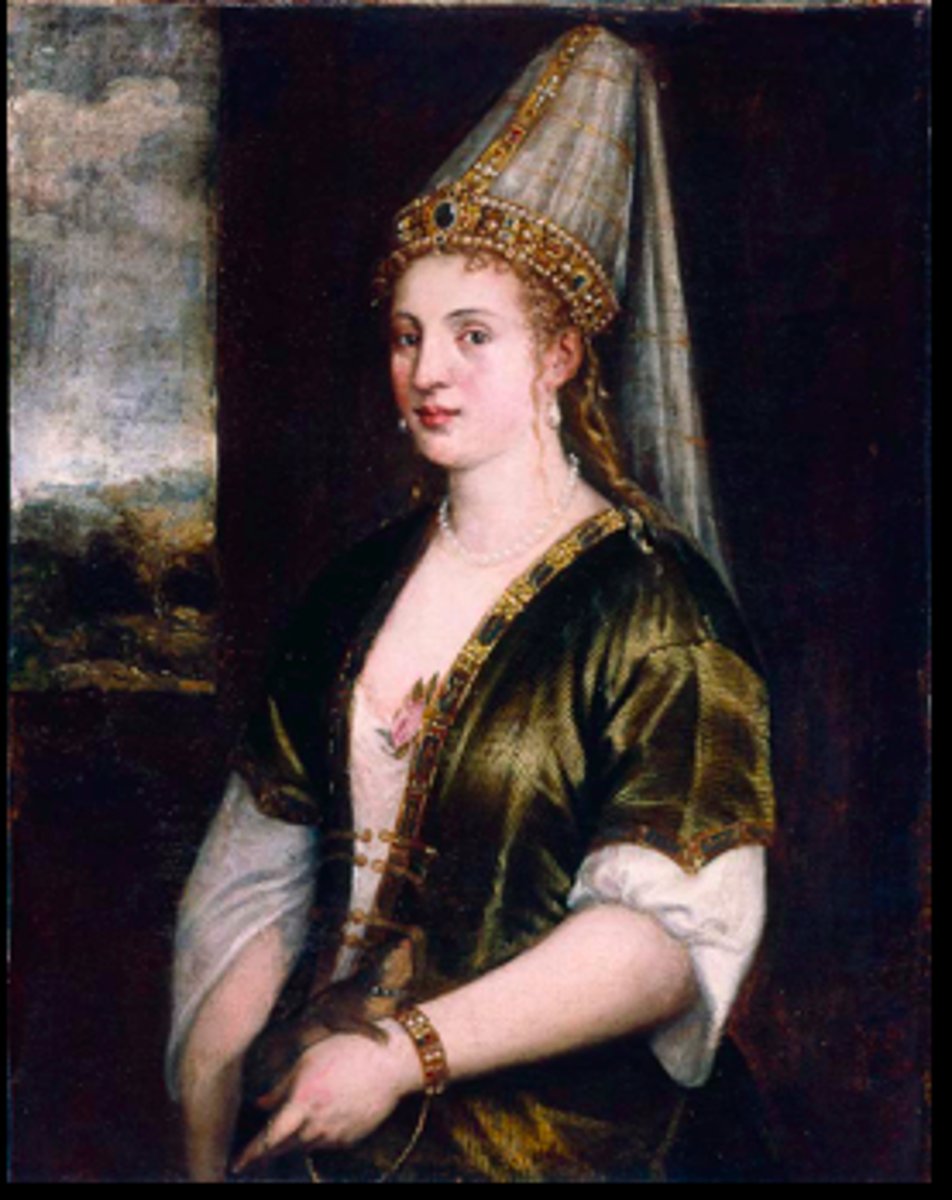
18. Women in Politics and Mahd-e Olya
-the major three Islamic Empires, the Safavids, the Ottomans in the Middle East, and the Mughals in India, carried on many of the traditions of the Mongols with regard to the involvement of women
-Technically, according to Islam, women had no traditional role in politics. They weren't allowed to rule or hold office
-However, following the example of Genghis Khan, they gave special privileges to their mother and "first wife;" these women could influence rulers on policy and help make critical decisions
-In Safavid Persia Mahd-e Olya was a famous wife of a Shah who basically was the ruler of the empire because she was so influential over her husband.
-Unfortunately her efforts to limit the power of the Qizilbash so enraged them that they murdered her.
-The aunt of another Shah was so annoyed at the ruler that she used her own money to raise an army and put down a revolt herself
19. The Tokugawa Shogunate 1603 CE to 1867 CE
-In 1600, Japan was ruled by an emperor
-There was also a Shogun, who was the highest ranking military general
--In 1603, Tokugawa Ieyasu was the Shogun; he staged a rebellion and took power away from the Emperor
-He started the _________________ ______________, which would last for 250 years
-He left the emperor in place however, as a puppet or figurehead. Throughout this entire time, the Shoguns had all the real power
-The Tokugawa Shoguns kept Japan isolated for 250 years; in 1853 CE Commodore Matthew Perry arrived in Japan and "opened" it to trade at gunpoint; the ______________ ______________ ended soon thereafter
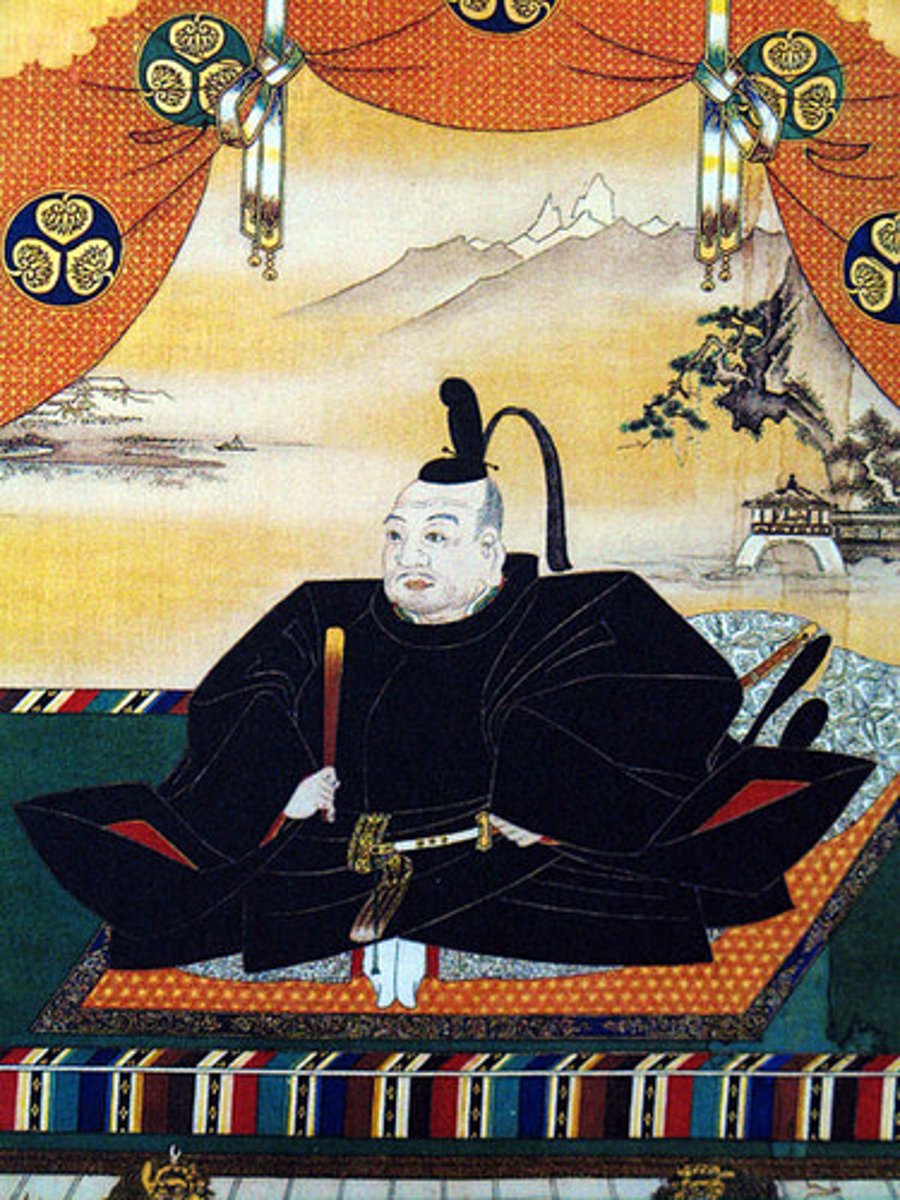
20. Tokugawa Ieyasu (1543-1616)
--In 1600, Japan was ruled by an emperor
-There was also a Shogun, who was the highest ranking military general
--In 1603, Tokugawa ___________________ was the Shogun; he staged a rebellion and took power away from the Emperor
-He started the Tokugawa Shogunate, which would last for 250 years
-He left the emperor in place however, as a puppet or figurehead. Throughout this entire time, the Shoguns had all the real power
-He was born the son of a minor daimyo [lord] and rose to power through his legendary skill as a warrior and shrewd [smart] moves as a military leader. Was known as an intimidating and fearless warrior and brilliant samurai general
-won a major battle, the Battle of Sekigahara, to establish his power and to unify Japan. Made Edo [Tokyo] the seat of his power
![<p>--In 1600, Japan was ruled by an emperor</p><p>-There was also a Shogun, who was the highest ranking military general</p><p>--In 1603, Tokugawa ___________________ was the Shogun; he staged a rebellion and took power away from the Emperor</p><p>-He started the Tokugawa Shogunate, which would last for 250 years</p><p>-He left the emperor in place however, as a puppet or figurehead. Throughout this entire time, the Shoguns had all the real power</p><p>-He was born the son of a minor daimyo [lord] and rose to power through his legendary skill as a warrior and shrewd [smart] moves as a military leader. Was known as an intimidating and fearless warrior and brilliant samurai general</p><p>-won a major battle, the Battle of Sekigahara, to establish his power and to unify Japan. Made Edo [Tokyo] the seat of his power</p>](https://knowt-user-attachments.s3.amazonaws.com/b5c7ccec-090e-4620-b7ad-1de85e9d8bac.jpg)
21. Lady Saigo (1589)
-first consort and trusted confidante [advisor] of Tokugawa Ieyasu
-as an advisor, her contributions were considered so significant that she was posthumously [after death] inducted to the Senior First Rank of the Imperial Court, the highest honor that could be given by the Emperor of Japan.
-During their relationship, Lady Saigō influenced Ieyasu's philosophies, choice of allies, and policies as he rose to power during the late Sengoku period, and she thus had an indirect effect on the organization of the Tokugawa shogunate.
-Although less is known of her than some other figures of the era, she is generally regarded as the "power behind the throne"
-Once she was in a respected and secure position as first consort and mother to Ieyasu's heir, Lady Saigō used her influence and wealth for charitable purposes.
- As she was quite near-sighted, she also established a charitable organization that assisted visually impaired women with no other means of support.
-Lady Saigō died at a fairly young age, under somewhat mysterious circumstances. Although murder was suspected, no culprit was identified.
-Her son would go on to be the second Shogun of the Tokugawa Shogunate
![<p>-first consort and trusted confidante [advisor] of Tokugawa Ieyasu</p><p>-as an advisor, her contributions were considered so significant that she was posthumously [after death] inducted to the Senior First Rank of the Imperial Court, the highest honor that could be given by the Emperor of Japan.</p><p>-During their relationship, Lady Saigō influenced Ieyasu's philosophies, choice of allies, and policies as he rose to power during the late Sengoku period, and she thus had an indirect effect on the organization of the Tokugawa shogunate. </p><p>-Although less is known of her than some other figures of the era, she is generally regarded as the "power behind the throne"</p><p>-Once she was in a respected and secure position as first consort and mother to Ieyasu's heir, Lady Saigō used her influence and wealth for charitable purposes. </p><p>- As she was quite near-sighted, she also established a charitable organization that assisted visually impaired women with no other means of support.</p><p>-Lady Saigō died at a fairly young age, under somewhat mysterious circumstances. Although murder was suspected, no culprit was identified.</p><p>-Her son would go on to be the second Shogun of the Tokugawa Shogunate</p>](https://knowt-user-attachments.s3.amazonaws.com/d031cec7-c76c-4b2b-aef6-1b54b3186cb8.png)
22. The Salaried Samurai
-During the Tokugawa Shogunate from 1600 -1850 CE, the Shoguns were constantly worried about rebellions from the "Daimyo" nobility, the noble class just below them
-In order to strengthen their power, the Shoguns began hiring professional samurai to fight for them and build a professional standing army. Paying the samurai a salary was a change from the feudal period, where they were sworn to the daimyo [nobles]
-Followed the Bushido Code of honor, which demanded respect, loyalty, high pain tolerance, honor, and dedication to victory
-Wielded the legendary Kitana sword to great effect. Tokugawa Ieyasu himself was a legendary samurai warrior
-This was similar to other Empires around the world like the Ottomans with the Janissaries and the European countries who were paying military professionals to build standing armies
![<p>-During the Tokugawa Shogunate from 1600 -1850 CE, the Shoguns were constantly worried about rebellions from the "Daimyo" nobility, the noble class just below them</p><p>-In order to strengthen their power, the Shoguns began hiring professional samurai to fight for them and build a professional standing army. Paying the samurai a salary was a change from the feudal period, where they were sworn to the daimyo [nobles]</p><p>-Followed the Bushido Code of honor, which demanded respect, loyalty, high pain tolerance, honor, and dedication to victory</p><p>-Wielded the legendary Kitana sword to great effect. Tokugawa Ieyasu himself was a legendary samurai warrior</p><p>-This was similar to other Empires around the world like the Ottomans with the Janissaries and the European countries who were paying military professionals to build standing armies</p>](https://knowt-user-attachments.s3.amazonaws.com/7f3d88de-d077-4932-81d0-8aae2087e50c.jpg)
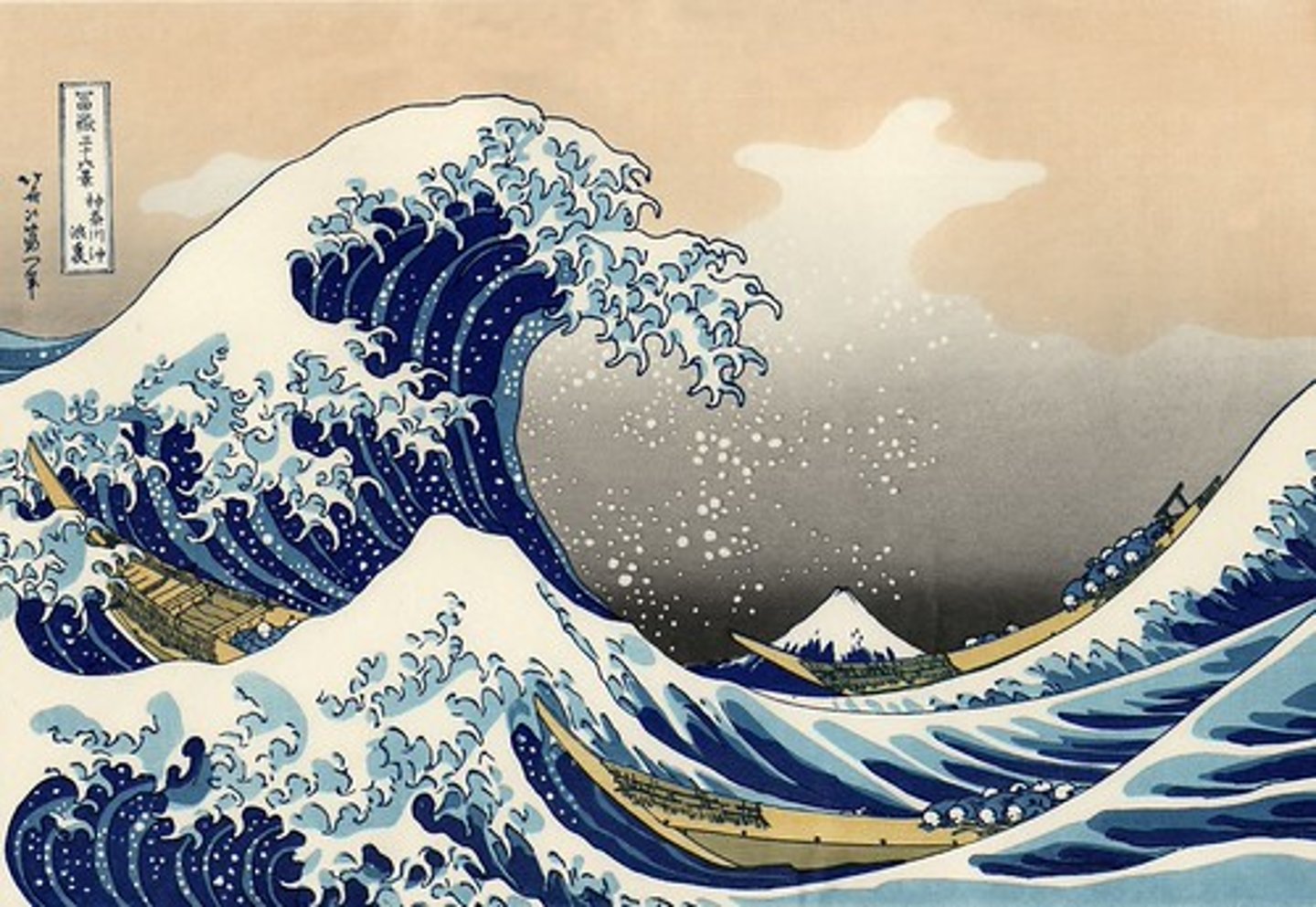
23. Wood-Block Prints in Japan
-From 1600 -1850 CE, this type of artwork became very popular in Tokugawa Japan
-These artists were able to create beautiful prints on wood-blocks using water based inks
-"The Great Wave off Kanagawa" is a famous example of wood-block prints; other famous examples include Japanese propaganda from the Meiji Reformation showing heroes with swords vanquishing (Defeating) Russian and Chinese enemies in heroic battle poses
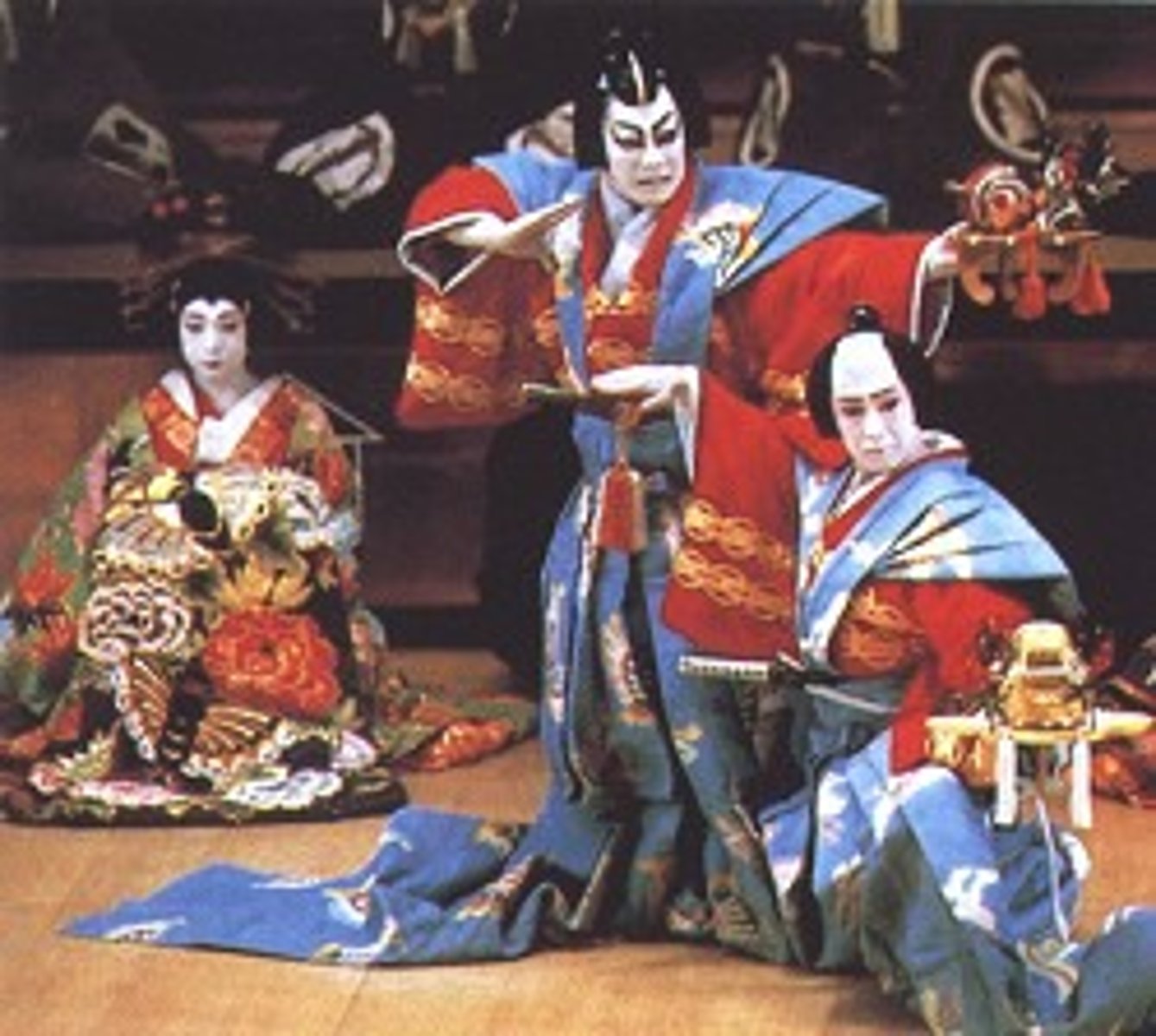
24. Kabuki Theater
-During the Tokugawa Shogunate from 1603 - 1867 CE the Japanese developed a beautiful style of theater and performing arts called __________________ Theater
-Essentially this like a really fancy and beautiful Japanese play
-It features colorful scenery and beautiful, bright costumes and an exaggerated style of acting
"Yotsuya Kaidan" is one of the most famous examples of a Kobuki play, it tells a tale of love affairs, ghosts, and revenge
25. The Tokugawa Closed Country Edicts
-The Tokugawa Shogunate was very worried about European influence in Japan
-They had seen what had happened to the neighboring Philippines, which had been taken over by the Spanish
-In 1635 the Tokugawa Shoguns issued the _____________; this was a set of laws that forbade any Japanese from leaving Japan, and blocked any foreigners from coming in
-Any foreigners who came to Japan were to be executed
-Any Japanese who left Japan were to be executed
-A ship of Portuguese decided to try their luck; the entire crew was beheaded, except for a few that were allowed to live to go tell the rest of the Europeans, "Come here no more."
-The only exception were the Dutch, who were allowed to trade with Japan. However, there was still a very limited amount of trade and knowledge being spread
-After this, Japan became Isolationist for 200 years until the arrival of Matthew Perry in 1853
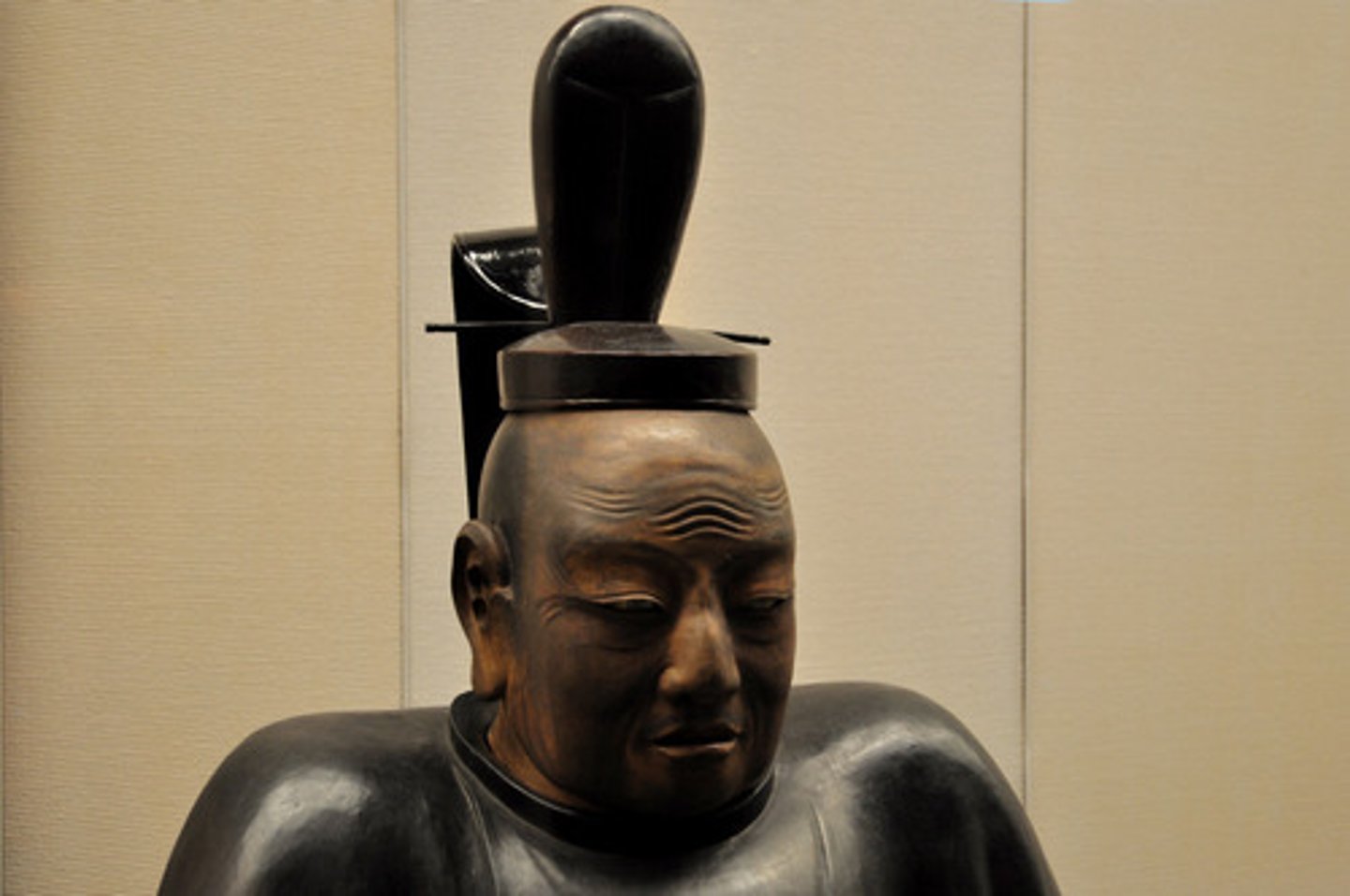
26. Japanese Isolationism 1635 - 1853 CE
-The Tokugawa Shogunate was very worried about European influence in Japan
-They had seen what had happened to the neighboring Philippines, which had been taken over by the Spanish
-In 1635 the Tokugawa Shoguns issued the Tokugawa Edicts; this was a set of laws that forbade any Japanese from leaving Japan, and blocked any foreigners from coming in
-The only people who were allowed to enter or exit Japan were the Dutch, so trade was very limited
-As a result of basically cutting off trade for 250 years, the Japanese became very ____________________________
-This meant that they fell very far behind in terms of technology, the Enlightenment, new ideas, etc.
-Here we see the damaging effect of cutting yourself off from the outside world; you get to preserve your culture, but you fall behind in military and technological power
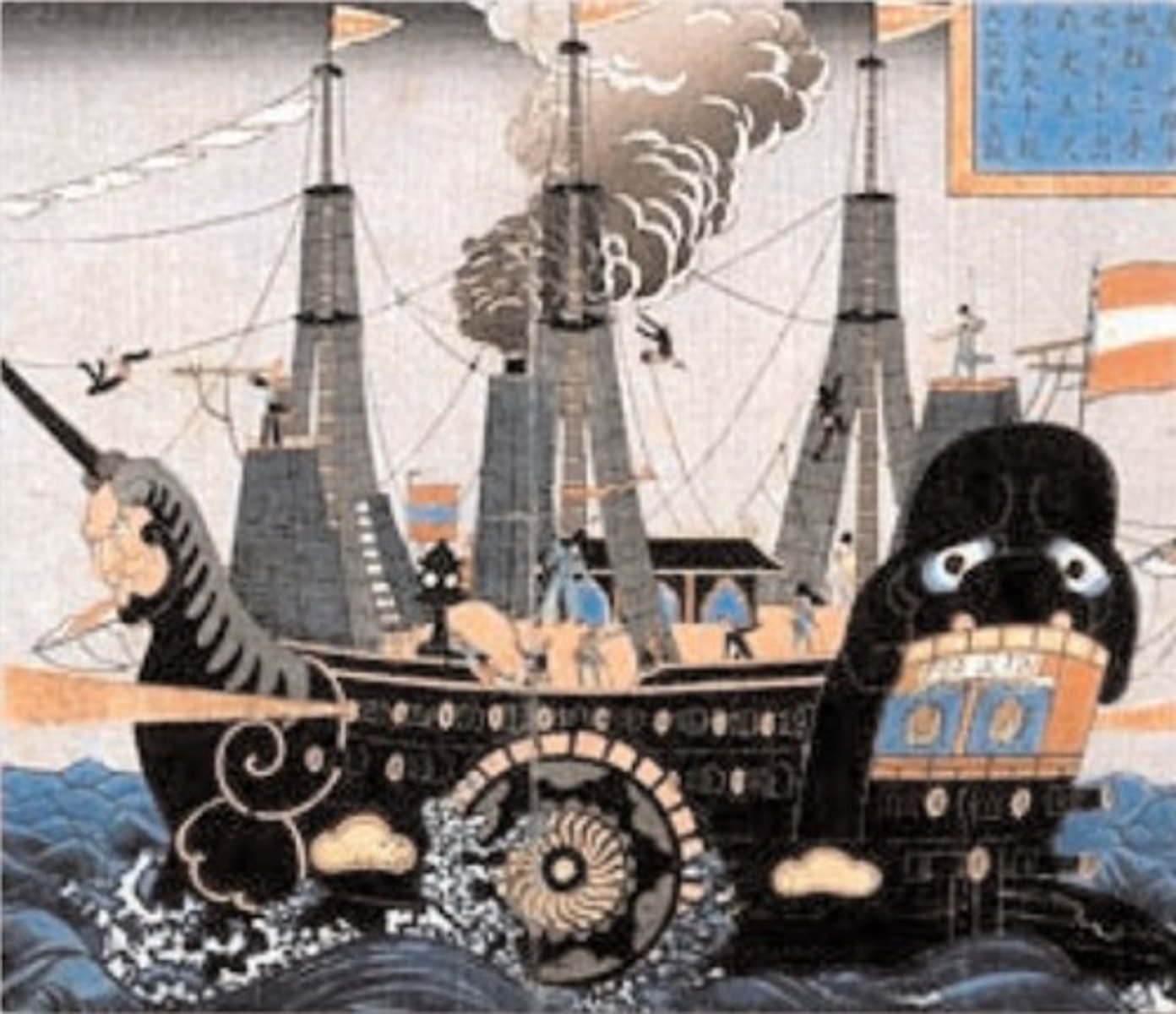
-Japanese _______________ ended in 1853 when Commodore Matthew Perry, an American, entered Japan and forced them to open up trade at gunpoint
27. 1853 CE
-After Matthew Perry arrived, Japan was now "opened" up from isolationism
-After a few years, the Tokugawa Shogunate fell apart and the Meiji Reformation happened in 1867
-Japan rapidly began to industrialize and Westernize
-This question asks for the DATE of the arrival of Matthew Perry and the "Opening of Japan"; what date did this happen?
-After the Tokugawa Shogunate fell, Japan rallied and pulled off one of the most remarkable technological revolutions in history, the Meiji Reformation
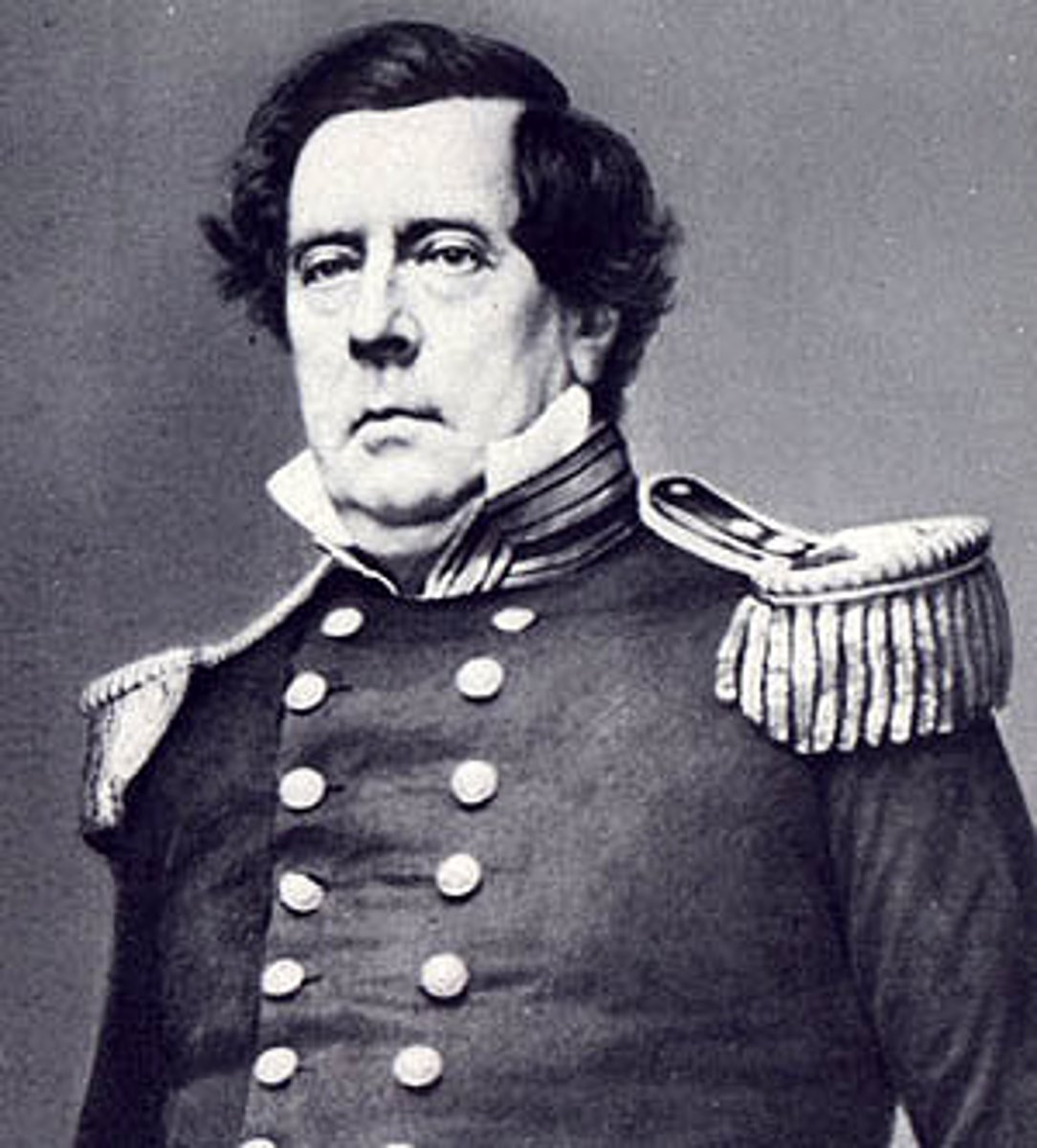
28. Commodore Matthew Perry 1853 CE
-The Tokugawa Shogunate was very worried about European influence in Japan
-They had seen what had happened to the neighboring Philippines, which had been taken over by the Spanish
-In 1635 the Tokugawa Shoguns issued the Tokugawa Edicts; this was a set of laws that forbade any Japanese from leaving Japan, and blocked any foreigners from coming in
-As a result of basically cutting off trade for 250 years, the Japanese became very isolated; this was called Japanese Isolationism
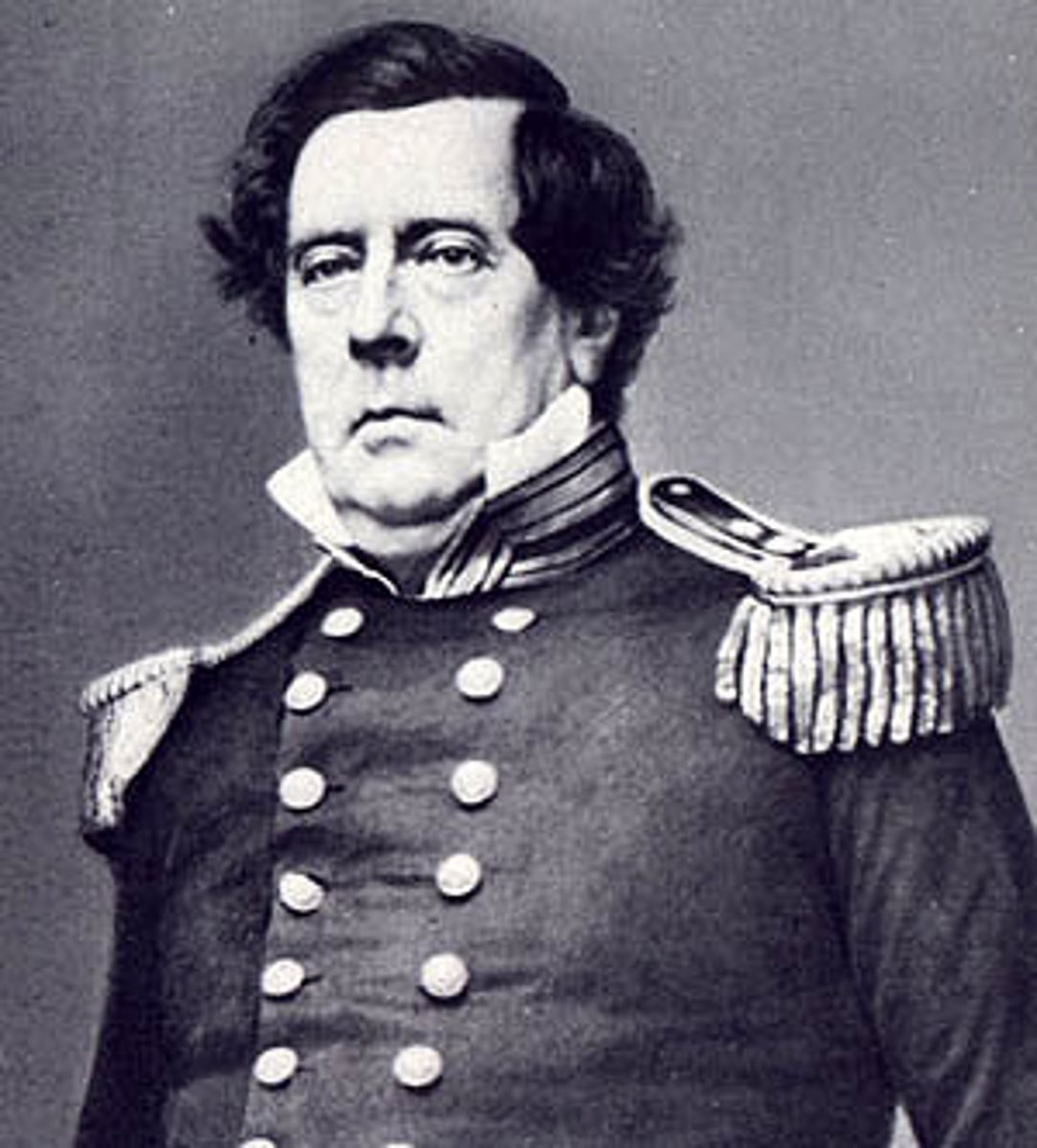
-Japanese Isolationism ended in 1853 when _____________________ __________ _______________ , an American, entered Japan and forced them to open up trade at gunpoint
-This term is the American naval commander that ended Isolationism in 1853 CE
29. 1) Silk Textile Production in China 1450 - 1750 CE
-From 1450 -1750 CE, the demand for ___________ increased dramatically in China as the Europeans found new ways to get there
-In China, the Ming and Qing Dynasties encouraged higher levels of planning and organization to produce more _________________. They worked in old school mini-factories in cities like Hangzhou, Beijing, and Chang'an
-There were thousands of people that worked in workshops to produce ____________ _________ that would be exported out of the country
-This was before factories though, and these shops were much smaller than factories