psych p3
 Call Kai
 Learn
Learn Practice Test
 Spaced Repetition
 Match
Match Flashcards
 Knowt Play
1/268

There's no tags or description
Looks like no tags are added yet.
Name | Mastery | Learn | Test | Matching | Spaced | Call with Kai |
|---|
No analytics yet
Send a link to your students to track their progress
269 Terms
what is the top-down approach to offender profiling?
A forensic psychologist will use prior knowledge and evidence gathered to make a profile for the offender of a crime. This method is used to narrow down suspects rather than catch them.
what are the 6 main stages of the top-down process?
profiling inputs
info such as sketches, photos, weapon collected
decision process models
patterns of the crime are collected and organised (murder type, location, time)
crime assessment
labelled organised/disorganised
criminal profile made
crime assessment again - police investigate profile
apprehension
suspect is caught and the entire process is rechecked
Please Don’t Catch Clever Criminals Again
Describe the top-down process (6 marks AO1)
The top-down approach to offender profiling was developed to solve murder cases in the USA. It involves designing a profile of the offender based on the dynamics of the crime. The profile is developed through 6 stages. Firstly, information from the crime scene is taken as well as any relevant background information. This information is then organised into meaningful patterns by the profiler, so that they can determine how the offender carries out their crimes. With this information, the profiler assigns the crime and offender as organised or disorganised. If organised, the crime may have been planned and the victim may have been targeted. If disorganised, it tends to be unplanned and there may be some clues around the body.
The profiler then makes the profile on the offender, which includes hypotheses about their background and mannerisms. This information will be important to help catch them and during interviews. The profile is then sent to the police, and any suspects matching the profile are interviewed. If no suspect is found, the profile is remade and they try again. If the suspect is found, each stage of the profiling process is evaluated to make sure no mistakes were made.
Strength of the top-down approach
Police officers find it useful
Copson found that 82% of police officers said the technique is useful. Although, the approach may not lead to convictions, it can help provide a different perspective to the investigation and prevent wrongful convictions.
However, the police officers may have only said this because they have not been exposed to other methods of investigation, which could be more effective than the top-down approach. Some of them may not have even been involved with murder cases, which may make their opinion/experience invalid.
Weaknesses of the top-down approach
The basis of the method may be flawed
- Profilers use data that was taken during interviews by Hazelwood and Douglas with serial killers to generate their own profiles for cases they are currently working on.
- However this information may be unreliable as it was taken from people who are known for being manipulative.
- Furthermore, their modus operandi (way of working) may be different to others and the information is outdated - low temporal validity.
- CA - the six-stage process does allow for improvements to be made to it - it is not fixed
Profiles are unscientific and may mislead investigations
- It can be argued that profilers do little more than psychics, who often have experience in ‘reading’ behaviour.
- Top-down profiling has no scientific basis and its believability can be explained by the Barnum effect.
- Jackson and Bekerian suggested that smart offenders have understood the profiling procedure, and may leave misleading clues to cause a fake profile to be made.
- Therefore, police and courts must not fully place their faith in profiles. It also raises the question whether profiling should remain a private method of investigation.
- CA - profiling is combined with other investigative methods, so it’s not that bad.
what is the bottom-up approach to offender profiling
The approach used in the UK. It was developed by David Canter. This approach looks for consistencies in offenders’ behaviour and compares this to data in computer databases.
These statistical techniques are used to produce predictions about the likely characteristics of an offender.
What are the 2 examples of the bottom-up approach to offender profiling
Investigative psychology
Geographical profiling
Features of investigative psychology
Interpersonal coherence - assumes that people are consistent with their behaviour, therefore there will be correlations between the crime and their everyday life.
Forensic awareness - Some behaviours reveal that they have knowledge of police techniques, maybe through past experience. Davies et al. found that rapists that conceal fingerprints often had a previous burglary conviction
Features of geographical profiling
Is the suspect a marauder (close) or a commuter (travels)?
Circle theory - Canter and Larkin suggested that a criminal’s base is usually in the centre of the entire area where they commit crimes. (only true for a marauder)
Criminal geographic targeting (CGT) - A computerised system based on Rossmo’s formula, which makes a 3D map showing spatial data related to time, distance and movement to and from the crime scene.
Strengths of the bottom-up approach to offender profiling
The bottom-up approach can be applied to a range of crimes
Whilst the top-down approach only works for murders and/or SA, the bottom-up approach’s use of statistical techniques and the idea of spatial consistency can be applied to investigate crimes such as burglary or theft as well as murder.
Arguably more scientific and objective than top-down
It is more grounded in psychological theory and evidence, and less driven by speculation and hunches, which forensic psychologists do in the bottom-up approach. Investigators are able to obtain geographical and psychological data quickly through statistical and computerised techniques.
Weaknesses of the bottom-up approach to offender profiling
Lack of success with circle theory
- Canter and Larkin conducted a study which found 91% of offenders are marauders. If almost all offenders are marauders, the classification seems a bit useless.
- Furthermore, if the offender’s base (home) is not in the middle of the circle, police could be looking in the wrong place, which wastes time
Databases only analyse patterns of behaviour for solved crimes + statistical techniques can’t distinguish between offenders
- Even though it uses objective statistical techniques and computer analysis, the data that is input is only related to offenders that have been caught.
- It tells us nothing about patterns of behaviour related to unsolved crimes.
- Furthermore, these formulae may be incorrect and not helpful in some cases.
- e.g. Rossmo’s CGT formula cannot distinguish multiple offenders and it also only tells us spatial data about movements, not personality
- Therefore, in practice, these tests are inevitably biased and unrepresentative
What are the historical biological explanations of offending behaviour
Lombroso’s theory of atavistic form
Sheldon’s theory of somatotypes
Lombroso’s theory of atavistic form
This theory suggests that criminality is inherited and that someone ‘born criminal’ could be identified by their looks
These people exhibit atavistic (i.e primitive and less evolved) features. They had biological characteristics from an earlier stage of human development, which show a tendency to commit crime.
They may: be insensitive to pain, have tattoos or be unemployed
Sheldon’s theory of somatotypes and criminal behaviour
Sheldon linked body types to criminality.
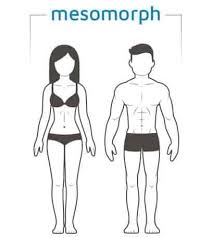
These were endomorph, mesomorph and ectomorph
He suggested that mesomorphs are linked to criminal behaviour as they are more assertive and aggressive
Mesomorph characteristics (Sheldon’s somatotypes theory)
large bones
low fat levels
wide shoulders
narrow waist
Strengths of historical biological explanations of offending behaviour
Lombroso’s contribution to criminology
- He has been hailed as the ‘father of modern criminology’
- He raised the possibility of scientific study of the criminal mind. Before this, crime was studied, but not the criminal. It was assumed that crimes were committed due to free will
- Lombroso’s ideas of biology and the environment predisposing people to crime marked a vital paradigm shift towards a scientific realm
Support for Sheldon’s somatotypes theory (Glueck & Glueck et al. AND Sheldon et al.)
- They found that 60% of delinquents were mesomorphs
- William Sheldon conducted his own study and also found that out of a sample of 200 young adults, more delinquents tended to be mesomorphs
- CA - both of these studies were conducted in the USA so not generalisable
Limitations of historical biological explanations of offending behaviour
Goring et al.
- Goring looked at 3,000 criminals and 3,000 non-criminals (all male)
- He found no evidence that offenders have distinct, unusual facial and cranial characteristics
- This questions Lombroso’s theory and attempt to identify criminals based on looks alone.
- CA: not generalisable to women (androcentric sample)
Lombroso’s gender bias
- Lombroso’s ideas about women were very androcentric.
- He suggested that they are naturally jealous and insensitive to pain, but at the same time are low in intelligence, maternally focused.
- This meant that they were much less likely to commit crimes
- Those women that had committed crimes, had masculine traits that turned them into ‘monsters’.
What are the modern biological explanations of offending behaviour
genetic
neural
Genetic explanations for offending behaviour
These suggest that genes make a person predisposed to crime. Genetic links have been confirmed through studies.
Tiihonen studied 900 offenders and found 2 genes:
MAOA gene - controls serotonin and dopamine in the brain and is linked to aggressive behaviour
CDH13 gene - linked to substance abuse & ADHD
Modern understanding of genetic factors suggests epigenetics proposes an interplay between certain genes and the environment.
Neural explanations for offending behaviour
Prefrontal cortex
- Raine found that offenders may have reduced functioning in the prefrontal cortex
- This means they may be more impulsive and lack control
Neurotransmitters
- Serotonin - low levels predispose people to impulsive aggression and criminal behaviour. This is due to a lack of inhibition by prefrontal cortex
- Noradrenaline - Both very high and very low levels of this neurotransmitter have been associated with aggression, violence and criminality (Wright et al.).
High levels of noradrenaline are associated with activation of the fight or flight response and thus are linked to aggression.
Low levels of noradrenaline can cause chronic under-arousement, which leads to sensation-seeking behaviour, such as criminal acts
Studies supporting genetic explanations for offending behaviour (strengths)
Research support
Family studies (Osborne & West)
- 40% of sons with fathers with criminal convictions committed a crime before 18, compared to only 13% for the control group.
Twin studies (Raine)
- Raine researched delinquent behaviour of twins and found 52% concordance for MZ twins and 21% concordance for DZ twins
Strengths of neural explanations for offending behaviour
Research support
Raine found that offenders may have reduced functioning in the prefrontal cortex
Wright et al. found that high/low levels of noradrenaline are linked to criminality
Practical application
diets of those at risk, could be adapted to include more tryptophan which helps to enhance serotonin levels and would hopefully decrease aggression
Weaknesses of genetic and neural explanations for offending behaviour
struggle to explain non-violent crimes
- It is harder to link non-violent crimes to biological explanations.
cause and effect cannot be established
- The results of these studies are correlational. They could have been affected by third variables. They also cannot show direction of causality
reductionist
- does not look at wider factors such as upbringing, social context, mental illness etc.
socially sensitive
- Firstly, it is deterministic, which may upset people that carry these genes
- Secondly, it may result in criminals blaming their biology rather than taking responsibility for their actions
What are the dimensions of personality according to Eysenck’s theory?
Extraversion - Introversion
Neuroticism - Stability
Psychoticism - Normality
What is extraversion and its biological basis?
Extroverts are outgoing with positive emotions but get bored easily, this means they have a chronically under-aroused nervous system. This leads to active, sensation-seeking behaviour in more dangerous activities.
What is neuroticism and its biological basis?
Neurotic people are over anxious, nervous and react strongly to stressful stimuli, therefore they are unstable and have a reactive nervous system.
This means they may react strongly in threatening situations.
What is psychoticism and its biological basis?
Psychotics are egocentrics, aggressive, impulsive and lack empathy.
Psychoticism has been linked to high testosterone, so men are more likely to be found at this end of the spectrum.
What is the role of socialisation in Eysenck’s theory?
Interaction with the environment is key in the development of criminality. This can be seen in conditioning
When ‘normal’ people do something wrong, they are punished for it and this reduces the likelihood of the behaviour being repeated (operant conditioning). However people that have high levels of extraversion and neuroticism are less able to be conditioned.
As a result, they do not learn to avoid anti-social behaviour.
Strengths of Eysenck’s theory of personality
Supporting research (Eysenck & Eysenck)
- Compared scores for 2070 male prisoners to a male control group on the Eysenck Personality Questionnaire (EPQ)
- The prisoners scored higher on EPN across age groups.
- Elab - generalisable to all age groups
- CA- androcentric sample, not generalisable to women, self-report (however this was countered by lie-scales)
Real world application
- These traits may provide a useful indicator of how offending behaviour can be prevented
- for example, the socialisation experiences of children who have potential to become offenders could be modified
- furthermore, more attention could be paid to conditioning experiences in people with high E and N to ensure that they learn from their experiences
Study against Eysenck’s theory of personality (weakness)
Cultural bias (Holanchock et al.)
- Holanchock found that Hispanic and African-American prisoners were less E (extraverted) than a control group
- This challenges the generalisability of the theory.
- The Eysenck & Eysenck study did not include people from different cultural groups
What are the 2 cognitive explanations of offending behaviour?
Cognitive distortions
Kohlberg’s levels of moral reasoning
What are the 2 types of cognitive distortions and explain them
Hostile attribution bias - a tendency to misinterpret other people’s actions, words or cues as being aggressive/threatening when in reality they aren’t. This allows them to rationalise offending behaviour.
Minimisation - downplaying the seriousness of a crime to make it seem less significant and to reduce negative emotions (guilt, anxiety etc.) and help them accept the consequences of their actions.
Research support for HAB
Schonenberg and Aiste
- They asked violent offenders in prison to interpret emotionally ambiguous pictures
- The offenders were significantly more likely to interpret the pictures as aggressive
- CA - this link is correlational. We cannot know for sure that they would find the same situations threatening in real life
Research support for minimisation
Kennedy and Grubin
- They interviewed sex offenders and found that they often downplayed their actions
- They would blame the victim or blame the criminality of the behaviour
- CA - other psychologists have argued that it is human nature to blame something else in order to protect ourselves
Outline Kohlberg’s theory of moral reasoning
Moral reasoning refers to how individuals draw from their own value system in order to determine what is right and what is wrong.
The levels can be summarised as a stage theory of moral development.
People progress through these stages as a result of biological maturity and discussion
What level of moral reasoning are most offenders at according to Kohlberg’s theory? Why?
The pre-conventional level. Their level of moral reasoning has not advanced since childhood.
They believe that actions resulting in punishment are bad and actions that bring rewards are good.
Therefore, if people at this level can commit a crime, get away with it and gain rewards will therefore keep on offending.
It has been suggested that this may be due to a lack of role playing opportunities in childhood, and therefore such opportunities should be provided. “Role-playing opportunities” means childhood experiences that let individuals practice taking others’ perspectives and understanding moral situations. Without these, moral development may be stunted, leading to less mature moral reasoning later in life.
Study supporting Kohlberg’s theory of the levels of moral responsibility (strength)
Research support (Palmer and Hollin)
- They compared moral reasoning between female and male non-offenders and convicted offenders using moral dilemma-related questions.
- The delinquent group showed less mature moral reasoning than the non-delinquent group.
- This supports Kohlberg’s theory that moral reasoning with offenders is at the pre-conventional level.
- It has been suggested that this may be due to a lack of role playing opportunities in childhood, and therefore such opportunities should be provided.
- “Role-playing opportunities” means childhood experiences that let individuals practice taking others’ perspectives and understanding moral situations. Without these, moral development may be stunted, leading to less mature moral reasoning later in life.
- Elab - compared to both men and women, which is good
Weakness of Kohlberg’s theory of the levels of moral responsibility
Kohlberg’s theory was only based on samples of men and boys and yet assumed to apply to all people (beta bias)
- This meant that when he investigated women and found that they are less morally developed, he exaggerated the differences between men and women (alpha bias)
- Gilligan then found that women aren’t less morally developed, they just take a different stance to moral reasoning than men. Men have a justice orientation, whereas women have a caring orientation.
- Therefore, Kohlberg’s theory may not be externally valid and generalisable to women
Who made the differential association theory and what is it?
Sutherland proposes that offender behaviour can be explained entirely in terms of social learning.
The concept of ‘differential association’ refers to how people vary in the frequency of which they associate with other people that have a more/less favourable attitude to crime. These attitudes influence our attitudes and behaviour.
Sutherland thought a mathematical formula could be developed to predict whether someone would turn to crime based on the frequency, duration and intensity they have with their social contacts.
What is learned through differential association theory?
Attitudes towards crime
Also which crimes are acceptable
And methods to carry out these crimes
Who influences our attitudes towards crime in differential association theory?
They are learned from intimate personal groups, such as family and/or peers. The individuals in the group may not be criminals, but may still hold deviant/accepting attitudes towards crime.
How do people learn through differential association theory?
This depends on the frequency, duration and personal meaning of such associations.
The modes of learning are mainly operant conditioning (child receiving praise/punishment for deviant behaviours) and vicarious reinforcement (SLT) [child sees a role model engage in deviant behaviour and feels that they can imitate the behaviour to gain rewards]
Strengths of differential association theory
Strengths:
Changed people’s views about the origins of criminal behaviour + RWA
- marked an important shift away from ‘blaming’ individual factors to pointing out social factors.
- This has real-world applications because learning environments can be changed.
- CA - this theory cannot explain why most offences are committed by people under 21
Research support (Osborne and West)
Osborne and West found that 40% of sons committed a crime by the age of 18 if their father had a criminal conviction compared to 13% with fathers that didn’t have criminal convictions
This suggests criminality may run in families and that criminal behaviours and attitudes are a result of social learning
CA - it could be argued that this evidence can be explained in terms of genetic inheritance. Plus, this is an androcentric sample and ungeneralisable to women
Weaknesses of differential association theory
Methodological issues in research
- correlational research
- direction of causality?
- In terms of peer influences, it could be that offenders seek out other offenders (rather than being influenced by them) and this would explain why offenders are likely to have peers who are offenders.
The absence of biological factors from this approach is a drawback
- The diathesis-stress model may offer a better account by combining social factors with vulnerability factors.
- Predisposing factors may be innate genetic ones or early experiences such as maltreatment.
- Indeed, attachment research suggests that emotional problems in childhood make a child vulnerable to deviant peer influences later in life.
- As such, the social approach on its own may be an insufficient explanation.
What are the two psychodynamic explanations of offending behaviour
Bowlby’s maternal deprivation theory (affectionless psychopaths)
Inadequate superego
Outline Bowlby’s maternal deprivation theory and how it links to offending behaviour
prolonged separation between a mother and her child would have long-term emotional consequences
There was a significant risk of this happening if it occurred before the age of 2.5 years old (critical period)
The consequence that links to offending is affectionless psychopathy.
This is when people have a lack of affection, shame or responsibility for their actions
Study on affectionless psychopathy
Bowlby’s 44 thieves study
Bowlby studies 44 offending patients and compared to a control of 44 ‘normal’ patients
17/44 thieves had experienced early separation
12/17 of these thieves were also APs
He used a control group and found that none of them had experienced early separation
Basis of the inadequate superego theory, who made it and the three types of superego
Blackburn argues that the superego may be deficient in criminals, which allows the id ‘free rein’ to pursue its desires. Three types of inadequate superego are given:
weak superego
deviant superego
over-harsh superego
What causes the weak superego?
The weak superego is caused due to the absence of the same-sex parent during the phallic stage as an outcome of the Oedipus/Electra complex.
Therefore, the child cannot identify with a same-sex parent and the superego is not internalised.
Consequentially, there will be less resistance to the id and the individual is likely to instantly gratify impulses
What causes the deviant superego
The child has internalised immoral values. In effect, the child was raised by a same-sex parent that is an offender
What causes the over-harsh superego
If the same-sex parent is very strict and the child grows up with excessive guilt/anxiety
The child will internalise receiving punishment for guilt
Anytime they satisfy their id, they would feel bad
Therefore they will offend with a wish to be caught, as this will cause guilt and so they will receive punishment
Strengths of psychodynamic explanations for offending behaviour
Bowlby’s 44 thieves study
real life application - importance of adoption
- treatment for young people who were subject to early separations in terms of emotional problems is slow and difficult
- Bowlby suggested that it is best to prevent early separation to overcome this problem
- He demonstrated that the problem was emotional separation, not physical
- So if these children could be adopted and provided with alternative care, these problems could be avoided
- he preached the importance of adoption of young children and made a big difference
Weaknesses of psychodynamic explanations for offending behaviour
androcentric bias in Freud’s theory
- Freud proposed that women develop a weaker superego. He claimed that this is because women had lower status, so there was little reason to identify with them.
- this part of his theory is very sexist and is not accepted in the modern era
- Furthermore, even if this was true, we would expect more women to offend, which is not the case
- His views represent an alpha bias (exaggeration of differences between sexes)
Bowlby’s research is correlational
- There is only evidence to suggest that there is a link between separation and AP
- separation was not manipulated and other factors were not controlled
- AP could have been caused by a tough environment (maybe DAT?)
- Bowlby also researched privation, not deprivation. His study was not precise. Maybe this causes AP?
- causal conclusions cannot be made
What are the 4 ways of dealing with offending behaviour?
Custodial sentencing
Behaviour modification
Restorative justice
Anger management
What is custodial sentencing?
This involves a convicted offender spending time in prison or another institution.
What are the aims of custodial sentencing
deterrence- puts offender and potential offenders off offending through OC and vicarious reinforcement
incapacitation - keeping the offender away from society and being a threat to the public
retribution - a way for society and victims to feel a sense of justice
rehabilitation - aims to make the offender a better person through therapy, education, skills training etc.
What are the psychological effects of custodial sentencing?
deindividuation - loss of identity due to dehumanisation. They are more aggressive and treat people in inhuman ways
depression, self harm, suicide - much higher rates in prison than in wider society
institutionalisation - inmates struggle to adjust to society after release. They may have a lack of autonomy and become very conformative due to the routines of prison life
disinhibition - become very conformist and obedient
Strength of custodial sentencing
Custodial sentencing has potential benefits
- One benefit is incapacitation, but this is only relevant to a small proportion of criminals who are dangerous and need to be kept away from society
- Another is retribution, but this can also be achieved through less extreme methods, such as restorative justice, where offenders make amends to the victim(s) and face their conscience (although RJ will not be applicable in all cases)
- The final benefit is rehabilitation as there are certain programmes available in prison to make offenders better people. However, they can’t be forced to take part in these programmes. When they do take part, it is usually a superficial involvement so that they can shorten their sentence
Other methods of dealing with offenders can be carried out in prisons
- for example, anger management and behaviour modification
Weaknesses of custodial sentencing
Recidivism rates
- In the UK, about 46% of adults and 67% of under-18s are reconvicted in under a year.
- These figures suggest that custodial sentencing is not very effective at deterrence in the UK.
- Recidivism costs the UK £9.5 billion a year
- This can be explained by Sutherland’s differential association theory.
- suggests custodial sentencing is not the best way to deal with offending behaviour
Alternatives might be better
- The cost of prison care and the psych problems associated with it suggest alternatives may be better in the forms of: probation, fines, electronic monitoring, community service etc.
- Evidence has suggested that cautions are more effective deterrents than prison. This would reduce recidivism and prevent these criminals from experiencing the psych problems that are brought about by prison.
- CA - however, serious crimes cannot be handled just with cautions. Only the less dangerous can be given these kinds of sentences
What is behaviour modification
BM uses operant conditioning to encourage desirable behaviour and to punish undesirable behaviour and make it extinct.
It uses a token economy system to do this. They are given tokens/credits (secondary reinforcers) for every desirable behaviour that they perform (avoiding conflict, following orders etc.).This is positive reinforcement. These tokens can be traded for rewards (primary reinforcers).
When the offender does an undesirable behaviour, these tokens can be taken away (negative punishment) to discourage the behaviour.
The behaviour of offenders can be shaped. Desirable behaviours (e.g. avoiding conflict) are broken down into small steps (e.g. working positively in a group, walking away when provoked etc.) which can be reinforced a step at a time.
Outline and name the behavioural modification experiment (for offending behaviour)
Hobbs and Holt
they observed the effectiveness of a token economy at a school for delinquent 12-15 year old boys
125 boys living in 4 cottages were observed. One of these was a control, where a token economy was not implemented
The number of social behaviours was recorded for all of the boys, who were informed of the tasks they could complete to get rewards
These readings were taken before and after the token economy was implemented
Post-tokens, an average increase of 27% was recorded. The control grp showed no increase in the same time period.
Strengths of behaviour modification
Strengths:
Research support (Hobbs and Holt)
- Used a sample of 125 boys 12-15 yrs old
- Found an increase in social behaviours by 27% when a token economy was implemented
- CA - this study used an androcentric sample, and is less generalisable to adults, evidence has also shown that token economies work better for young people
Token economies are very easy and cheap to implement
- It does not require specialists to be carried out, unlike RJ and AM techniques.
- They can be implemented by virtually anyone in any institution.
- They are also cost-effective and easy to follow once workable methods of reinforcement have been established.
- CA - It still requires careful pre-planning and consistent application in order to remain effective
Weaknesses of behaviour modification
Only effective short-term
- Research has shown that recidivism for these offenders returns to normal after a few years
- This makes sense considering the OC principles. The cessation of rewards means that the stimulus-response link is extinguished.
- Token economies may be able to change behaviour, but the roots of behaviour (cognition) is not considered and altered. This may explain why behaviour returns to normal after ending the token system.
- This suggests that token economies give the illusion of changing behaviour, but don’t actually have a lasting effect
Individual differences
- Research has suggested that token economies are more effective for young delinquents
- Token economies are less effective for violent offenders AND those in psychiatric institutions
- This may be because people with high E/N are harder to condition.
What are the 3 aims of anger management?
Cognitive restructuring - greater self-awareness of anger
Regulation of arousal - learning to control anger
Behavioural arousal - problem-solving skills
CRRB Check for anger
What are the 3 stages of anger management?
Cognitive Preparation - the offender reflects on past experiences and considers the typical patterns and triggers of their anger
Skill Acquisition - offenders are introduced to a range of skills to help them deal with triggering situations rationally (like breathing techniques)
Application practice - they then practice in a controlled environment, where good negotiation would be met with positive reinforcement from the therapist
Certain Stages of Anger management
Strengths of anger management
Research support (Ireland)
- 87 young male offenders were observed. 50 received anger management CBT and 37 didn’t
- They were assessed before and after using questionnaires and by police officers. The scores were compared.
- They found significant improvement in exp grp and no change for the control grp
- CA - androcentric sample, self-report measures
Deals with the root cause of anger
- It tackles the thought processes behind anger, rather than superficially modifying behaviour
- It creates more permanent change and research has backed this up as recidivism is reduced
- Better than CS and BM
- CA - the roleplay practice may not be reflective of real-life situations
Weaknesses of anger management
Expensive and not always applicable
- It is costly to run anger management CBT as it requires trained professionals to deal with violent offenders.
- Many institutions in the UK may not be able to afford such programmes
- Furthermore, it requires commitment from offenders. Offenders that are uninterested will not get much out of CBT and this would be a waste of time and money
CBT is not for everyone
- Some people dislike/are unable to reflect on their anger. For these people, anger management would be very difficult and ineffective
- An alternative is to use drama-based courses, which are more engaging and less reliant on verbal ability.
- These methods have been proved to have been effective
- This suggests anger management should be targeted for those who are actually able to complete the course.
What are the aims of restorative justice?
Rehabilitation
Atonement - Offender may offer compensation and show their remorese
giving the victim Power - the victim may feel powerless without a voice. They may also understand the offender’s perspective which may reduce their feeling of victimisation
RAP
Explain how restorative justice works
Restorative justice is a method of rehabilitation for both the offender and the victim.
This is done through reconciliation of both parties.
They arrange a meeting, where there is a mediator to help steer the conversation.
Both people actively take part in the conversation and explain their side of what happened.
This gives the victim a voice and allows the offender to take responsibility for their actions, hopefully meaning that there will be positive change in their behaviour.
It is important for the offender to see the distress they caused for the rehabilitation process.
The offender ‘suffers’ by taking the victim’s perspective and showing guilt. This is retribution.
Studies supporting restorative justice (strengths)
Victims find RJ beneficial
- The UK Restorative Justice Council reports 85% satisfaction from victims after meeting with offenders.
- CA - restorative justice is not appropriate in all cases. Some victims will not want to meet the offender, and some offenders may not show remorse for their crimes. This factor decreases the effectiveness of RJ
Success in terms of reduced recidivism (Sherman and Shang)
- Sherman and Shang conducted a meta-analysis
- All of the studies showed reduced recidivism when using RJ compared to other methods like CS
- suggests it is more effective way of dealing with offending behaviour.
Weaknesses of restorative justice
Hardly carried out
- alternative options attract low levels of public attention.
- It is also seen as a soft option as deterrence and retribution are less obvious and it does not meet the aim of incapacitation.
- Therefore, although it seems relatively effective, it may never be accepted by a large portion of the population and will have a minimal impact on reducing recidivism.
Ethical issues
- RJ can have harmful effects on the victim or offender, which raises an ethical problem.
- The victim may not find that meeting the offender helps them, due to power imbalances
- the abuser holds more control and authority than the victim, making it difficult for the victim to participate freely or safely in restorative justice.
- On the other hand, victims may gang up and shame the offender
- This questions the effectiveness of restorative justice in terms of helping the victim feel satisfied and helping them forgive the offender.
What is intra-sexual selection?
Members of one sex (usually males) compete for access to other sex (usually females).
In many species, males are usually larger on average than females.
This implies males fought for females in the past, so natural selection has favoured males that are larger, and so large body sizes in males are now a product of evolution.
What is inter-sexual selection?
This is how people choose a possible mate. People have certain traits which increase perceived attractiveness and induce members of the opposite sex to mate with them.
e.g. females choose to mate with men who can provide resources for them and males choose to mate with females who are fertile (look youthful)
What is anisogamy?
Anisogamy refers to the differences between male and female sex cells (gametes)
What does anisogamy say about the reproductive strategies of males and females
Males - they are more promiscuous and their strategy is to mate with as many females as possible. This is because it is much easier to produce sperm and so they can mate with many women at once (in theory). Promiscuity in males increases chances for mating success.
Females - they are more choosy with who they mate with. This is because eggs are released once a month and they must ensure that they mate with someone with the best genes for the child and someone that can provide resources to take care of the child.
What is concealed ovulation and a pair bond? What are the advantages of this?
Other female primates show signs of being fertile e.g reddening of the face. This is more concealed for human females. This has led to the evolution of the pair bond.
These allow males to commit due to uncertain paternity and guard their mate from other males to ensure their offspring are his.
For females, pair bonds increase survival chances for offspring by ensuring the male’s presence for their children.
What is sexual jealousy and how do males and females show it?
Sexual jealousy is a specific, intense emotional response triggered by the suspected or actual sexual infidelity of a partner.
Males:
Tend to show jealousy to the possibility of sexual infidelity (unfaithfulness)
An unfaithful female could lead to the male wasting valuable resources on offspring that are not theirs.
Females:
Sexual jealousy tends to be triggered by emotional connections with another female
This could lead the male to remove his support and investment from their family unit
What is Fisher’s ‘sexy son’ hypothesis
A female mates with a male who has a desirable characteristic, and this ‘sexy’ trait is then inherited by her son.
Females choose the most attractive mate so their children will also be attractive and be selected…
Additionally, the females daughters will inherit the preference for this trait
This allows the genes to continue through generations - a feedback loop…
Research support for inter-sexual selection. What did this study show?
Clark and Hatfield
They conducted a study to investigate differences in reproductive behaviour between men and women.
Attractive male and female experimenters approached strangers on an American university campus and asked one of 3 questions.
Would you go on a date with me?
Would you go back to my apartment?
Would you have sex with me?
They found that males agreed to have sex 75% of the time, whereas no women said yes to this question. Women agreed to go on a date 50% of the time and this was the same % for males.
These results show that men are more interested in ‘one-night stands’ as these require little investment and increase chances of reproduction compared to going on a date with a woman and spending time and effort getting to know them.
They also show that females are more choosy with their partner. They are not interested in one-night stands as the male is showing a lack of commitment to help raise the offspring.
Research support for sexual jealousy. Explain the findings
Buss
Male and female students were asked to imagine their bf/gf either having sex with someone else OR being in love with someone else.
Their physiological responses to imagining these situations were measured.
Men became more distressed at the image of their partner being sexually unfaithful, whereas women became more distressed at the image of their partner being in love with someone else.
These results can be explained by sexual jealousy. Men are afraid of their partner having access to other mates and consequently producing offspring that isn’t theirs, meaning that they may have wasted valuable resources on offspring that isn’t theirs.
Women are afraid of their partner showing commitment to someone else. This may mean that the male will stop providing resources for her and their child.
Weaknesses of evolutionary explanations for partner preferences
Cultural relativism + environmental reasons for partner preference (Kasser and Sharma)
- Kasser and Sharma analysed 37 cultures showing that women valued their mates’ access to resources far more in cultures with limited educational opportunities and status for women.
- This suggests that evolutionary partner preferences are not the main driving force behind what sexual characteristics women may prefer in men - and that the context of their lives and opportunities affects this.
- In countries where the education and independence of women is not highly valued, they may be more reliant on males for resources after marriage.
Hard to apply to non-heterosexual relationships
- Evolutionary explanations focus on the need to maximise reproductive success.
- As same-sex relationships cannot result in direct offspring, these explanations fail to explain why these relationships occur.
- Sexuality is more complex than ‘mate selection’, we also form relationships to seek social bonding, pleasure and emotional connection.
What are the 3 factors affecting attraction
self disclosure
physical attractiveness
filter theory
What is self-disclosure?
The revealing of personal information about yourself. Romantic partners reveal more about their true selves as the relationship develops.
Which theory explains how self-disclosure affects attraction. What does it say?
Social Penetration Theory is the gradual process of revealing your inner self to someone else, or giving your deepest thoughts and feelings.
Reciprocal exchange of information occurs between intimate partners, this requires trust and causes a balance of self-disclosure between both partners, which increases feelings of intimacy and deepens the relationship.
As they reveal more information, romantic partners ‘penetrate’ into each others lives and gain a better understanding of each other.
The process is like peeling an onion. We start with disclosing a high amount of information but it is low-risk and superficial information. The breadth of disclosure is narrow and many topics are off-limits at the start.
As the relationship develops, self-disclosure becomes deeper, revealing more layers to reveal our true selves.
Study against self-disclosure as a factor of attraction (weakness)
Lacks cultural relativism (Tang et al.)
- Tang et al. reviewed research regarding sexual self-disclosure and found people in the USA self-disclose significantly more sexual thoughts and feelings than people in China.
- Both levels of disclosure were linked to relationship satisfaction in those cultures
- suggests high amounts of self-disclosure may be an important factor in western relationships, but not so much in other cultures
- CP - Only measures sexual thoughts and not other types of info
Studies supporting self-disclosure as a factor of attraction (strengths)
Research support
Hass and Stafford found that 57% of gay men and women said self-disclosure was the main way they maintained and deepened their relationships.
- If partners who tend to limit to ‘small talk’ learnt to self-disclose, it could bring several benefits to the relationship in terms of increasing satisfaction and commitment
- Elab - good as it considers gay people
- CP - Self-report research
Research support
- Kleinke et al. found when people were perceived as being selective over who they shared personal info with - so that the person receiving disclosure felt ‘special’ - the person disclosing was rated to be more attractive
- CP - Cannot identify causal relationship (could’ve been affected by other factors)
- CP - Self-report research
Which parts of physical attractiveness matter in attractiveness?
symmetrical faces
neotenous features (baby-face features)
matching hypothesis
These can also cause the halo effect to occur
Why do people find symmetrical faces more attractive?
This is because it may be an honest signal of genetics (symmetrical faces show a lack of genetic defects).
Why do people find neotenous features more attractive?
People with neotenous (baby-face) features, such as: large eyes, delicate chin, small nose are attractive.
These are valuable for females, as it makes them appear more youthful, fertile and caring
what is the halo effect?
The physical attractiveness stereotypes suggest people who are physically attractive are consistently rated as kind, strong, sociable and successful.
The halo effect describes how one distinguishing feature (physical attractiveness) has a disproportionate influence on our judgements of a person's other attributes e.g. their personality.
What is the matching hypothesis? How is matching determined?
People choose romantic partners who are roughly of similar attractiveness to each other.
To do this we make a judgement of our own attractiveness to a potential partner. It requires a balance of what we would ideally like in a partner (best genes possible) and what we are prepared to settle for to avoid rejection.
Studies supporting physical attractiveness as a factor affecting attraction (strengths)
Research support for matching hypothesis
- Fiengold - did a meta-analysis and found a significant correlation in ratings of attractiveness between romantic partners. This supports the matching hypothesis
- CA - it may have been better to ask third parties to rate attractiveness in order to prevent cognitive biases
Research support for halo effect
Peterson & Peterson - found that physically attractive people were rated more as politically knowledgeable than unattractive people.
- This was a significant powerful halo effect as the participants did not know if they had any expertise.
- Therefore, the halo effect and physical attractiveness may be a strong factor affecting attraction
- CA - Towhey found that some people do not attach much importance to physical attractiveness. This suggests there are individual differences
Study disproving physical attractiveness as a factor affecting attraction (weakness)
Research disproving matching hypothesis (Walster)
- Walster (1966) - 752 uni students attended a dance party. They were rated by a panel and matched by attractiveness to a partner.
- After the party, they were asked if they would go on a second date with their partner, students were likely to agree if their partner was attractive, regardless of their own level of attractiveness
- This suggests that the matching hypothesis is flawed, or at least circumstantial. People may pick an attractive partner even if they themselves are less attractive.
- CA - this study lacks in temporal validity and population validity as the sample is quite concentrated
- CA - you can argue that the students were asked a hypothetical question (would you go on a date with this person), therefore they may have answered ‘yes’, but in a real world scenario, would not consider going on a date with a more attractive person if they were trying to avoid rejection.
- This may suggest physical attractiveness is actually a relevant factor affecting attractiveness and that the matching hypothesis works
What are the 3 filters in filter theory? What does each mean?
Social/Demographic - most people meet people similar to them (education, background, age)
Similarity of Attitudes and Values - in terms of attitudes, values, beliefs
Complementarity of (emotional) needs - have traits we lack, meet each others needs (opposites attract)
This model argues relationships develop in three stages. For this reason, it is known as a stage theory. At each stage, people are filtered down until the individual looking for a relationship is left with the most desirable partners.
What is the final selection after filtering known as?
‘the field of desirables’
Studies supporting filter theory as a factor affecting attraction (strengths)
Kerckhoff and Davis (1962) compared student couples, those who had been together for more than 18 months and those who had been together for less.
The couples completed questionnaires which reported views on attitude similarity and personality traits.
It was identified that attitude similarity was the most important factor in relationships around the 18-month stage.
After this period of time, the ability to meet each other’s needs took precedence over attitude similarity.
CA - Self-report measure, low temporal validity of both theory and study
Gruber-Baldini et al. found couples who shared similarities were more likely to be together 20 years later.
- This shows that the first filter is important in initial attraction and may make a relationship more likely to last
- Therefore, the theory can be seen to be a useful factor affecting attraction and a good explanation for how relationships work
- CA - However, this research is correlational, the correlation could have been caused by a third untested variable (do NOT say extraneous)
Weaknesses of filter theory as a factor of attraction
Correlation not causation (for stage 2)
- Filter theory suggests people are attracted to each other because they are similar, but there is evidence that suggests that this may not be the case, and that partners become more similar over time.
- This is known as emotional convergence.
- This means that there is bidirectional ambiguity between what causes what.
Low temporal validity
- Nowadays ⅓ of couples meet online. Technology has had a huge impact on how we interact.
- Location is not as important now, people often engage in ‘long distance relationships’.
- CA - however, dating apps now allow people to filter for more ideal partners online
What are the 3 theories on relationship maintenance?
Social exchange theory (SET)
Equity theory
Rusbult’s investment model
Explain social exchange theory (SET)
This describes relationships in economic terms.
Profit - rewards outweigh costs
Loss - costs outweigh rewards
Rewards - Happiness, gifts, physical touch etc.
Costs - Financial, emotional etc.
Comparison level (CL) involves comparing the current relationship with one’s view of what a relationship should be like.
Comparison Level for Alternatives (CL Alt) involves comparing the current relationship with other potential relationships on offer or leaving the relationship.
An individual may choose to leave a relationship if they feel as though they are always in a ‘loss’ or if the comparison level for alternatives provides a better rate of interest.
What is the minimax principle (SET)
those in a relationship try to minimise losses and maximise profits