Vertebrate Zoology Lab Practical 2 - Skull + Teeth
 Call Kai
 Learn
Learn Practice Test
 Spaced Repetition
 Match
Match Flashcards
 Knowt Play
1/58

There's no tags or description
Looks like no tags are added yet.
Name | Mastery | Learn | Test | Matching | Spaced | Call with Kai |
|---|
No analytics yet
Send a link to your students to track their progress
59 Terms
Angular
A (dermal-derived) bone of the lower jaw.
Articular
Part of the jaw that articulates the mandible against the skull.
Cranium
A cartilaginous or bony structure that surrounds the brain; the portion of the skull that houses the brain.
Dentary
The tooth-bearing (dermal-derived) bone of the lower jaw.
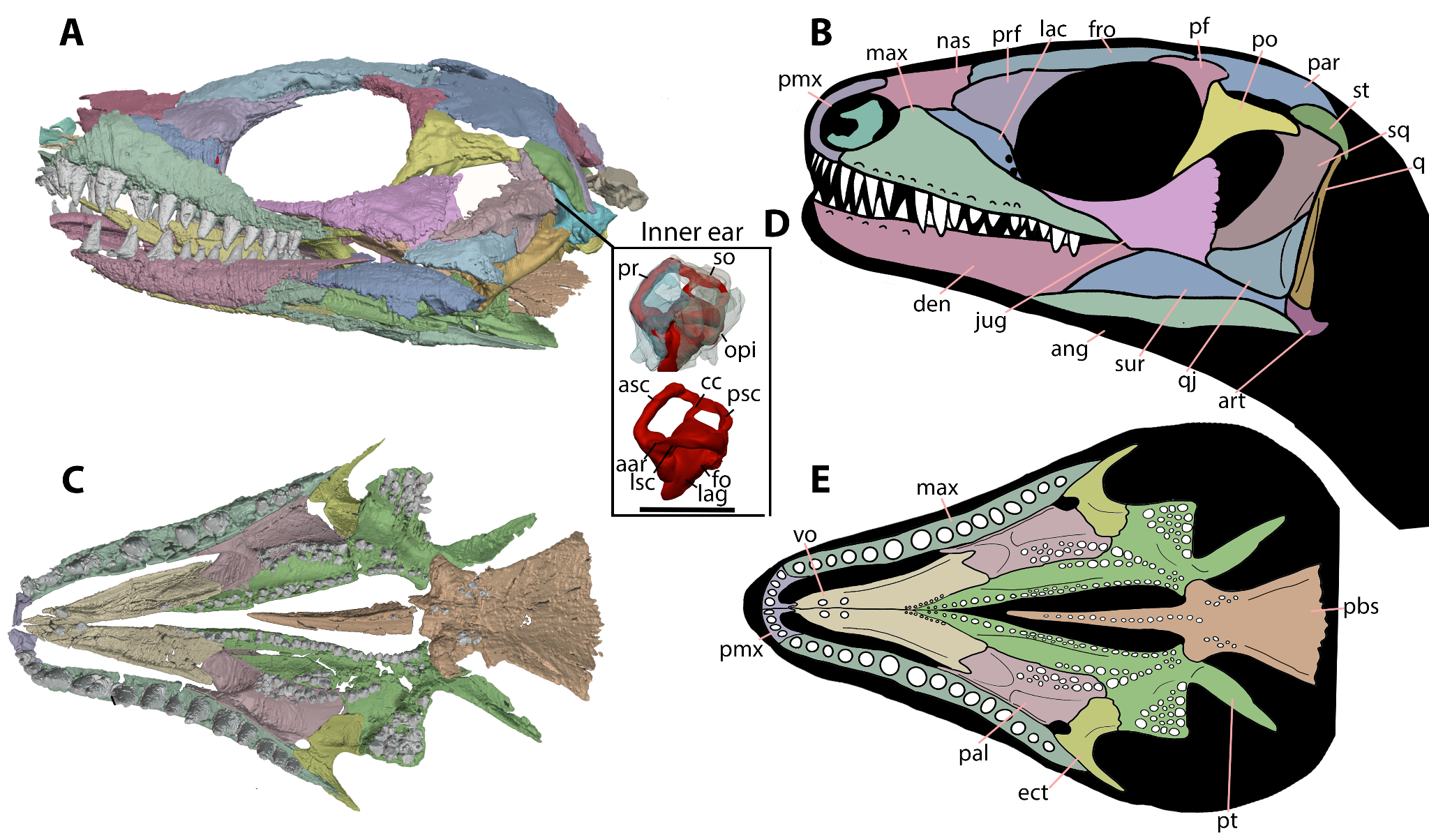
Ectopterygoid (ect on diagram)
Skull bone that connects the palate with the brain case; forms part of the roof of the mouth.
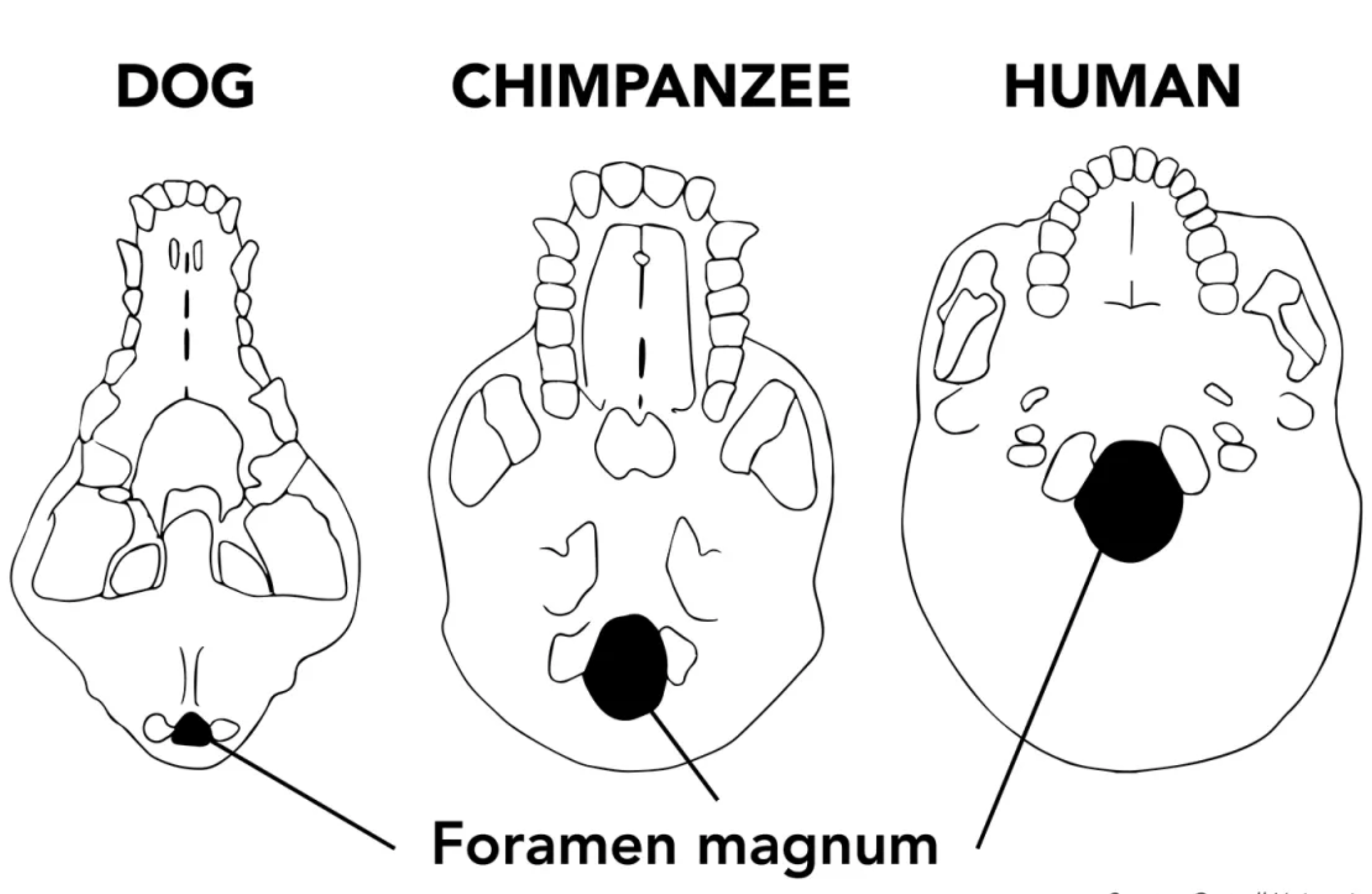
Foramen Magnum
The large posterior opening of the cranium or skull through which the nerve cord passes.
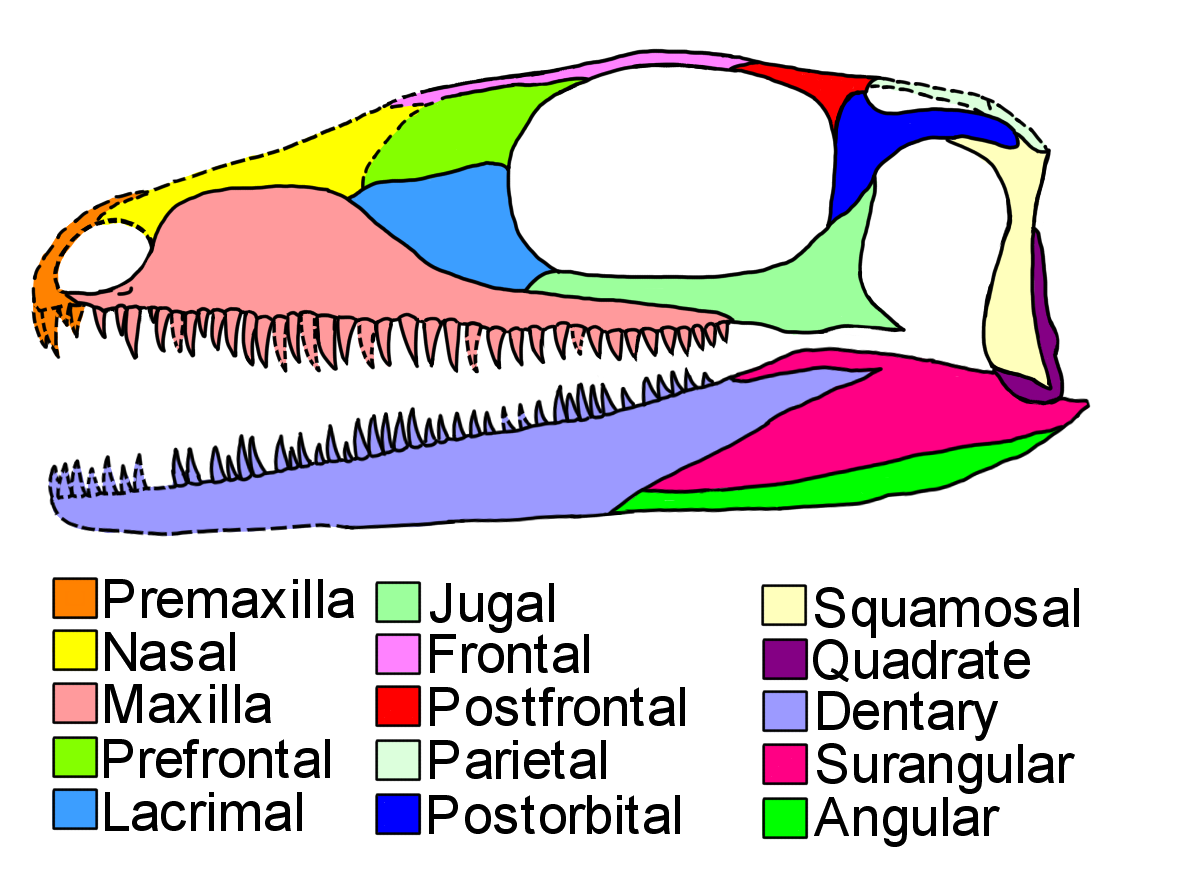
Frontal
A (dermal-derived) bone of the skull, generally located between the orbits.
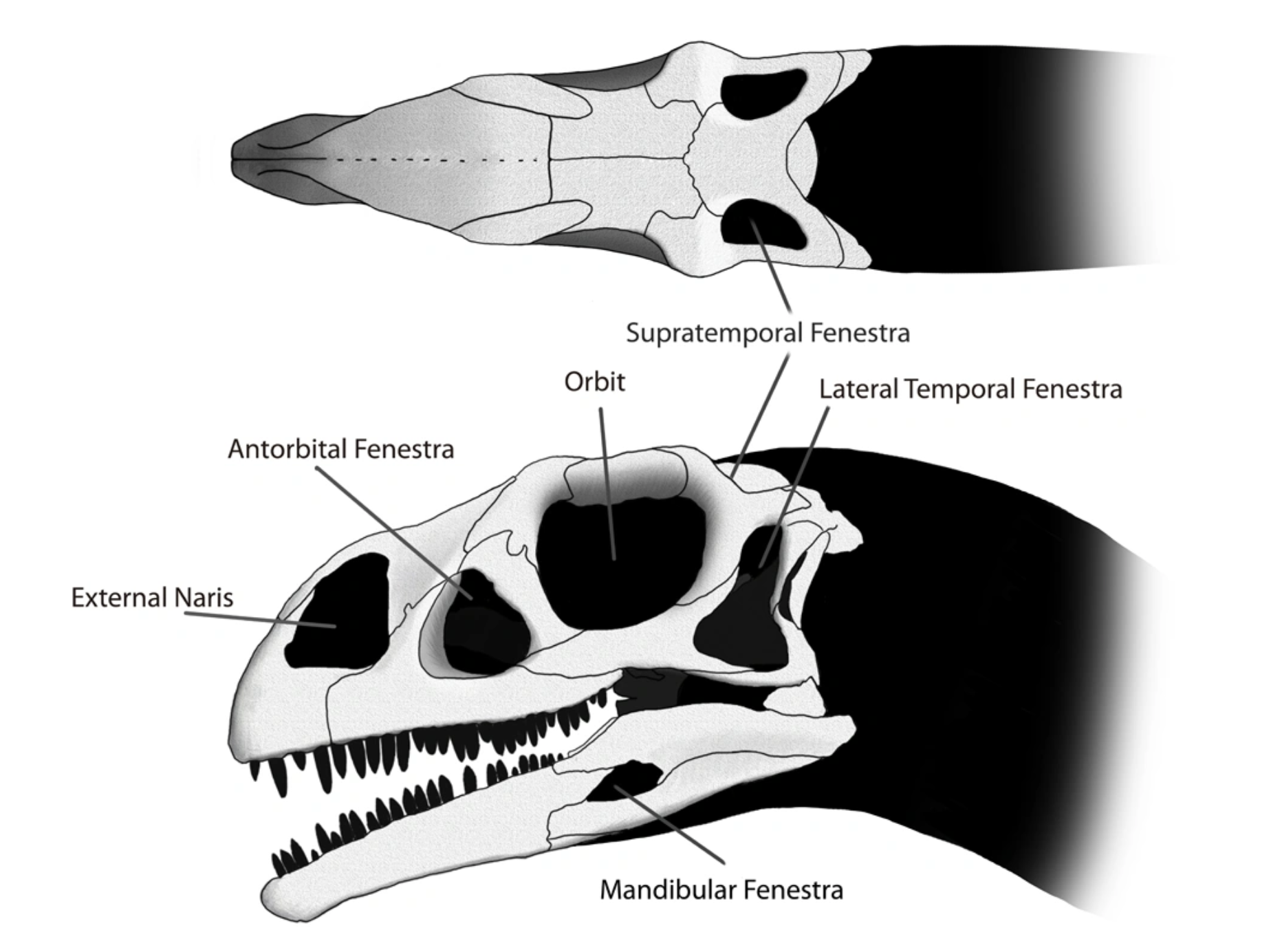
Infratemporal Fenestrum
The lower of the two openings behind the orbit of the skull.
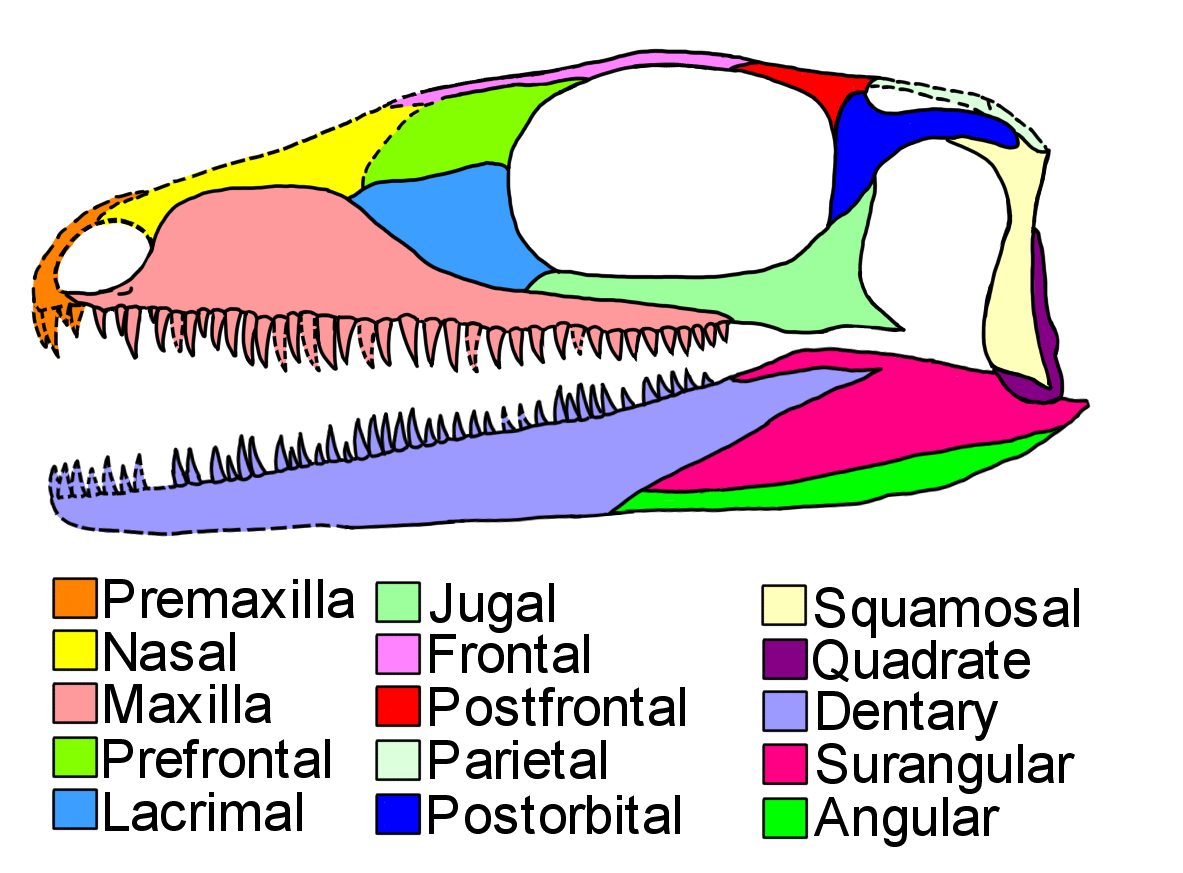
Jugal
A (dermal-derived) paired bone of the posterio-ventral region of the skull.
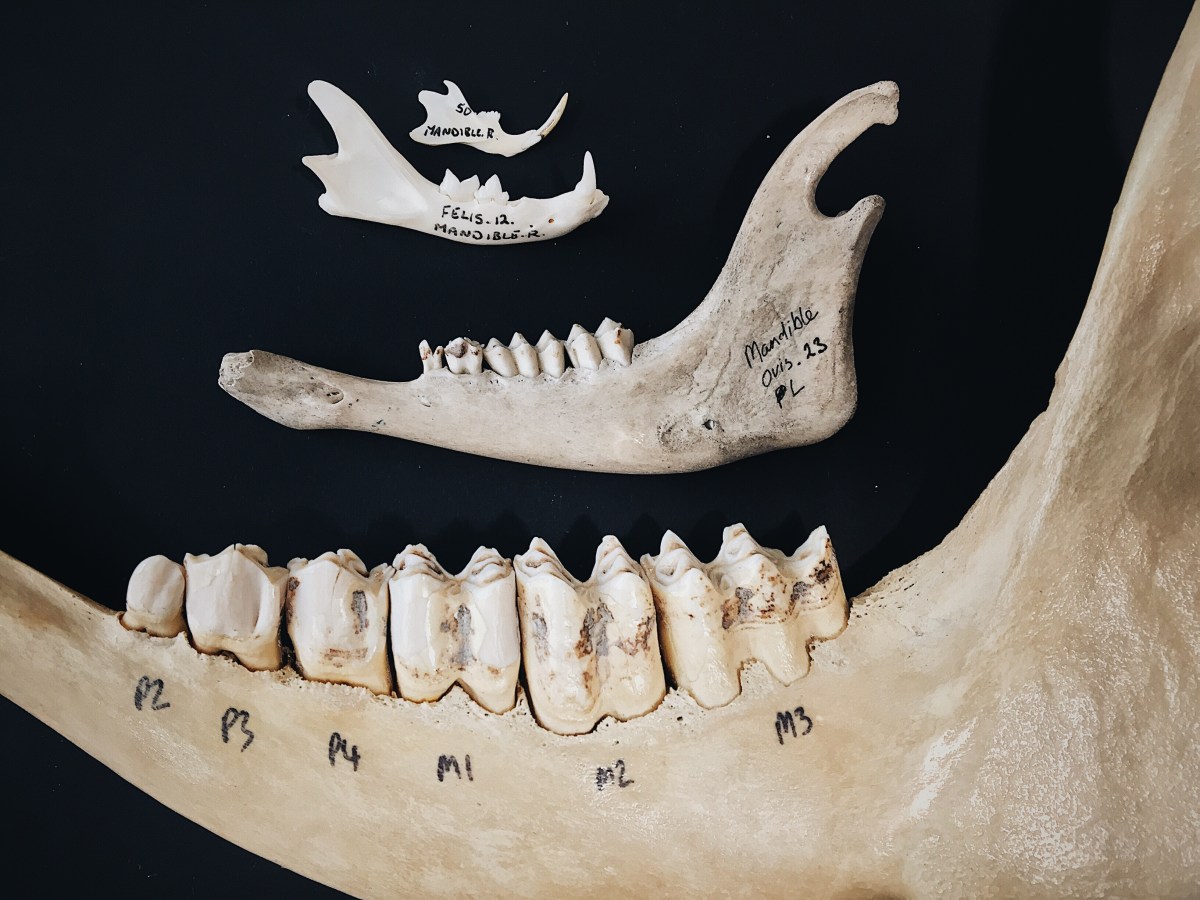
Mandible
The lower jaw, derived from Meckel’s cartilage and various dermal bones.
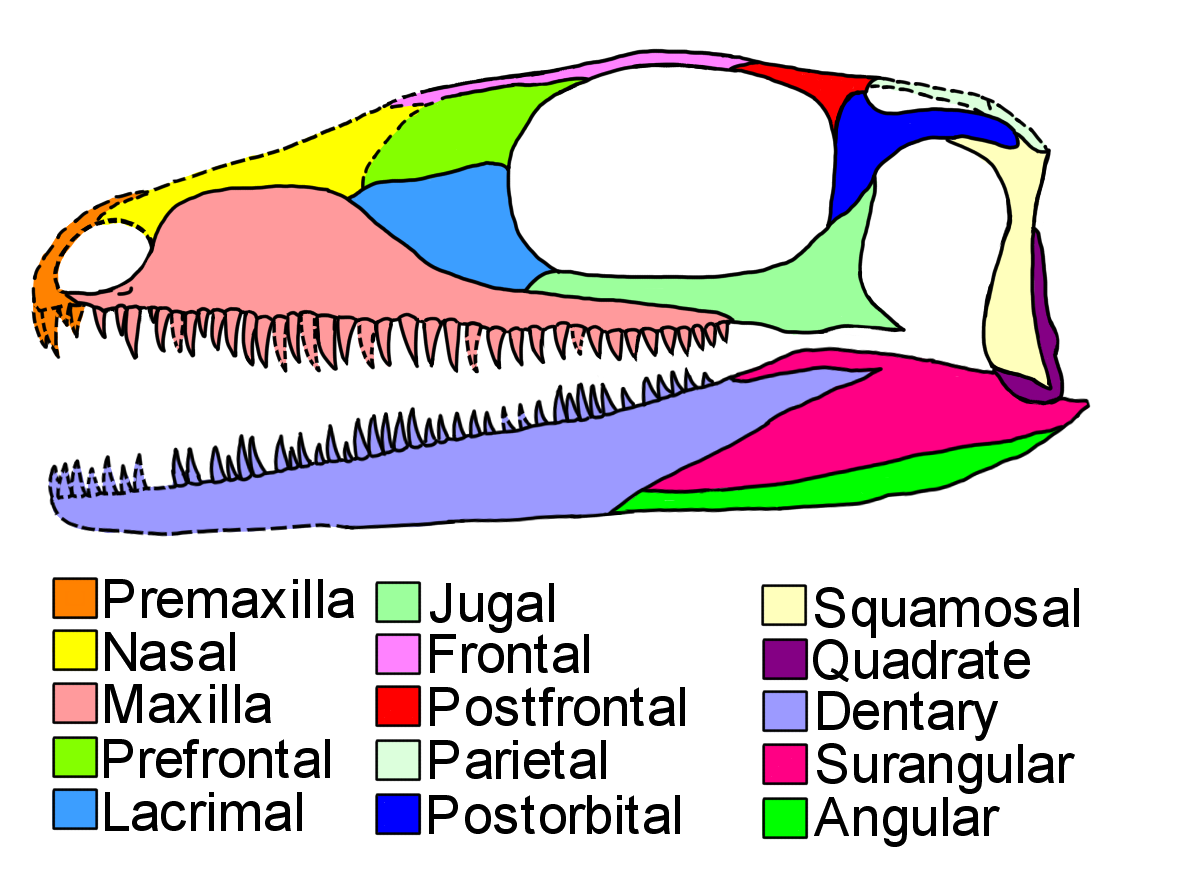
Maxilla
Paired bones of the lateral portion of the upper jaw that typically bear teeth.
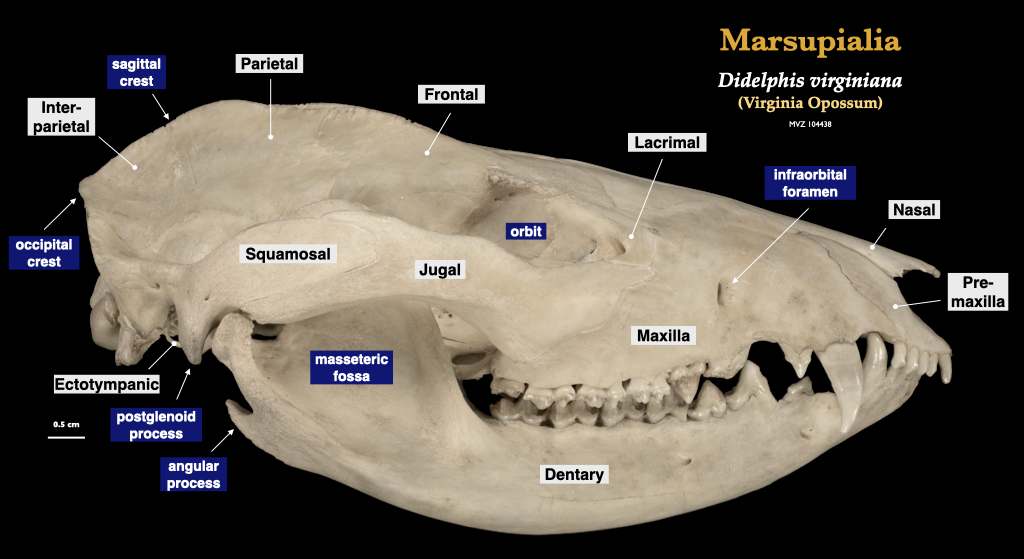
Nasal
Bony structure of the skull that houses the nares.
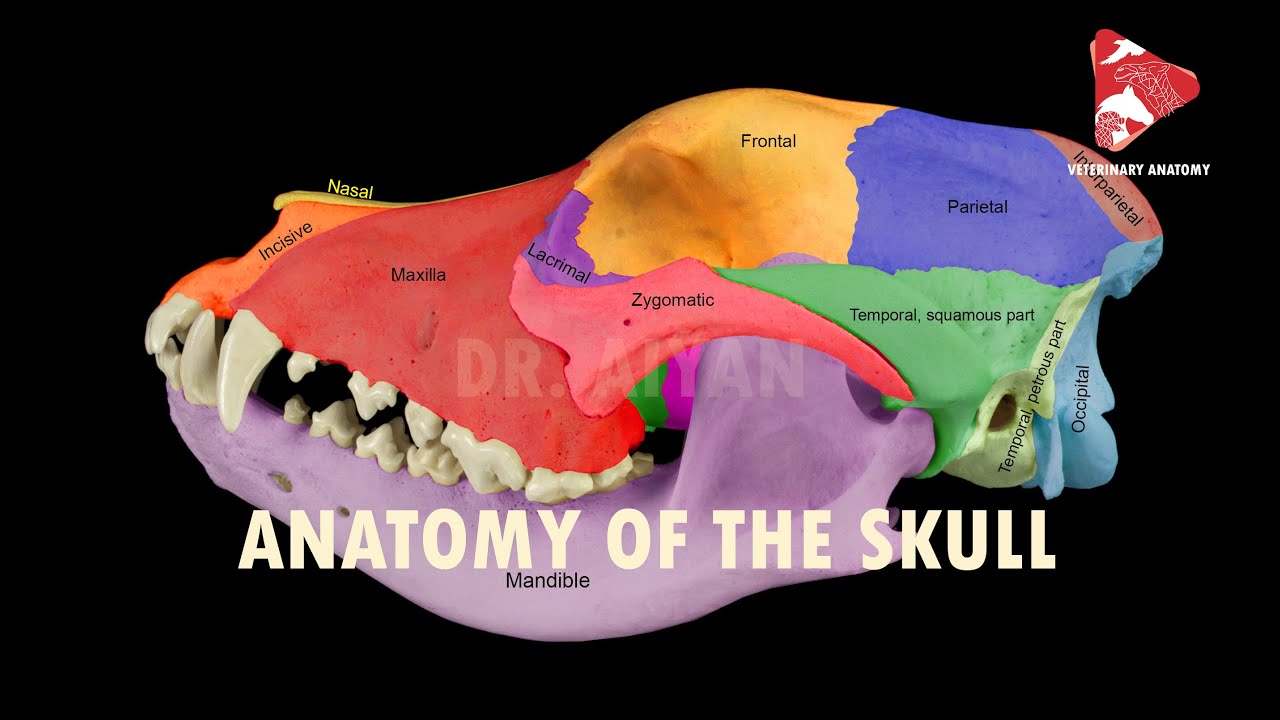
Occipital (bone)
The posterior portion of the head or skull
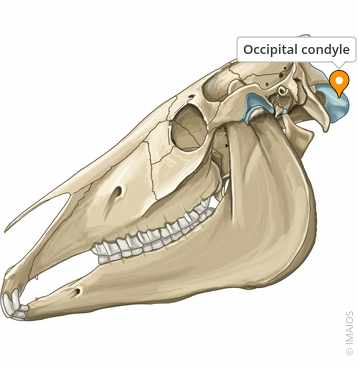
Occipital Condyle
A dermal bone at the posterior of the brain case.
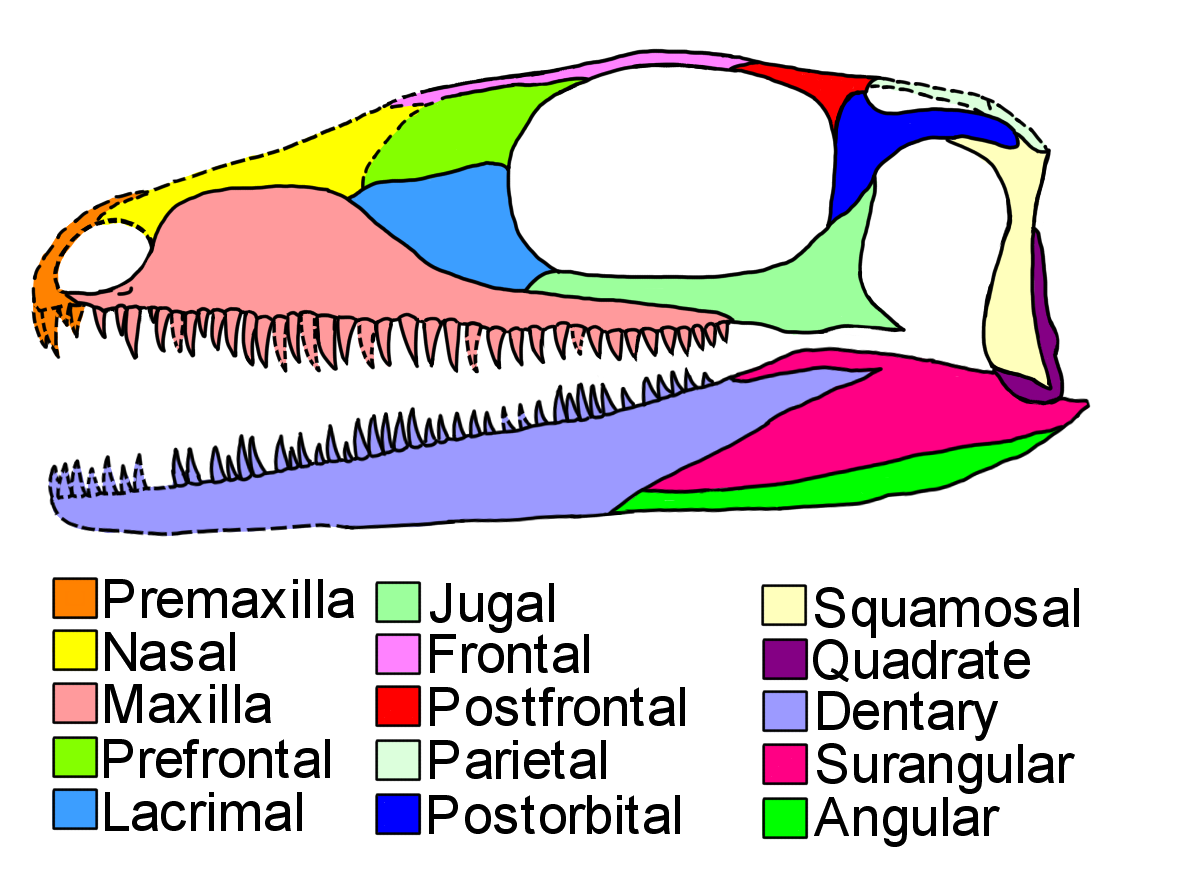
Orbit
The cavity or opening of the skull or cranium that holds the eyes.
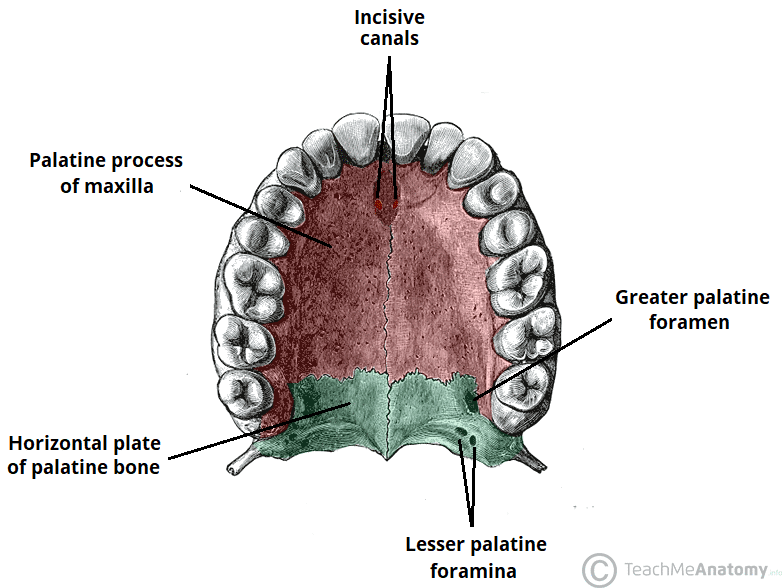
Palate
A shelf of bone at the roof of the mouth that separates the oral and nasal cavities.
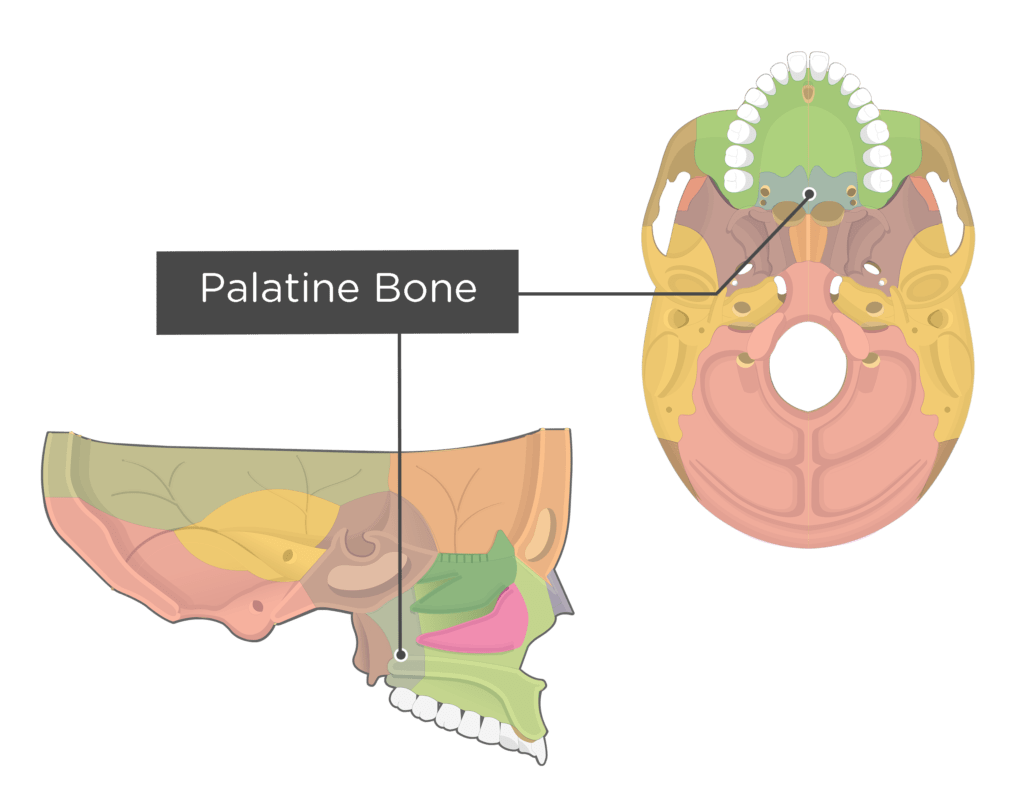
Palatine
Bone structure that forms parts of the eye socket, nasal cavity and hard palate.
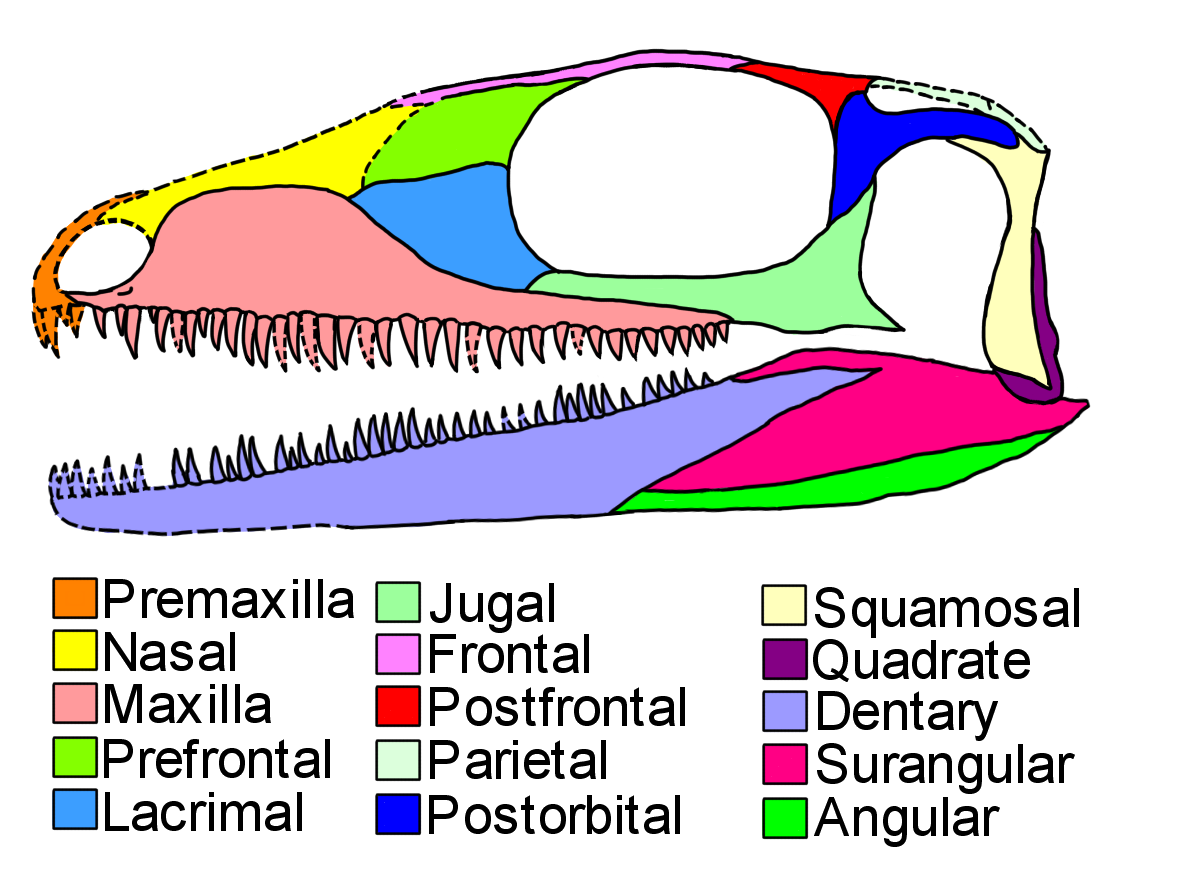
Parietal
A (dermal-derived) paired bone of the dorsal skull.
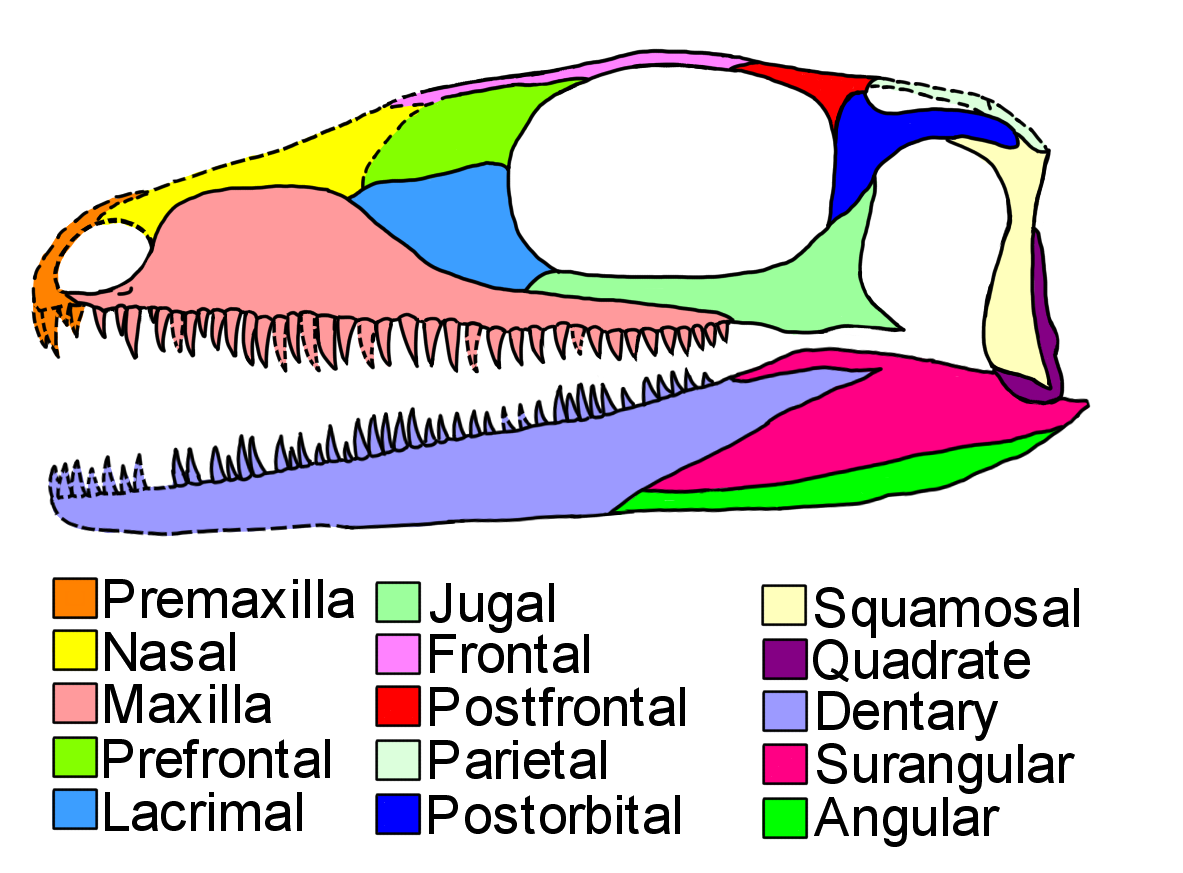
Postorbital
Forms a portion of the skull roof, or sometimes a ring around the orbit.
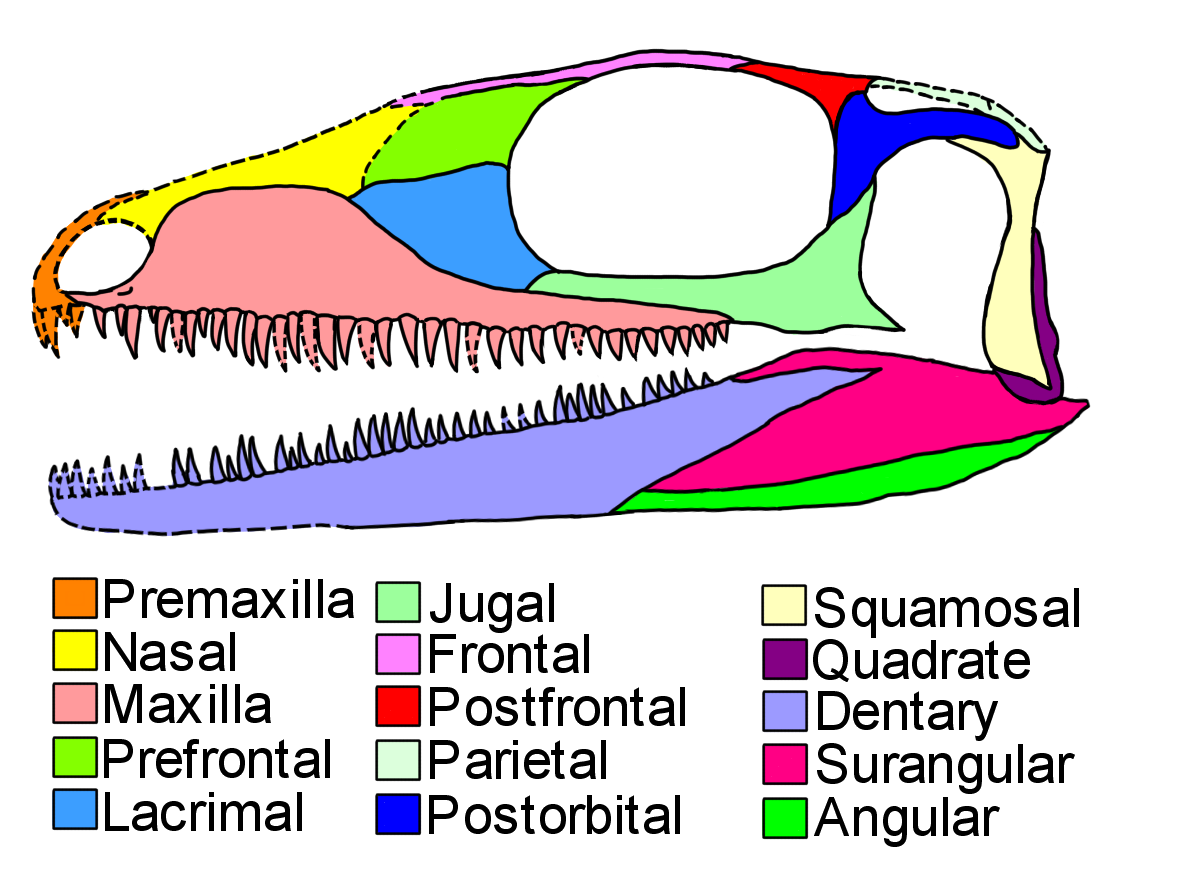
Prefrontal
Separates lacrimal and frontal bones, lost in mammalians.
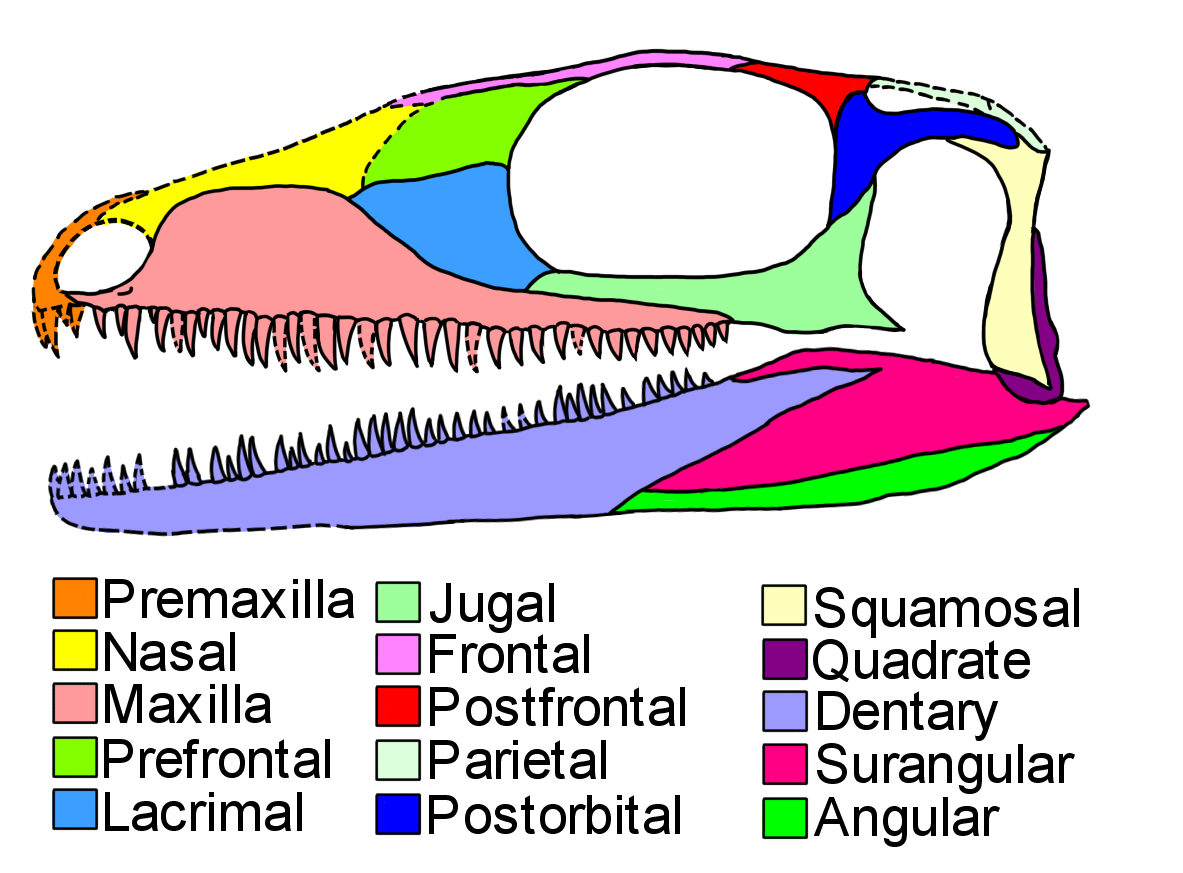
Premaxilla
The anterior-most paired bone of the skull; it typically bears teeth.
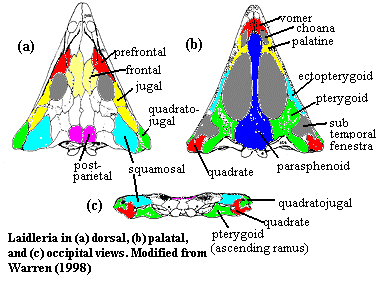
Pterygoid
Flat bone surface in the jawbone region of the skull that acts as attachment point for jaw muscles.
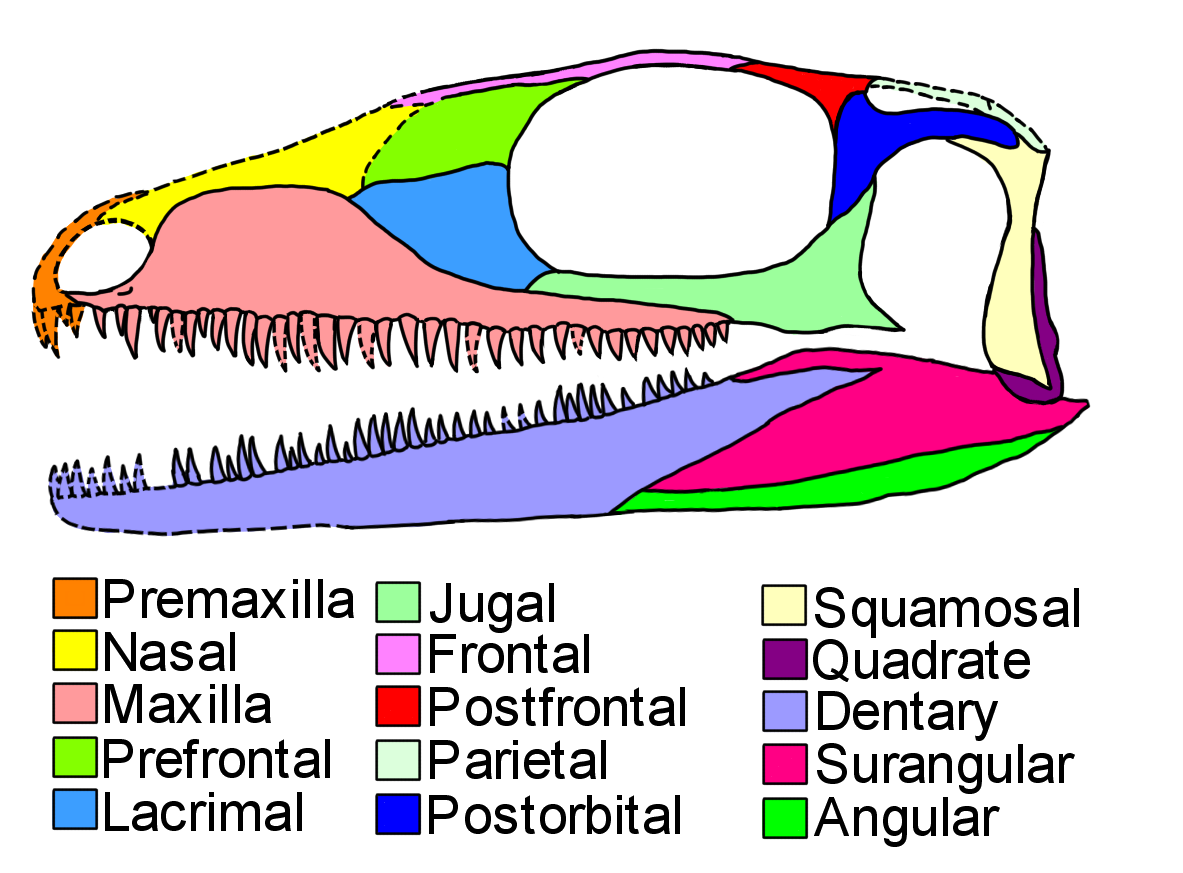
Quadrate
A paired bone of the skull that typically articulates with the mandible.
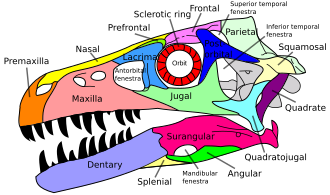
Quadratojugal
Forms a portion of the jaw joint; lost in many mammals.
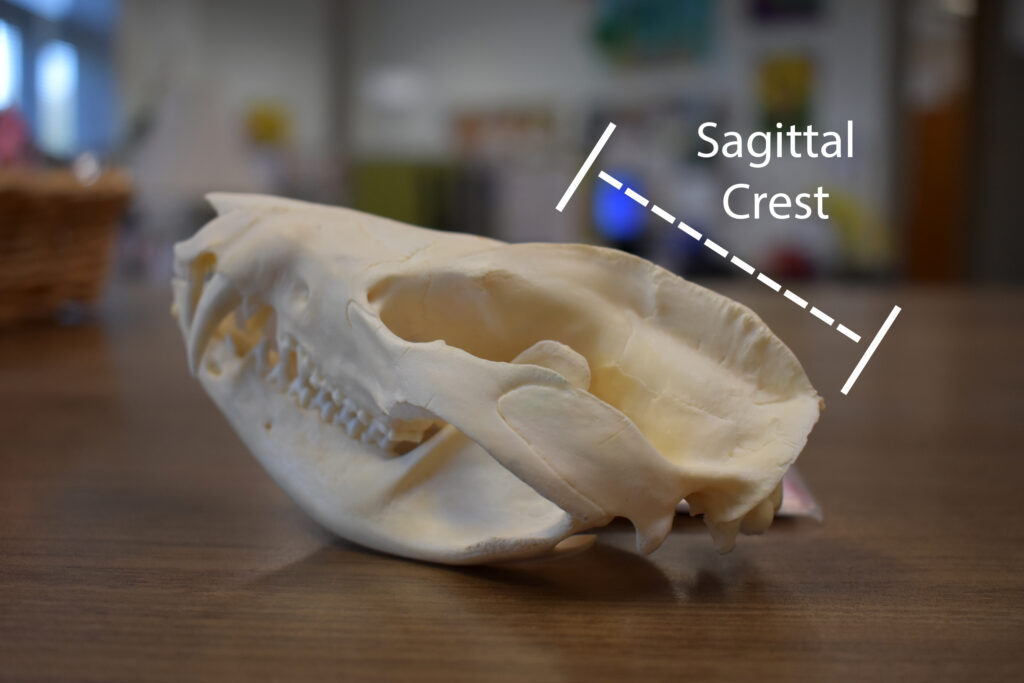
Sagittal Crest
A raised ridge along the midline of the brain case to which jaw muscles attach.
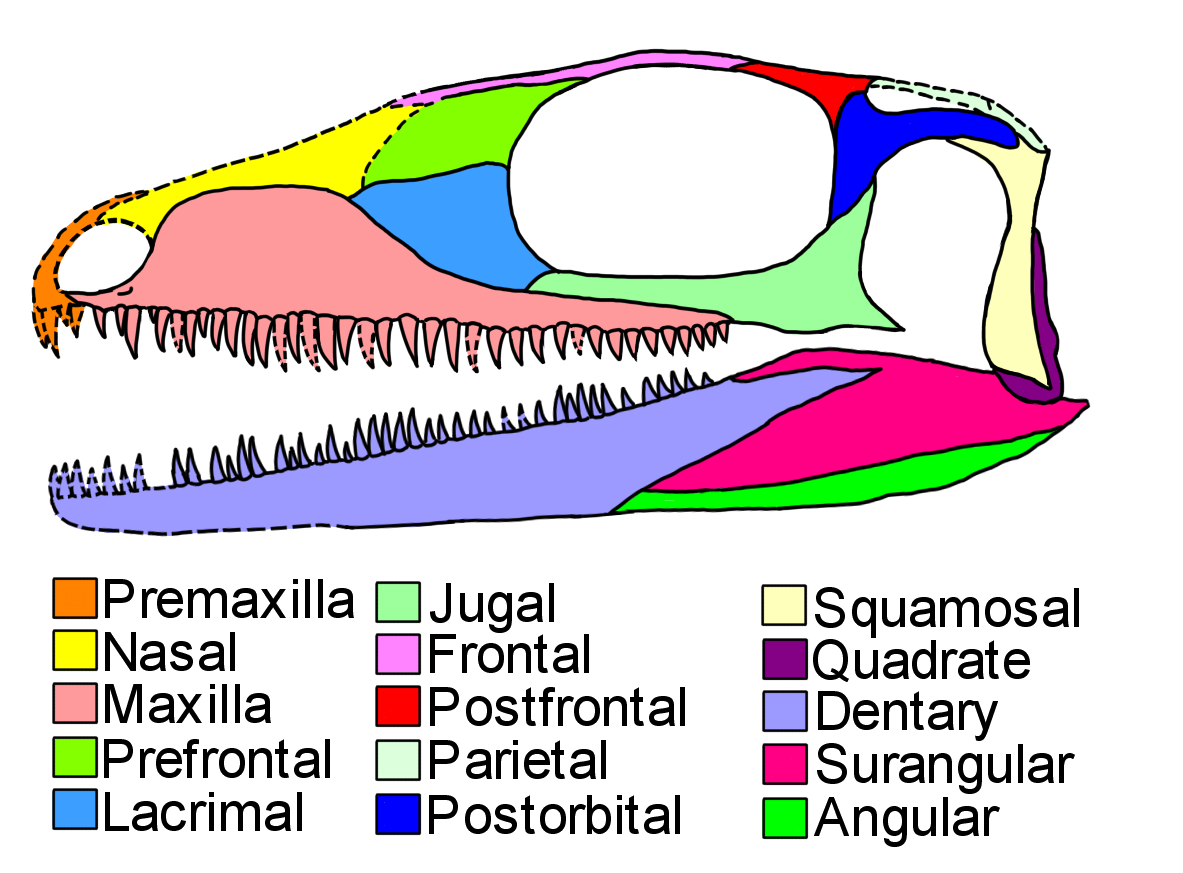
Squamosal
A (dermal-derived) paired bone of the posterior skull.
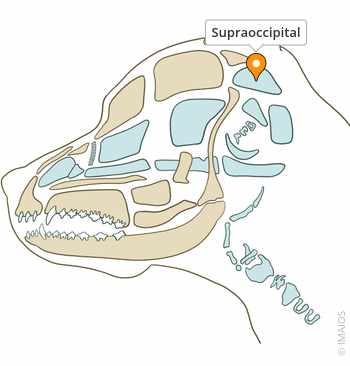
Supraoccipital
Back of skull, above the nape of the neck.
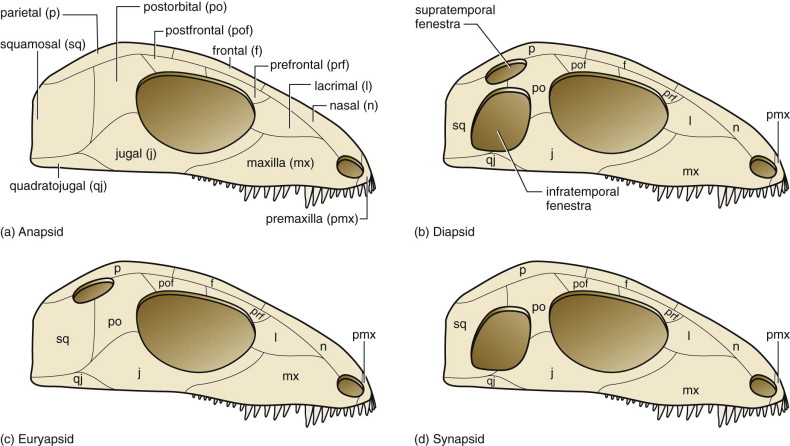
Supratemporal Fenestrum
Holes in the skull that are visible from a top-down view.
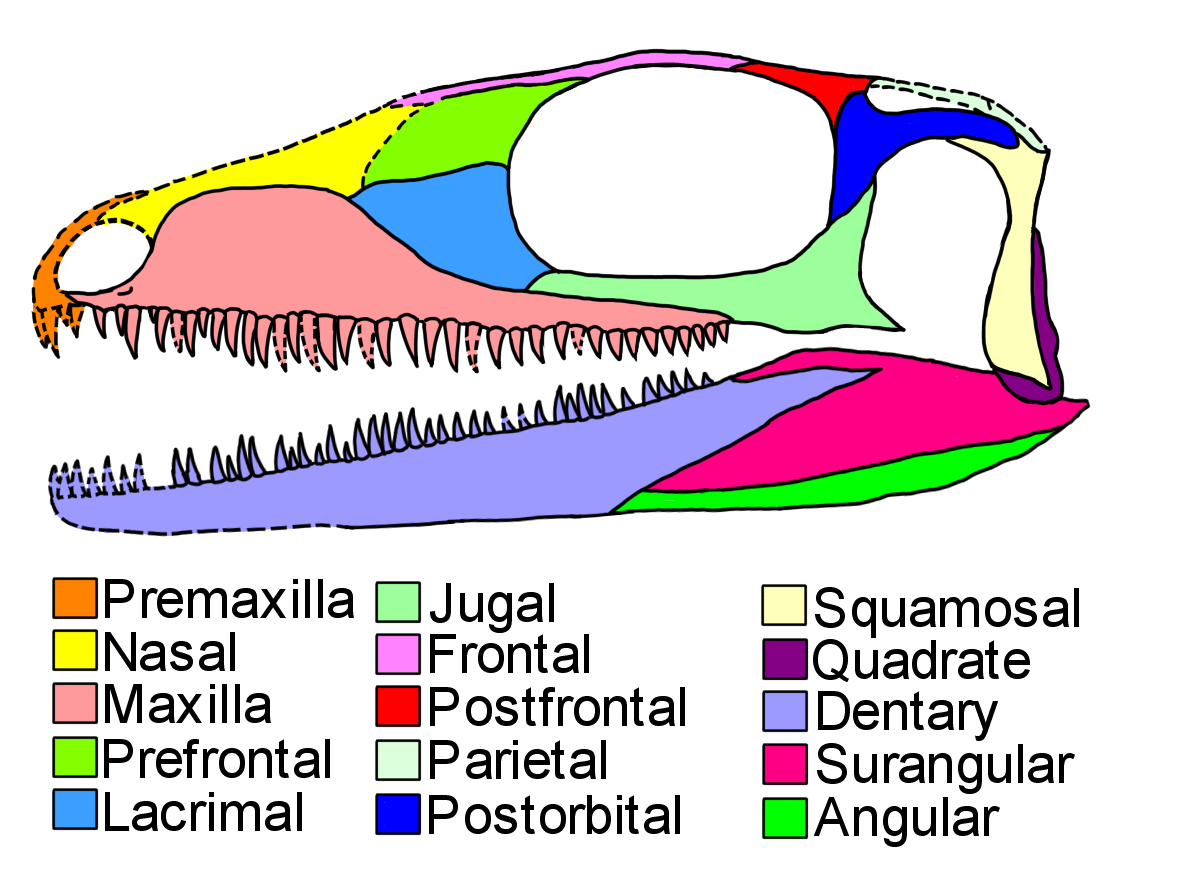
Surangular
Jawbone found in the back towards the articular joint, used as a muscle attachment point.
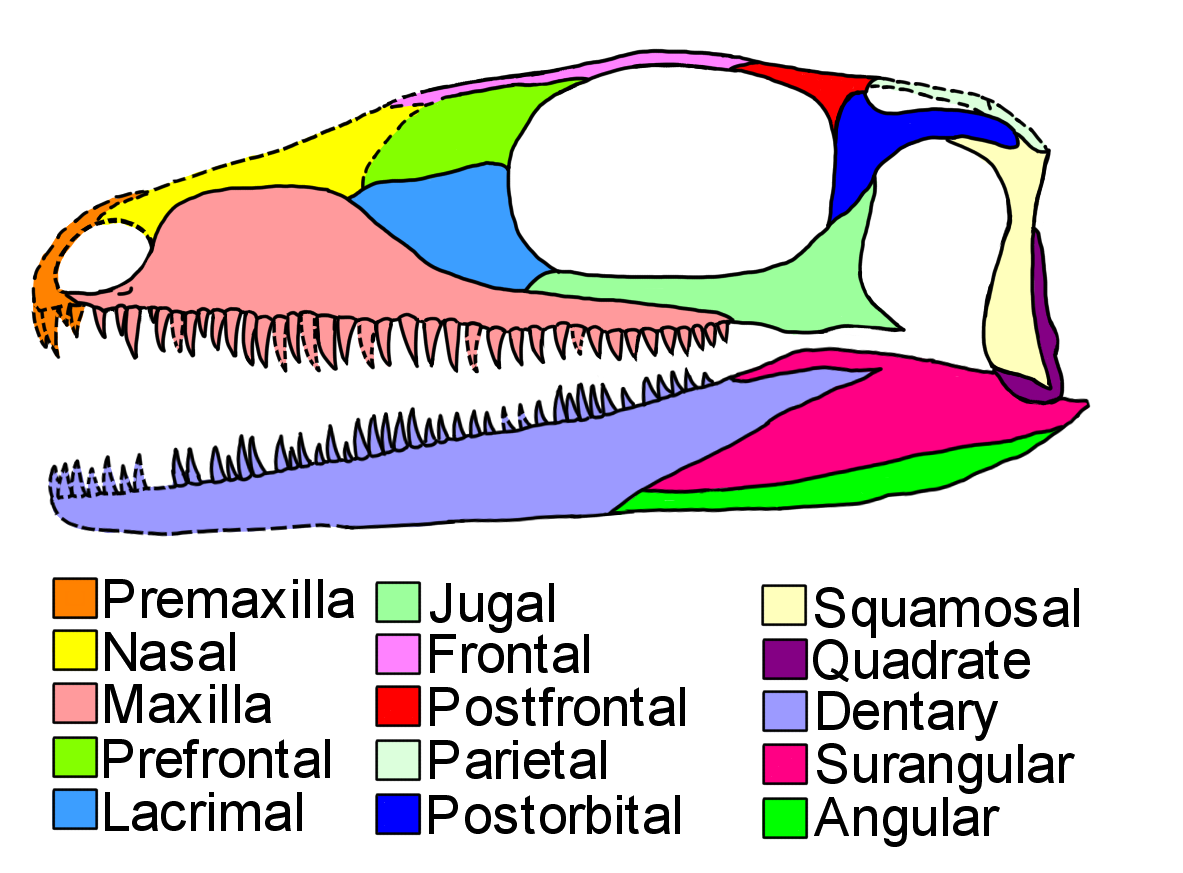
Temporal
A (dermal-derived) paired bone of the posterior skull. Same as Squamosal.
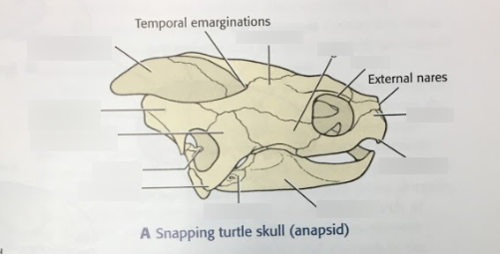
Temporal Emargination
Large holes in the back of the skull for the attachment of muscle or reduction of weight.
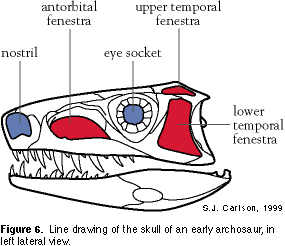
Temporal Fenestra
An often large opening in the skull roof of amniotes posterior to the orbit; it functions to increase attachment area and expansion of the jaw muscles.
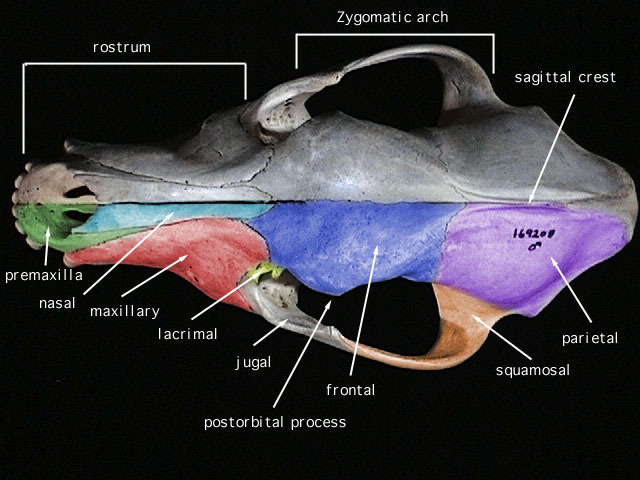
Zygomatic Arch
An arch of bone that represents the remnant of the ventral edge of the skull roof; composed of the jugal and squamosal bones.
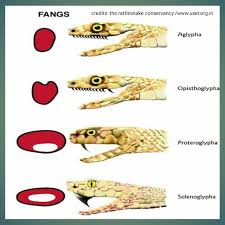
Aglyphous
Lacking fangs in snakes.
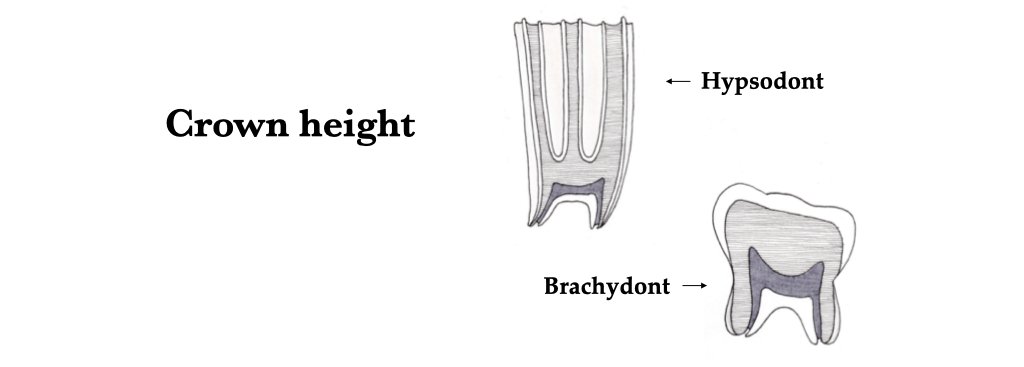
Brachydont
Enamel of molars is restricted to the exposed crown; generally have relatively shallow roots.
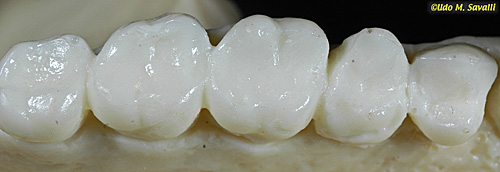
Bunodont
Molars having rounded cusps in a rectangular pattern.
Canine
A single pair of upper and lower teeth located posterior to the incisors; typically unicuspid, cone-shaped, and often larger than other teeth.
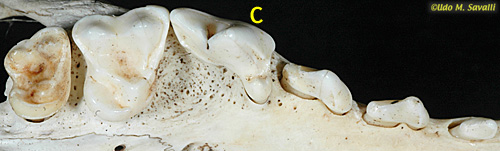
Carnassial
The specialized cheek teeth of carnivores mammals that form a combined shearing and crushing structure from last upper premolar and first lower molar.
Cusp
A raised bump, point or ridge on a tooth (especially mammals).

Diastema
Any gap between teeth, but especially the large gap between incisors and cheek teeth in herbivorous mammals.
Diphyodont
Having only 2 generations (milk and adult) of teeth in a lifetime.
Fang
An enlarged tooth, particularly one adapted for delivering venom.
Heterodont
Having two or more distinct types of teeth.
Homodont
All teeth are more or less the same shape.
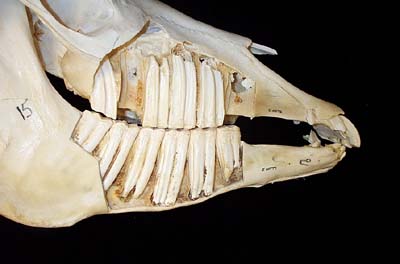
Hypsodont
Molars with a deep enamel-covered crown so that the deep-rooted tooth can be continuously pushed up as it wears.
Incisor
The anterior-most teeth of mammals (if present) located on the denture and premaxillary bones; typically (but not always) chisel-like.
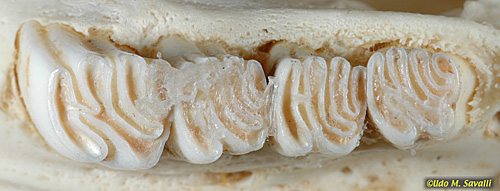
Lophodont + Selenodont
Molars that have ridges rather than pointed cusps; produced by ridges of enamel that wear more slowly than the dentine between them.
Molar
The most posterior teeth in mammals; often with complex patterns of cusps; not present as milk teeth (only one generation).
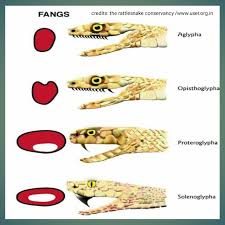
Opisthoglyphous
Having short, fixed fangs at the rear of the mouth.
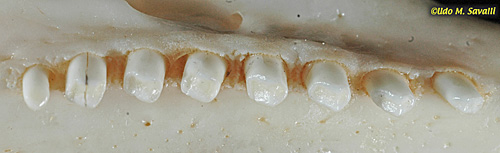
Peg-like
Teeth without obvious cusps or ridges but are flat topped (and usually round in cross section).
Premolar
A tooth that is posterior to the canines and anterior to molars, located on the maxillary and dentary bones; often have multiple cusps and may be similar to or smaller than molars; have 2 generations, unite molars.
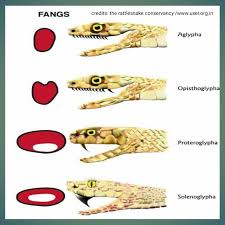
Proteroglyphous
Having fixed fangs at the front of the mouth (on a short maxilla).
Root
In thecodont teeth, the portion that is imbedded in the jaw socket.
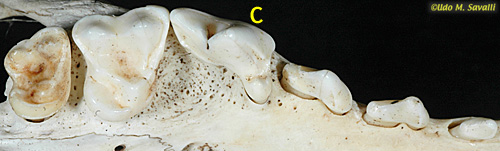
Secodont
Teeth that are blade-like and often triangular in lateral view.
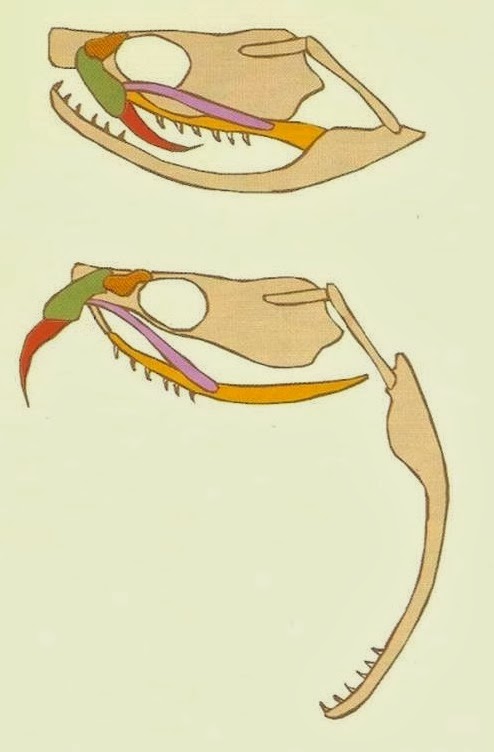
Solenoglyphous
Having long fangs on a short maxilla that can swivel or fold (vipers).
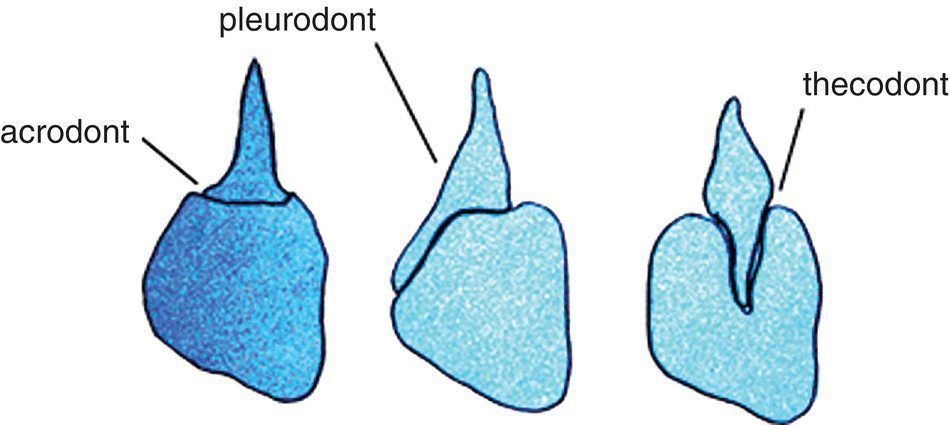
Thecodont
Having teeth set in a deep socket.
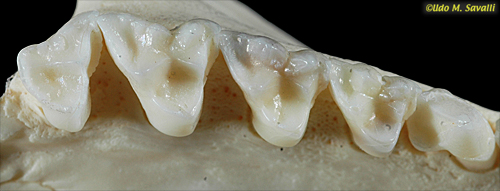
Tribosphenic
A general term for molars with V or W-shaped patterns of pointed cusps; generally typical of an insectivorous diet.
Tusk
An enlarged tooth, usually a canine, that projects beyond the mouth and is permanently exposed.
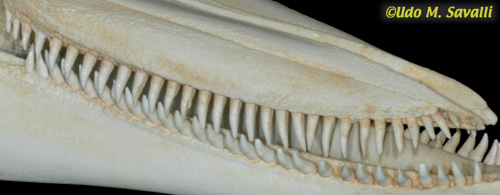
Unicuspid
In teeth, having a single cusp (peak or point).