HD Exam 3- Adulthood
 Call Kai
 Learn
Learn Practice Test
 Spaced Repetition
 Match
Match Flashcards
 Knowt Play
1/176

There's no tags or description
Looks like no tags are added yet.
Name | Mastery | Learn | Test | Matching | Spaced | Call with Kai |
|---|
No analytics yet
Send a link to your students to track their progress
177 Terms
History Normative events begin to have a bigger impact on what stage of adults? Why?
History normative events- societal challanges impact emerging adults directly instead of through their families bc they are more independent
ABLE Act
Achieving a better life experience act. Allows people who have a disability established before the age of 46 to open a tax free savings account to help save money for disability related expenses while maintaining eligability for other financial supports. Important because people with disabilities have additional financial burdens. One weakness of this act is that it limits the amount of money individuals can put in their account, not really allowing them to save enough money for a years worth of expenses.
Voting Accessibility for the Elderly and Handicapped Act of 1984 (VAEHA)
VAEHA requires voter registration and all polling locations used in federal elections to be physically accessible or provide an alternative means of voting such as main-in ballots. This increases voter turn out in persons with disabilities and people over 65 which is important because their vote is what will influence the changes they need in the world. One weakness in this act is that it fails to fully address non-physical barriers to voting and therefore continues to place limits on persons with other disabilities.
Cohort Effect
change that characterizes a population born at a specific time, social, Alwin/McCammon attitudes established young/maintained, social change occurs gradually between generations
What did the australian study of adults beliefs show about boomers?
they had opposite opinions regarding traditional values on family, gender, and religion
Generation Y
1980s-90s, kidss of baby boomers, values fam/career, women enter workforce, change in normative social/cultural expectations that previously defined adulthood (career/fam), 1st gen to become familiar with tech
Emerging adulthood (arnett)
between adolescence/adulthood, no kids/financial independence, rely on fam, explore education/jobs, prolongued period of identity/job development
Early adults face social challanges with
energy and enthusiasm
Traditional milestones of early adulthood (18-30s) (no longer average experience today)
finishing school, leaving home, marriage, children, finaancial independence
Physical performance peaks in…
early adulthood
Physical Function Early Adulthood
peak physical status/optimal health but peridoxical period bc risky behavior (accidents, obesity, drugs)
Edgework
desire to live on the edge resulty in behavior like extreme sports (not the same as reckless behavior)
Quarter Life crisis
emerging/early adulthood, locked in- feel trapped in adult role, locked out- feel unable to enter adult role
Early Adulthood Brain/NS
peak performance, adult by 25, prefrontal cortex fully matures, inc self regulation, less plastic, neurogenesis continues but slower- hippocampus
Early Adulthood Sensory Function
peak acuity, good sensory functioning support high level working memory
Sensory processing / disorder
complex neurobiological functioning that enables the brain to understand what is happening inside/outside of the body, a disorder emerges in childhood when the body cant organize signals into appropriate responses
Early Adulthood Cognition
fluid intelligence peak, better able to consider mult view points at once, understand/appreciate criticism, integrative/personal/practical, “achieving stage”
Erikson stages through adulthood
Early adulthood: intimacy vs isolation, middle adulthood: generativity vs stagnation, late adulthood: Ego integrity vs dispair
Schaie & Willis 7 stages of age-related cognitive development
kid- aquisitive, then movement thru stages not about age abt development/skills: achieving, responsible, executive, reorganizational, reintegrative, legacy creating
achieving stage (schaie + willis)
early adulthood, previously aquired knowledge used to establish oneself in the world
responsibility stage (schaie + willis)
when adult establishes/is in charge of family
executive stage (schaie + willis)
broaden focus form personal to community/social domains, not all people function at this level (requires opportunity + intrinsic ability)
Fluid intelligence
ability to process and problem solve in novel situations independent of aquired knowledge, peak ealry adult, begin decline in 30s
Crystallized intelligence
applying previously gained knowledge/LTM to decide how to respond/solve problems, improves through early/middle adulthood
Health equity
the study of healthcare across dif populations
Early adulthood domestic life
aquisition f necesities (CF), place to live, not uncommon to move 4+ times, household maintanence, assisting others
Early Adulthood Relationships
formal: employment/social parties with mutual affiliation/goal, informal: friend group, intimate: physical, nonverbal, self-disclosure, emotional intimacy, commitment, mutuality, not just romantic, romantic
Ginzberg’s developmental theory of vocational choice
childhood fantasy period, adolescence tentative period, early adulthood experimentation of career category + exploration process
supported employement
help individuals with disabilities participate in competitive job market by finding job and providing ongoing support
Sex vs Gender
chromosome/relative hormone basis, social categorization
Define the following gender identities:
cisgender
transgender
nonbinary (queergender)
gender fluid
bigender
agender
cisgender- same as assigned at birth
transgender- different than assigned at birth
nonbinary (queergender)- not exclusive to one gender category
gender fluid- multiple gender categories depending on context
bigender- identify with two genders
agender- not identify with any gender
gender typing
process of gender socialization during development
gender-typed
behaviors/things stereotyped to a given gender
cross-gender typed
behaviors contrary to those stereotyped for a persons gender
gender non-conforming
kids who are highly cross-gender typed, “tomboy”
Gender difference
more similarities, few differences, highly variable within group, motor abilities, gendered typed play, physical aggression, trivial
gender segregation
prefer to play with same gender emerge in preschool, temperment/soc/cog influence, emerge at same time as gender identity, peer pressure, rejection
Gender in middle childhood
attain gender constancy (not tied to physical appearance), highly gender typed but flexibility exists
Gender in Adolescence
gender rol rigidity/intensification, internalization of gender roles, discrimination, AND gender role relaxation/flexibility, flexible attitudes/interests
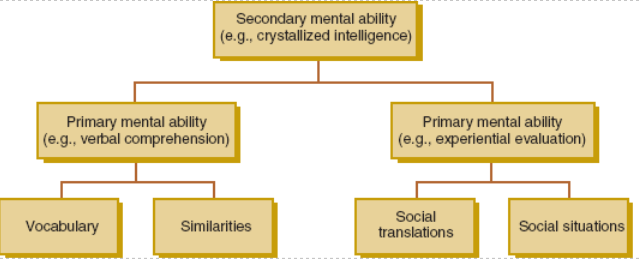
Structure of Intelligence (organization of interrelated abilities)
factor (ability measured by mult tests) primary (cluster of factors) secondary (even more theoretical)
Middle Adulthood age general range
40s-60s, established adult roles: family, career, community participation
Middle age developmental tasks
extended caregiving/family responsibilities, maintain standard of living, be proud of accomplishments, adjust to physiological changes
3 types of age
biological, psychologyical (adapt/problem solve/cope), social (habits/beliefs/attitudes, with the times?)
Sandwhich generation
middle age adults caring for their parents and children
Occupational balance
how satifying/fullfilling and compatible with their goals/values someones job is
Body function/structure in middle age
generally good physical/mental performance, gradual age related declines, menopause
Middle Adult Brain/NS
neurogeneisis balanced by shrinking of hippocamus, cortex, and cerebellum (doesnt dramatically impact functioning, diet/exercise can reduce)
Risk factors for cognitive decline in middle adulthood
hypertension, T2D, high cholesterol
Middle Adulthood Cognition
peak: inductive reasoning, spatial orientation, vocab, and verbal memory, dec: perceptual speed and numerical reasoning (women reach peak performance 10 years after men)
Middle Adulthood Sensory Function
decline, noticeable changes in vision and hearing but no major impairment until late adulthood
Absolute threshold vs Difference threshold
smallest detectable level of stim, vs smallest detectible incriment of change
Middle Age Vision
need more light to see (dec: lens transperancy, light entering eye, and macular neurons), less effective accomodation, and presbyopia (ciliary cchange for lense curve dec), most need glasses 40s-50s
Middle Adulthood Skeletal Change
bone remodeling balance shift to more loss than formation after 35, osteoporosis (most common bone disease in middle adulthood), osteoarthritis
Middle adulthood Hearing
presbycusis (most common, notice at 60), sensorineural hearing loss (prolongued exposer to loud noise damage cochlear hairs)
Middle adulthood muscular change
30-40 BMI increase, bone density dec, 40-65 change not in strength but in contractions, dec flexibility
Sex differences in CV fitness
physical activity more strongly influences CV of men, physical inactivity plays a more substantial role in disease risk for women
leadng cause of morbidity/mortality in middle/late adulthood
cardiovascular disease
Health risks (aging-associated diseases)
hypertension, cardiovascular diseaase, diabetes, cancer
Common causes of disability in adults
arthritis, lower back pain, CVD, mental/emotional pain
Stages of Reflective Judgement
Pre-reflective Reasoning: believe authority figure or firsthand observation rather than evaluation of evidence, “I know bc I see”/”its on the news” clear/correct answer
Quasi-reflective reasoning: knowledge contains uncertainty, use evidence but don’t fully trust “are we sure scientists aren't making this up” nothing certain/everything =subjective
Reflective Reasoning: knowledge = constructed, analyze mult viewpoints/evidence, reevaluate thoughts
McAdams Life Story
narrative your tell yourself/keep rewriting throughout life
MAPS model
metacognition, agency, and possible selves, model for sense of control/agency
Personal Control Beliefs throughout life
primary control low then high in middle age then low, secondary control inc in middle age and stay high
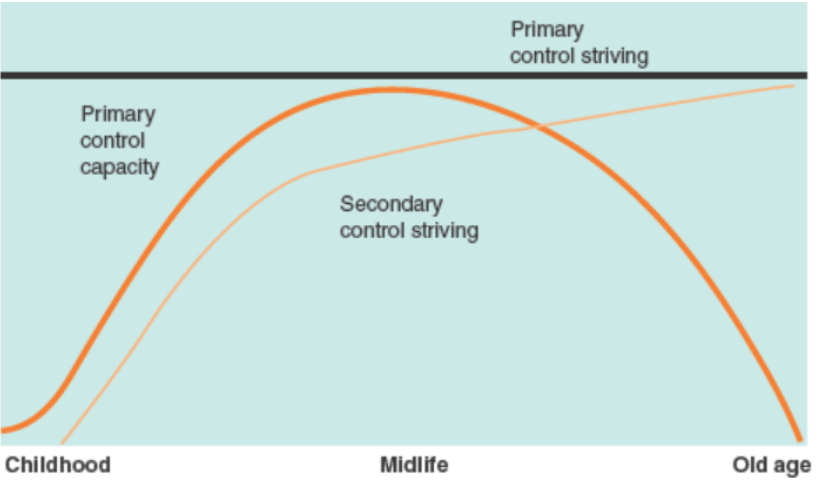
Haase Primary vs Secondary Control
primary: behavior aimed to impact outside world, secondary: internal behavior (self belief)
Social baseline theory
friends become part of our self-definition and influence our brain (less fear in trialing situations)
Assortative mating theory
find partners based on similarities
Exchange theory (marriage)
happy marriage when both parties feel they are contributing evenly
When do the different types of ages (chronological, social, etc) start to really matter?
middle adult when someone at 60 can seem older or younger
When is life considered most intense, demanding, and rewarding?
midlife
How does emotional integration change over adulthood?
as adults get older prefrontal lob and ant insula and amygdala more integrated, so logical thought and emotions more integrated
Neural efficiency hypothesis
smarter ppl process info more efficiently, areas of weaker activation are much fewer than dumb ppl
emerging adults judge a person more harshly when the negative information is presented ________
older adults judge a person more harshly when the negative info is presented _________
second (think abt last), first (integrate all)
Possible selves
represent what we could become, good and bad
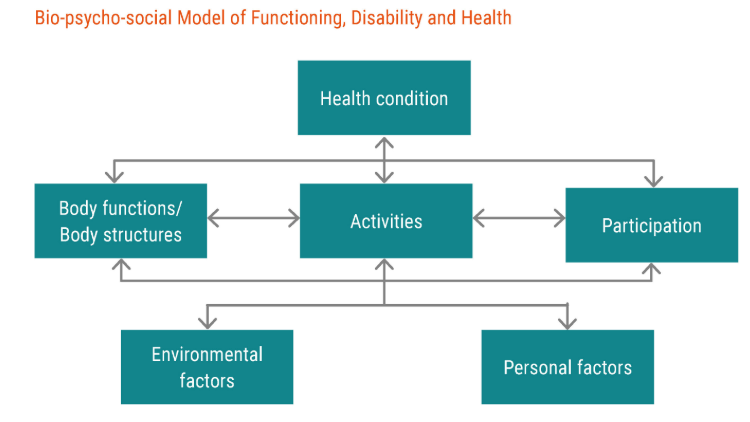
ICF model review
homogamy
similarity
Vulnerability-stress-adaptation model (marriage)
marital quality = dynamic process of couples ability to adapt/handle stress based on vulnerabilities/resources
Who said: people work for more than money, they want to do something meaningful
schwartz
Meaning-mission fit
companies whose employees agree with their mission work better
Holland’s Job Theory
people choose jobs based on individual traits and occupational interests, influenced by 6 personality types (investigative, social, realistic, artistic, conventional, enterprising)
What is SCCT based on?
Banduras social cognitive theory
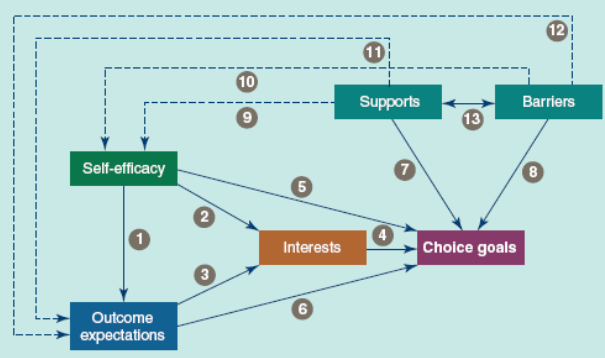
Social cognitive careet theory (SCCT)
career based on 4: self efficacy, outcome expectations, interests, and choice goals (what you want to achieve), second version includes supports and barriers
What accomodations can help middle adults?
improve lighting and better visual contrast
Super’s developmental view of occupations
self concept/job adaptation: implementation, establishment, maintenance, decleration, retirement
Supers 5 developmental tasks (career dev)
crystalization, specification (teen), implementation (20s), stabilization, consolidation (middle/late adulthood)
Selingo 3 type of people (in relation to careers)
sprinters (always know what wanted to do), wanderers (less certain, change majors), stragglers (drift after high school)
Reverse, Reciprocal, and Micro mentoring
more senior becomes mentee, roles switch depending, mentor for one specific task
2 problems that can occur lower job satisfaction
alientation: feeling like one cog in the machine, burnout
Vallerand’s passion model
obsessive passion: uncontrollable urge to participate, all eggs in one basket, burnout, harmonious passion: freely engage, accept as less important/no contigencies, balance with other activities
Glass ceiling
upward limit for minorities
Glass cliff
minority only given leadership position in time of instability (when company isn’t doing well)
boomerang generation
leave the home then come back again before leaving again, not associated with a specific generation
boomerang employees
leave company and return often as contractor with less benefits
Career plateauing
lack of challange/promotional opportunity, reskilling + upskilling
climacteric
point at which women loose reproductive ability
Stress and Coping Paradigm (Lazarus)
stress is not based on stimulus/event but how we interpret/react, primary appraisal filters/categorizes info, secondary appraisal is percieved ability to cope/do something about it, reappraisal
Problem Focused vs Emotion focused coping
tackle problem head on vs deal wth feelings about event
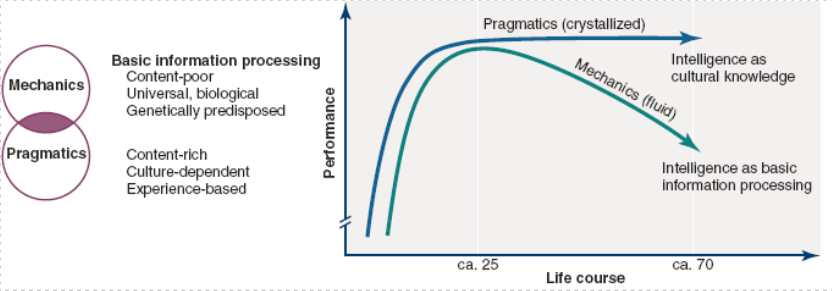
Pragmatics (crystalized) + Mechanics (fluid) over time
more apparent in middle adulthood, mechanic decline in late adulthood
Expert performance peaks in…
middle age
5 factor model of personalities
Neuroticism, extraversion, openness to experience, agreeableness, conscientiousness, fairly stable over time
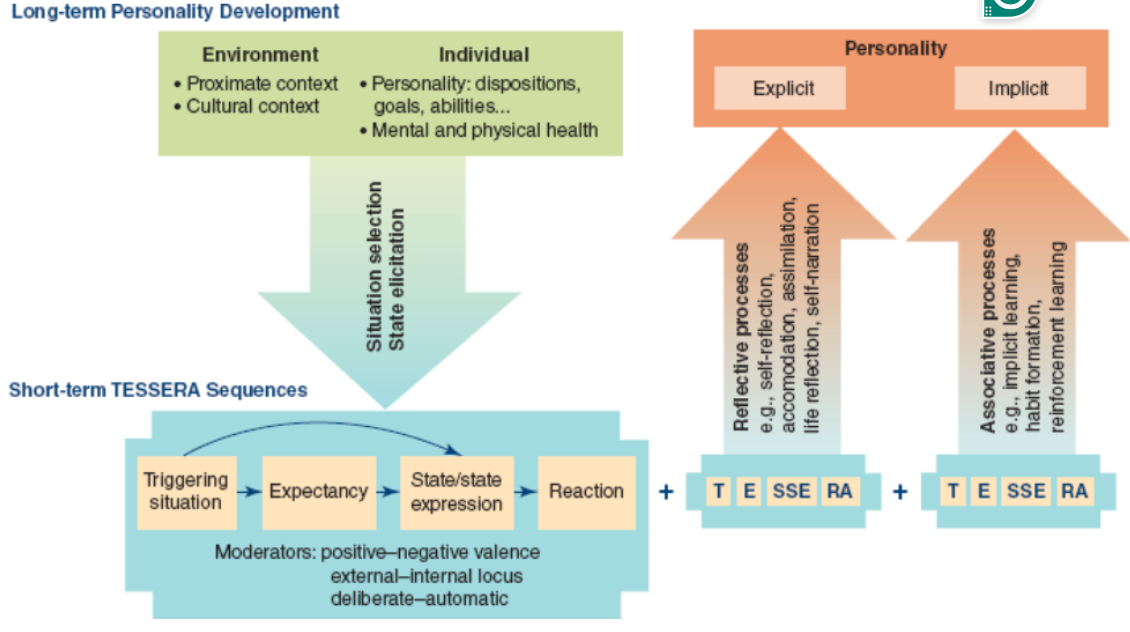
TESSERA model
explains how short term things loop/add up to long term personality, triggering situation, expectancy, state/state expression, reaction