Chemistry AS terminology
 Call Kai
 Learn
Learn Practice Test
 Spaced Repetition
 Match
Match Flashcards
 Knowt Play
1/43

There's no tags or description
Looks like no tags are added yet.
Name | Mastery | Learn | Test | Matching | Spaced | Call with Kai |
|---|
No analytics yet
Send a link to your students to track their progress
44 Terms
Isotope
atoms of the same element with a different number of neutrons and a different mass
relative atomic mass
weighted mean mass of an atom compared with 1/12th mass of carbon-12
relative isotopic mass
mass of an atom of an isotope compared to 1/12th mass of carbon-12
atomic orbitals
a region around the nucleus that can hold up to two electrons with opposite spins
empirical formula
simplest whole number ratio of atoms of each element present in a compound
molecular formula
the number and type of atoms of each element in a molecule
water of crystallisation
water that occurs in crystals but is not covalently bonded to a host molecule or ion
anhydrous
contains no woc
hydrated
contains woc
standard solution
solution of known concentration
acids
release H+ ions in aqueous solutions
ionic bonding
electrostatic attraction between + and - ions
covalent bonding
strong electrostatic attraction between shared pair of electrons and nuclei of bonded atoms
dative covalent bonding
when lone pair is donated to empty space in atom
giant ionic lattice
due to oppositely charged ions strongly attracted in all direction
electronegativity
the ability of an atom to attract the bonding electrons in a covalent bond
polar molecule
requires polar bonds with dipoles that do not cancel due to their direction
metallic bonding
strong electrostatic attraction between cations and delocalised electrons
disproportionation
when an element is both ox and red in reaction
first ionisation energy
energy required to remove one mole of electrons from one mole of atoms in the gaseous state to form one mole of gaseous 1+ ions
Homologous series
series of org compounds with same functional group differing by a CH2 each
aromatic
contains benzene ring
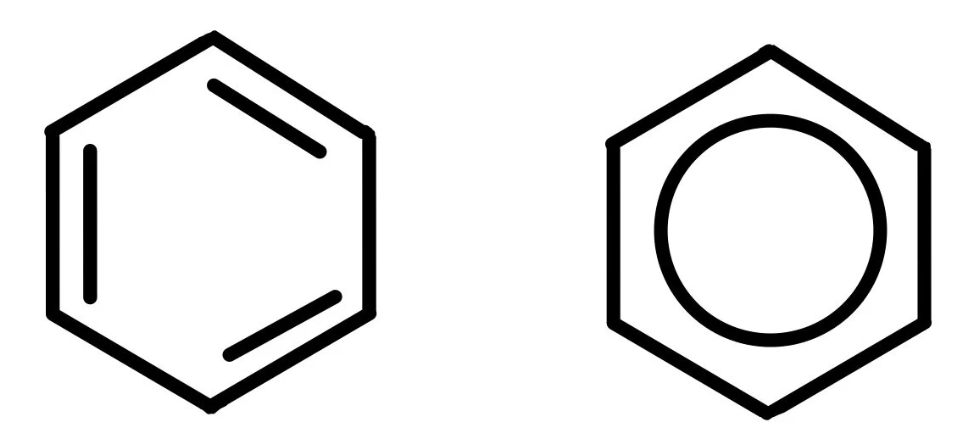
alicyclic
compounds/carbons bonded in a ring (not benzene)
aliphatic
compounds branched/unbranched/non aromatic rings
structural isomer
same molecular formula but different structural formula
homolytic fission
each bonding atom receives one electron from the bonding pair, forming 2 radicals
heterolytic fission
one bonding atom receives both electrons from the bonded pair
radical
species with unpaired electron
stereoisomerism
compounds with same structural formula but diff arrangement in space
Sigma bond
Overlap of orbitals directly between bonding atoms, free rotation
Pi bond
Sideways overlap of adjacent p orbitals above and below bonding c atoms
Electrophile
An electron pair accepter
Nucleophile
Electron pair donor
Standard conditions
100KPa and 298K
Standard state
Physical state under standard conditions
Enthalpy change of reaction
Enthalpy change associated with stated equation
Enthalpy change of formation
Formation of 1 mol of a compound form its elements
Enthalpy change of combustion
Complete combustion of 1 mol of a substance
Enthalpy change of neutralisation
Formation of 1 mol of water from neutralisation
Standard [-]
Under standard conditions with all R and P in standard states
Average bond enthalpy
Energy required to break one mol of bonds in gaseous molecules
Exothermic reaction
More energy released forming bonds than is taken to break bonds
Endothermic reaction
Less energy released forming bonds than is taken to break bonds
Activation energy
Minimum amount of energy required for a reaction to occur