active 48/49
 Call Kai
 Learn
Learn Practice Test
 Spaced Repetition
 Match
Match Flashcards
 Knowt Play
1/102

Earn XP
Description and Tags
finished up to page 8 question 10 as of 11:23 PM 4/24/2026
Name | Mastery | Learn | Test | Matching | Spaced | Call with Kai |
|---|
No analytics yet
Send a link to your students to track their progress
103 Terms
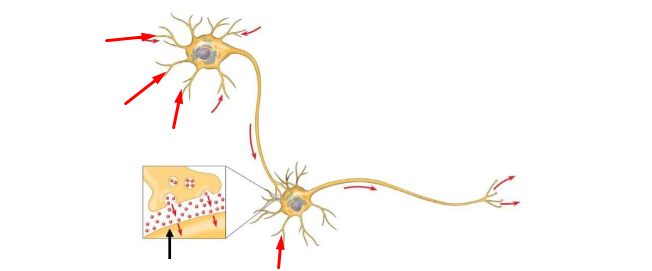
define
dendirte recieves signals from others neurons
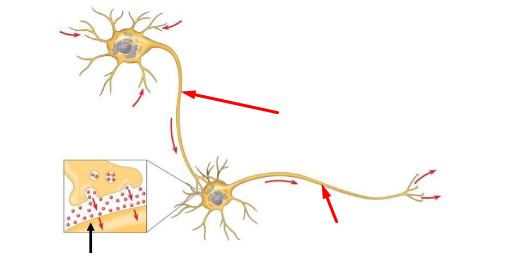
define
axon, sends signals away from cell body
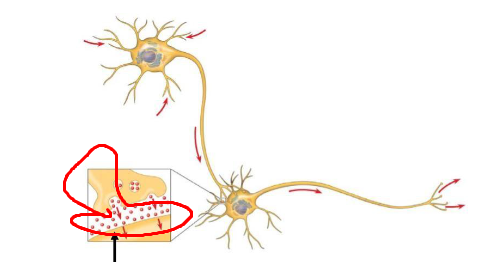
define (a lil foggy)
synapse, gap where one neuron communicates with another cell
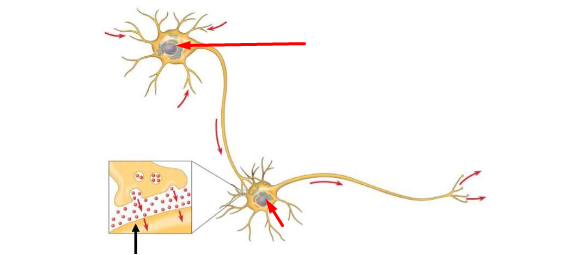
define
nucleus, inside cell body containing neuron dna + control protein
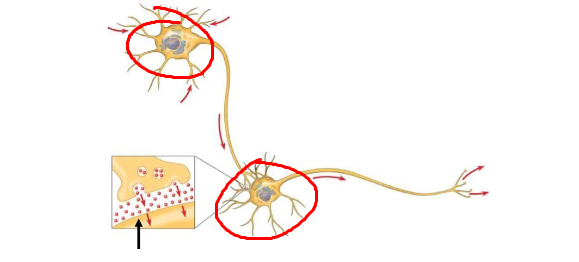
define
cell body, (soma) contains nucleus + organelles
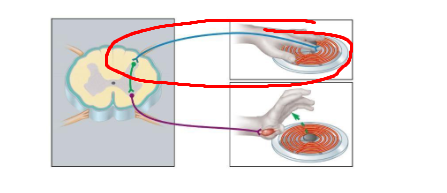
what neuron type pathway
sensory neuron, carries info from body to cns
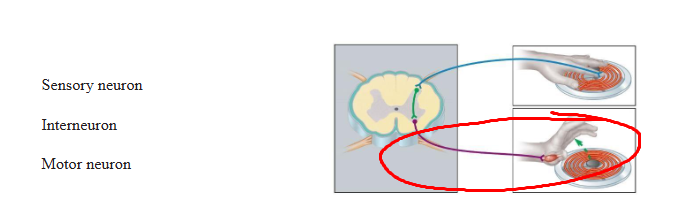
what neuron type pathway
motor neuron, carries commands from cns to muscle gland
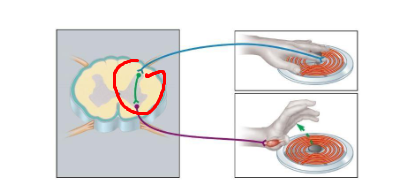
what neuron type pathway
interneuron, located in spinal cord, relays signal between sensory and motor
3 different tpye of nerve cells
sensory
interneuron
motor
The central nervous system consists of __________________ and _____
brain + spinal
The voltage (charge differences) across the plasma membrane of a resting neuron is called
_______________
resting membrane potential
The resting potential of a neuron that is “at rest” is between __________ and ____________ mvolts.
-60mV and -80mV
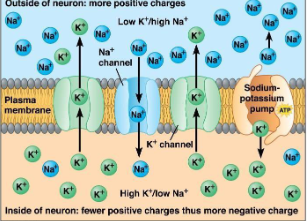
how does a sodium potassium pump work and what is its role
uses atp to pump 3na out and 2k in, maintains ion imbalance needed for neurons resting membrane potential and future action potential
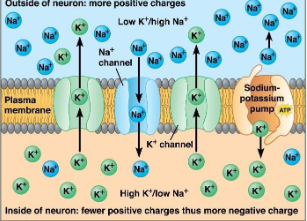
how does a potassium channel work and what is its role
let k move through membrane, from inside neuron to outside, keeps inside of neuron NEGATIVE
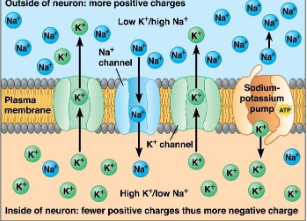
how does a sodium channel work and what is its role
let na move in, keep inside of neuron more positive
At rest, what is the concentration of sodium and potassium inside and outside of the cell relative to each other + what does this setup allow
sodium high outside
potassium high inside
this setup allows potential energy
At rest, is the inside of the neuron (membrane potential) more negative or more positive in relation to outside of the cell
negative, k leaves giving more neg
If a resting neuron’s membrane suddenly becomes extra permeable to sodium ions, there is a rapid
movement of sodium into the cell.
What will happen to the membrane potential?
depolarization, membrane becomes more pos
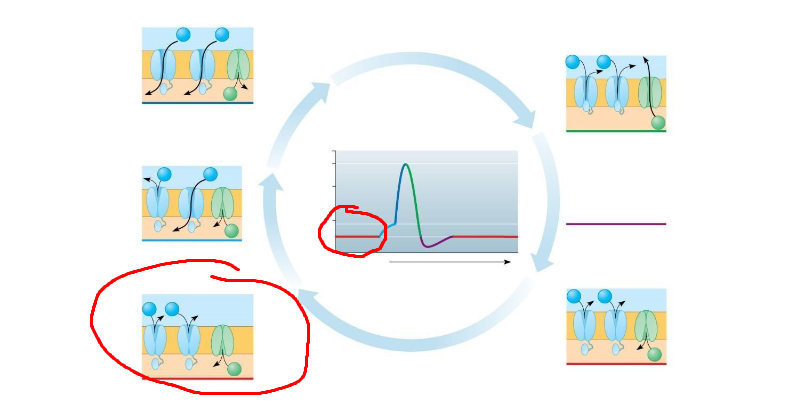
??
resting potential, na and k channels closed, k leak and na pump maintain resting potential around -70mV, allowing negative inside
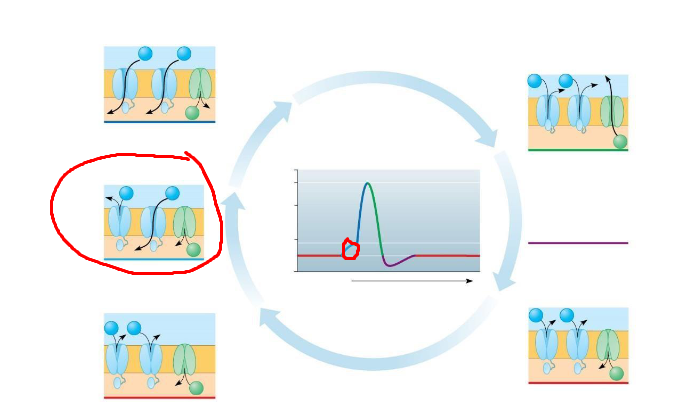
??
stimulus opens some na+ channels making inside more pos
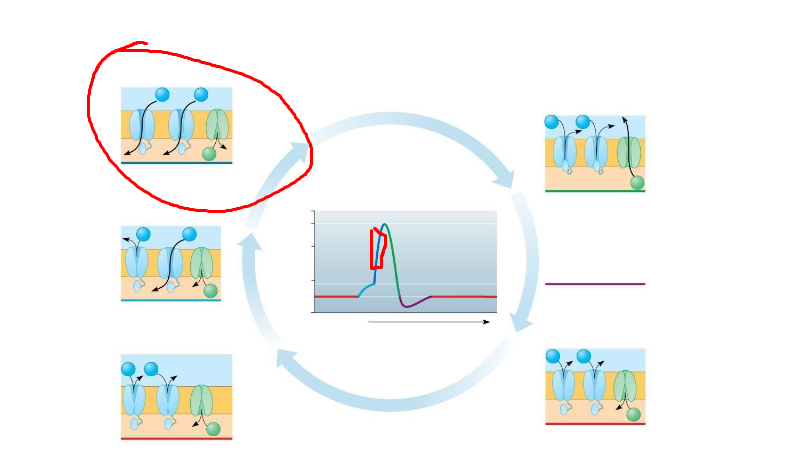
depolarization, many na channels open, allowing inside of neuron to become positive to hit threshold of -55mV
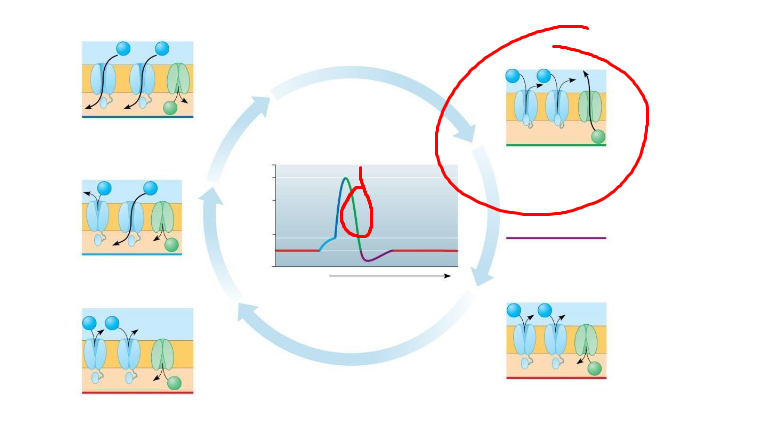
repolarization, at the peak of action potential, na channels close, k channels open, allowing k to leave, making inside more negative
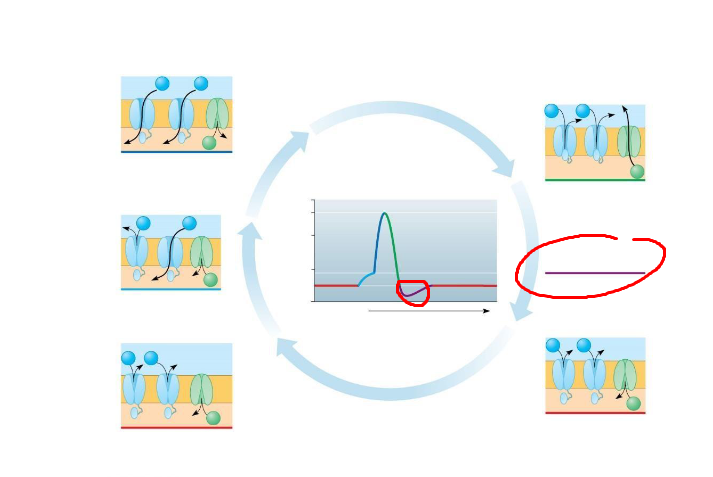
hyperpolirzation (undershoot)
k channels close but stay open a little extra long, extra k leaves
makes inside more negative than resting potential, dipping below -70mV
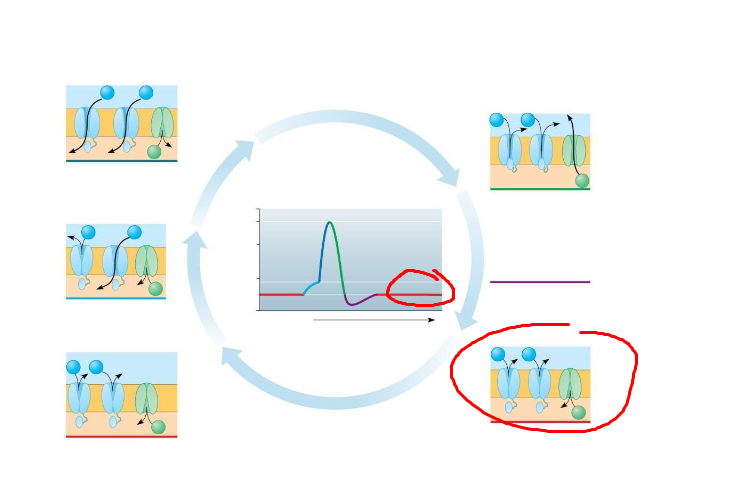
return to resting state through na potassium pump and leak channels
What is the action potential in millivolts?
+30 - +50 mV
What is it about neurons (nerve cells) that make their properties different from those of other cells? In
other words, what enables nerve cells to produce action potential?
excitable membranes with voltage gated ion channels
what happens along axons once action potential begins
axon depolarizes, triggering next section to derpolarize, then previous section repolarizes (one way gun like)
how does the nervous system signal differences in intensity of signal?
frequency of AP
The speed of the signals in neurons vary in different neurons. Write two factors that influence the speed of a signal
diameter, large axon=faster
myelination=insulated layer = faster
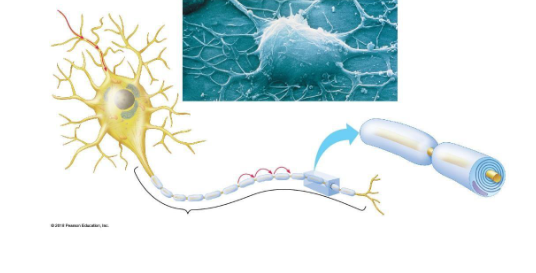
what direction
from cell body to terminal
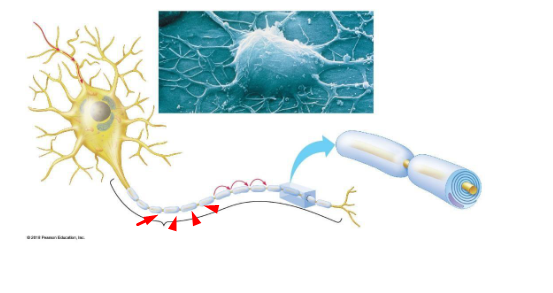
define
myelin sheath, fatty insulating cover around axon, speeds transmission CREATED BY SCHWANN
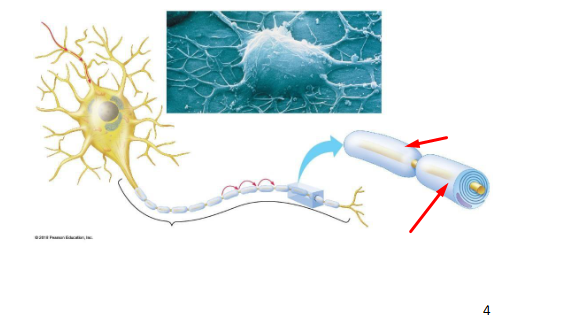
schwann cell, living glial cell that produces myelin sheath
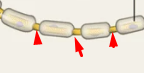
nodes of raniver
gaps in myelin sheath where ions enter/leave
Name two ways that neurons convey their signals to other cells at the synapse:
________________________________ ___________________
electrical
chemical
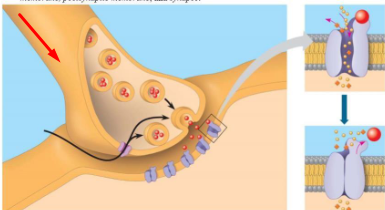
process?
AP arrives down axon of presynaptic cell
once ap reach axon terminal, depolarization of presynaptic membrane begins
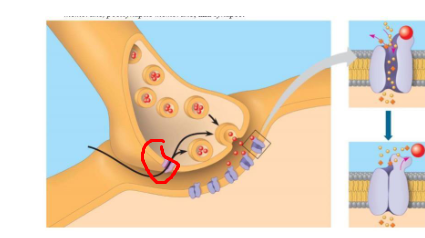
depolarization opens voltage gated calcium channels allow ca to rush into axon
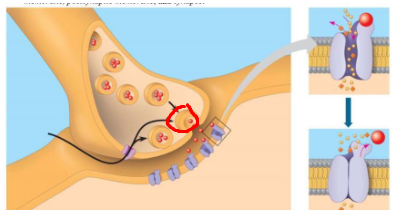
elevated ca causes synaptic vesicles to fuse with presynaptic membrane (exocytosis), releasing neurotransmitter into synaptic cleft
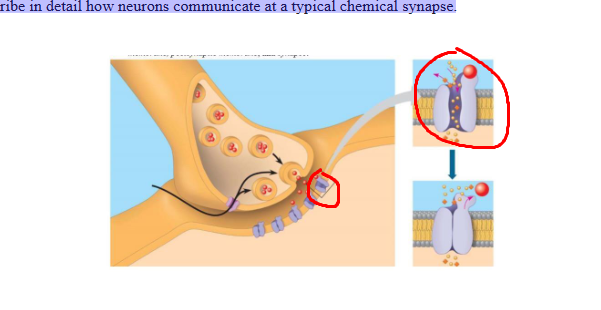
neurotransmitters bind to receptors on postsynaptic membrane, opening ion channels
How wide is a synapse?
20-40 nanometers
If a synapse were two times as wide, what effect would it have on the transmission of nerve signals from
one neuron to the next? How would this change affect the response time of an organism?
double tranny time
delayed response
Some nerve gases and insect poisons work by destroying acetylcholine esterase. Acetylcholine esterase
is normally present in acetylcholine synapses and acts to degrade acetylcholine. What is likely to happen to
nervous transmission in insects exposed to this type of insect poison?
constant stimulus instead of rest
causes spasm/paralysis
The pufferfish (fugu) contains the poison tetrodotoxin. Some shellfish produce a paralytic poison called
saxotoxin. Both of these poisons block the Na1 channels in neurons. What specific effects could these toxins
have on neuron function?
block na channels, neuron cant depolarize, cant produce ap
A type of spider (the funnel-web spider) produces a toxin that blocks the Ca1 channels.
a. Can a neuron exposed to this toxin fire an action potential? Explain.
b. Can a neuron transmit a signal across the synapse using neurotransmitters? Explain.
yes, neuron can fire but cant transmit as uptake of ca allows trans of nt
define nerve net
simple nervous system made of neurons spread throug hbody
define nerve
bundle of neuron axons wrapped together
define cephalization
evolutionary trend of concentrating sensory organs and nervous tissue at head
define ganglia
cluster of neuron cell bodies that act as a simple processing center
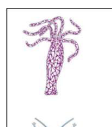
name phylum nervous system type
hydra, cnidaria, nerve net (no brain)

name phylum nervous system type
sea star/echinodermata/nerve ring, radial nerve

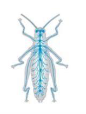
name phylum nervous system type
insect arthropoda, developed brain ventral nerve cord
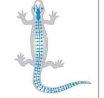
name phylum nervous system type
salamander/chordate/brain dorsal hollow nerve cord cns
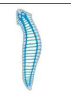
name phylum nervous system type
planarian/platyhelminthe shows cephalization, anterior ganglia
which phyla has a nerve net
cnidaria
first phyla to show cephalization
platyhelminthes
phyla with ventral nerve cord
annelid artropods
phyla with dorsal nerve cord
chordata
What are the two components of the central nervous system?
brain spinal cord
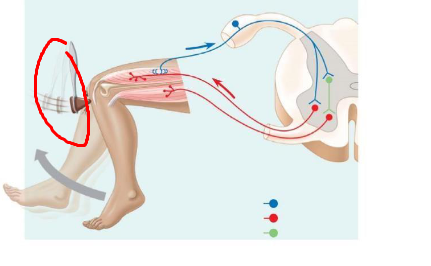
stimulus
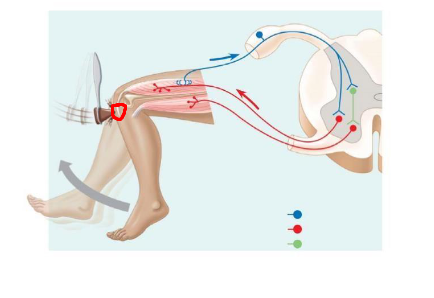
stretch receptors detect stimulus
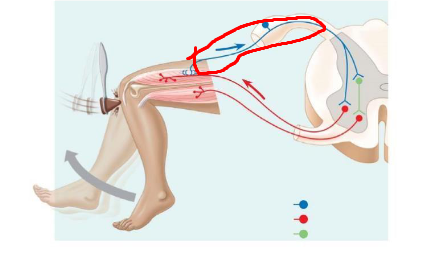
stimulus travels from receptor to cns
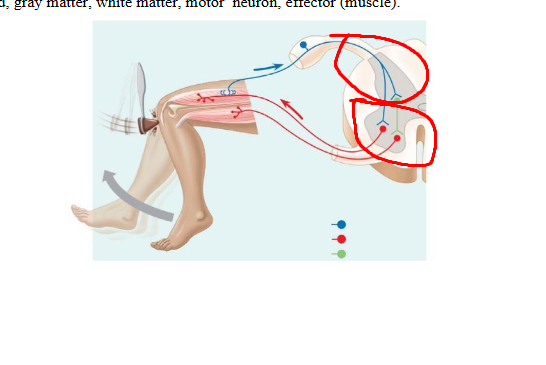
spinal cord processes reflex, interneuron inside spinal coord coordinates response
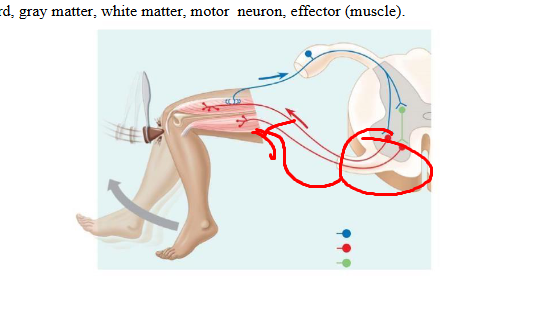
motor neuron carries signal from cns to muscle
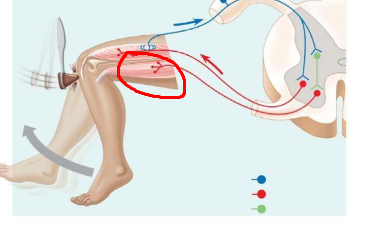
effector (response muscle) carries out response
Why does it take you longer to “realize” why you blinked than it takes for the blink reaction to occur?
reflexes use short fast pathway to close eyelids, takes longer to reach brain
What is the function of cerebrospinal fluid in mammals? Where is it found?
cushion and protect brain / spinal cord
found between brain/spinal cord
Distinguish between white matter and gray matter.
white=signal trans, contains bundles of myelinated axons
gray=processing, contains neuron cell bodies