1. Price Elasticity of Demand
 Call Kai
 Learn
Learn Practice Test
 Spaced Repetition
 Match
Match Flashcards
 Knowt Play
1/13

There's no tags or description
Looks like no tags are added yet.
Name | Mastery | Learn | Test | Matching | Spaced | Call with Kai |
|---|
No analytics yet
Send a link to your students to track their progress
14 Terms
What is price elasticity of demand? (PED)
The responsiveness of changes in quantity demanded to a change in price.
How is price elasticity of demand calculated?
% change in quantity demand / % change in price
What does perfectly inelatic mean?
The quantity demanded does not change at all as price changes. (0)
What does perfectly elastic mean?
When buyers are not prepared to purchase the product at all at a higher price. (Infinity)
What is unitary elasticity?
When quantity demanded changes by exactly the same percentage as price does. (1)
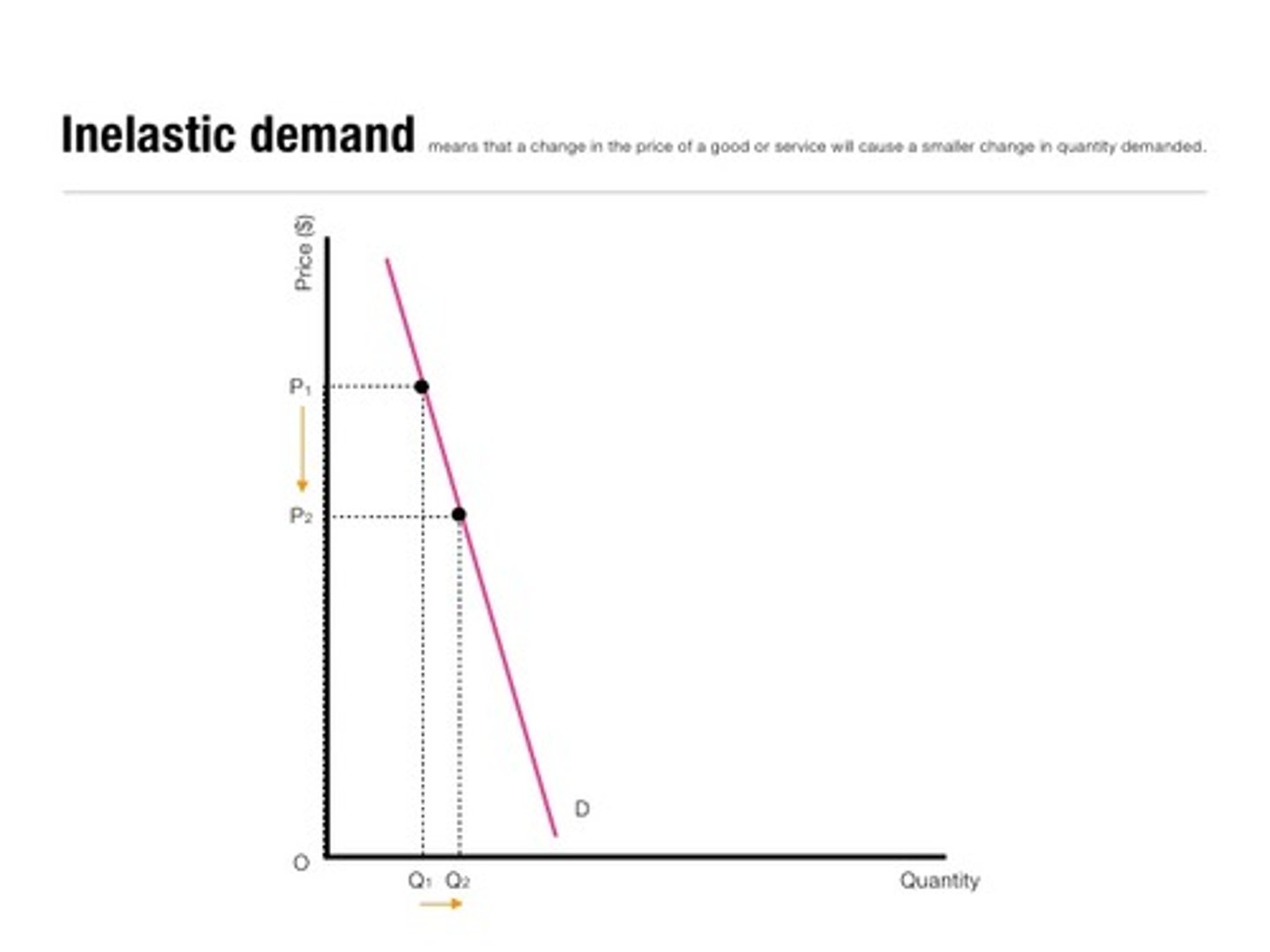
What does inelastic mean?
Quantity demanded changes by a smaller percentage than price does. (0-1)
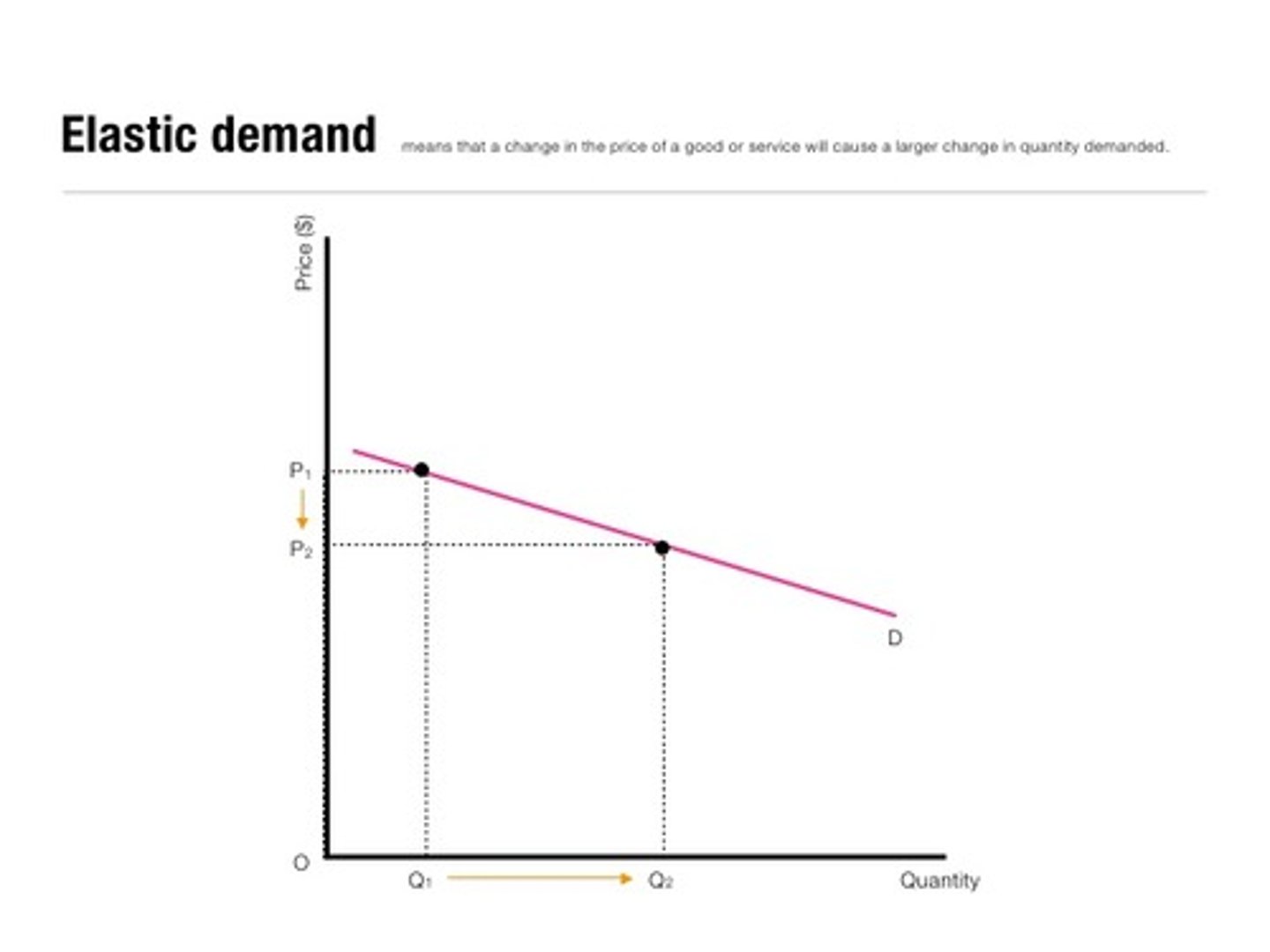
What does elastic mean?
Quantity demanded changes by a larger percentage than does price. (1 to infinity)
State six factors which affect PED.
1. Number of substitutes available - more substitues = more elastic.
2. Time - More elastic over time as people find ways to prevent costs.
3. Necessity vs luxury good.
4. % of consumers income allocated to spending on good.
5. Cost of switching between products.
6. Brand USP's or loyalty.
State 3 uses for PED.
- Helps firm determine optimum price
- Helps firms decided whether to increase or decrease prices
- Helps calculate impact of price changes on sales revenue.
State 3 limitations of using PED.
- Values used to calculate PED are based on estimates.
- Information used to calculate PED may be outdated.
- Elasticity is likely to change over time so the calculation is only useful in the short term.
Draw an elastic demand graph.
Draw an inelastic demand graph.
Why is PED always negative?
Negative answer represents the inverse relationship between price and demand.
Which numbers represent PED?
Perfectly Elastic: infinite
Elastic: 1+
Unitary elasticity: 1
Inelastic: 0-1
Perfectly Inelastic: 0