SCOM - Pediatric and Adolescent Spine Growth and Maturity
 Call Kai
 Learn
Learn Practice Test
 Spaced Repetition
 Match
Match Flashcards
 Knowt Play
1/36

There's no tags or description
Looks like no tags are added yet.
Name | Mastery | Learn | Test | Matching | Spaced | Call with Kai |
|---|
No analytics yet
Send a link to your students to track their progress
37 Terms
What is the most common type of scoliosis?
adolescent idiopathic scoliosis (AIS)
The goal of scoliosis bracing is to correct the curve. True or false?
false - goal is to maintain the curve where it is (prevent progression)
What is normal birth size influenced by?
materal health
nutrition
placental health
Nutrition drives rapid, early infantile growth. Therefore, malnutrition can lead to diminished .
stature
Childhood growth from 3 years old until puberty is primarily driven by what hormones?
growth hormone (GH)
insulin-like growth factor-1 (IGF-1)
thyroid hormone
What marks discontinuity from childhood growth?
puberty
Bones grow in length at the .
epiphyseal plate (growth plate)
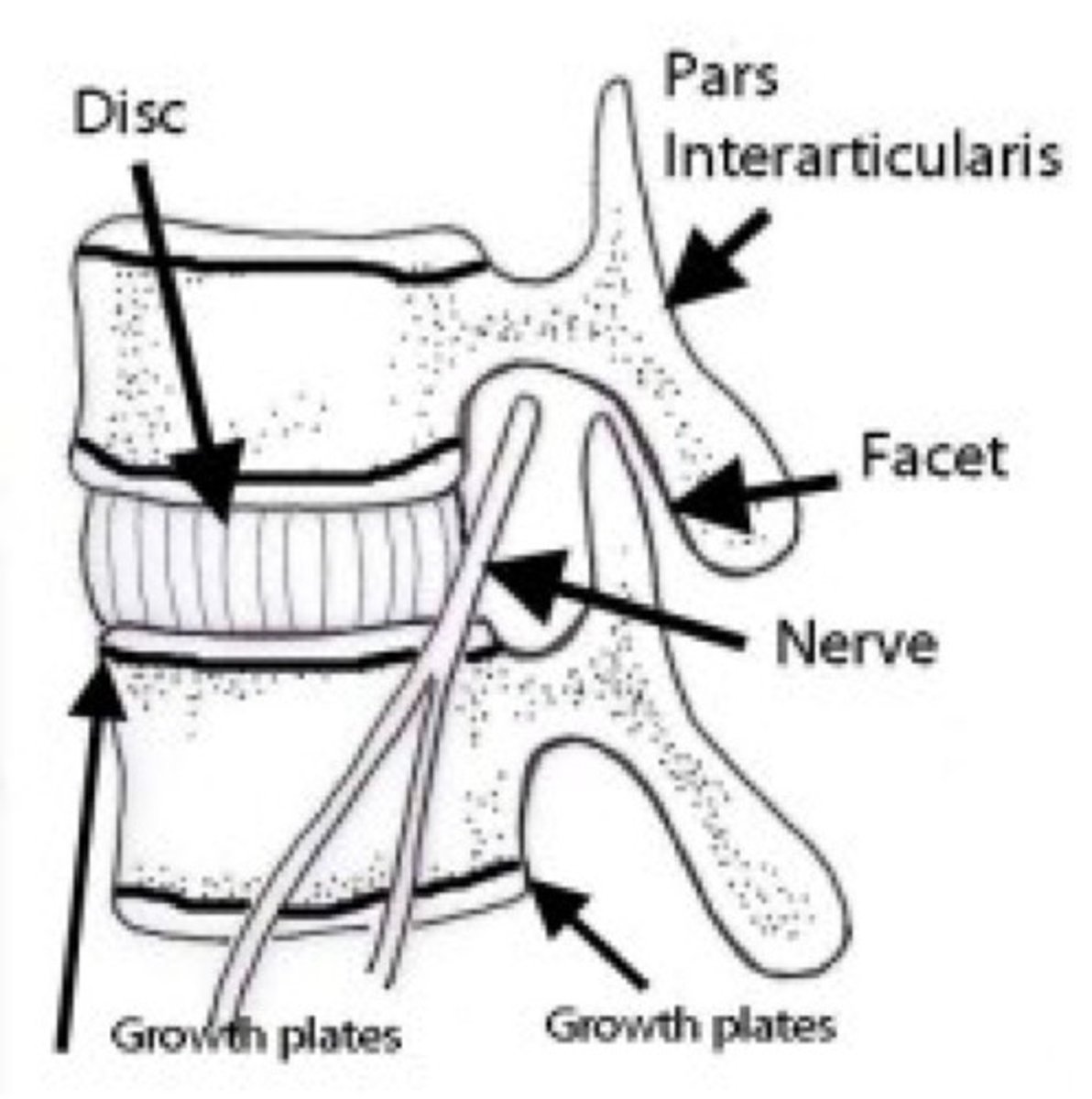
What grows in response to skeletal stimuli?
muscles
ligaments
nerves
blood vessels
If muscles, ligaments, nerves, and blood vessels respond to skeletal growth in a typical child, what happens if there is an underlying pathology?
deformity
muscular imbalance/weakness/contracture
neuropathologies
etc.
At what age does puberty start in girls and boys, and how much do they grow a year?
girls: ~10 years old (8 +/- 1 cm/yr)
boys: ~12 years old (9 +/- 1 cm/yr)

What are the two primary periods of rapid growth?
first few years of life (nutrition driven)
adolescent growth spurt (puberty)
What is peak height velocity (PHV)?
the period of time in which an adolescent experiences the fastest upward growth in their stature
aka peak growth age, maximum height growth rate, growth spurt
At what age does PHV start in girls and boys?
girls: ~12 years old
boys: ~14 years old
both ~2 years into puberty
Why is PHV important when considering scoliosis?
PHV is the major marker of growth
spine and curve grow as the child grows
curve can increase significantly and worsen curve
Puberty typically lasts how long?
~4 years
girls: ~10-14
boys: ~12-16
What is the general pattern of height growth through the years?
1: very rapid growth
2-3: gradual slowing
4-adolescence: steady velocity ~5cm/yr
small mid-childhood growth spurt @ 8
puberty
What is skeletal maturity?
maturity fully reached by official end of puberty
most definitively determined in retrospect
can determine with x-rays and height
predictor of how likely a scoliotic cure is to progress
predictor of surgical intervention
determines timing/cessation of orthotic intervention
What is the most important dimension for musculoskeletal care?
longitudinal bone growth
Longitudinal bone growth is best reflected by what measure?
PHV
PHV is easy to calculate. True or false?
false - difficult to calculate
Aside from longitudinal bone growth, what other dimensions of maturity are important to consider?
musculoskeletal development/strength
secondary sexual characteristics:
-sweat gland maturation
-voice change
-axillary hair
-facial hair
-menarche
What three methods are typically used to examine skeletal maturity?
1. Risser sign
2. Triradiate cartilage
3. Sanders scale (hand)
less common options include:
-ossification of rib heads
-cervical spine appearance
-knee
-foot
-calcaneal apophysis
-elbow
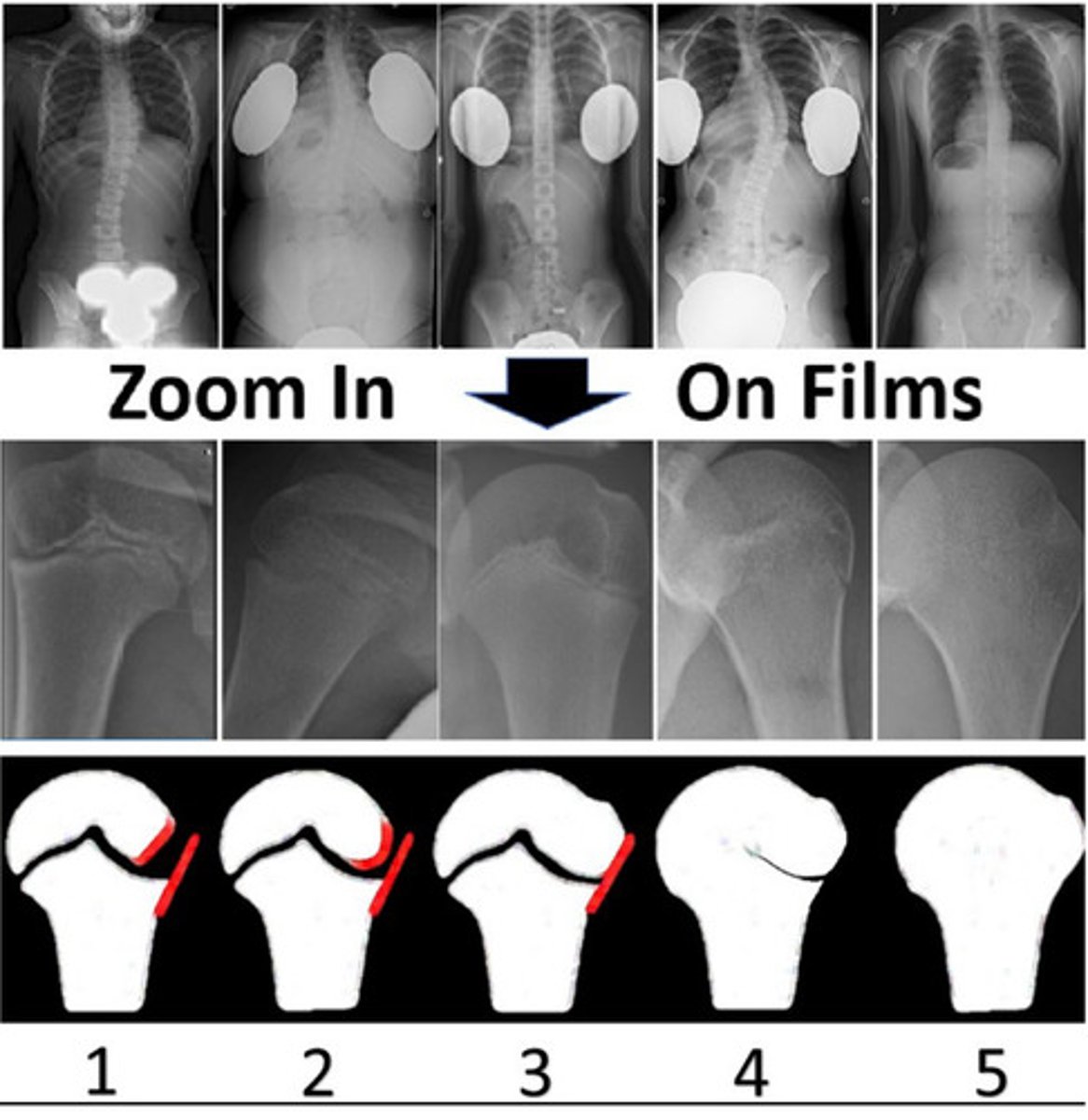
-proximal humeral epiphysis
What does the Risser sign measure?
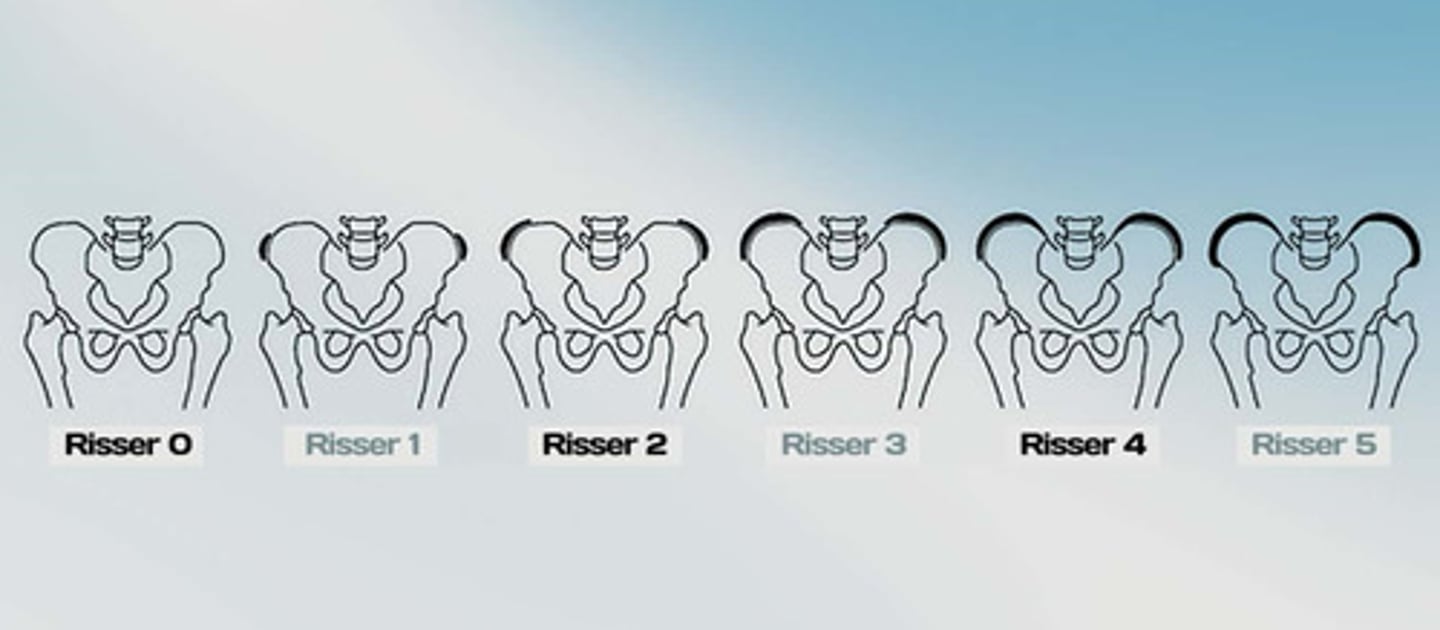
how much mature bone has developed on the top part of the iliac apophysis (growth plate on iliac crest)
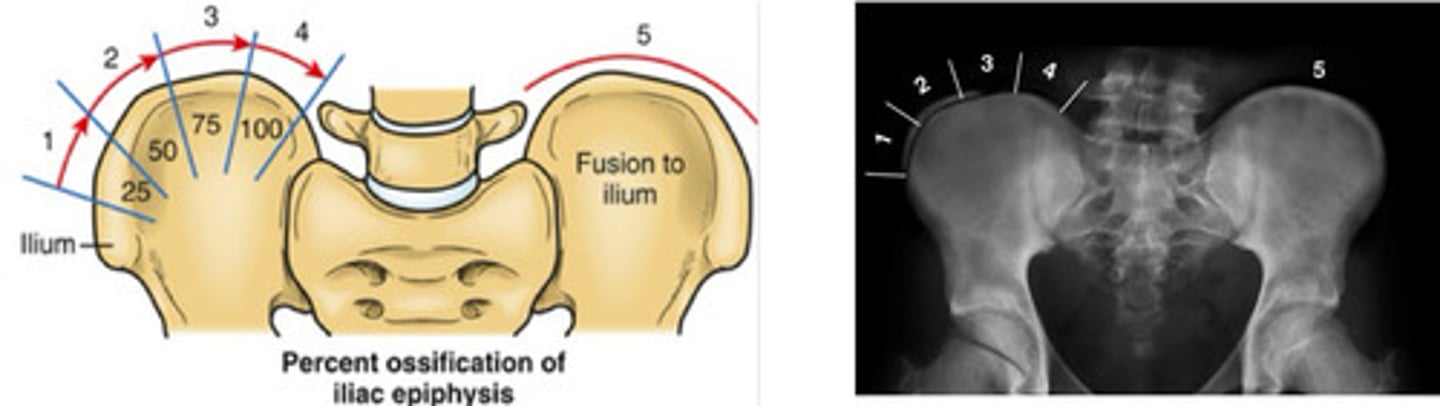
How is the Risser sign determined and interpreted?
Risser = 0: PHV not reached
Risser >0: PHV has been reached
0: 0% ossification (no line)
1: 25% ossification
2: 50% ossification
3: 75% ossification
4: 100% ossification
5: full fusion to ilium (no line)
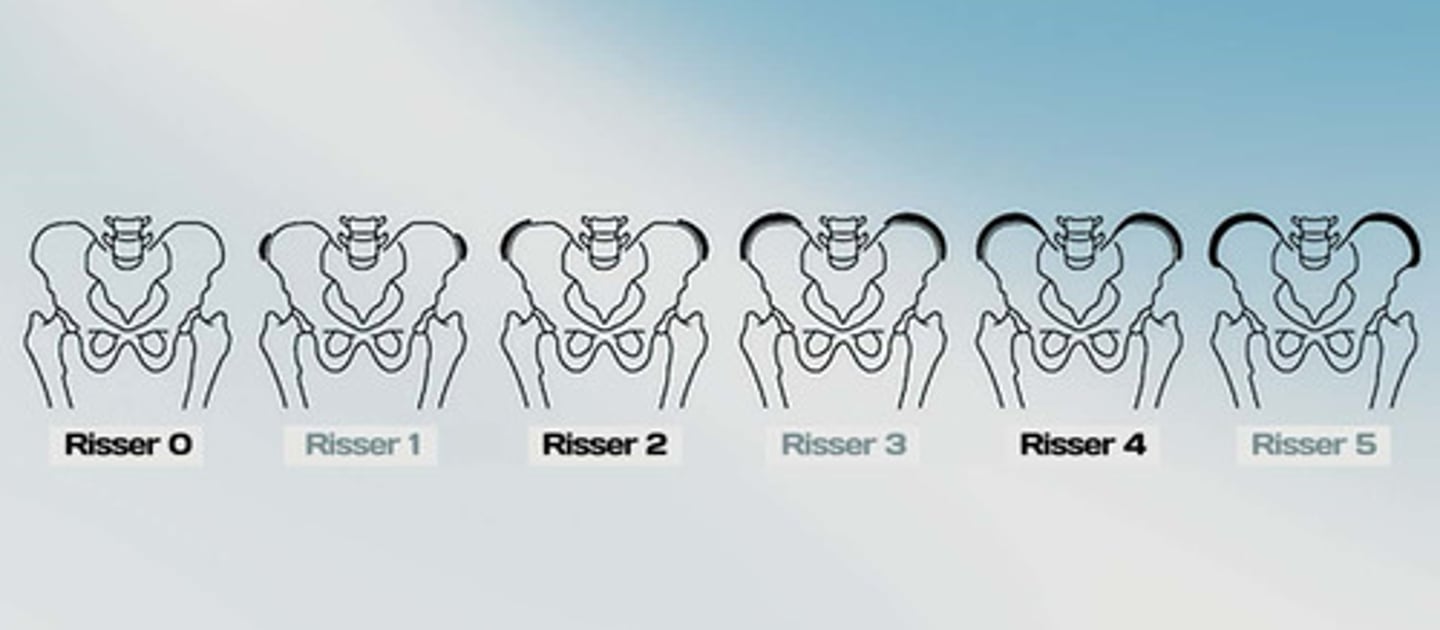
In what direction does growth progress on the iliac crests?
grows from the outside in
fuses from the inside out
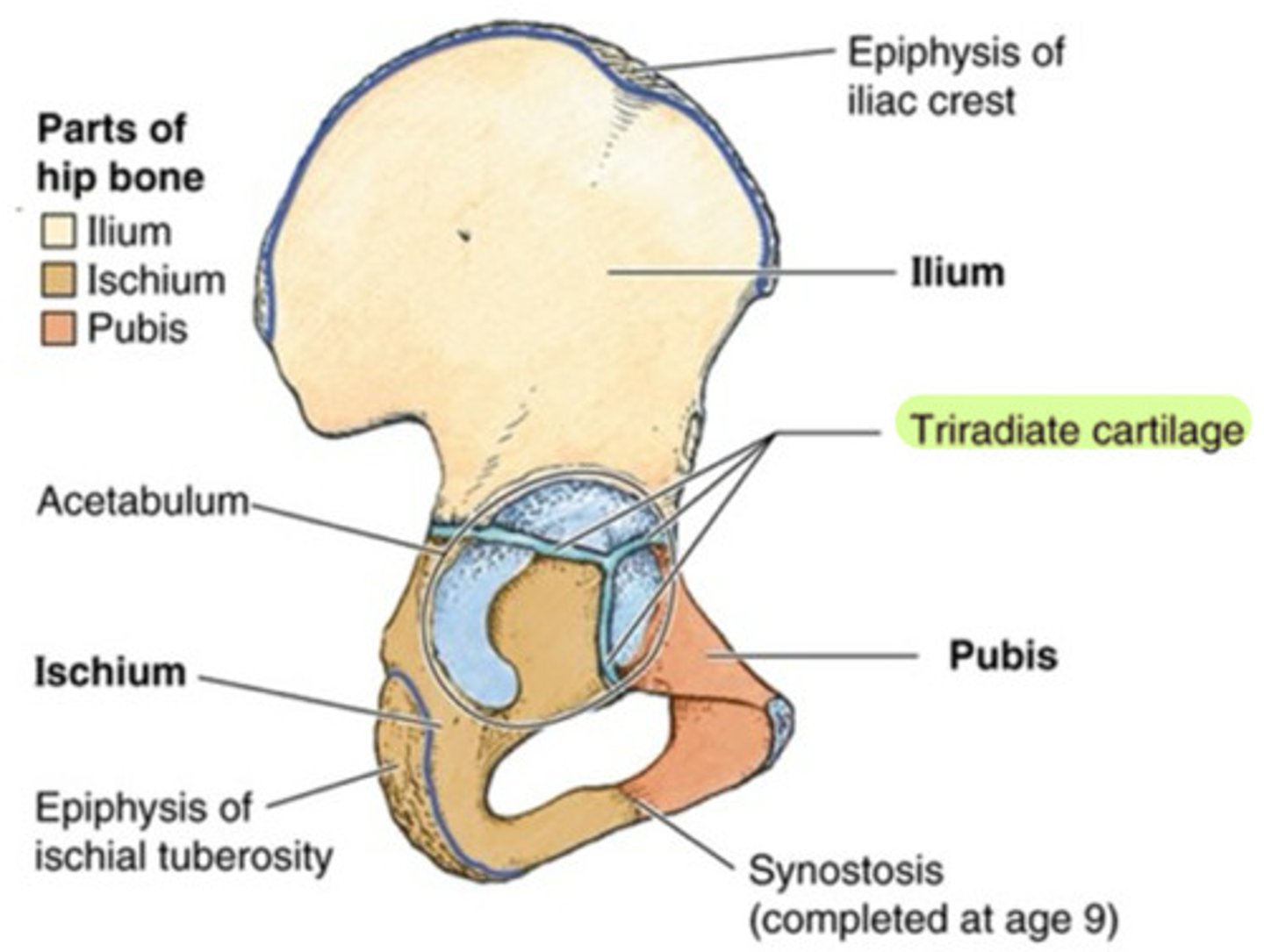
What is the triradiate cartilage?
Y-shaped epiphyseal plate that occurs at the junction where the ischium, ilium, and pubis meet in the skeletally immature skeleton
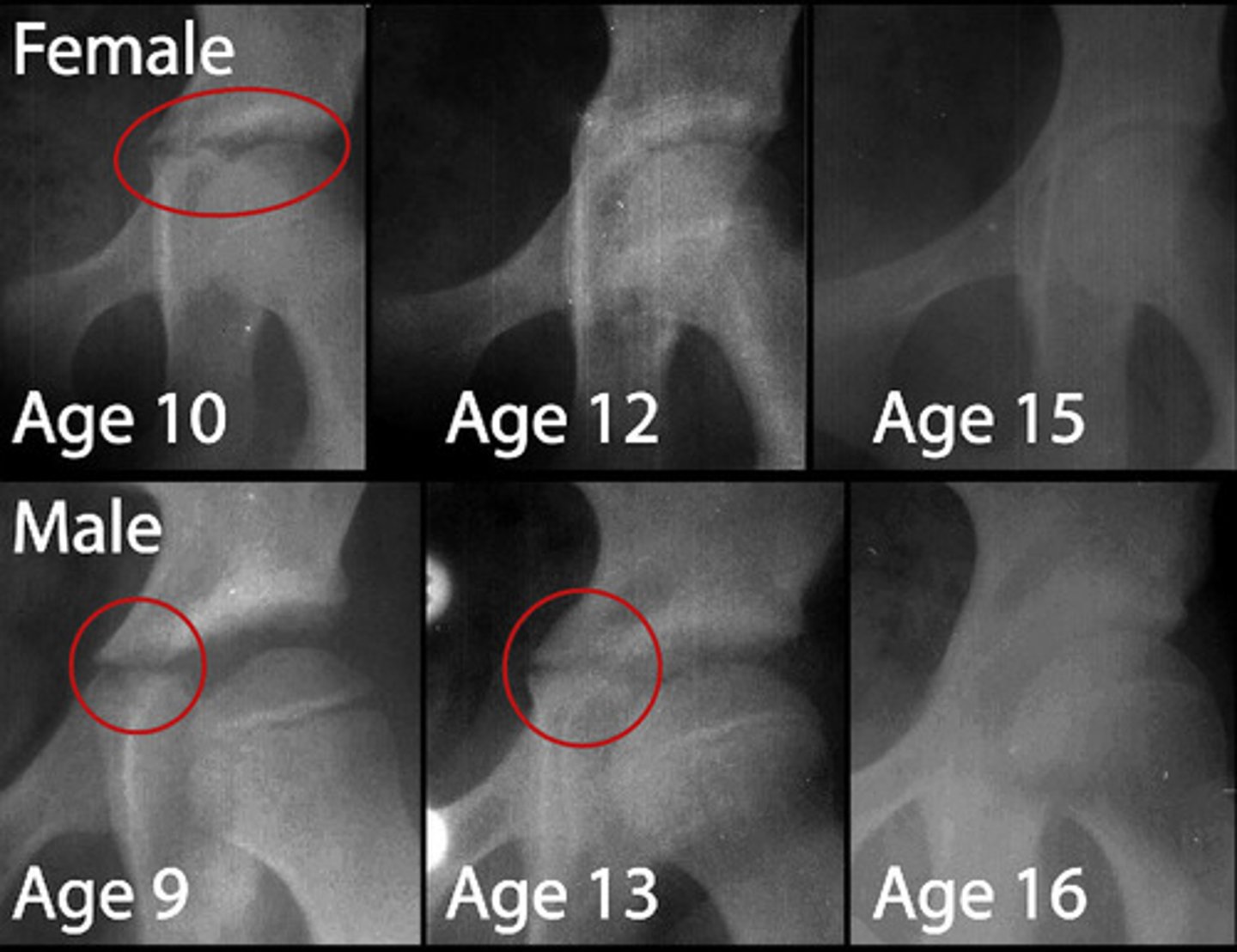
At what age does the triradiate cartilage close in girls and boys?
girls: ~12 years old
boys: ~14 years old
about the time of PHV
Typically the triradiate cartilage closes before the Risser begins. True or false?
true (when triradiate cartilage is open, R = 0)
Why did the Sanders scale develop?
recent research found looking @ growth plates in hand is more accurate way of determining remaining growth
What describes each classification of the Sanders scale?
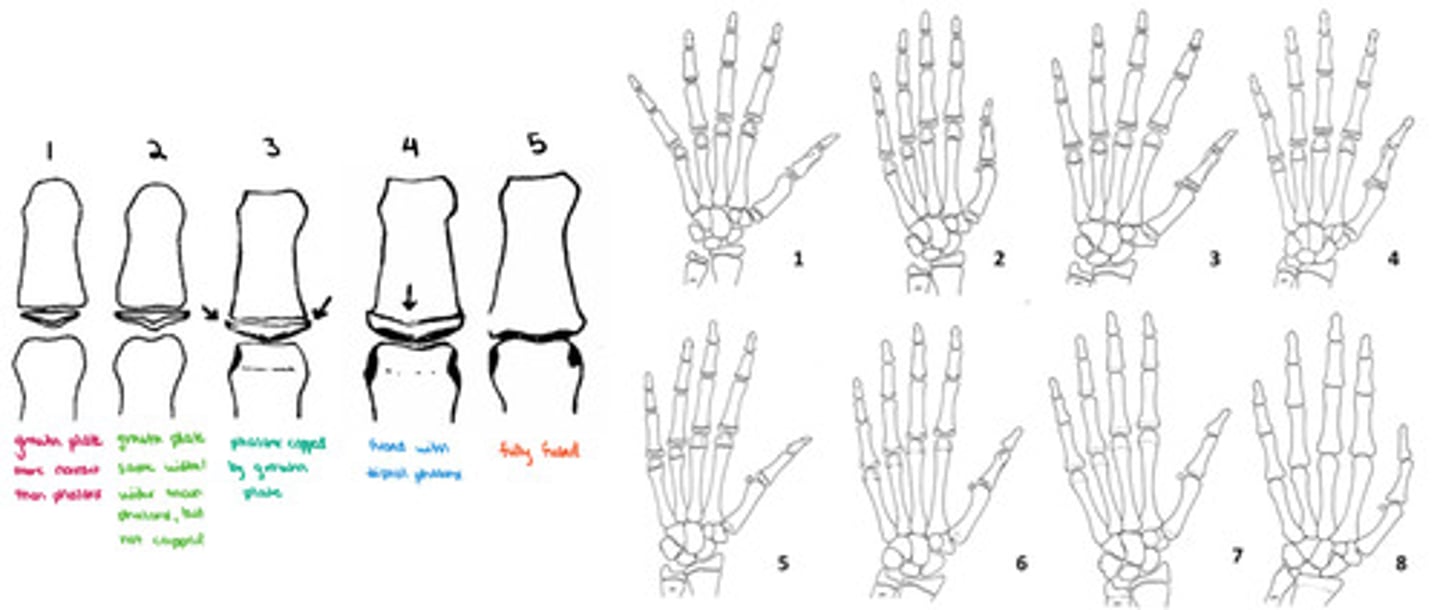
1: growth plate more narrow than phalanx
2: growth plate same width/wider than phalanx, but not capped
3: phalanx capped by growth plate
4: growth plate fused with distal phalanx
5: full fusion of distal phalanges
6: fusion of middle/proximal phalanges
7: only distal radius open
8: distal radius has completely fused
What is the last bone to fuse in the hand?
radius
What hand is analyzed with the Sanders scale?
left hand
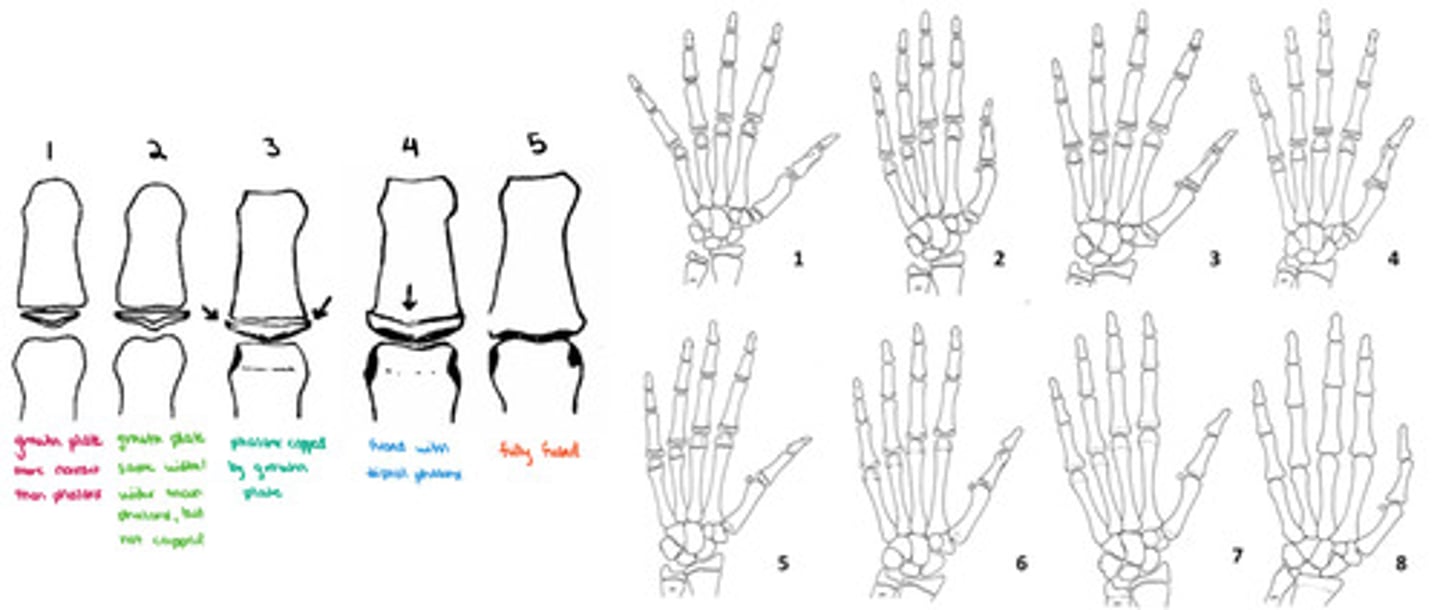
Why is the Sanders scale a more accurate measure of growth stage?
captures more information
lots of information and details
Risser only captures end stages
triradiate cartilage is binary (open/closed)
The Sanders scale is a stronger predictor than the Risser sign. True or false?
true
At what Sanders stage does PHV typically begin?
3
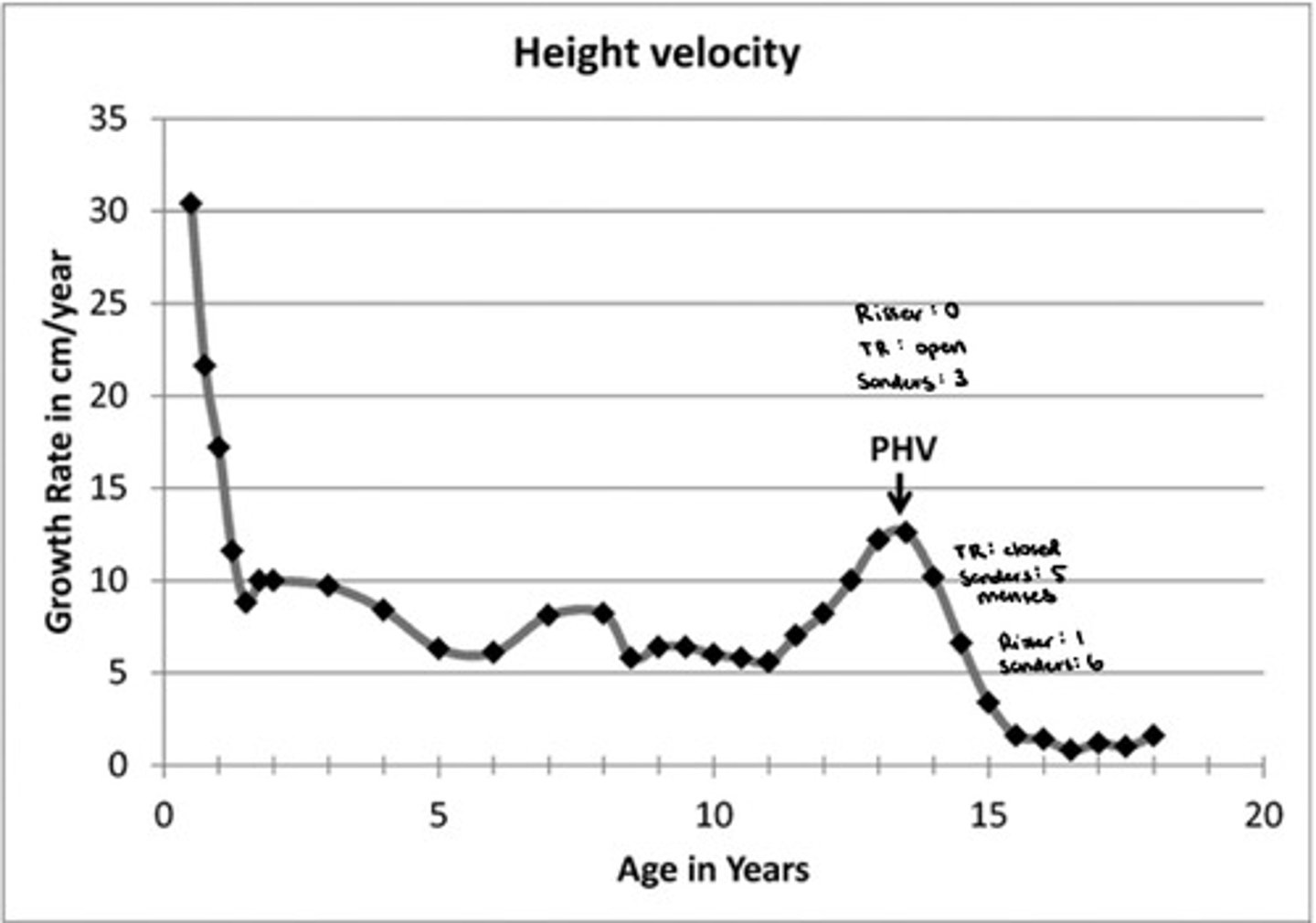
At what Sanders stage does the triradiate cartilage typically close?
5
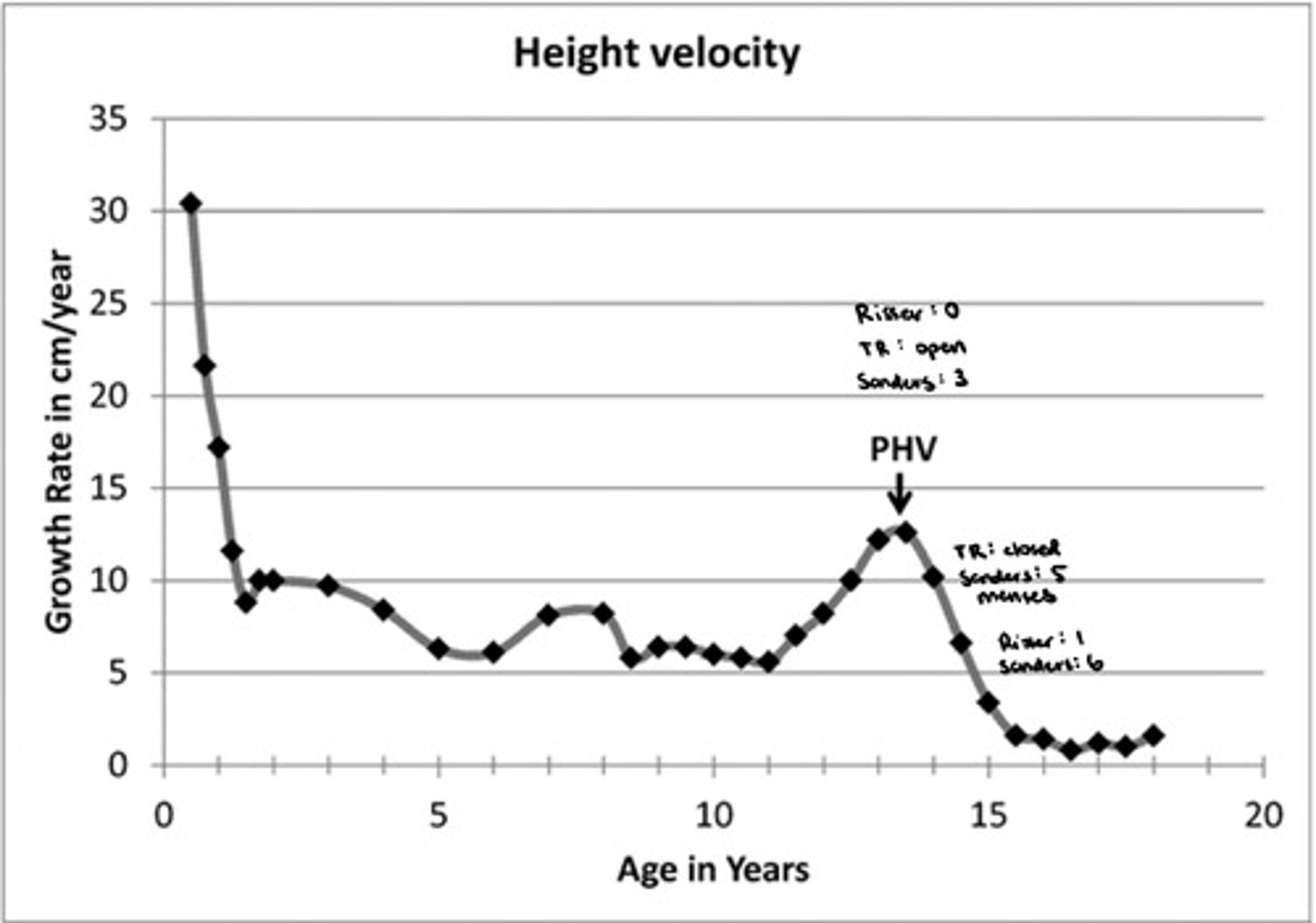
At what Sanders stage is there full fusion of the Risser sign (5)?
8