Approach to pruritis
 Call Kai
 Learn
Learn Practice Test
 Spaced Repetition
 Match
Match Flashcards
 Knowt Play
1/52

There's no tags or description
Looks like no tags are added yet.
Name | Mastery | Learn | Test | Matching | Spaced | Call with Kai |
|---|
No analytics yet
Send a link to your students to track their progress
53 Terms
What is pruritus?
Unpleasant sensation that elicits the desire or reflex to scratch
Why is it hard to notice pruritis in cats?
May be secretive
What does pruritis look like in dogs vs cats?
Dogs —> scratching, rubbing (along furniture), chewing, licking, rolling, temperament changes
Cats —> scratching, chewing, licking
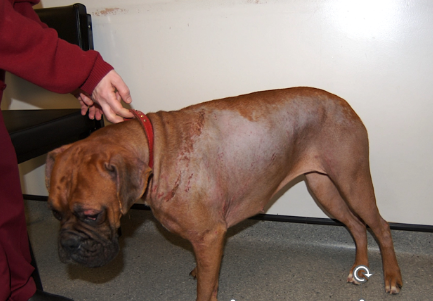
What is being shown here?
Marked excoriation associated with scratching + alopecia secondary to chronic skin inflam
What is being shown here?
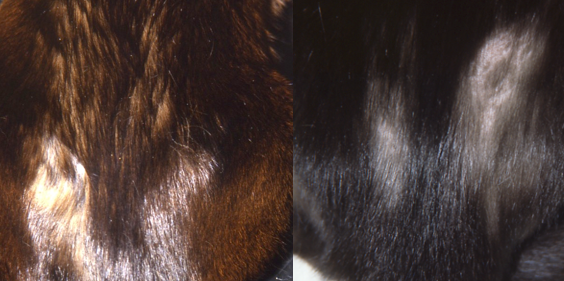
Alopecia due to excessive licking
Often symmetrical
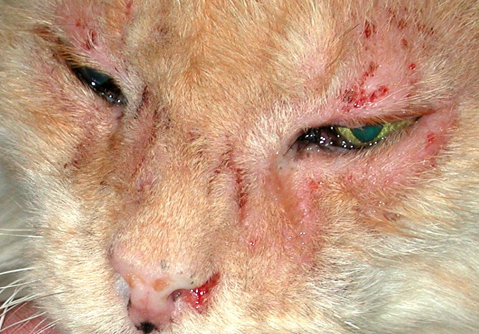
What is being shown here?
Excoriations as a result of severe scratching in very pruritic cat
What history information would you try to gather from a patient with pruritis?
Observe dog in consult room / cat in basket
Videos of animal at home
Hair in environment or faeces, vomiting hairballs
What do we do in a physical examination?
See saliva staining, excoriations, hair embedded in gingival sulci/tongue
Feel broken hair
Itch-scratch reflex —> under ventrum (backleg will begin to try and scratch)
How can you diagnose pruritis?
Trichography —> broken hair tips
Cytology —> oropharyngeal bacteria
What is being show here
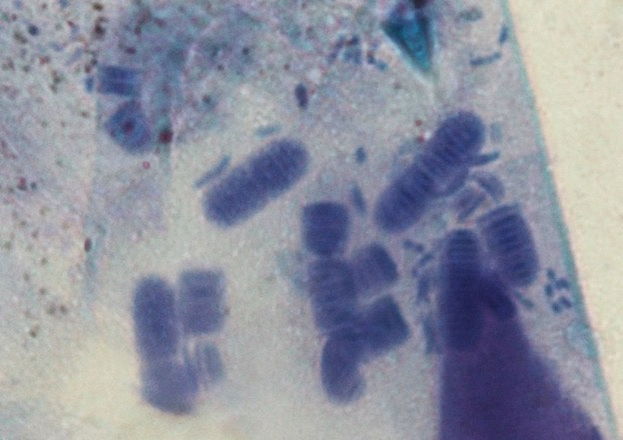
Conchiformbius bacteria —> if found on animals feet it is a sign that they have been licking (oral comensal)
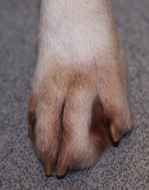
What are the animal welfare concerns of pruritis?
Chronic unpleasant sensation, lack of sleep
What are the different types of pruritis?
Primary
Pruritus is the initial sign
Other lesions (alopecia, excoriations, pustules, crusts) follow
Secondary
Lesions such as pustules, nodules, scale or crusts precede pruritus
What are the ddx for pruritis?
Hypersensitivity (allergic skin disease)
Canine atopic dermatitis
Feline atopic skin syndrome
Parasitic infection
Microbial infection (secondary to other skin disease)
Some disease have variable pruritis
What are causes of primary pruritis?
All forms of HSR (type I and/or IV)
canine atopic dermatitis /feline atopic skin syndrome, parasite hypersensitivity (including Demodex gatoi & injai)
What can cause secondary pruritis?
Microbial infection —> pruritus usually present with other lesions
Demodex canis/cati, dermatophytosis, PF and Epitheliotophic lymphoma: present with another major sign +/- pruritus
What are some examples of diseases that occur at specific ages?
canine atopic dermatitis/feline atopic skin syndrome onset <3yrs
Epitheliotropic lymphoma in seniors
pemphigus foliaceus in middle aged
What diseases are contagious?
Parasites (Sarcoptes, Cheyletiella, Demodex gatoi, fleas)
Dermatophytosis
In what disease is pruritis often very severe?
Sarcoptic mange
Which conditions cause pustules?
Bacterial infection —> superficial pyoderma
Pemphigus foliaceus (Akitas predisposed to)
What is the pruritis visual analogue scale useful for?
Pruritis severity:
assesses tx response & important for dogs with multiple handlers / owners
not helpful in narrowing differentials
What is a characteristic sign of epitheliotropic lymphoma?
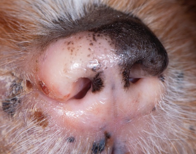
Depigmentation of the skin in the mucous membranes of an old animal
What is the distribution of the lesions of epitheliotropic lymphoma, pemphigus foliaceus and canine atopic dermatitis?
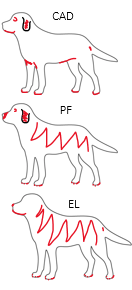
CAD = feet, ears, chin, eyes, perianal, ventrum
PF = ears, nose, eyes, digits and flank
EL = nose, chin, digits and flank
What is the lesion distribution of sarcoptic mange, Cheyletiellosis & pediculosis, trombiculiasis and flea bite hypersensitivity / infestation?
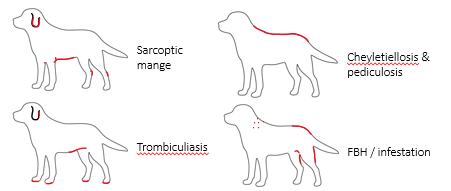
What area does otodectic mange effect?
ear canals
‘coffee granules’ wax
Skin around ears and tail in cats rarely
What is Favrot’s criteria for diagnosis of canine atopic dermatitis?
Age at onset < 3 years
Mostly indoor
“Alesional” pruritus at onset
Affected front feet
Affected ear pinnae
Non-affected ear margins
Non-affected dorso-lumber area
for dogs
What is the first thing we do in a pruritic case?
Cytology to rule out secondary microbial overgrowth/infection
Direct impression smear —> exudative lesions, ruptured pustules
Indirect impression smear —> ear canals, skin folds
Acetate tape impression (stained) —> glabrous skin, interdigital skin
What are the different ways we can identify parasites?
Direct observation —> harvest mites, lice, fleas (cats readily remove), Otodectes (via otoscope)
Coat brushing and wet paper test —> fleas, cheyletiella
Acetate tape impression (unstained) —> Demodex gatoi, Cheyletiella
Skin scraping
Hair plucks and trickography —> Demodex injai (less invasive)
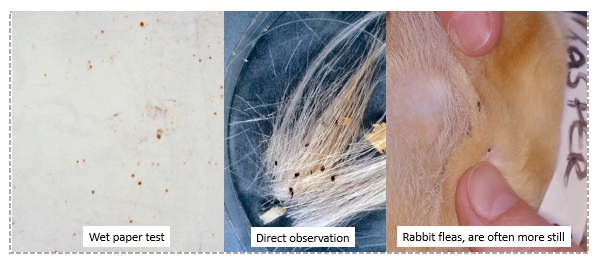
What is being shown here?
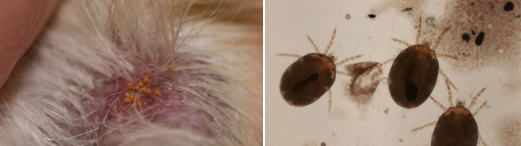
Harvest mites
Orange clusters on skin
6 legs = juvenile (larval) form of the mite
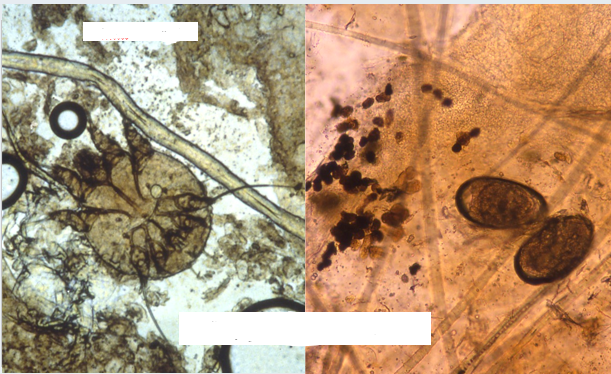
What is being shown here?
Sarcoptes scabei —> diagnostic of sarcoptic mange
L = adult mites
R = faecal pellets + eggs
How do you rule out ectoparasites?
Ectoparasite treatment trial
How do you rule out food-induced canine atopic dermatitis?
Elimination diet
When would you carry out a skin biopsy?
If history and lesions consistent with pemphigus foliaceus / epitheliotropic lymphoma
What is causing this?
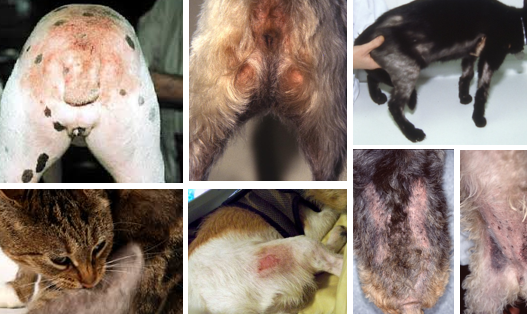
Fleas
erythema, excoriation, pruritis, caudal dorsum + HLs
What is causing this?
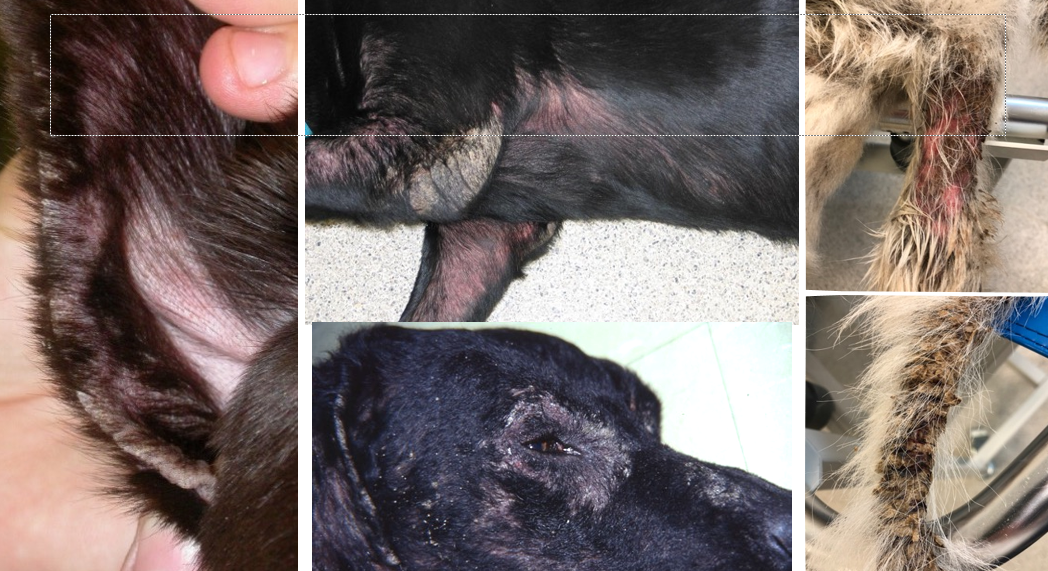
Sarcoptes scabei → sarcoptic mange
elbows crusty, erythema, pinnal margins affected
only seen in older, dehbilitated cats
What is causing this?
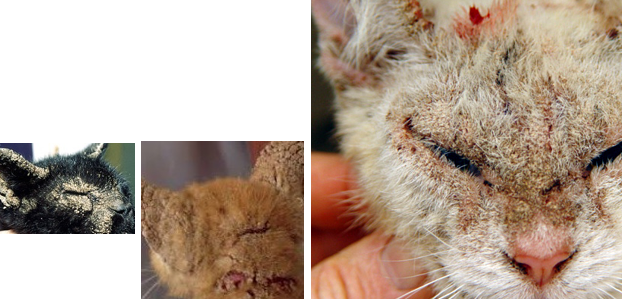
Notoedres cati —> feline form of sarcoptic mange (not in UK)
affects head & ears mostly (rare in rest of body), zoonotic
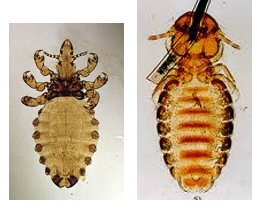
Cheyletiellosis vs pediculosis
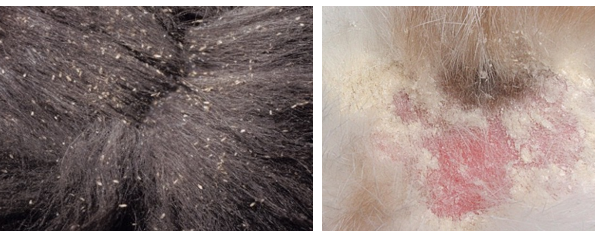
Pediculosis on the left
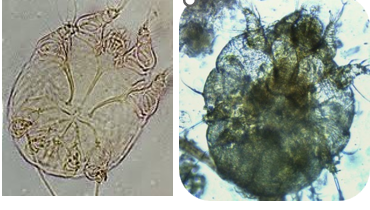
Sarcoptes vs notoedres
Sarcoptes = right
notoedres = smaller, bum hole dorsal
Cheyletiella vs Otodectes
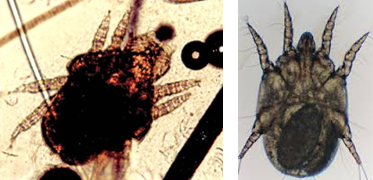
Otodectes = right —> long strands on legs
cheyletiella = left —> waisted body, long legs, hooked palps
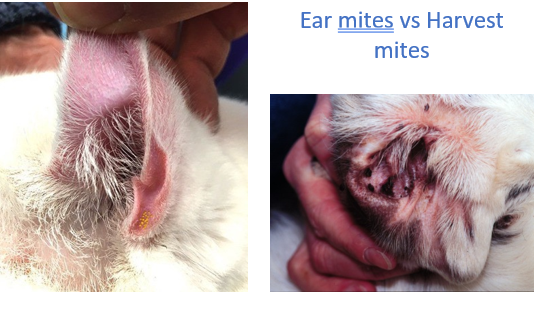
Ear mites vs harvest mites
harvest mites = left
ear mites = right
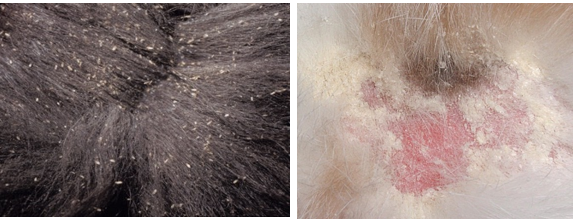
Cheyletiellosis vs pediculosis
cheyletiella = right —> causes bigger hypersens reaction = lots of scale (walking dandruff)
pediculosis = left (lice)
Cheyletiella vs louse egg
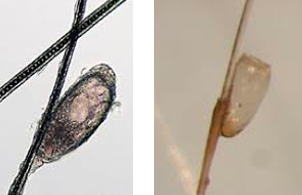
Louse egg = right = cemented to hair + operculated
cheyletiella = left = not operculated, loosely attached to hair
What are the different types of lice?
Chewing lice —> Felicola subrostratus, Trichodectes canis (broad heads)
Sucking louse —> Linognathus setosus (narrow heads)
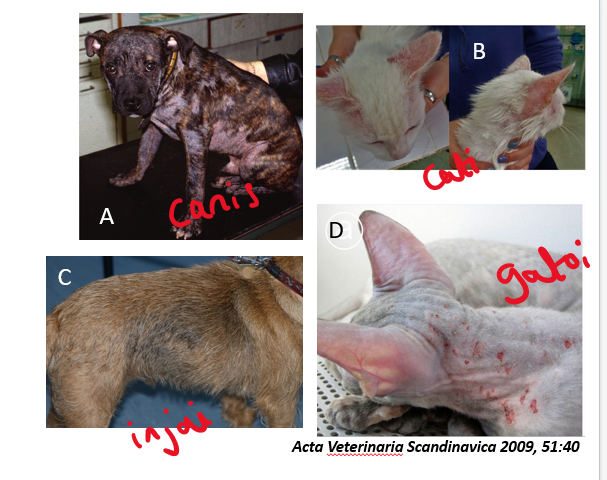
What species of demodex affect which species?
Cats
Demodex gatoi (very pruritic + alopecia)
D. cati (just hair loss due to inflam of hair follicles)
Dogs
D. canis (follicular, patchy to widespread alopecia)
D. injai (terrier breeds pruritis i.e. wirey coated breeds —> affects dorsum of shoulders)
What do we use to treat fleas?
Adulticide (correctly administered) to ALL in contact animals for 6-8 weeks —> fipronil, isoxazolines (end in laner), imidacloprid
How would we treat the environment when there are fleas present?
Vacuuming plus combined adulticide & insect growth regulator sprays e.g. permethrin
Lufenuron (Program) injection for cats (does not kill adult fleas) —> IGR
inform owners that adult fleas may still emerge from pupae
Nitenpyram / spinosad / isoxazolines —> limitt egg production
What do we use to treat harvest mites and cheyletiella?
Fipronil spray (not licenced)
How do we treat hypersensitivity reactions?
Prednisolone 0.5-1 mg/kg pruritus & skin inflammation
Oclacitinib/lokivetmab if just pruritus (>12m old for oclacitinib)
What can heavy flea infestation of puppies and kittens cause?
Iron deficiency anaemia
What are some vector-borne diseases?
Bartonella henselae —> bartonellosis (cat-scratch fever) in humans
Dipylidum caninum (tapeworm of cats & dogs)
What are the features of the gross lesions of Epitheliotropic lymphoma?
Lichenificaton
Mucosal lesions
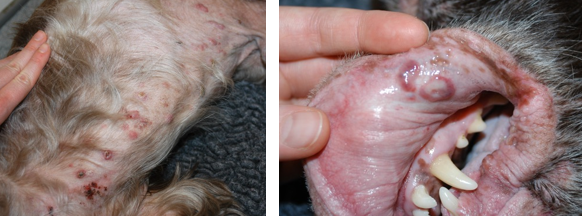
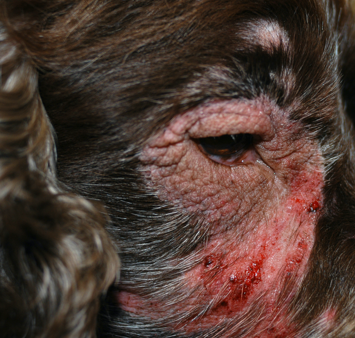
How do you diagnose Epitheliotropic lymphoma?
Skin biopsy & histopathology
What causes Epitheliotropic lymphoma and what causes the pruritis?
Lymphocyte invasion of epidermis
T-cells produce IL-31 → pruritis
What can damage to basement membrane often cause?
Depigmentation