Clin Path Lab Practical 2
 Call Kai
 Learn
Learn Practice Test
 Spaced Repetition
 Match
Match Flashcards
 Knowt Play
1/30

There's no tags or description
Looks like no tags are added yet.
Name | Mastery | Learn | Test | Matching | Spaced | Call with Kai |
|---|
No analytics yet
Send a link to your students to track their progress
31 Terms
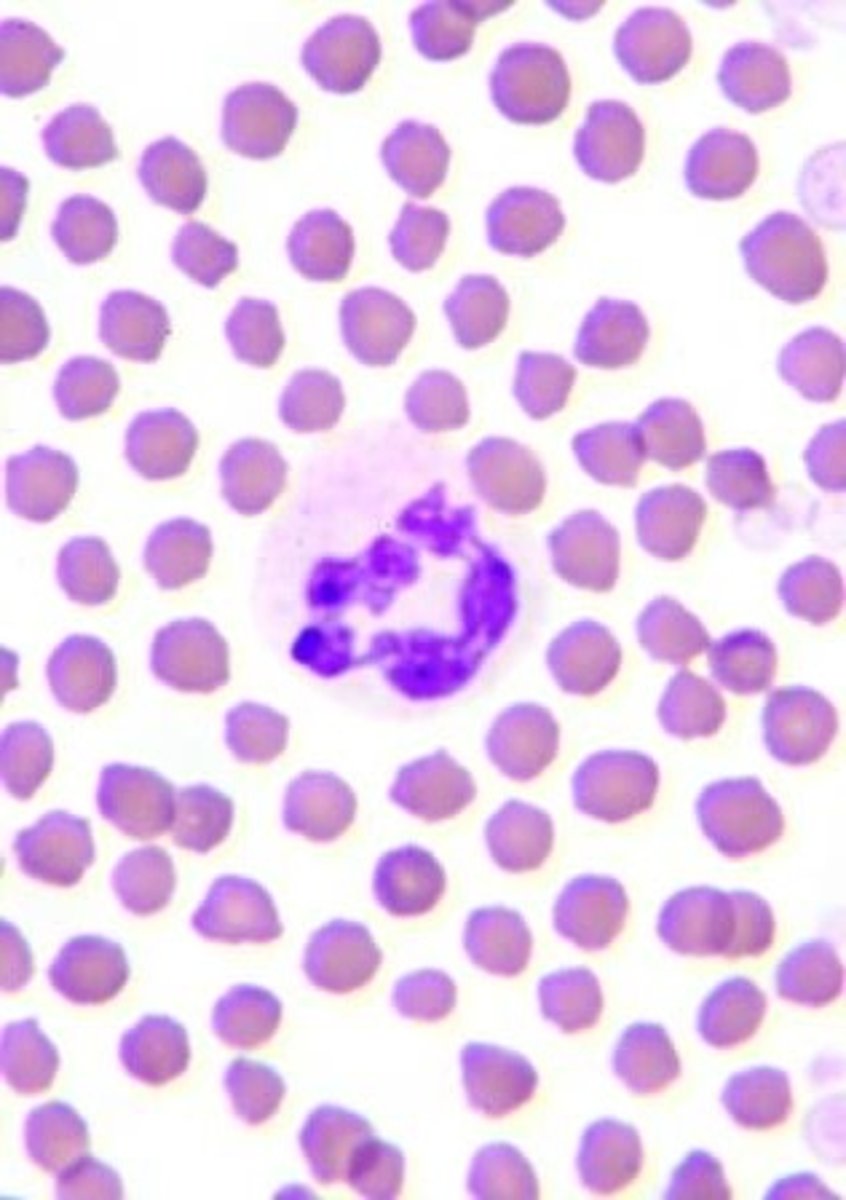
platelet
This artifact may be confused with Ehrlichia canis. Identify this artifact
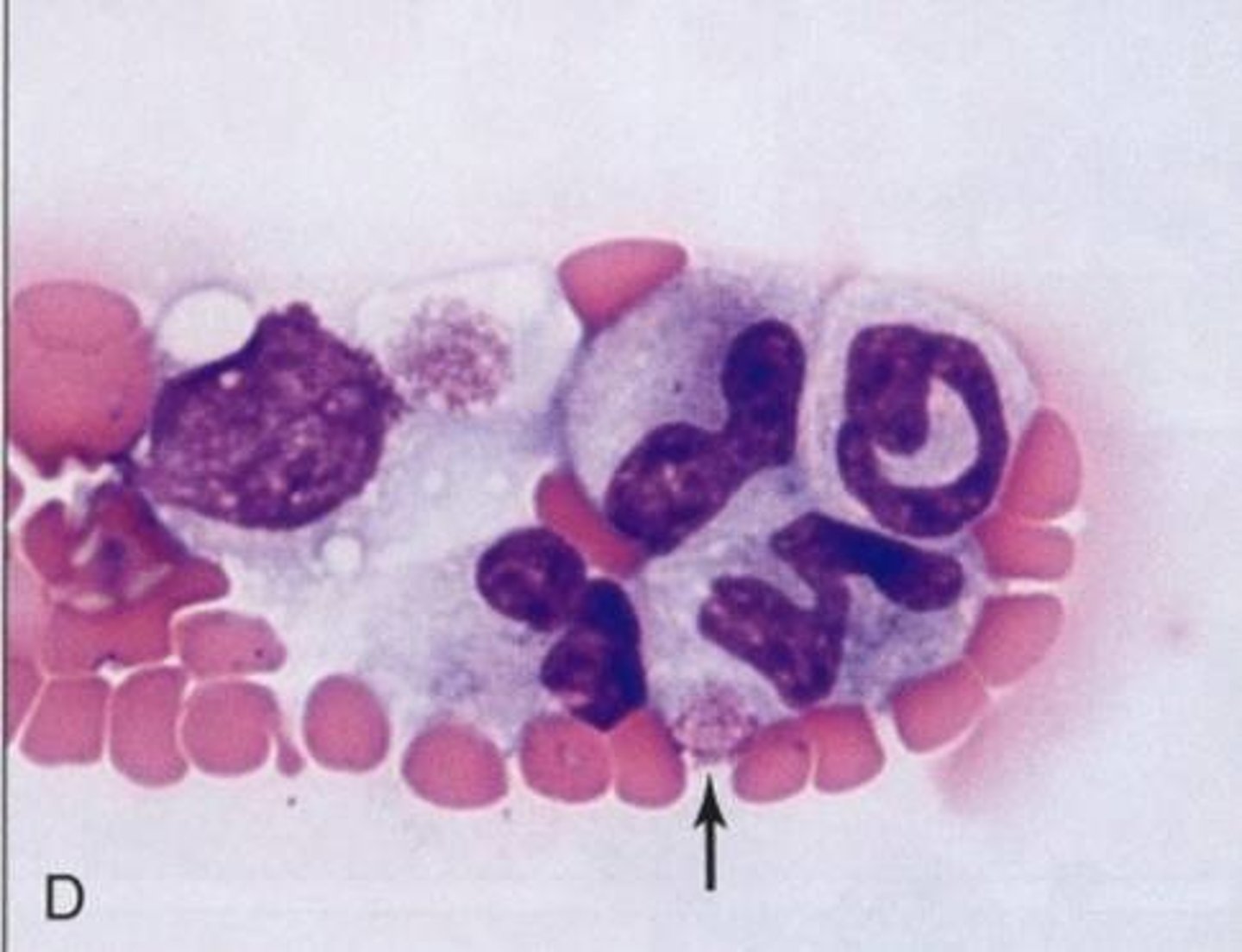
Basket
WBCs that were ruptured during smear preparation and their nuclear chromatin may spread out and form an amorphous, netlike structure are often called __________________ cells
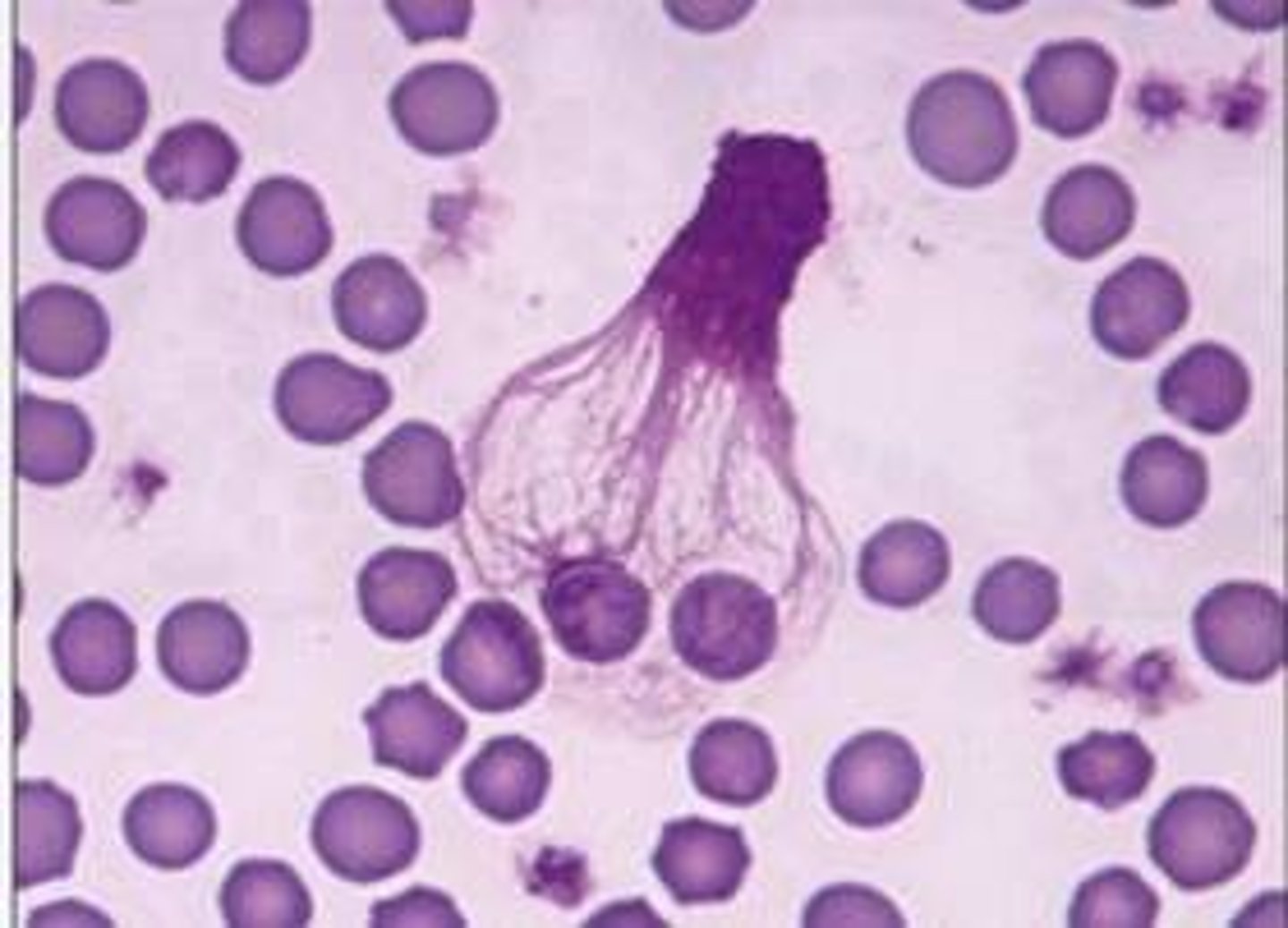
Anaplasma platys
The tick-borne intracellular bacteria that infects platelets is ____________________ ____________________. An infection with this bacteria is associated with thrombocytopenia.
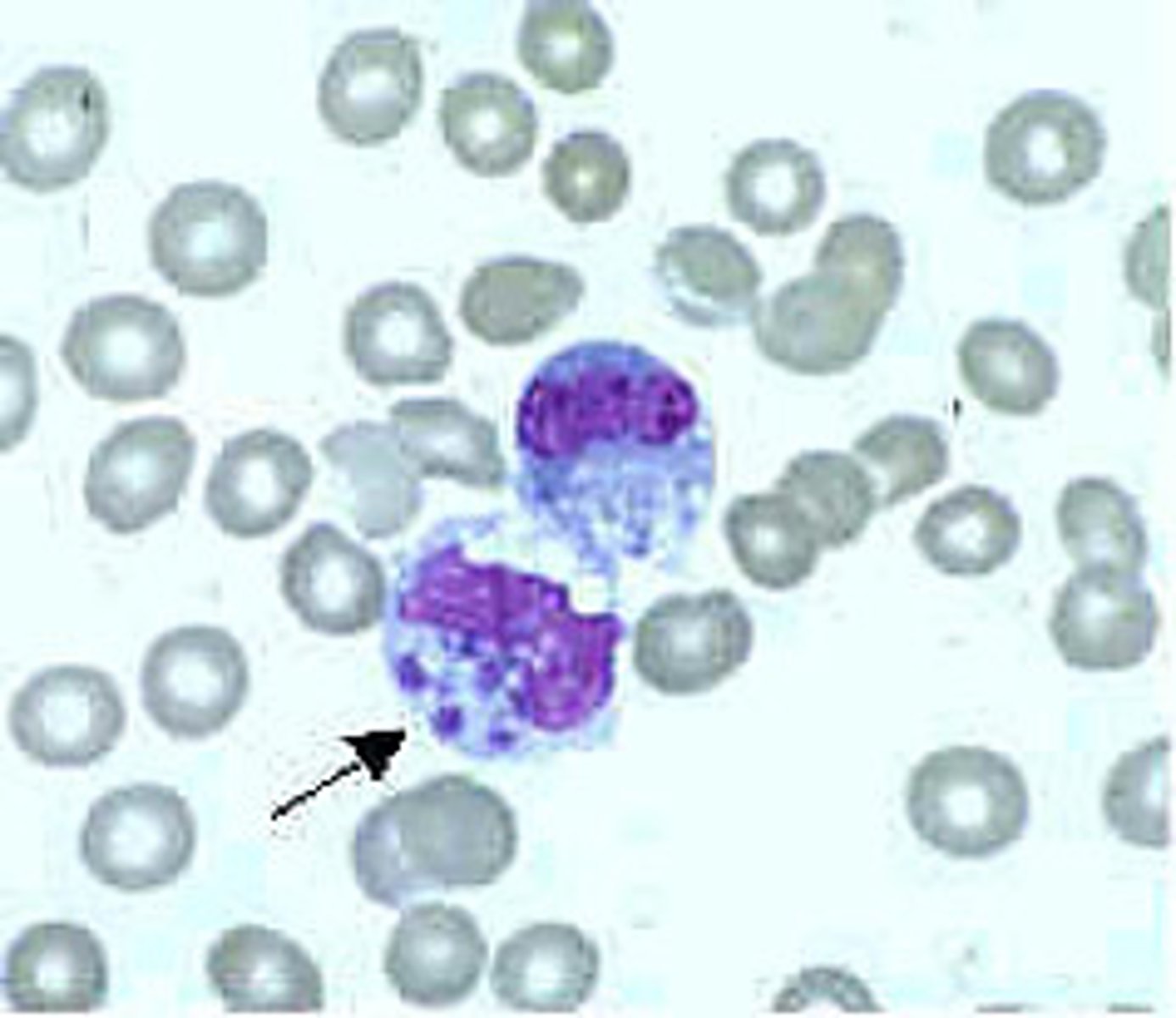
Erlichia canis
Identify this bacteria found in monocytes
Dohle Bodies
Identify these light blue-gray, oval, basophilic, leukocyte inclusions located in the peripheral cytoplasm of neutrophils. They are typically the remnants of the rough endoplasmic reticulum. These are _______________ ______________.
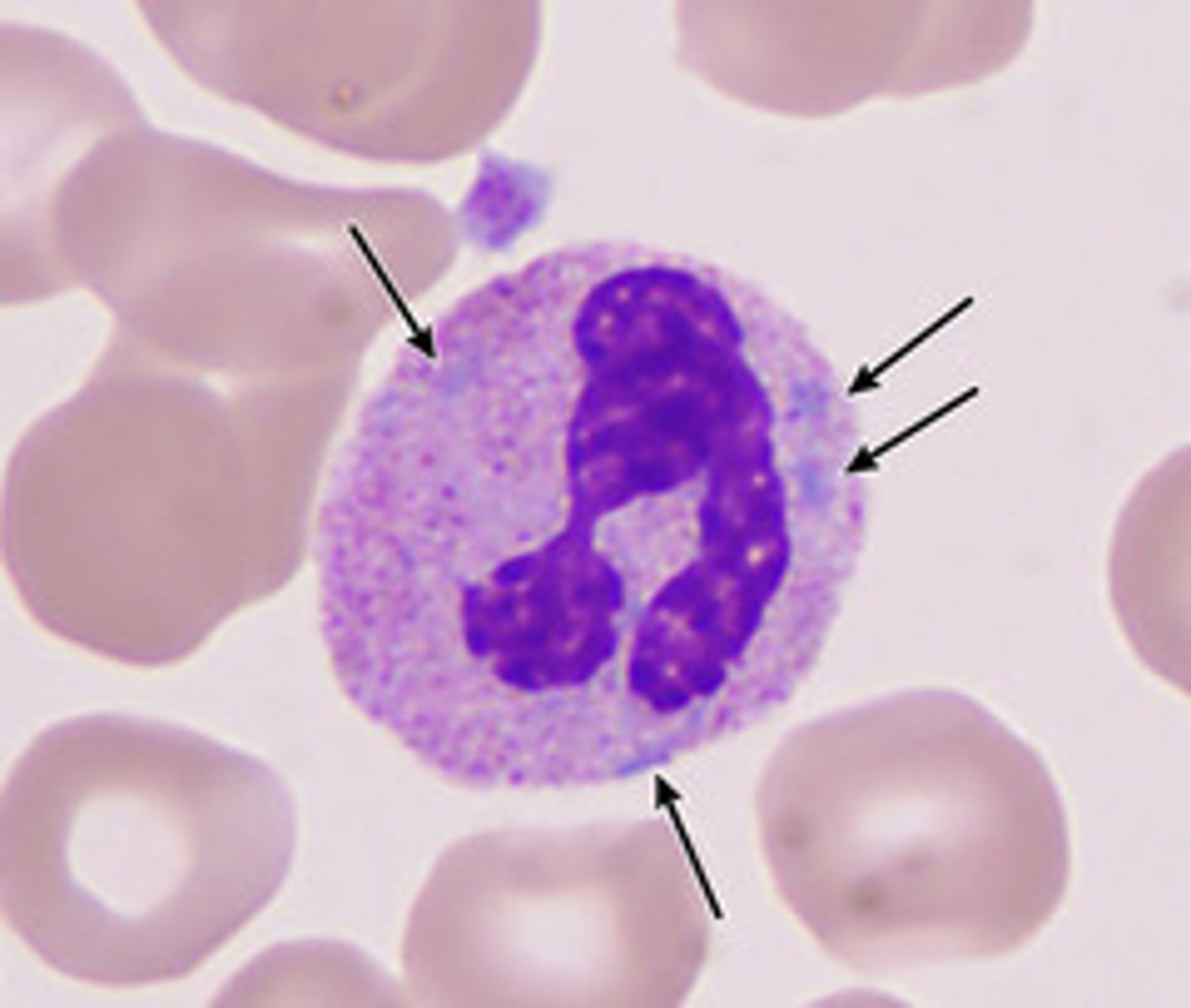
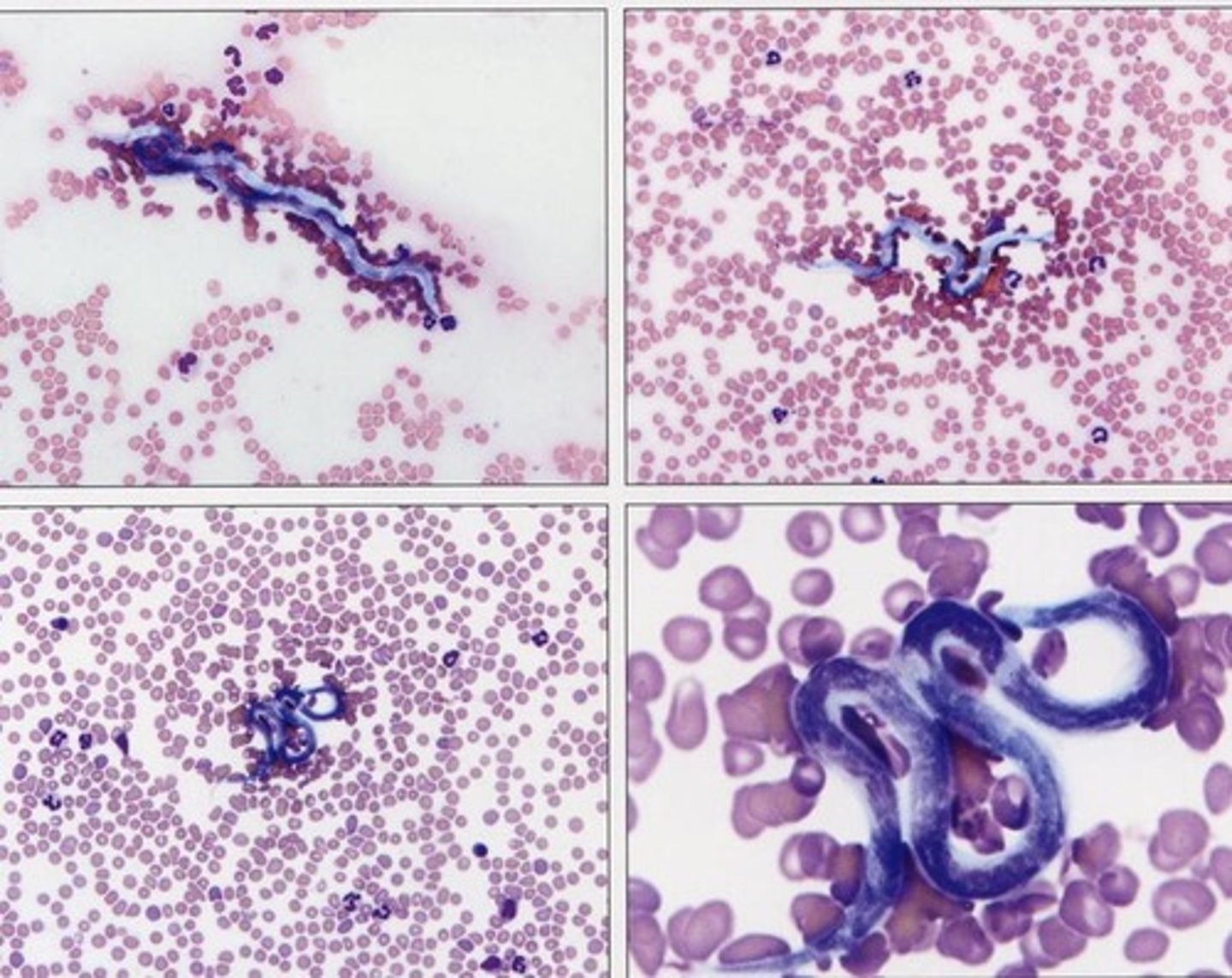
Dirofilaria immitis
Identify this blood extracellular organism. Be sure sure to call it my its scientific name.
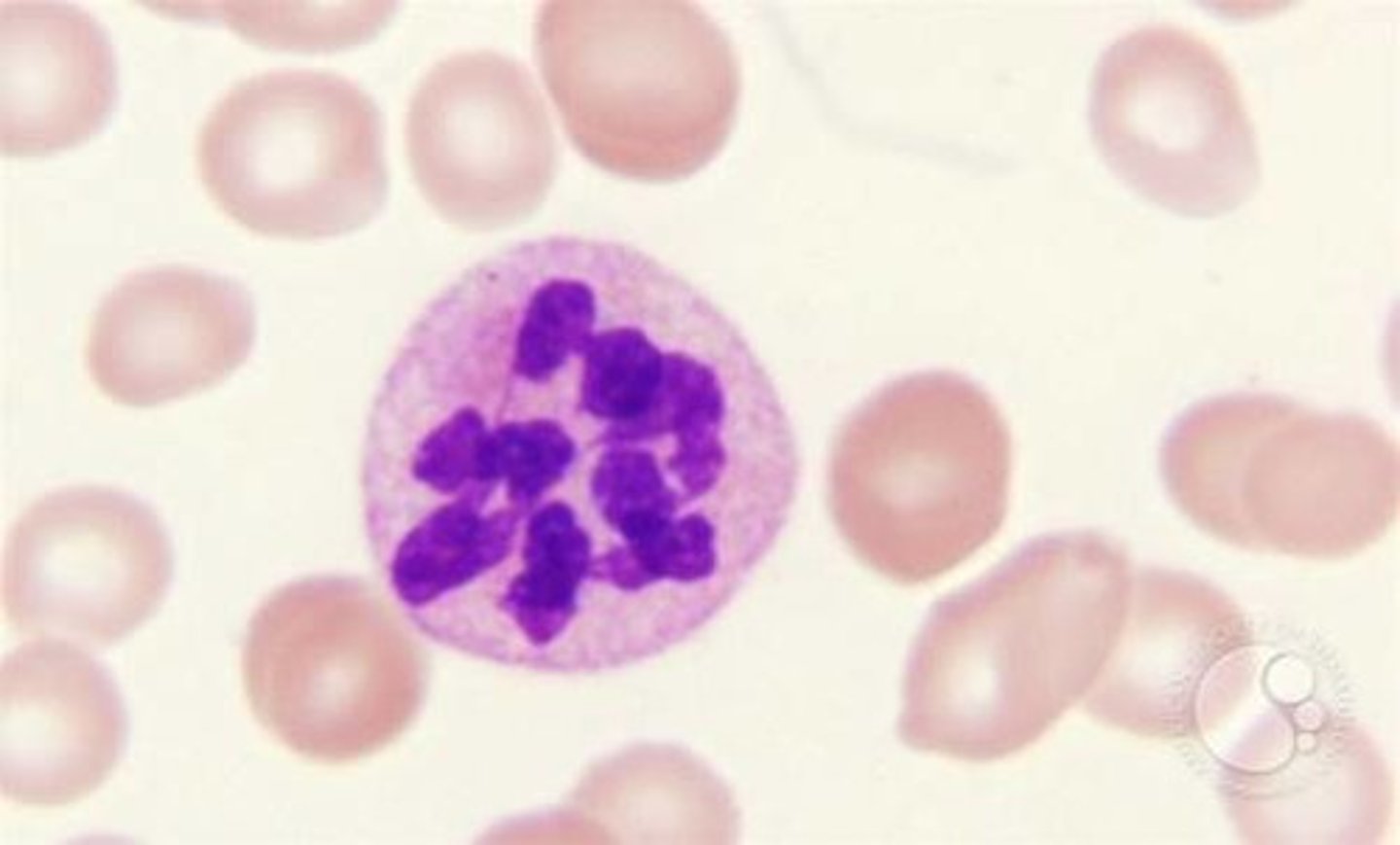
True
T/F: This neutrophil has a hyper segmented nucleus. This may indicate a B12 or folic acid deficiency.
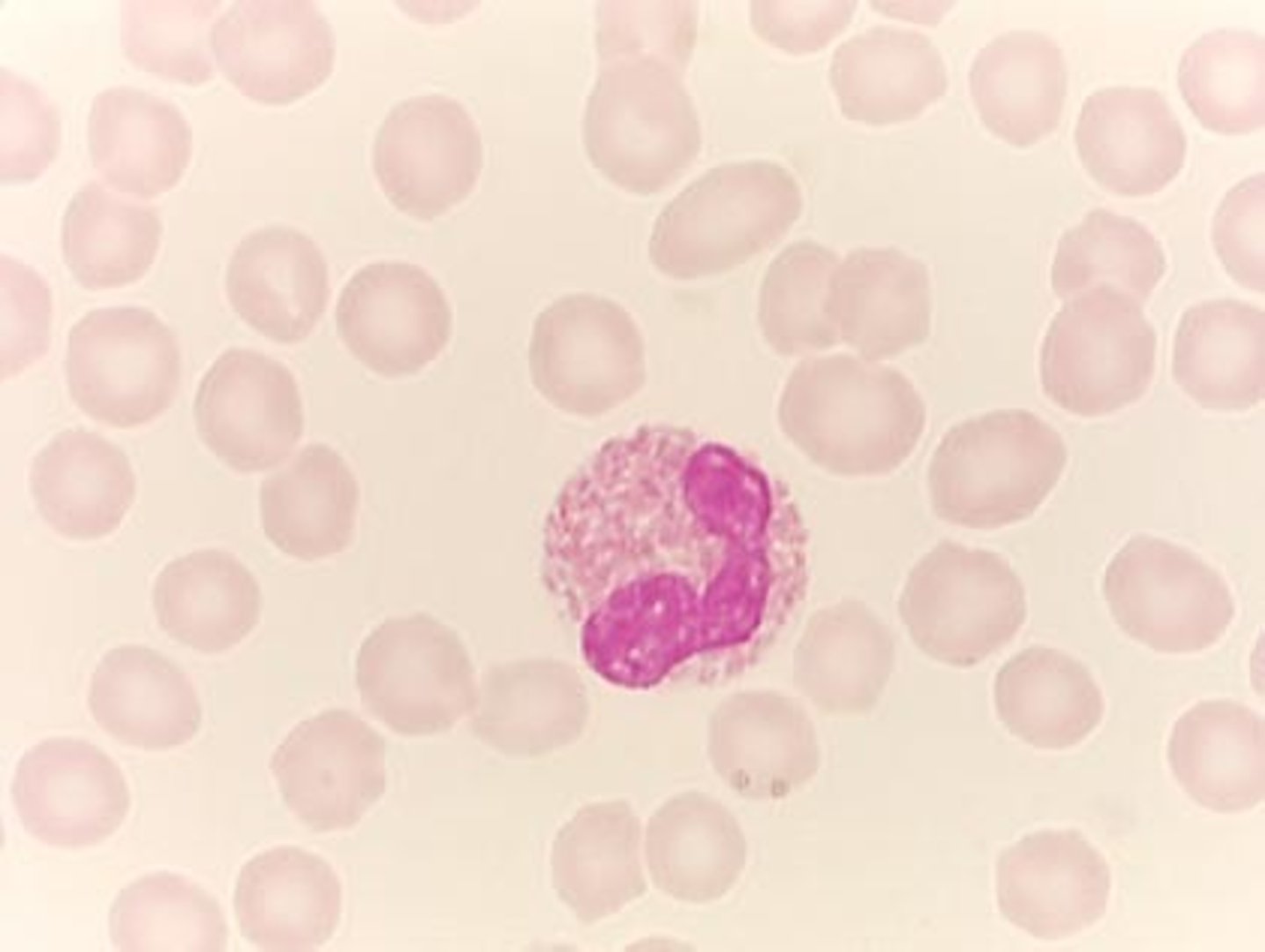
True
T/F: The distinctive feature of eosinophils is the bright pink cytoplasmic granules
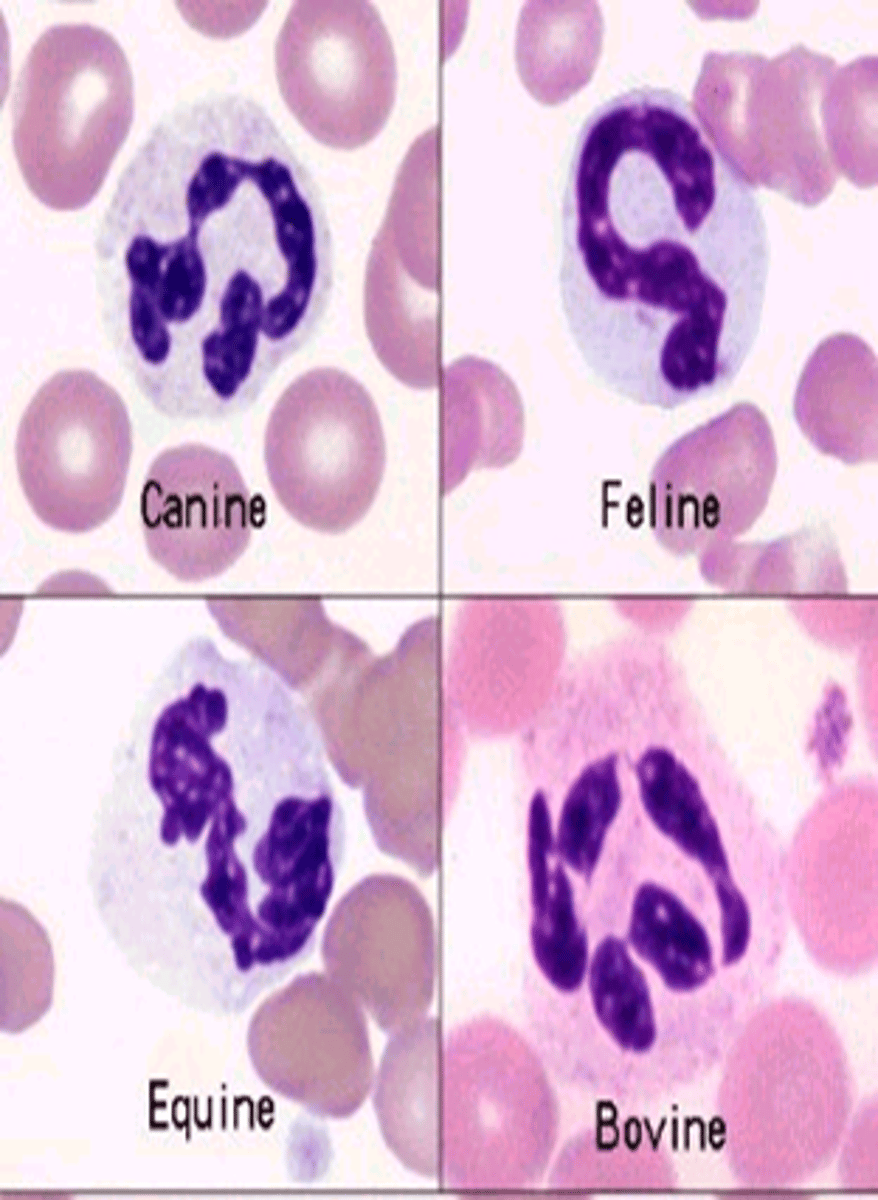
neutrophils
Identify these leukocytes.
eosinophil
Increased numbers of ________ often indicates a hypersensitivity reaction to parasites.
left shift
A ____________ ___________ is a phrase used to note that there are a high number of young, immature white blood cells present.
True
T/F: WBCs that may have been damaged during smear preparation, have bare or free nuclei, and may retain an intact nucleus appearance are commonly called smudge cells
macroplatlets
Platelets that are greater than 5 micrometers are called _________________________.
C. Monocyte
Which of these leukocytes is not a granulocyte?
A. neutrophil
B. basophil
C. Monocyte
D. Eosinophil
Monocyte
Increased numbers of these may indicate a chronic condition or recovery phase of an acute condition
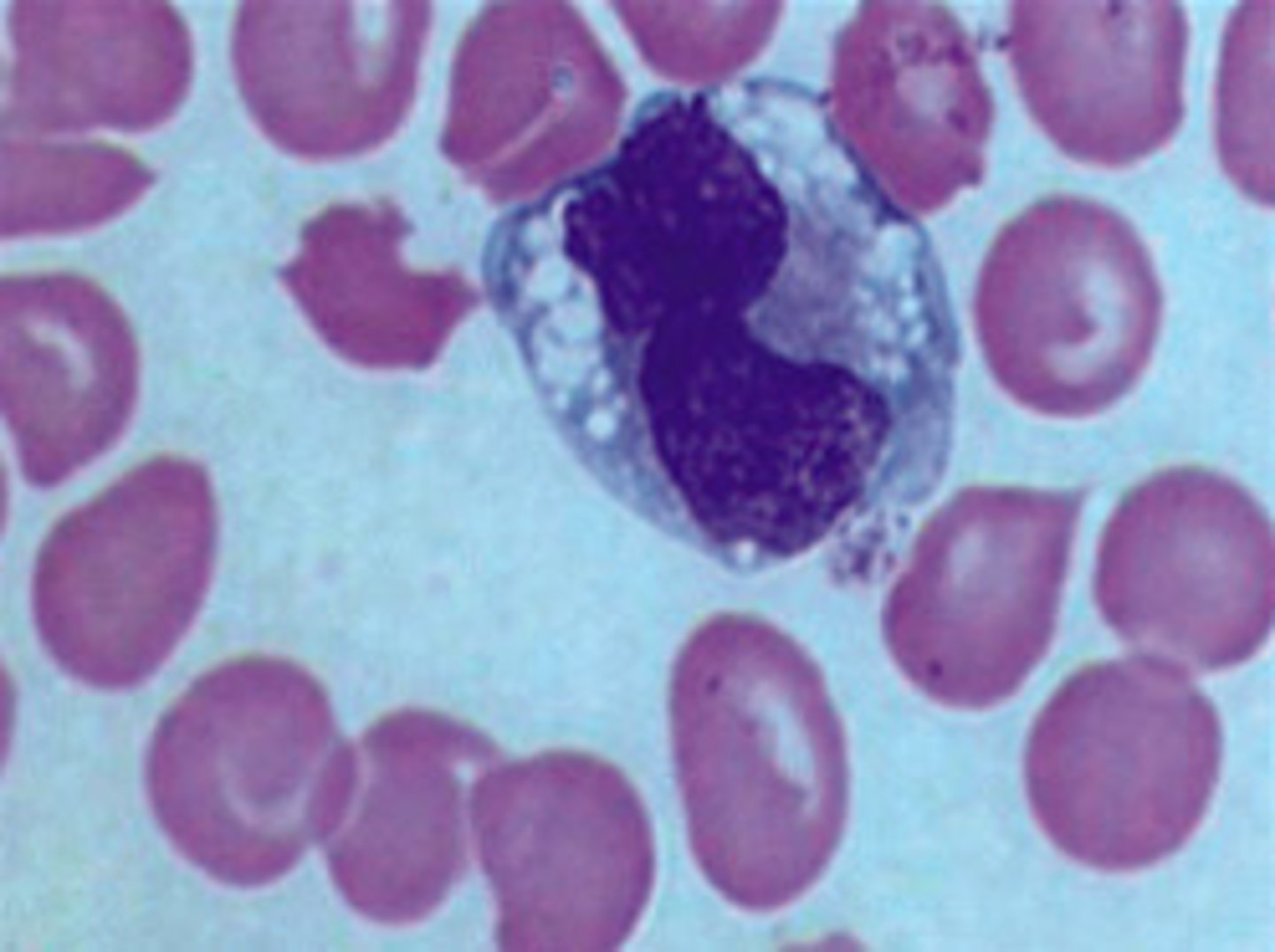
The common term for segmented nucleus, common in a neutrophil, is _______________________ and is often abreviated ______________.
True
Numerous pyknotic neutrophils present in a blood smear may indicate an excessive delay in making the blood smear after collection.
hepatozoon canis
Identify this protozoan in the WBC of a dog
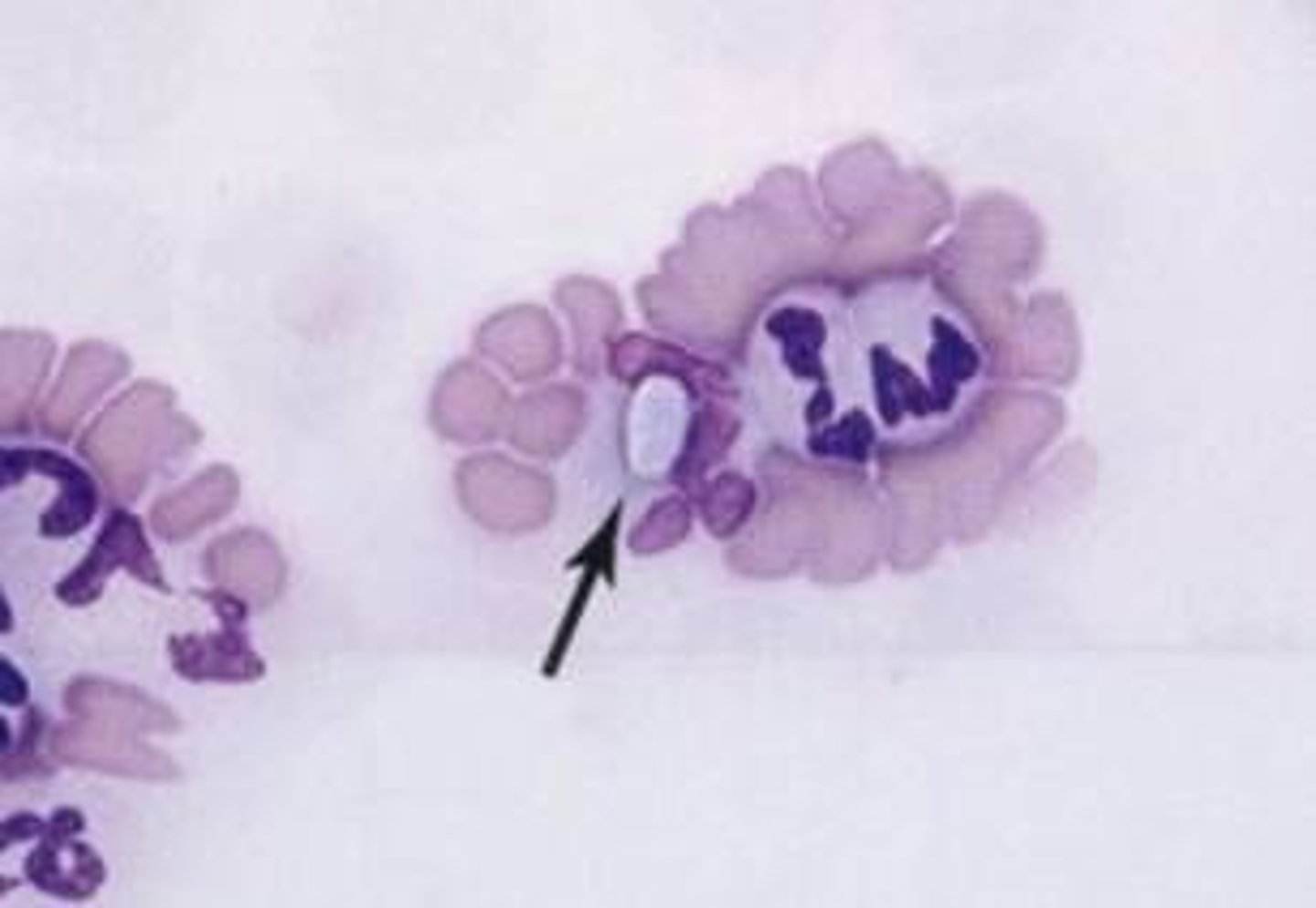
granulocytes
This category of leukocytes contain granules in the cytoplasm that stain selectively
neutrophil
These cells are often the first responders to a bacterial pathogen and may indicate an acute infection.
lymphocyte
Identify this leukocyte. These are often the most numerous leukocyte in caprine, and bovine and other ruminants
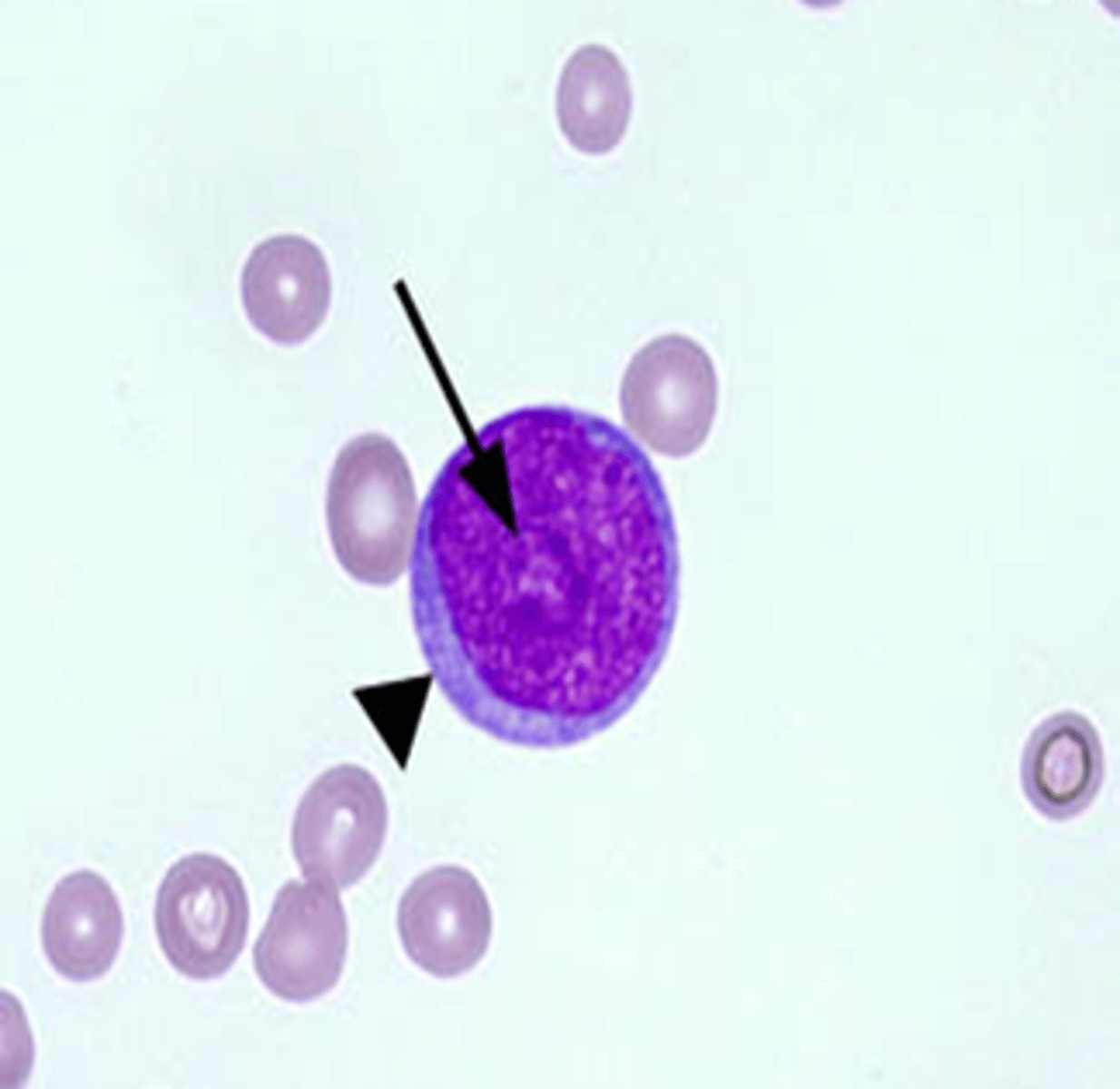
equine
You are more likely to see basophils in the blood smear of which species?
Ehrlichia canis
Identify the organism responsible for Canine Monocytic Ehrlichiosis. The vector for this organism is a tick
False
Even though there may be some platelet clumping in a sample, an accurate thrombocyte count is still possible.
dohle bodies
Identify these light blue-gray, oval, basophilic, leukocyte inclusions located in the peripheral cytoplasm of neutrophils. They are typically the remnants of the rough endoplasmic reticulum. These are _______________ ______________.
hypersegmented neutrophil
This is a ___________________ ______________________ and may be the result of aging due to delayed EDTA blood smear preparation, chronic or excess glucocorticoid use, B12 or folic acid deficiency, or an iInherited maturation defect such as macrocytosis of poodles
D. All of these may be the result of an under stained smear
Which of these may be the result of an under stained smear.
A. Have pale-staining leukocytes
B. Ill-defined nuclear features
C. Difficult to differentiate WBCs from each other
D. All of these may be the result of an under stained smear
Hepatozoon canis
This protozoan may inhabit the cytoplasm of neutrophils is transmitted through the ingestion of infected ticks.
neutrophils
These cells are often the first responders to a bacterial pathogen and may indicate an acute infection.
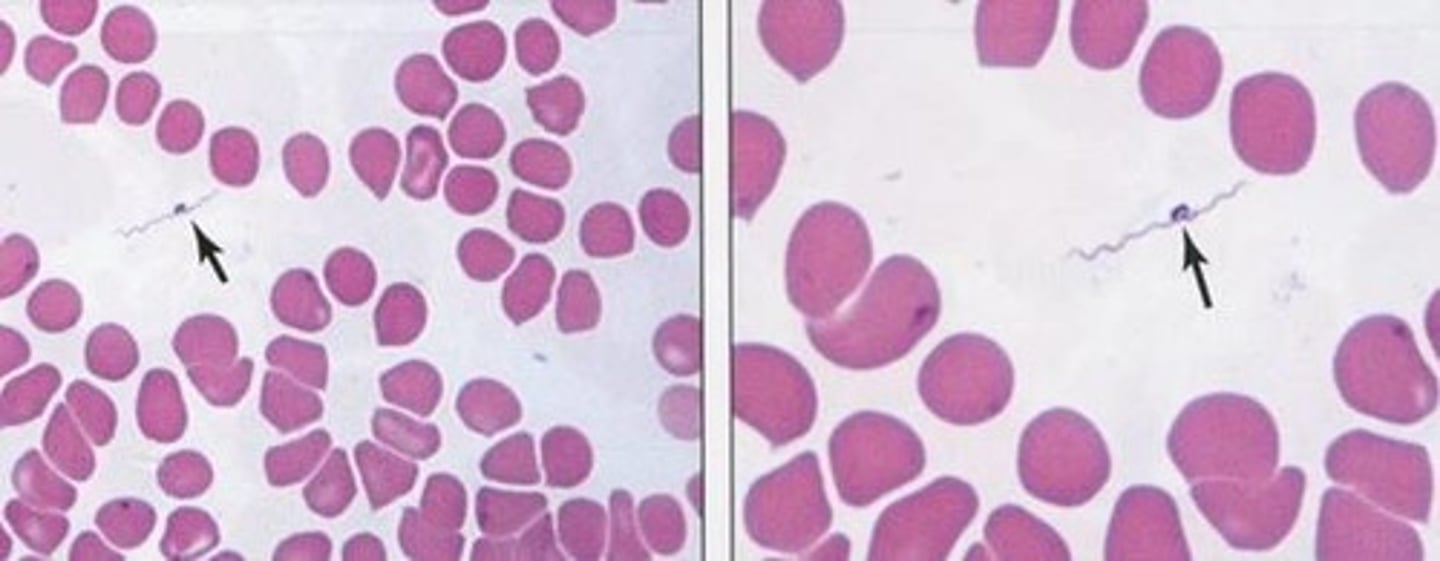
Spirochetes
Identify the shape of the extracellular bacteria in this blood smear.
neutrophil
Identify this Caprine White Blood Cell.