post m2
 Call Kai
 Learn
Learn Practice Test
 Spaced Repetition
 Match
Match Flashcards
 Knowt Play
1/12

There's no tags or description
Looks like no tags are added yet.
Name | Mastery | Learn | Test | Matching | Spaced | Call with Kai |
|---|
No analytics yet
Send a link to your students to track their progress
13 Terms
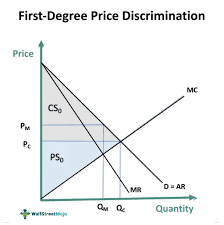
First-degree (perfect) price discrimination
Monopolist charges each consumer their exact willingness to pay, extracting all consumer surplus
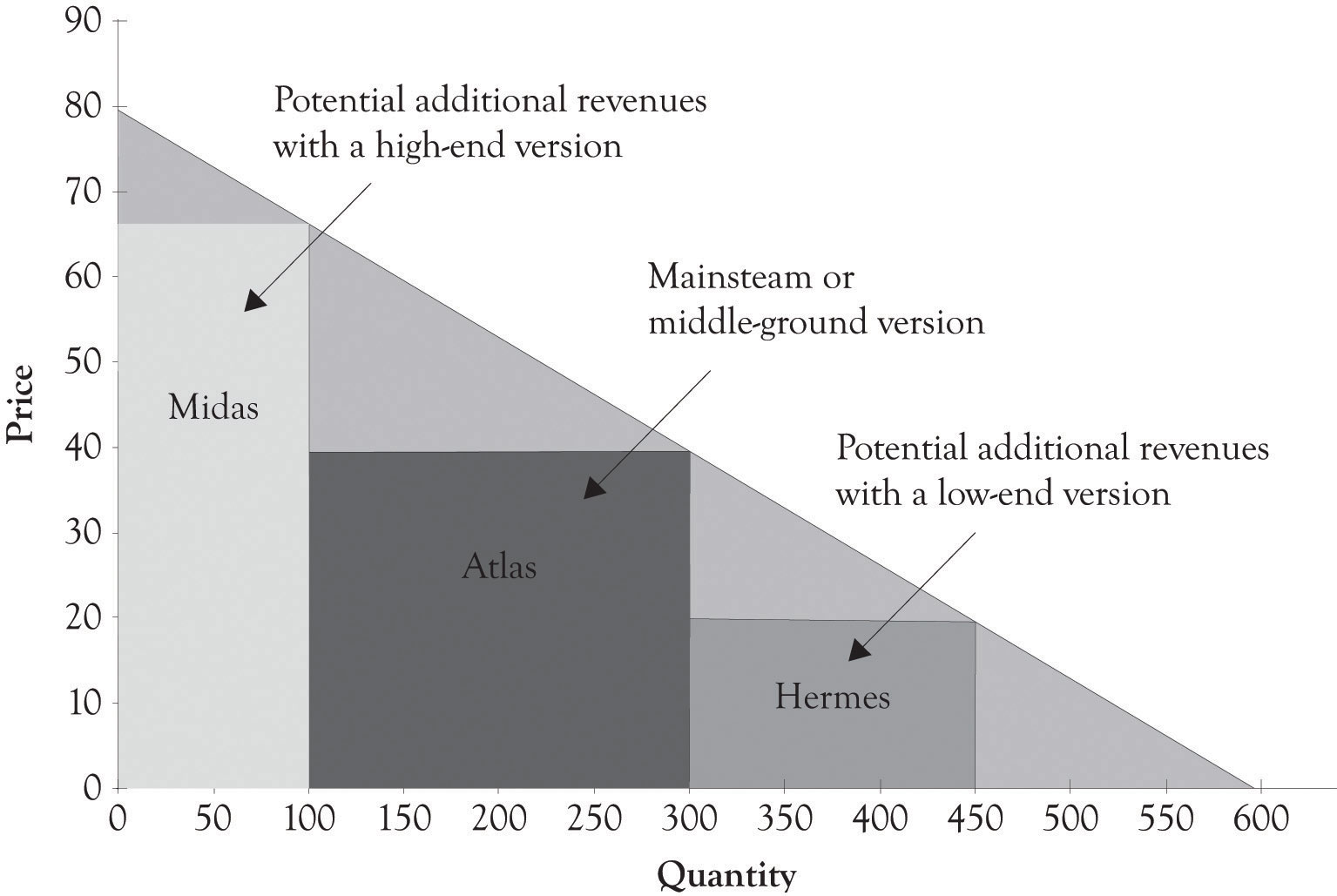
Second-degree price discrimination
Monopolist offers a menu of price-quantity (or quality) bundles and lets consumers self-select, with prices varying by quantity/version purchased.
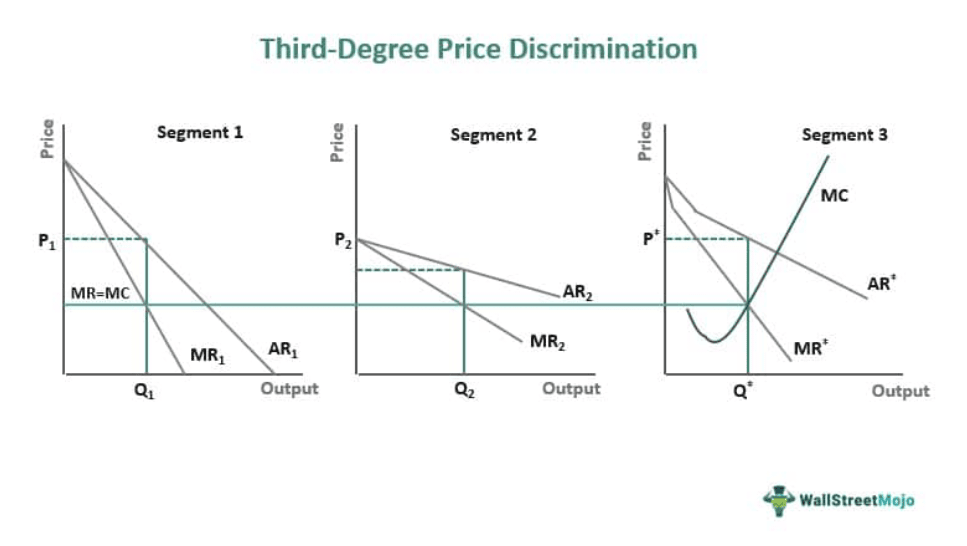
3rd degree price discrimination
Monopolist segments consumers into observable groups (e.g., students, seniors) and charges each group a different price based on their elasticity.
dynamic vs static games in game theory
Static: players move simultaneously (or without knowing others' moves); Dynamic: players move sequentially with knowledge of prior moves, so order and history matter.
Which kinds of monopoly pricing are Pareto efficient?
Only first-degree (perfect price discrimination) is Pareto efficient — the monopolist charges each person their exact willingness to pay, so everyone who values the good more than it costs to make gets it (P = MC on the last unit).
All others waste trades (P > MC → deadweight loss):
Second-degree: low-end bundles shrunk to stop high-types from faking low-types
Third-degree: one price per group, not per person
Single-price monopoly: classic DWL triangle
cournot vs bertrant p & MC relationships
Cournot: p>MCp>MC in equilibrium
Bertrand: firms undercut until p=MCp=MC (at least when they have identical costs)
In Bertrand competition, what do firms choose?
price
In cournot competition, what do firms choose?
quantity
steps to solve cournot duopoly
Derive each firm’s best‑response function by maximizing its profit given the other’s quantity.
Solve the two best‑response equations simultaneously to get equilibrium quantities.
Use the inverse demand curve to find the equilibrium price.
how to solve stackelburg duopoly with firm 1 as the leader
Derive firm 2’s Cournot best‑response function q2(q1)q2(q1).
Substitute that q2(q1)q2(q1) into firm 1’s profit and choose q1q1 to maximize it.
Compute firm 2’s quantity from its best response to the chosen q1q1, then find the price from inverse demand.
Is MR = MC in 3rd degree price discrimination?
yes!
Stackelberg vs Cournot (with quantities, linear demand, identical MC):
Total quantity: Stackelberg > Cournot
Price: Stackelberg < Cournot
Profits: Leader > its Cournot profit, Follower < its Cournot profit
T/F In a finite dynamic game of complete and perfect information, any strategy profile that is a Nash equilibrium but uses a not sequentially rational off the equilibrium path cannot be subgame perfect.
T