Anatomy & Physiology: Tissue Types, Structures, and Functions
 Call Kai
 Learn
Learn Practice Test
 Spaced Repetition
 Match
Match Flashcards
 Knowt Play
1/83

There's no tags or description
Looks like no tags are added yet.
Name | Mastery | Learn | Test | Matching | Spaced | Call with Kai |
|---|
No analytics yet
Send a link to your students to track their progress
84 Terms
What are the four major types of tissues in the body?
Epithelial, Connective, Muscle, Nervous
What is the primary function of epithelial tissue?
Covers exposed surfaces, lines internal passageways, and forms glands.
What roles does connective tissue serve?
Fills internal spaces, supports other tissues, transports materials, and stores energy.
What is the main function of muscle tissue?
Specialized for contraction.
What is the role of nervous tissue?
Carries electrical signals from one part of the body to another.
What is histology?
The study of tissues.
What are the functions of epithelial tissue?
Provide physical protection, control permeability, provide sensation, and produce specialized secretions.
What are the characteristics of epithelia?
Polarity, cellularity, attachment to basement membrane, avascularity, and regeneration.
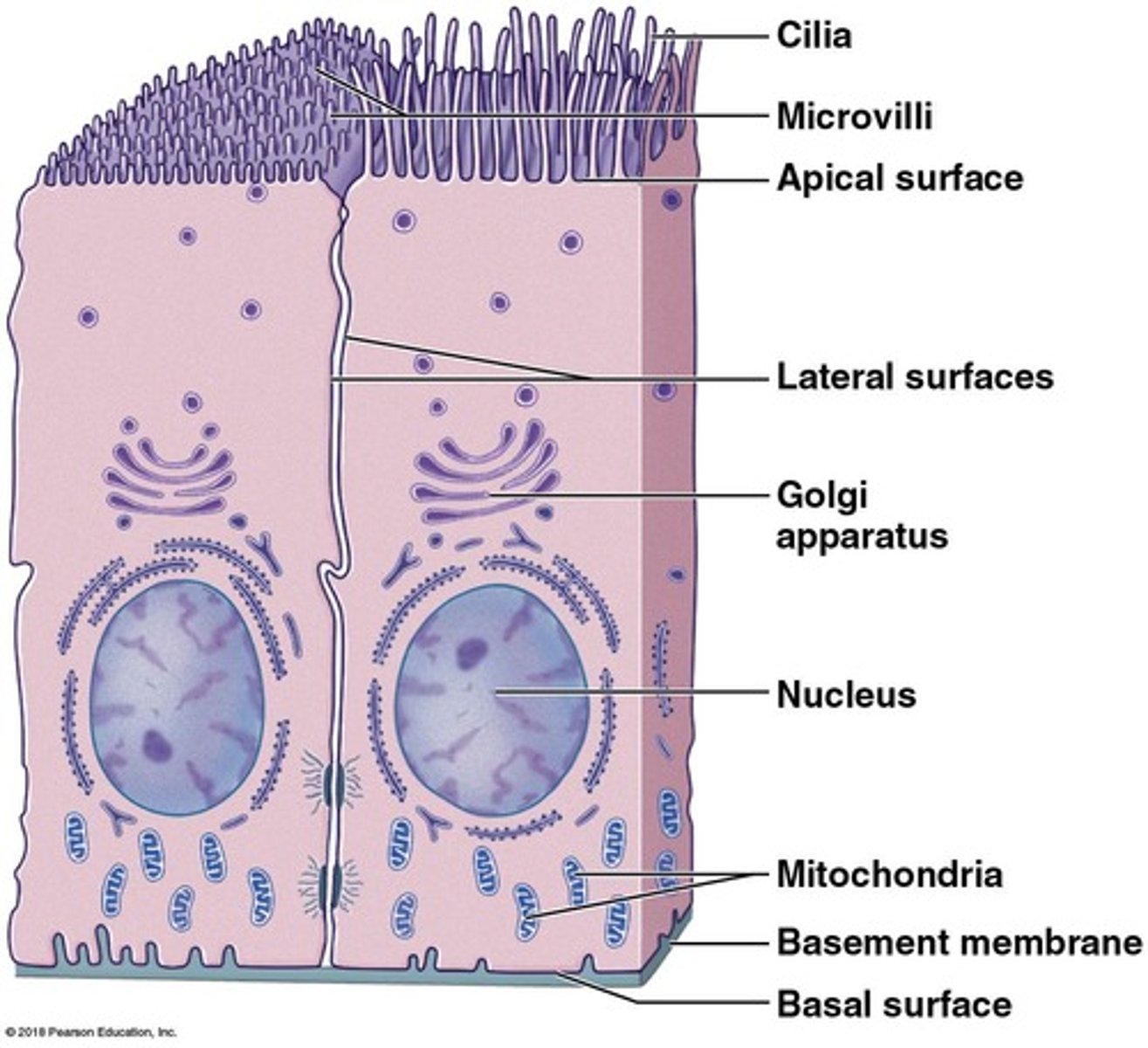
What is the function of microvilli in epithelial cells?
Increase absorption or secretion by increasing surface area.
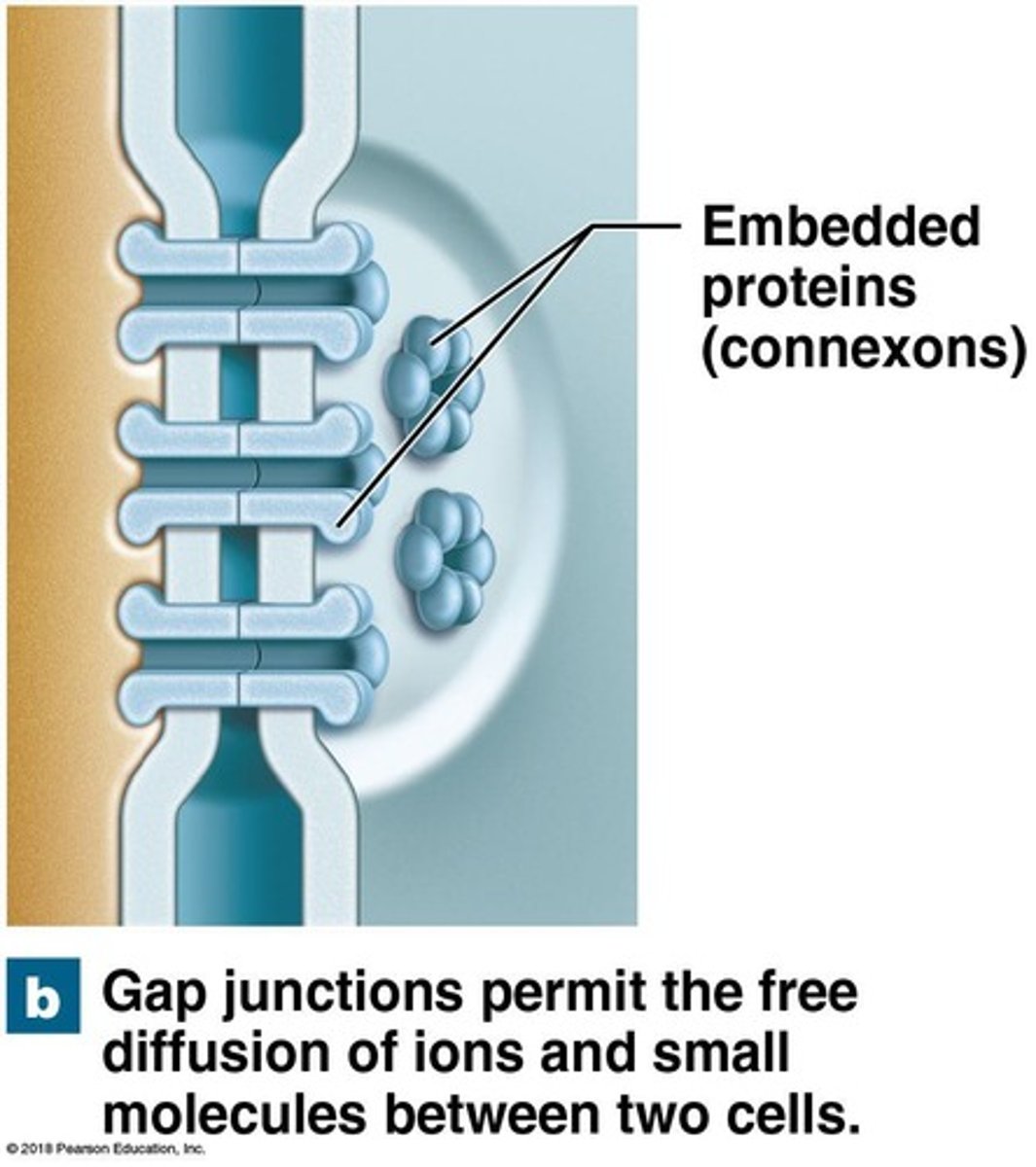
What do gap junctions allow?
Rapid communication between cells and the passage of small molecules and ions.
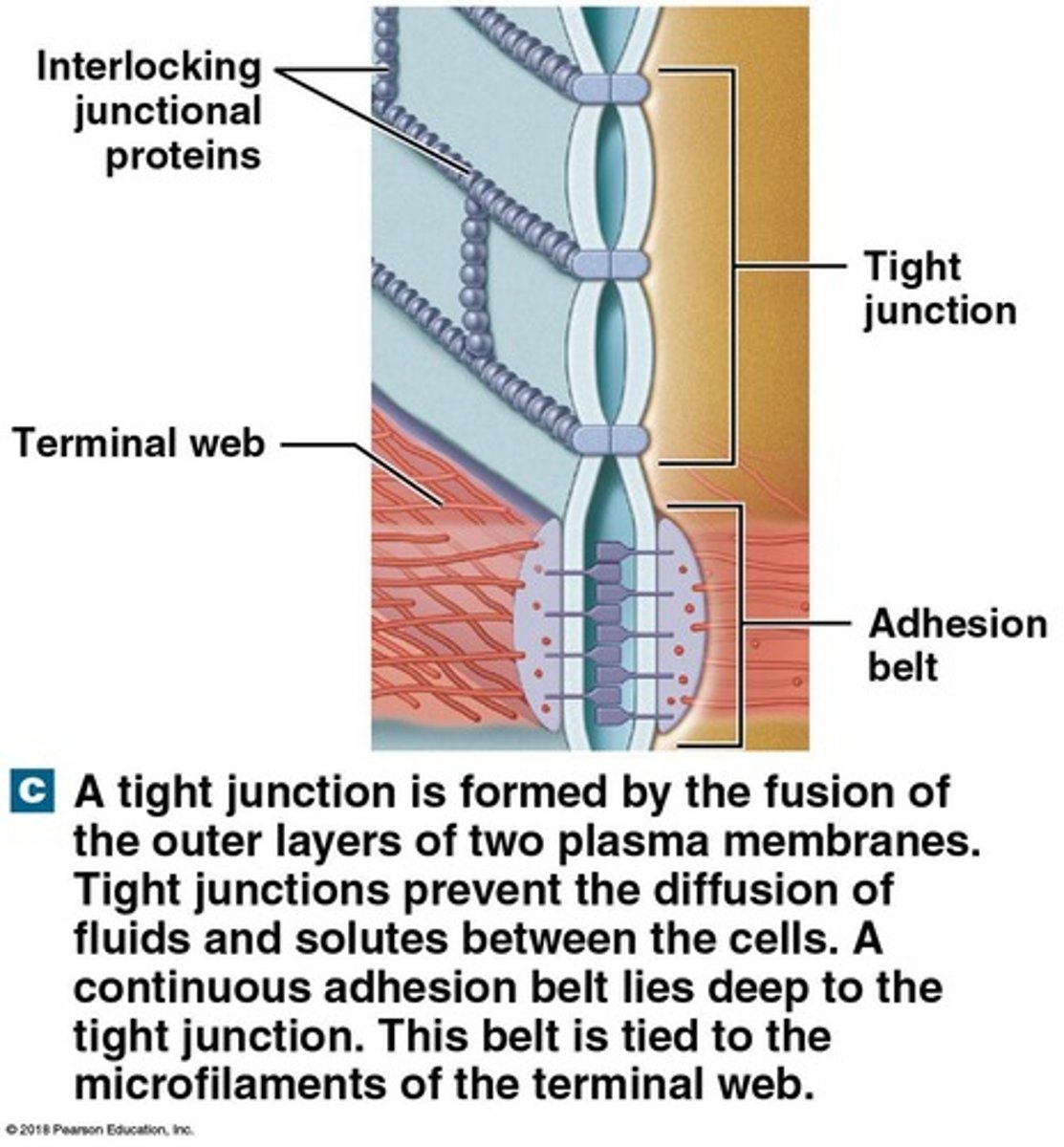
What is the purpose of tight junctions?
Prevent passage of water and solutes between cells.
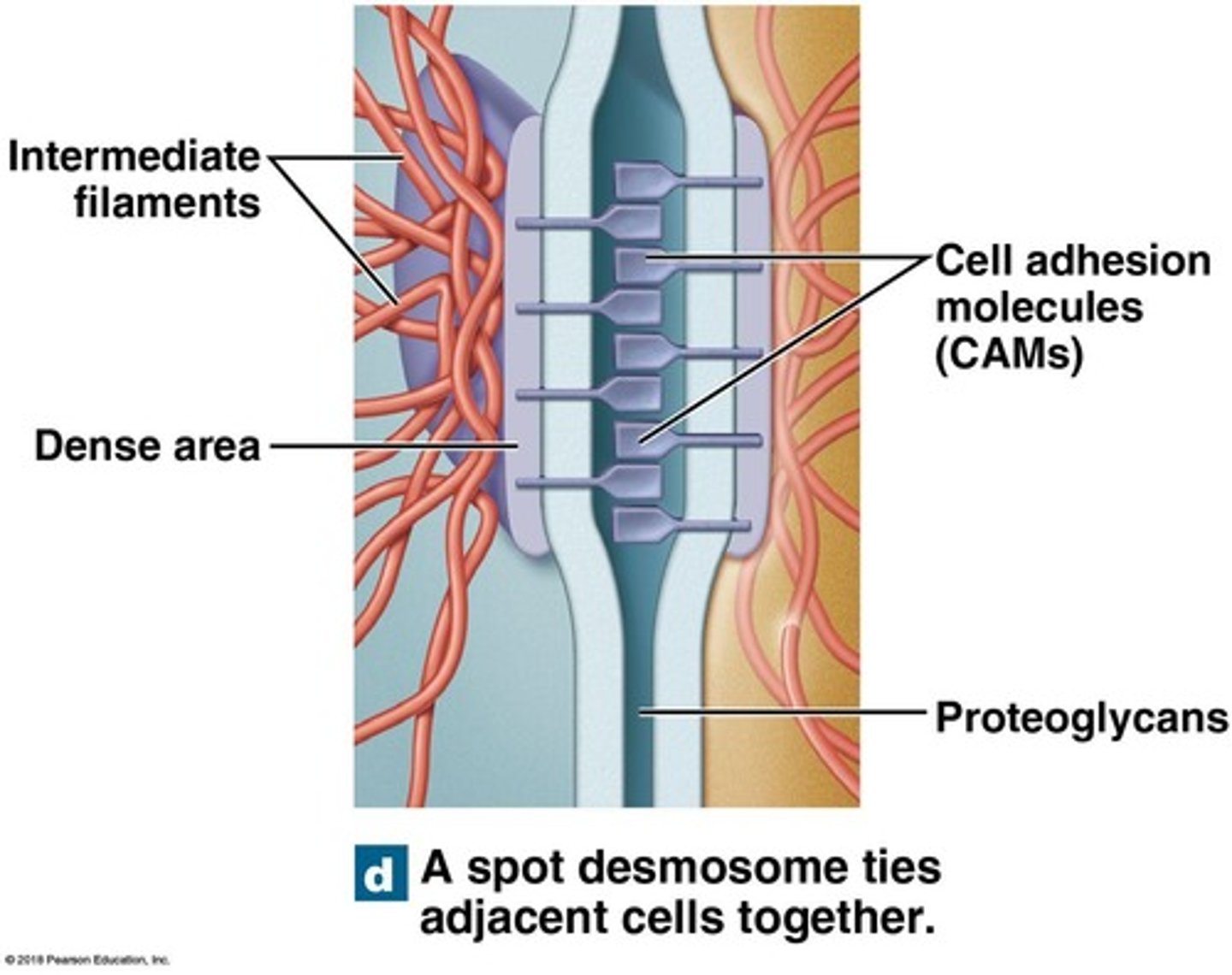
What are desmosomes?
Cell junctions that tie cells together and allow bending and twisting.
What is the basal lamina?
The closest layer of the basement membrane to the epithelium.
How are epithelial cells maintained and repaired?
By continual division of stem cells located near the basement membrane.
What are the two classifications of epithelia based on shape?
Squamous (thin and flat), Cuboidal (square shaped), Columnar (tall, slender rectangles).
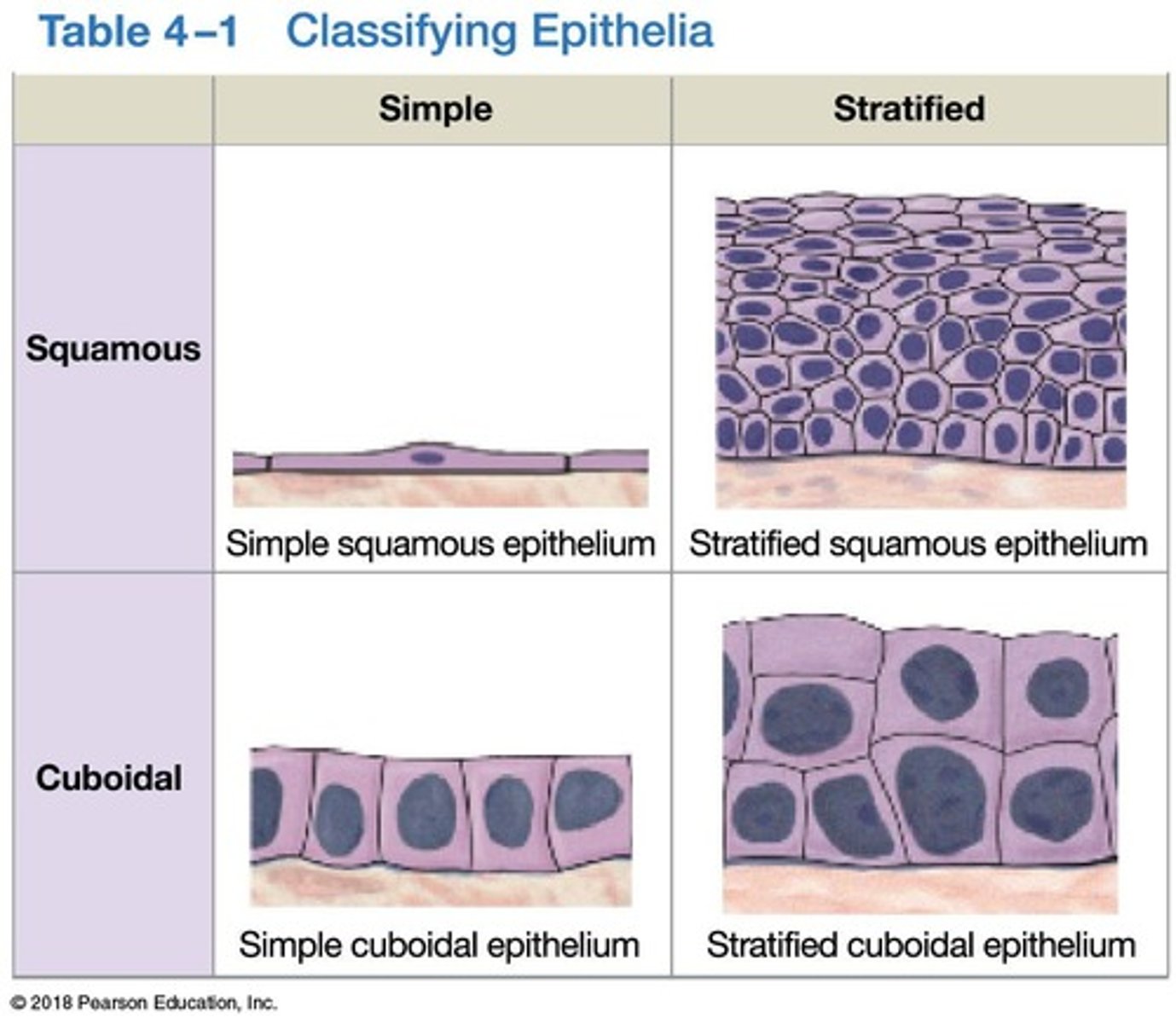
What is simple squamous epithelium specialized for?
Absorption and diffusion.
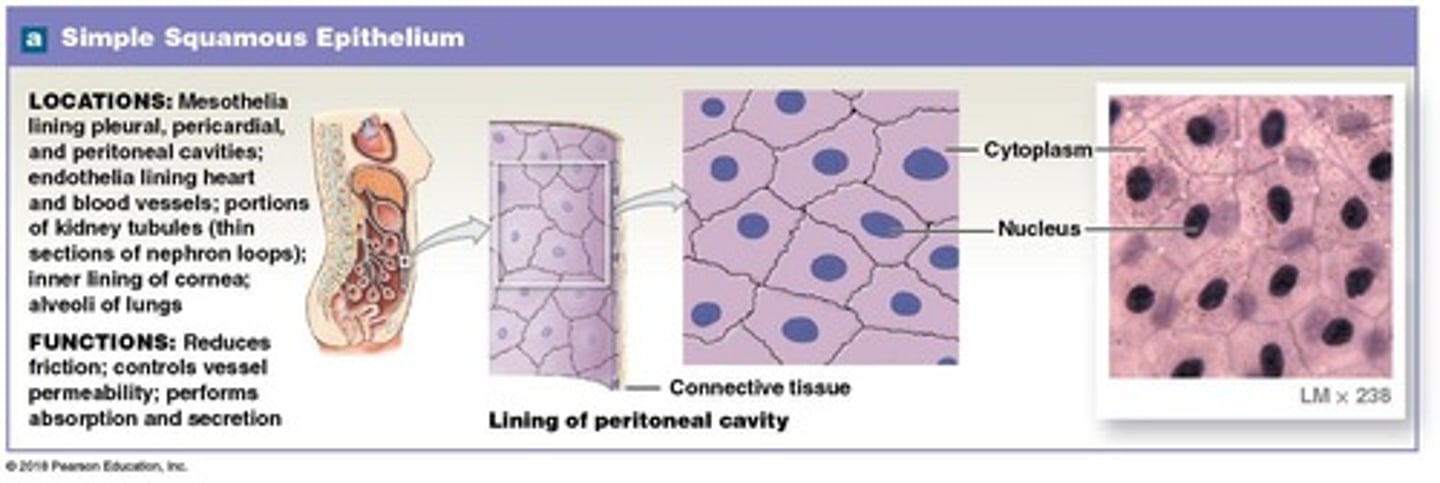
Where is stratified squamous epithelium commonly found?
In areas that require protection against mechanical stresses.
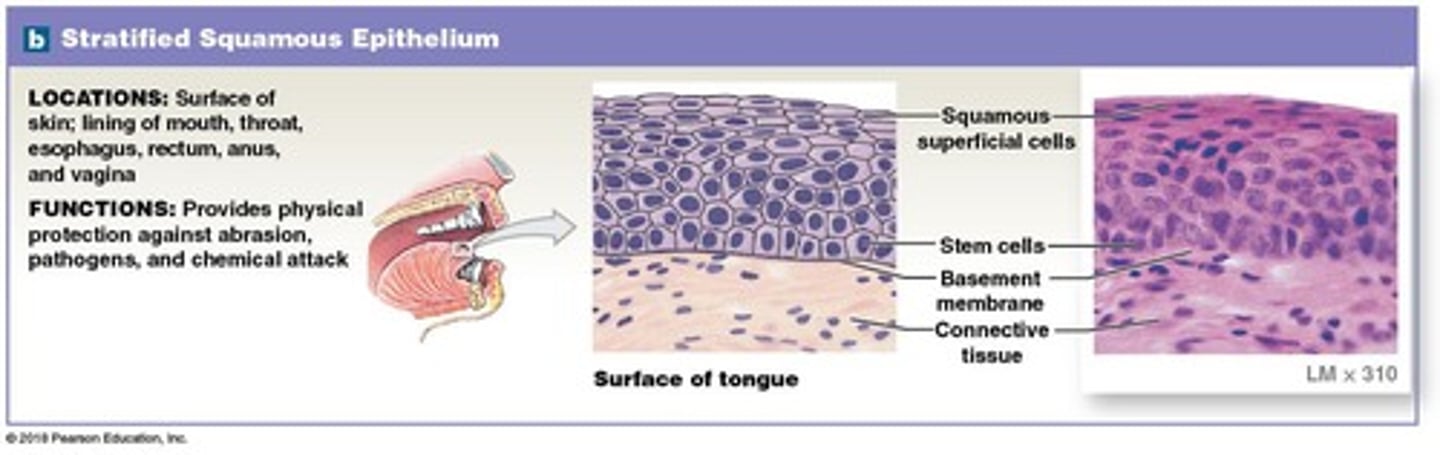
What is the function of simple cuboidal epithelium?
Secretion and absorption.
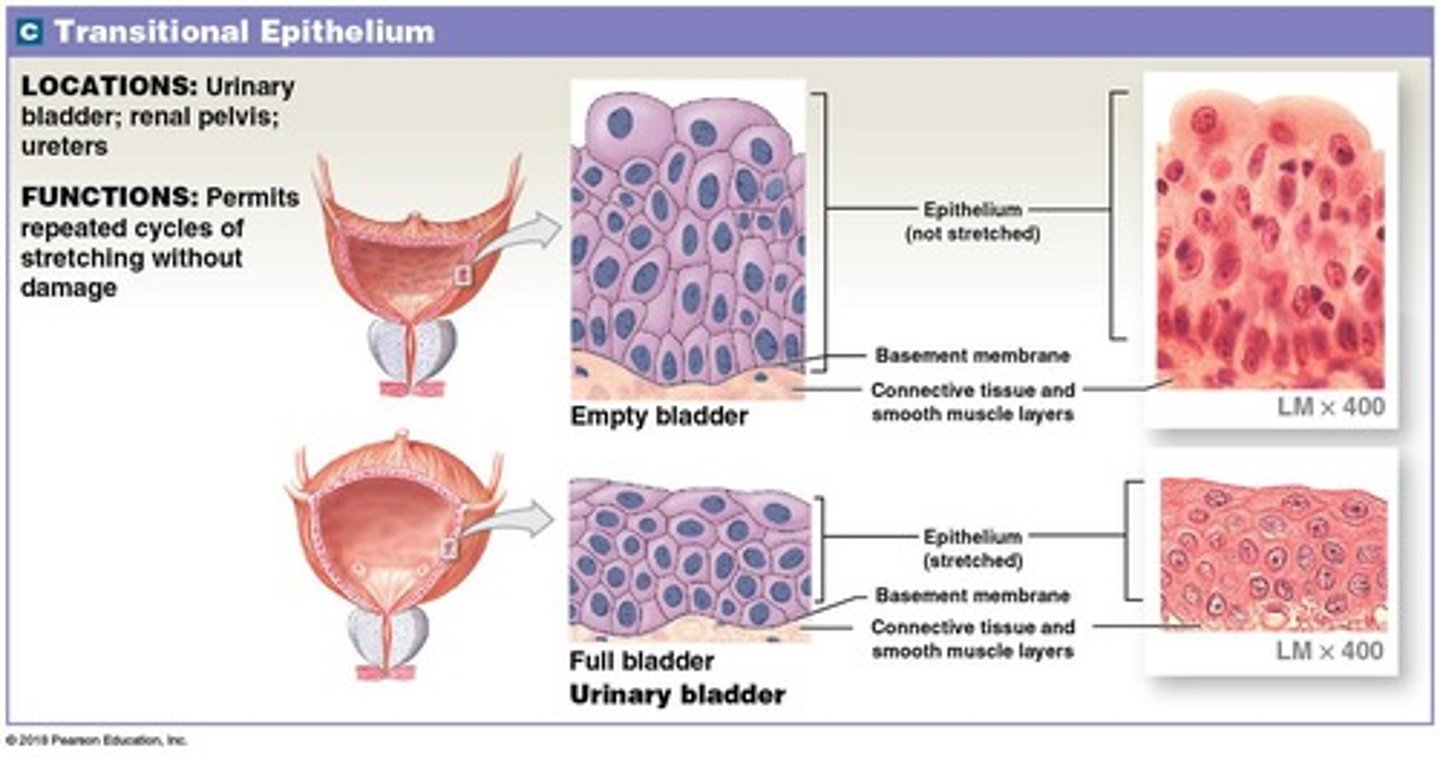
What is transitional epithelium specialized for?
Tolerating repeated cycles of stretching without damage.
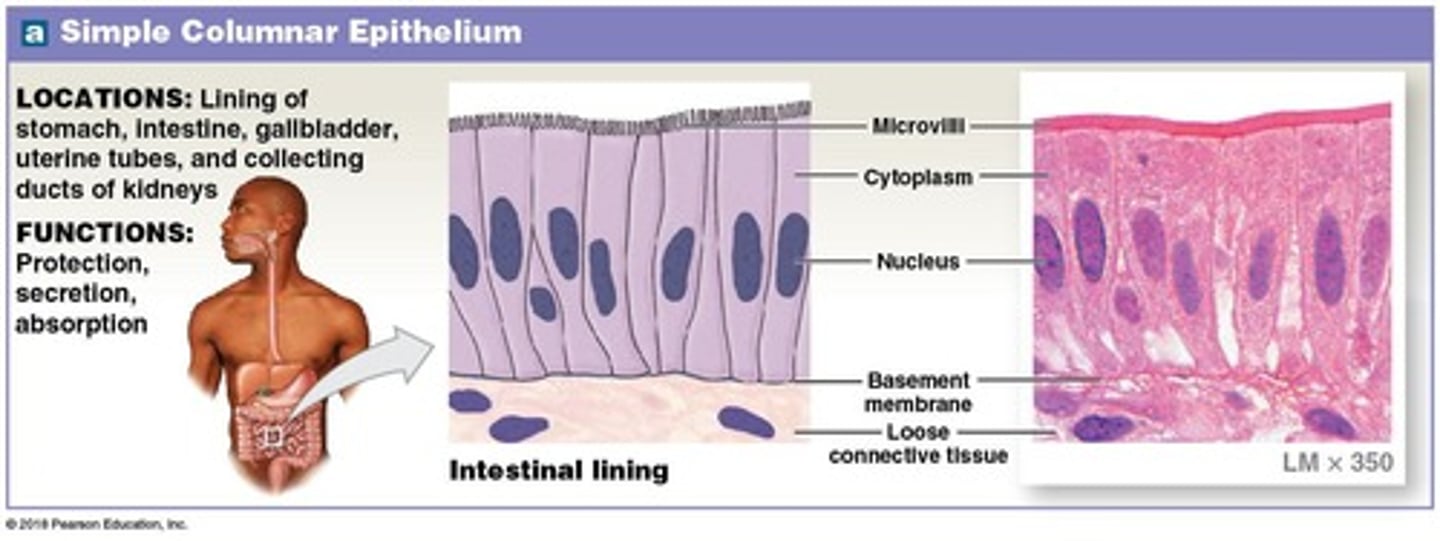
Where can simple columnar epithelium be found?
In the stomach, small intestine, and large intestine.
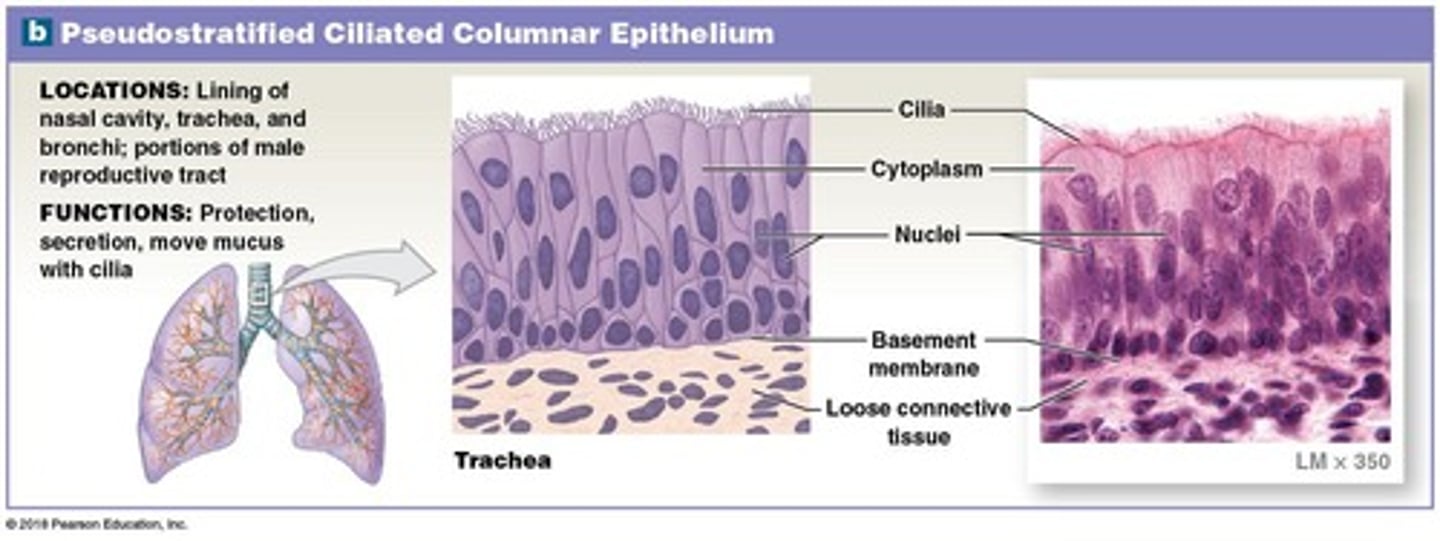
What is the role of pseudostratified columnar epithelium?
Typically has cilia to move fluids, found in the nasal cavity, trachea, and bronchi.
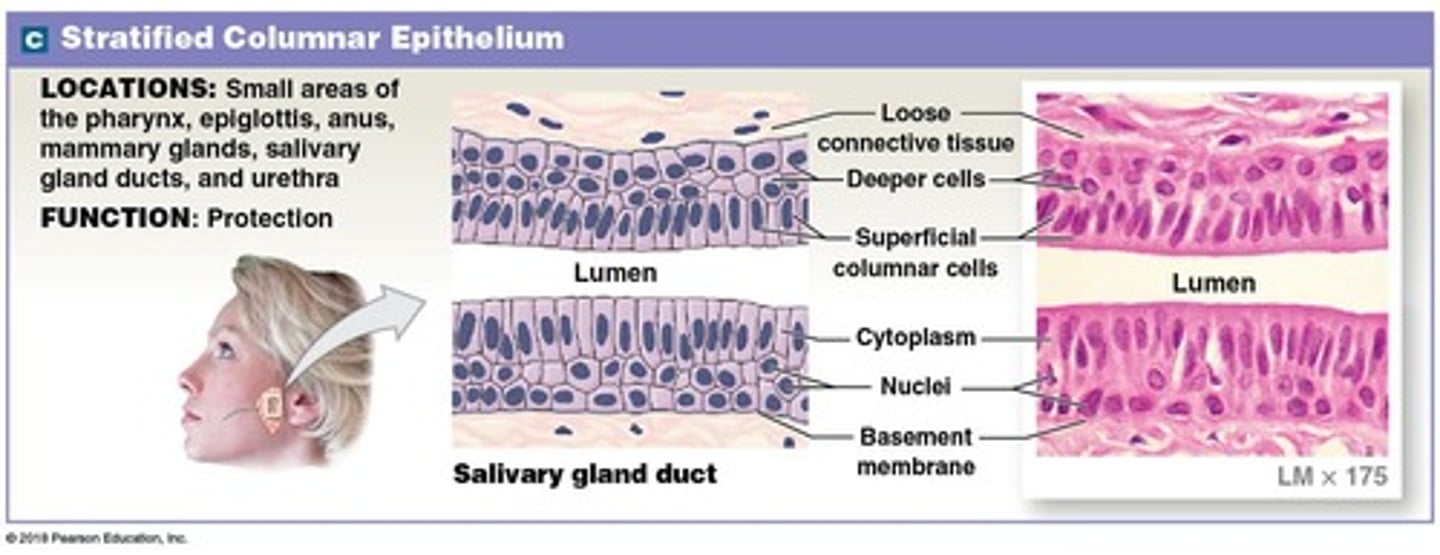
What is the primary function of stratified columnar epithelium?
Provides protection in areas like the pharynx, anus, and urethra.
What are the three main categories of connective tissue?
Connective tissue proper, fluid connective tissues, and supporting connective tissues.
What is the relationship between structure and function in epithelial tissue?
The structure of epithelial tissue (like cell shape and layering) directly relates to its functions (like protection and absorption).
How does aging affect tissues in the body?
Aging can lead to decreased regeneration and repair capabilities of tissues.
What is the primary role of blood as a fluid connective tissue?
Transports nutrients, gases, and waste products throughout the body.
What is the role of lymph in the body?
Maintains fluid balance and plays a role in the immune response.
What are glands composed of?
Collections of epithelial cells that produce secretions.
What do endocrine glands release?
Hormones that enter the bloodstream.
How do exocrine glands discharge their secretions?
Through ducts onto epithelial surfaces.
What is an example of a unicellular gland?
Goblet cells in the intestines.
What do goblet cells secrete?
Mucin, which mixes with water to form mucus.
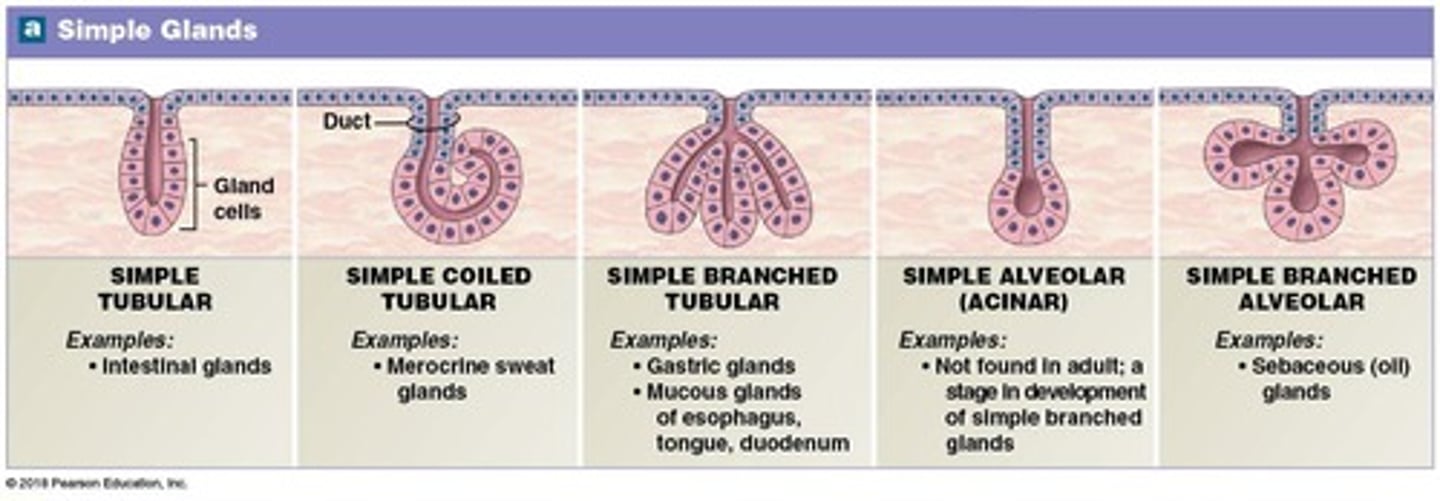
How are multicellular exocrine glands classified?
By the structure of the duct, shape of the secretory portion, and relationship between ducts and glandular areas.
What are the two types of duct structures in multicellular exocrine glands?
Simple (undivided) and compound (divided).
What are the two shapes of secretory portions in multicellular exocrine glands?
Tubular (tube-shaped) and alveolar or acinar (blind pockets).
What are the three methods of secretion in exocrine glands?
Merocrine, apocrine, and holocrine.
How does merocrine secretion occur?
Released by secretory vesicles through exocytosis.
What is an example of a gland that uses apocrine secretion?
Mammary glands.
What happens during holocrine secretion?
Cells burst, killing gland cells, which are replaced by stem cells.
What are serous glands known for?
Producing watery secretions.
What do mucous glands secrete?
Mucins.
What is the primary function of connective tissues?
Establishing a structural framework for the body.
What do fibroblasts do?
Secrete proteins and hyaluronan (cellular cement).
What are adipocytes?
Fat cells that store a single, large fat droplet.
What is the role of macrophages in connective tissue?
Engulf pathogens and damaged cells.
What type of connective tissue is areolar tissue?
Loose connective tissue.
What distinguishes dense connective tissue from loose connective tissue?
Dense connective tissue has more fibers and less ground substance.
What is the function of reticular fibers?
Form a network that stabilizes functional cells and structures.
What is the significance of ground substance in connective tissue?
Fills spaces between cells and slows pathogen movement.
What type of connective tissue is found in embryos?
Mesenchyme.
What is the function of white fat?
Stores fat, absorbs shocks, and slows heat loss.
What is brown fat known for?
More vascularized and helps in thermogenesis in babies.
What are dense connective tissues also known as?
Collagenous tissues
What are the three types of dense connective tissues?
Dense regular, dense irregular, and elastic
Describe dense regular connective tissue.
Tightly packed, parallel collagen fibers that attach muscles to bones and connect bones to each other.
What are tendons and ligaments?
Tendons attach muscles to bones, while ligaments connect one bone to another.
What is the function of aponeuroses?
They are tendinous sheets that attach broad, flat muscles to another structure.
Describe dense irregular connective tissue.
An interwoven network of collagen fibers that provides strength to the dermis and forms sheaths around cartilages and bones.
What is the role of elastic tissue?
Made of elastic fibers, it provides flexibility, such as in elastic ligaments of spinal vertebrae.
What are fasciae?
Connective tissue layers that support and surround organs.
What are the three layers of fasciae?
Superficial fascia, deep fascia, and subserous fascia.
What is the primary function of blood?
To transport nutrients, gases, and waste products throughout the body.
What is lymph and its function?
Lymph forms from interstitial fluid that enters lymphatic vessels and is monitored by the immune system.
What are the two main types of supporting connective tissues?
Cartilage and bone.
What is the matrix of cartilage made of?
A firm gel containing polysaccharide derivatives called chondroitin sulfates.
What are chondrocytes?
Cells in the cartilage matrix that reside in chambers called lacunae.
What is the function of hyaline cartilage?
It reduces friction between bones and is found in synovial joints, rib tips, sternum, and trachea.
Where is elastic cartilage found?
In the external ear and epiglottis.
What is fibrocartilage known for?
Being very durable and tough, limiting movement and preventing bone-to-bone contact.
What are the two types of cartilage growth?
Interstitial growth (enlarges from within) and appositional growth (growth at the outer surface).
What is bone tissue primarily made of?
Calcified matrix that provides weight support and resists shattering.
What are the two layers of the periosteum?
Fibrous (outer) and cellular (inner) layers.
What are the four types of tissue membranes?
Mucous membranes, serous membranes, cutaneous membrane, and synovial membranes.
What is the function of mucous membranes?
They line passageways that have external connections and must remain moist to reduce friction.
What do serous membranes do?
They line cavities that do not open to the outside and reduce friction with serous fluid.
What is the cutaneous membrane?
The skin that covers the body, which is thick, relatively waterproof, and usually dry.
What is the role of synovial membranes?
They line synovial joint cavities and produce synovial fluid for lubrication.
What is the primary function of muscle tissue?
Specialized for contraction to facilitate movement.
What are the three types of muscle tissue?
Skeletal muscle, cardiac muscle, and smooth muscle.
What characterizes skeletal muscle tissue?
It consists of long, thin cells called muscle fibers and is striated and voluntary.
What is unique about cardiac muscle tissue?
It is striated, involuntary, and forms branching networks connected at intercalated discs.
Describe smooth muscle tissue.
It consists of small, spindle-shaped cells that are non-striated and involuntary.
What is the basic structure of nervous tissue?
Specialized for conducting electrical impulses, consisting of neurons and neuroglia.
What are the parts of a neuron?
Cell body, dendrites (receive signals), and axon (carries outgoing signals).