L28- introduction to microbiology and bacterial cells
 Call Kai
 Learn
Learn Practice Test
 Spaced Repetition
 Match
Match Flashcards
 Knowt Play
1/22

There's no tags or description
Looks like no tags are added yet.
Name | Mastery | Learn | Test | Matching | Spaced | Call with Kai |
|---|
No analytics yet
Send a link to your students to track their progress
23 Terms
what are the two types of cellular organisms
eukaryote ( includes fungi/yeast and protozoa)
prokaryote ( includes bacteria and archaea )
what are prions
its described as a piece of infectious protein with no nucleic acids. it can cause human proteins to change causing problems
e.g. BSE/ mad cow disease
what are the main differences between prokaryotes and eukaryotes
prokaryotes
smaller ( 1-5 micrometres )
they are haploid
asexual reproduction
unicellular
no true nucleus
cell wall
eukaryotes
bigger ( >10 micrometres )
diploid ( but not always )
sexual reproduction ( but not always )
unicellular/ multicellular
true nucleus
what are key features/ characteristics of bacteria
unicellular
huge diversity in shape, size, habitat and metabolism
mostly harmless
some can cause diseases ( pathogenic )
or pharmaceutical contaminants
they are named using genus and species
why are microbes unwanted inside drugs
they can cause infections
they can affect the efficacy of the drug
what are the main ways of classifying bacteria
morphology ( simplest way )
cell shape, size motility , spore forming
metabolism
use of energy sources/nutrients
molecular characteristics
protein, lipid structure, sequence of gene encoding
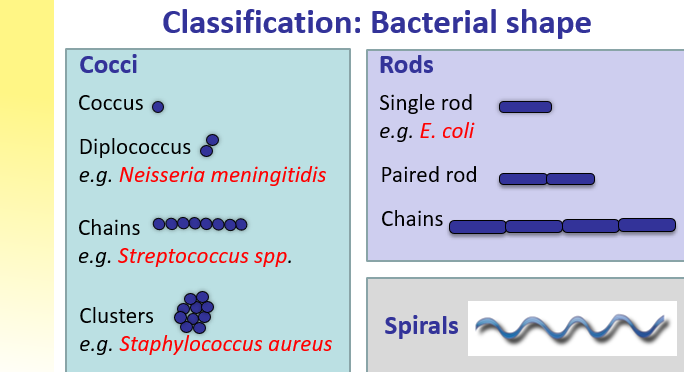
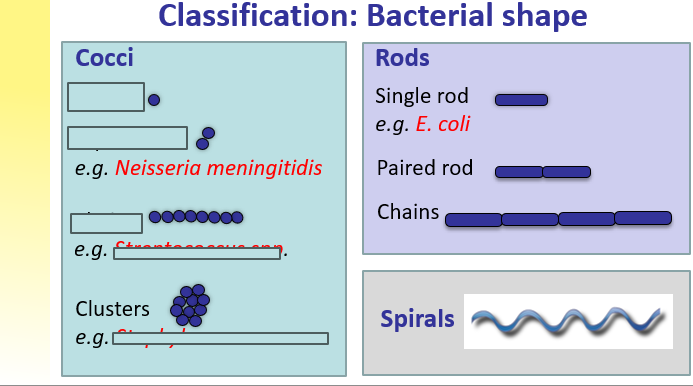
describe
sequence a persons DNA with contamination for example and compare against a database
it will tell you right down to the species
very specific but requires a lot of equipment
why was it decided that it was the 16s ribosomal RNA gene that would be used for classiying bacteria
all bacteria will have them
the 16s gene is highly conserved ( it is similar in lots of different bacteria ) but contains hypervariable regions/ short sections of DNA that are different
the variation is bigger in different species
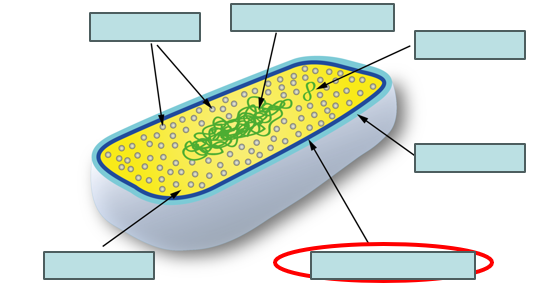
structure of bacteria
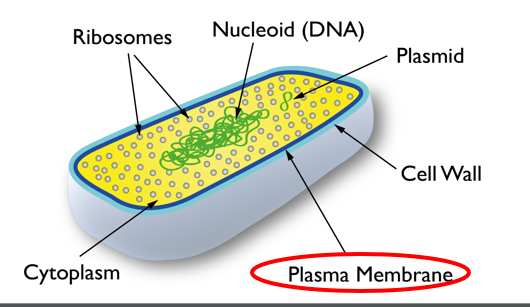
briefly describe the structure of the plasma membrane on bacteria
its made up of a selectively permeable phospholipid bilayer
within the bilayer there are peripheral and integral proteins which medicate transport into and out of the cell and is typically the site of secretion and respiration as the bacteria don’t have mitochondria
they are environmental regulators as the respond to what’s happening outside the cell like increasing salt levels
how does respiration occur in bacteria
as the bacteria don’t have mitochondria it occurs in a series of enzyme in the proteins across the cell membrane
explain the structures inside the cytoplasm and their functions
ribosomes- 30s and 50s, 70s in total
inclusion bodies- act as storage bodies as they store nutrients
the cytoplasm also contains a high concentration of dissolved solute
explain the structure and the function of a nucleoid
it is the genetic structure of bacteria/ bacterial chromosome
its a double stranded DNA ( dsDNA ) that is supercoiled
not enclosed by a membrane
it contains one copy of a gene-haploid
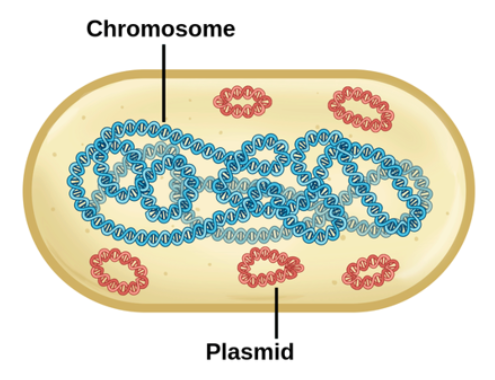
what is the function of the plasmid
they are extrachromosomal DNA, they are small circular dsDNA
they replicate independently of chromosomes
they encode auxiliary functions - contain gene that aren’t essential for survival but provide the organism with an advantage e.g. antibiotic advantage
what is thestructure and the function of the bacterial cell wall
it protects the structure and provides rigidity and strength by preventing lysing
makes an excellent drug target as its structure is unique to bacteria
its composed of peptidoglycan that’s cross linked to form a mesh- a backbone made up of sugar residue bonded by glycosidic bonds but the crosslinking comes from the link between peptides on adjacent glycan backbones
its important as it help it remain strong but due to it being mesh it still allows molecules inside and out
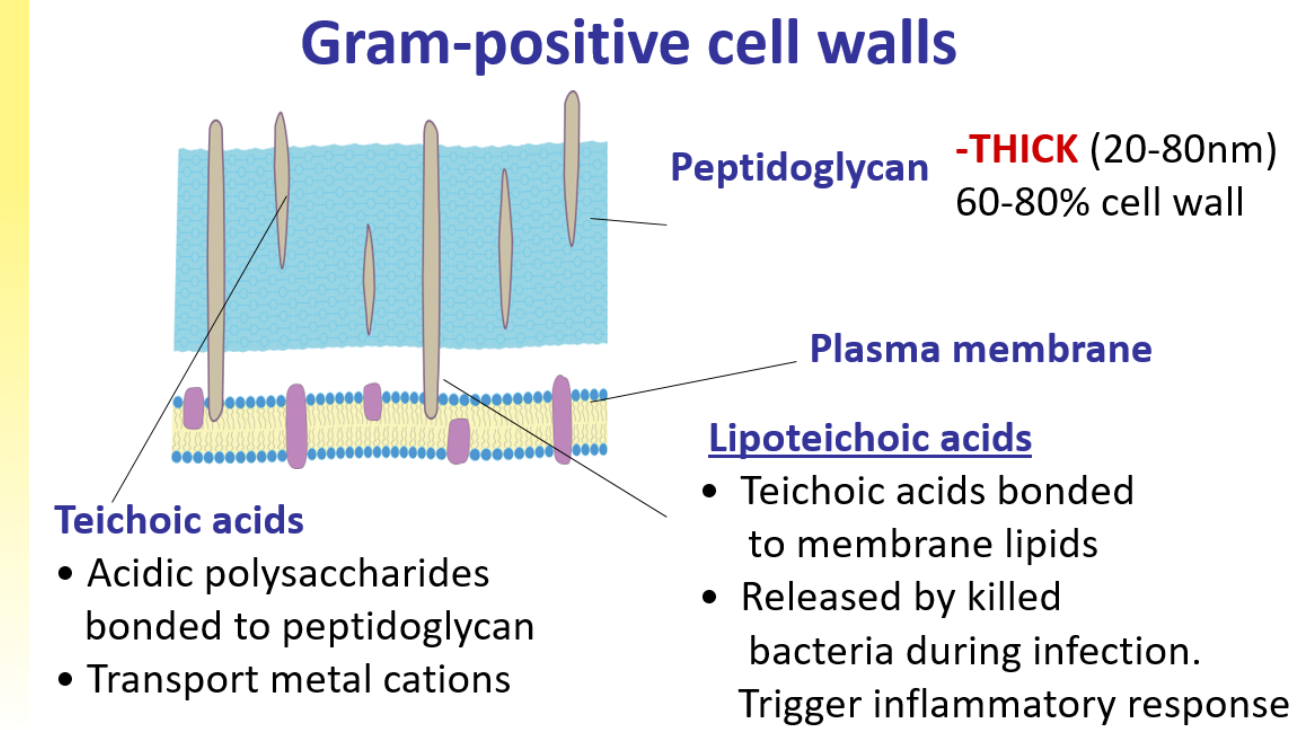
what are the two different types of pathogenic bacteria
gram positive
stains purple
has a thick peptidoglycan layer
within the peptidoglycan layer there are teichoic acids and lipoteichoic acids
e.g. staphylococcus aureus
gram negative
stains pink
has a thin layer of peptidoglycan
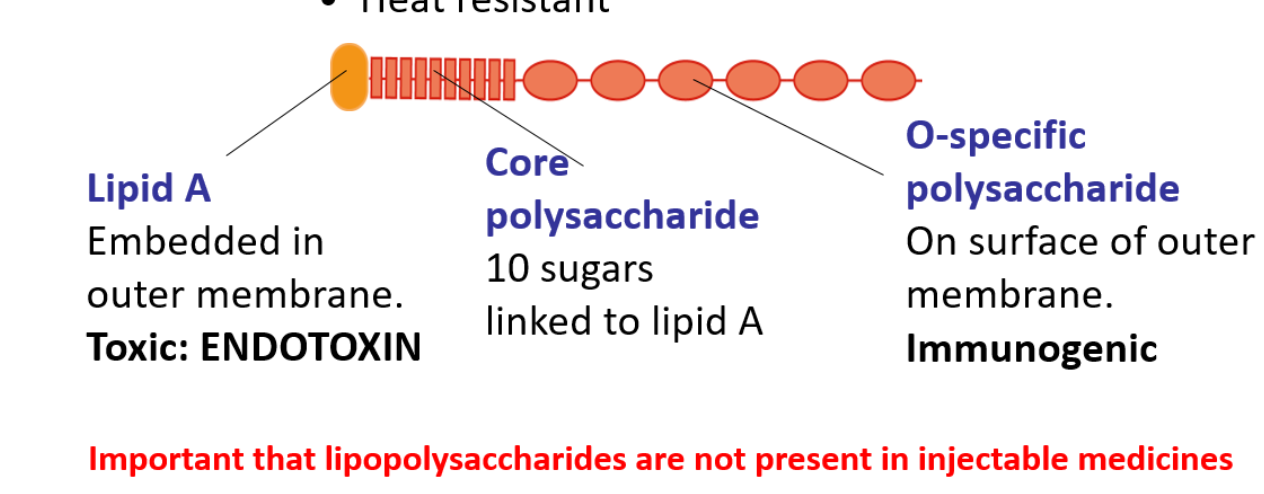
its surrounded by a lipopolysaccharide outer membrane too
in-between the lipopolysaccharides there are porins which are water filled channels
e.g. E.coli
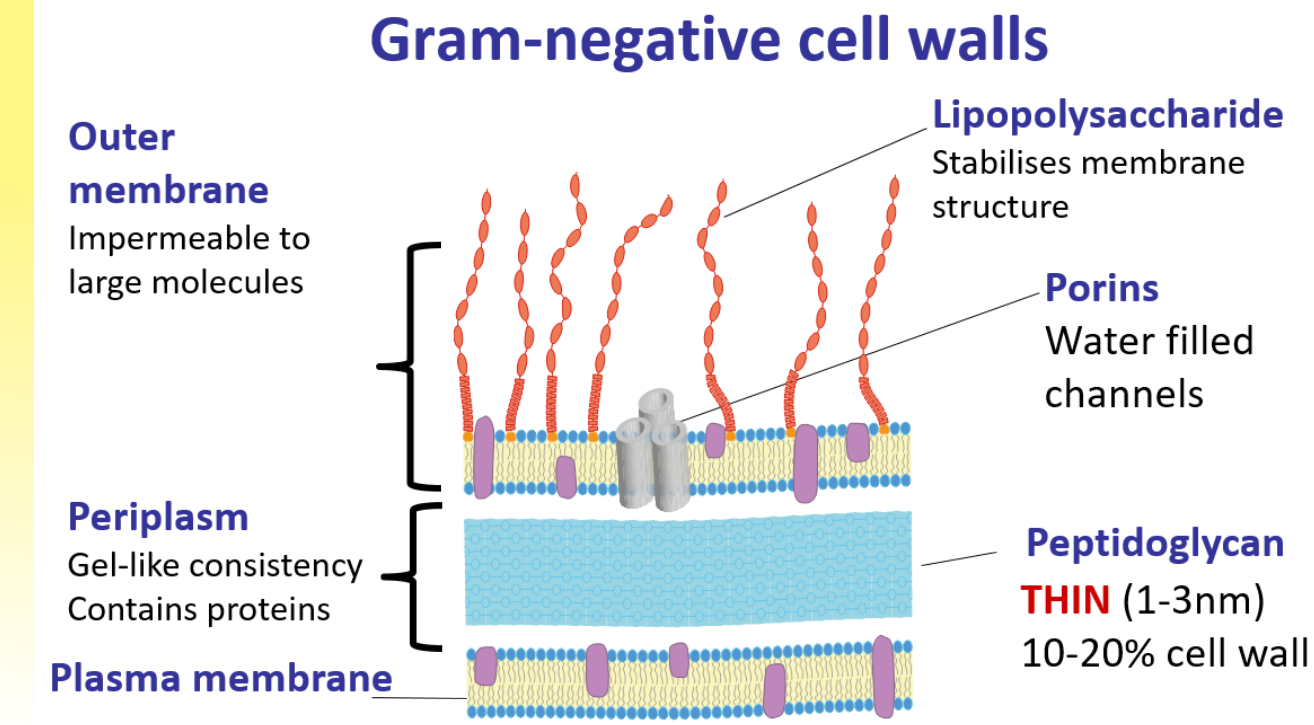
what are the features of lipopolysaccharides ( endotoxin )
they are very immunogenic- triggers an immune response in the body
toxic to animal cells
heat resistant
what are some pathogenic bacteria that arent classified by gram staining
acid- fast bacilli
they have an extra thick waxy layer
atypical bacteria
bacteria that don’t have a peptidoglycan layer, they often cause intracellular infections
what are three examples of bacterial cell componets only present in some bacteria
endospores
capsules and slime layers
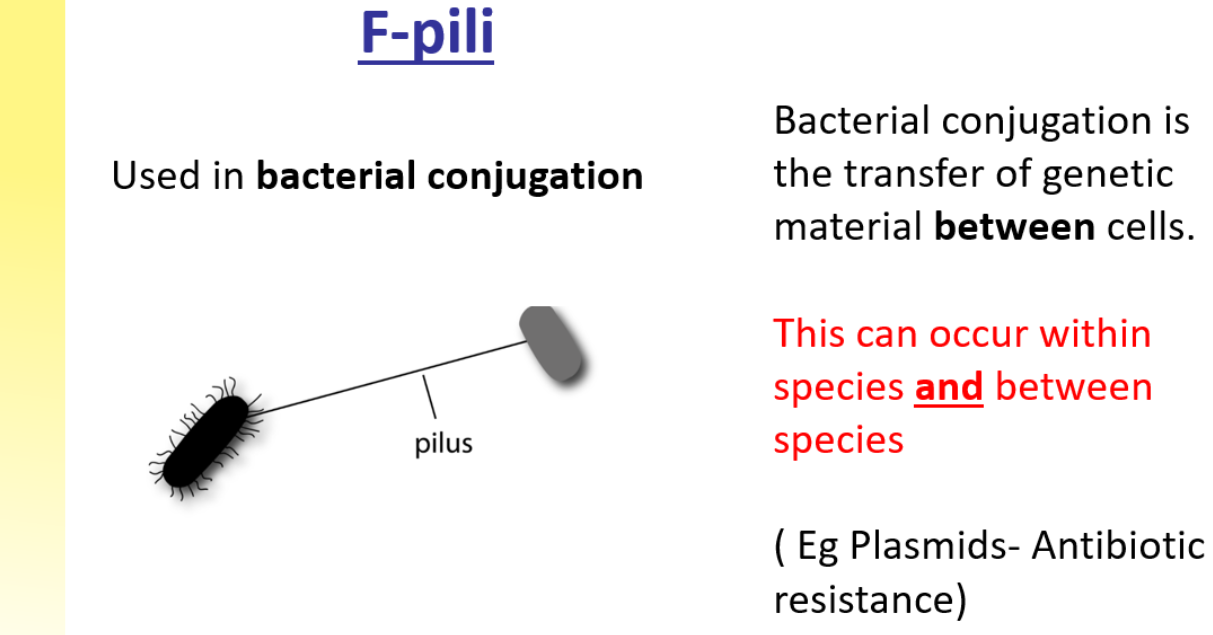
pili and fimbriae
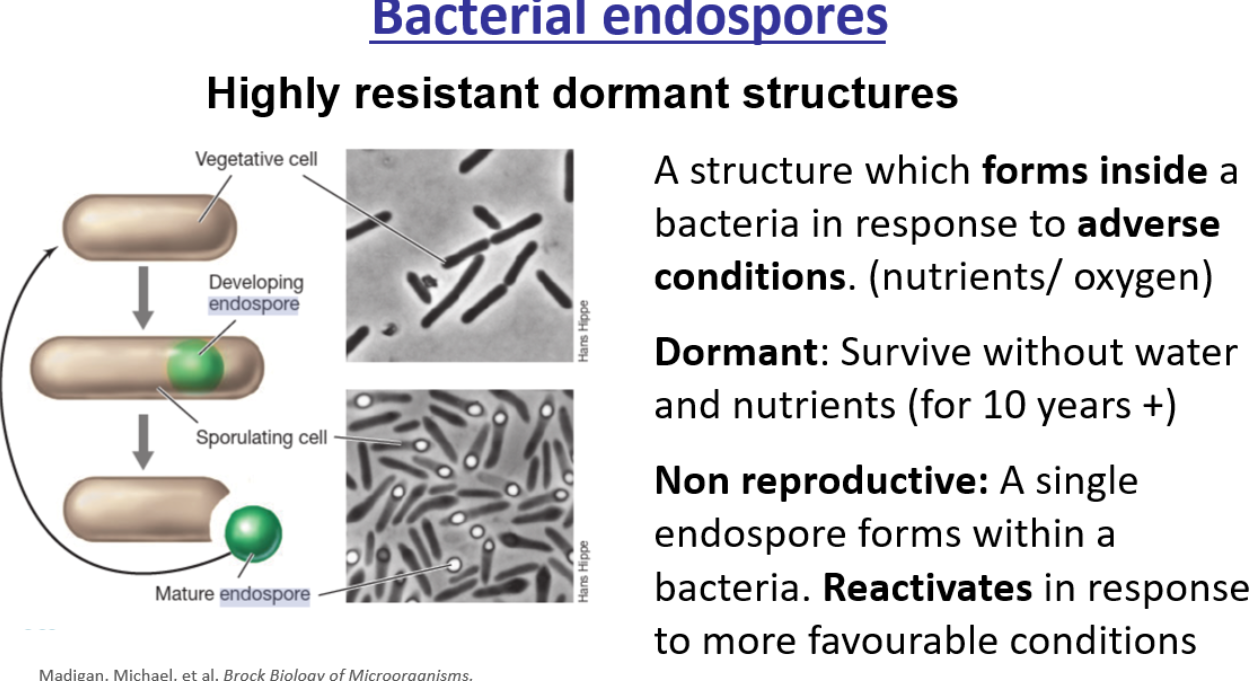
what is a bacterial endospore
they are also resistant to uv radiation, freezing high temps and most disinfection
difficult to kill due to being metabolically inactive
e.g C.diff which causes hospital associated diarrhoea
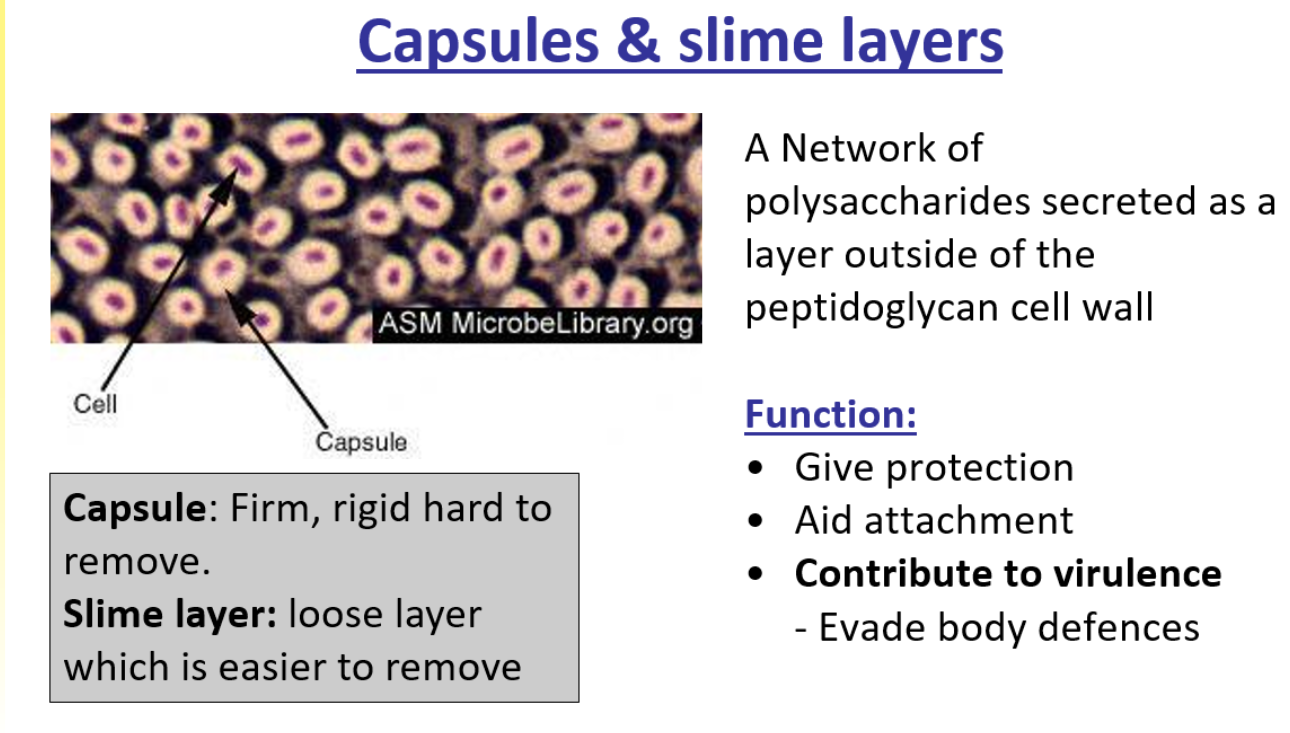
describe capsules and slimlayers
e.g streptococus pneumonia which causes pneumonia
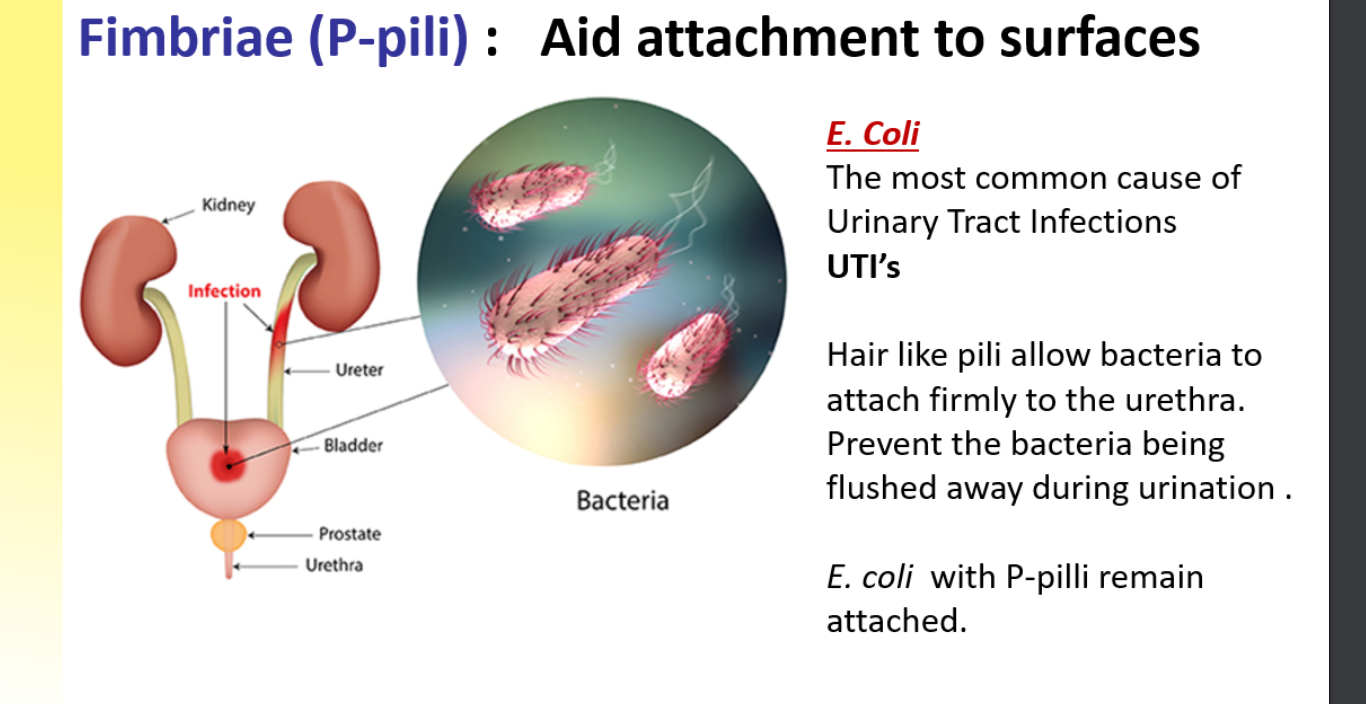
describe what the fimbriae is and fili