Rehab 3061 Midterm 1 Questions with 100% correct answers + detailed rationales
 Call Kai
 Learn
Learn Practice Test
 Spaced Repetition
 Match
Match Flashcards
1/82

There's no tags or description
Looks like no tags are added yet.
Name | Mastery | Learn | Test | Matching | Spaced | Call with Kai |
|---|
No analytics yet
Send a link to your students to track their progress
83 Terms
Rehabilitation (WHO) def?
rehab is a set of measures that assist individuals who experience disability to achieve and maintain optimal functioning in interaction with their environments
_____ people worldwide can benefit from rehab
1 in 3 (2.6 billion)
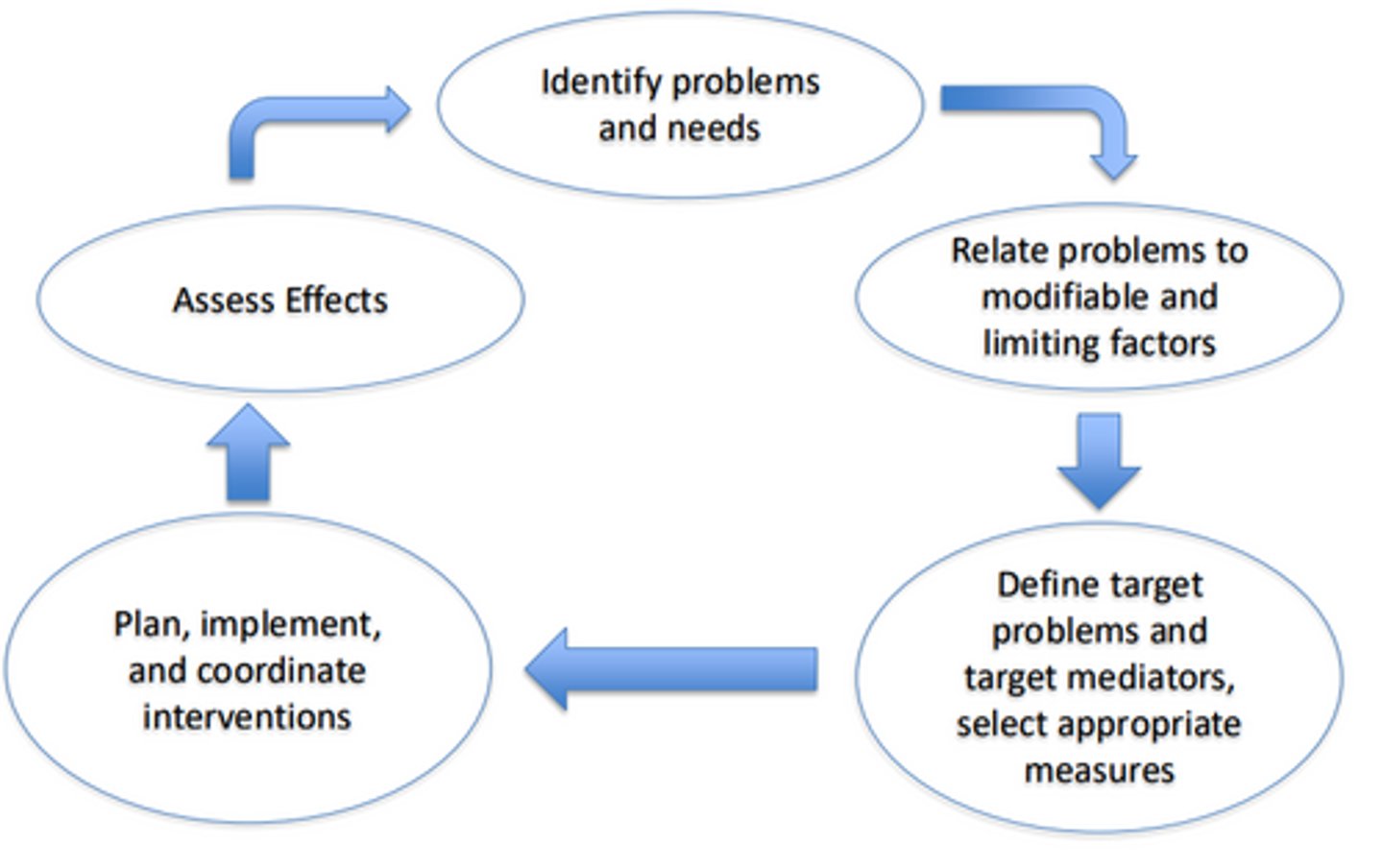
Rehab Process
No entry point (circular)
Rehab Goals?
- prevention of loss of function
- improvement or restoration of function
- slowing the rate of loss of function
- compensation for lost function
- maintenance of current function
Rehab goals depend on..?
- condition being treated
- patient characteristics (age, values, attitude)
- availability of resources and other psychosocial factors
Rehab Categories? (3)
- Rehabilitation medicine
- Assistive technology
- Rehabilitation therapy
Rehab Medicine improves function through..?
- diagnosis and treatment of health conditions
- reducing impairments
- preventing / treating complications
doctors with expertise in rehab medicine are referred to as:
physiatrists, rehab doctors, physical and rehab specialists, etc.
Assistive technology?
an assistive technology device is any item or equipment or product that improves or maintains functional capabilities of individuals
Rehabilitation Therapy is concerned with:
- restoring and compensating for loss of function
- preventing / slowing decline in functioning
- maintenance of current level of functioning
Therapy set of measures include:
- training and/or compensatory strategies
- education
- support and counselling
- modifications to env.
- provision of resources
- assistive tech.
Physical/Physiotherapists?
regulated, evidence-based, primary health care professionals who aim to prevent, assess and treat the impact of injury, disease and/or disorders in movement and function
T/F: PT is a protected term
TRUE: it's a regulated profession
T/F: patients need referrals to see a PT
FALSE
Are PTs required to join the professional associations?
NO (although almost 85% do)
Association acts on behalf of the _____, college acts on behalf of the _____.
1. PT
2. Public
Do PTs need to co-sign notes?
No - they are autonomous
PT uses physical agents like:
- mechanical force and movements (bio-mechanics or kinesiology)
- manual therapy
- exercise therapy
- electrotherapy (ultrasound, TENs, etc.)
- other modalities (like hydrotherapy)
primary modality used is _____
movement
PT is used to improve a patient's QOL through:
- examination
- diagnosis
- physical intervention
- patient education
Family of International Classifications?
WHOFIC is a set of integrated classifications that provide a common language for health info across the world.
The Reference classifications is important in understanding..?
the framework of rehabilitation
Reference classifications?
approved for international reporting and cover the main parameters of health
WHO is responsible for 3 primary reference classifications:
1. ICD
2. ICF
3. ICHI
ICD-11?
international classification of diseases is a tool that standardizes the language used by health professionals worldwide in diagnosing, reporting and monitoring diseases, injuries and causes of death
how many available languages are there in the ICD?
14 (to facilitate global accessibility)
the ICD has ______ diagnostic categories and ______ clinical terms for injuries, diseases and causes of death
1. 17 000
2. >130 000
ICF?
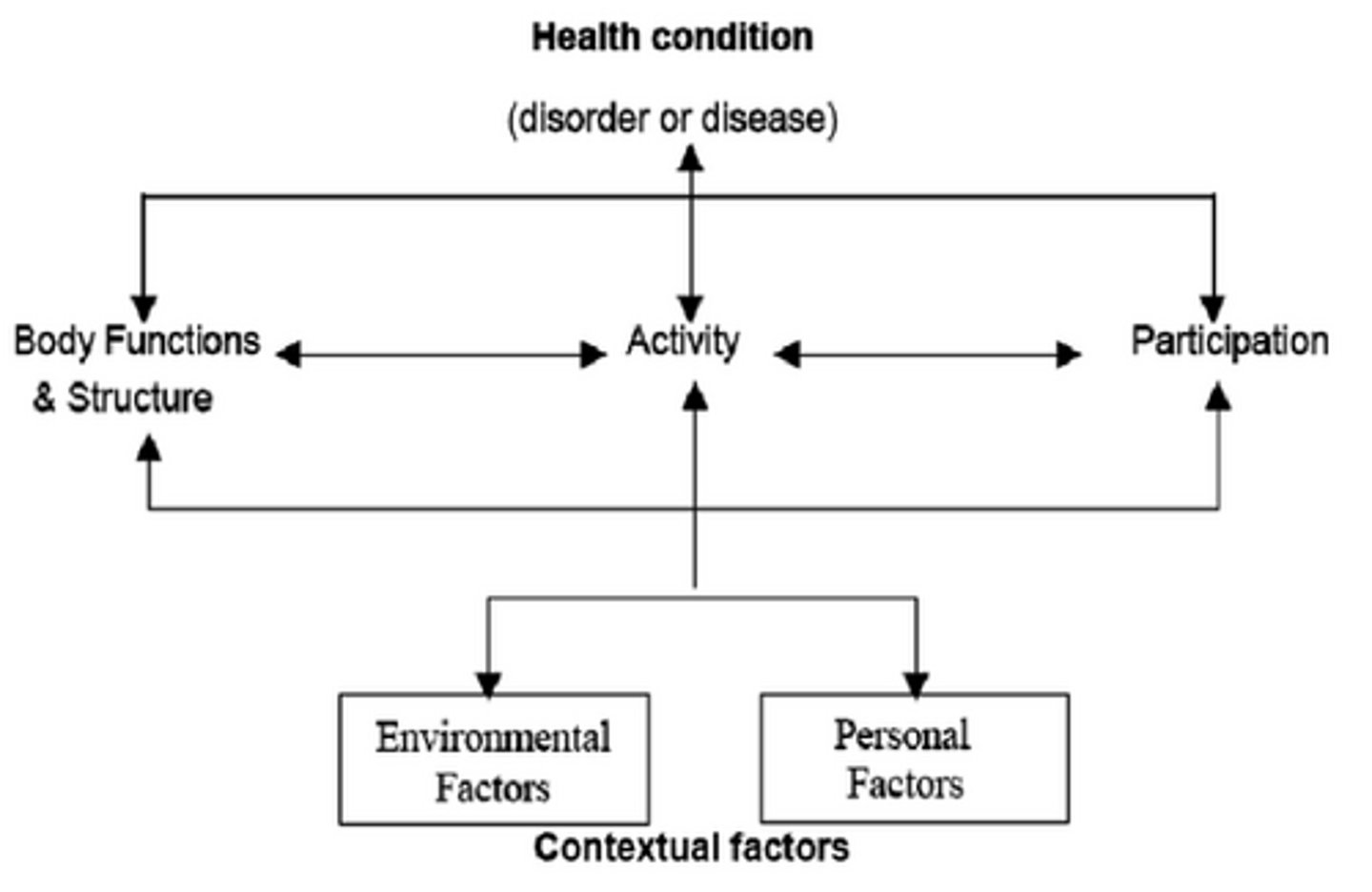
The International Classification of Functioning, Disability and Health provides a standard language and framework for the description of health and health related domains
ICF complements the ___ revision of ICD, which contains info on ____, but not on ____.
1. 10th
2. diagnosis and health conditions
3. functional status
ICF factors diagram
ICHI?
International Classification of Health Interventions is being developed to provide a common tool for reporting and analyzing health interventions for statistical purposes
RHPA?
the regulated health professions act (1991), and associated health profession acts, set out the governing framework for the regulated health professions in Ontario. This act was amended in 2009.
(lets regulated health professions self govern)
Purpose of RHPA
- better protect and serve the public interest
- be a more open and accountable system of self governance
- provide a more modern framework for the work of health professionals
- provide consumers with freedom of choice
- provide mechanisms to improve quality of care
Scope of practice?
statement describing what the profession does
Controlled acts?
procedures or activities which may pose a risk to the public if not performed by a qualified practitioner
Health Regulatory Colleges
corporation that governs regulated health profession
HP Regulatory Advisory Council?
an independent, advisory body to the Minister of Health and LTC to advise regarding the regulation of health professions
HP Appeal and Review Board?
an independent third part to review registration and complaints decisions of the health regulatory College
How many regulated health professions are there?
29
The Physiotherapy Act of 1991 legislation outlines?
- authorized (controlled) acts
- scope of practice
- rights and responsibilities of the regulatory College
Authorised acts for PTs..??
PTs who perform acts under their own authority must roster for each of these activities with the college
- tracheal suctioning
- spinal manipulation
- acupuncture (including dry needling)
- treating a wound below the dermis
- pelvic internal exams (beyond labia majora or anal verge)
- administering a substance by inhalation
Scope of practice for PTs?
- assessment of musculoskeletal, neuromuscular, and cardiorespiratory systems
- diagnosis of diseases or disorders associated with physical, injury or pain
- treatment, rehab, and prevention or relief of physical dysfunction, injury or pain
Canadian Physiotherapy Association (CPA) practice divisions?
1. Acupuncture
2. Cardiorespiratory
3. Global Health
4. Leadership
5. Neurosciences
6. Oncology
7. Orthopaedic
8. Paediatric
9. Pain Science
10. Private Practice
11. Seniors' Health
12. Sport
13. Pelvic and Reproductive Health
*division partners = animal rehab association of Canada
What are the essential competencies for PTs in Canada?
1. PT expertise
2. Communication
3. Collaboration
4. Management
5. Leadership
6. Scholarship
7. Professionalism
Professional Ethics?
a collection of criteria, rules and moral values that are formulated and assumed by people undertaking professional activity
PT Code of Ethics
- PTs are responsible for conducting themselves ethically in every professional practice situation
- the ethical values for PTs in Ontario are represented by the acronym R.E.A.C.H.
- these values should be applied in all aspects of professional practice, particularly in the patient-physiotherapist relationship and when facing an ethical problem or dilemma
- PTs should also understand that while a consistent process can be followed each time an ethical decision is required, the decision or outcome can vary and there can be differences of opinion
Steps in ethical decision making?
1. Recognize there is an ethical issue
2. Identify the problem and who is involved
3. Consider the relevant facts, law, principles, and values (REACH value / ethical principle)
4. analyze potential options. Weigh possible outcomes. Moral imagination.
5. Choose a course of action and implement it. Are there barriers? What info should be recorded?
6. Evaluate the outcome. Is further action needed? What did you learn? Prevention?
R.E.A.C.H.
Respect
Excellence
Autonomy and Well Being
Communication, Collaboration and Advocacy
Honesty and Integrity
Scenarios PTs are obligated to report in Ontario?
- Suspected abuse of a child (<16 years)
- Suspected of an adult client by a health care practitioner (no age for elder abuse)
- Suspected abuse of an adult living in a long-term care of retirement facility
Legal and ethical obligations to make reports for PTs is under what act?
The Regulated Health Professions Act
Types of abuse?
physical, sexual, emotional, financial
Capacity and informed consent?
able to understand the info that is relevant to making a decision and able to appreciate the reasonably foreseeable consequences of a decision or lack of a decision
Informed consent must be _____
constant and ongoing
Consent needs to be by someone who has ____
capacity
what is generating demand for physiotherapy?
a growing and aging population
the incidence of injuries and need for treatment of chronic and acute pain ______ as pop. ages
rises
greater demand on the health care system because of..
a backlog of medical procedures and patient care needs
what does "expanding scope of practice mean"?
- authority to order diagnostic imaging (& how it's billed)
- ontario is working towards having the scope of practice (but it will always be fixed/delegated)
who determines pt violations and penalties?
College determines violations/penalties
- once college has deemed there has been a violation, the info is made public
how many different pt standards are there?
19
PT practice can be grouped into how many categories?
4
what are the 4 PT practice setting?
1. private
2. community/home health
3. acute care
4. rehabilitation
private clinic?
Individuals visit a pt in a clinic or other health care facility for their health needs
- private practice is primarily to address: musculoskeletal, neuromuscular injuries, pelvic health
______ is the most common private practice setting
outpatient clinic
Community / Home Health?
PT is provided in a patient's home or school
- patient population often served: older adults, pediatric patients with dev. disabilities, individuals needing rehab due to long term illnesses
-home health is provided in: patient home. family/care partner home, long-term care home, retirement facility, hospice
Acute care?
This is health care where a patient receives: active but short-term treatment for severe injury or episode of illness, care for urgent medical condition, or during recovery from surgery
- setting occurs in: inpatient hospital (ICU, CCU, NICU), includes assessment and treatment, often follows rehab protocols and best practice standards, requires discharge planning
- PT focus is: functional mobility, pain management, exercise/movement, patient goals, discharge needs
Rehabilitation?
PT is provided to individuals: admitted to the rehab unit or facility, intense therapy is provided to improve the person's ability to care for themself (typically 3+ hours/day)
- main goal of rehab is to get the person's capability back
Steps to be a licensed PT?
1. Complete university degree
2. Complete licensing exam (CPTE)
3. Register with College - mandatory
4. Annual registration and ongoing quality management
Program Accreditation?
If a program is accredited (by Physiotherapy Education Accreditation Canada)
- Team that sends in reviewers, normally someone that is in charge of reviewing another program, and make sure that the program is teaching all the competencies that need to be taught, and receive accreditation (usually a 7 year cycle)
National Canadian PT Exam?
Canadian Alliance of PT Regulators (CAPR)
- manages the credentialling process for internationally educated PTs for practice in Canada
- administers the Canadian PT Examination (CPTE)
- 5 hours (2-2.5 hour sections), virtual, remotely proctored
- oral section - 150 point, case-based assessment where candidates verbally respond to examiners
- written section - 100 point, multiple-choice and media enhance multiple-choice questions
- available in french and english
- pass/fail
Registration with College
College of Physiotherapists of Ontario (CPO) - regulates physiotherapists in Ontario.
- College is governed by a Council.
- Council is made up of physiotherapists elected by: peers, members of the public appointed by the Ontario government and academic representatives from Ontario Universities.
CPO mission statement
To protect the public interest by ensuring physiotherapists provide competent, safe, and ethical care.
How:
- Helping Patients Make Informed Decisions About Care
- Supporting Patients and Physiotherapists
- Investigating Concerns and Taking Action When Necessary
Common Interventions?
1. Therapeutic exercise
2. Education and Self-Management
3. Manual Therapy
4. Behavioural & Psychological approaches (new)
5. Electrotherapy (moderate evidence of effectiveness)
Therapeutic Exercise?
- Personalized exercises aimed at improving strength, flexibility, balance and overall function.
- Systematic and planned performance of body movements or exercises.
Goals of therapeutic exercise?
- improve and restore physical function
- prevent loss of function
- enhance a patient's functional capabilities
- prevent and decrease impairment and disability
- improve overall health status, fitness and sense of well-being
Types of therapeutic exercise?
- Range of motion (ROM) exercise
• Which aim to maintain and increase range of motion (passive PROM, active AROM, active assistive AAROM)
- Muscle performance exercise
• To increase muscle strength, power and endurance - resisted and endurance exercises
- Neuromuscular control / re-education exercises
• Postural and core stabilization, proximal / distal training
- Cardiorespiratory system training
• As breathing exercises and circulatory exercises
- Functional movement retraining
• Gait, stairs, getting up from floor
Education & Self Management?
- Teaching patients about pain science, posture, movement strategies, and home exercise programs.
• education is increasingly recognized as a valuable part of physiotherapy — particularly when combined with exercise, because it empowers patients to manage symptoms and reduce fear-related barriers to movement
- Providing the knowledge, skills and behaviours to patients for increasing responsibility of their own care
- A goal in physiotherapy is to transfer responsibility to the patient by the end of the intervention; supportive process of increasing knowledge, self-efficacy and technique
- Education is always a component of PT practice
Manual Therapy?
Hands-on techniques including joint mobilization, soft-tissue release, and manipulation intended to improve range of motion, reduce stiffness, and decrease pain
Behavioural & Psychological Approaches?
Address the cognitive and emotional aspects of chronic pain, helping patients overcome fear avoidance, build confidence, and develop effective coping strategies.
- these interventions support gradual return to meaningful activities and have shown effectiveness particularly when integrated with physical rehabilitation.
→ Cognitive Behavioural Therapy
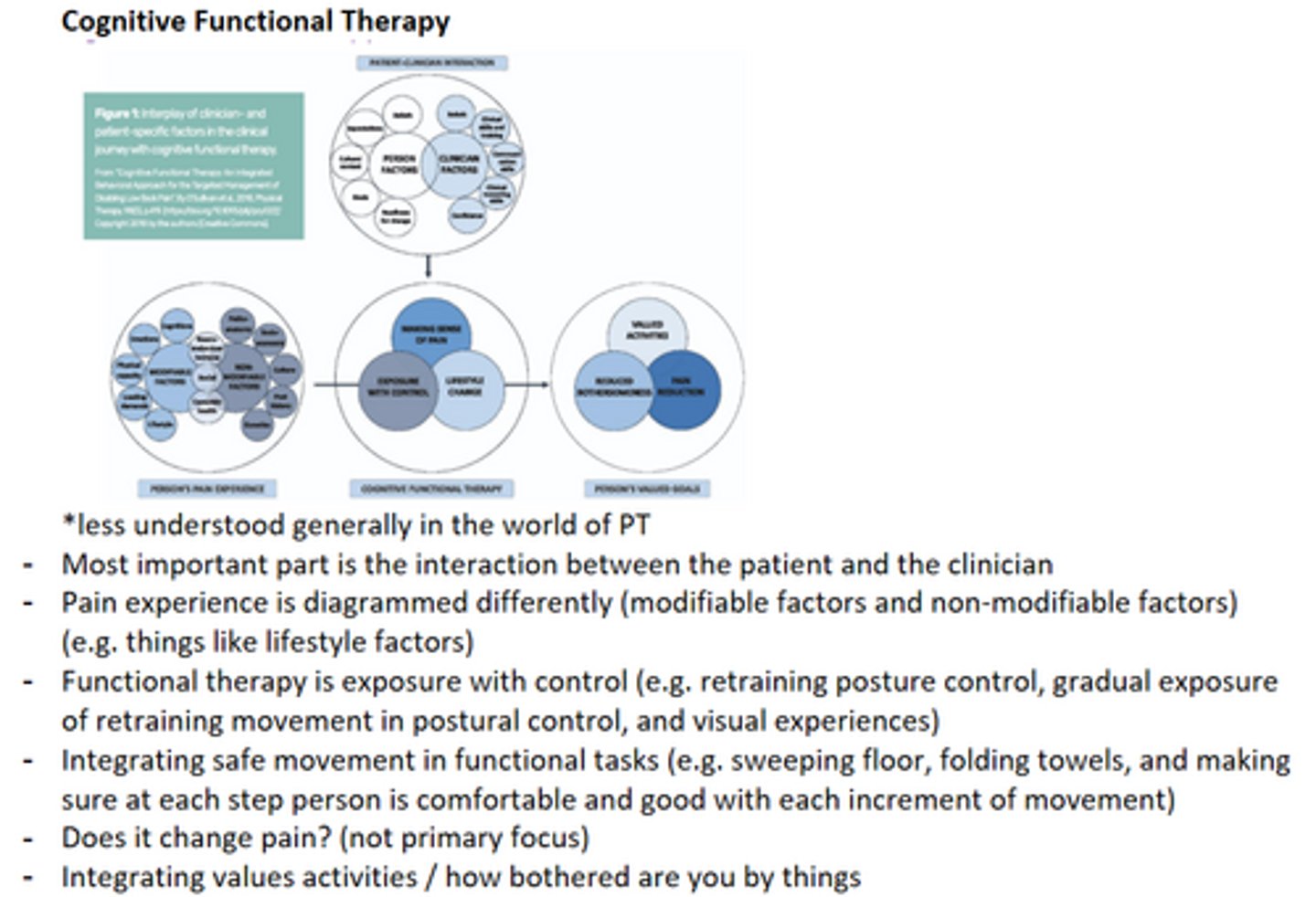
→ Cognitive Functional Therapy
Behavioural & Psychological Approaches?
Cognitive Behavioural Therapy Cognitive Behavioural Interventions (CBI) are broad comprehensive personalized treatments that consider biological, psychological, and social factors to address maladaptive beliefs, emotions, and behaviours related to the experience of pain (van Dijk et al., 2023).
- physiotherapy is a common intervention aiming to prevent and manage chronic nonspecific LBP
- now well-established that an integrated biopsychosocial (BPS) approach is crucial for understanding and treating chronic pain
- a recent systematic review and meta-analysis describes psychological interventions as more effective on pain and function when they are carried out in addition to physiotherapy treatment
Electrotherapy?
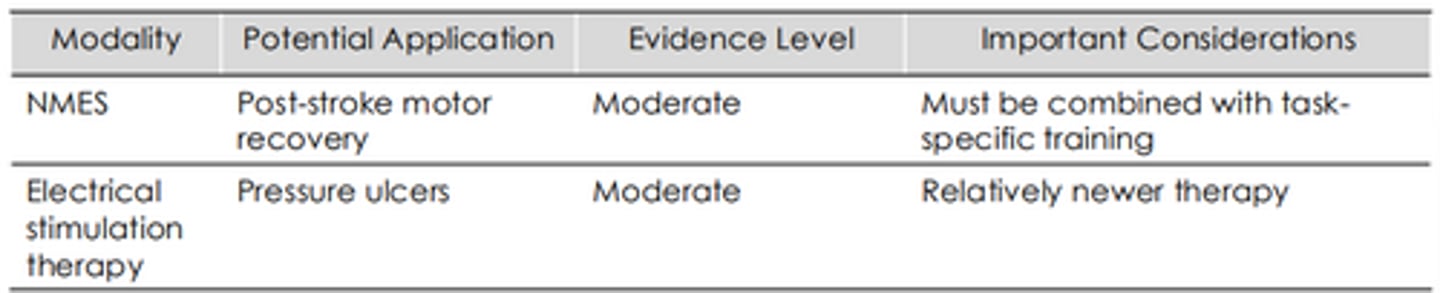
Therapeutic use of electrical energy and electromagnetic modalities including Transcutaneous Electrical Nerve Stimulation (TENS), therapeutic ultrasound, interferential therapy (IFC), neuromuscular electrical stimulation (NMES), shortwave diathermy, for example.
- current evidence-based practice has shifted decisively toward active, exercise based interventions as first-line treatments for most musculoskeletal conditions
Key factors driving this change include:
- limited high-quality evidence supporting most electrotherapy applications despite decades of use
- strong and consistent evidence demonstrating effectiveness of exercise and active interventions
- risk of fostering dependency on passive treatments and external "fixes" rather than self-management
- superior cost-effectiveness and long-term outcomes with active rehabilitation approaches
What is an outcome measure?
- tool to assess the function of a patient
- provides a baseline measure of function at the beginning of PT treatment
- same tool often used to determine change; provide evidence for treatment effectiveness/prognosis/functional recovery
Types of outcome measures?
1. questionnaire:
- completed through interview of a patient
- patient self-report
2. performance-based: required patient to do specified movements or tasks to determine functional abilities