Week #15: Assessment & Intervention: Writing
 Call Kai
 Learn
Learn Practice Test
 Spaced Repetition
 Match
Match Flashcards
 Knowt Play
1/9

Earn XP
Description and Tags
Vocabulary and key concepts from the CSD 7455 lecture on assessment and intervention of writing, including models, measurement methods, and instruction phases.
Name | Mastery | Learn | Test | Matching | Spaced | Call with Kai |
|---|
No analytics yet
Send a link to your students to track their progress
10 Terms
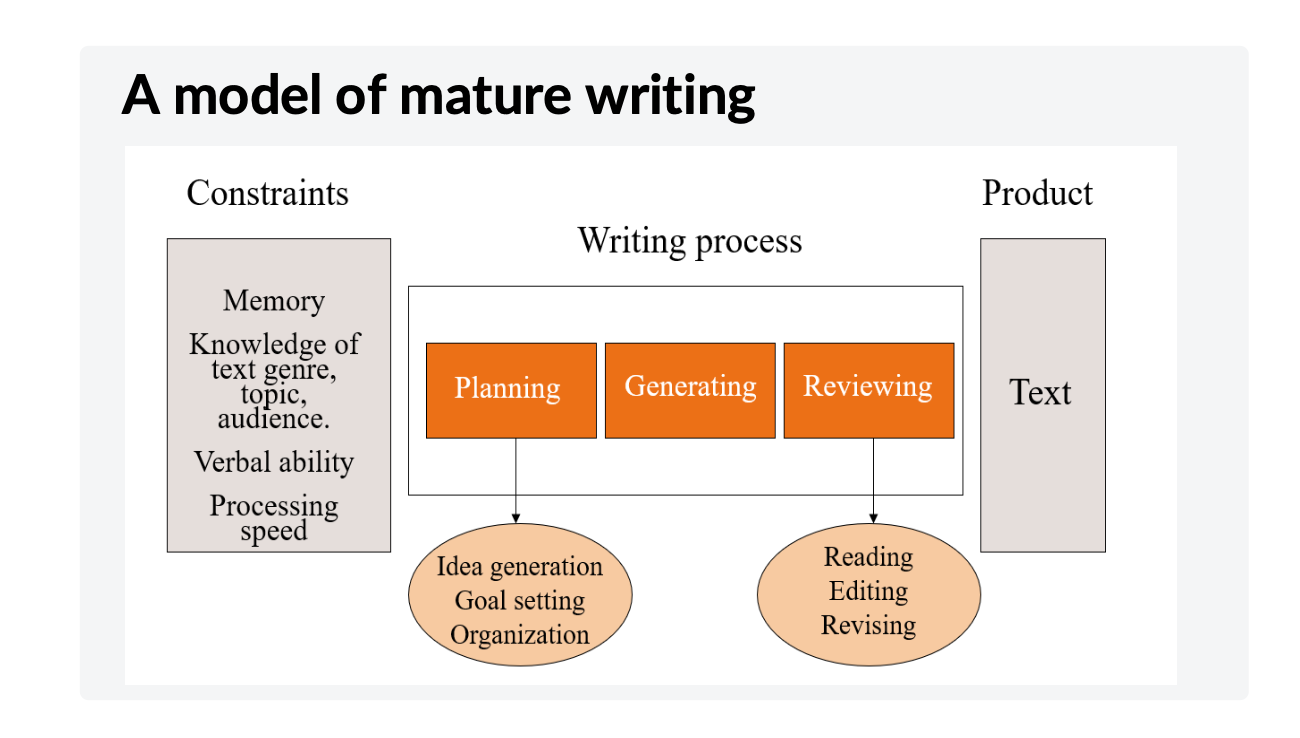
Model of mature writing
Planning: We have an idea of what we want to put on paper; goal setting, and how will i organize/sequence the story for example
Generating: doing the actual generating of writing
Reviewing: proofread and self check our writing to make sure what we generated what we planned
constraints can limit successful writing: memory, knowledge of topic/text genre, verbal abiliity, processing speed
Higher and Lower order writing process
writing also includes top doan and bottom up processing
Higher order: converting ideas into words, clauses, and sentences; general act of text generation
lower order: mechanics of writing itself, spelling, handwriting, punctuation
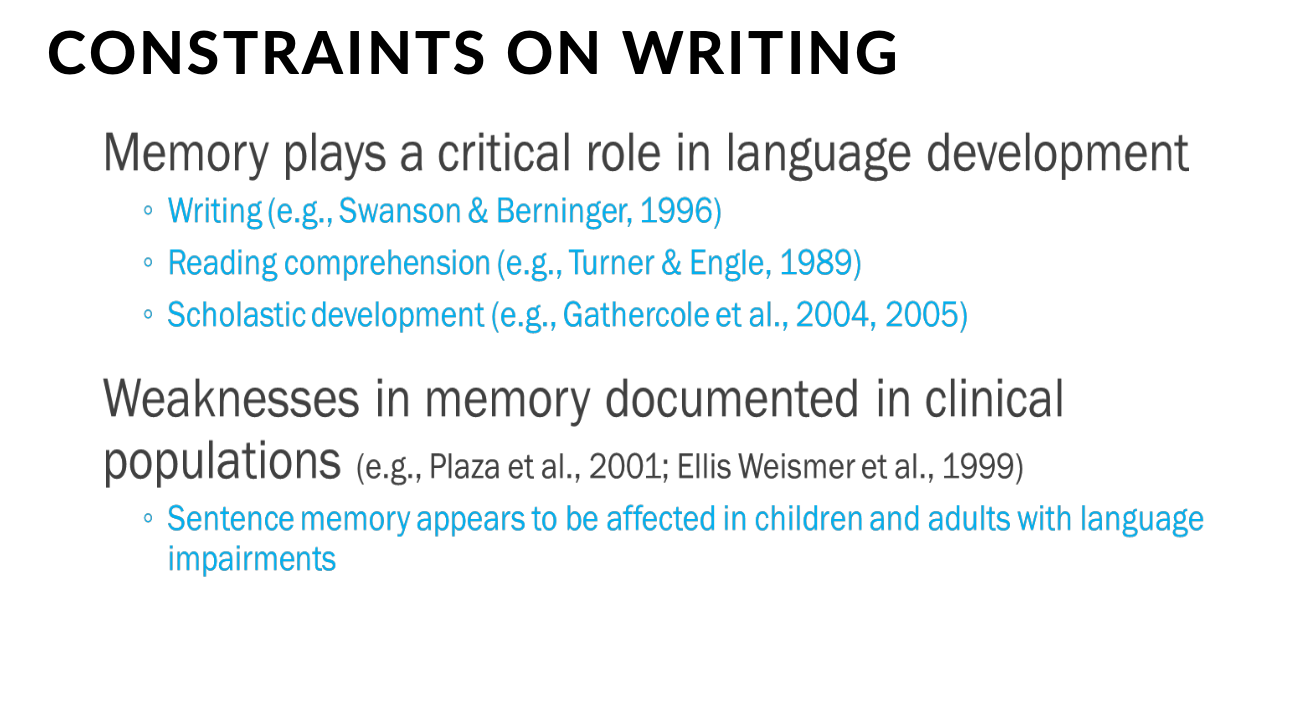
Role of memory to writing
Higher order Text generation→ relies on working memory b/c requires you to translate complex ideas into linguistic representations. when thinking about what to write, not thinking about it one word at a time; thinking of larger ideas that you have to hold in memory and think of what you want to say, and go back and translate that into writing.
Lower order Transcription→ relies on short term memory; when writing one word at a time, using orthographic and phonological processes in short term memory.
why those with DLD who have memory deficits can struggle with writing
Constraints on writing
Assessing writing
use both standardized and nonstandardized assessments
nonstandardized useful for specifics on deficits and how to plan intervention, not just saying they overall have a struggle with language
can look at: microstructure: total number of words, how complex sentences are, accuracy of spelling and punctuation, fluency of handwriting
macrostructure: cohesion, quality ratings
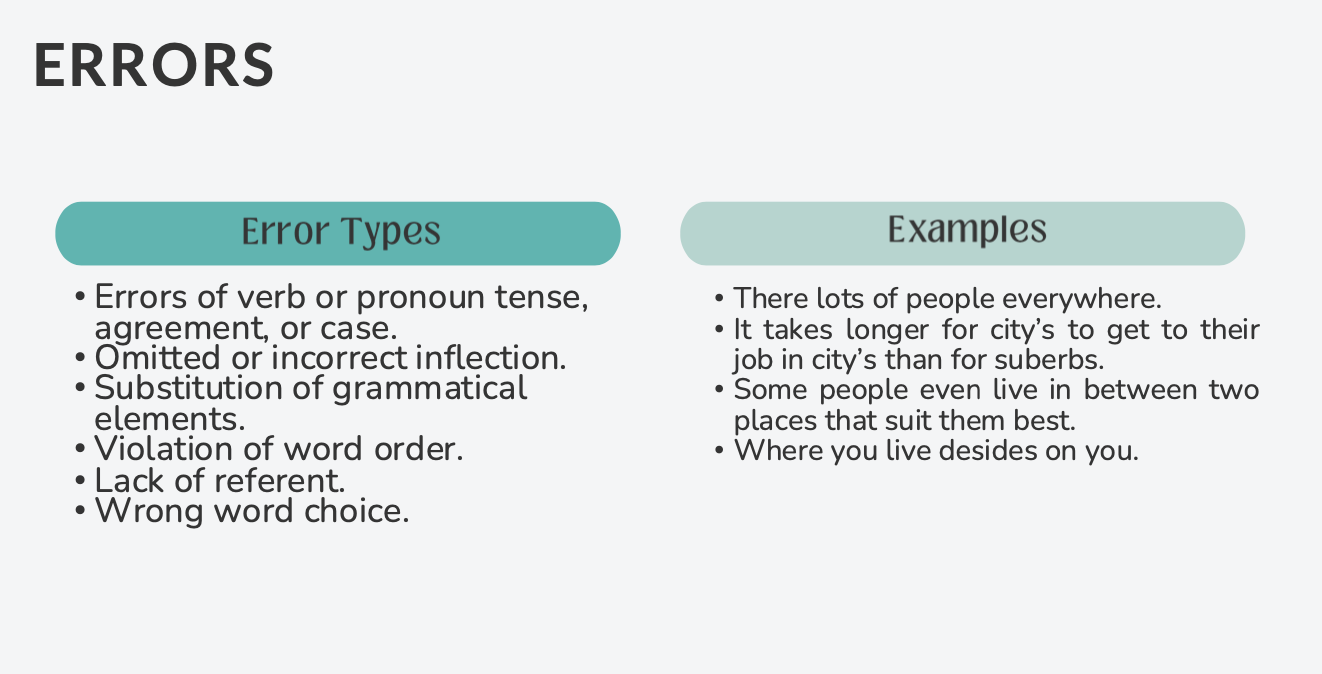
look for error types
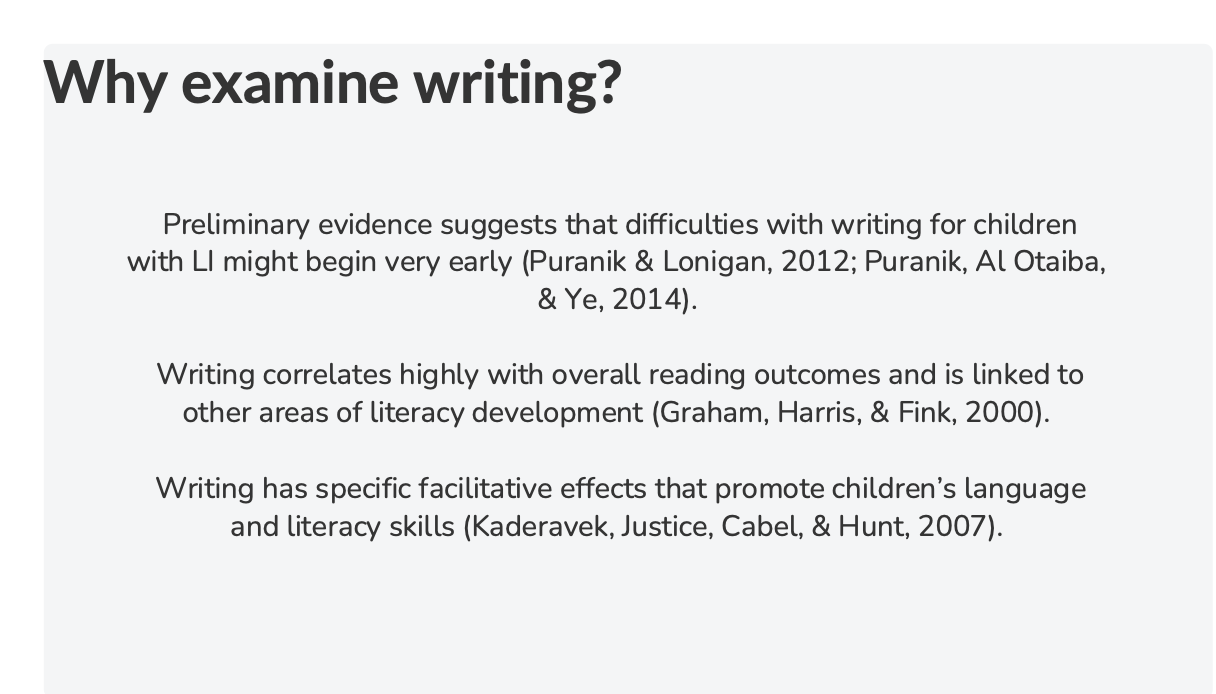
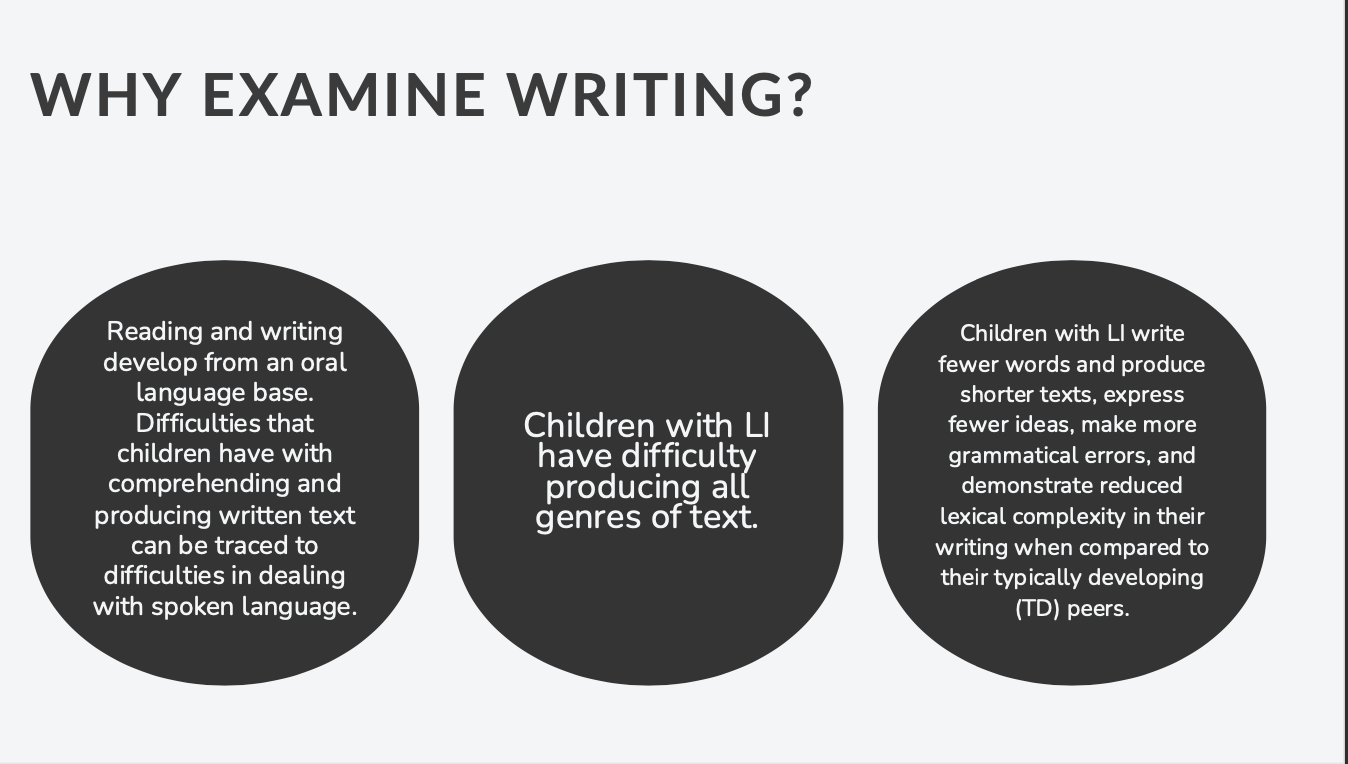
Why examine writing
tells you a lot of information about children’s spoken language, as well as their phonological and reading skills.
writing is so complex and pulls on so many language skills, so if you have reading disorders, or DLD, will have deficits in this.
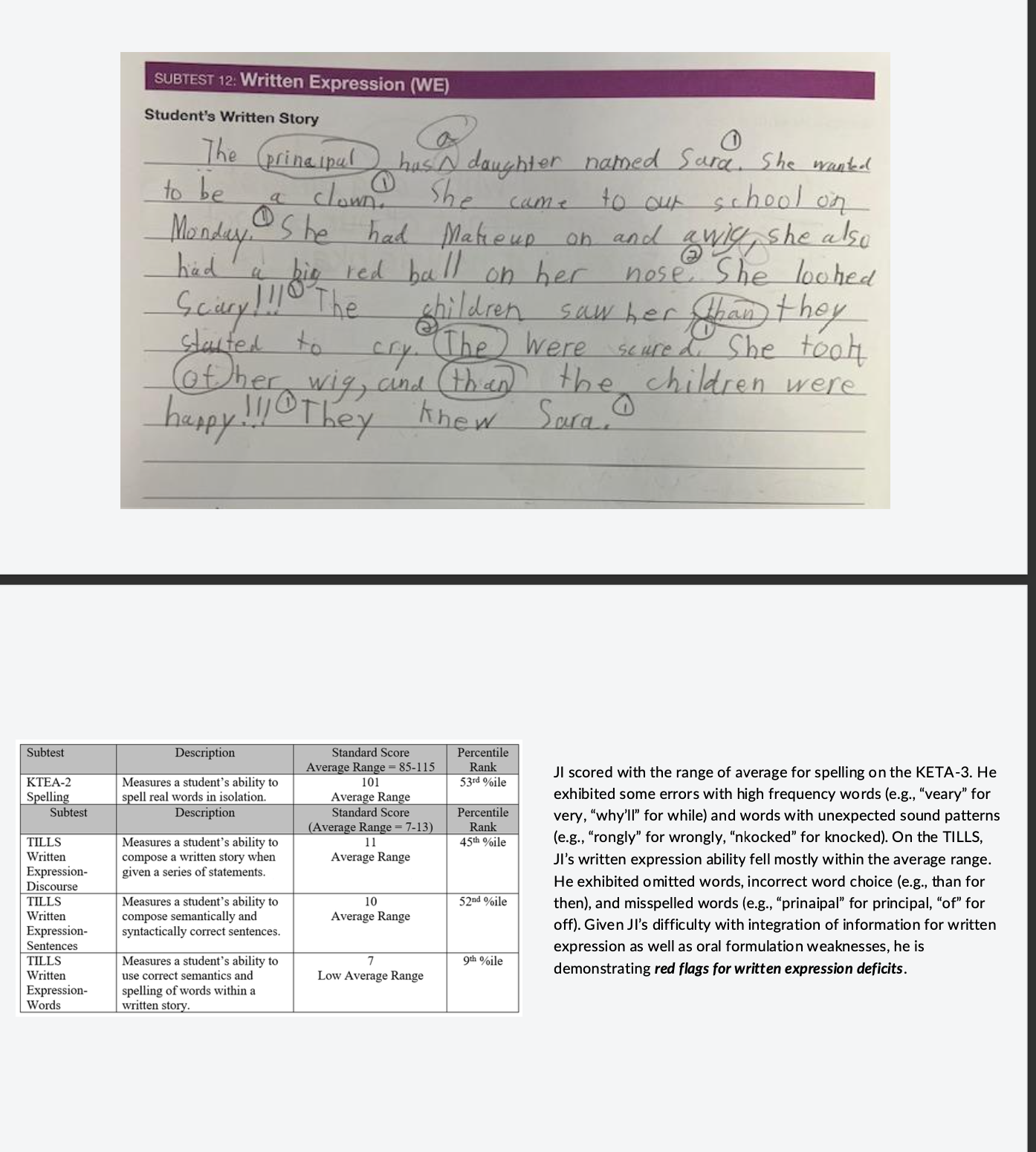
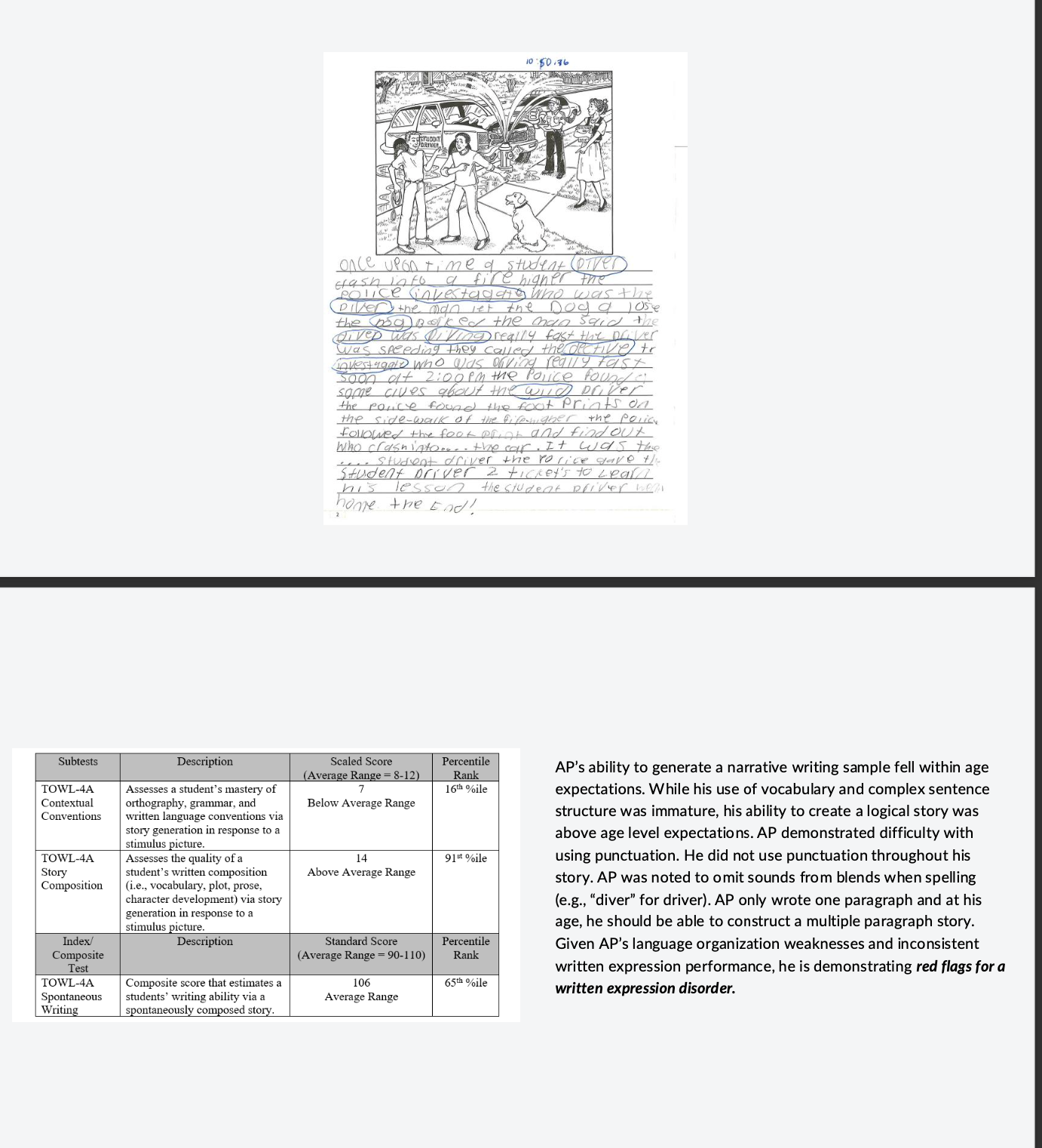
look at this!!!
general effective writing intervention involves: Explicit instruction
look at slides
gave up but refer back to slides for rest of information