Dumb Bio Test
 Call Kai
 Learn
Learn Practice Test
 Spaced Repetition
 Match
Match Flashcards
 Knowt Play
1/56

There's no tags or description
Looks like no tags are added yet.
Name | Mastery | Learn | Test | Matching | Spaced | Call with Kai |
|---|
No analytics yet
Send a link to your students to track their progress
57 Terms
Mechanisms preventing self fertilization
Dioecious plants- separate female and male plants
timing of flower development
Self incompatibility- plant rejects its own pollen
Flowers
the reproductive shoots of the angiosperm sporophyte
4 floral organs
Sepals
Petals
Stamens
Carpels
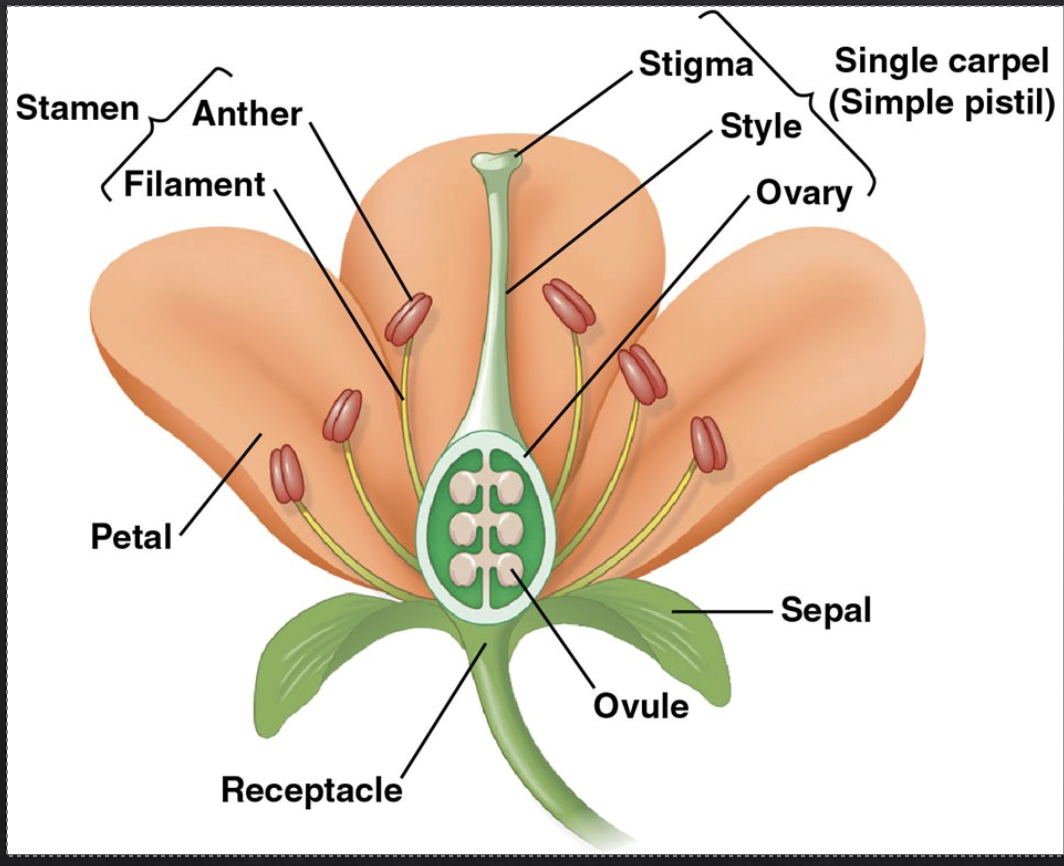
Sepals
protect the flower in the bud
Petals
surround the reproductive parts
Stamens
male reproductive structure
Carpels
female reproductive structure
Incomplete flowers
lack 1 or more of the floral organs
Production of male gametophyte
male gametes are produced in the anther of the stamen from diploid cells called microsporocytes
Microsporocytes undergo meiosis to produce 4 haploid microspores
Each microspore divides once via mitosis to produce two cells ( a generative cell and a tube cell)
This two celled structure is usually encased in a thick wall and is the pollen grain
Male gametophyte in polle grain
Pollination and Fertilization
pollen grain lands on the stigma of a compatible plant
the tube cell grows and burrows through the stigma and down the style
the generative cell then divides via mitosis and the two sperm travel down the pollen tube
the pollen tube enters the micropyle
one sperm fertilizes the egg
the other joins with the other two polar nuclei forming a triploid cell
that cell gives rise to the endosperm or food storing material
(pollination does not always lead to fertilization)
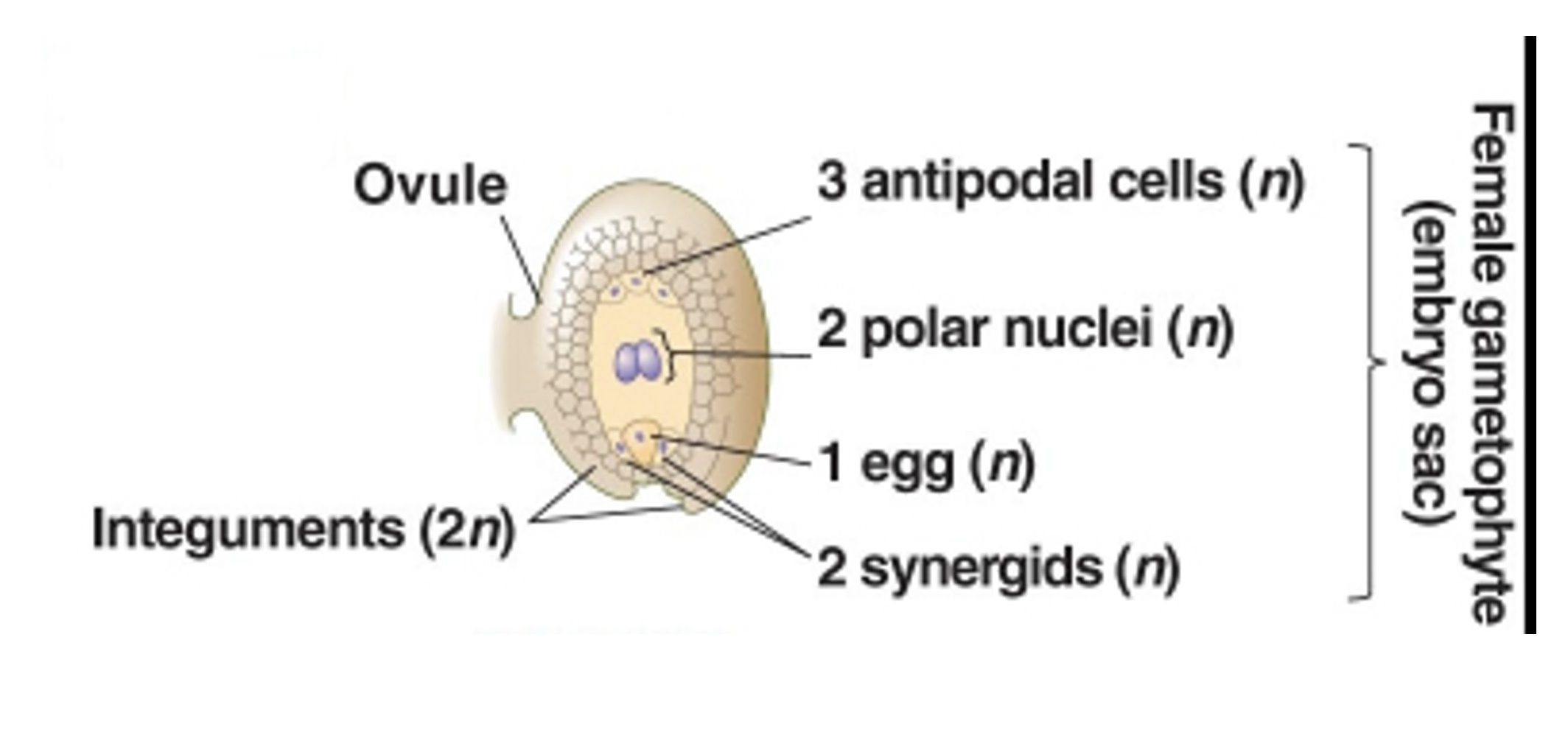
Production of female gametophyte
In the ovule a megasporocyte undergoes meiosis producing megaspores (egg and central cell)
The megaspore undergoes three mitotic divisions (8 nuclei partitioned into 7 cells)
1 egg with 2 synergids, 3 antipodal cells, 1 remaining cell w/2 nuclei
pollen tube
provides an appropriate environment and path for the sperm
highly species specific and prevents interspecific fertilization
double fertilzation
produces zygote and endosperm
ensures nutrients are supplied only to eggs thats have been fertilized
Costs of Sexual Reproduction
requires twice the fitness
loss of “ideal” individuals
less efficent
slower population growth rate
Vicar of Bray Hypothesis
sexual reproduction increases variation which means a greater chance of gathering more fit traits
more variation is beneficial in changing environments
The Red Queen Hypothesis
evolutionary arms race between hosts and pathogens
pathogens adapt to common host genotypes
sexual reproduction produces rare hosts genotypes
increased host variation makes it difficult for pathogens to specialize
External Reproduction
often associated with aquatic animals
release eggs and sperm into water, sperm swims to eggs
many have a planktonic larval stage
Gonochorism
separate sexes
Problems associated with sexual reproduction
must exclude self fertilization and gametes from other species
must bring gametes together
must produce gametes
must limit fertilization to two gametes
Male reproductive structures
male gametes (sperm) are produced in the testes
Sperm pass into the epididymis from the seminiferous tubules (highly coiled tubes in the testes)
Leydig cells
produce testosterone
Sertoli cells
provide nutrients for developing sperm
Spermatogenesis
the process cells move from the outer edge of the tubules toward the center
Spermatogonia (diploid) through mitosis
the cells undergo meiosis (spermatocytes) (initially diploid)
produce haploid spermatids
mature into final sperm cells (haploid)
cells mature in the epididymis
Sperm passage
During ejaculation, sperm are propelled from the epididymis through the vas deferens and out through the urethra
three sets of glands add secretions to the sperm to form the semen:
Seminal Vesicle: fructose (60% of total vol.)
Prostate gland: anticoagulant enzymes and citrate
Bulbourethral gland: neutralizes the acidic environment of the urethra
Female Reproductive Structures
the ovaries are composed of an outer covering surrounding up to 400,000 follicles (present at birth)
from puberty to menopause follicles mature and egg cells are released (ovulation)-monthly
the remaining cells of the follicle form the corpus luteum
the egg moves into the oviduct and travels along to the uterus.
travel aided by cilia
Oogenesis
Oogonia (diploid) enter meiosis and become primary oocytes
But stop in prophase I of meiosis (prior to birth)
After puberty FSH stimulates one or more primary oocytes to complete the first meiotic division and pause in Metaphase II
At the time of ovulation, the egg is in Metaphase II of meiosis
The mature follicle ruptures, releasing the secondary oocyte from the ovary
After a sperm cell penetrates the egg, it is triggered to complete meiosis
Fertilization in Mammals
sperm travel through an outer layer of cells to reach the zona pellucida, the extracellular matrix of the egg
when the sperm binds to a receptor in the zona pellucida, it triggers a slow block to polyspermy
no fast block to polyspermy has been identified in mammals
Fertilization
if fertilized the developing embryo will implant in the thickened lining of the uterus (endometrium)
Hormonal Regulation Males
Hypothalamus: GnRH (gonadotropin releasing hormone)
Anterior Pituitary: FSH and LH (follicle stimulating hormone and luteinizing hormone)
Testes: FSH acts on Sertolli cells supporting spermatogenesis, LH stimulates Leydig cells to produce androgens (testosterone- also needed for spermatogenesis)
Hormonal Regulation in Females
Hypothalamus: GnRH (gonadotropin releasing hormone)
Anterior Pituitary: FSH and LH (follicle stimulating hormone and luteinizing hormone)
Ovaries: FSH stimulates maturation of follicle (estrogen), LH stimulates ovulation and development of corpus luteum (progesterone)
Root important functions:
anchoring the plant
absorbing minerals and water
storing carbohydrates
Stems consist of
nodes: points at which leaves are attached
internodes: stem segments between nodes
apical bud: causes elongation of a young shoot
axillary bud: a structure that has the potential to form a lateral branch, thorn, or flower
Leaves
main photosynthetic organ of most vascular plants
leaves intercept light, exchange gases, dissipate heat, and defend the plant from herbivores/pathogens
Blade and petiole (attached to node on stem)
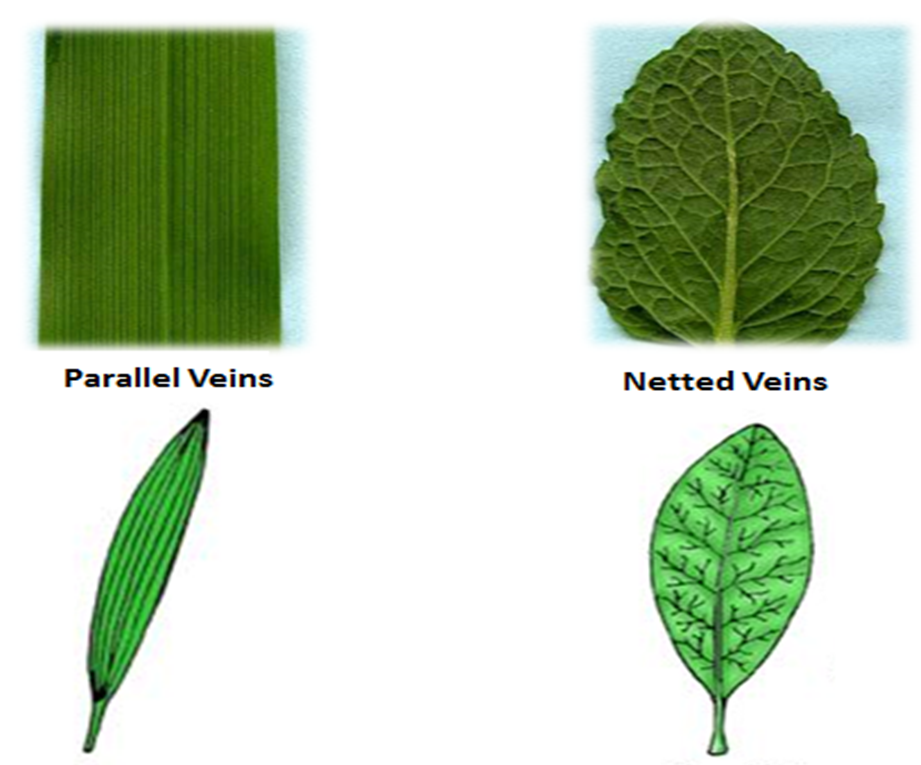
Monocots: have parallel veins
Dicots: have branching veins
3 tissue types in plants
Dermal
Vascular
Ground
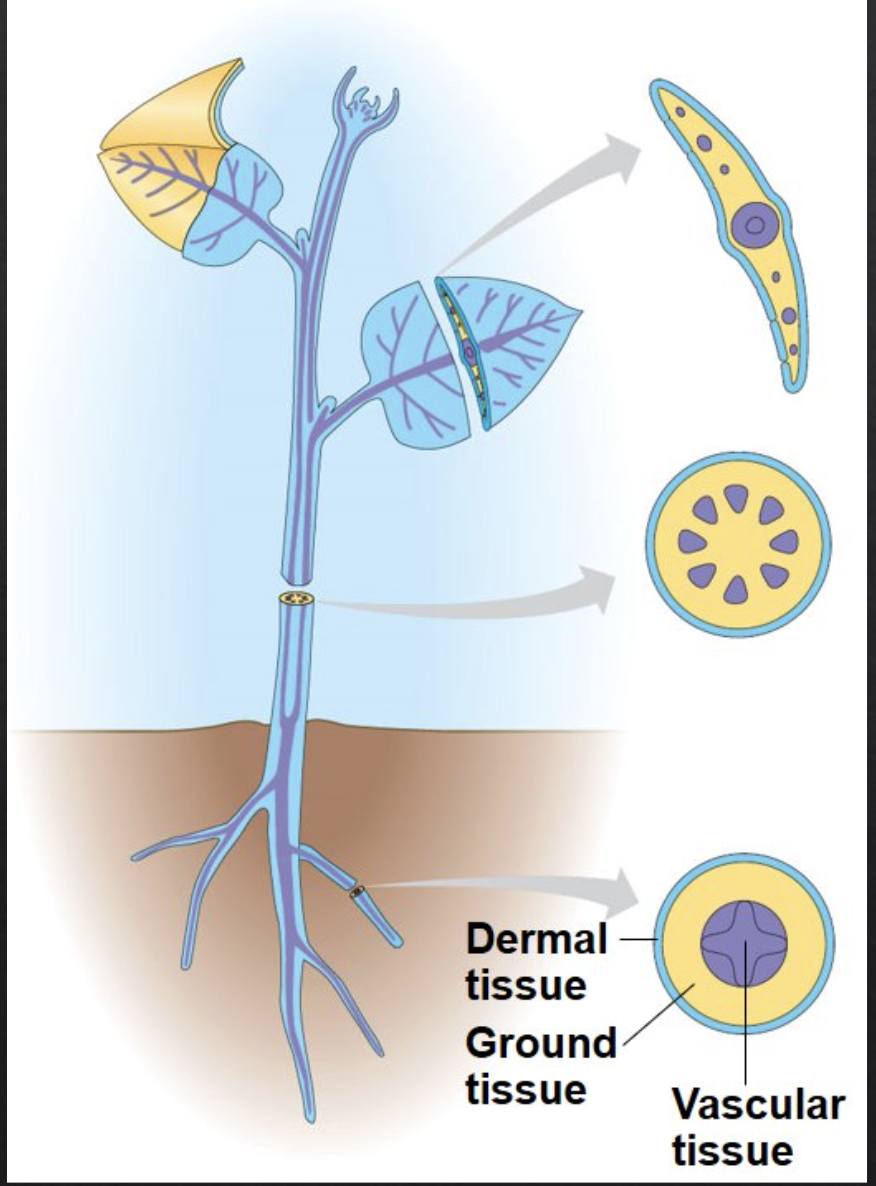
dermal tissue system
in nonwoody plants, the dermal tissue system consists of the epidermis
cuticle- waxy coating that helps prevent water loss from the epidermis
in woody plants, protective tissues called periderm replace the epidermis in older regions of stems and roots
vascular tissue system
facilitates the transport of materials through the plant and provides mechanical support
Xylem: conducts water and dissolved minerals upward from roots to shoots
Pholem: transports sugars from where they are made (primarily leaves) to storage structures or sites of growth
ground tissue system
includes cells specialized for storage, photsynthesis, support, and transport
Water-conducting cells of the Xylem
Vessel elements are common to most angiosperms, and a few gymnosperms and seedless vascular plants
Vessel elements align end to end to form long pipes called vessels
the end walls of of vessel elements have perforation plates that allow water to flow freely through the vessels
Sugar-conducting cells of the Pholem
cells of the Pholem are alive at maturity, but lack organelles
In angiosperms, sugars are transported in sieve tubes, chains of cells called sieve-tube elements
Pholem
sieve tubes, sieve tube elements, carbohydrates, from lead to other parts of plant
Xylem
vessels, vessel elements, water + minerals, from root to shoot
Primary growth
apical meristems are located at the tips of roots and shoots
elongate shoots and roots, process is called primary growth
Secondary growth
Lateral meristems add thickness to woody plants- secondary growth
Vascular cambium adds layers of vascular tissue called secondary xylem (wood) and secondary pholem
Cork cambium replaces the epidermis with periderm, which is thicker and tougher
Secondary growth occurs in gymnosperms and many eudicots, but is rare in monocots
Dedrochronology
analysis of tree ring growth patterns to study past climate change
tree rings are present where late and early wood meet
thick rings indicate a year with warm or wet growing conditions, thin rings indicate a cold or dry year
4 key stages of Animal Development
Fertilization
Cleavage
Morphogenesis
Organogenesis
acrosomal reaction
triggered when the sperm meets the egg
the acrosome at the tip of the sperm releases hydrolytic enzymes that digest jelly coat surrounding the egg
acrosomal process forms, grows, and develops the egg
“lock and key” on plasma membrane
The Cortical Reaction
Na+ rush in and the membrane depolarizes- creates an electric barrier to other sperm (separate from the cortical reaction)
fusion of egg and sperm also initiates the cortical reaction
seconds after the sperm binds to the egg, vesicles just beneath the egg plasma membrane release their contents and form a fertilization envelope
the fast block of polyspermy (seconds)
the fertilization enevelop also acts as a slower block to polyspermy 30-60 seconds
the cortical reaction requires a high concentration of calcium ions in the egg
the reaction is triggered by a change in calcium ion concentration
calcium ions spread across the egg correlates with the appearence of the fertilzation envelope
Fertilization
egg activation- activates a sharp rise in metabolic processes
in humans this stimulates the oocyte to complete meiosis
fusion of haploid nuclei into diploid nucleus
the fertilization stage ends with a zygote
Cleavage
a series of mitotic divisions
results in the formation of a fluid-filled ball of cells, Blastula
each cell is called a blastomere
the fluid filled space is the blastocoel
Morphogenesis
involves large scale movement of cells
involves cell movement, and cell shape changes
Establishment of: three primary tissue types, anterior/posterior axis, digestive system
begins with gastrulation
involves invagination: cells at one end of the blastula begin to migrate inside the blastocoel generating a tube within a tube
Organogenesis
regions of the three germ layers develop into the rudiments or organs
the mechanisms of organogenesis involve folds, splits, and dense cell clustering
this must occur in the proper location (pattern formation)
pattern formation
the process governing the arrangement of tissues and organs, largely controlled by chemical cues
determination
refers to the process by which a cell or group of cells become committed to a particular fate
differentiation
refers to the resulting specialization in structure and function
fate maps
diagrams showing organs and other structures that arise from each region of an embryo
positional information
the molecular cues that control pattern formation, this information tells a cell where it is with respect to the body axes
Formation of the Vertebrate Limb
one limb bud regulating region is the apical ectodermal ride (AER)
The AER secretes a protein signal called fibroblast growth factor (FGF) that promotes limb-bud outgrowth
the second region is the zone of polarizing activity (ZPA)
ZPA regulates development along anterior/posterior axis of the limb
cells nearest the ZPA form posterior structures, and those furthest form anterior structures
sonic hedgehog is a secreted signal produced by the ZPA
the production of a forelimb or a hindlimb depends on patterns of Hox gene expression
BMP-4, FGF, hedgehog, and Hox proteins are examples of a larger set of molecules governing cell fates in animals
Higher concentration of sonic hedgehog determines posterior side (long digits)
Lower concentration of sonic hedgehog determines anterior side (short digits)