essay 40 - machine-driven endodontic instruments - types, classifications, characteristics, indications, working techniques. properties and limitations of NiTi instruments. Basic rules of working technique by machine-driven NiTi instruments
 Call Kai
 Learn
Learn Practice Test
 Spaced Repetition
 Match
Match Flashcards
 Knowt Play
1/14

There's no tags or description
Looks like no tags are added yet.
Name | Mastery | Learn | Test | Matching | Spaced | Call with Kai |
|---|
No analytics yet
Send a link to your students to track their progress
15 Terms
classifications of machine driven endodontic instruments
classified based on material
— steel rotary instruments e.g Gates-Glidden or Largo drills
— NiTi rotary instruments e.g ProFiles or LightSpeed
list the steel rotary instruments
Gates glidden drills
Largo drills/Peeso reamers
Describe Gates glidden drills - steel rotary instruments
used to eliminate coronal interferences and enlarge the coronal 3rd
Size Start Point - #1 0.5mm
always used after pre flaring with hand files
elliptical (flame shape) cutting head, Flat Cutting blades, reduced aggressiveness and screw in tendency, not active cutting tip
working technique; passive use with a brush like circumferential withdraw motion
Available in Short (28mm/15mm working Part), long (32mm/19mm cutting part)
800 rpm
designed to fracture at start of the Shank, Tip fracture only common in size one and two
Describe Largo drills/Peeso reamers - steel rotary instruments
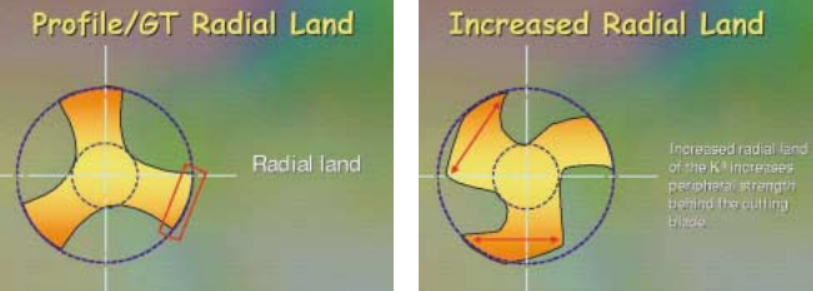
cylindrical shape, long cutting blades over a wider surface - non cutting tip. radial lands blade design
Size Start Point - #1 0.7mm
sizes 1-6
more aggressive than Gates
primarily for post space (dowel space) preparation - also used in retreatment cases for rapid removal of obturation material
very aggressive due to extended active part - high risk of root stripping if used carelessly
used with a passive, straight in and straight out motion - not a brushing or lateral movement
not recommended for initial canal access or coronal enlargement - despite having a non cutting tip, early use Can be dangerous in unprepared canals
List the NiTi rotary instruments
ProFiles
Quantec
LightSpeed
Rotary GT Files
Sybron Endo K3
Pro Taper
WaveOne
Describe Profiles - NiTi rotary instrument
triple U’’ cross section with three radial ends (flat cutting surfaces); non cutting round tip;
Depth Gauges at 18, 19, 20, 22 and 24mm (machined grooves on the shank that act as visual depth reference marks)
reduced core metal mass → fragile to torsional stress, but very flexible and safe for curved canals
working technique; crown down technique = .02, .04, .06; used with torque controlled handpiece at 250-300 rpm
.02 taper: ISO sizes 15-45
.04 and .06 taper: ISO sizes 15-80
ISO standard colour rings:
— 1 ring = .02 taper
— 2 rings = .04 taper
— 3 rings = .06 taper
Available in 21mm 25mm and 30 mm
Recommended Speed: 250-300 rpm
torque: low for .02/.04 tapers, medium for .06 taper
shaping carved canals (high flexibility reduces transportation risk) less effective in coronal flaring or removal interferences
prone to torsional stress and fracture in long/calcified canals
Describe Quantec - NiTi rotary instrument
quantec Sc - cutting tip (faceted, 60 degrees, no transition angle) narrow, calcified canals with strong curvatures
quantec LX - non cutting tip (blunt, 60 degrees) wider canals or with severe apical curves
blades are asymmetrical radial lands behind contact area
optimised debris removal and reduced friction
working technique; progressive use, variable helical angle and cutting edge design improve saftey
surface grooves to channel debris coronally. prevent apical compaction (‘‘dental mud’’ buildup)
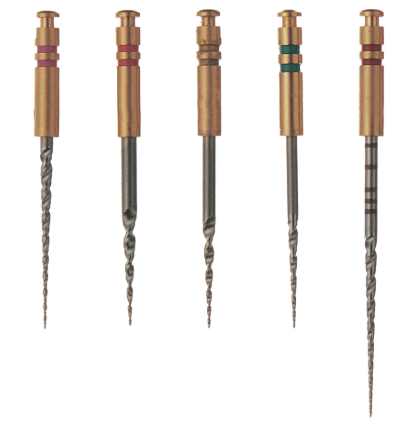
Describe LightSpeed - NiTi rotary instrument
resembles gates glidden, flame shaped with short working part and long shaft
ISO sizes from 20 to 100
non active rounded tip
Available in length 21, 25, 31. must be used from smallest to largest in a step back sequence using a pecking movement
first the canal is manually pre enlarged with a K file up to size 15. then the master apical rotary (MAR) is selected - it's the Lightspeed file that can reach working length using 12 gentle pecking motions. After establishing MAR, a step back sequence follows: larger files are inserted progressively shorter than the working length with 4-8 pecks each. the goal is to enlarge the canal coronally and middle 3rd to a diameter at least 0.25 mm larger than MAR. recommended speed for Lightspeed instruments is 1200-2000 rpm
designed for accurate apical preparation with minimal shaping in the coronal and middle thirds
ideal for apical enlargement in Curved canals. reduces transportation and over preparation in the middle and coronal thirds
requires good tactile sensitivity and strict control of working length.
not typically used for shaping the whole canal alone
special feature; breakage point designed at 18 mm to allow safe retrieval
Describe Rotary GT Files - NiTi rotary instrument
non cutting tip, radial lands, clockwise blade direction (unlike hand gt)
low lateral cutting efficiency (do NOT aggressively cut dentin on their sides (laterally)), designed to imprint shape into the canal. radial Cutting planes - flat surface on the outer edge of a rotary file (not sharp angles)
fixed tip diameter and maximum flute diameter (MFD)
multiple tapers, blade length inversely proportional to Taper (longer the taper, shorter the blade)
working technique: crown-down; adjust taper/diameter according to canal anatomy. use at 250-300 rpm with torque control
continuous clockwise rotation (no screw in effect). Crown Down technique using decreasing taper/ diameter
Selection Gutta percha cones, paper point, and obturators based on file used
torque Low For 0.04 tapers, medium for 0.06 tapers and high for tapers above 0.06
tip diameters; series of GT 20, 30, 40 and accessory sizes (up to .12 taper)
Describe Sybron Endo K3 - NiTi rotary instrument
2 radial lands (tiers): 1. support blade, 2. reduce wall friction, 3. stabilises and centre the file. non-working tip
lengths available = 21 mm, 25mm, 30mm
tapers and sizes = .02 (ISO 15-45), .04 and .06 (ISO 15-60), orifice openers: .08 and .10 tapers
core diameter: decreases coronally → maintains flexibility
cutting angle: slightly positive → efficient cutting
handle design: short axxess handle → better access in posterior teeth
working technique; crown-down after hand filling to size 15. use with a torque controlled motor and auto reverse
crown down: decreasing diameter - decreasing taper - alternating both
work until .06 taper size 25 or 30 reaches working length
indication; thin, curved canals; short handle for posterior access
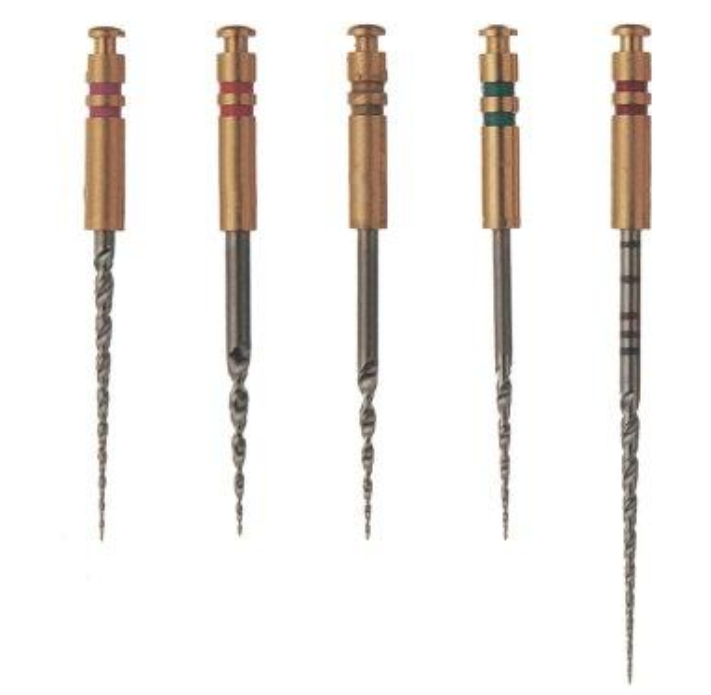
Describe ProTaper - NiTi rotary instrument
Design and structure
Progressive taper, Convex triangular cross section
Composed of 6 files:
shaping files: SX, S1, S2 - progressively increasing taper, brushing motion
Finishing files: F1, F2, F3 - progressively decreasing taper, pecking motion
convex triangular cross section for high cutting efficiency
Variable taper and pitch (“spacing” or “interval” between the spirals of the file) to reduce screw in effect and enhance flexibility
torque controlled endomotor with auto reverse is recommended
Sequence of Use
initial hand instrumentation with at least A size 15 or 20 K-file and use irrigation
SX: used to flare coronal 3rd and eliminate coronal interferences
S1 files: prepares middle 3rd
S2: reaches apical 3rd
F1, F2, F3: Finish Shaping of apical 3rd depending on the final apical size needed
brushing action used for shaping files (SX, S1, S2)
In-out pecking motion without applicable pressure used for finishing files (F1-F3)
Rotational Speed: 250-300 rpm with torque-controlled endomotor
Describe WaveOne - NiTi rotary instrument
motion; reciprocating
sizes; small (.06 taper), primary (.08 taper), large (.08 taper)
lengths; 21,25, 31 mm
M-wire NiTi for enhanced cyclic fatigue resistance
indications; single-patient use (pre-sterilised), simplified instrumentation
instruments: includes matching paper points, gutta-percha points and obturators
Advantages:
— no sterilisation needed
— minimises file breakage
— maximised cutting efficiency per patient
what are the properties of NiTi instruments?
high flexibility, therefore they are excellent for curved canals
resistance to cyclic fatigue
shape memory and super elasticity
efficient cutting in lateral brush motion
designed for rotary or reciprocating motion
what are the limitations of NiTi instruments?
fragile under torsional and flexural stress
require precise torque and speed settings
need for torque-controlled handpieces with auto-reverse
not suitable for aggressive cutting without control
cannot be twisted like stainless steel - must be micromachined
Basic rules of working technique by machine driven NiTi instruments
always explore and pre flare with hand files up to size #15-#20 before rotary use
must have a glide path established
work in crown-down sequence (reduce taper or diameter from coronal to apical)
use and endodontic motor with torque control and auto reverse
maintain rotational speed (typically 250-300 rpm for rotary NiTi)
use short and gentle pressure, especially in curved canals
use with frequent irrigation and lubrication
avoid excessive apical force - use brushing motions with shaping files
do not reuse single-use instruments like WaveOne to avoid cross contamination and breakage