Concept 34.4: Tetrapods are gnathostomes that have limbs
 Call Kai
 Learn
Learn Practice Test
 Spaced Repetition
 Match
Match Flashcards
 Knowt Play
1/6

Name | Mastery | Learn | Test | Matching | Spaced | Call with Kai | Chat |
|---|
No analytics yet
Send a link to your students to track their progress
7 Terms
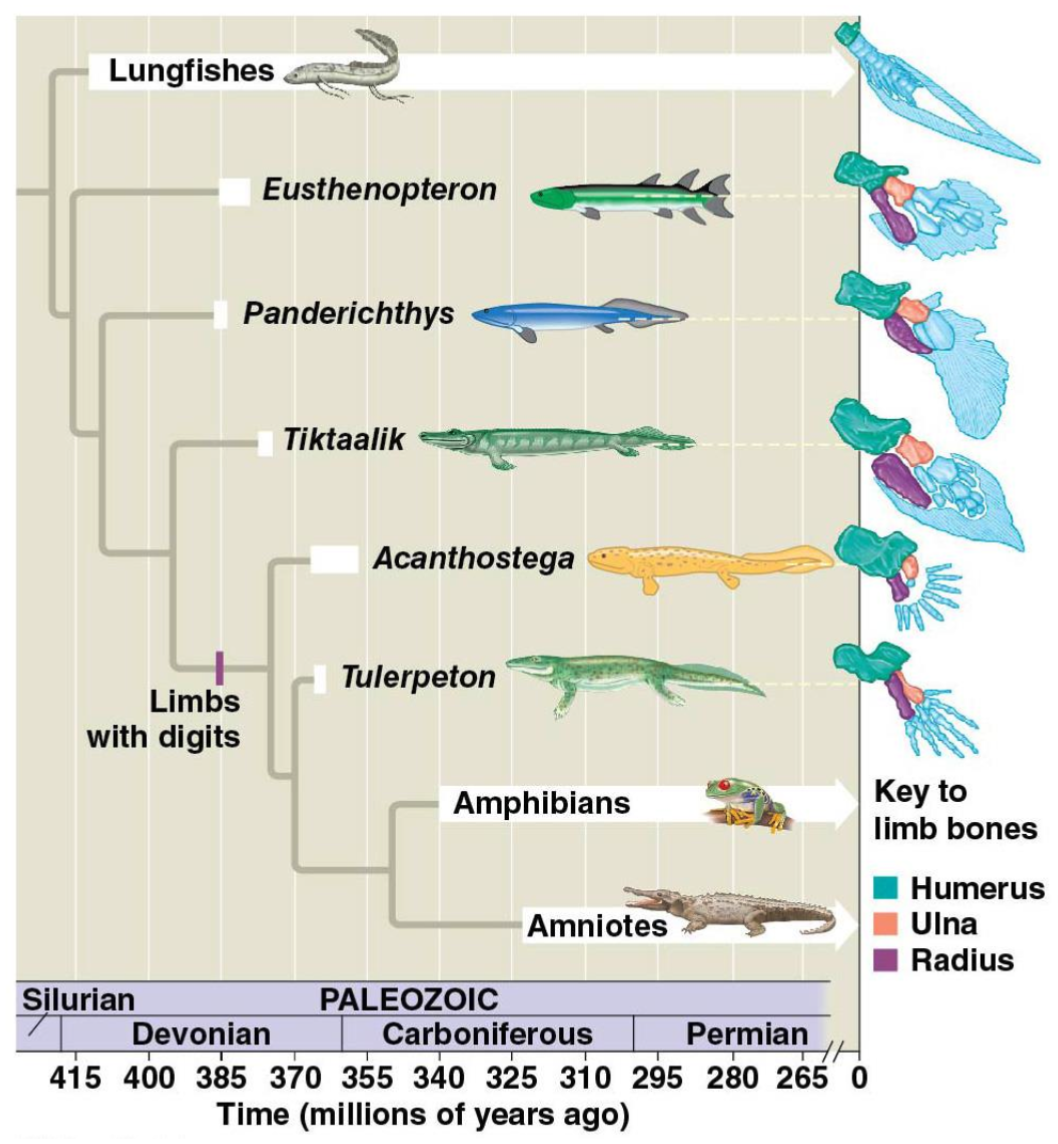
Tetrapods
Gnathostomes that have limbs via the evolution of a lineage of lobe-fins 365 mya, leading to great diversification
Have four limbs and feet with digits
A neck, enabling independent head movement
Fusion of the pelvic girdle to backbone
The absence of gills
Ears for detecting airborne sounds
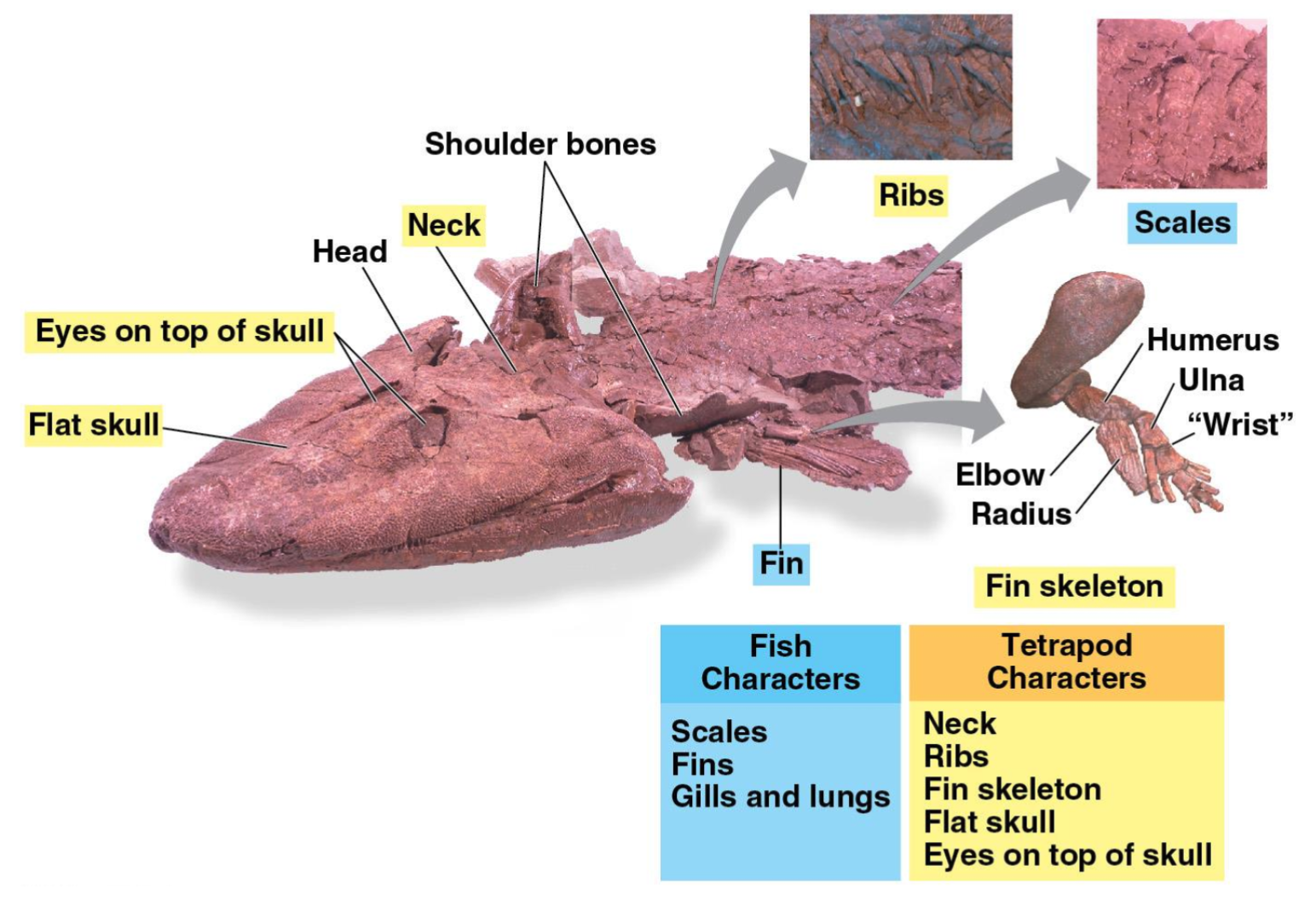
Tiktaalik
A fossil species with characteristics of both fish and tetrapods
Fish traits include fins, gills, lungs, and scales
Tetrapod traits include ribs, a neck and shoulders, front fins with similar bone patterns, and a pelvis and rear fin more robust than those found in fish
Likely could walk in water, but is unlikely that it walked in land
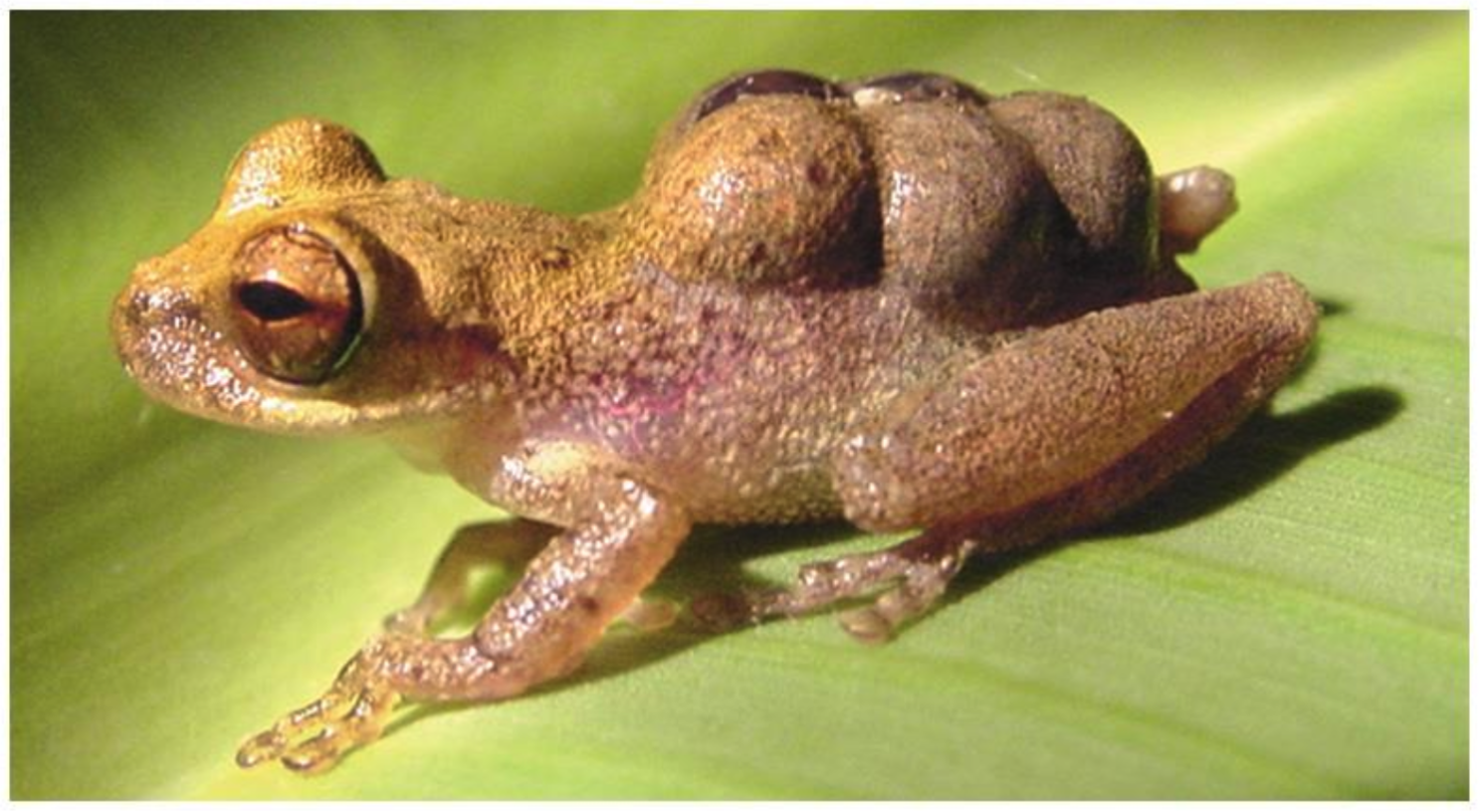
Amphibians
A class with 6,150 species in three clades:
Salamanders (Urodela or “tailed ones”)
Frogs (Anura or “tail-less ones”)
Caecilians (Apoda or “legless ones”)
Name means “both ways of life,” referring to the life stages of many frog species first in water and then on land
Usually found in damp environments; these have skin that function in gas exchange
Eggs lack a shell and must be laid in water or moist environments on land
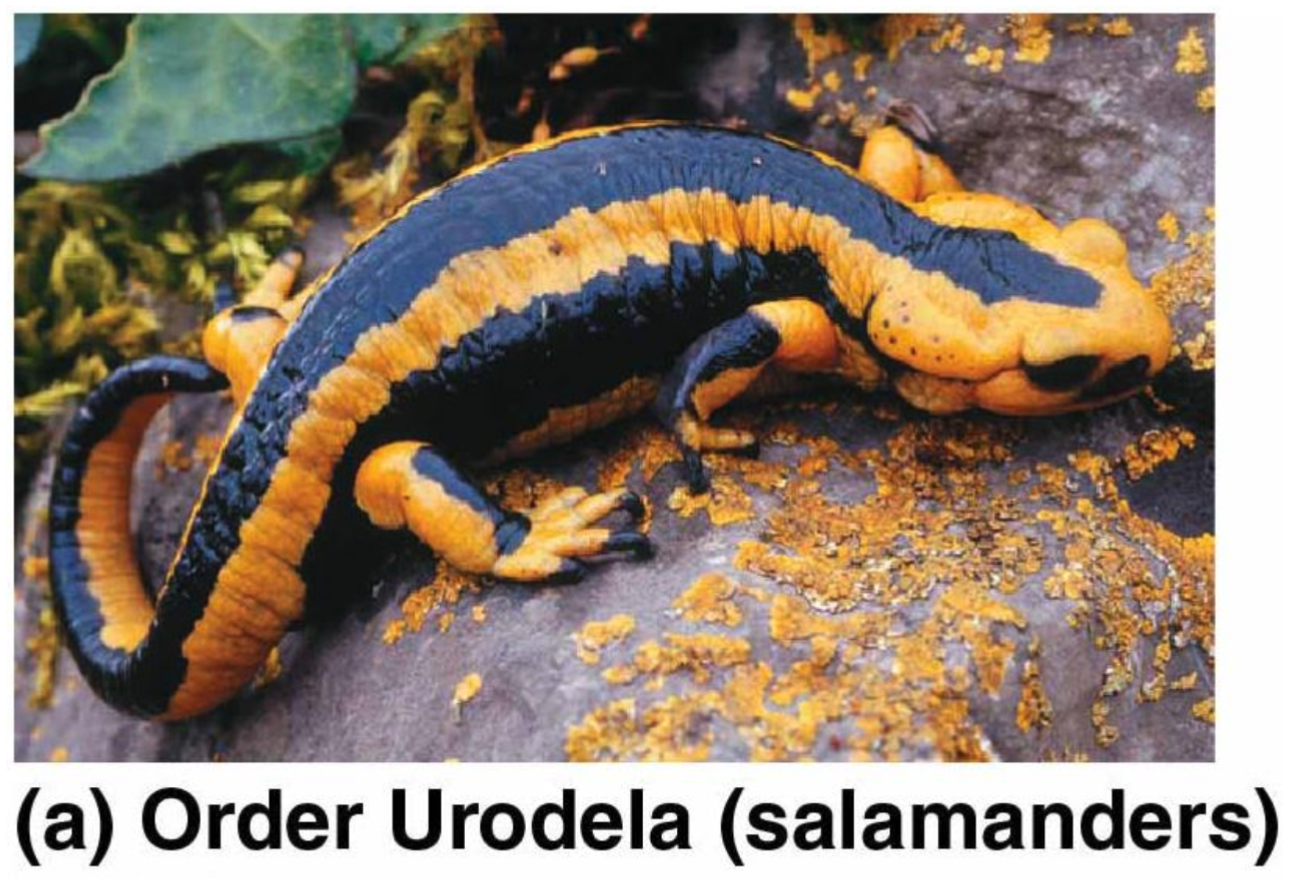
Salamanders (Urodela)
A clade under amphibians with about 550 species; these have tails
Some are aquatic
Exhibit paedomorphosis, or the retention of larval features when mature
Typically carniverous
Paedomorphosis
The retention of larval features when mature enough to reproduce; this is common in aquatic salamanders
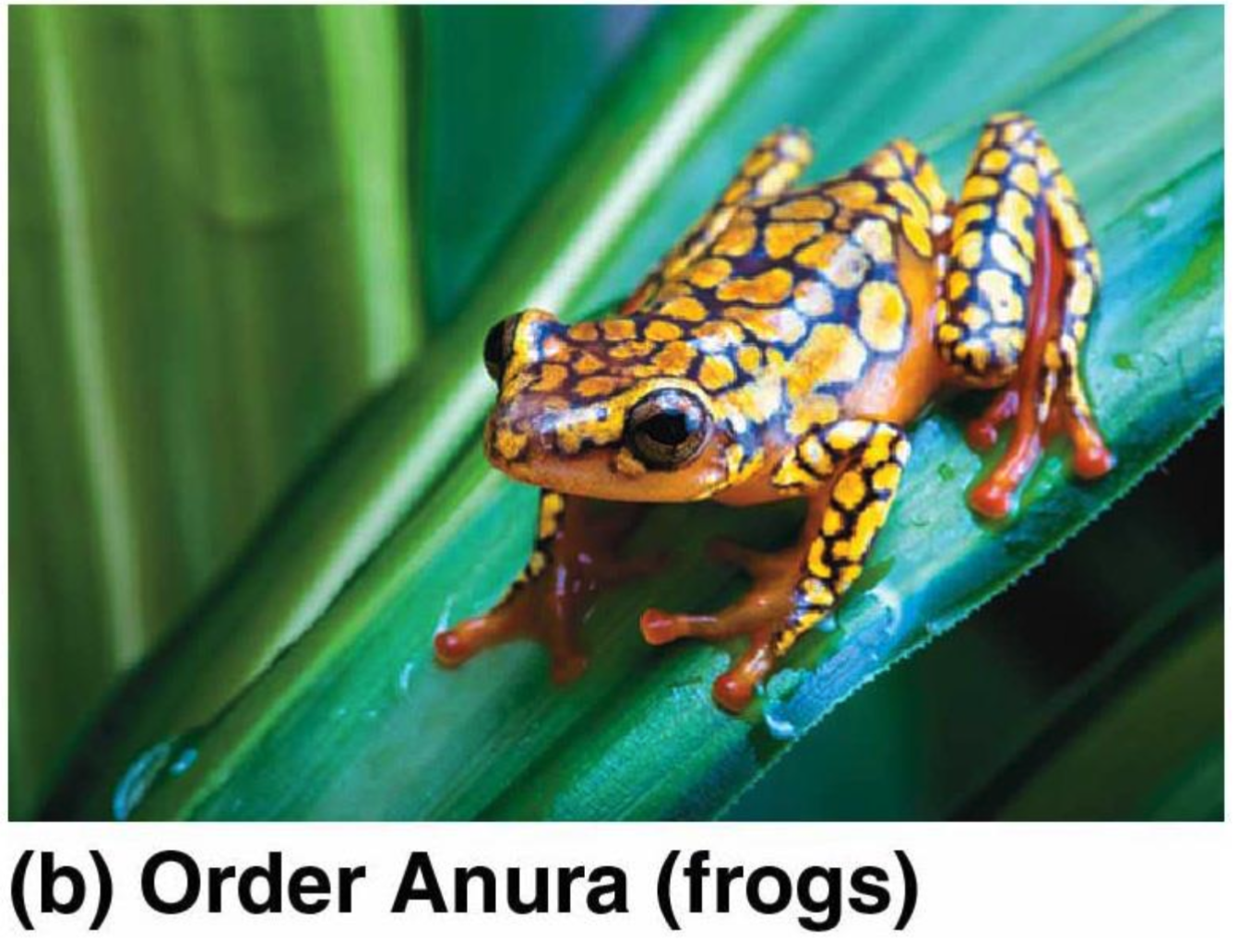
Frogs (Anura)
A clade under amphibians with about 5,420 species; these lack tails but have powerful hind legs for locomotion on land
These with leathery skin are called “toads”
Larvae are herbivoeres with gills, a lateral line system, and long, finned tails; this eventually is grown out of and a carnivorous diet persists
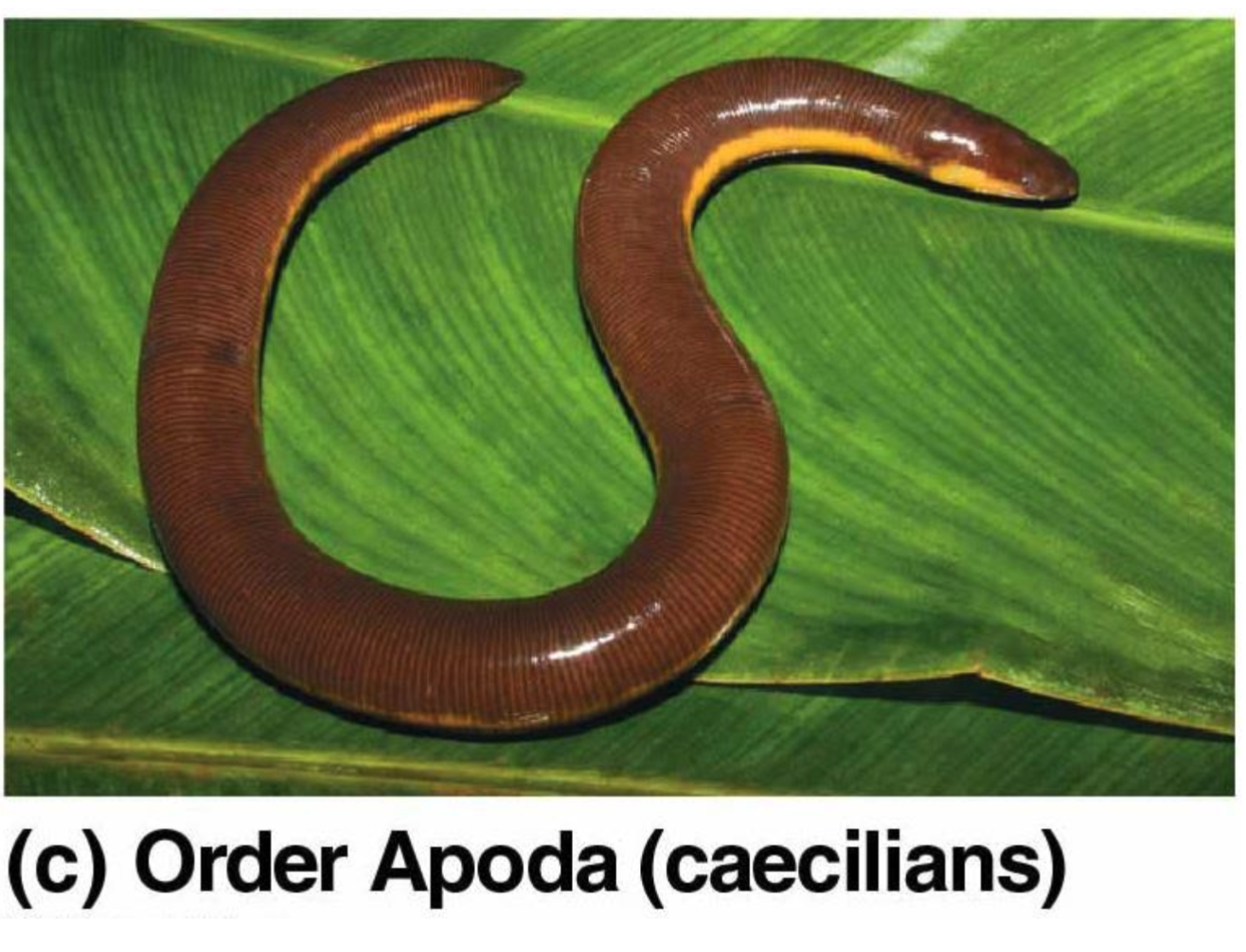
Caecilians (Apoda)
A clade under amphibians with about 170 species; these are legless and nearly blind, resembling earthworms
Legs were lost as a secondary adapation
These inhabit moist forest soils in tropical areas