PSYCH 135 - Final Review
 Call Kai
 Learn
Learn Practice Test
 Spaced Repetition
 Match
Match Flashcards
 Knowt Play
1/34

There's no tags or description
Looks like no tags are added yet.
Name | Mastery | Learn | Test | Matching | Spaced | Call with Kai |
|---|
No analytics yet
Send a link to your students to track their progress
35 Terms
how does the other shape the self?
internalize the “ought”, the things other ppl tell us we should be doing
internalize others perspectives
called Generalized other: like your internal simulaion of what youre parents and friends would say if they knew what you were doing and thinking
what is the Generalized other?
an individual’s internalized sense of the total expectations, norms, and attitudes of a broader society or social group
1. How It Develops
coined by sociologist George Mead = how we learn to evaluate our own beh thorugh the eyes of the community rather than just by direct, one on one itneractions
The Preparatory Stage: Children merely mimic the actions of those around them (like parents) without fully understanding the meaning.
The Play Stage: Children begin to take on the roles of specific individuals (e.g., playing "house" or "doctor").
The Game Stage: Children graduate to organized, structured activities (like team sports). Here, they must simultaneously understand the roles of everyone else on the team. This allows them to internalize the "rulebook" of the community as a whole, forming the foundation of the generalized other
2. Everyday Examples
Social Etiquette: When you hold a door for the person behind you, you are adhering to the generalized other. You anticipate society’s expectations of politeness without needing the stranger to explicitly demand it.
The Internal Critic: When you stop yourself from acting impulsively or making an inappropriate joke because you think, "What will people think?" you are consulting the generalized other.
3. "The I" vs. "The Me"
The generalized other is a core component of Mead's theory of the self, which is divided into two primary parts:
The "Me": The socialized, conforming aspect of self that has internalized the attitudes and expectations of the generalized other.
The "I": The spontaneous, creative, and unpredictable response of the individual to the "Me."
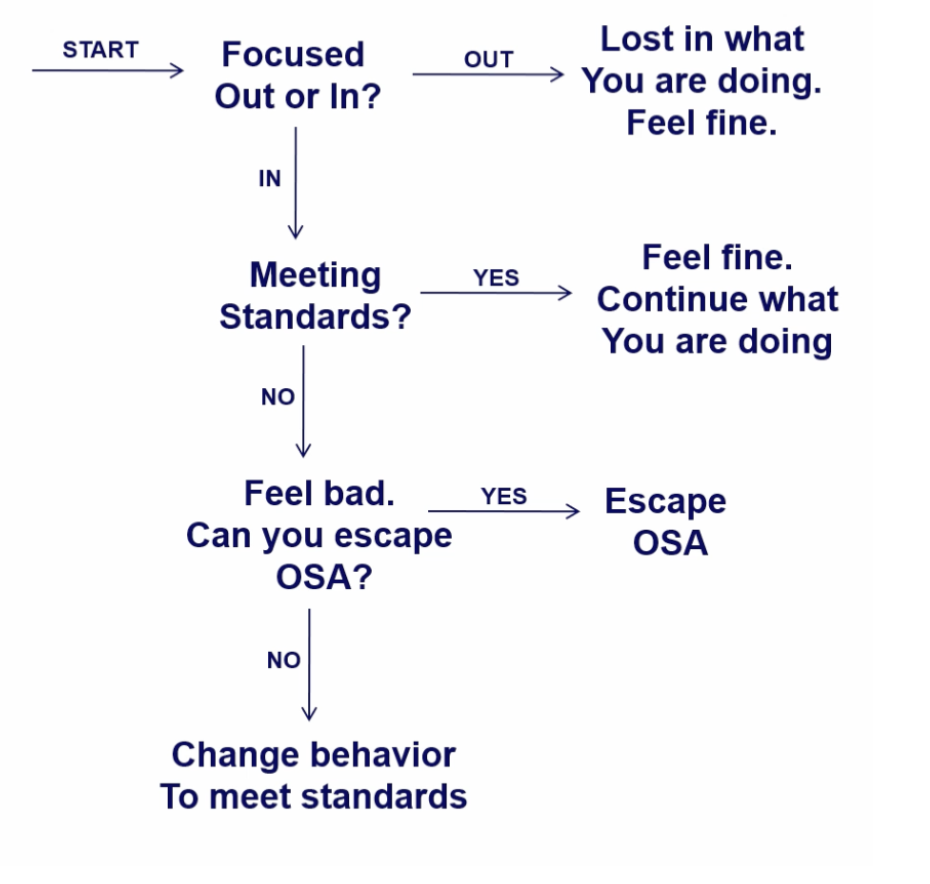
What is OSA (object self-awareness)
Robert Wicklund (1971) - took meads ideas and tried to actually test them in the lab
Objective - not the case
Object - self - awareness
aware that Other people evaluate you as an object
When objectively self-aware use “generalized other” to evaluate and guide behavior
Generalized other doesn't always guide beh
Only made objectively self-aware (reflective)
what are the options when you have objective self-awareness?
Options
Restraint and self -control (apollonian)
Do what the gen other wants us to do
Here, self-awareness initiates self-control
Escape self-awareness (dionysian)
Ex: pleasurable activities, porn, drugs, games, sex, phone activity
Ex: exercise, sports,
Losing control…
distraction/engagement
Brain chemistry (drugs, sex, alc)
Diminish refelctive porcessing
During escape, the generlized other cant impose standards
Tend to follow impulses
what is deindividuation ?
a psychological phenomenon where individuals in a group or crowd lose their sense of personal identity and self-awareness. This state of anonymity and reduced personal accountability often causes people to shed their internal restraints and act in impulsive, disinhibited, or uncharacteristic ways
caused by:
sensory overload
crowds
arousal
lack of accountability
anonymity
Altered states of consciousness
Via drugs, alcohol, and lack of sleep
what does deindividuation do to the mind
Minimize self awareness - judgment
Less inhibition, restraint, and constraints
Minimizes concern for social evaluation
More impulsive
Not thinking about consequence for self
Time distortion
Only now, no past or future
No subject-object dichotomy
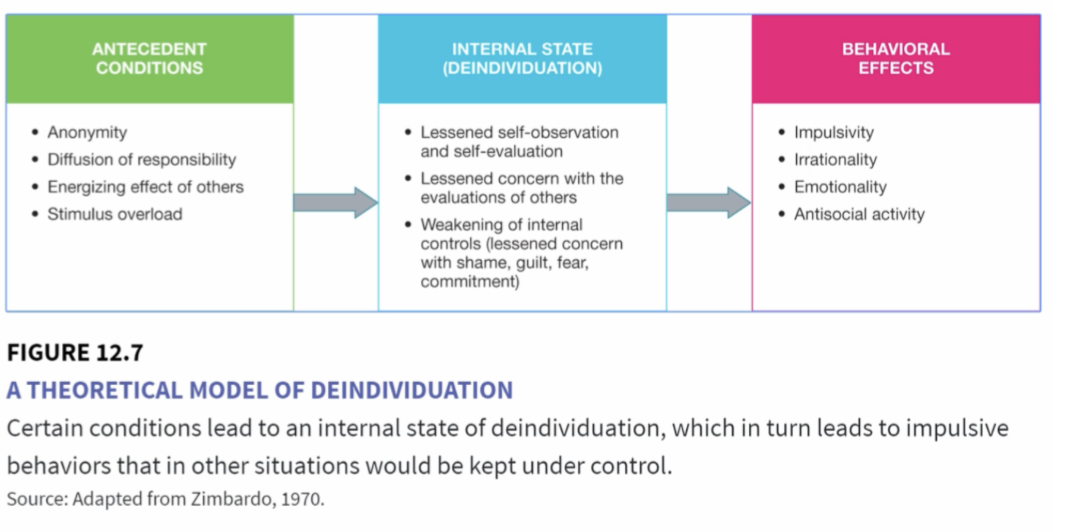
waht does deindividuation do to our behavior?
uninhibited/impulsive beh
beh not guided by “gen other’
bhe of others nearby is contagious to us
reduced memroy for actions
less apolllonina and reflective/more dionysian
can be good or bad depnding on the context and who is evaluating you
what are the studies about deindividuation?
taboos - asked to discussion def of porn while hidden by a mask
inflicting pain - inflict more pain when youre not seen, no thinking about the self or being evaluated
transgression - halloween candy, in groups and anonymous had the most kids stealing candy
in the dark - students touched others, hugged others, moved seats, and felt sexually aroused.
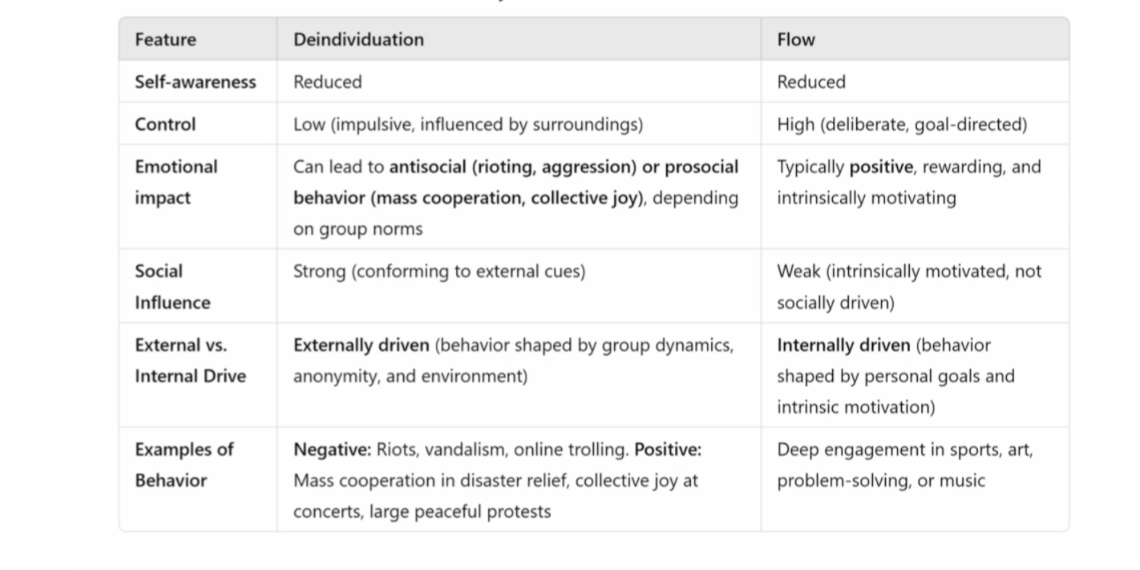
how does flow relate to escaping the self?
Complete immersion , losing sense of self while still being alone
No self-evaluation
Positive experience
engaged , in the moment, more than happy,
Makes us happier
Self consciousness gets taken away, skilled action takes over
lose track of time
Flow = more deliberate and goal oriented
Intrinsically motivated
Deinviduation = conforming to the group
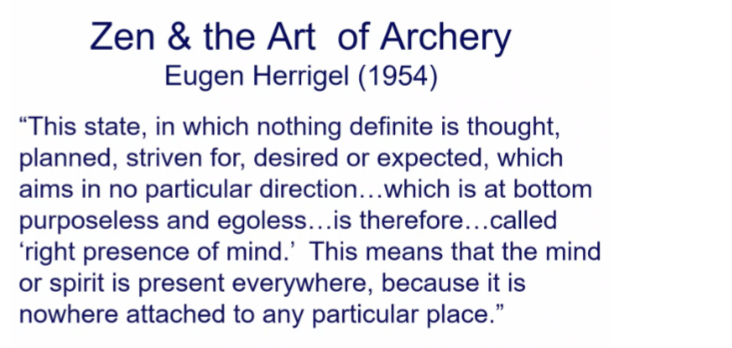
how does zen relate to escaping the self?
Buddhism - Separate the self from self evaluation
Similarly, zen = absence of self reflection and reflective processes in general is seen as the right presence of mind
which is more yourself? self control or self impulse?
different eras emphasize each (society pressure vs freedom)
why do we give biased answers to be more favorable about ourselves?
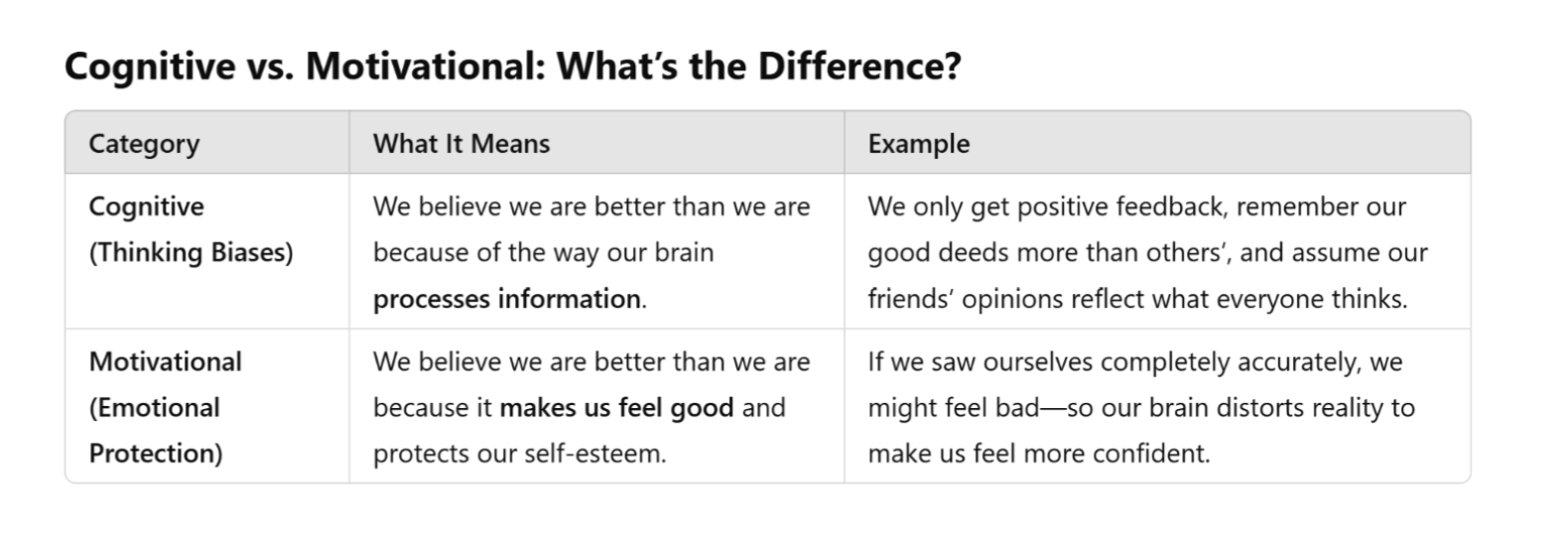
cognitve mechanisms
others dont give us neg feedback
friends feedback ?
motivatinal mechanims
unconsciosus self-protective mechanisms
have unreasonably high Self Esteem
we choose hwo to define comparison (what does good friend mean)
what are the studies related to the self-serving bias ?
looks being a 7/10 (20% more attracive than you rlly are)
married couples thinking they are responsible for 16/20 chores in the house,
bc youre there when youre doin the chores but not when theyre doing it
what is self esteem?
to regard the self with respect
we are teh esteemed and the one doing the esteeming
why do we have Self Esteem? (motivational mechanisms)
sociometer hyp (mark Leary)
its our estimate of whether we are meeting society’s standards and thus likely to be accepted
cant know if were actually esteemable to others
estimate in light of generalized other is our proxy
coping : terror managament theory (TMT)
its a psychological buffer against existential fears and distressing exps
helps us cope with anx, uncertainty, and existential trheats, provde a sense of meaning and sig
reminders of mortality lead ppl to seek ways to boost SE
studies for self esteem
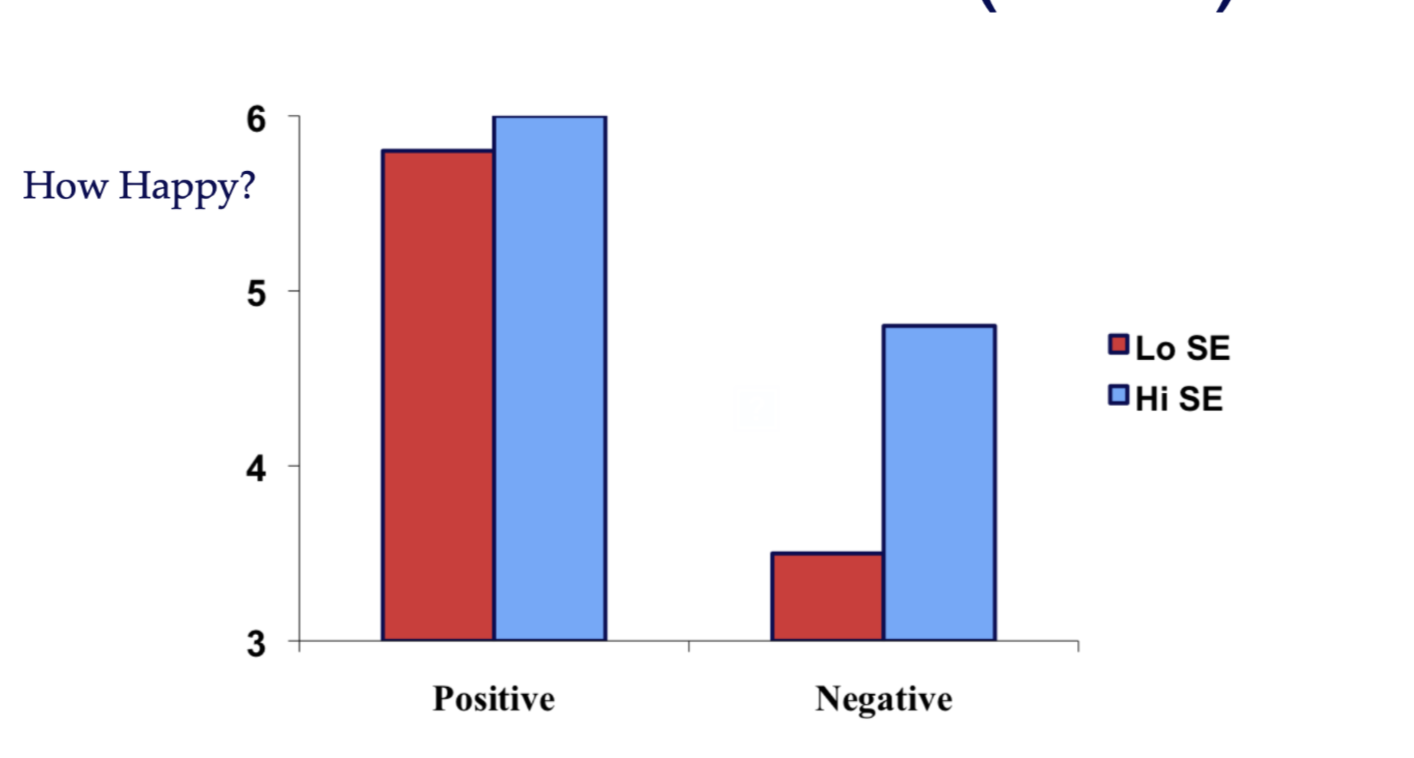
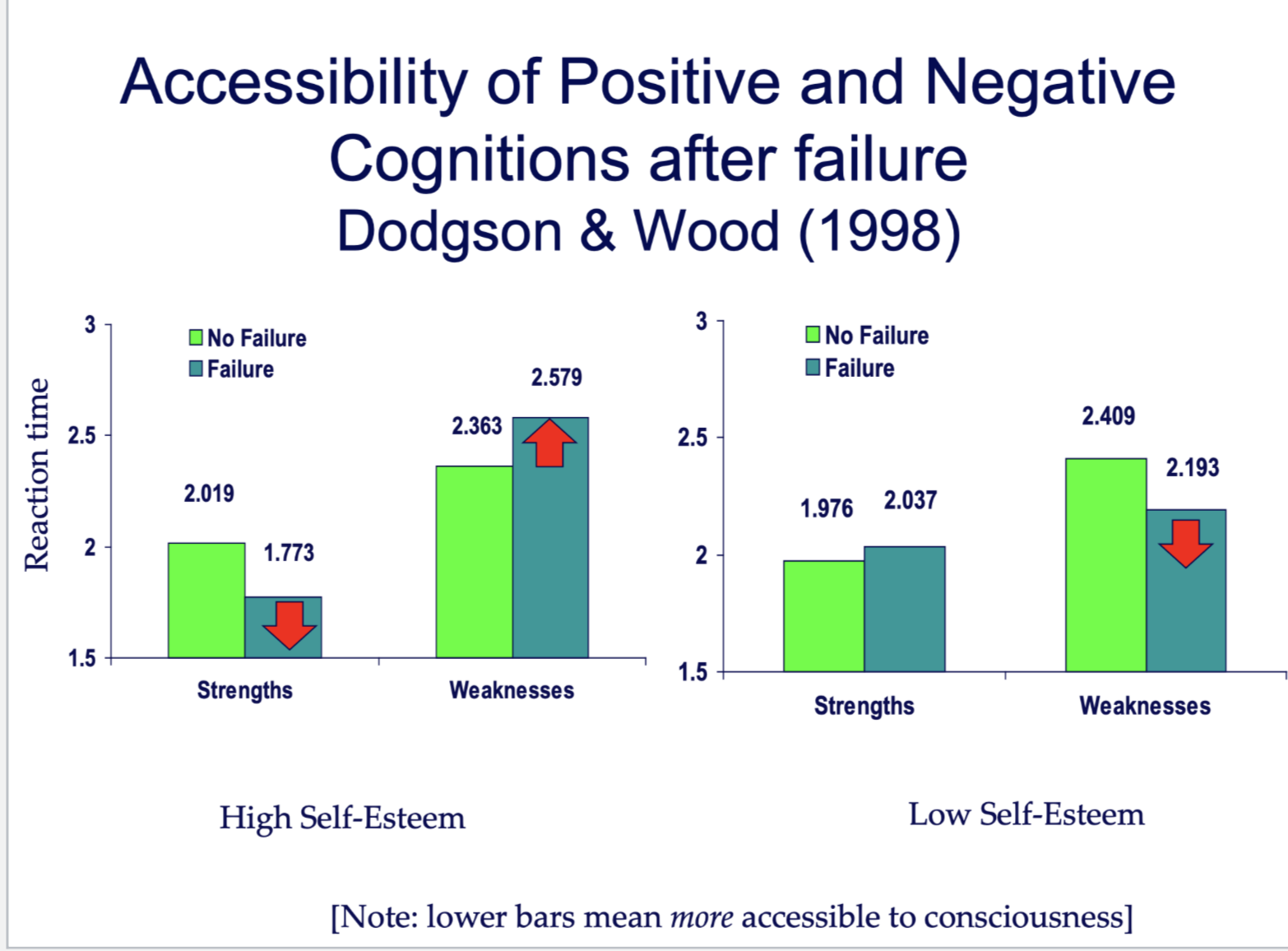
Okay, I failed here, but I’m still competent in other ways.”
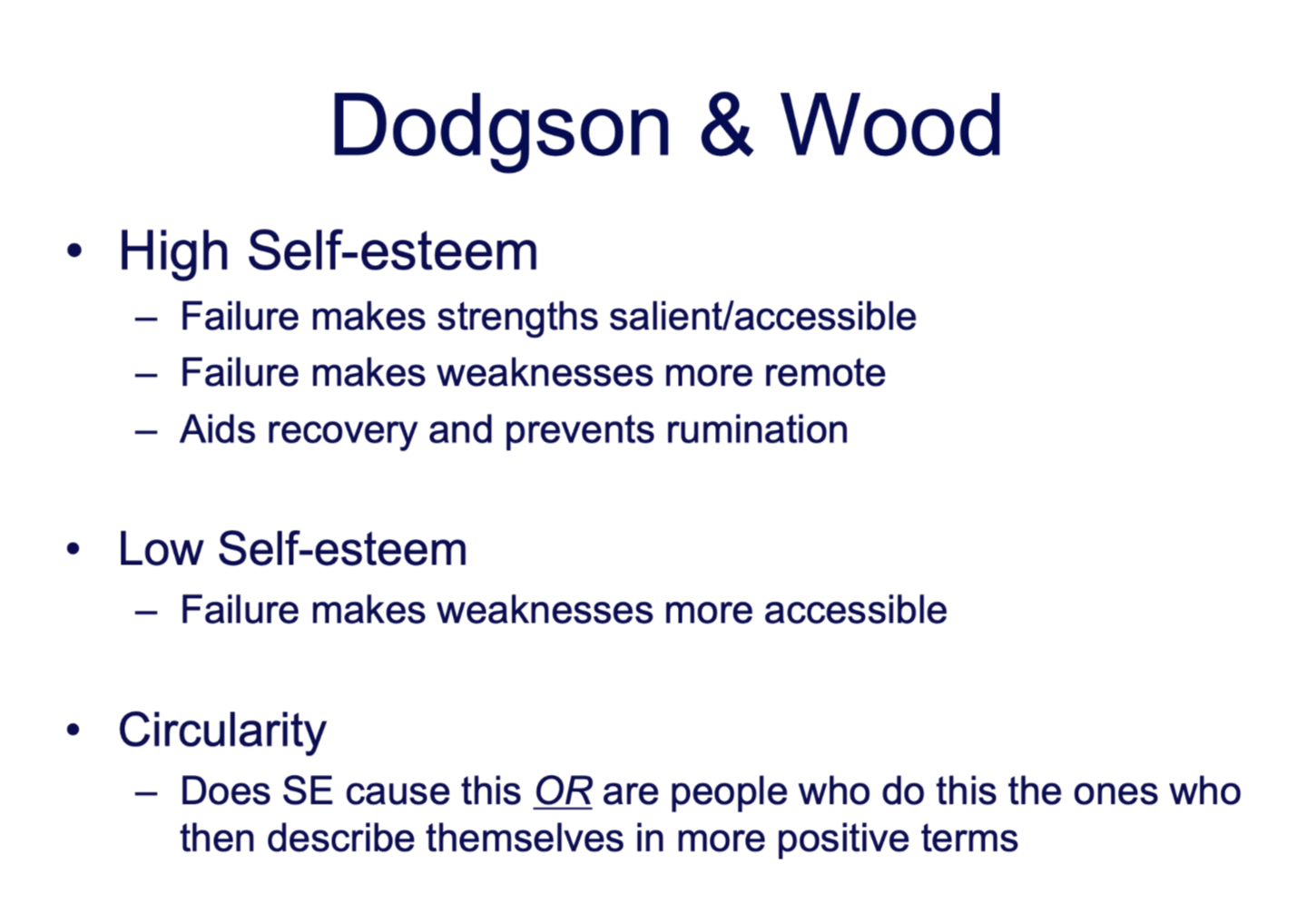
High self-esteem:
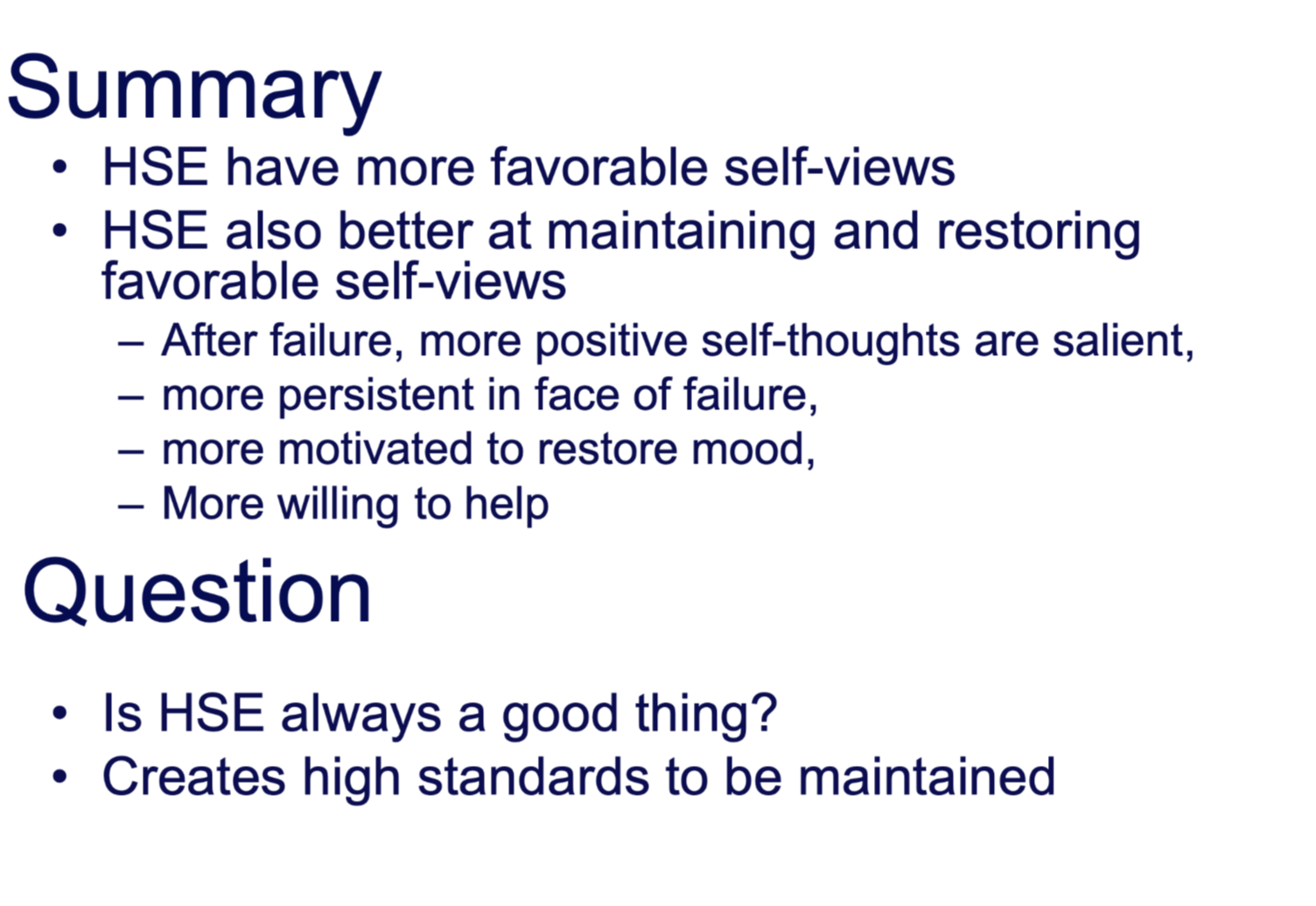
Failure → “This is bad, but I’m still capable” → strengths become salient → recovery.
Low self-esteem:
Failure → “This confirms what is wrong with me.” “This proves I’m flawed” → weaknesses become salient → rumination.
Failure is threatening. High self-esteem people defend against the threat by mentally shifting toward strengths. Low self-esteem people absorb the threat because it matches their self-schema.
why do HSE ppl watch comedy more after failrue (ego threat) ?
For high self-esteem people, failure threatens their usual self-view:
“I’m competent / worthy / capable.”
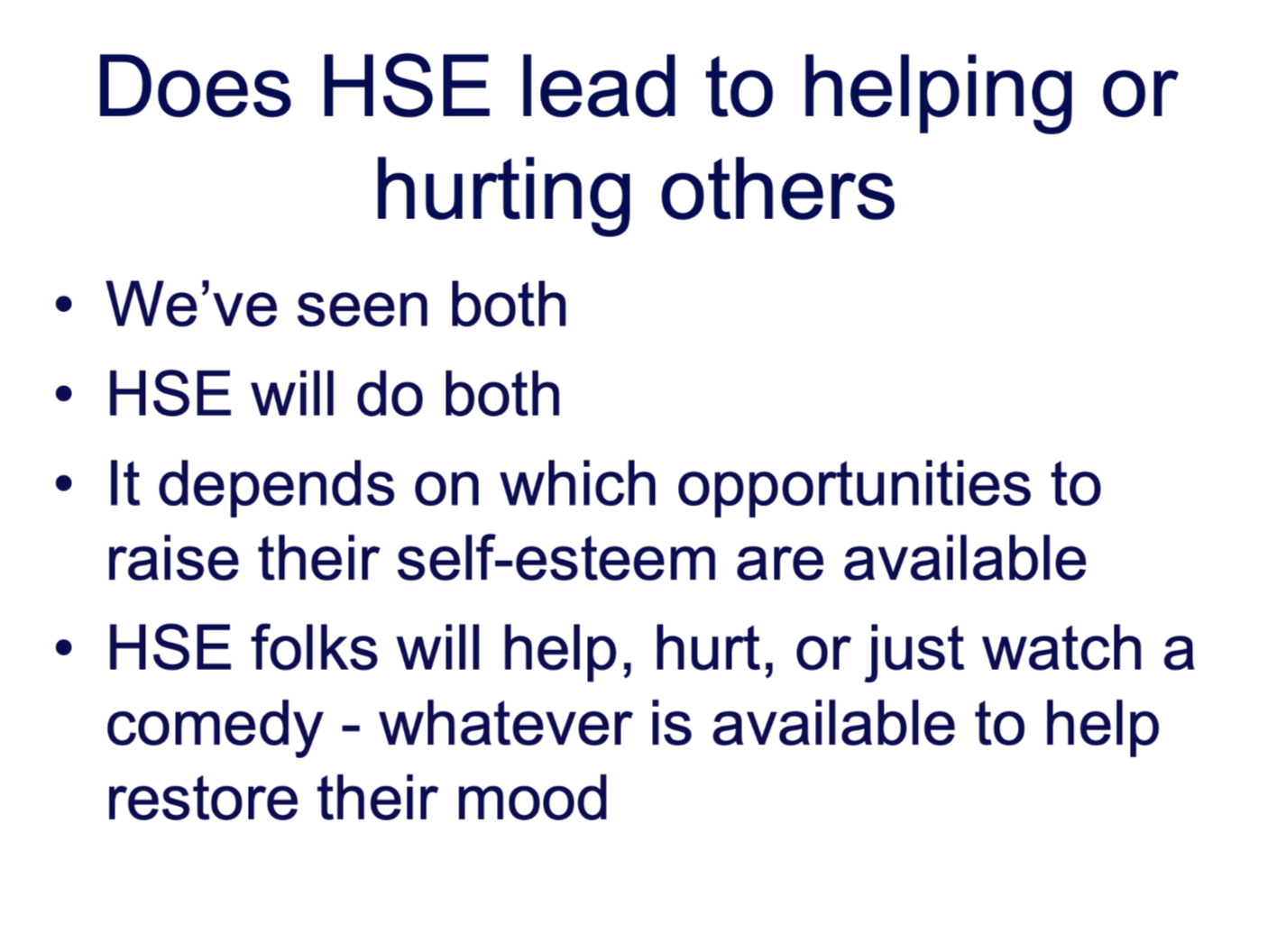
So after failure, they are motivated to repair mood and protect the self. Watching comedy is a way to restore emotional balance.
So the pattern is:
High self-esteem + failure → threat to positive self-view → mood repair → comedy becomes appealing
For low self-esteem people, failure may feel more consistent with their self-view:
“Yeah, this is what happens to me.”
So they may not automatically shift into repair mode. They may ruminate, withdraw, or stay in the negative emotion because it feels familiar or “deserved.”
Should we try to increase self-esteem?
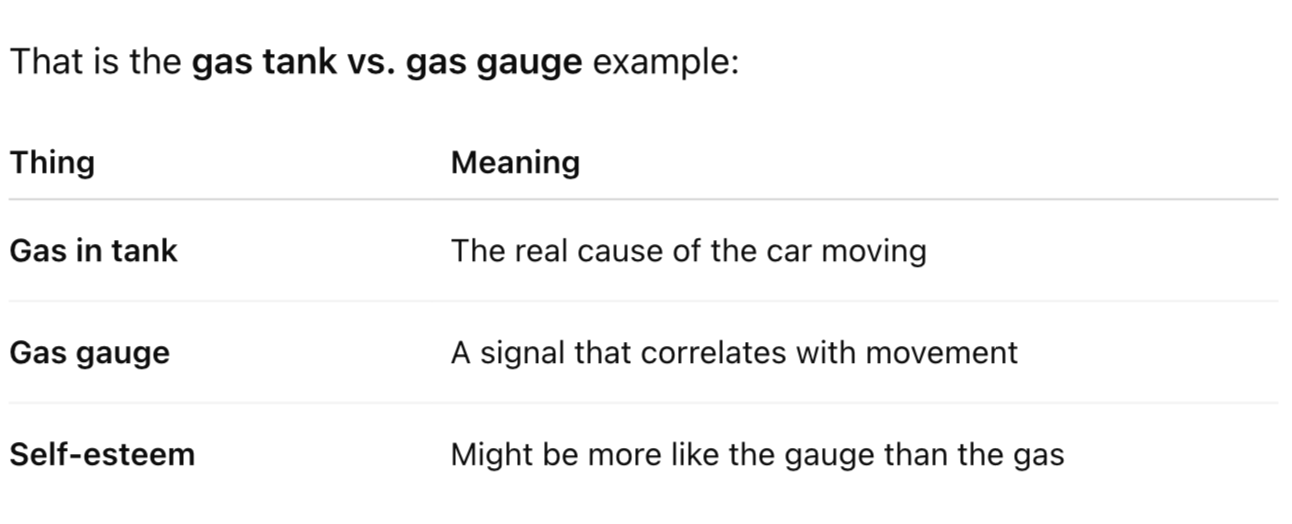
Not directly as the main goal. The better goal is to help people become more esteemable.
That means building real traits, behaviors, and capacities that make self-respect justified:
competence
resilience
honesty
emotional regulation
social skill
follow-through
self-compassion
actual achievement
repair after failure
So the better intervention is not:
“Convince yourself you’re amazing.”
It is:
“Build a life and self-concept that gives you real reasons to respect yourself.”
what are the downsides to HSE?
especially when it is inflated, fragile, or defensive.
High self-esteem can become bad when it turns into:
narcissism
defensiveness
inability to accept criticism
entitlement
blaming others for failure
avoiding accountability
But secure self-esteem is generally beneficial. The downsides mostly come from fragile high self-esteem, not stable self-worth.
So the clean answer is:
Do not inflate self-esteem artificially. Build stable self-worth through real competence, self-compassion, and esteemable behavior.
how do we know how good of a person we are and how good we are at different things?
we compare ourselves to others to find out where we stand
hard to know abolute sense withotu standard of comparison
BUT we CHOOSE our standard of comparison AKA referecne pt
the whole game is in who we choose
like choosing def of friend
we think the comparison is reaosnable but it may not be
reasonable person standard
social comparison allows us to learn about oursevles of FEEL GOOD abt oursevles (but rarely both)
HYP 5 = accuracy and likability motives
SOCIAL comparison theory (festinger)
upward comparisonss to someoen better = mmore informative(COGnitively), feel bad
what are they doing ebtter than me
downward = someone worse = feel good
what is SELF - Evaluation Maintenance theory? (abe Tesser)
developed by Abraham Tesser, explains how we protect our self-esteem when those around us—like friends or family—succeed. We typically respond to a close other's success through two primary mechanisms: reflection(sharing in their glory) and comparison (evaluating our own skills against theirs).
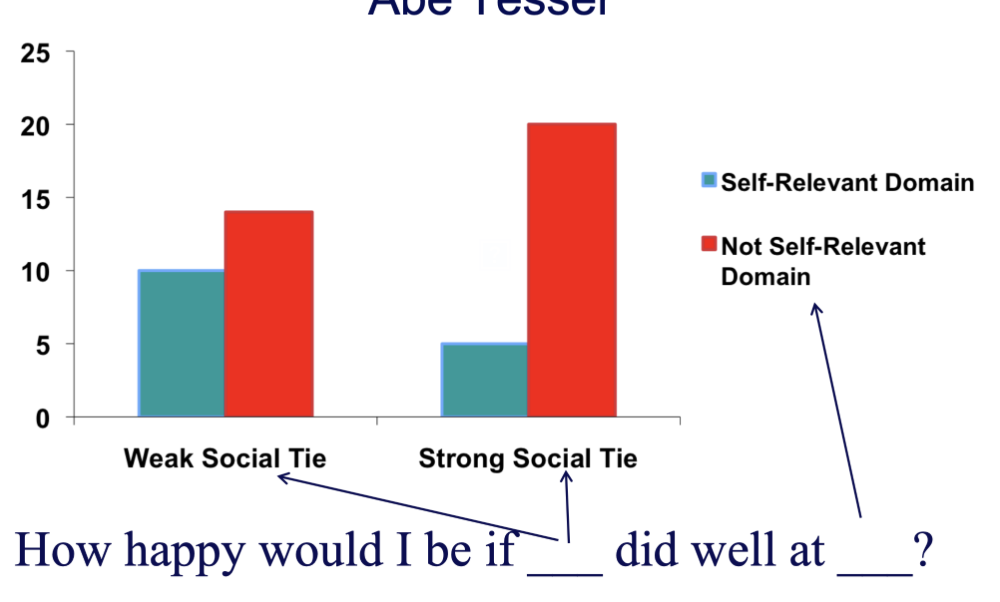
The theory posits that our emotional reaction depends on three factors: closeness (how near you are to the person), performance (how well they did), and relevance (how important their achievement is to your own identity)
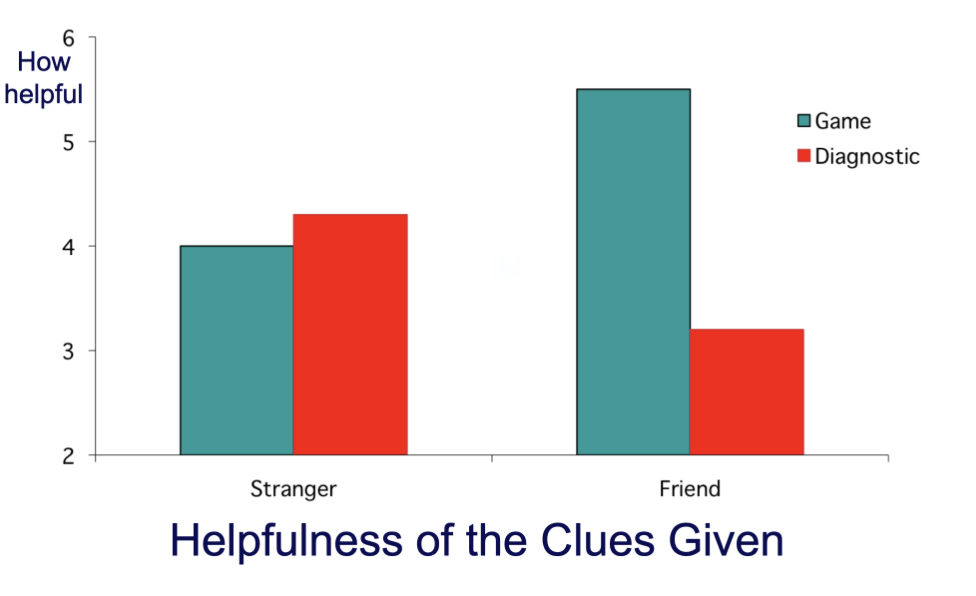
what are the 2 processes of Self esteem maintenance theroy?
Reflection: When a close other succeeds in an area that is not important to your own self-definition, you celebrate their success. You "bask in their reflected glory," boosting your own self-esteem
eg, sports team won + you identify w them, if not win…
Comparison: When a close other succeeds in an area that is very important to your self-worth, it threatens your ego. Comparing yourself to them can cause you to feel inadequate or envious.
How We Protect Our Self-Esteem
When the comparison process threatens our self-worth, the SEM theory states that we usually try to restore our ego using one of three coping mechanisms: [1, 2]
Distance: We may become less psychologically or socially close to the successful person to reduce the threat.
Devalue: We might convince ourselves that the specific skill or domain isn't really important after all.
Outperform: We may work harder to improve our own performance in an attempt to match or exceed the other person
what is the purpose of social feebdack?
besides social comparison, we also use social feedback to eval oursevles
reflected appraisals (MEAD)
reflected appraisals (MEAD)
the process of forming our self-concept based on how we believe others perceive and evaluate us. Also known as the "looking-glass self," this social psychology concept asserts that we use the reactions of people around us as a mirror to judge our own worth, abilities, and identity. [1, 2]
what do ppl prefer to hear about themselves?
mostly postive with occassional neg feedback
self enhancment theory
tell me im great no matter what the truth is
push for postivity
want to be liked by others (HYP 5)
Self-verification theroy
tlel me the truth - what i alr believe to be the truth
pushes for consistnecy
want to be accurately known by others (HYP5)
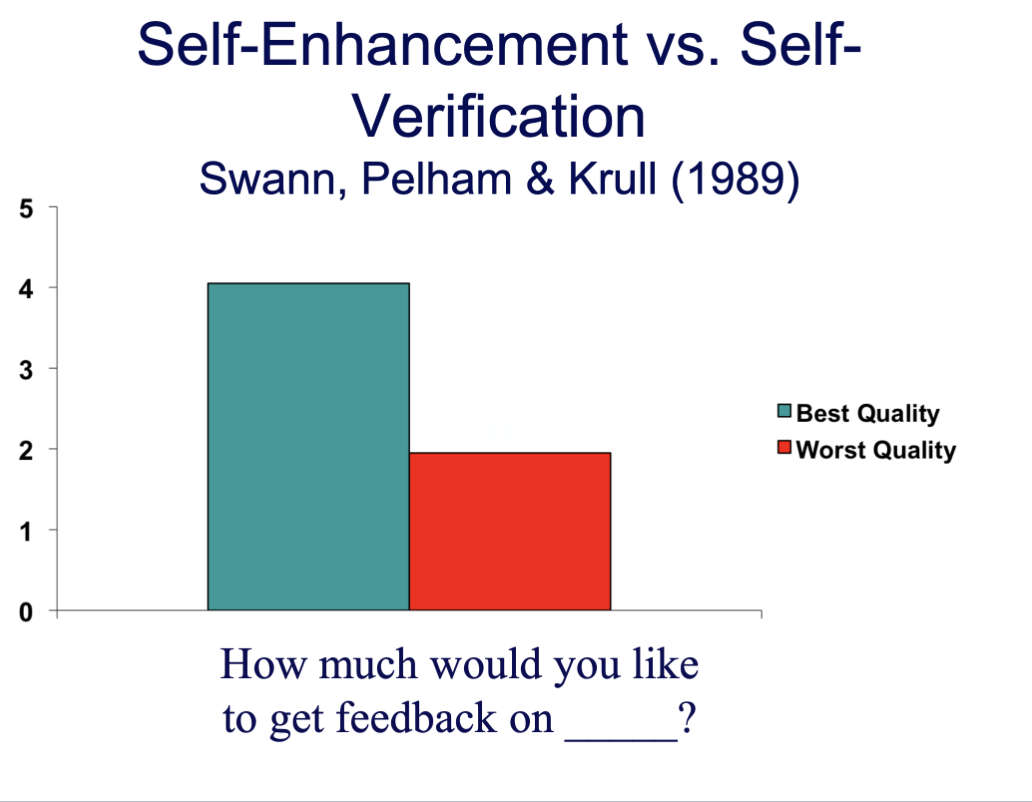
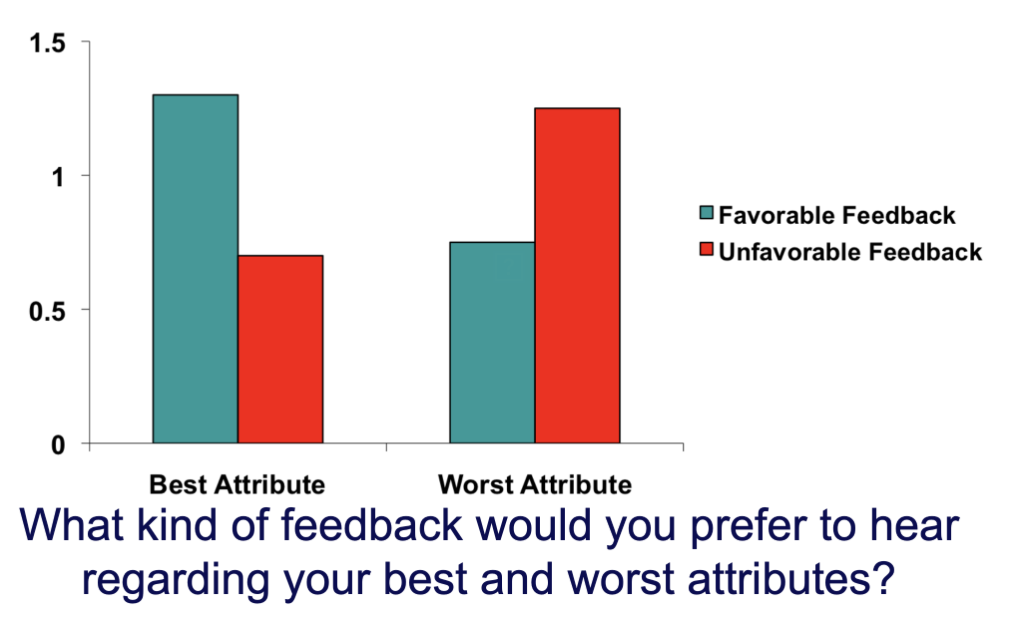
Studies related to self-enhancement vs self-verification theories
motivation to get certain kinds of feedback if you get to choose (pro enhancement)
motivation to get certain kinds of feedback if you dont get to choose (pro verification)
how much do you beleive different kinds of feedback (pro verification)
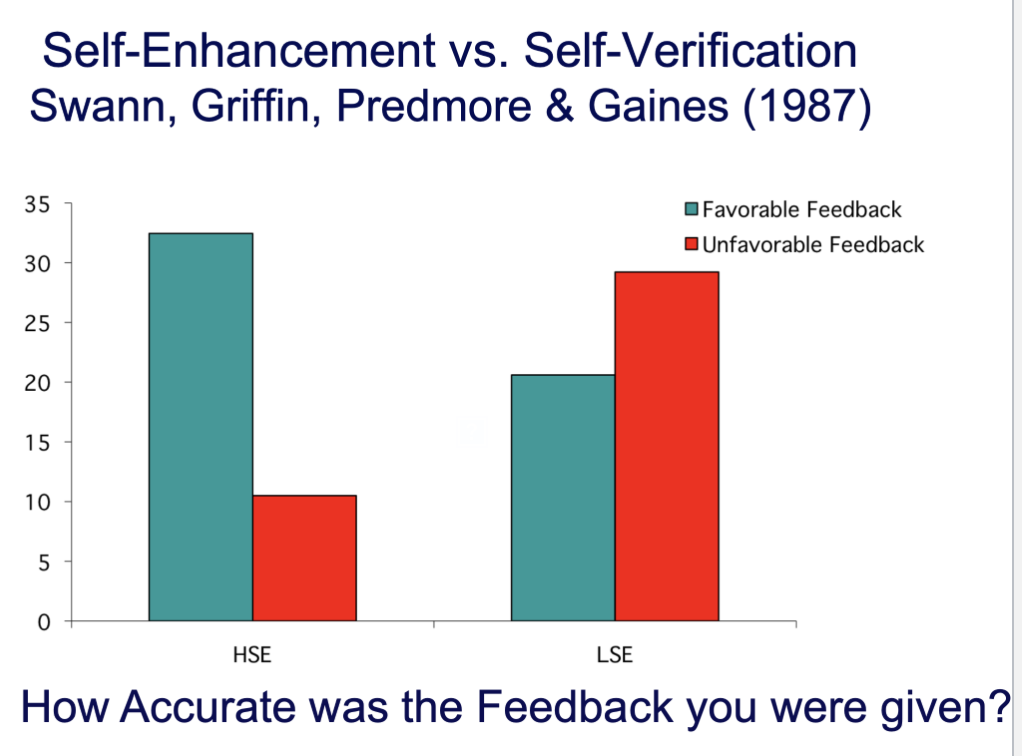
how do you feel after getting certain kinds of feedback? (pro enhnacment )
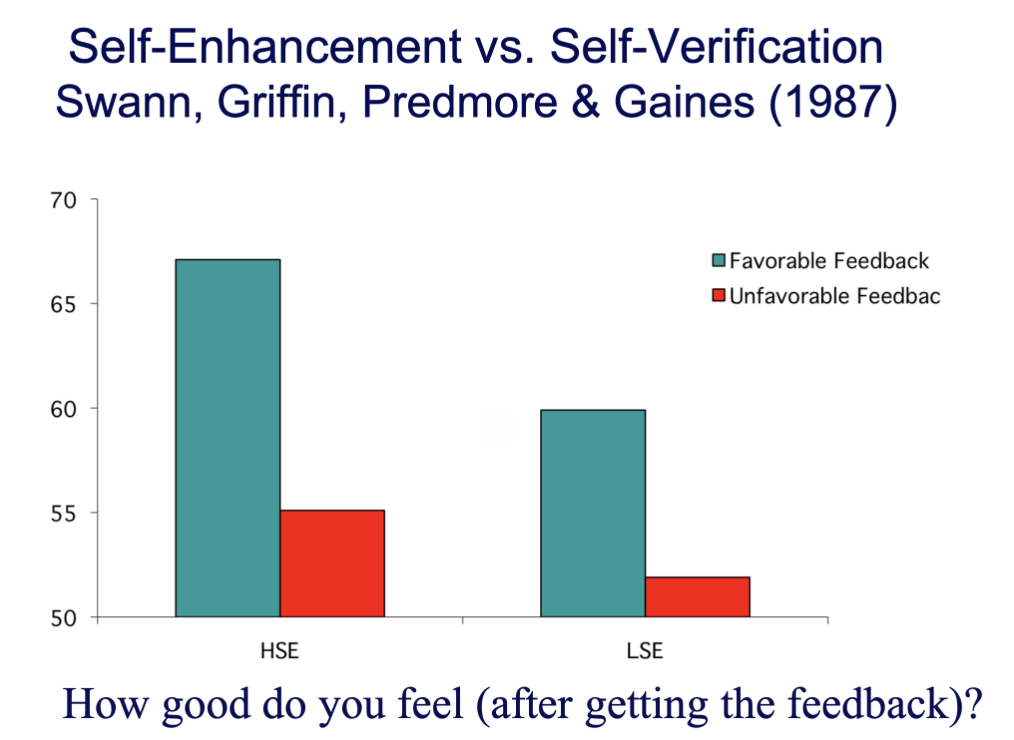
results interpretation for self-enhancement vs self-verification theories
if we get to choose, we want to hear about our good qualities and feel better when we do
self enhancmenet
drivien by affective goals and desire to be liked (HYP 5)
if we have to hear abot trait X, we want to hear what we blieve is true, but will feel badif that truth is negative
slef-veritication
driven by informational goals and desire to be known
still have affective consequences (negative)
we want to imporve
doesnt come up oftne (hopefully)
social comparison = a barrier to happiness
studies indicate that unhapy individuals are more affected by social comparison, leding to increased neg emotions
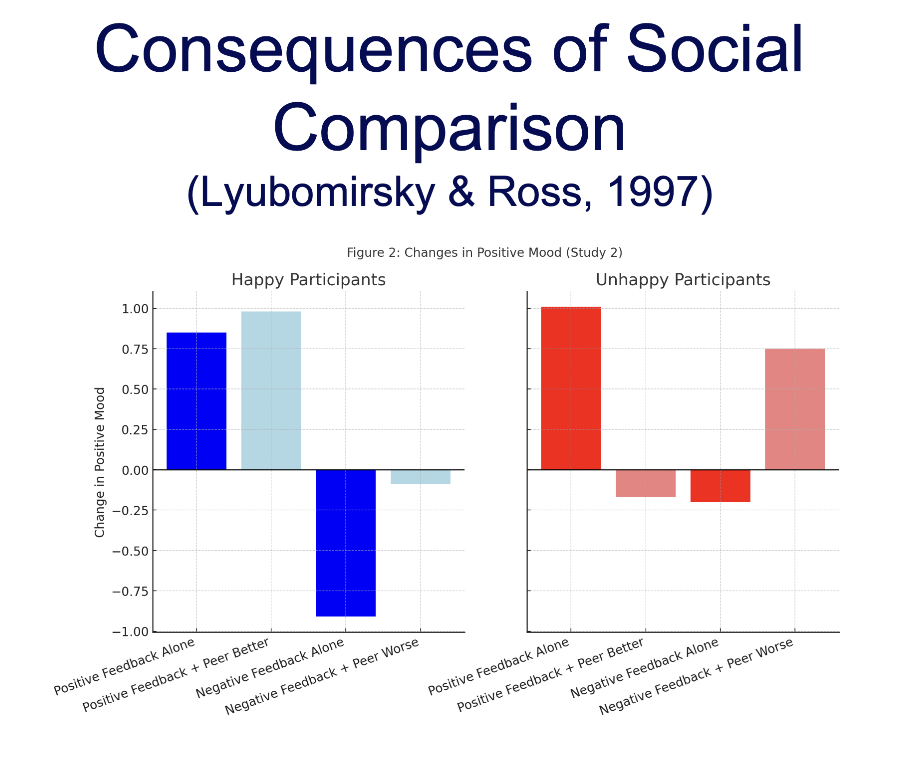
how can we enhance well-being by reducing social comparison?
set internal standards - focus on personal goals, not others
practice gratitude - appreciate what you have
be kind to others - acts of kindness improve well being
limit triggers - reduce exposure to comparison-heavy stis (social media)
stay mindful - be present and aware of your thoughts
like im envious of grace for being so mature and happy at such a young age…
rationalization
an unconscious psychological defense mechanism where a person invents logical, seemingly reasonable excuses to justify unacceptable behaviors, thoughts, or feelings. It protects the ego from guilt, shame, and anxiety by masking true, uncomfortable motivations with self-serving explanations
The Purpose: It reduces cognitive dissonance (the mental discomfort of acting against your own values) and preserves your positive self-image
it can seem inauthentic (like lying to yourself)
purpose - a need to feel (not be) consistent/authentic (HYP5)
how to do it
balance theory
Rationalization is a cognitive distortion that helps individuals justify or explain their behaviors, actions, or thoughts in a way that makes them seem more reasonable and acceptable. It is a defense mechanism to protect the ego from discomfort and guilt. By offering seemingly logical explanations, individuals can maintain a positive self-image and alleviate the cognitive dissonance that arises from conflicting thoughts or behaviors.
cogntive dissonance
the psychological tension or discomfort you feel when holding two contradictory beliefs, or when your actions conflict with your stated values. Because the human brain craves consistency, this clash creates mental stress that drives people to subconsciously justify, rationalize, or alter their behavior or beliefs to resolve it.
dissonance reduction
Change attitude or belief (the corporations are stealing form me too )
Justify or minimize conflict
Change beh (often cant do this)