BIOL 2160 EXAM 2 - CHAPTER 6
 Call Kai
 Learn
Learn Practice Test
 Spaced Repetition
 Match
Match Flashcards
 Knowt Play
1/142

There's no tags or description
Looks like no tags are added yet.
Name | Mastery | Learn | Test | Matching | Spaced | Call with Kai |
|---|
No analytics yet
Send a link to your students to track their progress
143 Terms
what is the first leading cause of death in the US?
heart disease
what is the second leading cause of death in US?
cancer (kills >600,000 people/year); causes ~20% of deaths in U.S. each year
what is cancer the result of?
genetic damage, that is often due to tumor-promoting chemicals, hormones, and sometimes viruses (Due to failure of cellular mechanisms that normally control cell division)
what can the genetic damaged result from?
from a mutation in 1 of 3 types of genes: proto-oncogenes , tumor-suppressor genes, and caretaker genes
what do Proto-oncogenes do?
normally promote cell division, but are changed into oncogenes by mutations that make the gene excessively active
what do Tumor-suppressor genes do?
normally restrain growth. Mutations cause inactivation of these genes, allowing excessive cell division to occur
what do caretaker genes do?
normally protect genome and are linked to cancer (proteins that fix mistakes in DNA)
what happens when caretaker genes are inactivated?
mutations in the genome accumulate
what are the genes that encode proteins that help regulate cell birth, cell death (apoptosis), and DNA damage repair?
proto-oncogenes, tumer-suppressor genes, and caretaker genes
what are carcinogens?
Environmental substances that induce cancer-causing mutations in cells.
what are some examples of carcinogens?
UV radiation (excessive sunlight), Tobacco, Asbestos, Red meat, Alcohol, Benzene, Lead, Nickel, etc….
what is HPV-Human papilloma virus?
a virus that causes warts on the skin, mouth, genitals, and larynx. Spread through physical contact with infected areas even if you use a condom
whats the ratio of people who already have HPV?
¾ sexually active people; Clears up naturally in 1 or 2 years in 90% of cases
what’s the ratio of women that get HPV in their lifetime?
80%
what’s the ratio of female students that get HPV during college?
60%
what causes ALL cervical cancers?
causes causes 90-98%
what is the relation between HPV and cervical cancer?
In about 10% of women, HPV remains in the cells of the cervix and increases the chances of cervical cancer, though most women with HPV infections will not develop cervical cancer
what factors increase an individual’s risk of contracting cervical cancer?
increasing age, smoking, and lowered immunity
what is Gardasil?
an HPV vaccine given in 3 injections over 6 months and targets the types of HPV that contribute to cervical cancer and genital warts
what’s the percentage of cervical cancer what will not be prevented by the vaccine?
about 30%
when will the HPV vaccine be effective?
Only effective if you have not been exposed to disease-causing HPV
what is the third most common type of cancer in women?
cervical cancer
how can HPV be reduced?
Can be detected by regular pap smears, which have reduced the death rate by 70%
what type of virus if HPV?
sexually-transmitted DNA virus
what type of virus is HIV?
RNA virus or retrovirus
what increases your chances of ALL cancer?
early detection
what is protein E5?
a viral protein made by HPV that’s only 44 amino acids long, spans the plasma membrane and forms a dimer or trimer which creates an ON switch for certain pathways
what does the E5 polypeptide do?
can form a stable complex with one endogenous receptor that is already on the membrane for PDGF (platelet-derived growth factor)
what is platelet derived growth factor (PDGF)?
a protein that plays a key role in angiogenesis and it causes all cell divisions by causing dimerization of PDGF receptors
what does E5 aggregate?
can aggregate 2 or more PDGF receptors together at the cell membrane
what is the result of E5 aggregating 2 or more PDGF receptors together at the cell membrane?
This receptor-dimerization is the exact same process that occurs when PDGF normally activates its receptor at the plasma membrane, causing sustained receptor activation and promotion of cell division
what does HPV code that inhibits p53 activity?
E6
what does E7 inhibit when HPV encodes it?
that inhibits Rb, retinoblastoma protein, which controls cell cycle. First tumor-suppressor gene to be discovered. Inactivated Rb protein is present in almost all cancer cells.
what does the current HPV vaccine composed of?
a capsid protein called L1, and is designed to trigger an immune response. It contains no virus, alive or dead
what does the current HPV vaccine protect us from?
against 4 strains of HPV: 6, 11, 16, and 18
what is Hepatitis (B) and (C) viruses?
cause liver infections that can develop into liver cancer. In the U.S., over 30% of liver cancers are related to Hep. B or C. Higher in other countries
how is Hepatitis (B) and (C) viruses spread?
through un-protected sexual contact, or exchange of blood like when you use dirty needles
where do mutations mostly occur in?
somatic cells or “normal” body cells (non-germ-line cells or gametes) and they aren’t usually passed on to offspring
where so some mutations occur in?
in germ-line cells and can be passed on to offspring
why do most cancers develop later in life?
Many years may be required to accumulate the multiple mutations that are necessary for tumor formation
what is the 8th most common form of cancer in women and the 5 leading cause of cancer death in women?
ovarian cancer
why is ovarian cancer so deadly?
because it normally isn’t detected until it is very progressed and by that time it has likely spread to other vital organs like lung, liver, and pancreas
what is ovulation?
process in which an ovarian follicle ruptures, and discharges an ovum (egg), that bursts through the wall of the ovary
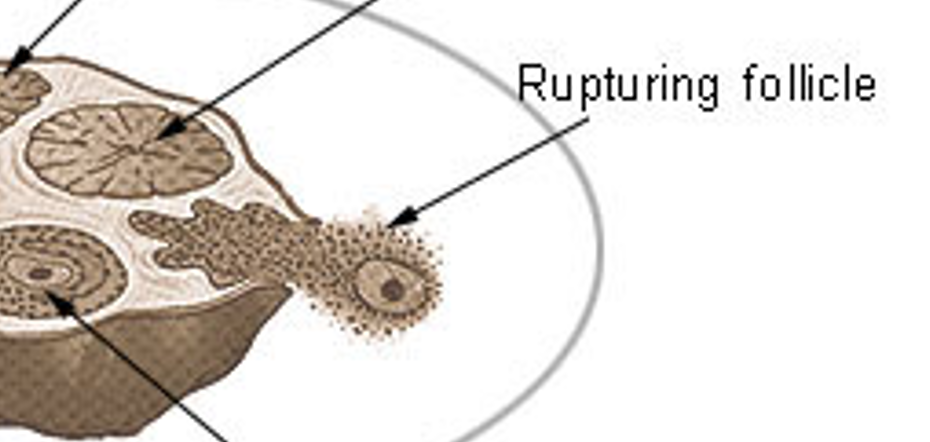
when does ovulation occur?
happens 2 weeks before menstruation
what must happened after the bursting ovum?
Upon release of the mature ovum (ovulation), cells on the surface of the ovary must divide to repair the hole caused by the bursting ovum
how does ovarian cancer happen?
If the cells repairing the hole caused the bursting ovum contain mutations in genes that encode vital cell-cycle-control proteins, then cell division will be excessive. Tumors will result.
what is Ortho Tri-cyclin?
The most commonly-used oral contraceptive, but is also taken to regulate monthly menstrual cycles by stabilizing the endometrium
how does Ortho Tri-cyclin work?
Usually a combination of varying levels of progestin and estrogen, hormones that prevent follicular development and inhibit ovulation, not menstruation hence why one still gets their period
what does no ovulation result in?
Without ovulation, no ovum is released, and damage to ovarian walls is prevented, eliminating the need for cell division
what happens when you take birth control longer?
the lower the risk of developing the disease
what is the percentage risk of ovarian cancer after taking the pill for 10 or more years?
based on Harvard and Oxford studies, it reduced as much as 50%
what’s the purpose of ovulation?
if pregnancy is desired, nothing else
what is oncogenesis?
the cancer-forming process from the result of an interplay between genetics and the environment
where do most cancers come from?
Most cancers are a result of genes being mutated by carcinogens, or by errors in the copying and repairing of DNA
what is a tumor?
A rapidly proliferating cell type that escapes normal growth restraints and stimulates the growth of vasculature to obtain oxygen
what conditions can cancer cells grow under?
the ability to grow under almost any conditions. They can also trigger the development of new blood vessels (capillaries) to receive a blood supply. This is called angiogenesis
what is metastasis?
A case in which cells from the primary tumor migrate to new sites where they can form secondary tumors. Complex process, and invasion of new tissues is non-random, depending on the nature of both the metastasizing cell and the invaded tissue.
what are most cancer deaths due to?
due to invasive, fast-growing metastasized tumors
what do tissues produce to become more resistant?
anti-proliferative factors, inhibitors of proteolytic enzymes, and anti angiogenesis factors
why do tumors require a blood supply to grow?
tumor cells are oxygen-starved and will grow new blood vessels and secrete growth factors if under attack by proteases
what do anti-proliferative factors do?
block cell division
what do inhibitors of proteolytic enzymes do?
block cancer cell proteases used to penetrate tissues
what do anti-angiogenesis factors do?
stop tumor cells from initiating the growth of blood vessels
what are the properties of transformed (cancer) cells?
changes in cell morphology, changes in membrane properties, growth control changes, secretion of plasminogen activator, cytoskeletal changes, and staining patterns differ
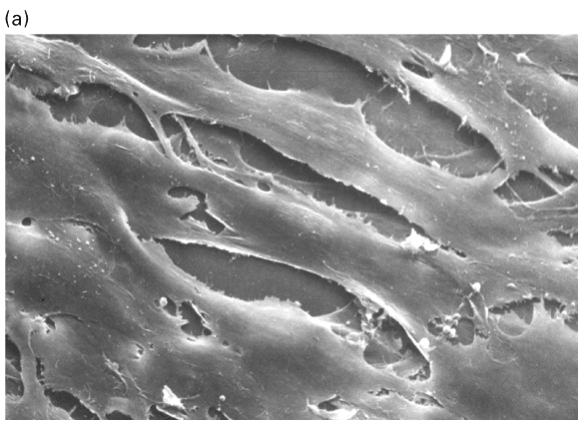
is this a normal or transformed cell?
normal; because of its one layer
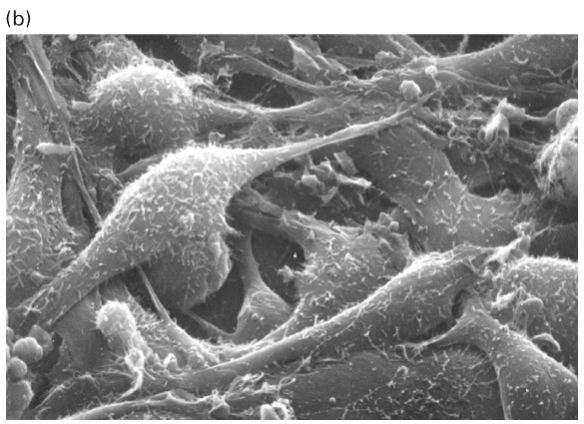
is this a normal or transformed cell?
transformed because of its high density and multi layers
what happens when there are changes in the membrane properties?
cell-to-cell interactions change (lack “contact inhibition” from not having gap junctions")
acquire the ability to grow unattached to the basal lamina
what happens there are growth control changes?
transformed cells have a reduced requirement for growth factors (ligand) (aka mitogen which normal cells need to grow, but cancer cells do not need)
what happens when the transformed cell secretes plasminogen activator?
breaks down basal lamina allow cells to break free and metastasize
what happens when cytoskeletal changes?
loss of actin (cytoskeletal protein) microfilaments allowing them to squeeze into much smaller spaces
why are staining patterns different?
due to hyper-active biosynthesis
ex: nucleoli are enlarged; Ribosomes are made in the nucleolus. Ribosomes are needed for protein synthesis. Cancer cells make a LOT of proteins. This is why the nucleolus is enlarged
what are enlarged nucleoli often used as?
used as prognostic indicators
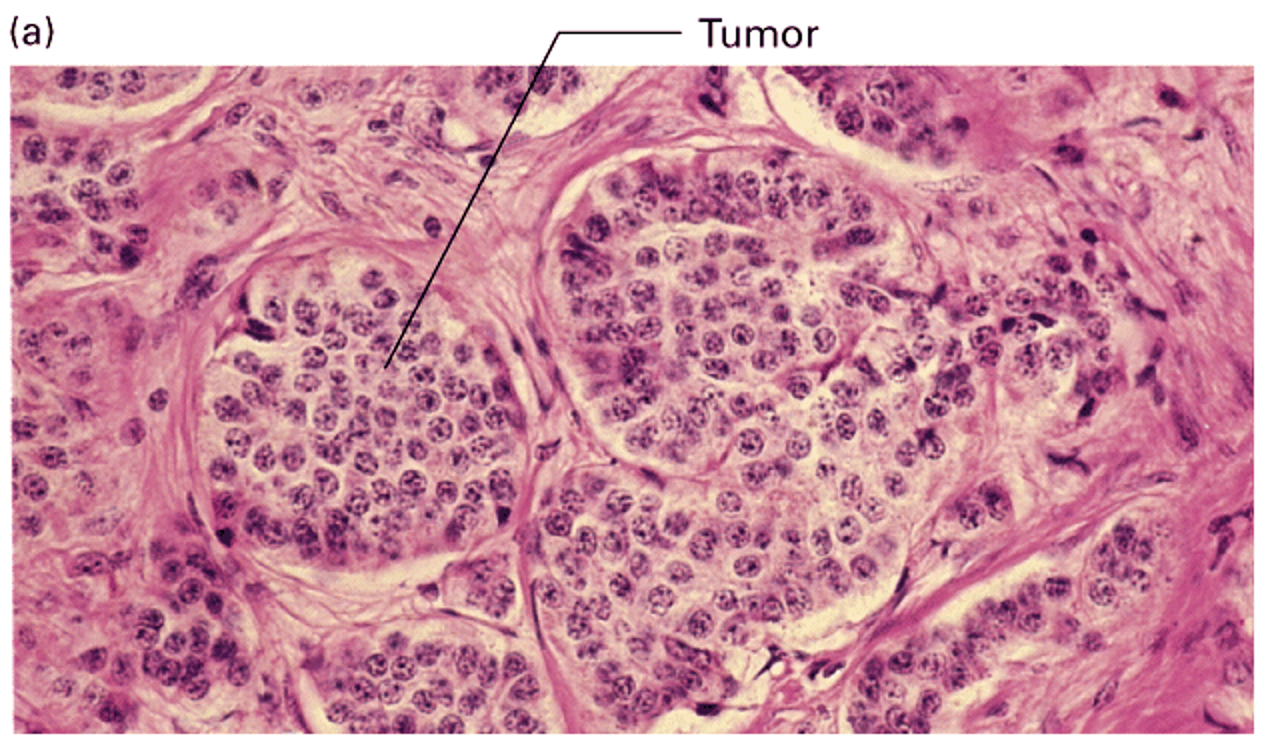
what was discovered from tumor cells in culture?
Discovered in an experiment using a cell line of mouse cells called 3T3 cells. Only grow when attached to the plastic surface of a culture dish, and grow at a low density. They stop growing when they touch other cells, results in a well-ordered mono-layer of 3T3 cells
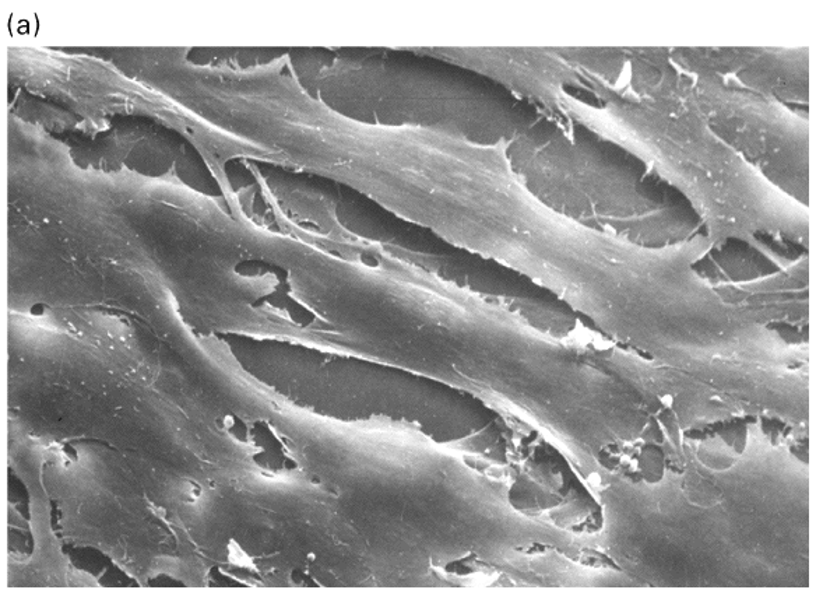
what did this display?
Normal mono-layer of Mouse 3T3 Cells
what is a classic experiment?
where it answered a huge question or it changed the way we thought about the question
what is an example of a classic experiment?
Genomic DNA from a human bladder carcinoma is added to the 3T3 cells; this experiment resulted in incorrect findings, but changes the way we thought about the problem → Focus cells now show many of the same characteristics of the original human cancer cells
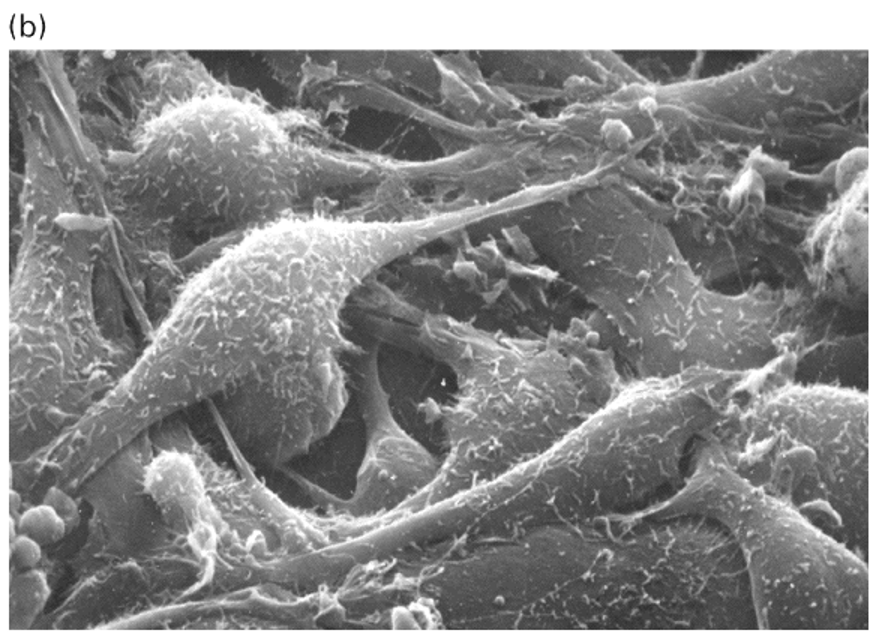
what does this show?
Transformed Mouse 3T3 Cells; now contain DNA from human bladder cells, began to appear very similar to human bladder cells
how was oncogene isolation achieved?
Took advantage of fact that humans have nearby repetitive DNA sequences (Alu elements) while mouse DNA do not
what were the result of oncogene isolation?
viral vectors showed fluorescence contained human Alu elements, i.e.: the DNA sequence responsible for transforming the 3T3 cells, i.e. the oncogene
what is a RasD oncogene?
breaks down GTP very slowly, so it remains in the “ON” position too long, sending a growth-promoting signal even in the absence of the growth factors normally needed to activate it
what does a normal Ras protein do?
functions in signal transduction pathways activated by growth factors and has GTPase activity; Toggles between GTP-bound “ON” state, and GDP-bound “OFF” state
how was RasD brought up?
The cloned segment contained a mutated version of the Ras gene and Glycine normally found in position 12 was replaced with a valine
what is an oncogene?
any gene that encodes a protein capable of transforming normal cells into cancer cells. i.e.: RasD
what is a proto-oncogene?
a normal cellular gene, that, upon mutation, can become an oncogene. i.e.: Ras
what was the problem with using cell culture vs. human tissues?
it focused on one type of cell such as 3T3 cells in the classic experiment but neglected the important cell cycle control proteins like p53 and p19ARF, resulting in an unreplicable experiment
where are Ras mutation found in for humans?
most human colon cancers, bladder cancers, etc
in human tissues, why is the loss of only Ras not sufficient for cancer?
because of looking for ONE oncogene, we started looking for SEVERAL
why are mutations in brain cell DNA less danerous than mutation in skin cell DNA?
Brain neurons don’t normally divide. So your one damaged cell just dies off.
Skin cells DO divide. So your one damaged cell can quickly become thousands.
what type of cell do most mutation in oncogenes to cause cancer have to be so that the mutation is passed on?
must occur in dividing cells
why are brain and muscle cancers rare conditions in adults?
Central nervous system neurons and muscle cells do not divide in adulthood. So these cancers are usually due to cancer cells that have metastasized from elsewhere, or, in the case of brain cancer, a non-neuronal cell called a glial cell that does divide.
what is angiogenesis?
Recruitment of new blood vessels is required for the growth of all tumors
what can the average tumor size can grow up to without blood?
average tumor mass can grow to be only ~ 2 mm in diamete
as new cells are dividing on the outside of the tumor mass, what is happening to the older tumor cells?
older tumor cells are dying within the tumor mass due to lack of nutrients
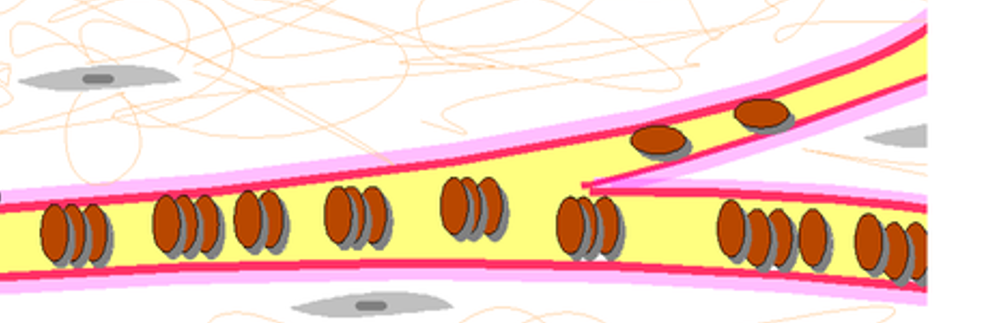
what must first happen for angiogenesis to occur?
Degradation of the basement membrane that surrounds a nearby capillary in order for these endothelial cells to break free and migrate elsewhere
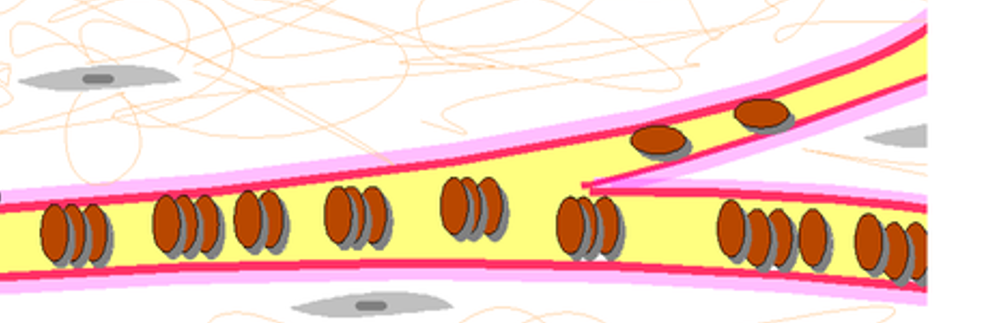
what do the endothelial cells go to after breaking free?
Migration and division of endothelial cells lining the capillary into the tumor.
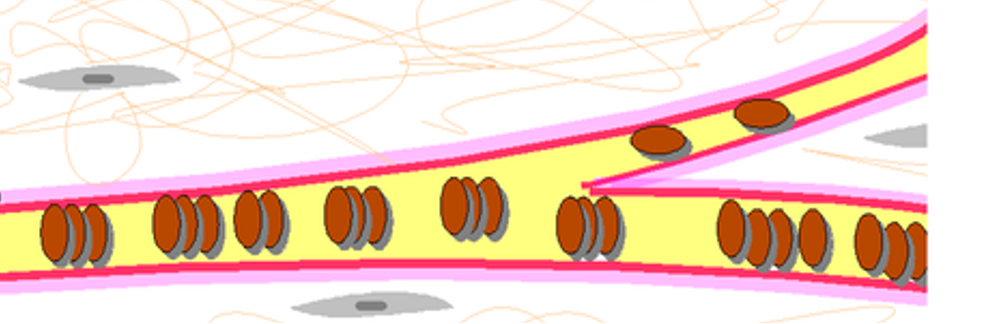
what is the final step og angiogenesis?
Formation of a new basement membrane around the new capillary
what growth factors are released from tumor cells for angiogenesis to occur?
Basic fibroblast growth factor (bFGF), Transforming growth factor α (TGFα), and Vascular endothelial growth factor (VEGF)
besides growth factors, how else can tumor cells cause angiogenesis?
some tumor cells induce surrounding normal cells to synthesize and secrete these growth factors
what is cancer incidence?
Cancer incidence should increase with age since it takes decades for the required multiple mutations to occur
what is the relationship between mutation rate and incidence of most cancer?
Assuming mutation rate is constant or a one-hit phenomenon, incidence of most cancers would be independent of age if only one mutation were required to transform a normal cell into a cancer cell