DT Test 1
 Call Kai
 Learn
Learn Practice Test
 Spaced Repetition
 Match
Match Flashcards
 Knowt Play
1/62

There's no tags or description
Looks like no tags are added yet.
Name | Mastery | Learn | Test | Matching | Spaced | Call with Kai |
|---|
No analytics yet
Send a link to your students to track their progress
63 Terms
(Floor) Plan
A horizontal 'cut' through a building or space taken at eye level
Shows how spaces relate to each other, how we move through the space, how furniture fits in the space, and the width and length of each space
Section
A vertical "cut" through a building or space. Shows how spaces connect to one another in the vertical dimension
or the y-axis.
Form and space
Form is the physical mass or object; space is the area around, between, and within forms. They work together to define architecture.
Tonal Value Chart
A scale showing the range from light to dark values used to create depth and contrast in drawings.
Four Characteristics of Form
Shape, Size, Color, and Texture
Primary Shapes
Circle, Square, and Triangle. These are the basic geometric forms that form the foundation for other shapes.
Lineweights
Variations in line thickness used to show importance, depth, hierarchy, and cut elements in drawings.
(Line weights) Thickest Line
Cut line
(Line weights) Thin line
Elevation line
(Line weights) Light line
Furniture, casework and fixtures
(Line weight) Dash line
Overhead elements
(Line weights) Dot line
Hidden elements
Subtractive Form
Created by removing portions from a larger mass
Additive Form
Created by adding volumes together
Characteristics of Summer Light
Higher in the sky, creating shorter shadows
Hot, direct light, sun overhead and long daylight hours
Characteristics of winter light
Sun is lower, creating longer shadows
Cold, more oblique, soft light and short daylight hours
How is drawing used as communication
A visual language used to communicate design ideas and spatial information
Reasons for drawing
Communication, exploration, documentation, problem-solving, and presentation of ideas
Concept Drawings
Quick sketches used to explore and communicate initial design ideas
What is a Line
A continuous mark defining edges or movement
What is a shape
Refers to the characteristic outline of a plane figure or the surface configuration of a volumetric form
Form = Solid, Positive
Form = solid/positive space
Form refers to the shape or configuration of a building or space
Space
Space = void/negative space
Sun Path
The apparent movement of the sun across the sky from east to west throughout the day
Order
The arrangement of elements according to recognizable patterns or principles that create unity and organization
Organizational Strategies
Centralized, Linear, Radial, Clustered, and Grid arrangements
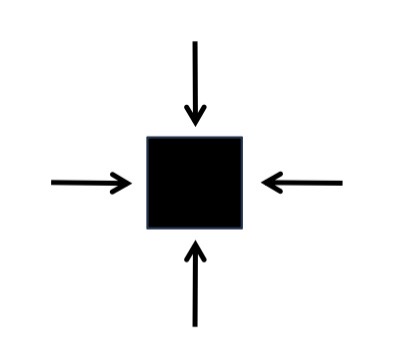
Centralized Form
A number of secondary forms clustered about a dominant, central parent-form
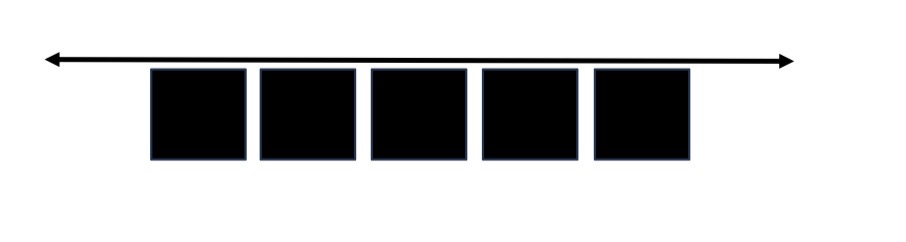
Linear Form
A series of forms arranged sequentially in a row.
Typically uses an axis to arrange spaces
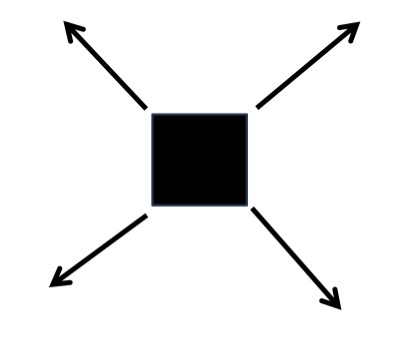
Radial Form
A composition of linear forms extending outward from a central form in a radial manner
Clustered Form
A collection of forms grouped together by proximity or the sharing a common visual trait.
Grid Form
A set of modular forms related and regulated by a three-dimensional grid
Scale Figures
Human figures added to drawings to indicate size and proportion
What does “Ma” mean
A Japanese concept referring to the meaningful space or interval between objects, events, or forms
Three Types of Artificial Light
Ambient, task, and accent
What is Ambient lighting
General lighting
Ceiling light
What is task lighting
For specific activities
Track lights, spotlights, desk
lamps
What is accent
Light that draws attention to particular objects, artwork etc
Three Types of Light
Direct, Indirect, and Diffuse
What is direct light
Comes straight from source
What is Indirect
Reflected
What is diffuse lighting
scattered evenly
Color Temperature
The perceived warmth or coolness of light measured in Kelvin (K). Lower K = warm, higher K = cool
Ordering Principles
Axis, Symmetry, Hierarchy, Datum, Rhythm, Repetition, and Transformation.
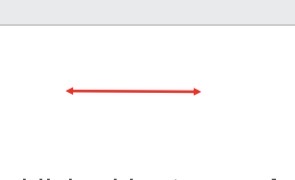
Axis
A line established by two points in space, about which forms and spaces can be arranged in a symmetrical or balanced
manner
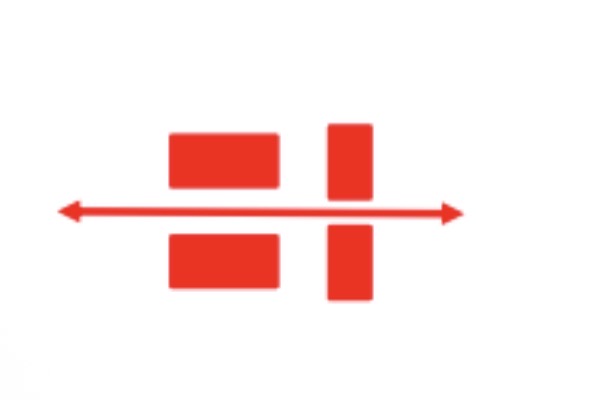
Symmetry
Established by two points; a symmetrical
condition requires the balanced arrangement of equivalent patterns of form and space on opposite sides of a dividing line or plane, or about a center or
axis.
Hierarchy
Degree of importance of these forms
and spaces
Rhythm
Fundamental notion of repetition as a
device to organize forms and spaces in architecture
Datum
It organizes a random pattern of elements through its regularity, continuity, and constant presence
Cardinal Directions and Light
North = consistent cool light
South = strongest sunlight
East = morning light
West = afternoon/evening light
Sun Path on a Site Plan
Shows the movement of the sun relative to the site to analyze daylight and shadows
Vanishing Point
The point where parallel lines appear to converge in perspective drawing
Horizon Line
Represents the viewer's eye level in a perspective drawing
Orthogonal/Vanishing Lines
Lines that recede toward a vanishing point in perspective drawings
One-Point vs. Two-Point Perspective
One-point uses one vanishing point; two-point uses two vanishing points for greater realism
Daylight
Specifically comes from the sun
Natural Light
Natural light includes sunlight and skylight
Chiaroscuro
The use of strong contrasts between light and dark to create depth and form
Vitruvius
Roman architect who established the principles of Firmitas (strength), Utilitas (function), and Venustas (beauty)
Orthographic Drawings
Accurate 2D representations of objects/buildings including plans, elevations, and sections
Cut Line
The line showing where an object or building is sliced in a section drawing; typically drawn with heavy line weight
Reflected ceiling plan
Similar to a floor plan, but instead of looking down at the floor, you look up at the ceiling
Allows designers to correlate lighting with furniture and spaces