IB ESS - Topic 3. Biodiversity
 Call Kai
 Learn
Learn Practice Test
 Spaced Repetition
 Match
Match Flashcards
 Knowt Play
1/83

There's no tags or description
Looks like no tags are added yet.
Name | Mastery | Learn | Test | Matching | Spaced | Call with Kai |
|---|
No analytics yet
Send a link to your students to track their progress
84 Terms
environmental pressures
the factors (abiotic or biotic) in an ecosystem which put pressure on an organism's survival and increase competition (whether inter-species or intra-species)
biodiversity
range/# of organisms found in a single place
richness of biodiversity vs. evenness of biodiversity
richness: # of species
evenness: if habitat has similar #s of each species
biodiversity is explored at the following levels:
species diversity, genetic diversity, and ecosystem (habitat) diversity
variation
the differences, either physical, phenotypic or genetic, between individuals of a species
species diversity
the variety of species within a given area, habitat, or region. includes # of species and # of individuals of each species
genetic diversity
the range of genetic variation present in a gene pool or population
habitat diversity
# of different habitats per unit area that a particular ecosystem/biome contains. if diversity inc. in habitat, it'll most likely lead to an inc. in the other 2.
Simpson's Diversity Index formula
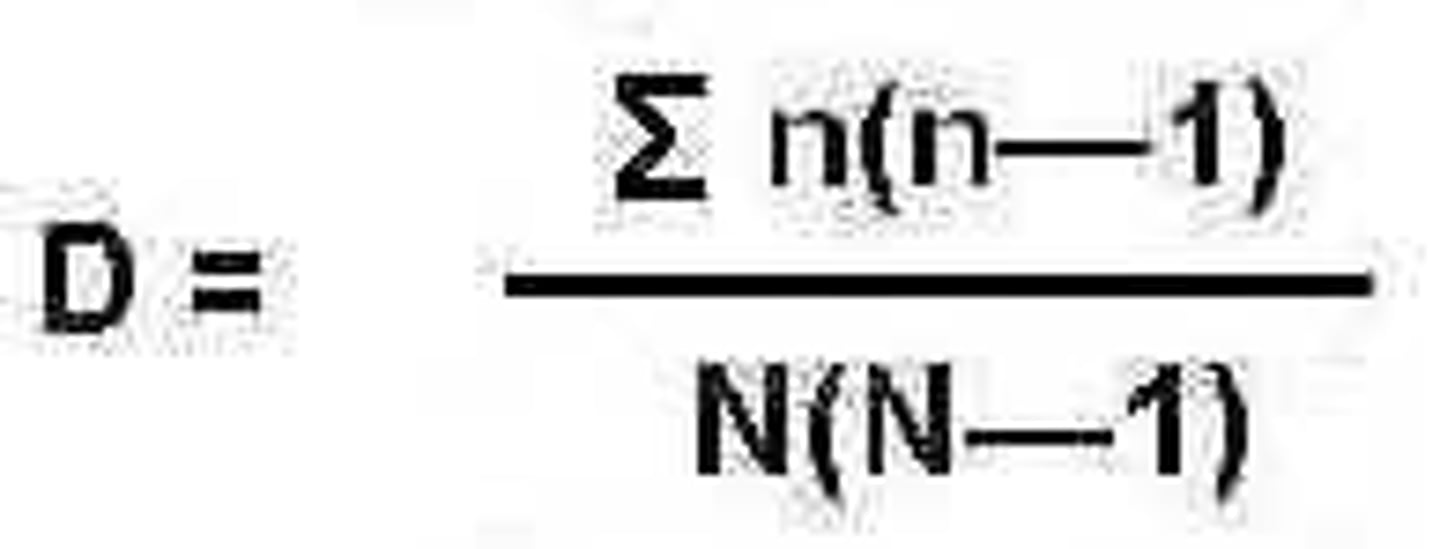
Simpson's Diversity Index lowest biodiversity:
1
origins of biodiversity
- came from evolutionary processes
- Darwin "On the Origin of Species" 1859 outlined natural selection, a theory of evolution of species
4 stages of natural selection
1. overproduction
2. genetic variation within that oversized population
3. struggle to survive; competing for resources
4. differential reproduction
random genetic mutations
the small differences which may occur in an organism as a result of reproduction - these small changes may add up to create variation
hotspots
an area of high biodiversity (which is under threat from human activities)
endemic species
the species which only occur in one specific area
speciation
the evolutionary process by which reproductively isolated biological populations evolve to become distinct species
evolution
the process by which a species may adapt to environmental pressures through natural selection of favourable variation caused by random genetic mutations - over thousands of generations
natural selection
the greater chance of passing on of genes by the best adapted organisms due to environmental pressures. Their favourable traits are then passed on to new generations
geographical isolation
the separation of populations of a single species - often leads to speciation if populations cannot interbreed for a very long time
physical barriers
e.g. a mountain, ocean or separation of lakes
land bridges
a connection between land masses - often as a result of lowering sea levels e.g. the Bering Straits
continental drift
the movement of the tectonic plates by around 1cm a year causing the change in shape and location of continents
lithosphere
the Earth's crust - the rocky part of Earth
Gondwana
the land mass made up of Africa, New Zealand, Australia and South America, India, Arabia and Antarctica millions of years ago - separated millions of years ago
background extinction rate
the natural rate of extinction of species - around 1 species per million species per year
extinction
the complete loss of a species from Earth - no more individuals of that species exist
mass extinctions
an extinction rate far greater than background extinction rate
factors that cause mass extinctions
tectonic plate movements
super-volcanic eruption
climate changes (drought, ice age, etc)
meteorite impact
Holocene extinction event
the 6th mass extinction occurring for the last 10,000 years, however, much faster in the last 100 years - generally agreed to be as a result of human activity
5 major causes of species decline
habitat destruction/degradation/fragmentation
invasive species
-pollution
-human population growth
-overexploitation
characteristics of species vulnerable to extinction
K-strategist, specialized niche, feeds at high trophic level, rare, commercially valuable
critically endangered species ex.
tiger
extinct species ex.
dodo
recovering species ex.
bald eagle
weedy species
the species (generally plant or animal) which are able to survive the environments we create e.g. urban rats, domesticated animals
Living Planet Report
a report produced by the Worldwide Fund for Nature (WWF) creates on the state of the world's ecosystems
conservation
the act of preserving nature - attempting to save habitats, species and biodiversity in general
approaches to conservation
habitat conservation
species-based conservation
mixed approach
Species based conservation
pros/cons
focuses on conserving high profile, charismatic species to catch public interest
pro: saving a species means preserving its habitat, benefiting all the other organisms in that habitat
con: favors charismatic organisms, less successful in saving less famous species. also a species can be preserved in zoo, not preserving the habitat
habitat conservation (protected area) criteria
edge effects: edge may have different abiotic factors attracting species not found deeper in the reserve.
size: 1 large > several small (so we can have large pops and more biodiversity and protect large vertebrates/top carnivores, also less edge effects)
shape: circle = less edge effects and poaching (harder to get to the center)
buffer zone: minimizes disturbance
close>isolated
clumped>spaced out to allow dispersion and recolonization
corridors: allows migration
2 approaches to biodiversity conservation
in situ (within habitat)
ex situ (outside habitat)
in situ conservation + ex.
within habitat
protects the plants and animals
ex. national parks, sanctuaries, reserves
ex situ conservation ex.
gene banks, seed banks, zoos, botanical gardens, etc.
pros/cons of zoos (ex situ)
pros:
education, controlled environment, genetic monitoring, improved
protected area ex.
Costa Rica (successful~)
2/3
the proportion of living species which are found in tropical rainforests
threats to tropical biomes
thin, nutrient poor soil; difficult to re-grow once cleared
etc....
current extinction rates
approx. 100 species per million species per year
ecosystem complexity
creates stability and resilience to change in an ecosystem - there are many pathways for energy flow
limiting factors
environmental conditions that limit the growth, abundance, or distribution of an organism or a population of organisms in an ecosystem - when there are few of these, biodiversity is likely to be high (and vice versa)
inertia
the ability of an ecosystem to resist change and maintain equilibrium when subjected to a disruptive force
natural hazards
naturally occurring events which may have a negative impact on the environment
habitat loss
the major cause of loss of biodiversity
habitat fragmentation
when a large area of habitat is broken into many smaller areas, often physically divided by roads, towns, factories, power lines etc - leads to the loss of biodiversity
overexploitation
the overuse of a resource to the point that is has a negative impact on the ecosystem e.g. deforestation
introduction of non-native species
when a species which is not naturally occurring in an ecosystem is introduced and may out-compete the native species - this may lead to a loss of biodiversity e.g. rabbits, cane toads, red foxes, camels in Australia
lungs of the Earth
rainforests - they are called this because they are thought to produce around 40% of the oxygen that animals breath
low genetic diversity
caused by small populations or declining diversity - makes a species prone to extinction as they may not be able to adapt to change
low population density
some species need a large area to hunt - if there are only a few organisms over a large territory this may make them prone to extinction, especially if habitats become fragmented
low reproductive potential
reproducing slowly and/or infrequently - this makes a species prone to extinction as it may take a long time for a population to recover its numbers
seasonal migration
the movement between different areas at different seasons - this makes a species prone to extinction as they rely on more than one habitat - if one is destroyed, they will not survive
poor dispersers
a species which cannot move easily to new habitats - this makes them prone to extinction - for example plants which rely on a slow dispersal of seeds, flightless birds of New Zealand
specialised feeders
a species which requires a specific food and cannot eat others e.g. giant pandas eat bamboo shoots, koalas eat eucalyptus leaves - this makes them prone to extinction if their food source becomes scarse
minimum viable population size
the lowest number of individuals of a species needed for a population to be able to recover - if a population is lower than this number, they may become extinct
govt. vs. non-govt. methods of biodiversity conservation
media:
- g: media liaison officers prepare + read written statements
- ng: use footage to gain attention
speed:
- g: usually slow, depends on consensus
- ng: can be fast
political diplomatic constraints:
- g: considerable; often hindered by political disagreement, ESPECIALLY if intl.
- ng: unaffected; can even be illegal
enforceability:
- g: agreements + laws can lead to proseceution
- ng: no legal power; just uses persuasion and public opinion to pressure govts.
IUCN
The International Union for the Conservation of Nature and Natural resources - often known as the World Conservation Union
made up of government agencies, states, non-governmental organisations (NGOs) and scientists and experts - their goal is to conserve nature and increase sustainability of resource use
Outline, giving reasons, two factors used to determine a species' Red List conservation status.
population size: population must be large enough for genetic diversity so population remains viable
quality of habitat: even if a species is not directly under threat, if its habitat is being reduced/degraded this will indirectly have an effect on the species;
UNEP
United Nations Environmental Program
Explain how human actions can reduce species diversity in two named ecosystems you have studied.
modern agribusiness in temperate grasslands of Prairies, USA:
pesticides can kill all insect species not just the pests being targeted
cyanide fishing in tropical waters off the Philippines:
reefs are biological hotspots, cyanide kills many species directly
Evaluate the importance of species-based conservation and protected areas in the preservation of biodiversity for future generations.
species-based conservation:
can successfully preserve a species in zoos, but high maintenance costs in zoos.
protected areas:
protects the whole ecosystem/interrelationship so long-term survival is more likely, but requires sufficient funding/protection to ensure not disturbed
Explain how human wellbeing is threatened by the loss of biodiversity.
more diverse environment = more likely to have more resources
areas of high diversity are more aesthetically pleasing than areas of low diversity, thus better places to live
low biodiversity reflects poor environmental conditions
Evaluate the role of local support, government agencies and research in the protection of a named protected area you have studied.
Costa Rica.
local support: their economic future and the future of the park are linked
govt:
punish poachers
research:
identifies new hazards and new goals;
Evaluate species based conservation as an approach for preserving biodiversity and suggest why trophy hunting (i.e. hunting animals for sport) may represent an acceptable method of achieving this goal.
species based conservation:
good because it concentrates on one or two key species, but may result in a species being conserved artificially outside its habitat, thus the organism and not the habitat it belongs in is protected.
trophy hunting:
managing habitat for "game" may have benefits for many other species
Discuss the causes and timing of past extinction episodes within the fossil record.
Describe the case history of one species that is endangered and one species that was endangered but has now been successfully removed from the endangered list.
tiger (endangered)
Endangered because of habitat (forest) loss due to agriculture
Loss of food source as traditional food source is being used by humans
Hunting for hides, trophies, medicine
Destroyed because regarded as a nuisance / pest
Ecological role is as a top carnivore
Loss would lead to an increase in herbivorous mammals
Ethical issues surrounding loss (rights of future generations, right of species)
Human guilt of allowing this to happen
Crocodile (now removed from endangered list)
Was endangered due to excessive hunting for skins, meat & trophies
And due to threats to humans & livestock
And due to habitat degradation (loss of water quality)
Ecological role is top carnivore
Loss would lead to imbalance in food pyramid
No longer endangered because of education (no longer seen as 'evil')
Ban on hunting
Controlled culling / hunting of certain crocodile species now being considered
Evaluate the strengths and limitations of zoos in conserving endangered species and justify your personal viewpoint.
Arguments for Zoos
Individual organisms are protected in a controlled environment
Education of public through visits may make them more likely to support conservation campaigns
Genetic monitoring can take place
Captive breeding enables higher rates of reproductive success
Number of offspring surviving adulthood is higher so species numbers increase more effectively
Studying species so understanding improves, helping management outside zoos
Arguments against Zoos
Ethical arguments against keeping animals in captivity for profit
Conserving species is just used as an excuse
Poor conditions or treatment in zoos leading to physiological and psychological problems for animals
Captive animals unable to adapt to life back in wild
Small genetic pool
Personal justification (needs to be more than just arguments for or against)
CITES
Convention on International Trade in Endangered Species
UNDP
United Nations Development Program
WWF
World Wide Fund for Nature
WRI
World Resource Institute
IGO
Intergovernmental organizations
GO
Governmental organizations
NGO
Non-govedrnmental organizations
large body
due to the 10% rule, it is much more difficult for big organisms to find enough food - this makes them prone to extinction e.g. wolves, tigers