bio lab final
 Call Kai
 Learn
Learn Practice Test
 Spaced Repetition
 Match
Match Flashcards
 Knowt Play
1/113

There's no tags or description
Looks like no tags are added yet.
Name | Mastery | Learn | Test | Matching | Spaced | Call with Kai |
|---|
No analytics yet
Send a link to your students to track their progress
114 Terms
moss
What is the common name for bryophyta?
yes
Do the bryophyta produce spores?
no
Do bryophyta have free-living sporophytes?
mitosis
Do bryophyta have gametophytes that develop by mitosis or meiosis?
1n
What is the ploidy (# of sets of chromosomes) in the bryophyta gametophyte?
mitosis
Are gametes in bryophyta produced by mitosis or meiosis?
archegonia
What is the structure where the eggs are produced in bryophyta?
1n
What is the egg ploidy in bryophyta?
anteridia
What is the structure where sperm are produced in bryophyta?
1n
What is sperm ploidy for bryophyta?
In the protective socket of the archegonial cell
Where is the zygote formed in bryophyta?
2n
What is the zygote ploidy for bryophyta?
mitosis
Does the sporophyte develop by mitosis or meiosis in bryophyta?
2n
Sporophyte ploidy for bryophyta?
capsule
Structure where spores are produced for bryophyta?
meiosis
Spores produced by mitosis or meiosis in bryophyta?
1n
Spore ploidy in bryophyta?
ferns & horsetails
Common name for Pterophyta / monilophyta?
yes
Do Pterophyta / monilophyta produce spores?
yes
Do Pterophyta / monilophyta have free-living gametophytes?
yes
Do Pterophyta / monilophyta have free-living sporophyte?
mitosis
Are gametophytes in Pterophyta / monilophyta developed by mitosis or meiosis?
1n
Gametophyte ploidy for Pterophyta / monilophyta?
mitosis
Pterophyta / monilophyta gametes produced by mitosis or meiosis?
archegonia
Structure where eggs produced in Pterophyta / monilophyta?
1n
Egg ploidy in Pterophyta / monilophyta?
artheridia
Structure were sperm are produced in Pterophyta / monilophyta?
1n
Sperm ploidy for Pterophyta / monilophyta?
archegonial canal
Where is Pterophyta / monilophyta zygote formed?
2n
Zygote ploidy in Pterophyta / monilophyta?
mitosis
Pterophyta / monilophyta sporophyte developed by mitosis or meiosis?
2n
Sporophyte ploidy in Pterophyta / monilophyta?
sporagnium
Structure were spore produced in Pterophyta / monilophyta?
meiosis
Spores produced by mitosis or meiosis in Pterophyta / monilophyta?
1n
Spore ploidy in Pterophyta / monilophyta?
roots - allows the plant to gain access to minerals & water in soil that wouldn’t be reachable otherwise
lignin - allows the plant to be supported against the force of gravity
vascular tissue - can transport the water & minerals found in the ground throughout the plant body
List three characteristics of the ferns and fern allies studied in this lab topic that are adaptations to living in a terrestrial environment not seen in the liverworts and mosses. Briefly explain how each enhances the chances of the plant surviving.
This will not work because these parts of the plant responsible for sperm & egg formation do not use meiosis, they use mitosis.
A person interested in studying crossing-over during meiosis in ferns prepared microscope slides of an archegonium and antheridium at different stages of development. Why will this study fail?
Fern spore - 9 chromosomes
fern zygote - 18 chromosomes
fern leaf - 18 chromosomes
moss spore - 9 chromosomes
moss zygote - 18 chromosomes
moss leaf - 9 chromosomes
A species of fern has a diploid number of chromosomes equal to 18. How many chromosomes would you expect to find in a spore? In a zygote? In a cell from a leaf? What would you expect if the species was a moss?
Fern sporophyte

Moss antheredial head

Moss archegonial head
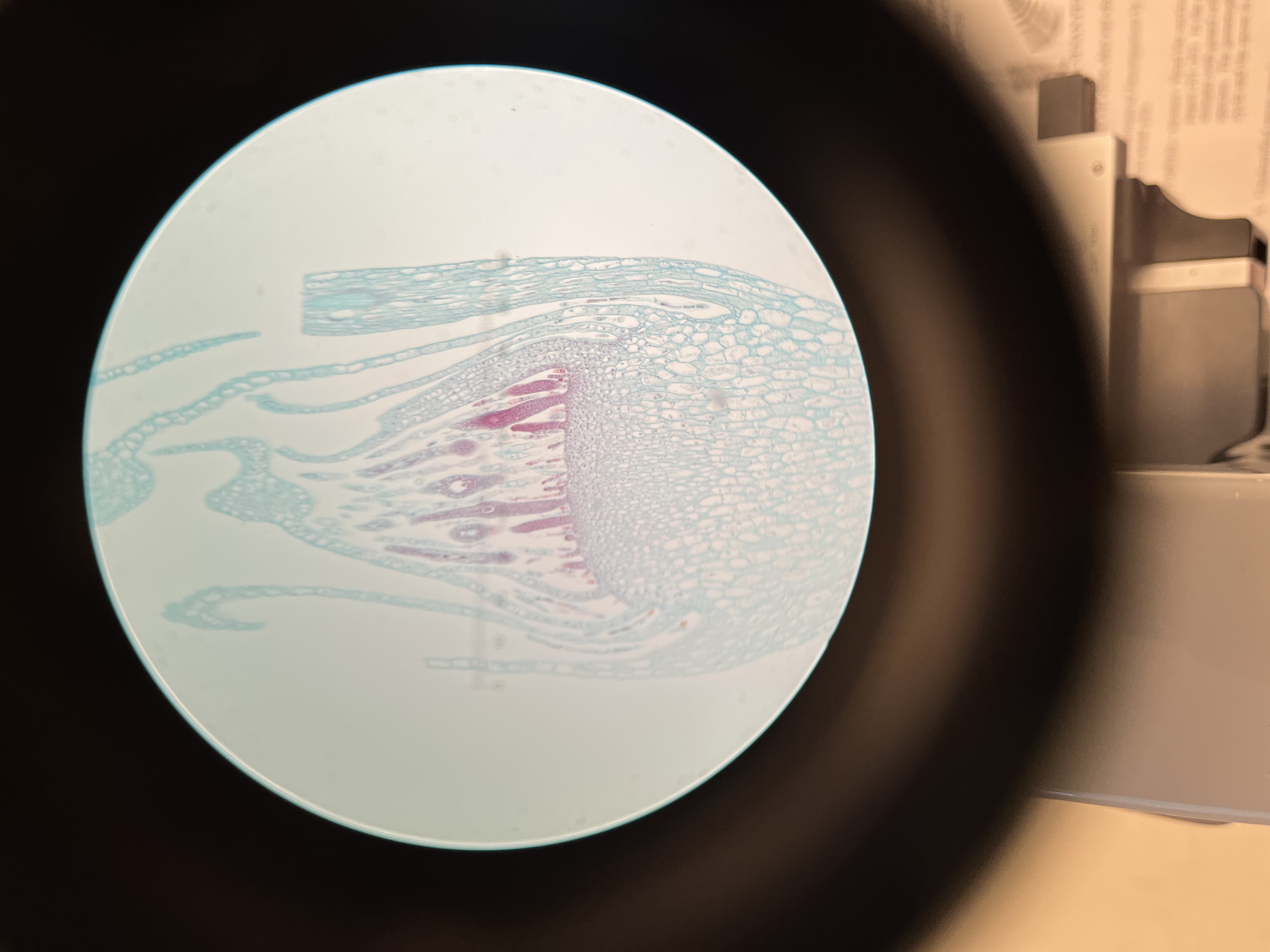
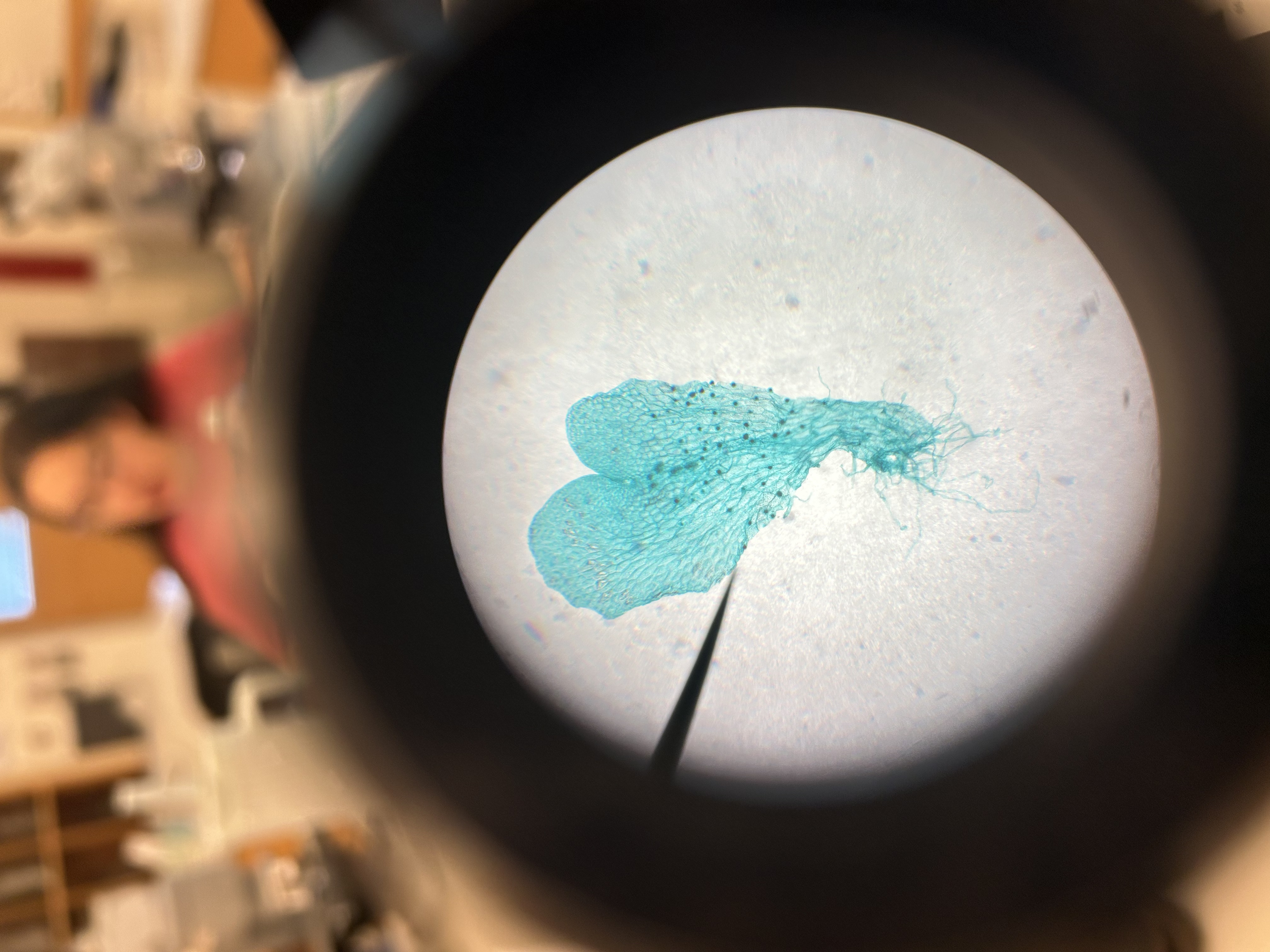
Fern pathallus
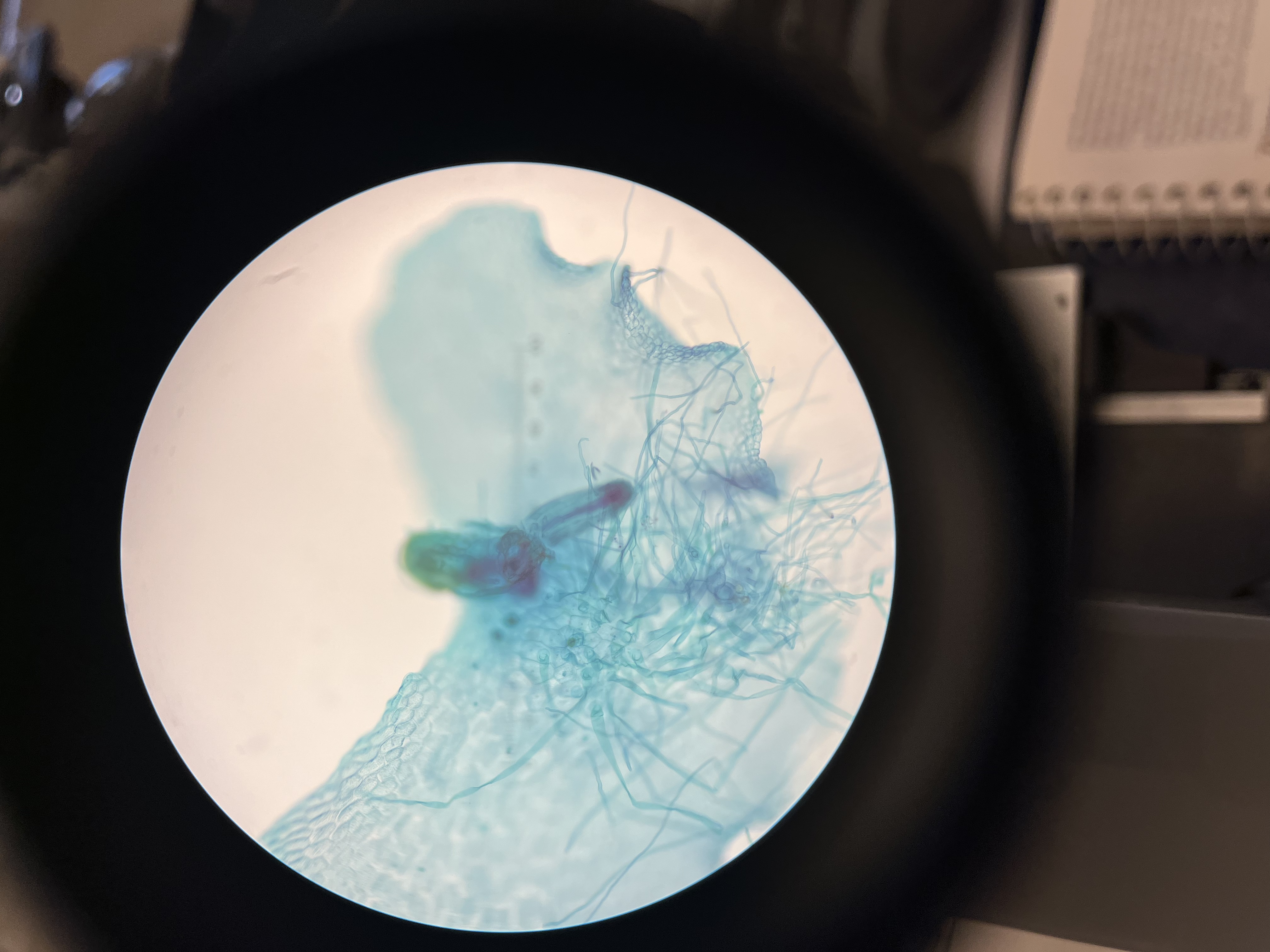
Young fern sporophyte growing out of pallathus
fungi are composed of hyphae
they are absorptive heterotrophs
they are composed of cell walls made of chitin
their life cycle only had one component that is diploid
Fungi are not assigned male or female but instead a charge
What makes a fungus different from a plant or an animal? Mention at least five characteristics.
Chytridiomycota
aquatic species
produces both haploid & diploid nuclei by mitosis
Ascomycota
contains sacs that have spores & are the site of sexual reproduction
Basidiomycota
“club fungi” - big decomposers of wood lignin
contains the “basidium”
List the distinguishing characteristics of the Chytridiomycota, Ascomycota, and Basidiomycota studied in this lab.
I would see if the organism had a lichen-like structure first (foliose, crustose, fruticose). Then, under the microscope, I would see if there was any interaction between a plant root & fungi.
If you were given a sample to identify, what characteristics would you use to determine if it was a lichen or a pure fungus?
fungal spore (1n) germinates via mitosis to form a hyphae
hyphae (1n) undergo mitosis to fuse cytoplasm (result in 1n)
nuclei join together to create a 2n zygote via mitosis
nuclei divide via meiosis to form 4 haploid spores
In general terms, describe a sexual life cycle in fungi. What stages are haploid and which ones are diploid? When is nuclear division by mitosis and when by meiosis?
These two organisms can often be found together due to a mycorrhizae relationship between the fungi & the plant
The Suillus lakei mushroom is commonly found growing around the base of conifers, especially the Douglas fir. Offer a possible explanation of this association of a fungus and plant.
zygosporangium of bread mold
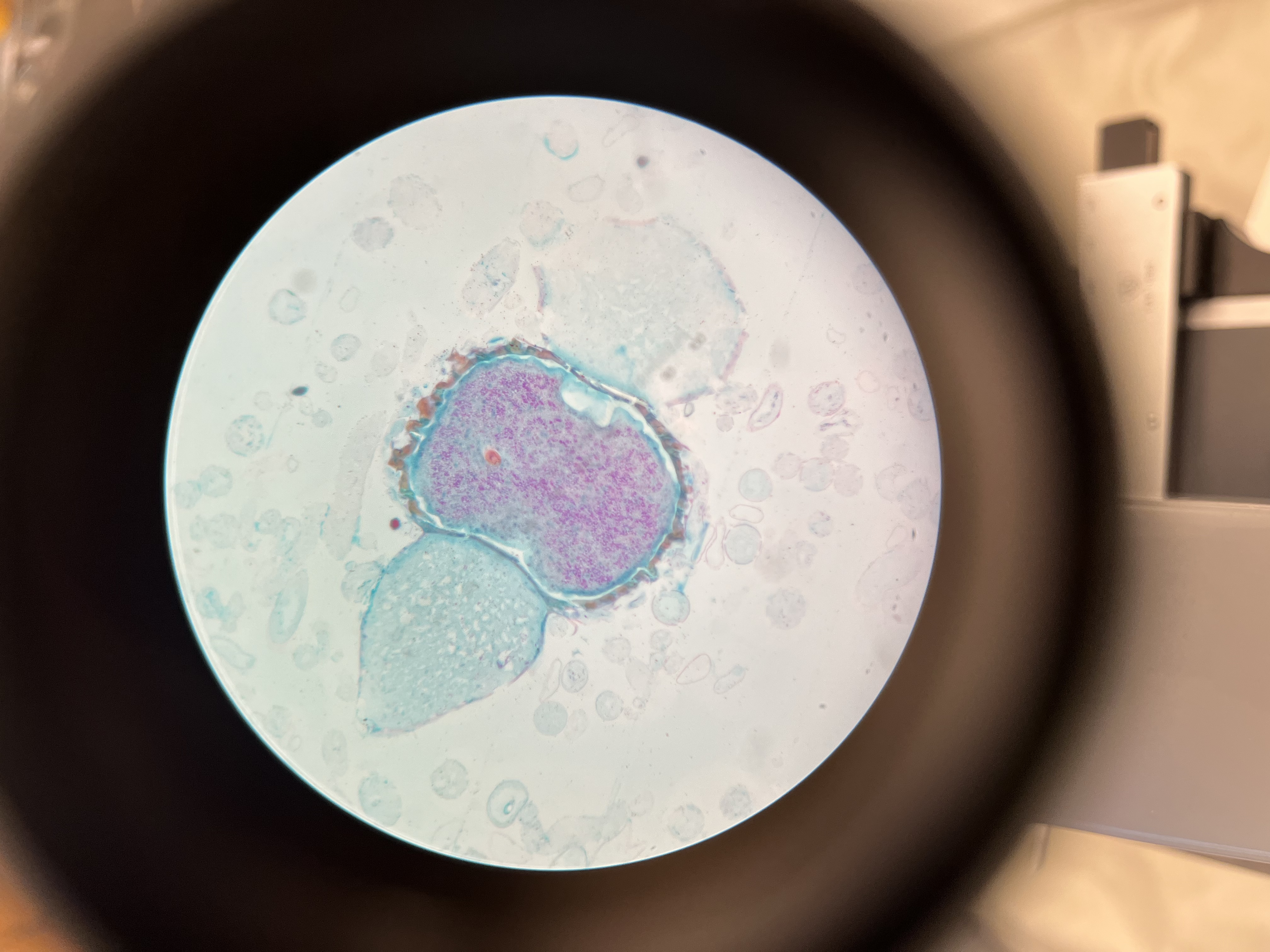
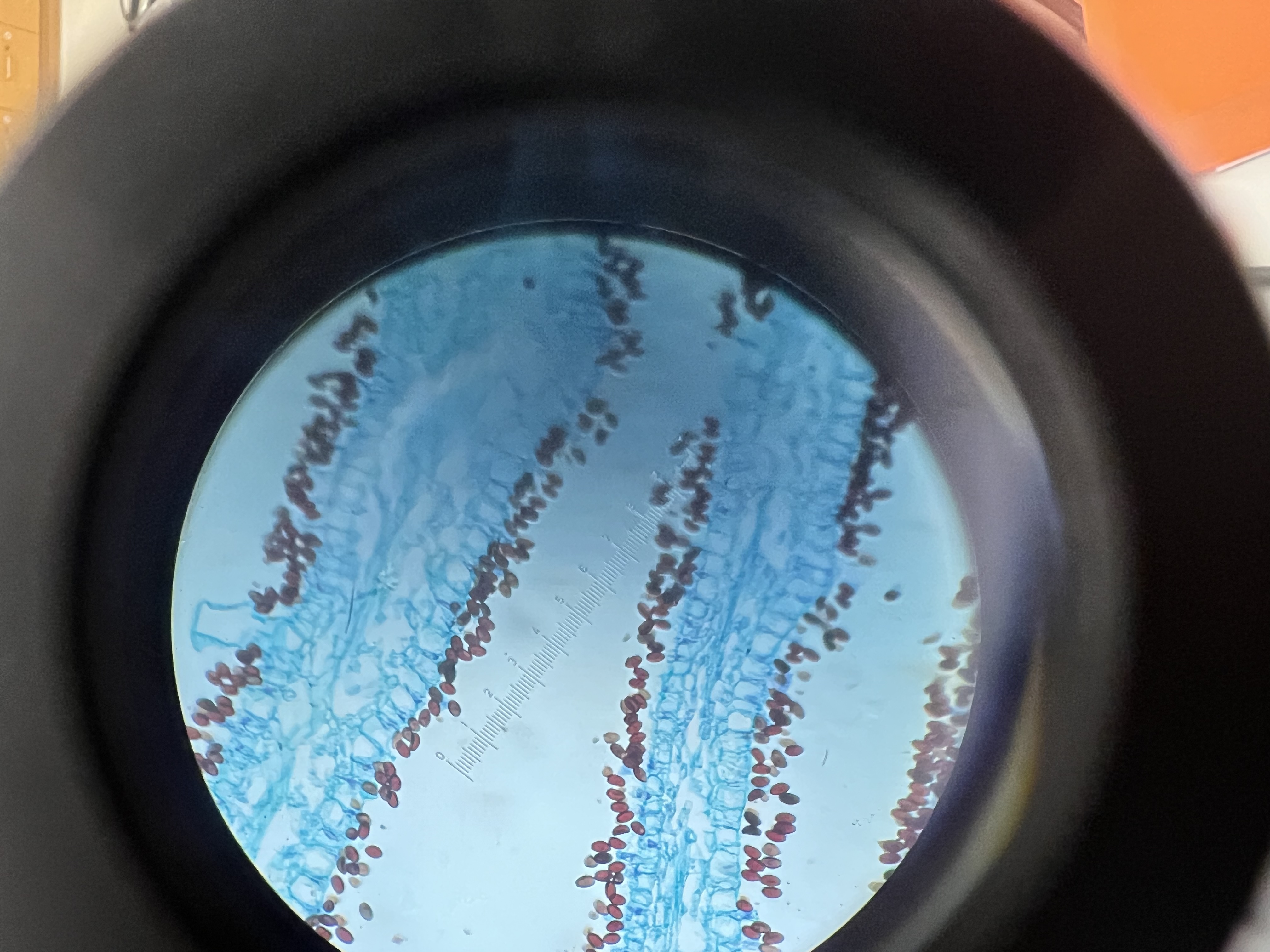
ascocarp with asci and ascospores of cup fungi
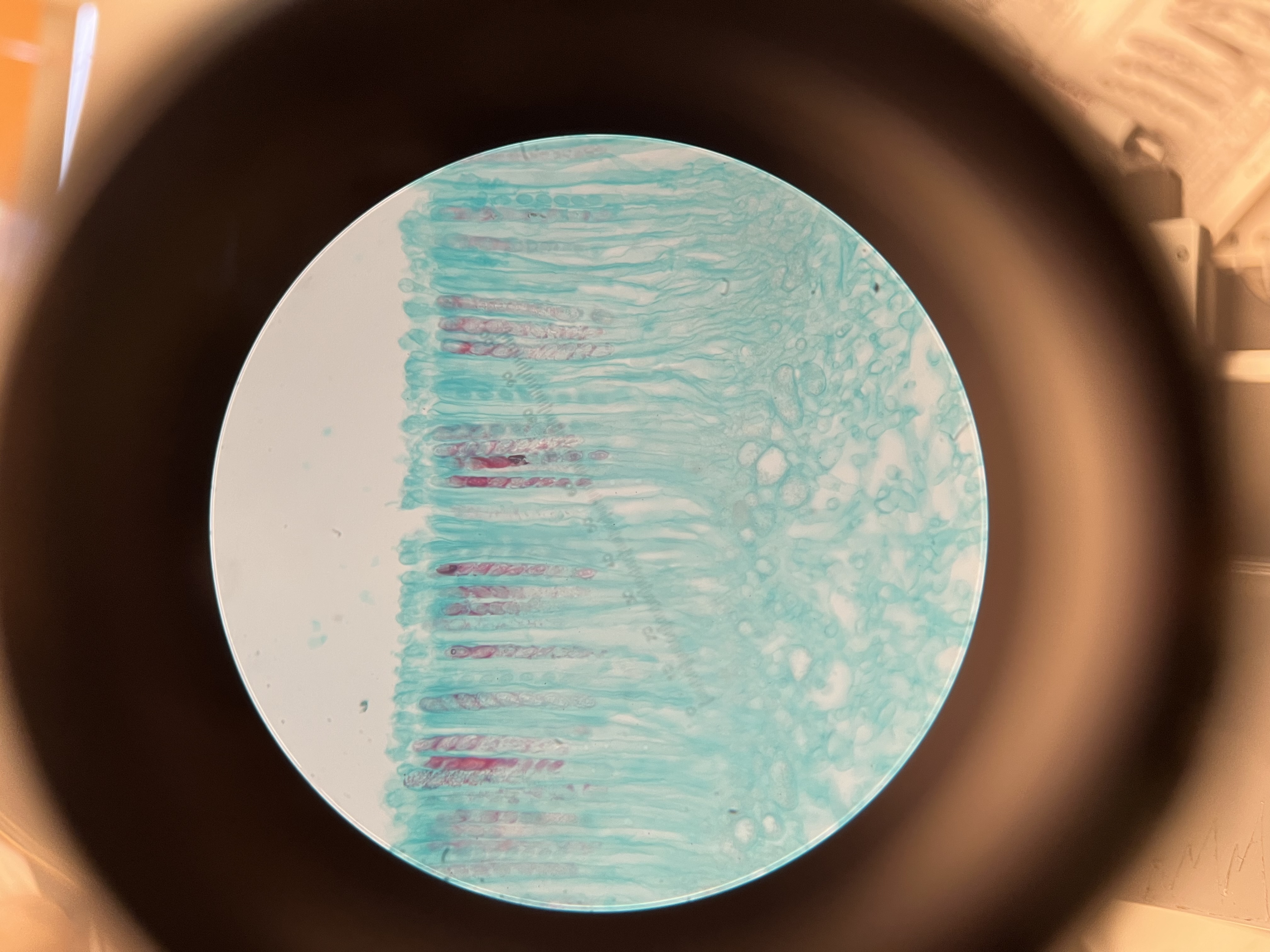
Section of gill with basidia bearing basidiospores
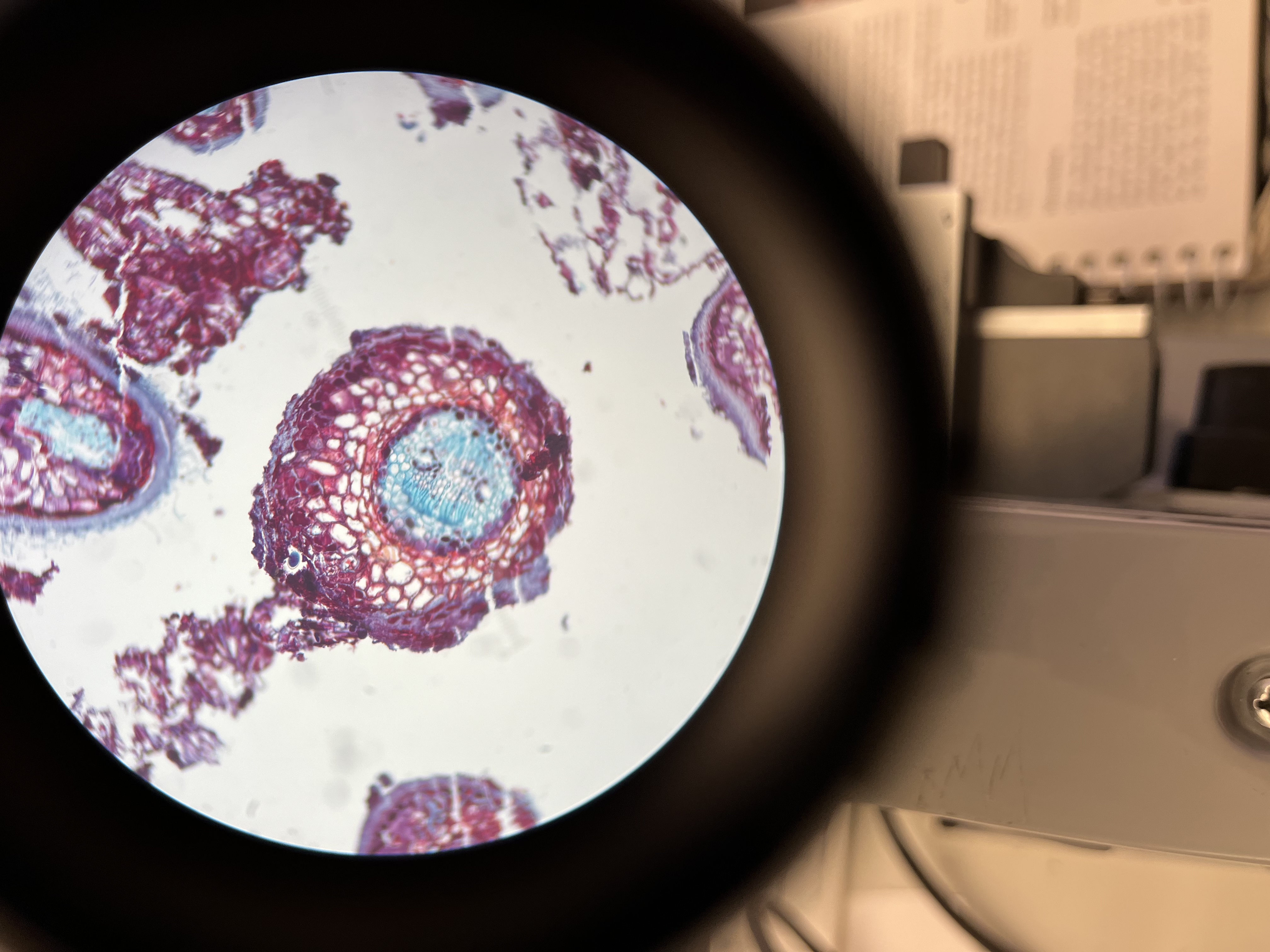
Arbuscular endomycorrizae from phylum muscoromycota

Ectomychorrhizal fungi
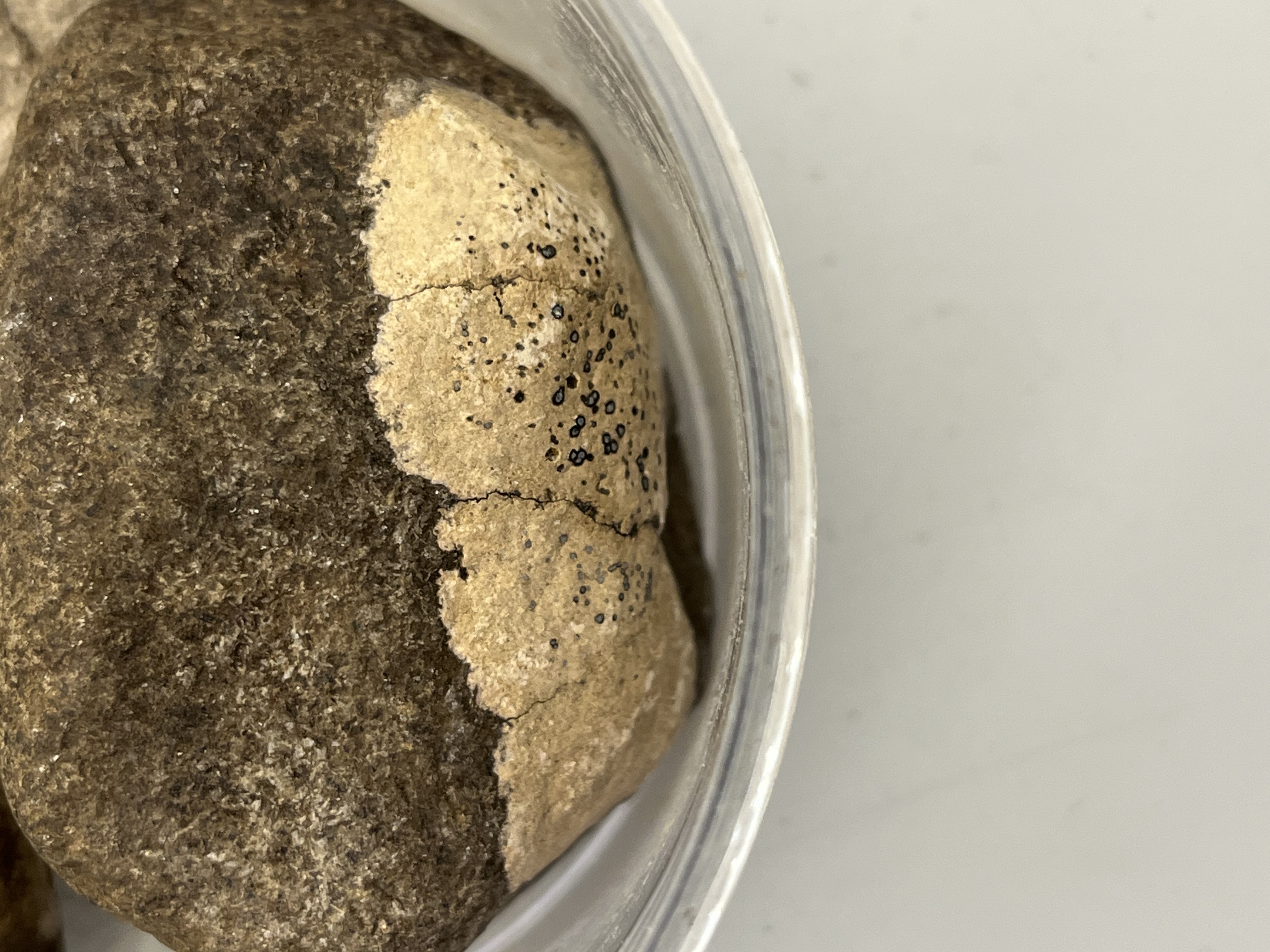
Crustose lichen
Foliose lichen

Fruticose lichen
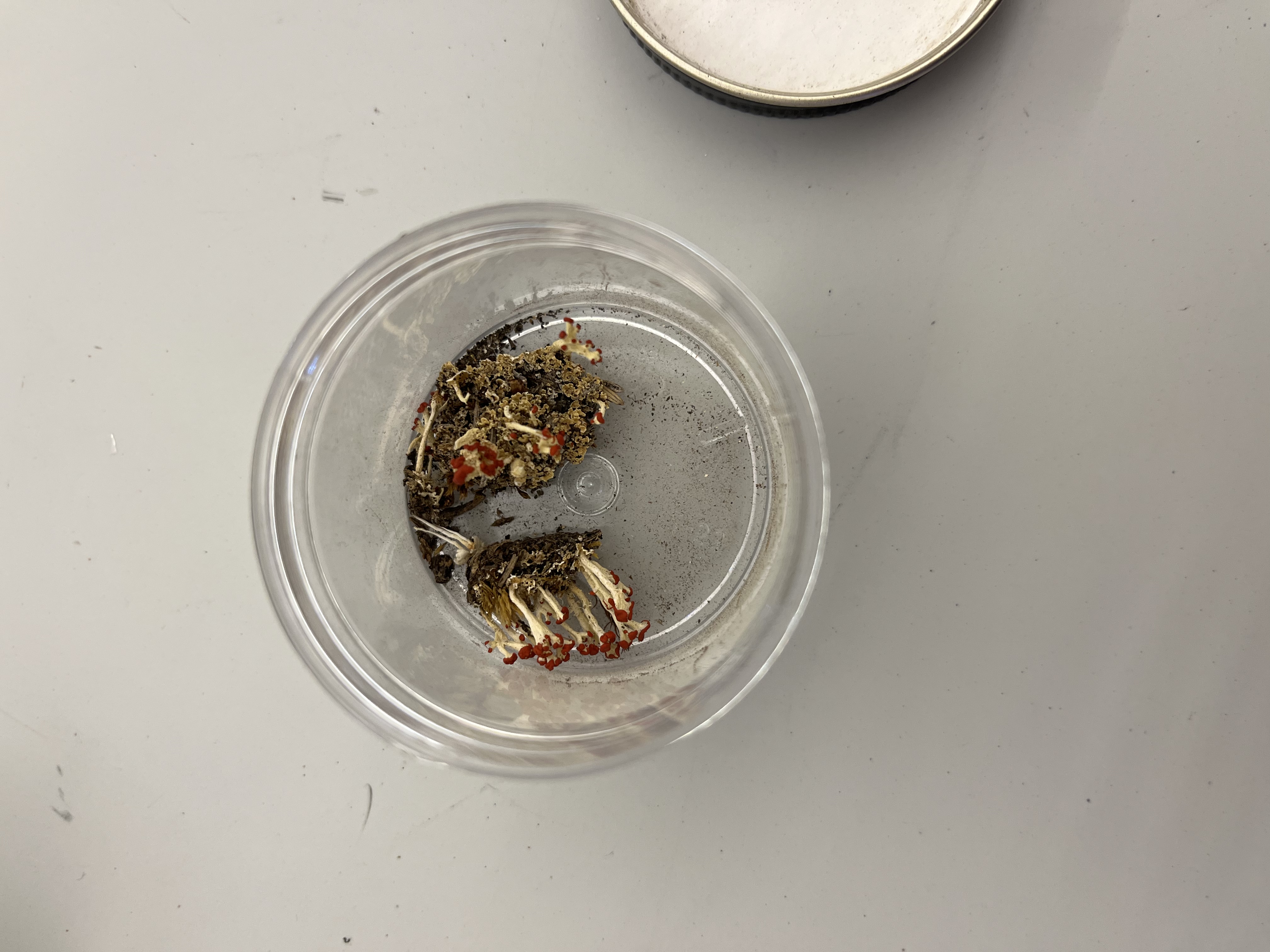
Cross section of lichen thallus
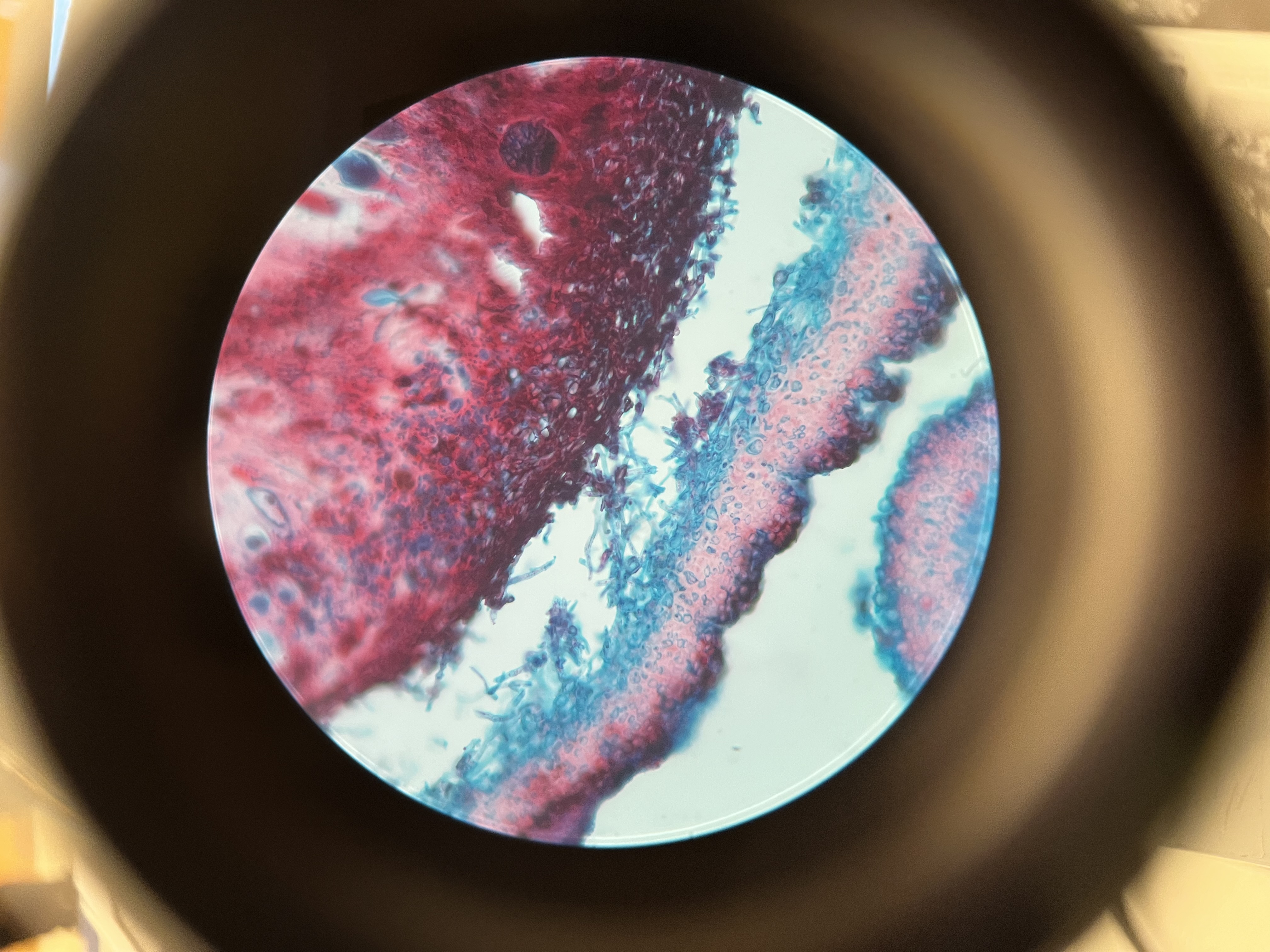
sponge
What is the common name for the porifera?
jellyfish, sea anemones, corals
What is the common name for cnidaria?
flatworms
What is the common name for playthelminthes?
no
Do porifera have tissues?
yes
Do cnidarians have tissues?
yes
Do playthelminthes have tissues?
asymmetric body plans
What type of symmetry do porifera exhibit?
radially symmetric
What type of symmetry do cnidarians exhibit?
bilateral symmetry
What type of symmetry do playthelminthes exhibit?
none
What are the embryological germ layers in porifera?
diploblastic (endoderm & ectoderm)
What are the embryological germ layers in cnidarians?
triploblastic
What are the embryological germ layers in playthelminthes?
none
What organ systems are present in porifera?
nervous system & digestive system
What organ systems are present in cnidarians?
nervous system, excretory system, reproductive system
What organ systems are present in playthelminthes?
intracellular
Do porifera have intracellular or extracellular digestion?
extracellular
Do cnidarians have intracellular or extracellular digestion?
intracellular
Do playthelminthes have intracellular or extracellular digestion?
filter - feeder
Are porifera herbivores, filter feeders, predator, parasite?
predators
Are cnidarians herbivores, filter feeders, predator, parasite?
parasite
Are playthelminthes herbivores, filter feeders, predator, parasite?
regeneration
What is an unique feature about porifera?
cnidocytes
What is an unique feature about cnidarians?
they lack eye spots
What is an unique feature about playthelminthes?
contains encrusting growth / globular aggregations, sessile creatures
Describe the body plan of the porifera
radial symmetry with both polyp & medusa stages
Describe body plan of cnidarians
dorsal-ventral flattening of body; acoelomate
Describe body plans of playthelminthes
Radially symmetric bodies are equally interacting with the environment while bilateral symmetry results in unequal contact.
If your compare animals with radial symmetry to those with bilateral symmetry, what differences come to mind?
They are both a way to organize animal bodies in half, & a way to interact with the environment. There is also a theory that they both originate from the same organism
If your compare animals with radial symmetry to those with bilateral symmetry, what similarities come to mind?
They perform these functions by utilizing their small surface area & performing diffusion of air molecules & gas molecules throughout the body
None of the animals studied in this lab had organs specialized for respiratory gas exchange or circulation of body fluids. How do these animals perform these important physiological functions?
Sponges might be green because of the green algae that can resides within/on the sponge. They are not considered plants because they cannot make their own food.
Sponges are sessile and often green in color. Why aren't they considered plants?
Nervous system development is associated with bilateral symmetry because an animal with bilateral symmetry does not interact with the environment equally around the body. The nervous system also exists because with bilateral symmetry. there is the development of the head.
Why is nervous system development coordinated with bilateral symmetry?
Spicules of porifera
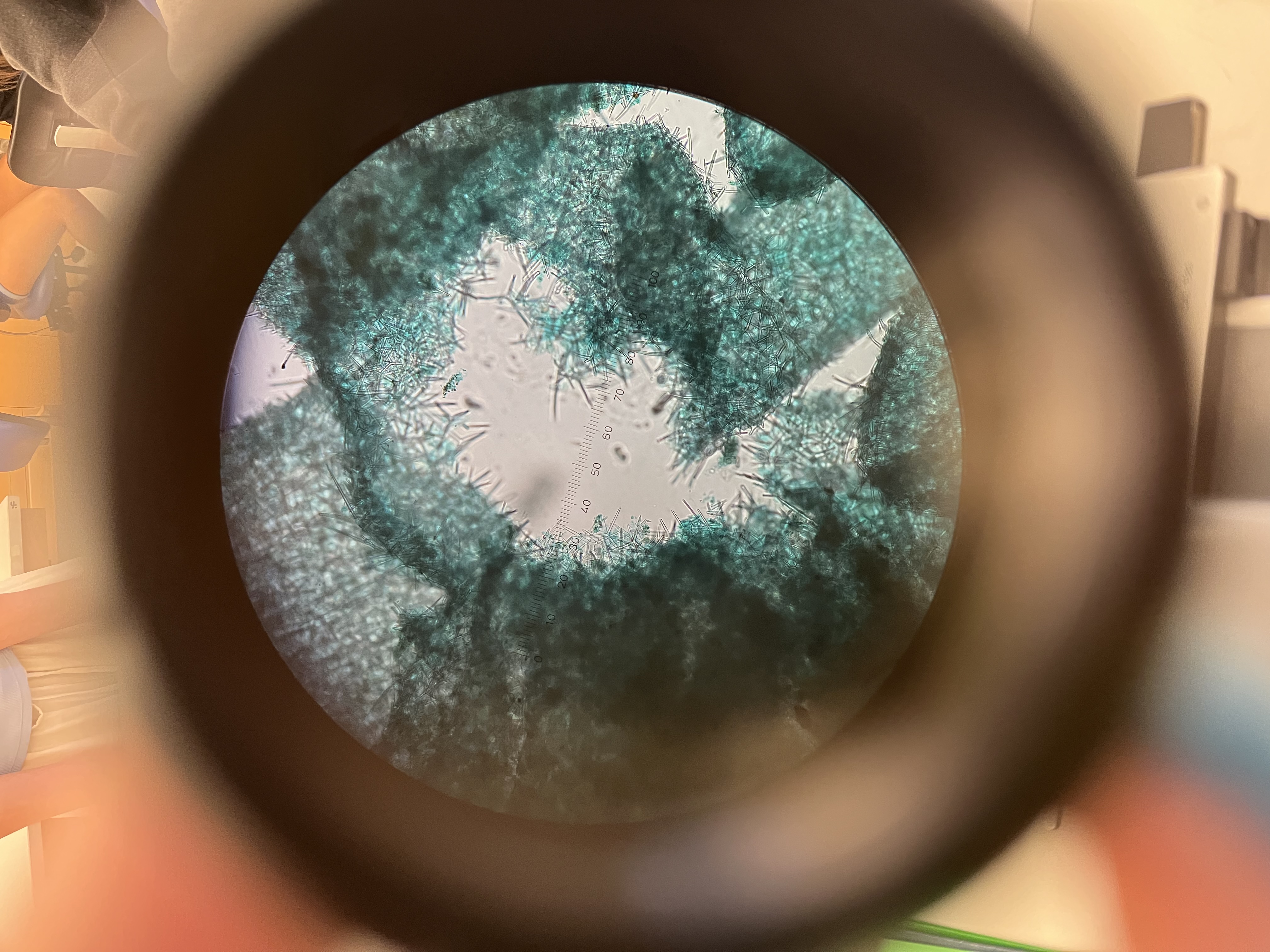
Polyp body form in hydra
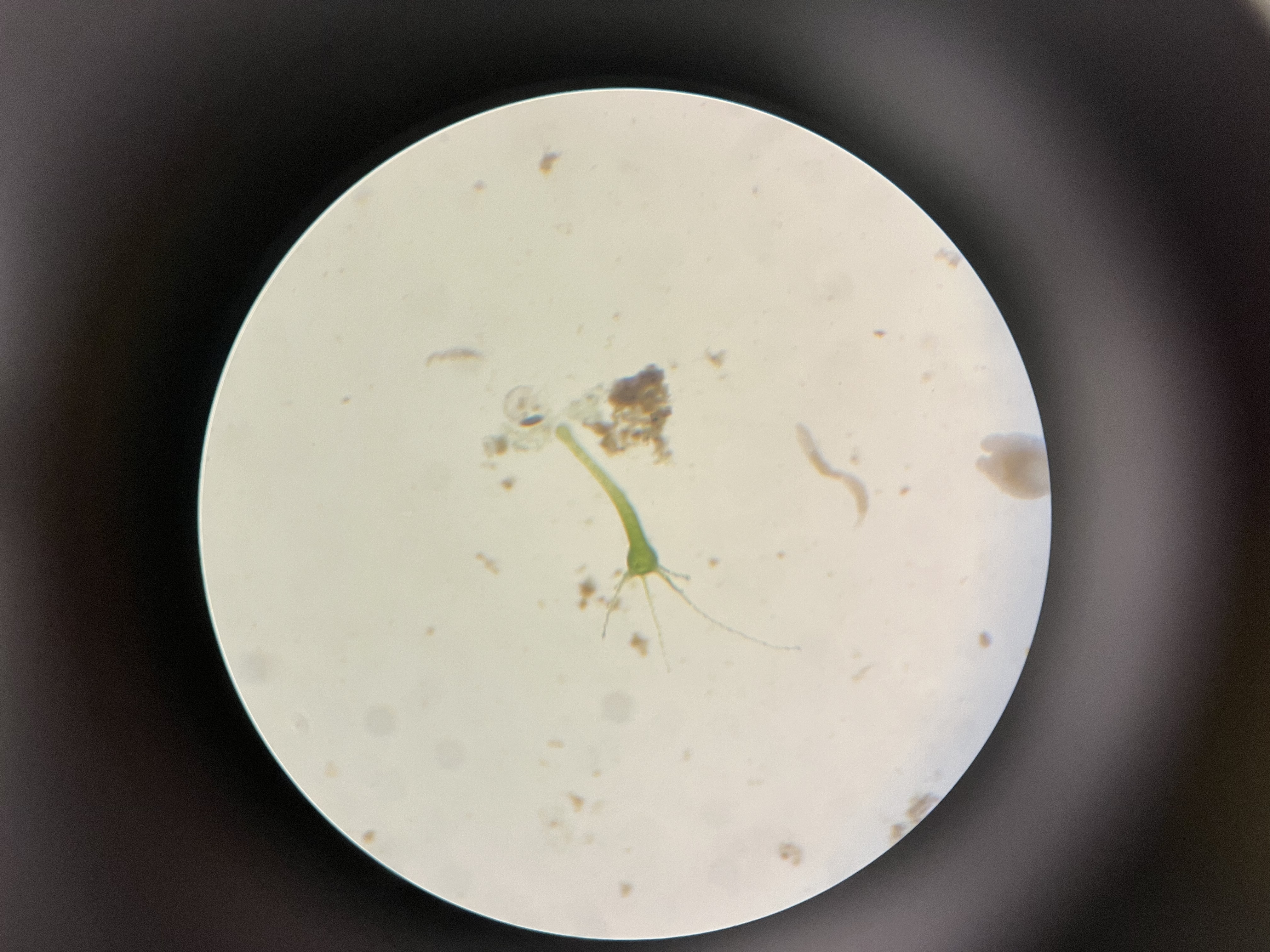
Discharged nematocysts; stinging structure in cnidocytes
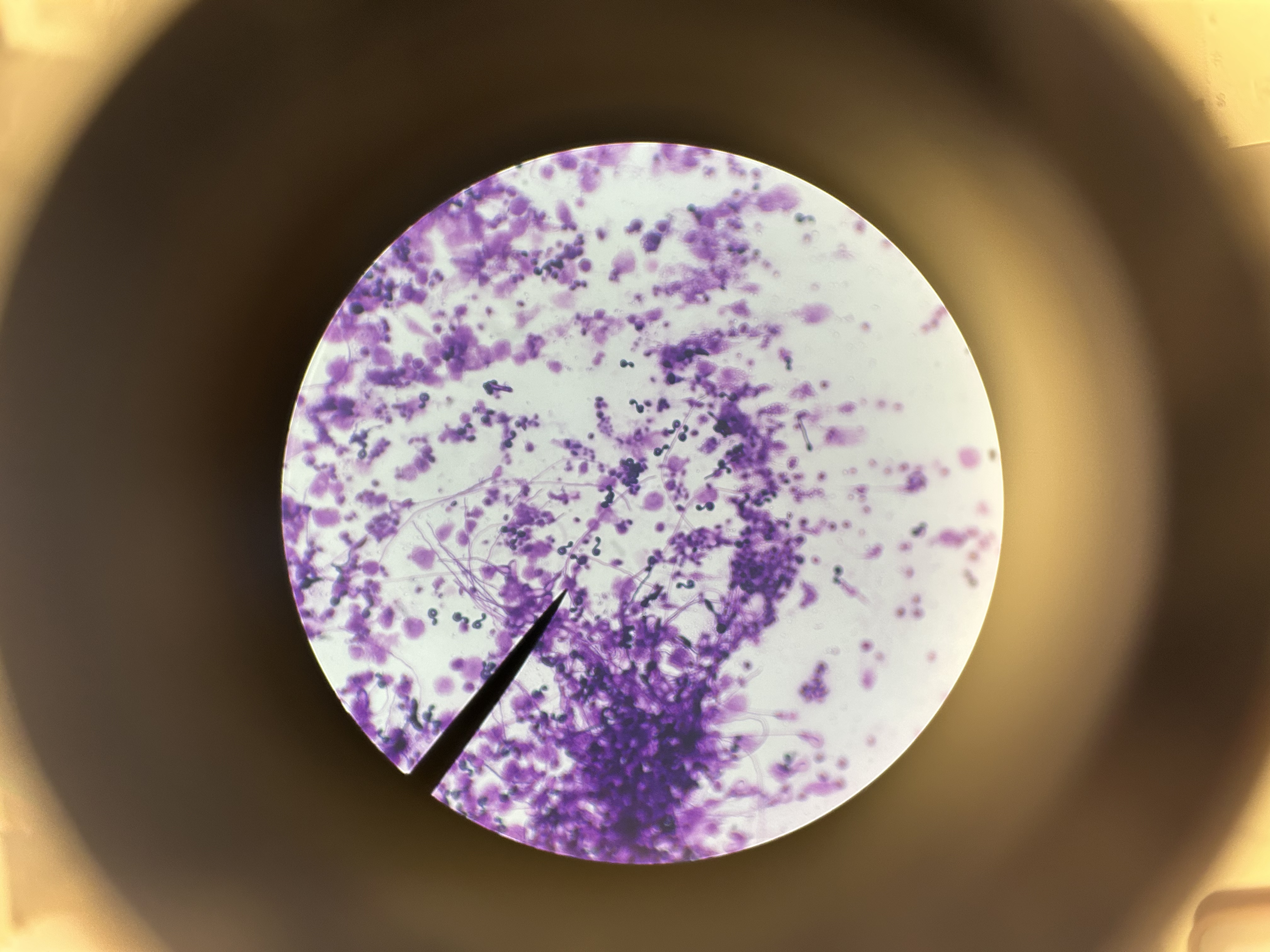
Cross section of tentacles (cnidocytes with undischarged nematocysts
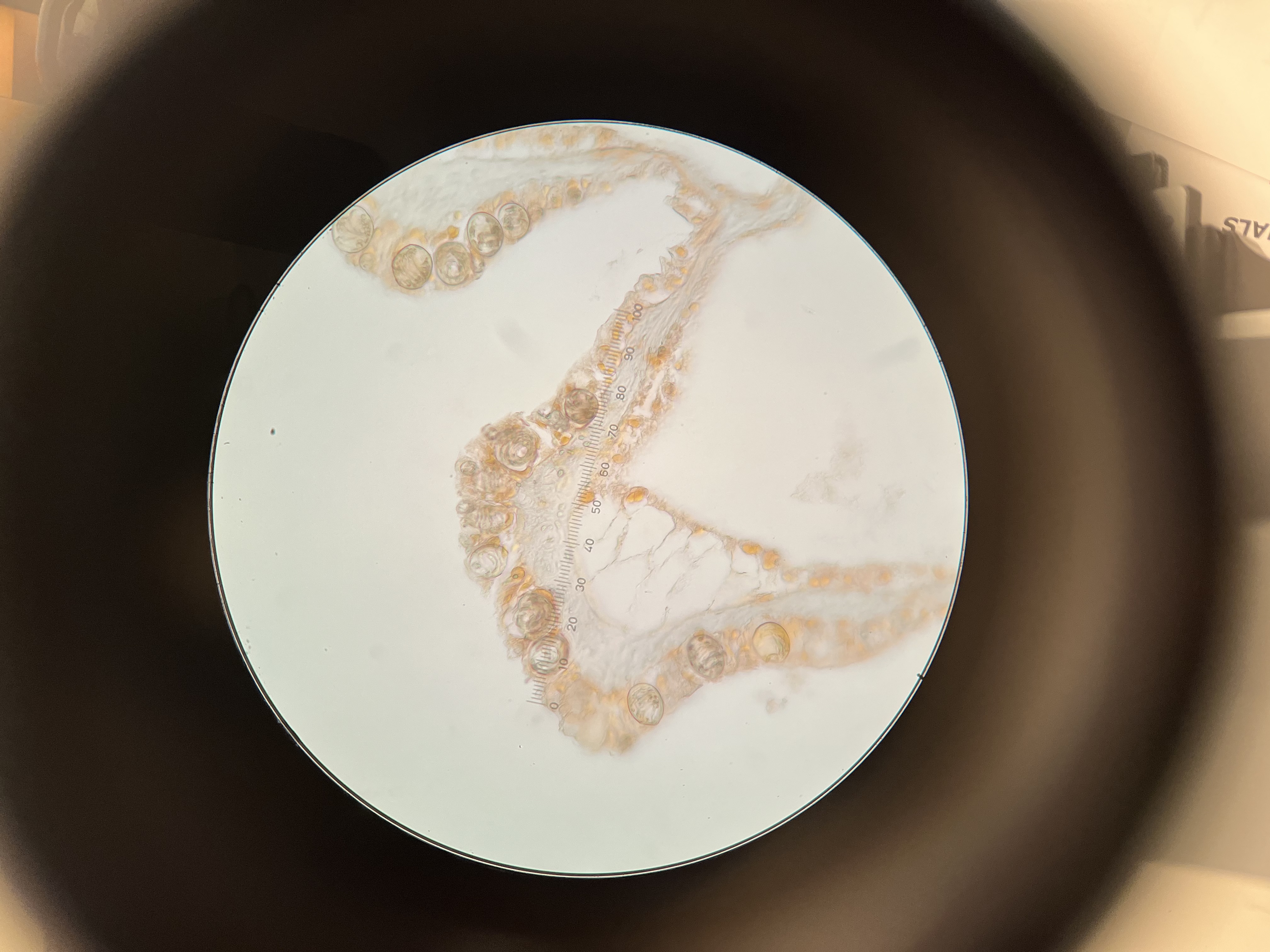
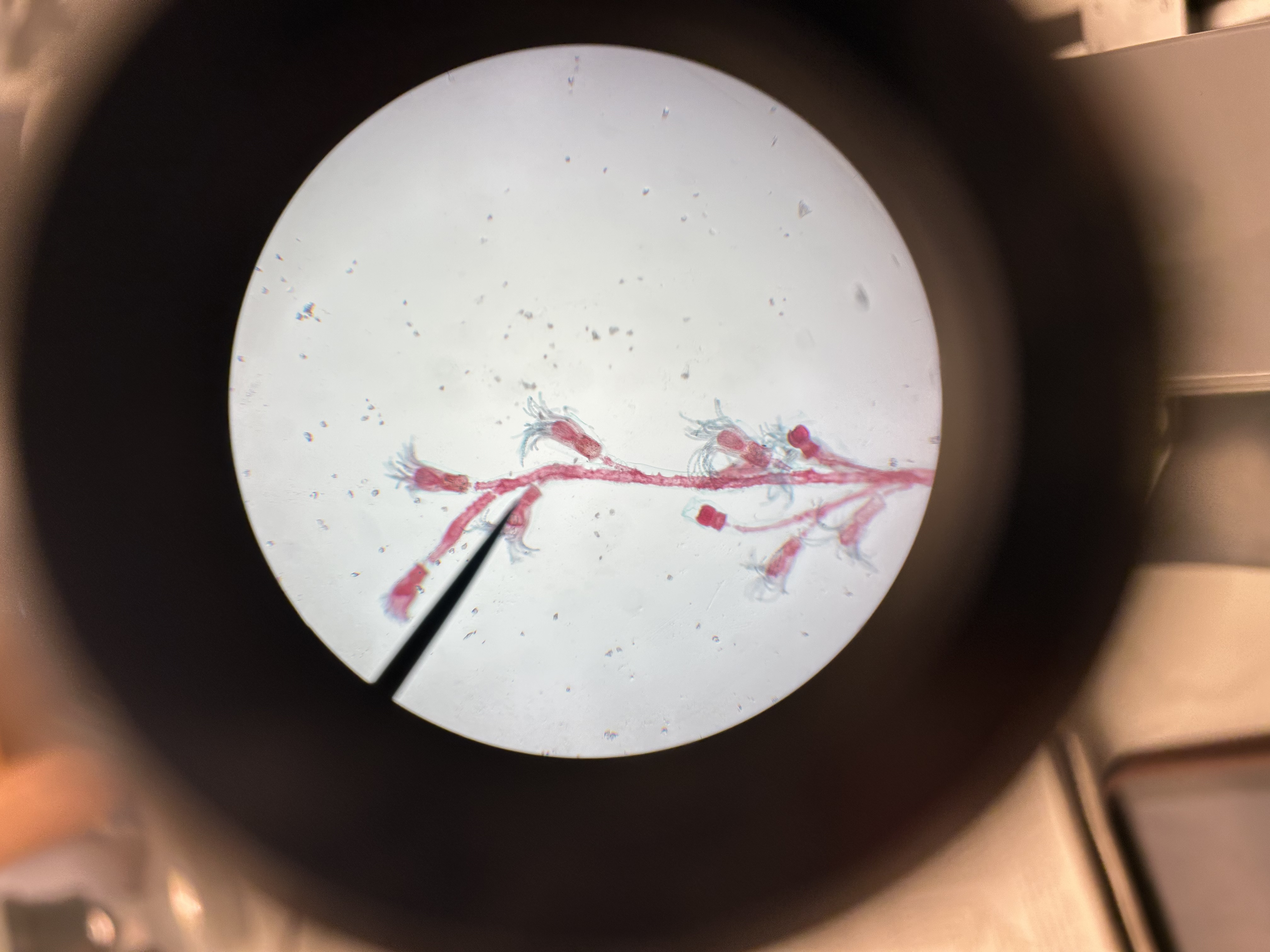
Feeding polyps
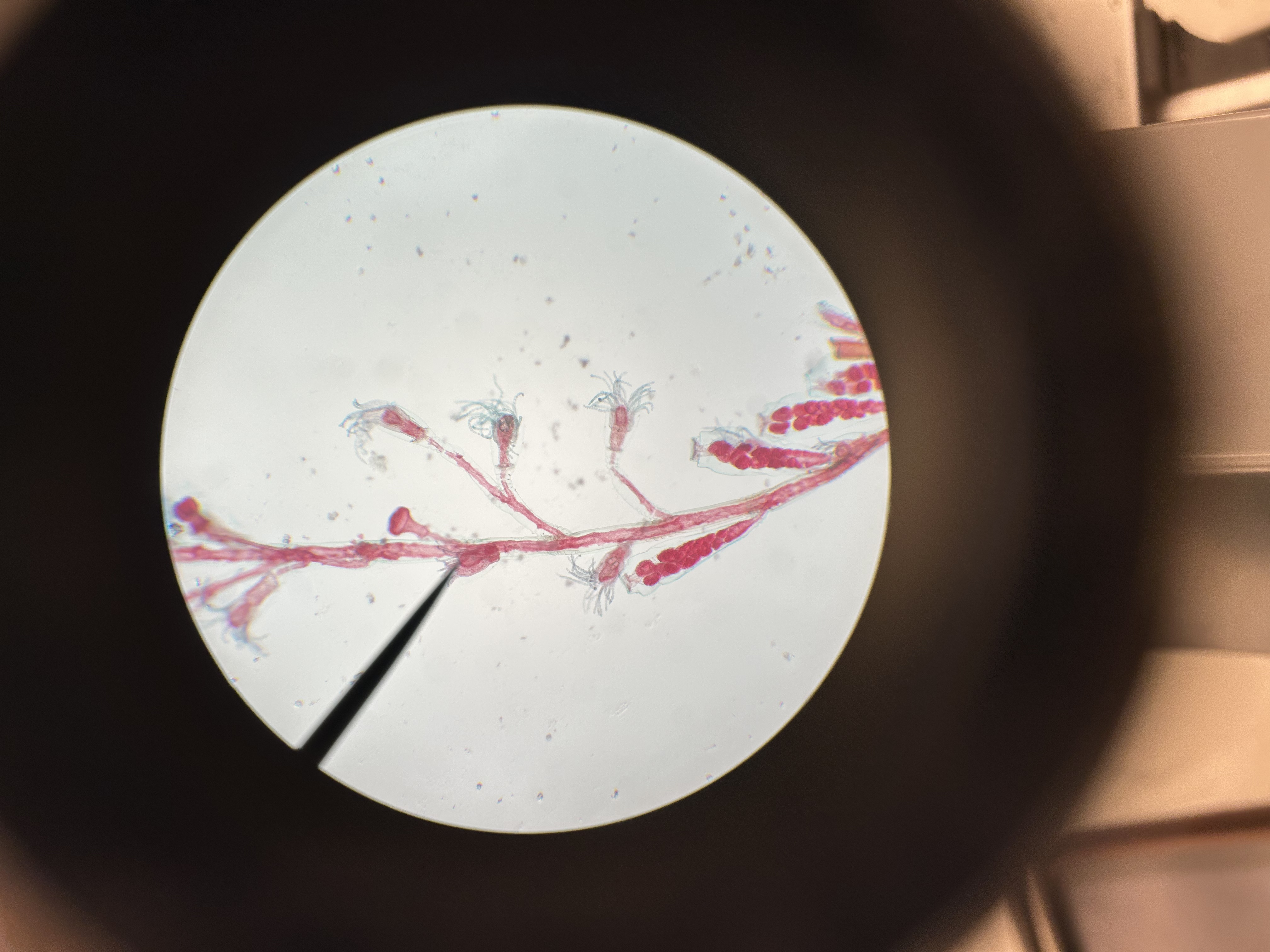
Reproductive polyps
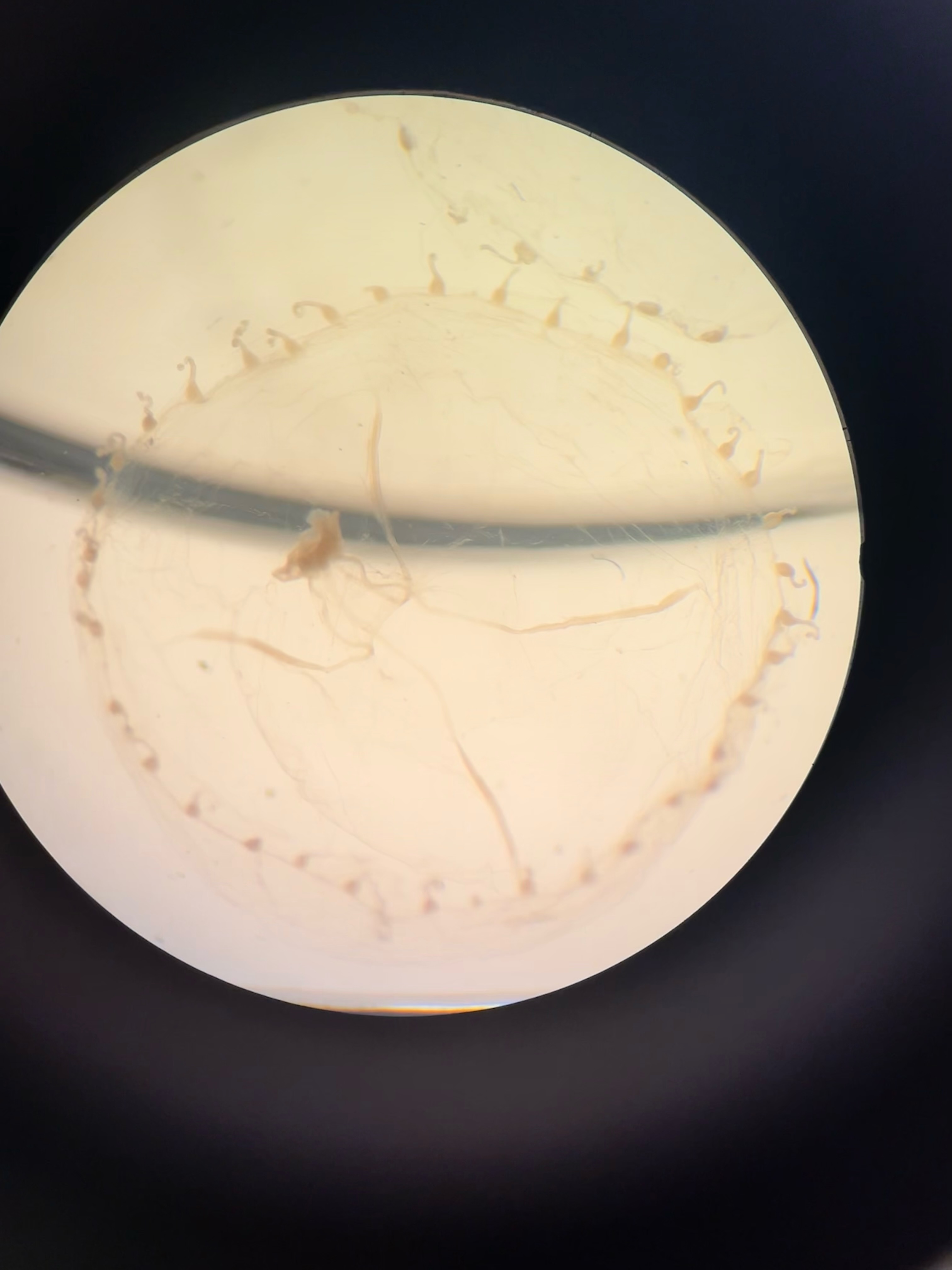
Gonionemus
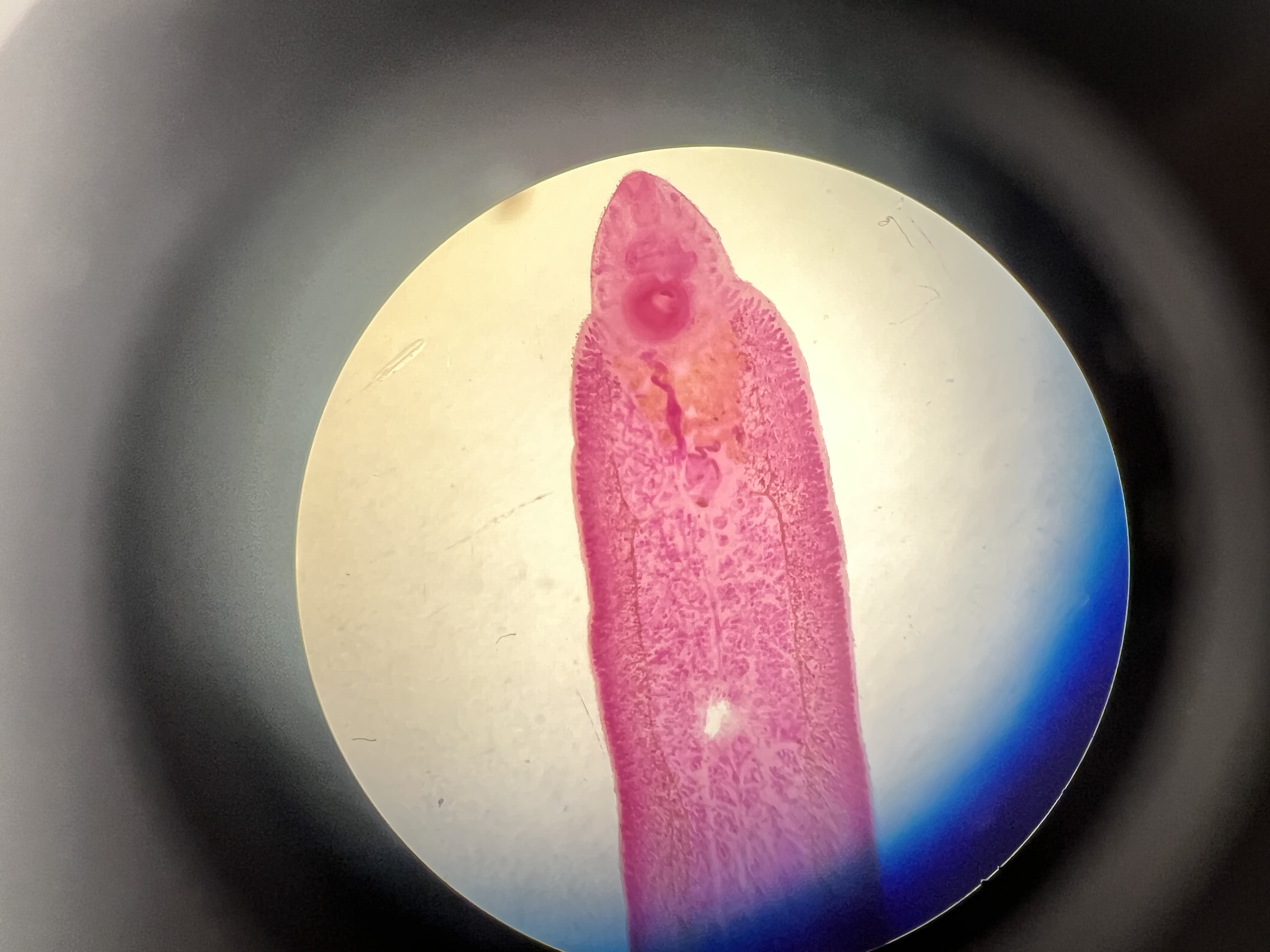
Sheep liver fluke
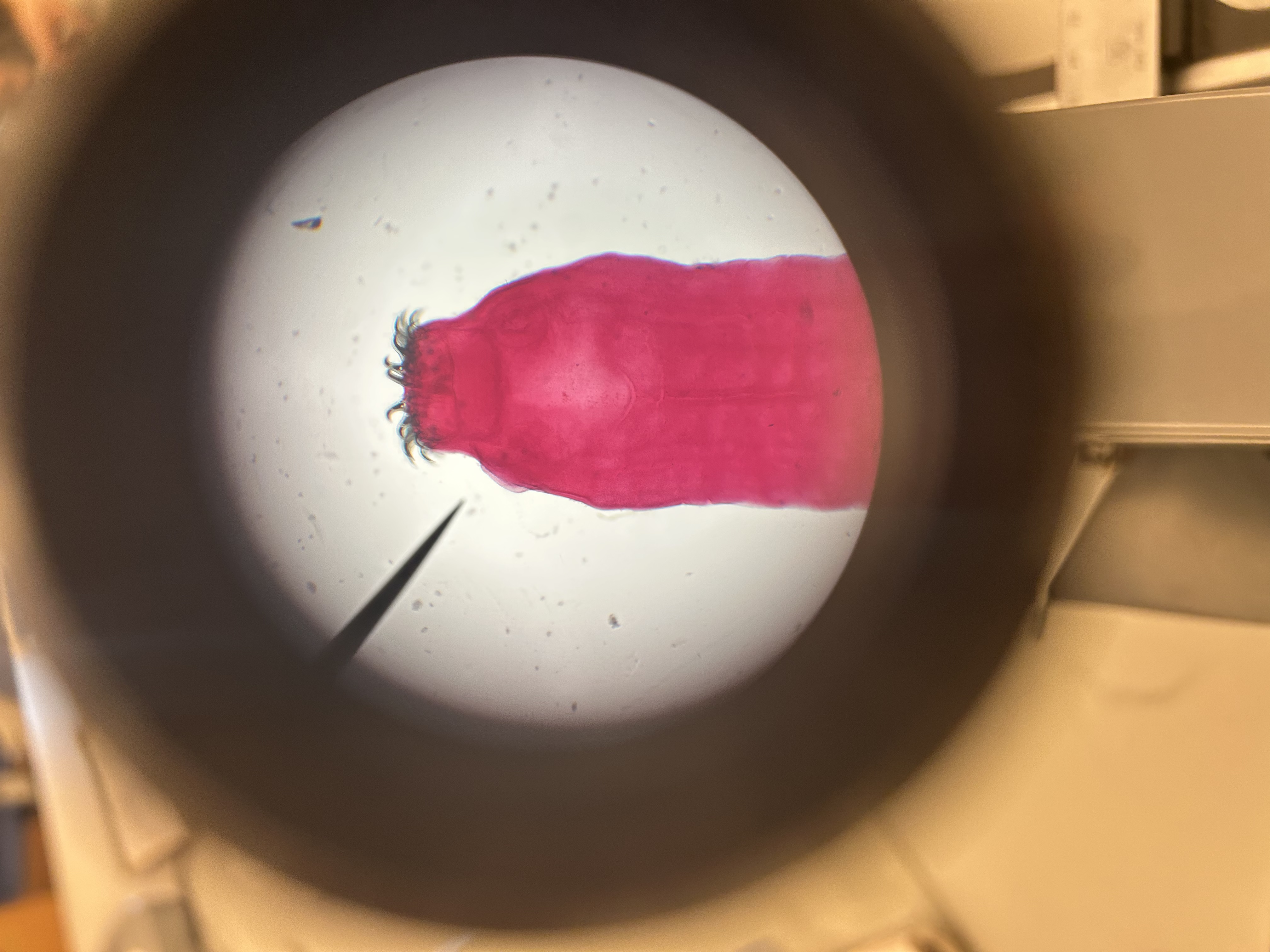
Scolex
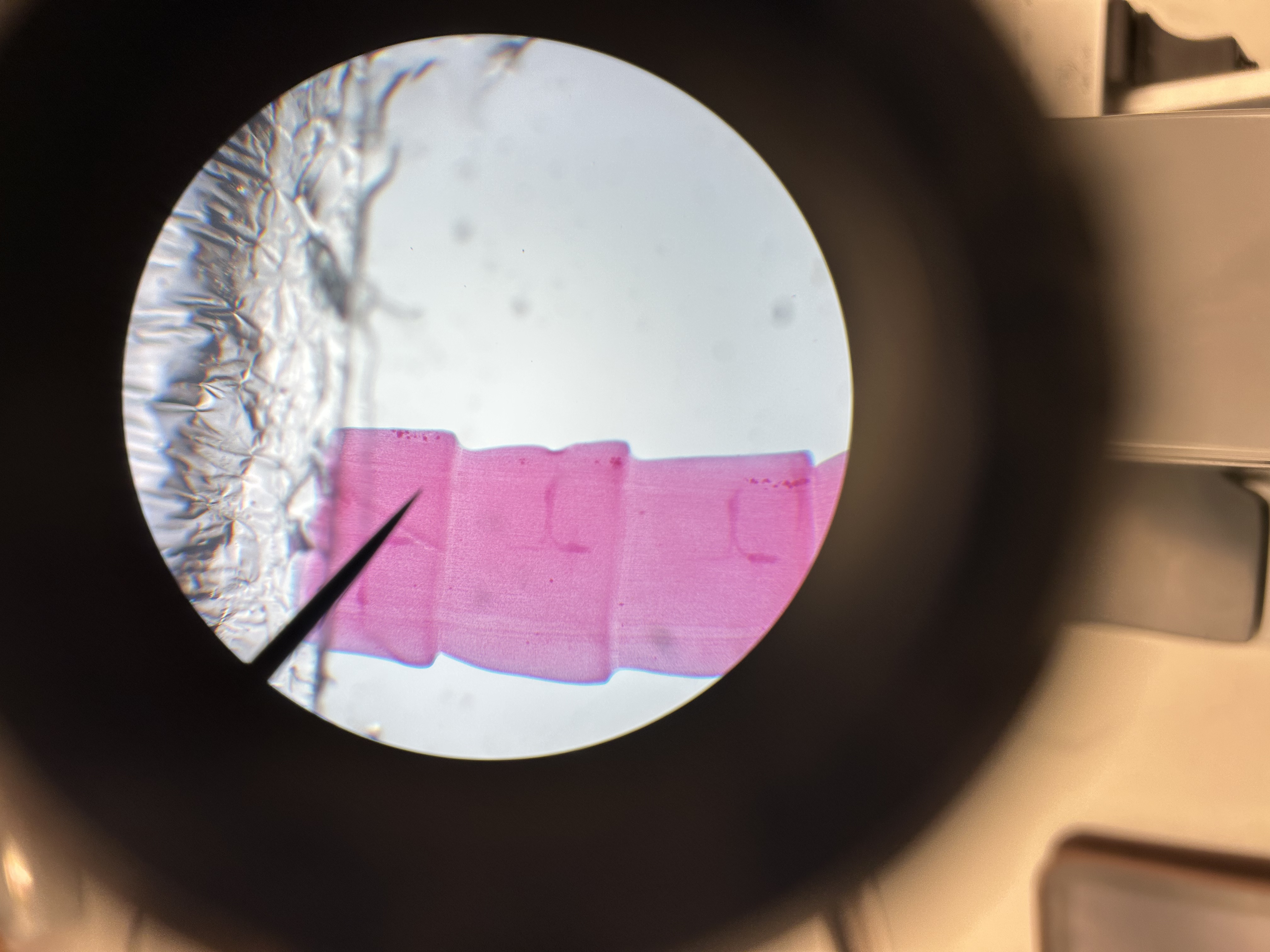
Mature proglottid
Green - siphon
Red - siphon retractor muscles
Black - anus
White - ink sac
Yellow - branchial hearts
Blue - gills
Silver - liver
Finger - stomach
Red with flag - ovary
Black with flag - nidamental glands
