Urologic and Testicular Issues: Kidney Stones, Infections, and Trauma
 Call Kai
 Learn
Learn Practice Test
 Spaced Repetition
 Match
Match Flashcards
 Knowt Play
1/66

There's no tags or description
Looks like no tags are added yet.
Name | Mastery | Learn | Test | Matching | Spaced | Call with Kai |
|---|
No analytics yet
Send a link to your students to track their progress
67 Terms
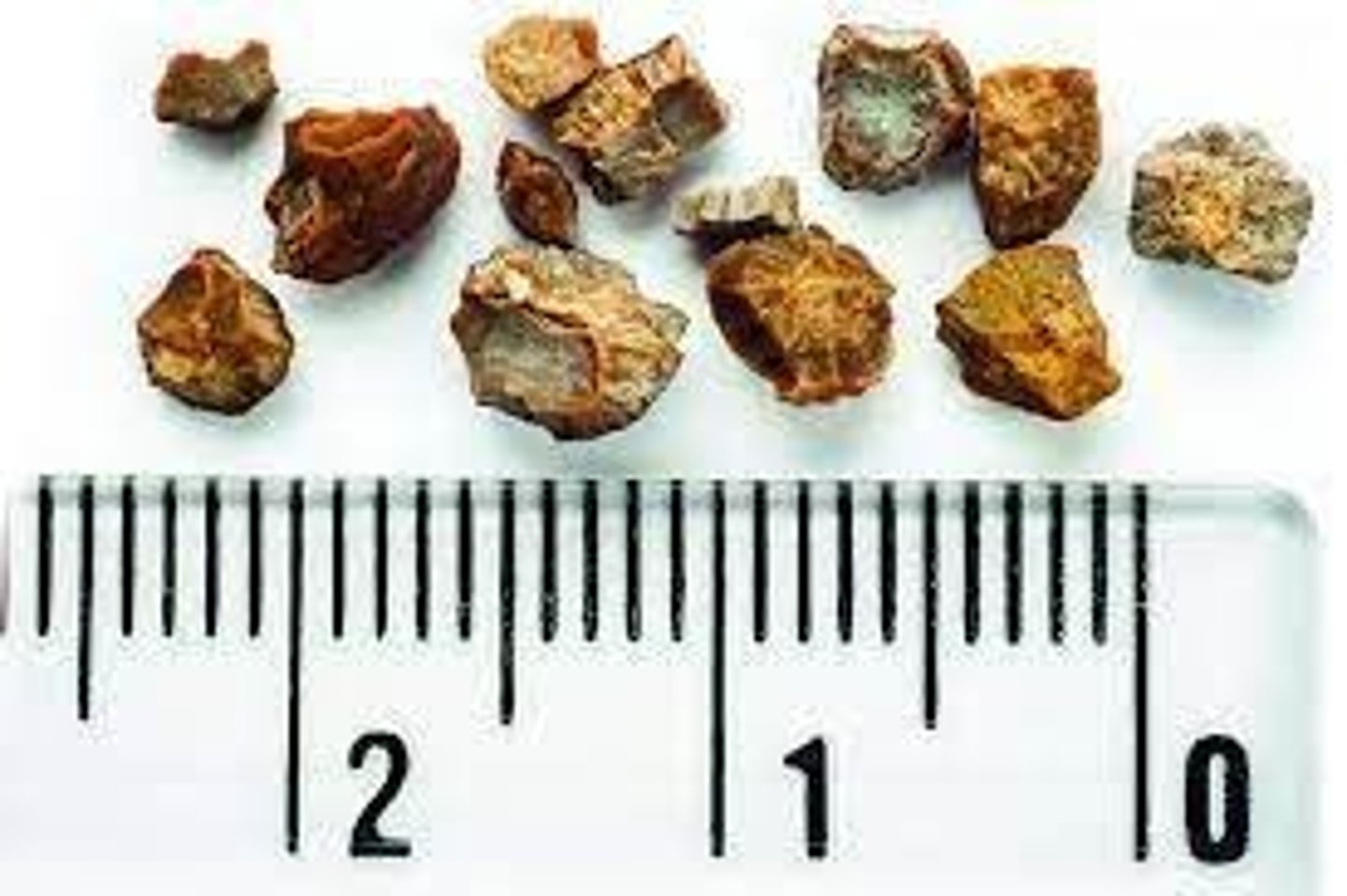
What are kidney stones primarily composed of?
Calcium Oxalate (50%), Calcium Phosphate (10-20%), Struvite (7%), and Cystine (3%)
What is the prevalence of kidney stones in males and females?
About 13% in males and 7% in females
What is the 5-year occurrence rate of kidney stones?
35 to 50%
Which demographic is more likely to be affected by kidney stones?
Caucasians are more likely than African Americans
What is a classic symptom of kidney stones?
Unilateral flank pain that radiates into the groin
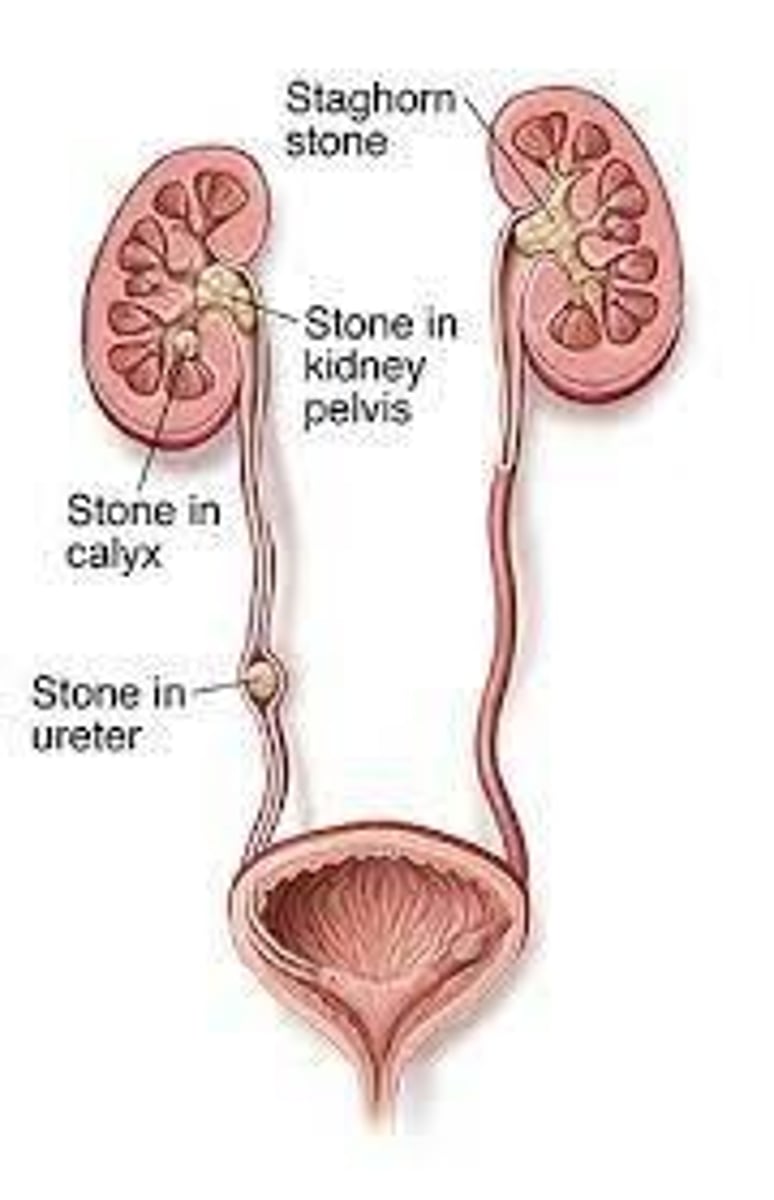
What physical exam finding is associated with kidney stones?
Flank tenderness (Lloyd's sign) and possible testicular pain
What is the test of choice for evaluating kidney stones?
Urinalysis
What imaging is typically used to confirm a diagnosis of kidney stones?
CT scan, possibly ultrasound
What is the initial treatment for kidney stones?
Pain management, hydration, and urine strain to catch the stone
What is sports hematuria?
Presence of 3 or more red blood cells per high-power field associated with physical activity
What percentage of swimmers experience sports hematuria?
80%
What is the typical resolution time for sports hematuria?
Usually resolves within 72 hours
What should be done if blood persists in urine beyond 72 hours?
Workup with renal ultrasound, CT scan, and possibly cystoscopy
What is the most common cause of bacterial infection in outpatient clinics?
Urinary Tract Infection (UTI)
What are the symptoms of a urinary tract infection?
Dysuria, blood in urine, cloudy urine, urinary urgency and frequency, N/V, abdominal pain
What is the difference between complicated and uncomplicated UTIs?
Complicated UTIs occur with functional or structural problems; uncomplicated UTIs occur in a normal urinary tract
What is a concerning type of UTI that may require IV antibiotics?
Pyelonephritis (kidney infection)
What urinalysis findings indicate a urinary tract infection?
Positive leukocyte esterase and/or nitrites with WBCs in urine
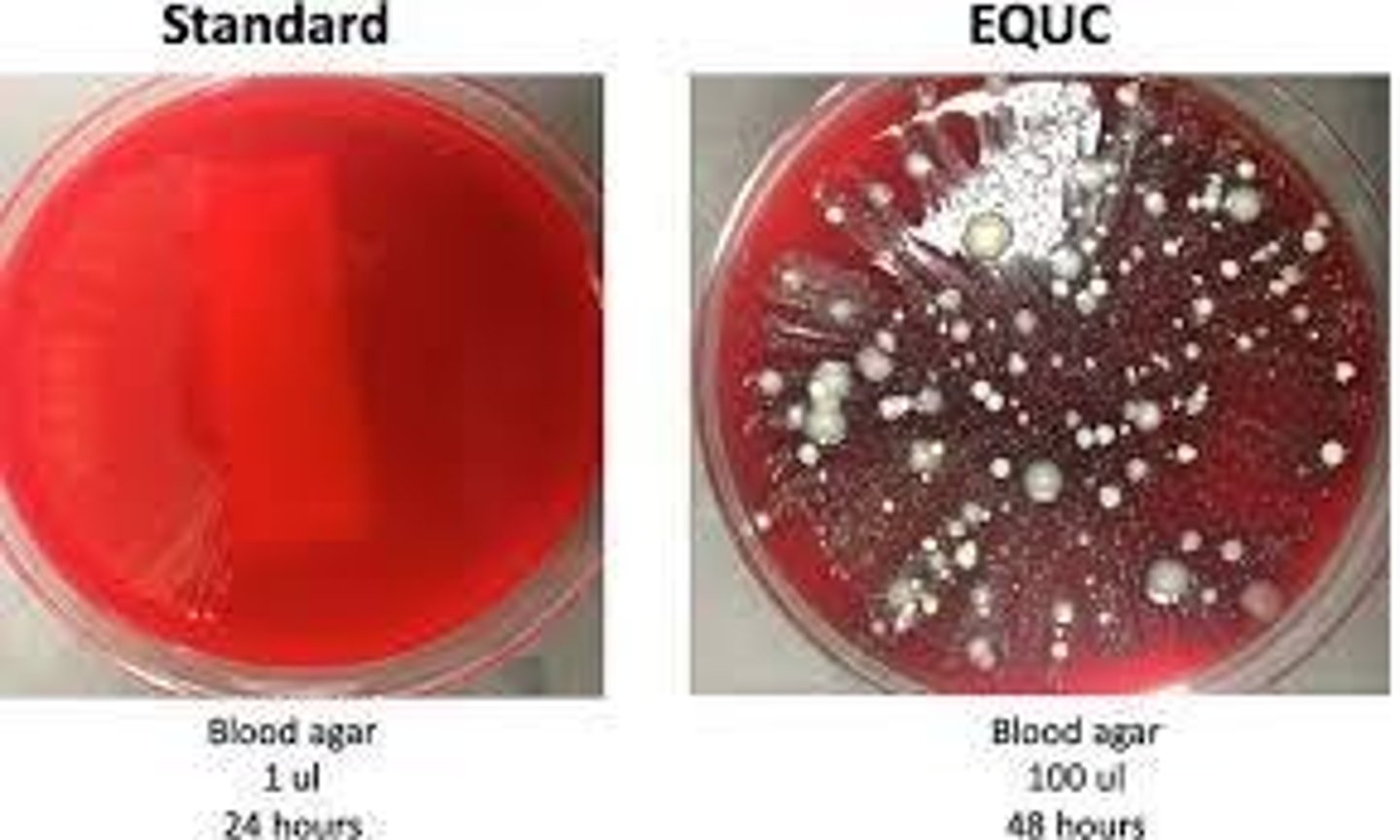
What urine culture result indicates a UTI?
More than 100,000 bacteria per milliliter of urine
What is the most common cause of urinary tract infections?
Gram-negative bacteria from wiping or intercourse.
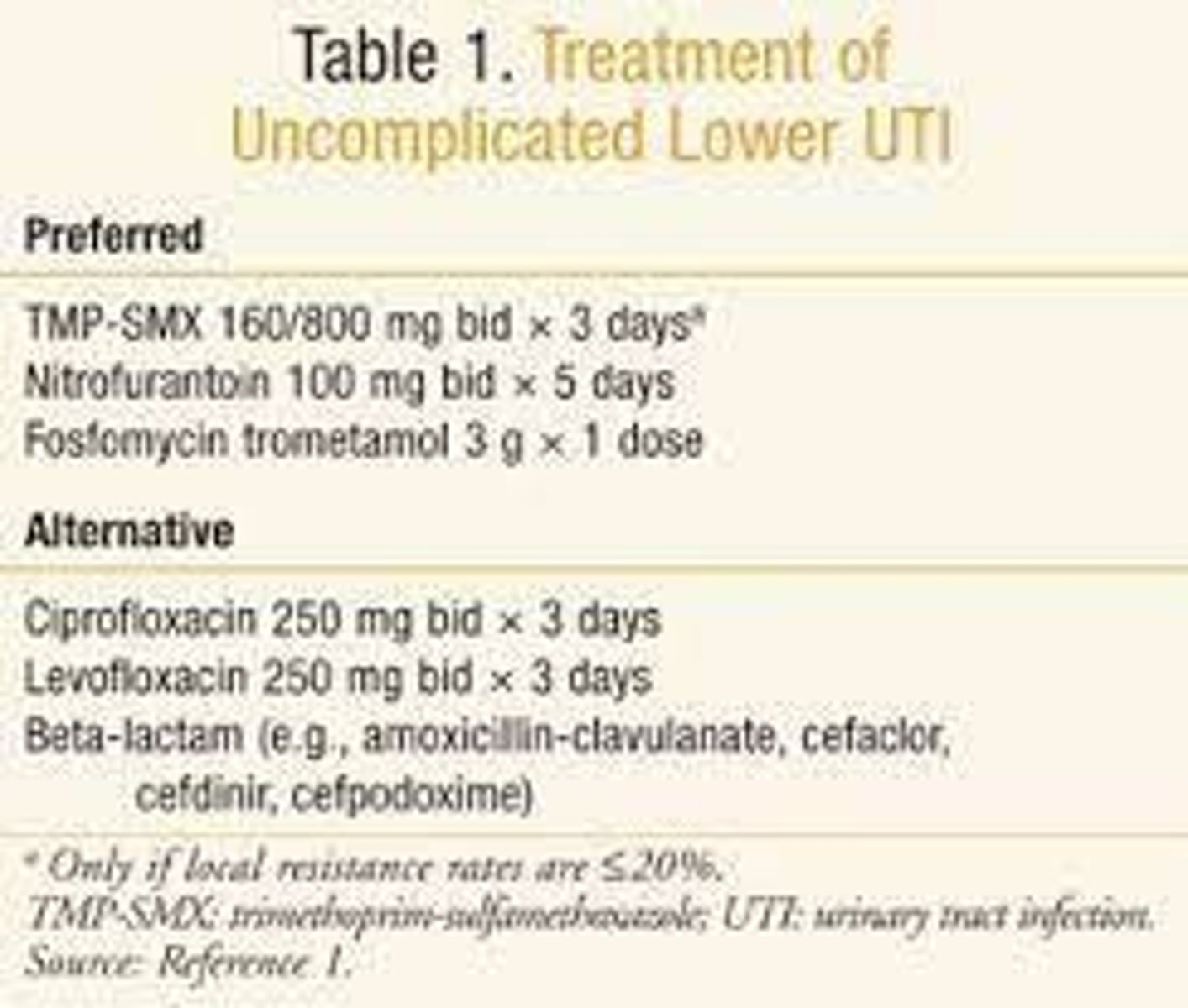
What is the recommended treatment duration for uncomplicated urinary tract infections?
7 to 10 days of antibiotic treatment.
How should treatment for urinary tract infections be guided?
Based on culture results.
What should be assessed 48 hours after starting UTI medication?
Culture results to determine if a change in medication is needed.
What is the treatment duration for complicated urinary tract infections?
10 to 14 days.
What are the 5P's to consider when taking a sexual history?
Partners, Practices, Protection from STIs, Past STIs, Pregnancy.
What are common symptoms of Gonorrhea?
Yellow vaginal discharge, painful urination, painful intercourse, but may be asymptomatic.
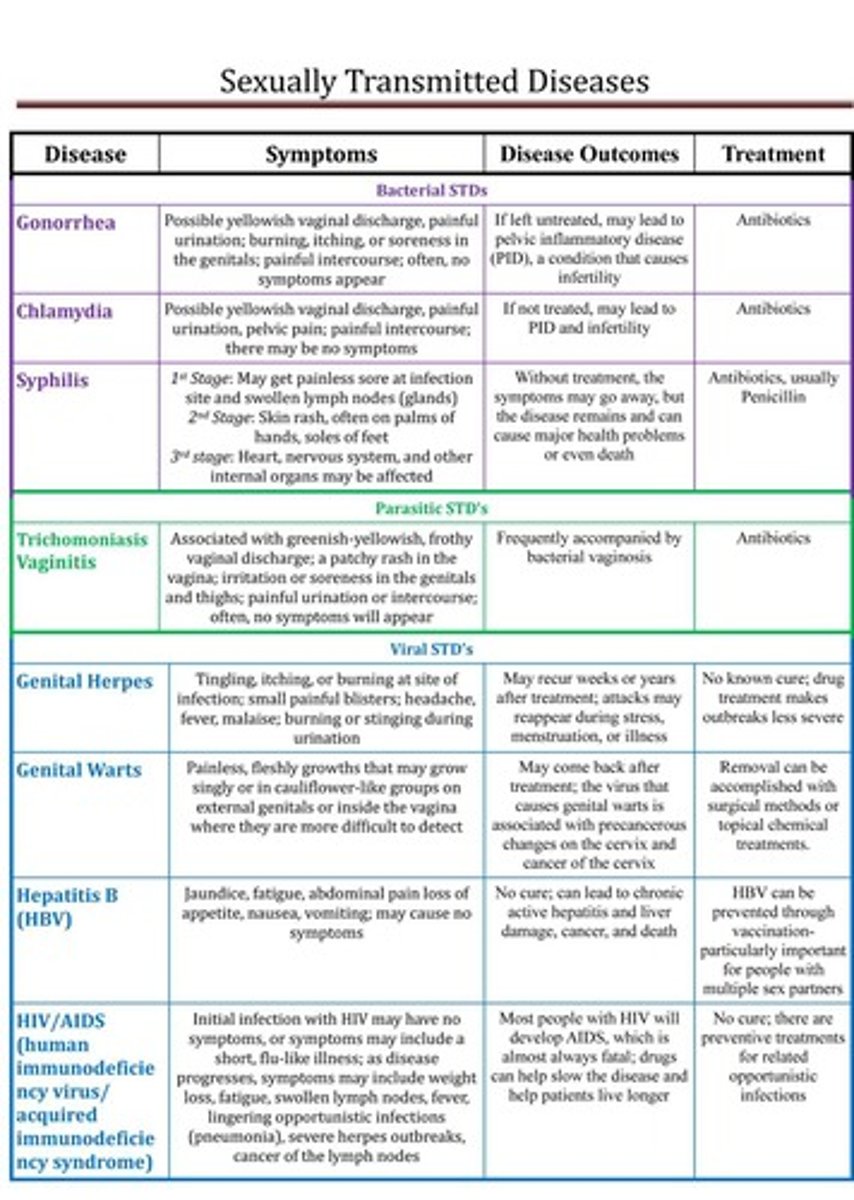
What is the first-line treatment for Gonorrhea?
Azithromycin x 1 dose and Rocephin IM x 1 dose.
What is the most common STI in the US?
Chlamydia.
What are the symptoms of Chlamydia?
Yellow vaginal discharge, painful urination, painful intercourse, but may be asymptomatic.
What is the recommended treatment for Chlamydia?
Azithromycin x 1 dose or doxycycline x 1 week.
What is the diagnosis method for Syphilis?
RPR blood test.
What are the symptoms of Trichomonas infection?
Greenish yellow, frothy vaginal discharge, patchy vaginal rash, irritation, painful urination or intercourse, may be asymptomatic.
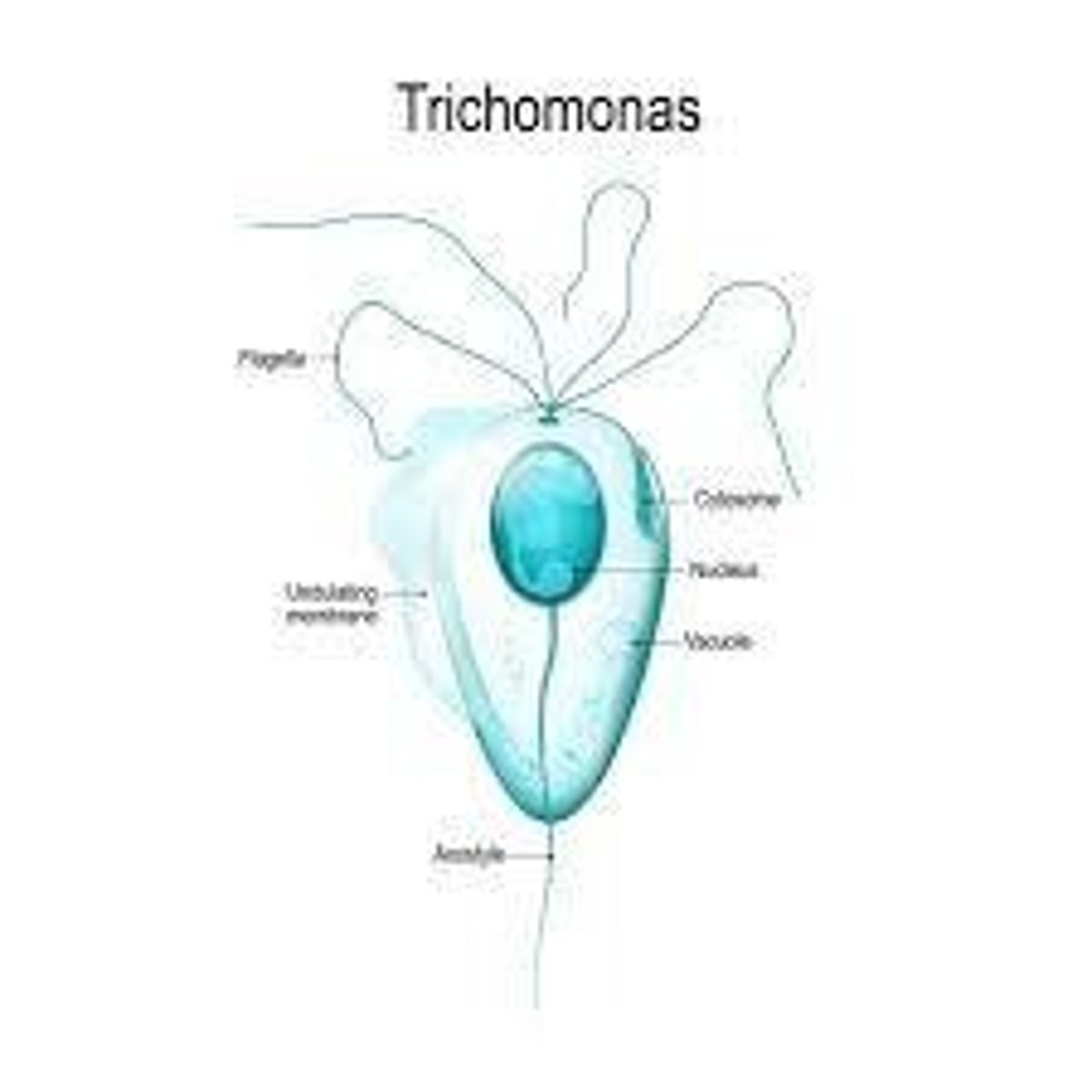
What is the treatment for Trichomonas?
Metronidazole 500mg twice daily for 7 days for females; males can take 1 dose of 2g Metronidazole.
What are the symptoms of Genital Herpes?
Tingling, itching or burning, small painful blisters, headache, fever, malaise, burning with urination.
What is the treatment for Genital Herpes?
Antivirals such as acyclovir or valacyclovir; no cure available.
What are the symptoms of Hepatitis B?
Jaundice, fatigue, abdominal pain, nausea/vomiting, loss of appetite.
What is the prevention method for Hepatitis B?
Vaccination.
What initial symptoms are associated with HIV/AIDS?
Short-term flu-like symptoms; long-term symptoms include weight loss, fatigue, swollen lymph nodes, infections.
What is the recommended testing frequency for non-monogamous individuals under 25?
Yearly HIV blood test and yearly urine test for Gonorrhea/Chlamydia.
What protective gear is advised for testicular injuries?
A protective cup.
What is a common cause of testicular injury?
Blunt trauma from falls, kicks, or ball contact.
What are common symptoms of testicular injury?
Scrotal pain, abdominal discomfort, swelling, bruising, nausea/vomiting.
What does a positive Prehn Sign indicate?
No relief with physical lifting of the testicle.
What is the significance of the cremaster reflex in testicular injury?
No cremaster reflex indicates that touching the medial thigh does not cause the testicle to rise.
What imaging technique is used to evaluate testicular blood flow?
Ultrasound (US) of the testicle.
What is the treatment for mild testicular injury?
Bed rest, ice packs for 20 minutes 3-4 times a day, supportive underwear, NSAIDs.
What characterizes moderate testicular injury?
Moderate pain and swelling, requiring ultrasound for imaging and evaluation by a surgeon.
What defines severe testicular injury?
Significant pain, swelling, and/or inability to perform an exam due to pain.
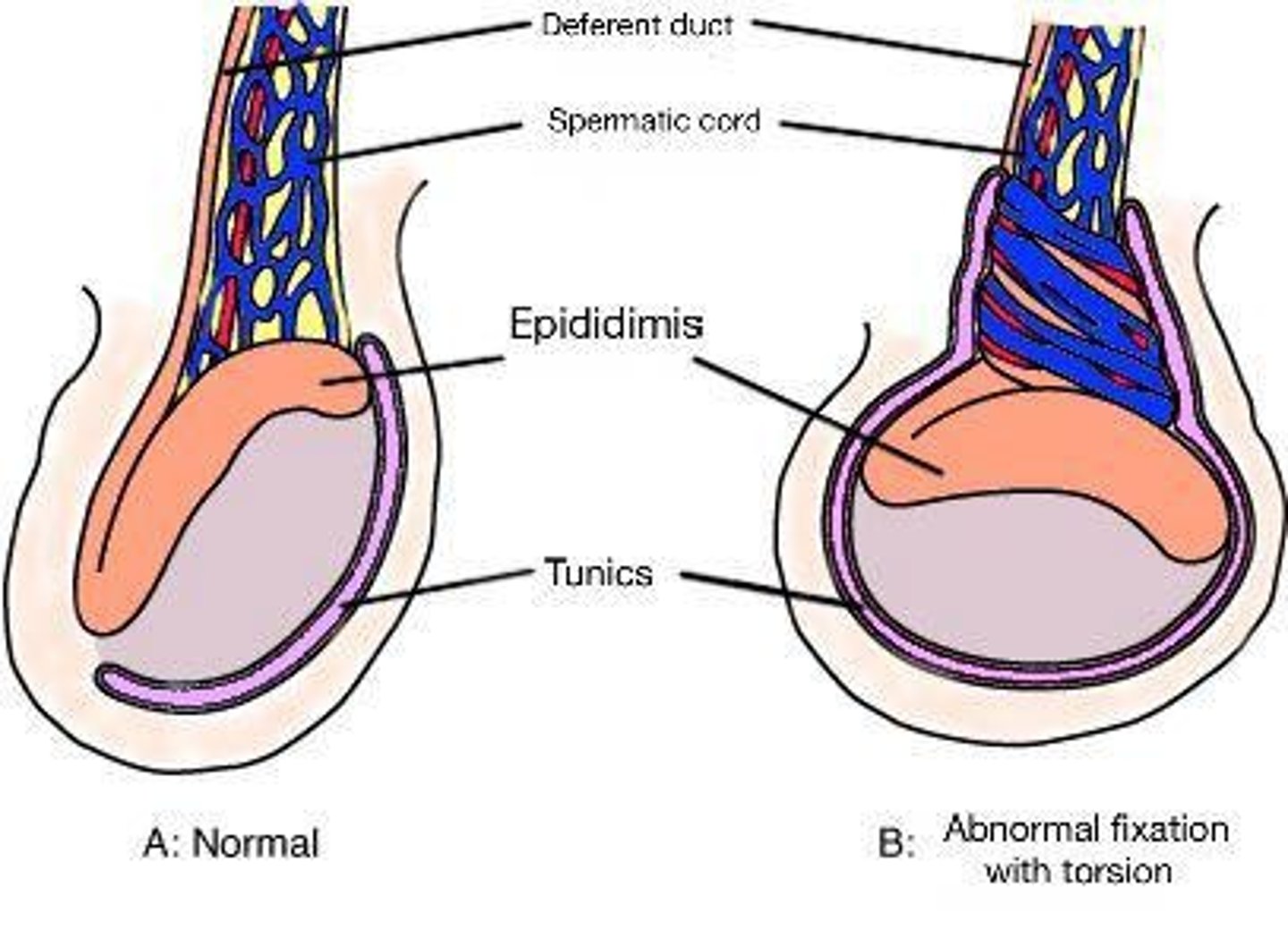
What is testicular torsion?
Rotation of the testicle leading to venous obstruction, arterial ischemia, and potential infarction.
What is the incidence rate of testicular torsion in males under 25?
1 in 4000.
What is a bell clapper deformity?
A condition allowing the testicle to freely rotate due to a narrow attachment of the epididymis to the tunica vaginalis.
What are the symptoms of testicular torsion?
Severe unilateral scrotal pain, scrotal swelling, abdominal pain, nausea/vomiting.
What is the recommended treatment for testicular torsion?
Urologic emergency; evaluation by a physician and referral to the Emergency Department.
What is the prognosis for testicular torsion if diagnosed within 6 hours?
80 to 100% preservation of the testicle.
What happens to the prognosis if testicular torsion is diagnosed after 12 hours?
0% preservation of the testicle.
What is a testicular rupture?
A rip or tear in the outer lining of the testicle leading to extrusion of testicular contents.
What is the treatment for a testicular rupture?
Surgery with repair, 90% successful if treated within 72 hours.
What is a testicular degloving injury?
The scrotum is torn away from the testicle, often from large industrial accidents.
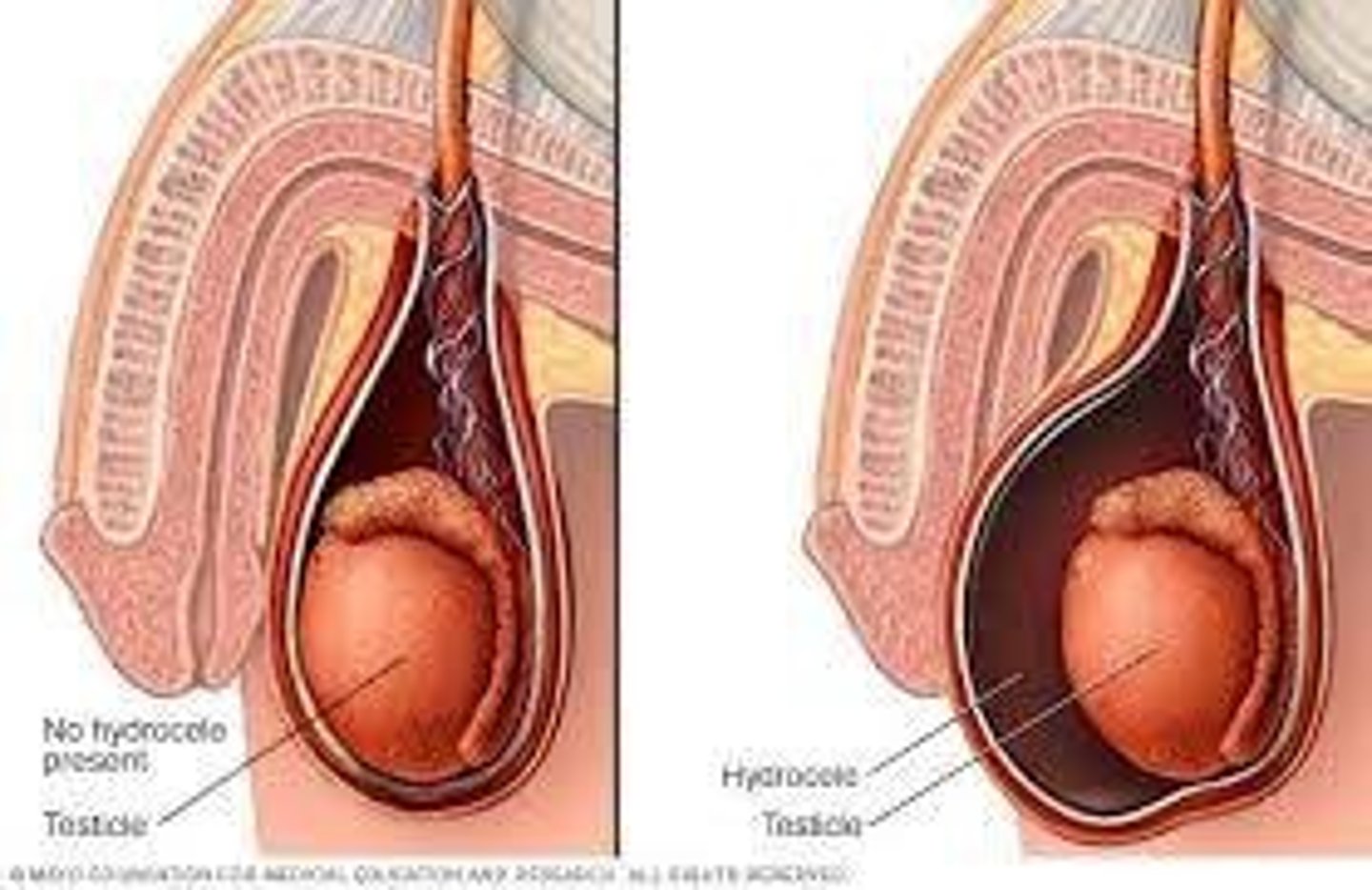
What is a testicular hydrocele?
Fluid collection along the spermatic cord or within the tunica vaginalis.
What percentage of males may have a hydrocele?
6%.
What are the symptoms of a hydrocele?
Asymptomatic, non-tender fullness in the hemiscrotum, palpable anterior to the testicle.
What is a communicating hydrocele?
A hydrocele that develops from the testicle moving from the abdomen into the scrotum over time.
What is a varicocele?
Dilation of the pampiniform venous plexus and internal spermatic vein in the scrotum.
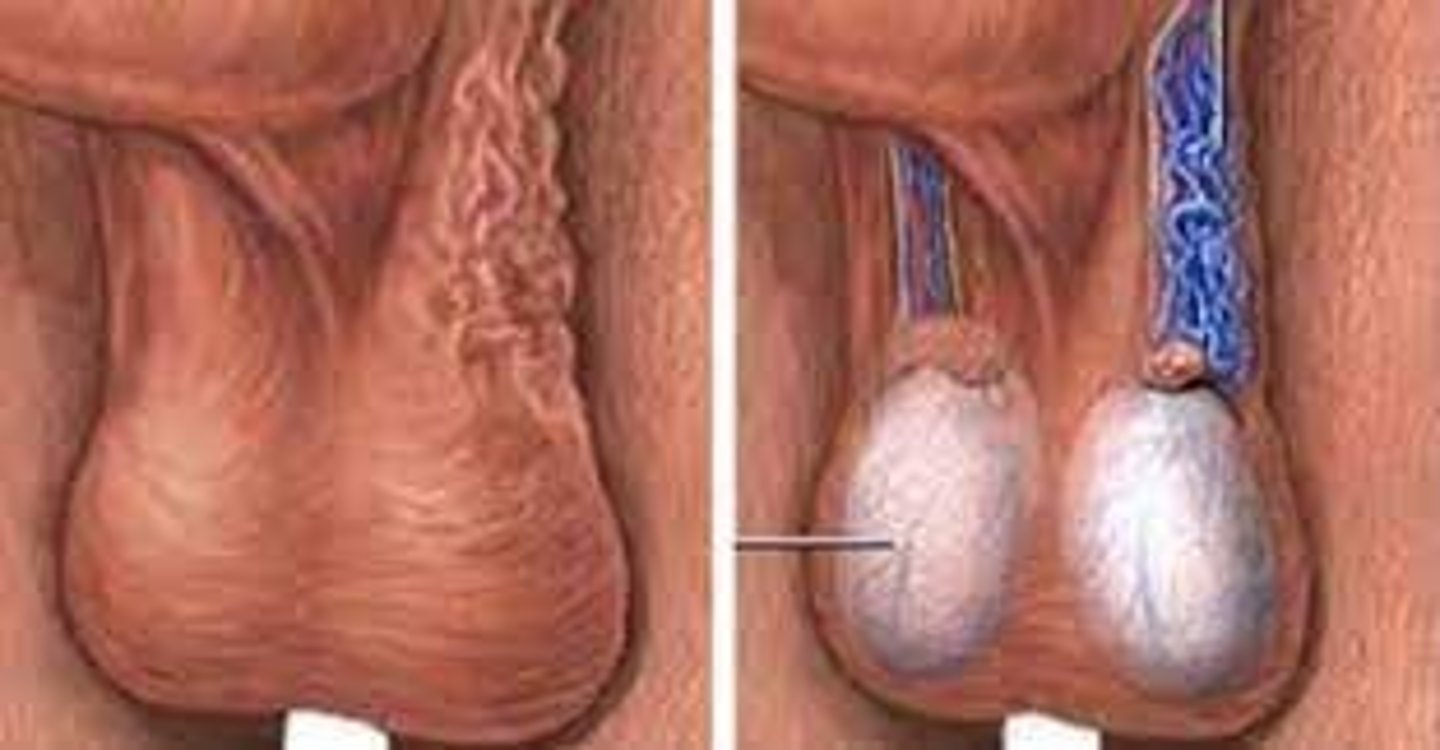
What percentage of infertile males may have a varicocele?
40%.
What is the survival rate for testicular cancer?
95%.
What are common symptoms of testicular cancer?
Painless swelling, growth/mass, pain in the testicle.
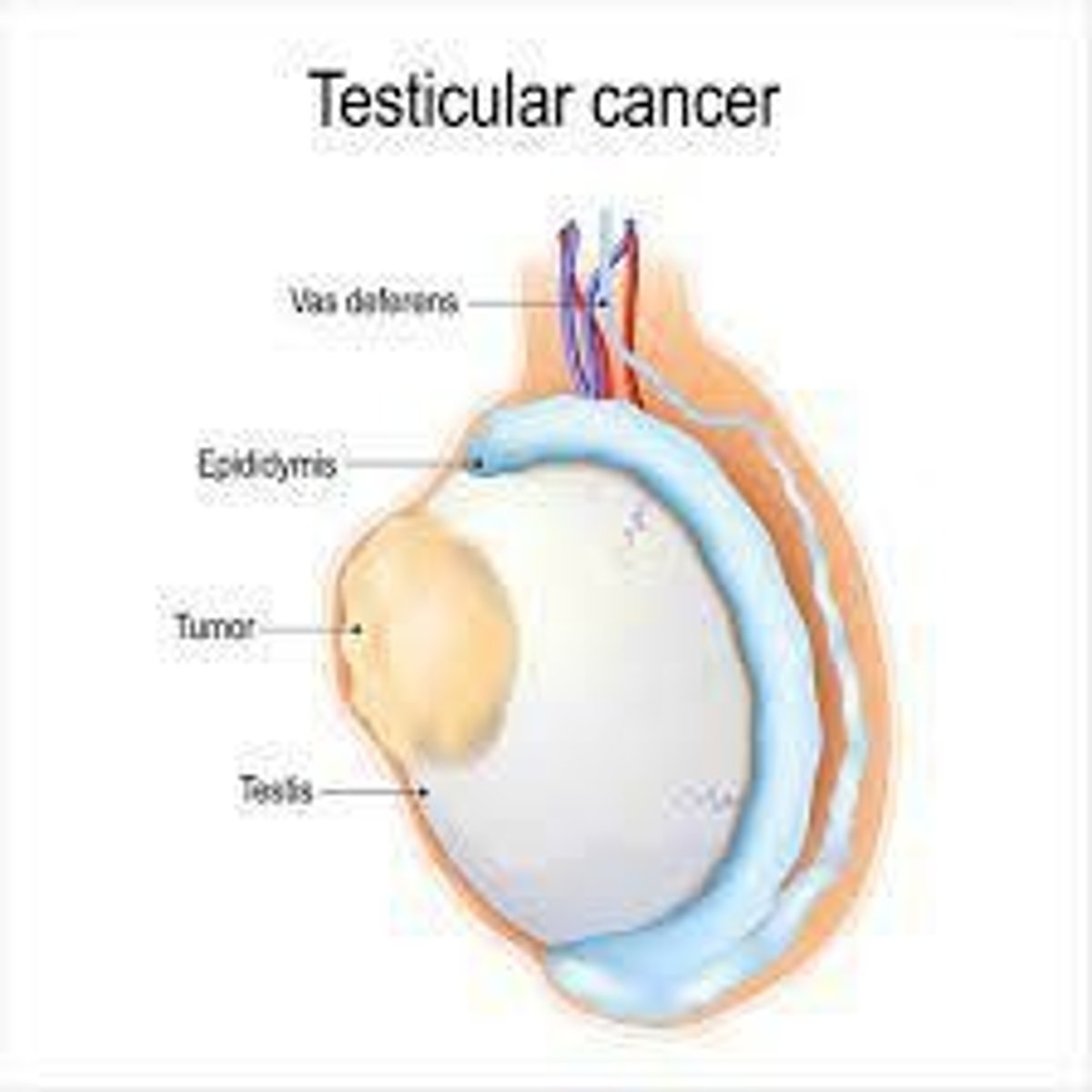
What is the typical age range for testicular cancer diagnosis?
Ages 16 to 44, with an average age of 33.