Economics Module 1 definitions
 Call Kai
 Learn
Learn Practice Test
 Spaced Repetition
 Match
Match Flashcards
 Knowt Play
1/33

Earn XP
Description and Tags
CAPE UNIT 1
Name | Mastery | Learn | Test | Matching | Spaced | Call with Kai |
|---|
No analytics yet
Send a link to your students to track their progress
34 Terms
Production Possibility Frontier
An economic model that illustrates the maximum possible outputs of two goods an economy can produce with its limited resources.
How does the Frontier illustrates scarcity?
The PPF illustrates the opportunity cost of producing one good over another, highlighting the concept of scarcity. Due to this, an economy must decide on what to produce, how to produce and who to produce it for.
Positive Statements
Objective, factual and can be tested and proven.
Normative Statements
Subjective and based on opinions, values and beliefs.
Cardinal Approach
Assumes that utility is quantifiable and can be measured numerically in units.
Ordinal Approach
Assumes that utility is a pschological phenomenon and cannot be measured but can be ranked in preference order.
Law of diminishing marginal utility
As an individual consumes an additional unit of a good/service, the marginal utility diminishes
Law of Equi Marginal Utility
States that a consumer will maximize their total satisfaction when the utility derived from the last dollar spent on each good is equal
Indifference curve
Shows all the different combinations of two goods that give a consumer the same level of satisfaction
Marginal rate of substitution
measures how much of one good a consumer is willing to give up in order to get one more unit of a another good while keep the overall satisfaction the same.
Budget Line
Shows all the combinations of two different goods a consumer can purchase with their limited income and the prices of those goods.
Consumer Equilibrium
Refers to the amount of goods a consumer can buy given his/her income and the prices of those goods.
A consumer is said to be in equilibrium when the budget line touches the highest possible indifference curve.
Normal Good
Products where demand increases when income increases
Eg: If you get a raise, you’ll purchase more steak and go to restaurants often.
Inferior Good
Goods where demand decreases when income increases
Eg: Instant ramen, instead of taking the bus you’ll purchase a car
Giffen good
A rare type of inferior good that defies the law of demand. When price goes up, demand increases.
This happens with absolute staples like bread or rice in very poor communities.
Substitute good
Pairs of goods that can be used in place of another. If the price of Good A goes up demand increases for Good B.
Eg: if the price for orange juice goes up the demand for apple juice increases.
Complementary goods
Products that are consumed together. if the price of good A goes up, demand for good B decreases
Eg: bun and cheese. if the price of bun goes up people will buy less cheese.
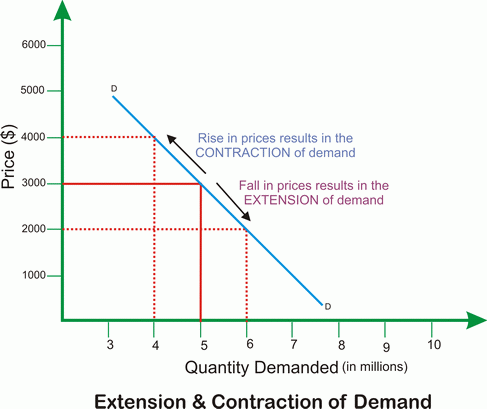
Movement along the demand curve
Result of a change in price of a good.
Fall in price ill result in an increase in QD, leading to an extension of the demand curve
Increase in price lead to a decrease in QD, causing the curve to contract.
Shift of the Demand Curve
A change in all other non price factor will cause a shift in the demand curve which ill result in a change in demand.
Factors that cause a shift to the right
An increase income
Increasing advertising
Improvement in product quality
Increase in population
Expectations of a price increase
Factors that cause a shift to the left
A decrease in income
Decrease in population
Decrease in advertisements
Expectation of price decrease
Decrease in product quality
Determinants of Demand
Price of good
Consumer income
Price of other good
Price Elasticity of Demand (PED)
Measures the responsiveness of quantity demanded to price.
Demand if elastic if the PED is greater than 1
Income Elasticity of Demand (YED)
Measures how quantity demanded for good changes in response to changes in consumer income
Cross Elasticity of demand (XED)
Measures how the quantity demanded of one good changes in response to a price change in another good.
Producer Surplus
The difference between the price a producer actually receives for a product and the minimum amount they would have been willing to accept.
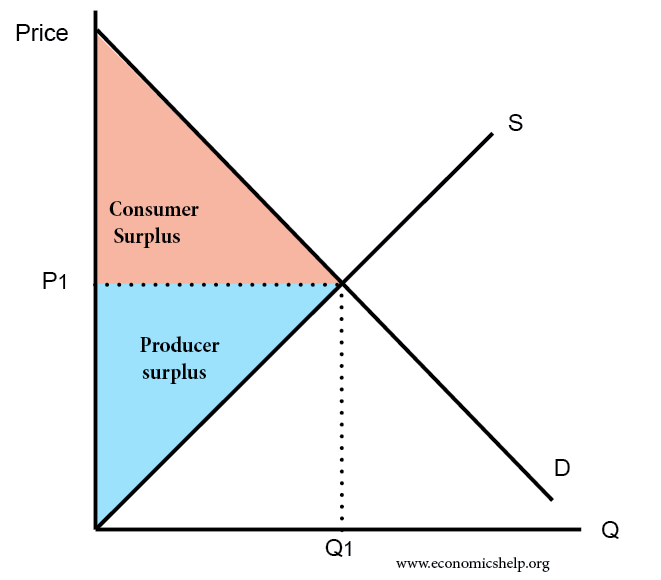
Consumer Surplus
The economic benefit consumers receive when they pay a price lower than the maximum they are willing to pay for a good or service
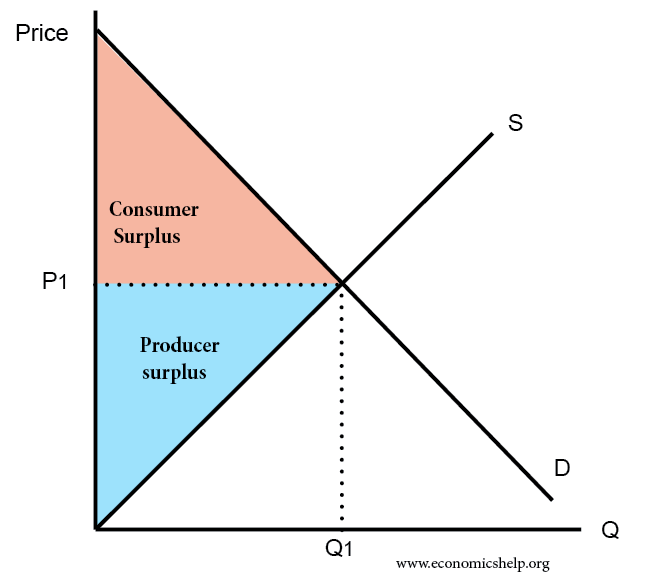
Market equilibrium
Refers to the state where quantity of goods or services demanded by consumers equal the quantity supplied by producers.
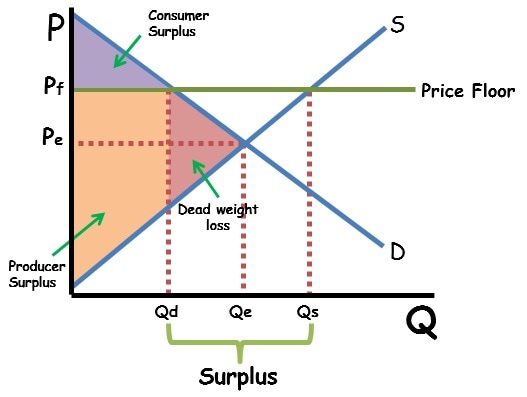
Price floor
A government imposed minimum price that can be charged on a good or service. It is set above market equilibrium. (minimum wage)
-Its purpose is to protect producers or workers by ensuring they receive stable income.
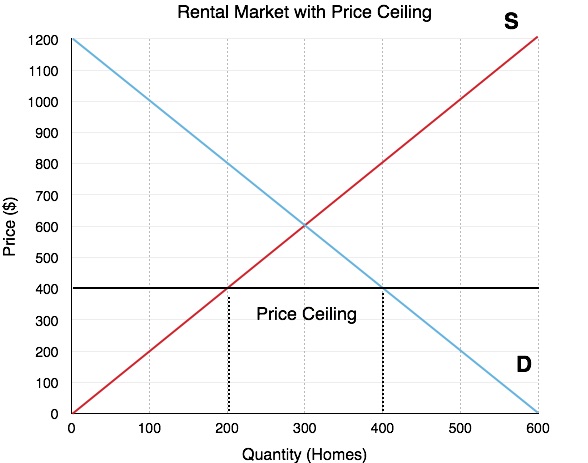
Price ceiling
A government imposed maximum price that can be charged on a good or service. It is set below market equilibrium.
Its purpose is to protect consumers by keeping essential goods and services affordable.