Bio 1105 Final Exam VT
 Call Kai
 Learn
Learn Practice Test
 Spaced Repetition
 Match
Match Flashcards
 Knowt Play
1/122

There's no tags or description
Looks like no tags are added yet.
Name | Mastery | Learn | Test | Matching | Spaced | Call with Kai |
|---|
No analytics yet
Send a link to your students to track their progress
123 Terms
characteristics of living things
o All made of cells
o All store and process info
o Transformations of energy
o Systems grow and reproduce diversity
o Systems adapt and evolve
Hierarchical organization of living systems
Atom molecule macromolecule organelle cell tissue organ system organism population species community ecosystem biosphere
cohesion
polarity of water creates the attraction of H20 molec., creates surface tension
Macromolecules
carbs, nucleic acids, proteins, lipids
carbohydrates
energy and structural support, energy rich biofuels, surface signaling (ex. Sugars and starches)
Nucleic Acids
storage and expression of genetic info (ex. DNA, RNA, ATP, NAD+, NADP)
Proteins
enzymes and structural support (cell wall, membranes, amino acids)
Lipids
energy storage, membrane structure, signaling (ex. Phospholipid bilayer)
Macroelements
carbon, hydrogen, oxygen, phosphorus, potassium, iodine, nitrogen, sulfur, calcium, iron, maganesium
microelements
chlorine, manganese, copper, zinc
plasma membrane
regulates what comes in and out of the cell; cell to cell recognition
nucleus
instructions for protein synthesis and cell reproduction; contains genetic info
chromosomes
contain hereditary info used in the direct synthesis of proteins
nucleolus
synthesis of rRNA and ribosome assembly
ribosome
site of protein synthesis
ER
intercellular compartment forms transport vesicles; participates in lipid synthesis and synthesis of membrane secreted proteins
Golgi Apparatus
packages proteins for export from cell; forms secretory vesicles
Lysosomes
digest worn out organelles and cell debris; digest material taken up by endocytosis
microbodies
isolate particular chemical activities from the rest of the cell
mitochondria
"power plants" of the cell; sites of oxidative metabolism
chloroplast
sites of photsynthesis
flagella
motility or moving fluids over a surface, like a tail
cell wall
protection and support found around plant cells
endomembrane system
o Made up of nuclear envelope, plasma membrane, ER, Golgi Apparatus, lysosomes, and vacuole
o Functions:
♣ Synthesis of proteins and transports into membranes, organelles or out of cells
♣ Metabolism and movement of lipids
♣ Detoxification of poisons
phospholipids
fundamental structure of the membrane with polar hydrophilic heads and non polar hydrophobic tails
Fluid Mosaic Model
o Hydrogen bonding eater keeps membrane in bilayer configuration
o Phospholipids and unanchored proteins in membrane are loosely associated and can diffuse laterally
phagocytosis
o particle is engulfed, which folds around it and forms vesicle
pinocytosis
o fluid droplets are engulfed by membrane then forms vesicles
receptor mediated endocytosis
o triggered by a specific receptor forming clathrin coated vesicles
direct contact
o - cells communicate with cells nearby, recognized by its receptors
♣ Used a lot during cells development
paracrine signaling
o cell releases signal m0lecules that diffuses through the membrane of another cell (next door neighbors)
endocrine signaling
o signal molecule remains in extracellular membrane, may enter organism's circulatory system
♣ Hormones- long lived signaling cell, slow compared to other signaling
♣ Ex. Insulin moving
synaptic signaling
o in animals' nervous system provides rapid signaling to distant cells, neuron to neuron or neuron to target cell
♣ Neurotransmitters - released from long fiberous nerve cells
autocrine signaling
cells send signals to themselves that bind to specific receptors on own plasma
phosphorylation
o Chemical reaction resulted in the addition of a phosphate group to an organic molecule
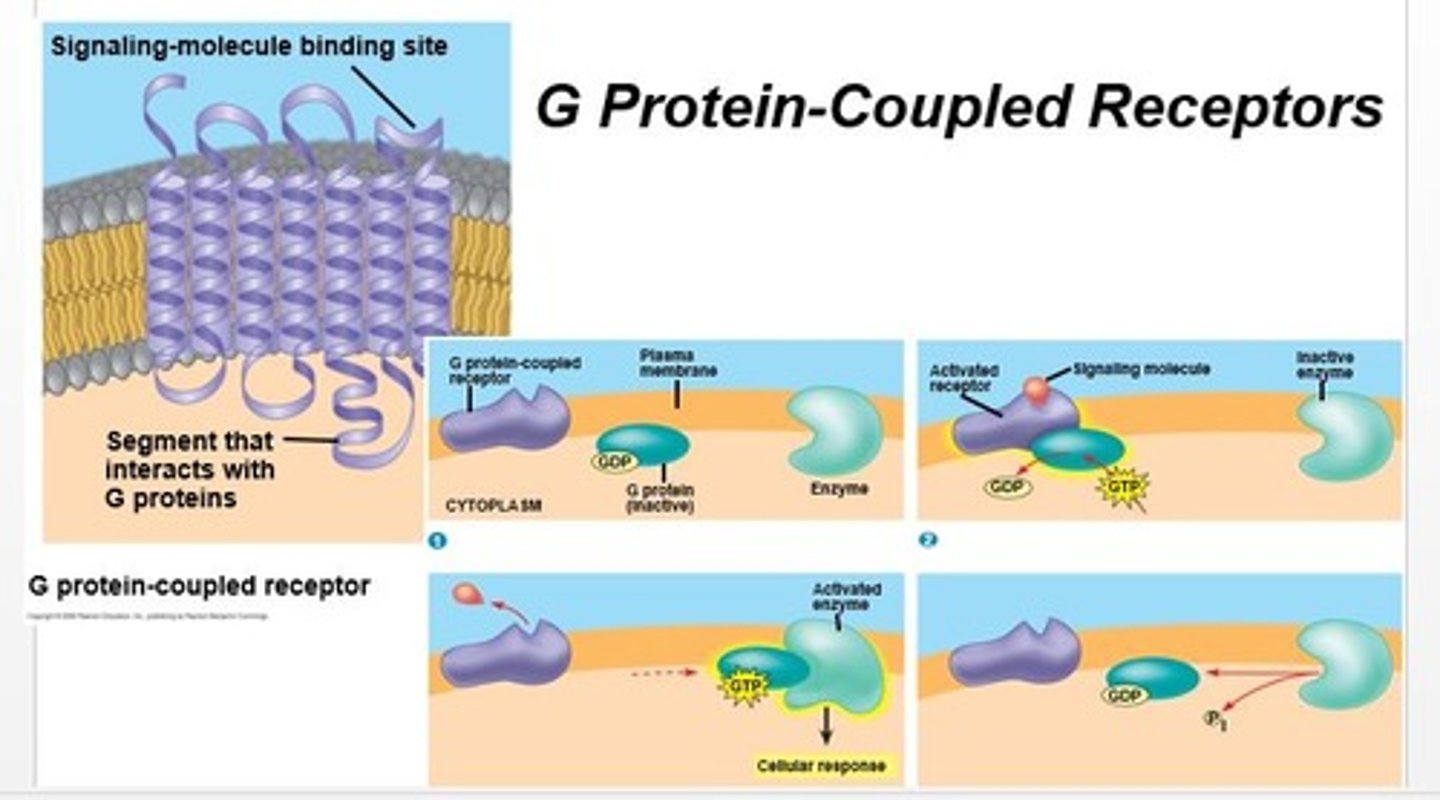
G protein-coupled receptors
o Large family includes receptors for neurotransmitters, odors/tastes. Photons, endocrine hormones and growth factors
50% of know drugs target
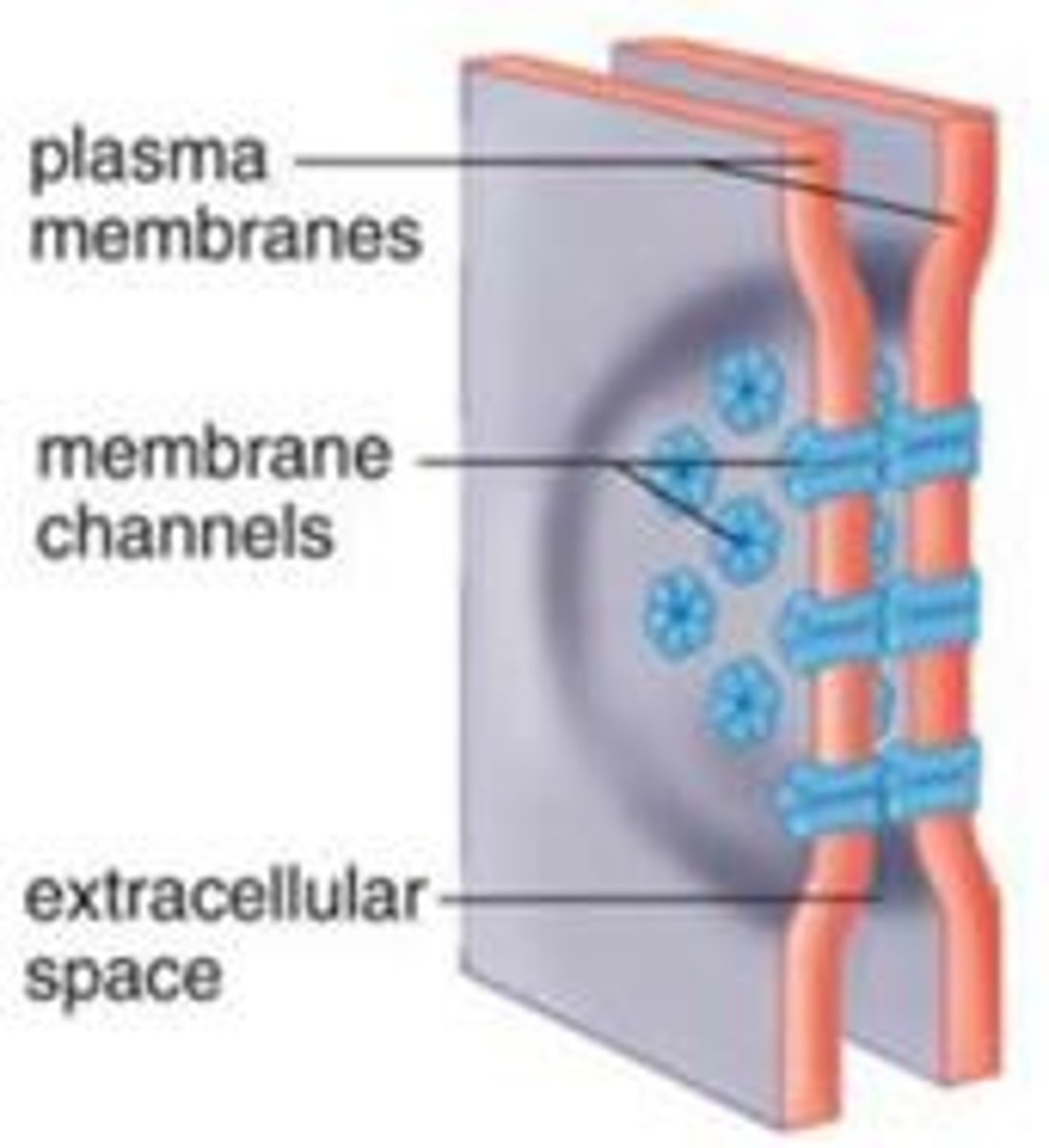
gap junction
o provide passageways large enough to permit small substances such as glucose and amino acids to pass from one cell to the next
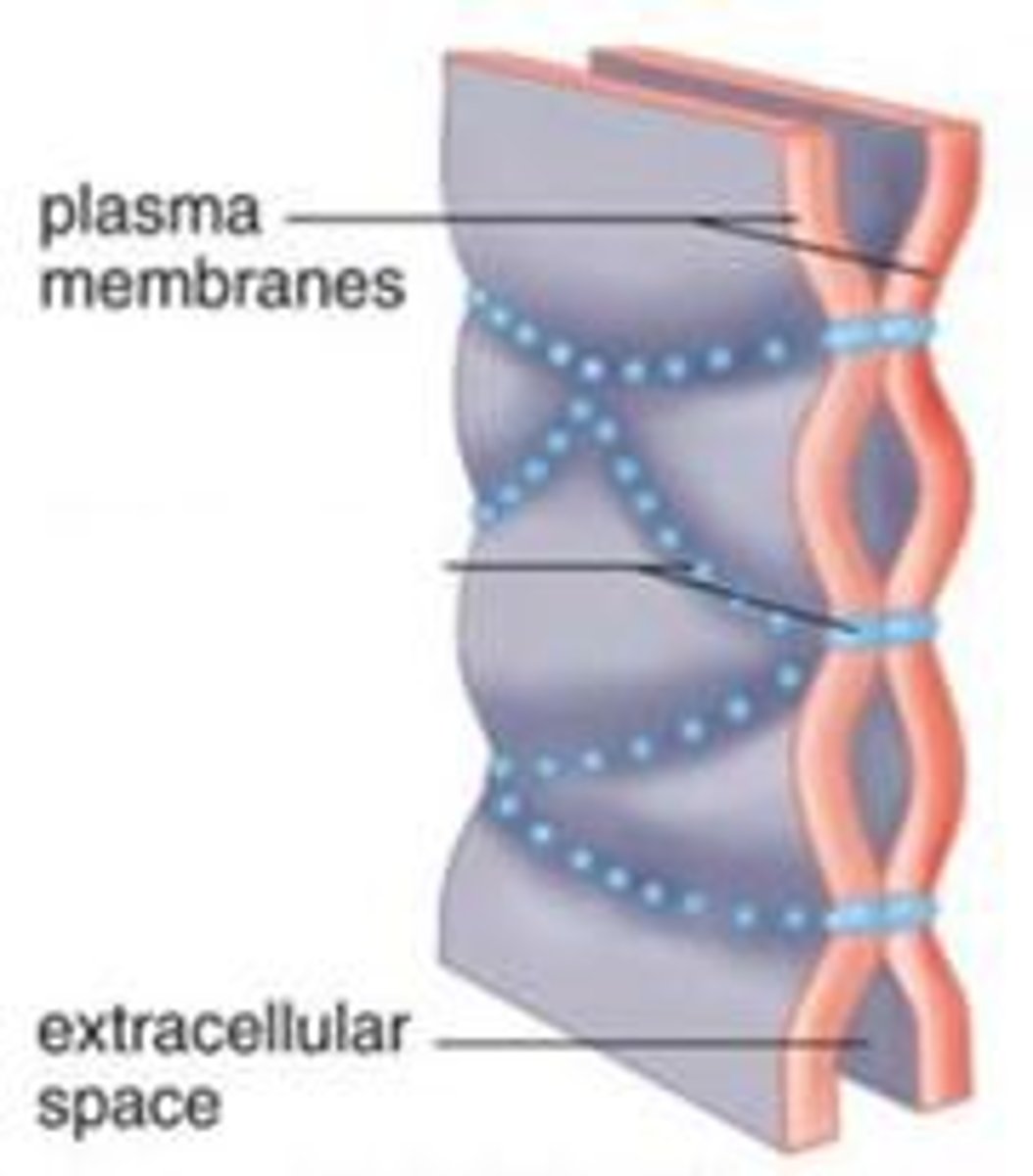
tight junction
along digestive tract; prevent leakage
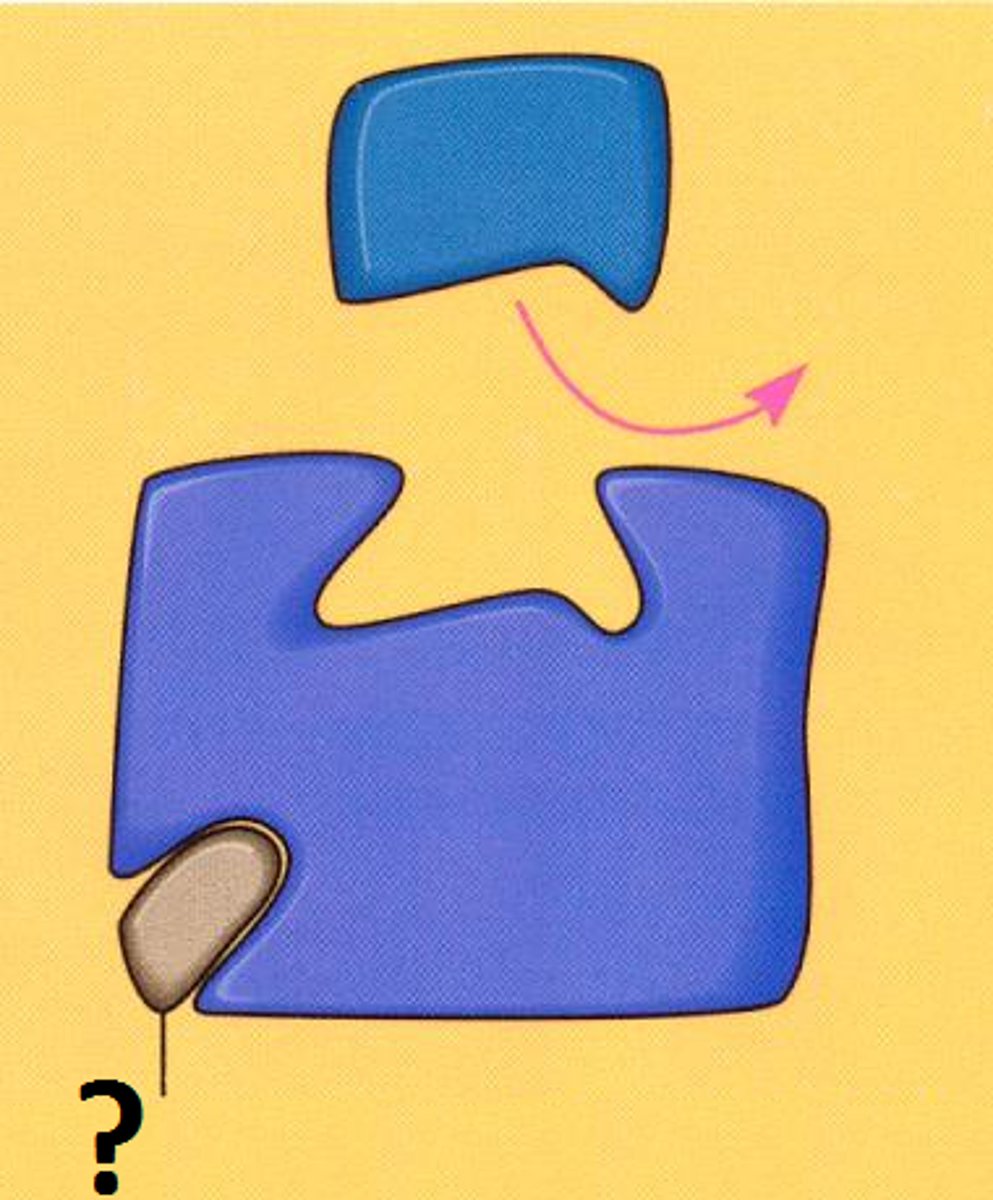
catalysts
o influence chemical bonds to lower activation energy
o cannot violate the laws of thermodynamics
o don't alter the proportion of reactant turned into product
competitive inhibitors
competes with the substrate for the active site
noncompetitive inhibitors
bind to enzyme at the allosteric site causes a shape change that makes the substrate unable to bind substrate
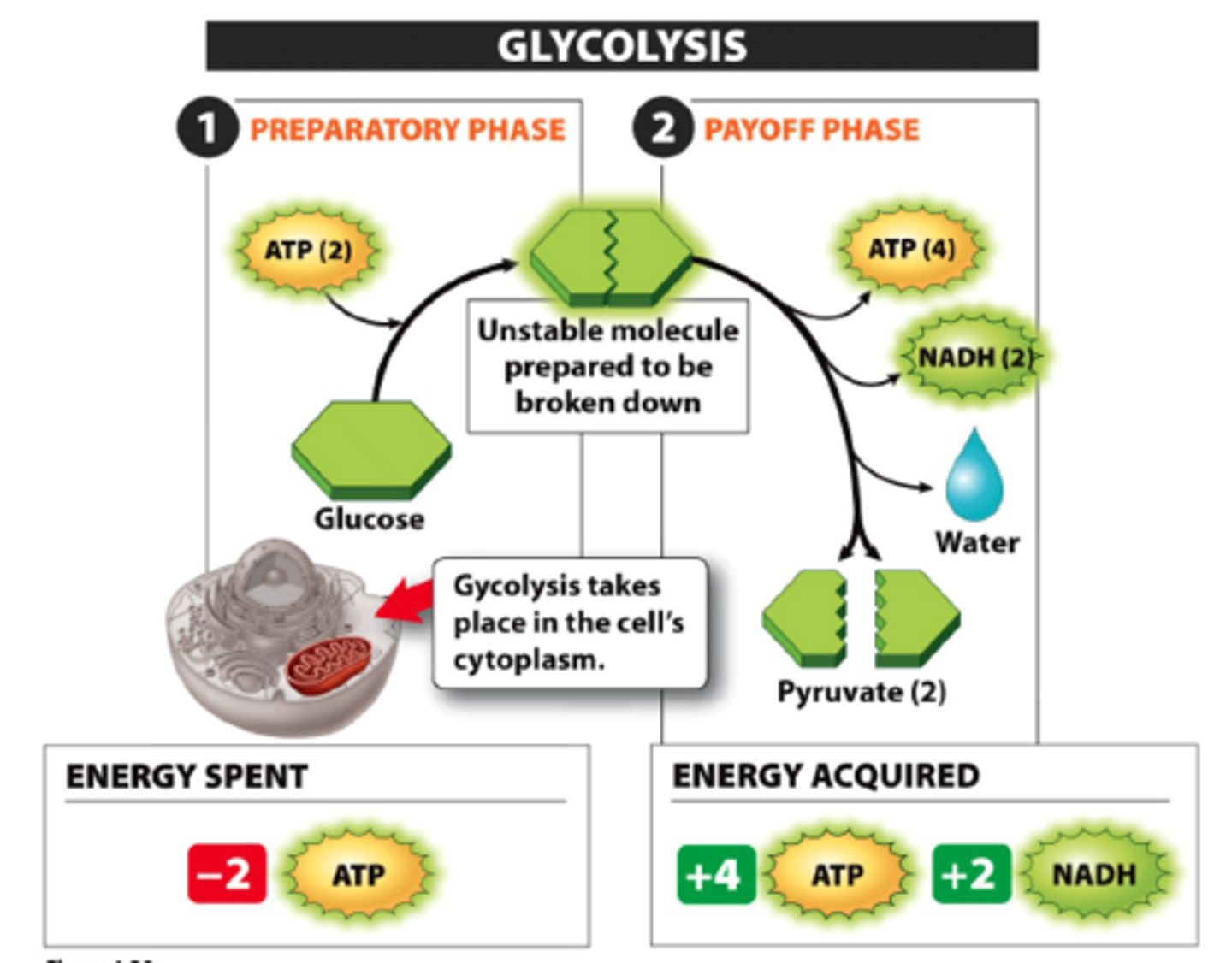
Glycolysis
• first stage of cellular respiration
o Takes place in the cytoplasm
o Converts 1 glucose to 2 pyruvates
o 10 step biochemical pathway
o left with no carbons because they are being released as carbon dioxide
o Products:
♣ 2 ATP by substrate level phosphorylation
♣ 2 NADH
o 1st converted into two G3P molecules
♣ 1st 5 reactions
♣ activity requires energy input hydrolysis of 2 ATP molecules
o Each G3P molecule is converted into pyruvate
♣ Last 5 reactions
♣ G3P is oxidized: NAD+ NADH
♣ Pi is added to G3P and transferred to ADP 2 molecules of ATP at the end
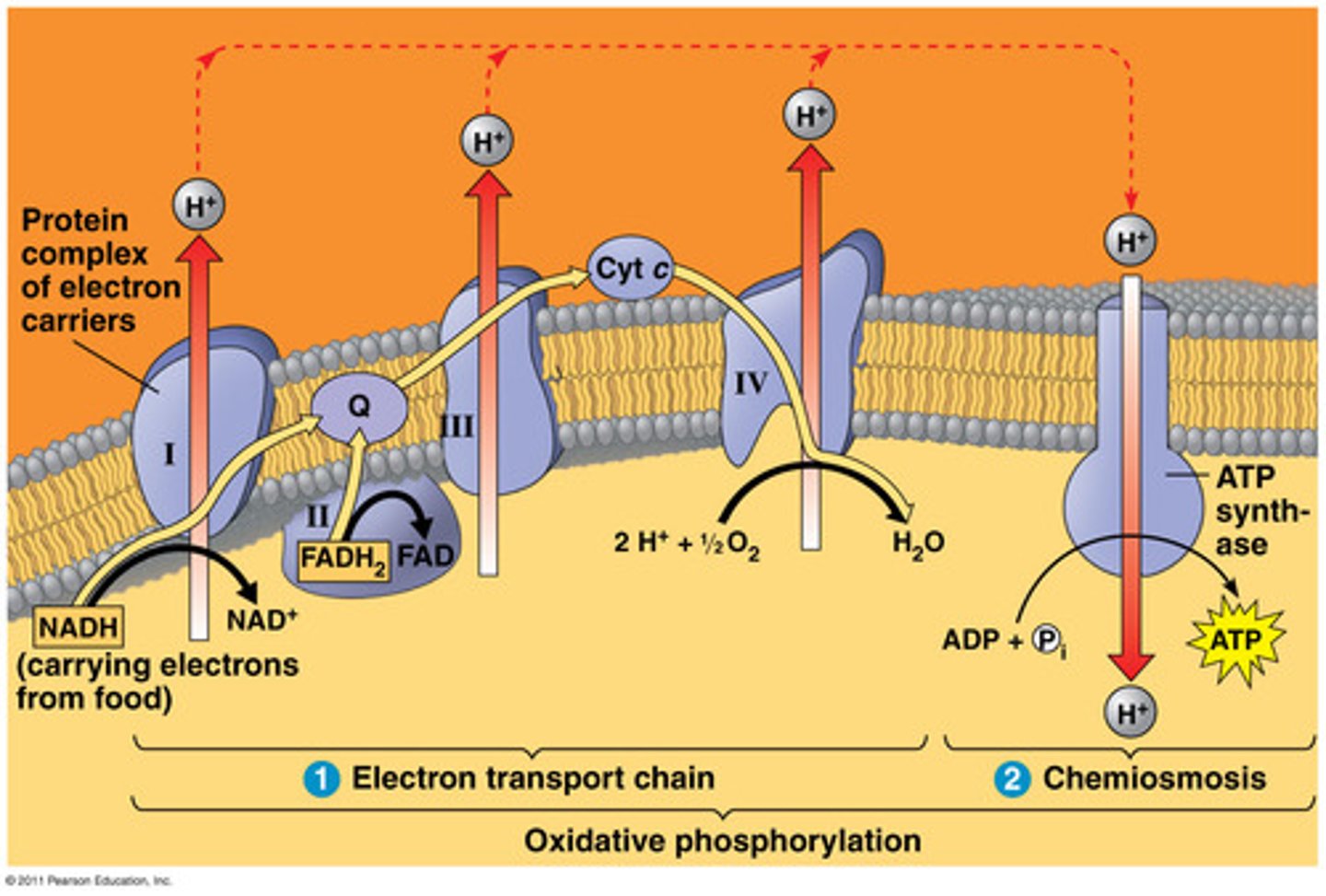
Electron Transport Chain
A sequence of electron carrier molecules (membrane proteins) that shuttle electrons during the redox reactions that release energy used to make ATP.
aerobic respiration
Growing or metabolizing only in the presence of molecular oxygen
fermentation
The process by which cells break down molecules to release energy without using oxygen
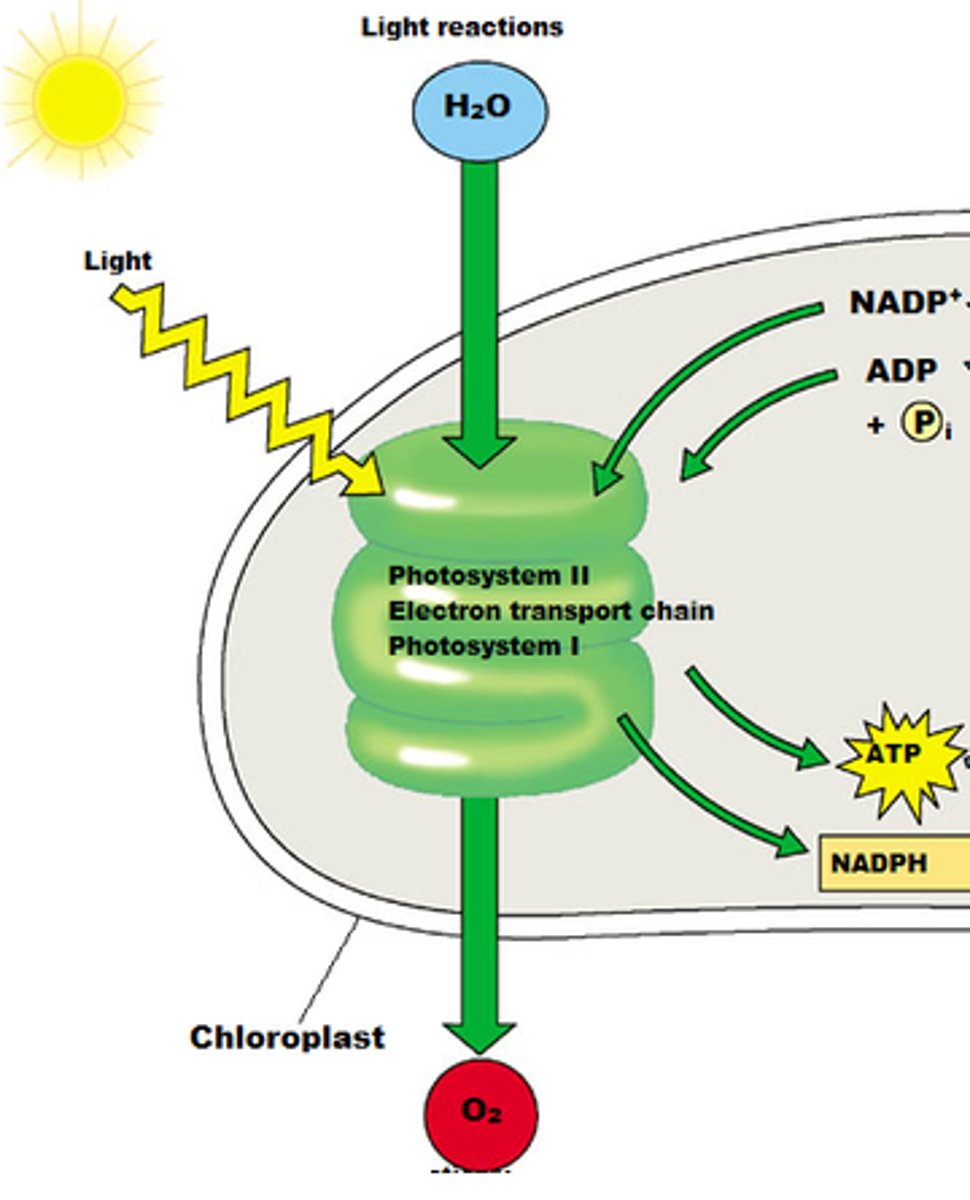
Light Dependent Reactions
o Require light
o Occur in the thylakoid
o Capture energy from the sunlight
o Make ATP and reduce NADP+ to NADH
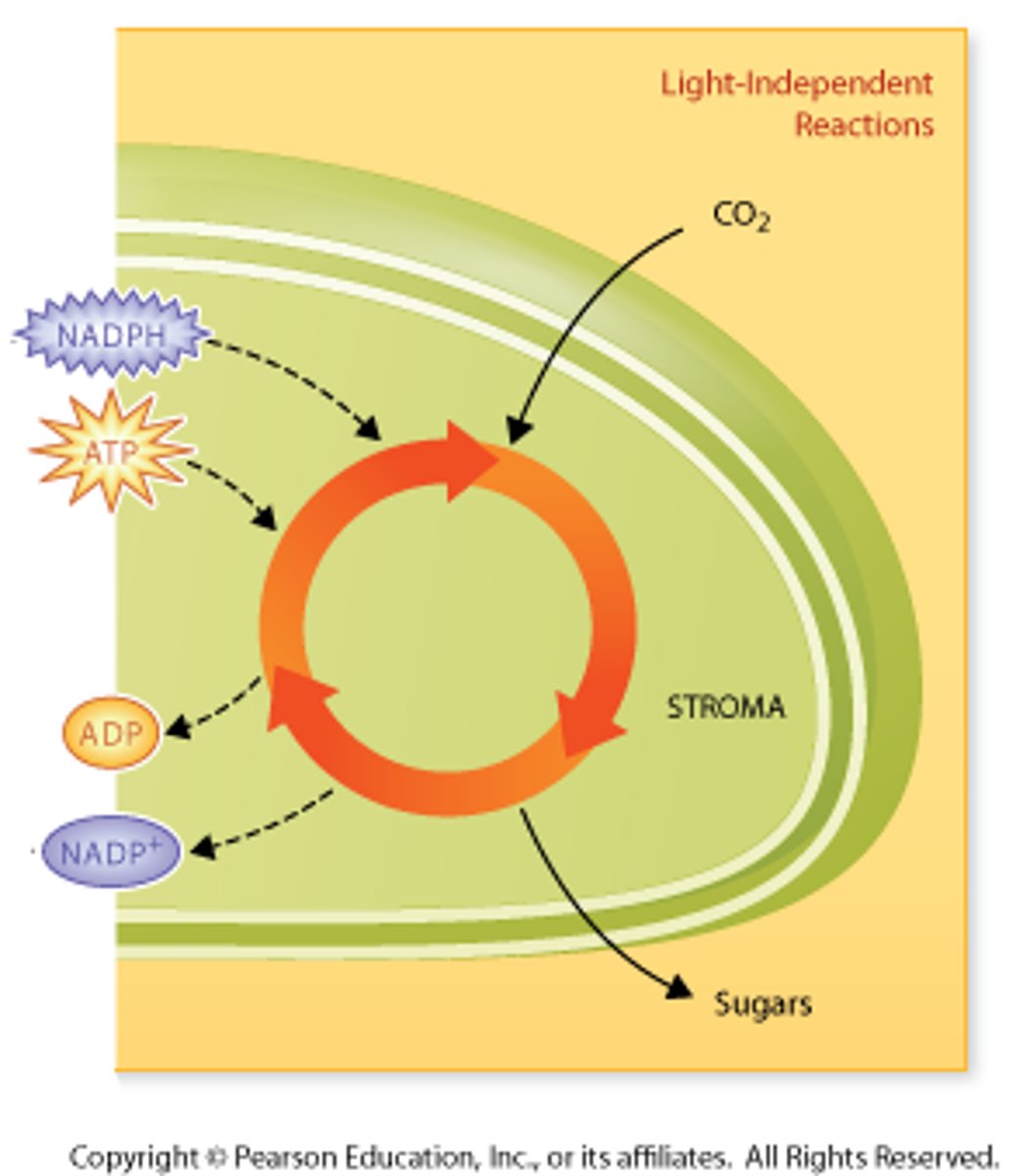
Light Independent Reactions
o Does not require light
o Occurs in the stroma
Use ATP and NADPH to synthesize organic molecules from CO2
chlorophyll a
♣ Main pigment in plants
♣ Absorbs violet-blue and red light
♣ Only pigment that can directly convert light energy into chemical energy
chlorophyll b
♣ Accessory pigment
♣ Absorbs blue and red-orange light
♣ Adds to rand of absorbed light
♣ Tissues will reflect green
carotenoids
♣ Accessory pigment
♣ Absorbs blue and blue-green light
♣ Adds to range of absorbed light
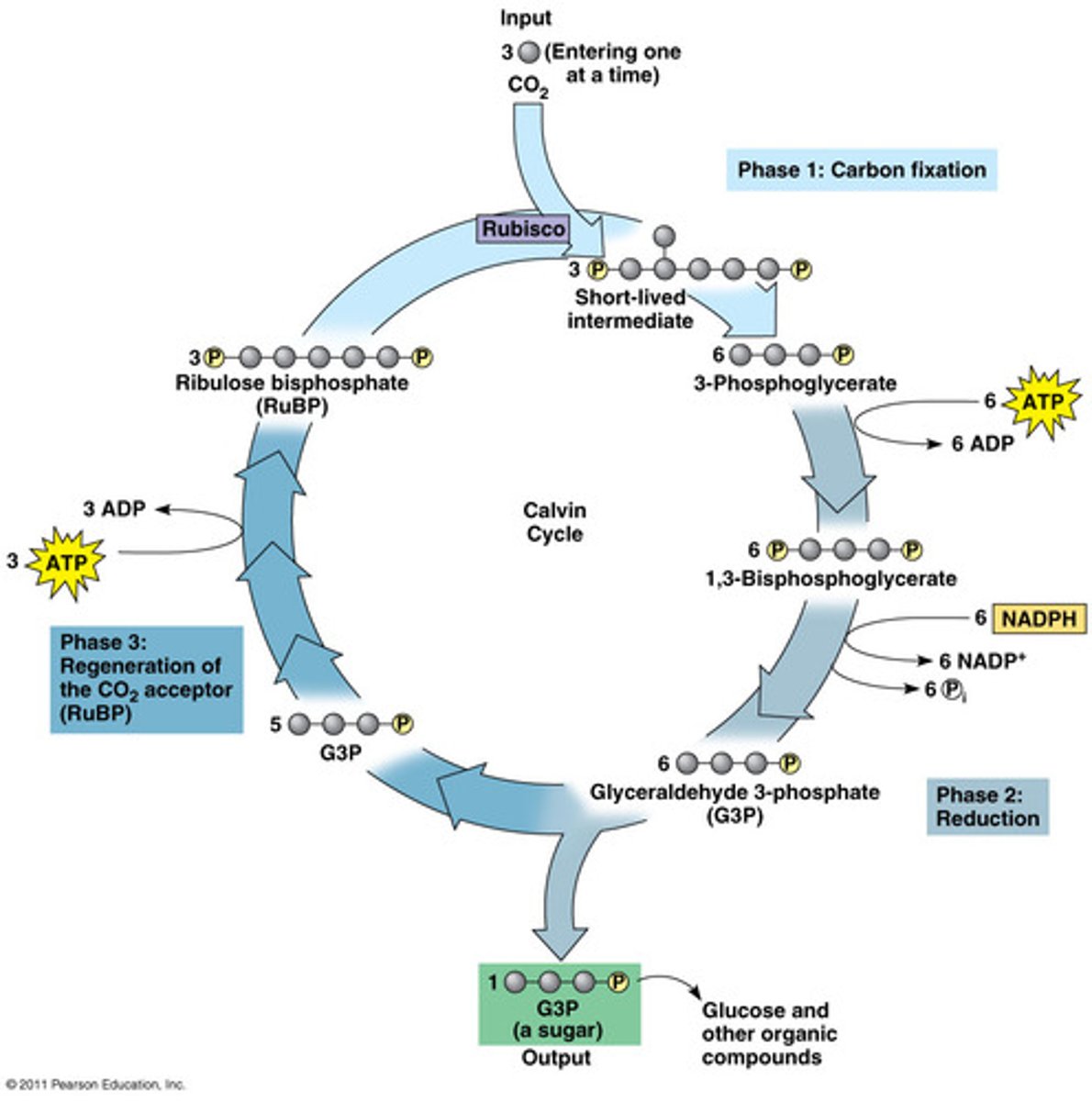
Calvin Cycle
Carbon fixation process in photosynthesis. Forms sugar and other organic compounds.
DNA pol III
synthesizes fragment, main replicating enzyme
DNA pol II
DNA repairing enzyme
DNA pol I
replaces RNA with DNA
Transcription
o When DNA is read and a complementary strand of RNA is formed
o Occurs in the nucleus of eukaryotes
G1 phase
primary growth phase (longest of the phases)
S phase
replication of DNA is signaled
G2 phase
more growth and prep for mitosis
M phase
nuclear and cytoplasmic division
prophase
♣ bipolar spindle assembles, chromosomes condense, nuclear envelope breaks down
prometaphase
chromosomes attach to microtubules at the kinetochores, chromosomes move to the equator of the cell
metaphase
♣ all chromosomes are aligned at the equator , called the metaphase plate, chromosomes are attached to opposite poles and are under tension
anaphase
sister chromatids separate, chromosomes move to plates, poles further separate
telophase
- chromosomes decondense, nuclear envelope begins to reform
cytokinesis
♣ Animal cells- cleavage furrow forms to divide the cells
♣ Plants- cell plate forms to divide the cells
G1/S Check point
♣ Growth factors, nutritional state of the cell , size of the cell
♣ Cell will either keep on growing or divide
G2/M Checkpoint
♣ Replication completed, DNA integrity
P53 protein comes into play
Spindle Checkpoint
♣ Chromosomes attached at metaphase plate
♣ Nondisjunction can occur if they are not properly attached
cyclins
proteins that intimate mitosis
proto-oncogenes
o only one chromosome in the pair is mutated
♣ Normal genes that become oncogenes when mutated
♣ Oncogenes may be overexpressed or stuck in the "on" state
Gain-of-function mutation: only one needs to be mutated
dosage compensation
o Ensures equal expression genes from the sex chromosomes even though females have two X chromosomes and males only have 1
nondisjunction
o Failure of homologues or sister chromatids to separate properly during meiosis
Leads to aneuploidy
aneuploidy
loss or gain of a chromosome
restriction endonuclease
o Breaks the double helix of DNA at specific sequence, in bacteria these enzymes protect the organisms from viruses
o Specific enzyme can only cut a specific section
o Generates ends of unpaired bases (sticky ends), useful for pair recombinant DNA
Polymerase Chain Reactions
o Denaturation, annealing of primers, DNA synthesis
o Uses heat cycles and DNA polymerase to replicate a segment of DNA many times
o DNA polymerase is the only enzyme used in cellular DNA replication that is required to perform PCR
o Mimics DNA replication
vector
o DNA molecule into which the DNA sequence of interest can be inserted
♣ Must:
• Have ability to be replicated by the host's cellular machinery
• Have selectable marker gene
• Have a way to insert the DNA of interest
cDNA (complementary DNA)
o made using reverse transcriptase, an enzyme isolated from retroviruses that converts RNA into DNA
o a way to examine alternative splicing in different tissues
genetic map
• provide relative locations of genes
o determined by recombination frequency
o first knowledge of genome came from construction of genetic maps
physical map
shows actual location of landmarks
restriction map
common type of physical map
♣ DNA cut with Restriction enzymes and the banding [attern is analyzed to generate map
♣ Distance on this type of map can be measured in base pairs (bp) or kilobases
clone-by-clone sequencing
Overlapping regions between bacterial artificial chromosomes
shotgun sequencing
o DNA is randomly cut into smaller fragments, cloned, the sequenced
o Occurs a lot faster
cleavages
o the first cell divisions in early embryos
♣ Occur rapidly
♣ No G1 or G2 phase
♣ No cell growth
Single cell multicellular organism
cell differentiation
o Changes in gene expression that ultimately result in cell specialization
♣ Progressive restriction of the number o fates that the wells with in a lineage can adopt occurs over multiple divisions
totipotent
- form all tissues of an organism plus extraembryonic tissues (ex. Zygote)
pluripotent
form all tissues of an organism but extraembryonic (ex. Embryonic stem cells from blastocysts)
multipotent
♣ can only form certain cell type (ex. Adult stem cells)
unipotent
♣ can only form one cell type
• Spermatogonia- sperm stem cells can only become sperm
morphogenesis
o Development of organisms body form
o Achieved through the following mechanisms:
Cell growth, division, migration, changes in cell shape , and programmed cell death (apoptosis)
meristems
clusters of cells responsible for producing new cells at the ends of plants
c. elegans
about as primitive an organism that exists which nonetheless shares many of the essential biological characteristics that are central problems of human biology
nuclear reprograming
o Resets a differentiated call to an undifferentiated stem cell shape
reproductive cloning
o nucleus of differentiated cell is put into a denucleated egg
therapeutic cloning
o nucleus of differentiated cell is put into the egg of a human
♣ The embryonic stem cells are harvested and cultured
apoptosis
o Programmed cell death
The cell breaks into several apoptic bodies ; the organelles are still functional and are recycled or metabolized by other cells
Hox genes
Class of homeotic genes. Changes in these genes can have a profound impact on morphology.
population
A group of individuals that belong to the same species and live in the same area
evolution
change in the population of organisms over a long period of time through shifts in allele frequencies
genetic variation
Differences among individuals in the composition of their genes or other DNA segments in a population
molecular hybridization
is tagged singled strands that are used to determined where wanted colonies are growing