complex emotional + relational needs
 Call Kai
 Learn
Learn Practice Test
 Spaced Repetition
 Match
Match Flashcards
 Knowt Play
1/63

There's no tags or description
Looks like no tags are added yet.
Name | Mastery | Learn | Test | Matching | Spaced | Call with Kai |
|---|
No analytics yet
Send a link to your students to track their progress
64 Terms
what is another term for personality disorders
complex emotional + relational needs → now the standard terminology
why is gaining the POVs of people with CERN important for research
there is a large diversity of experience across individuals → no one standard of presentation/experience
integral for the movement away from stigmatising representations, e.g. ‘dangerous’ or ‘self-obsessed’
the prevalence of personality diagnoses is high
what are 2 common experiences in CERN
emotional + interpersonal sensitivity → negative attributional style + experience of despair/shame despite rational thinking
difficulty with interpersonal relationships + lack of trust → often born out of past experiences + maintained by current behaviours
how can diagnosis be a paradoxical experience for people with CERN
may feel like being written off something being inherently wrong with you, e.g. being a ‘problem person’/having no prospect of change
may also feel like an enormous relief due to recognition that there is a problem + access to therapy
personality definition
our tendency towards patterns of behaviour, emotion, cognition + interaction that show through regardless of the situation we are in
traits held over time rather than temporary states
what is the issue of context when considering when personality becomes a problem
personality can have positive implications if it fits the demands of the world/environment that they are in, but they can have negative influence if they don’t fit the rules/social expectations of society
e.g. aggression in boxing is appropriate, but would be problematic if persisting outside of this context
what are the issues of sociopolitical conceptualisations of personality disorders
conception of personality disorders usually involves sociopolitical perspectives → these involve sentiments of:
this person is weird/not acceptable, or not within social bounds → these views are not agreed upon, and can change depending on social climate
early conceptualisations were based in relation to being non-diagnosable forms of other disorders → e.g. BPD used to be considered the ‘borderline’ of experiencing psychosis
medico-legal perspectives → how people in society are treated on the basis of whether they are likely to offend, rather than whether they have
what are 2 issues of categories vs dimensions when considering personality disorders
personality traits vary along dimensions, e.g. the big 5 personality traits
the issue is if personality disorders are extremes on these dimensions, how do we establish a cut-off, especially if what is considered a ‘problem’ is subjective
e.g. the top 0.5% of impulsivity would not be considered qualitatively different to the top 1%
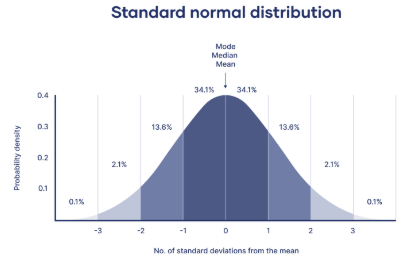
another issue = whether personality disorders are distinct ‘clumps’ at either extreme of trait distribution (e.g. being 2/3 SD from average in confidence), or only at one end of the dimension
e.g. extreme neuroticism would be seen as a problem, but not extreme stability
what was the DSM-IV definition of personality disorders (1994)
an enduring pattern of inner experience + behaviour that deviates markedly from the expectations of the individual’s culture
what were 2 main issue with the DSM-IV definition of personality disorder
definition is very vague + broad → it encompasses many things e.g. belief systems that are unusual in the current context, but may have been more regular at different points in history/in different societies
the issue of strictly using the method of categorisation
what is the DSM-V definition of personality disorders (2013)
the essential features of a personality disorder = impairments in personality (self + interpersonal) functioning + the presence of pathological personality traits
what 5 criteria does the diagnosis of a personality disorder require in the DSM-V (2013)
significant impairments in self (identity/self-direction) + interpersonal (empathy or intimacy) functioning
one or more ‘pathological’ personality trait domains/facets
impairments in personality functioning + treat expression are relatively stable across time + across situations (persisting)
impairments are not better understood as normative for the individual’s developmental stage/sociocultural environment
impairments are not solely due to the direct physiological effects of a substance (e.g. drug abuse/medication) or general medical condition (e.g. head trauma)
how have definitions of personality changed between the DSM-IV and DSM-V
DSM-V maintains diagnostic criteria + the same 10 personality disorders as the DSM-IV, but uses a more dimensional approach to diagnosis (accounting for variability in traits) + encourages further research on these than the DSM-IV, which was much more categorical
what 3 research proposals did the DSM-V include to allow future potential change in diagnosis of personality disorders
levels of personality functioning
personality trait domains + facets
personality disorder types
what are 3 key issues with reaching a personality disorder diagnosis
long-term presentations → traits must be persisting
must be independent of biological factors, e.g. drug use, starvation, actual threat
diagnosis cannot be made at a single clinical meeting → due to necessity of long-term effects + ruling out contextual factors, it should be judged over a number of weeks
however, a lot of clinicians do not adhere to this criteria, meaning some diagnoses may not be as accurate
what is Tyrer (2022)’s argument for diagnosing PDs in adolescents + what are issues with this
argues that some young people present personality functions are so disturbed that they cross the threshold of personality disorders
this is an incredibly stigmatising mindset to have → demonises personality disorders + enhances stereotypes of PD
incredibly inappropriate to diagnosed PDs at this age due to the wealth of changes adolescents go through in terms of identity → traits are not always stable/persistent at this age
what are the 3 clusters of personality disorders
cluster A → odd/eccentric
cluster B → dramatic/erratic
cluster C → anxious/fearful
what are cluster A personality disorders overall + what are the 3 types
PDs with schizophrenia-like features, while lacking in some positive symptoms e.g. hallucinations. includes:
paranoid PD
schizoid PD
schizotypal PD
what is paranoid PD
pattern of distrust/suspiciousness + resistant to challenge by others
what is schizoid PD
pattern of separation from social relationships, limited emotional expression + experience (affective flattening)
what is schizotypal PD
pattern of eccentric ideas + magical thinking (believing thoughts are reality)
what are cluster B personality disorders overall + what are the 4 types
PDs characterised by impulsive/erratic or self-centred behaviours, emotions + thinking. includes:
antisocial PD
borderline PD
narcissistic PD
histrionic PD
what is antisocial PD
presents pattern of disregard for other’s rights, selfishness + lack of empathy. strong links to conduct disorders + criminality
what is borderline PD
also known as emotionally unstable PD in ICD → pattern of unstable relationships, mood + behaviour, with efforts to control emotion (often using maladaptive coping mechanisms e.g. drinking/self-harm) + avoid rejection, as it is thought of as incredibly distressing
what is narcissistic PD
presents as a pattern of overestimation of one’s own abilities + accomplishments, with a pervasive need for admiration while not caring about others
fragility of self-esteem results in compensation + anger when not recognised for their ‘special’ nature
what is histrionic PD
presents with attention-seeking, dramatic behaviour → needing to be the centre of attention resulting in undue emotional expression + exaggerated presentation
what are cluster C personality disorders overall + what are the 3 types
PDs characterised by anxiety that is lifelong + not related to any specific trigger. includes:
avoidant PD
dependent PD
obsessive-compulsive PD
what is avoidant PD
presents with pattern of social avoidance → includes feelings of inadequacy + sensitivity to others’ views of them
what is dependent PD
presents with a pattern of dependence on other’s care → submissive, clinging + seeking others approval/support in order to elicit care from others
what is OCPD
presents as excessive perfectionism, need for order, patterns + control
often focus on completing a task results in forgetting the goal
is there much overlap across clusters + diagnoses
yes → it is rare for people to only meet 1 personality disorder criteria
if having one diagnosis, someone with a PD is expected to meet 4.5 criteria on average, demonstrating a huge amount of comorbidity
is prevalence or incidence used when measuring epidemiology of PDs + what is its estimated rate
prevalence (tota number of existing cases), as most of the time PDs have no clear onset (so number of new cases cannot be determined)
estimated rate = 10-15% for all PDs, with most common being borderline, schizotypal, antisocial + OC
in what 2 main ways are studies assessing prevalence of PDs often limited
depends on how thorough the assessment is:
many studies use weak measures + overestimate prevalence based on these
potential gender bias in diagnosis may misrepresent actual prevalence → women more likely to be diagnosed with B + C, men with A
what 7 conditions do PDs tend to be highly comorbid with
depression
substance misuse
panic disorder
PTSD → e.g. BPD often results from trauma
social phobia
eating disorders
neurodiversity e.g. autism
what does the high rate of comorbidity between PDs potentially suggest
raises questions as to whether diagnostic categories are as separate as they are depicted in the DSM, e.g. BPD + DPD both contain intense fear of abandonment
what are the old + current viewpoints as to whether PDs are lifelong
old view → they were considered untreatable + lifelong until around the age of 40 (typically fade after this time)
current view → they are not lifelong, as a large number of cases are not diagnosable a few years later (as symptoms can be transient over time), and are also treatable in some cases
what is the psychosocial model of the aetiology of PDs
when considering specific personality disorders, both biological/neurological factors + environmental factors contribute to its onset
what are 4 biological/neurological factors underpinning cluster A PDs
genetics
enlarged ventricles
enhanced startle response
cognitive deficits → lack of link to specific PDs means there isn’t too much specificity as to which
what are 3 environmental factors underpinning cluster A PDs
parental relationships → often due to trauma from caregivers
rejection
abuse
what are 4 biological/neurological factors underpinning APD
childhood conduct disorder
genetics
low anxiety
weak fear conditioning
what are 2 biological/neurological factors underpinning BPD
genetics
limbic system dysfunction
what is an environmental factor underpinning APD
modelling → some suggest modelling from harsh/inconsistent caregivers can contribute to experience driving an angry + impulsive schema development
what is an environmental factors underpinning BPD
trauma + emotional invalidation from close interpersonal relationships (e.g. caregivers, romantic relationships) → drives negative interpersonal schema development
what is an environmental factor underpinning NPD
potentially doting parents, though there is weaker evidence for this → may contribute to experience driving narcissistic schema development
what are 2 biological/neurological factors underpinning cluster C PDs
physiological predisposition to anxiety
genetics may specifically contribute to avoidant PD
what is an environmental factor underpinning avoidant PD
negative childhood experiences → drives negative schema development about interpersonal relationships
what is an environmental factor underpinning DPD
fear of rejection from previous experience driving negative schema development
which personality disorder are treatments usually limited to
BPD, due to being the most common
give 5 examples of treatments for personality disorder + approaches they take
all evidence accumulated is for psychological interventions rather than neurological:
CBT for personality disorders, based on Beck’s approach to depression
schema therapy (Young; Arntz) → takes broader approach to understanding PDs by drawing on + integrating CBT, Bowlby’s theory of attachment + other forms of psychotherapy to understand how one’s schemas form from experience
cognitive analytic therapy (Ryle) → integrates psychoanalysis into treatment lasting 16-20 sessions (though has limited evidence of efficacy)
mentalisation-based treatment (Bateman + Fonagy) → teaches to improve awareness of mental states by enhancing capacity to understand how others + themselves feel (has some evidence of efficacy)
structured clinical management (Bateman + Fonagy) → generalist approach similar to mentalisation-based treatment
what did Oud et al. (2018)’s meta-analysis on efficacy of specialist therapy for treating BPD find
using 20 studies (N = 1375), found a medium effect size of specialist therapeutic approaches on reducing BPD severity, with DBT also having a small-medium effect on self-injury
overall moderate evidence that specialist psychotherapies are more beneficial than generalised approaches
which approach to BPD treatment has the best evidence + what is its approach
Schema therapy (Young, 1990) → an integrative model that includes cognitive, behavioural, gestalt, attachment theory + object relation approaches. believes we have 3 ways of changing schemas:
behavioural
experiential (feeling)
cognitive (thinking)
what 3 techniques does schema therapy (Young, 1990) focus on
therapeutic relationship (rapport with clinician)
using mental imagery techniques to work through past life experiences + reattribute negative thoughts/feelings from them
using chair-work in therapy
what did Taylor et al. (2017)’s meta-analysis on the efficacy of schema therapy confirm
schema change and disorder-specific symptom change was found in 11 of the 12 studies that were eligible → provides some evidence for efficacy in the treatment of PDs, but less so on other disorders
what did Arntz et al. (2022) assess the efficacy of + what were the results
assessed effectiveness of schema therapy in groups (PGST → twice-weekly sessions + limited individual therapy) + combined individual and group (IGST → weekly individual + group ST)
found IGST had significantly reduced BPD trait scores after 3 years of treatment, with PGST yielding no significant effect
large trial → better methodology
what did Crawford et al. (2026) assess the efficacy of + what were the results
brief psychological support for people with a probable personality disorder → took a brief 10-session approach
treatment had no effect on social functioning, no evidence of cost-effectiveness + no difference in primary outcomes
shows importance of longer therapeutic approaches → abrupt cut-off for treatment was highly unsuitable for people with PDs
what is an example of a BPD treatment with good evidence supporting it + what approach does it take
dialectical behavioural therapy (Linehan, 1993) → behaviourally-based programme (less focus on changing cognitions) that aims to manage impulsive behaviours + thought processes in BPD to aid emotional regulation
contains elements of contingency management (what to do if a negative situation arises + how to cope adaptively), operant conditioning + mindfulness, often using suicidal ideation as a DV
very resource-intensive → involves out-of-session contact with therapist if distressed to recap strategies
what does evidence from analysing efficacy of DBT suggest
it is an effective treatment of BPD + reduces suicide risk substantially → 75% of people no longer fit diagnostic criteria after one year
which approach has better efficacy → schema therapy or DBT
not sure yet → trial is ongoing (get fucked)
what factor is the stronger contributor to PD aetiology
causes are much more consistently about developmental experiences (e.g. trauma + emotional invalidation) than neurological factors
how does personality disorder differ from mental illness (Gask et al., 2013)
PD is more persistent throughout adult life, whether mental illness results from a morbid process + has more recognisable onset time/course
remission more common in personality disorders + takes longer
what is the difference between the DSM-V + ICD-11 classification of personality disorders (Gask et al., 2013)
DSM-V, while suggesting revisions, still uses a categorical approach
ICD-11 proposes more dimensional approach using 4 levels of severity → personality difficulty, personality disorder, complex PD + severe PD, with description of 4 domains
what is the range of heritability between personality disorders (Gask et al., 2013)
between 30-60% → moderate heritability
what additional kind of therapy does Gask et al. (2013) propose as effective for BPD
transference-focused therapy → adaptation of psychodynamic psychotherapy, which describes contradictory internalised representation of self + others
focuses on therapeutic relationship + involves integrating split-off aspects of the personality
what are recommended treatments for APD (Gask et al., 2013)
research is currently lacking, but current suggestions include treatments for any comorbid conditions as usual, with knowledge that patient is less likely to adhere to it/misuse drug treatments
group-based cognitive + behavioural interventions that focus on reduction of offending + other antisocial behaviour