lab 9 - urinary system
 Call Kai
 Learn
Learn Practice Test
 Spaced Repetition
 Match
Match Flashcards
 Knowt Play
1/62

There's no tags or description
Looks like no tags are added yet.
Name | Mastery | Learn | Test | Matching | Spaced | Call with Kai |
|---|
No analytics yet
Send a link to your students to track their progress
63 Terms
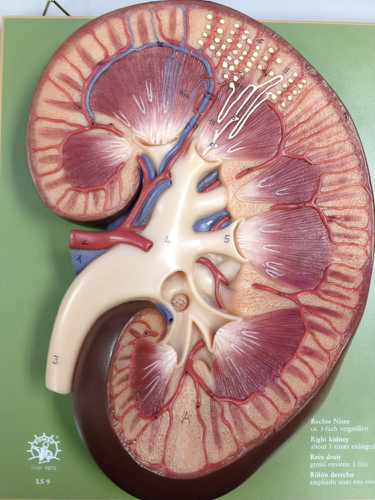
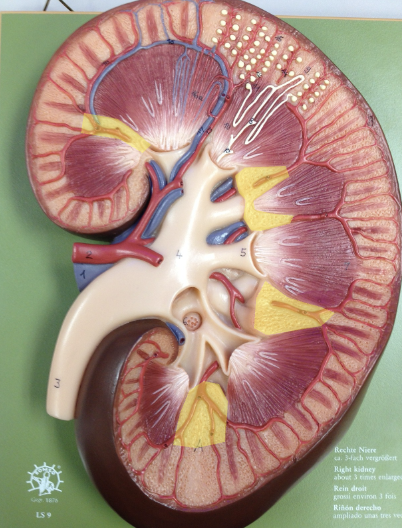
Kidney
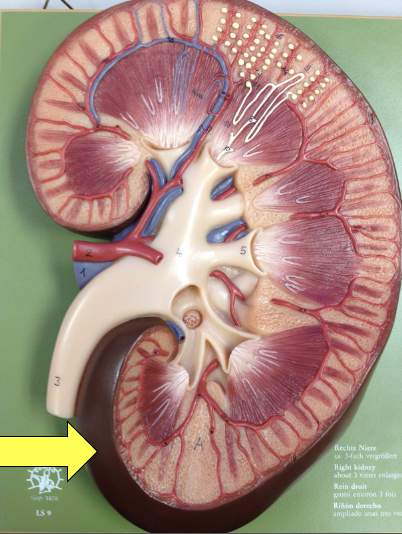
Fibrous (Renal) capsule
outer layer of kidney
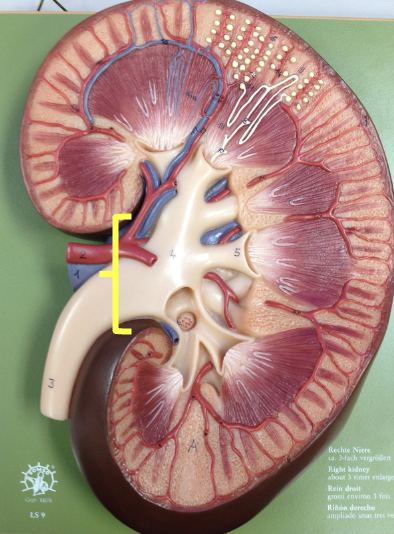
Renal hilum / hilus
Renal sinus
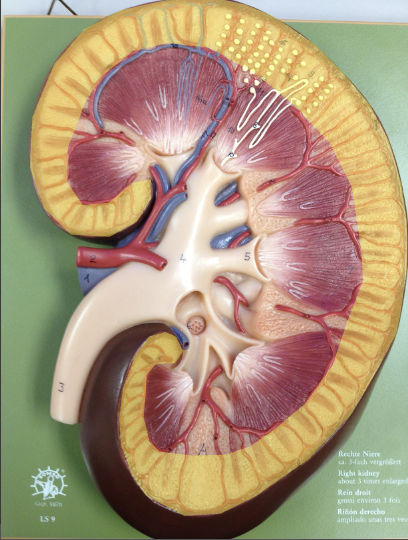
Renal cortex
Renal columns
area between the pyramids
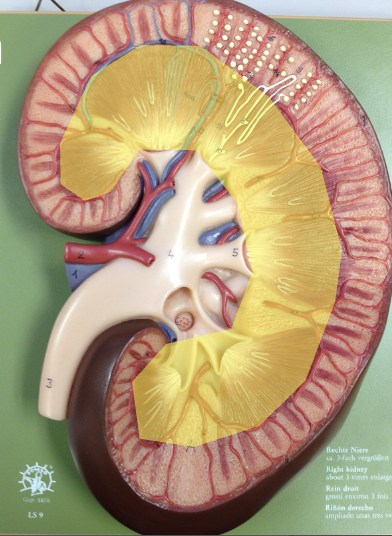
Renal medulla
Deep darker area containing the pyramids and columns
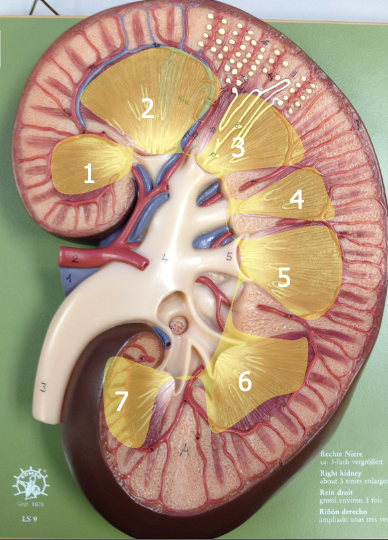
Renal pyramids
Renal papilla
Nephrons
Cortical nephrons
Juxtaglomerular nephrons
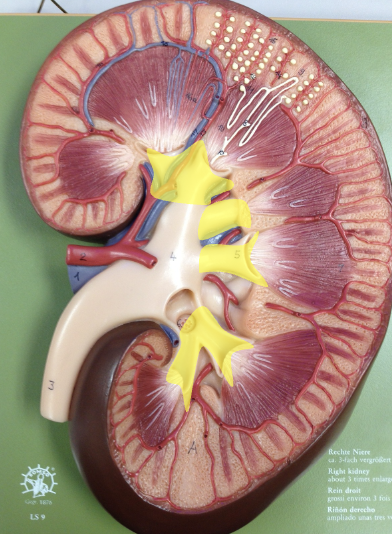
Minor calyx (calyces)
each kidney has 8-18
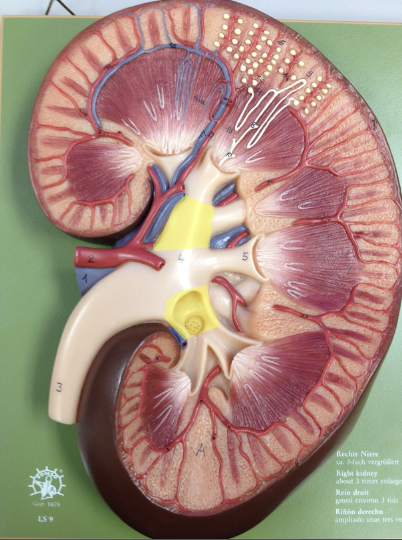
Major calyx (calyces)
each kidney has 2-3
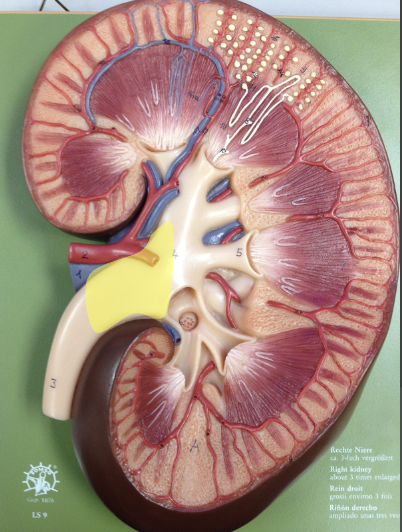
Renal pelvis
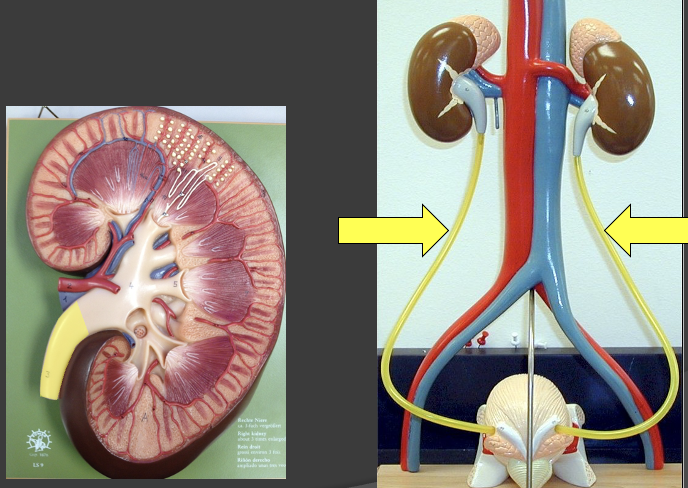
Ureter
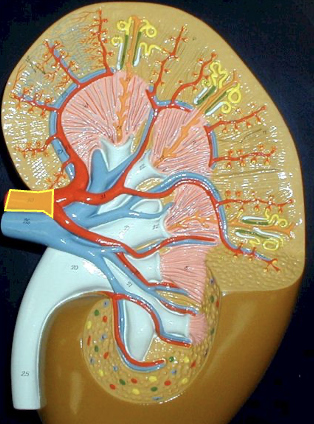
Renal artery
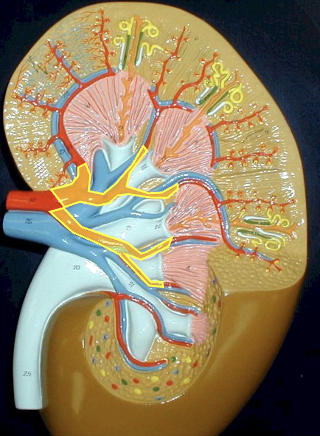
Segmental arteries
Renal artery divides and each segmental artery supplies one renal region
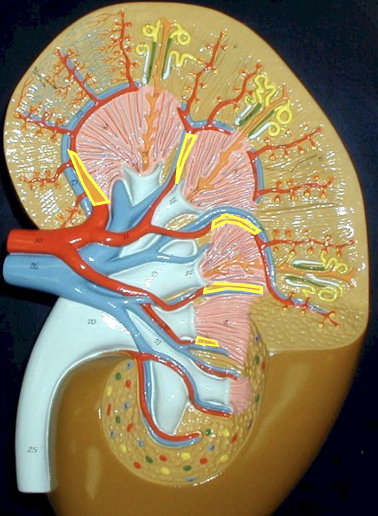
Interlobar arteries
Blood vessels that pass through the columns between the pyramids
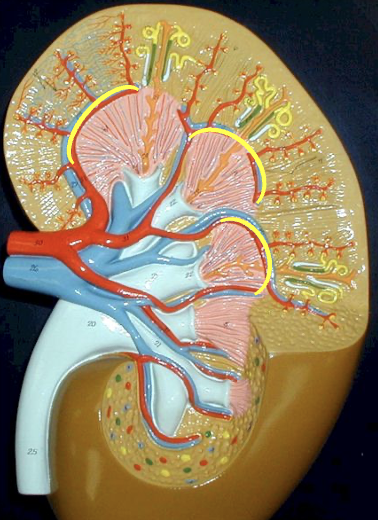
Arcuate arteries
Blood vessels that form an arc between the cortex and the medulla
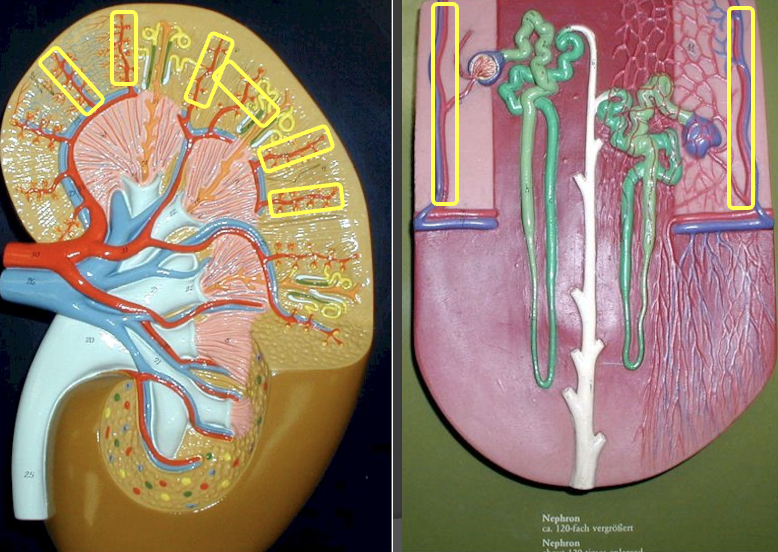
Cortical radiate arteries (interlobular arteries)
Branch from arcuate arteries to enter the cortex
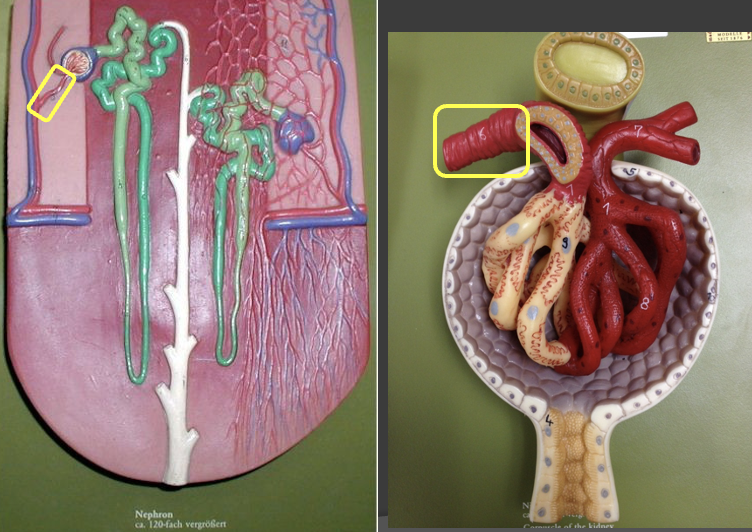
Afferent arterioles
Branches from interlobular arteries and is where blood enters glomerulus
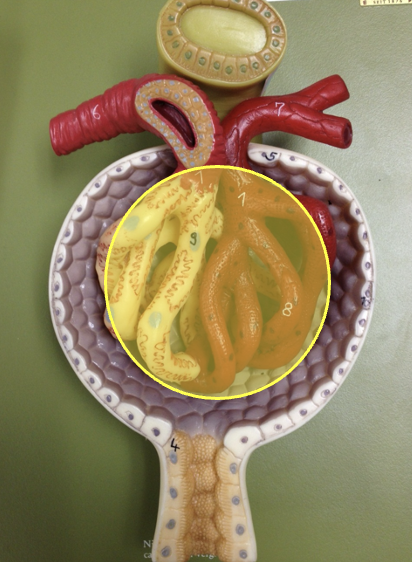
Glomerulus
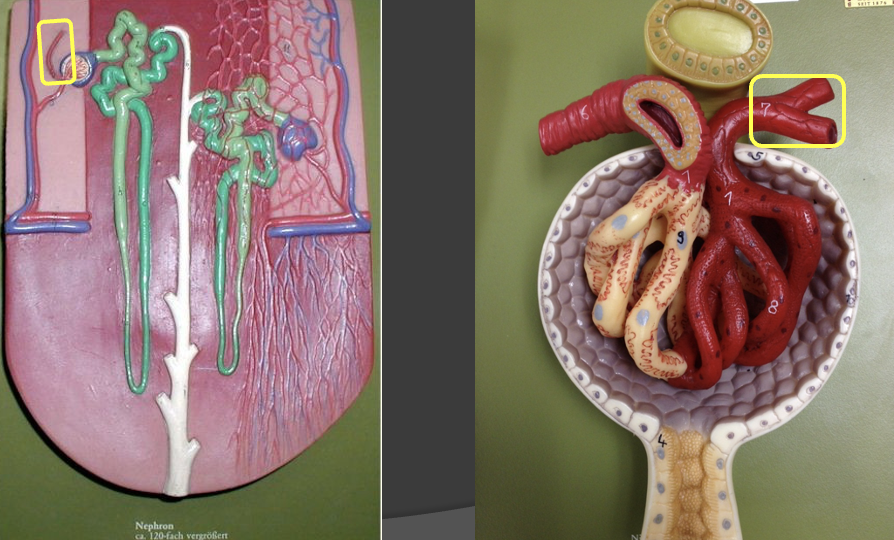
Efferent arterioles
blood exits glomerulus
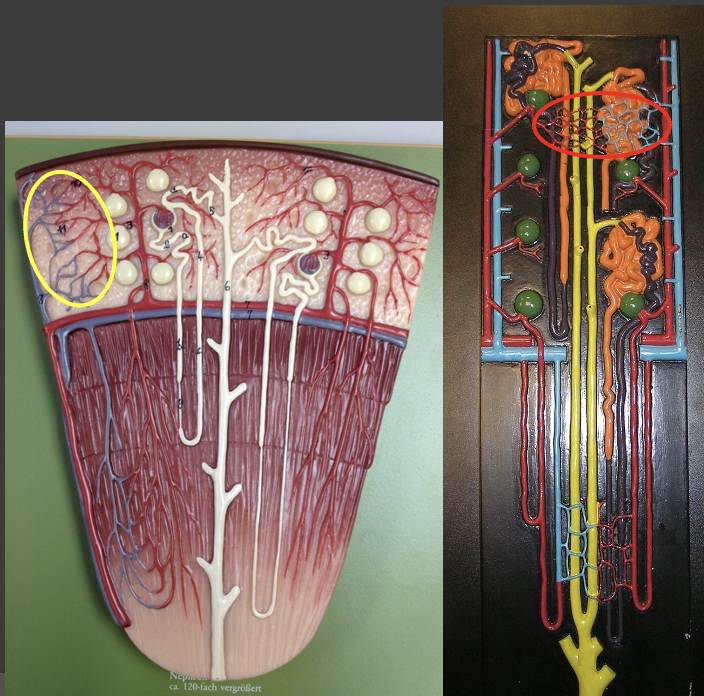
Peritubular capillaries (associated with cortical nephrons)
efferent arterioles divide to surround portions of the nephron in the cortex
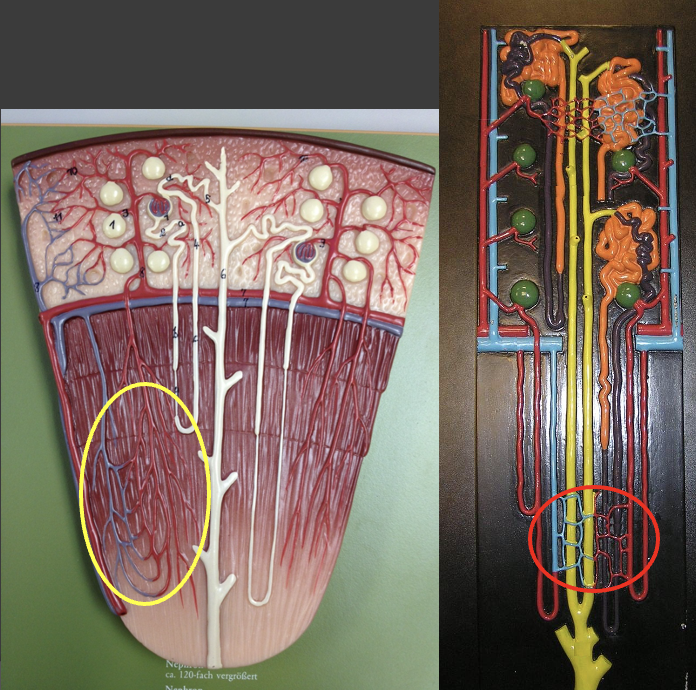
Vasa recta (associated with juxtamedullary nephrons)
Some efferent arterioles have long loop-shaped capillaries that surround portions of the nephron in the medulla
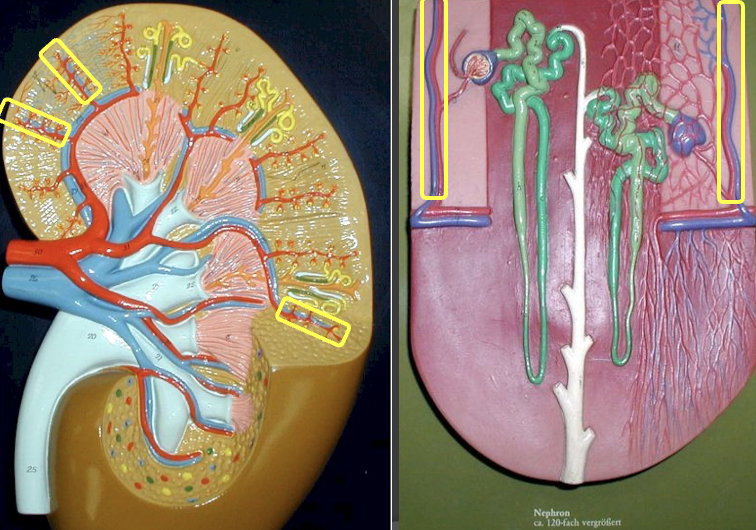
Cortical radiate veins (interlobular veins)
Peritubular capillaries reunite to form interlobular veins
Interlobular veins also receive blood from the vasa recta
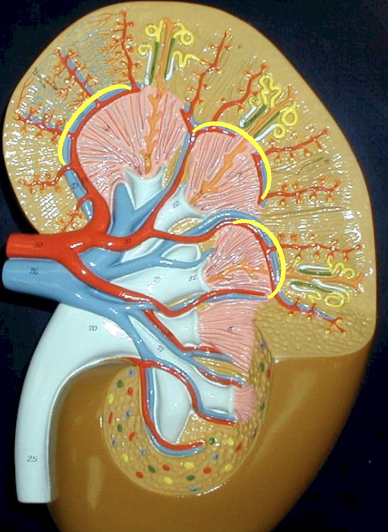
Arcuate veins
Receives blood from the interlobular veins
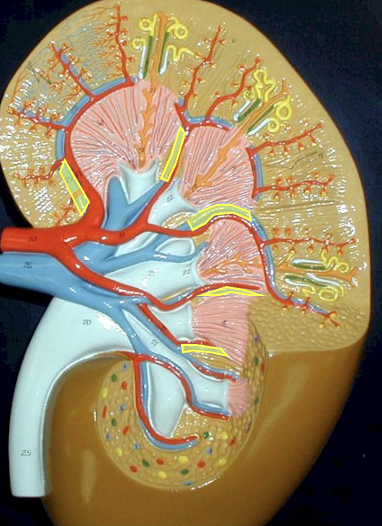
Interlobar veins
Pass through the renal columns and receives blood from arcuate veins
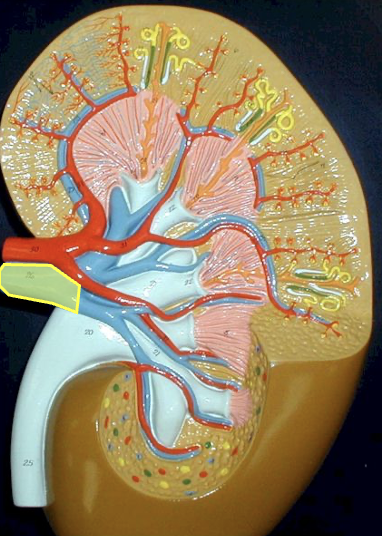
Renal vein
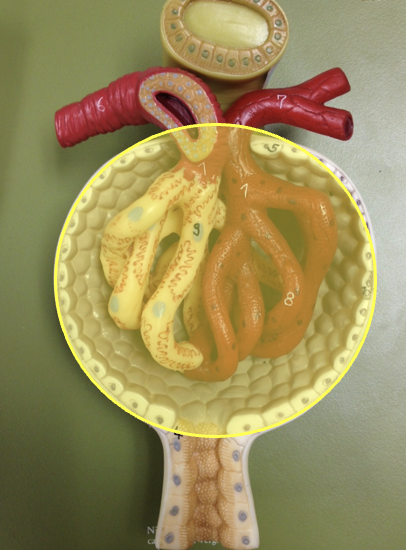
Renal corpuscle
Lies in the cortex and contains - Glomerulus & Bowman’s Capsule
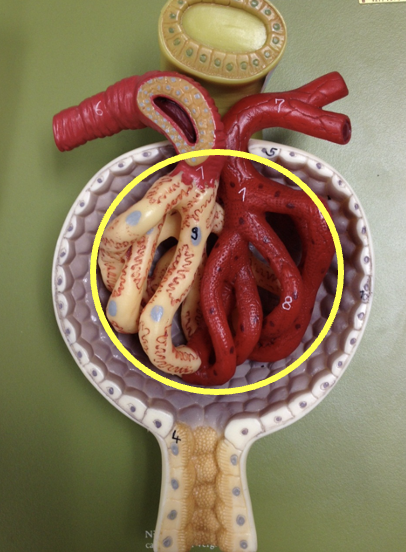
Glomerulus
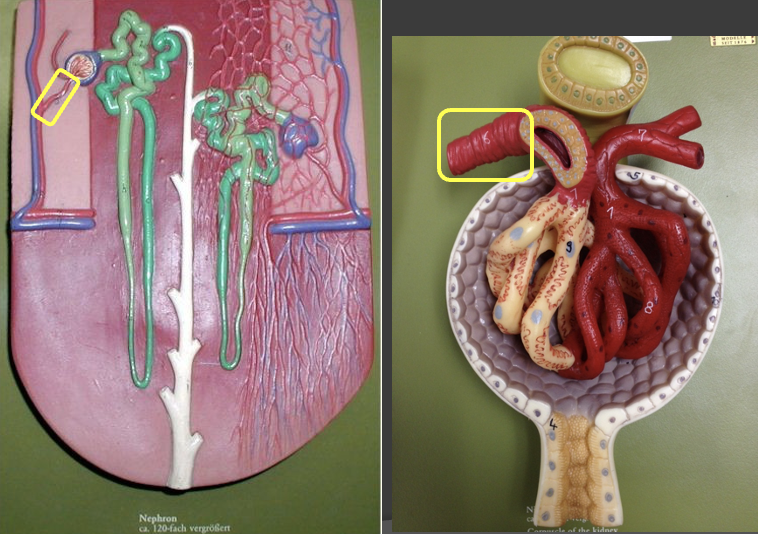
Afferent arteriole
Branches from interlobular arteries and is where blood enters glomerulus
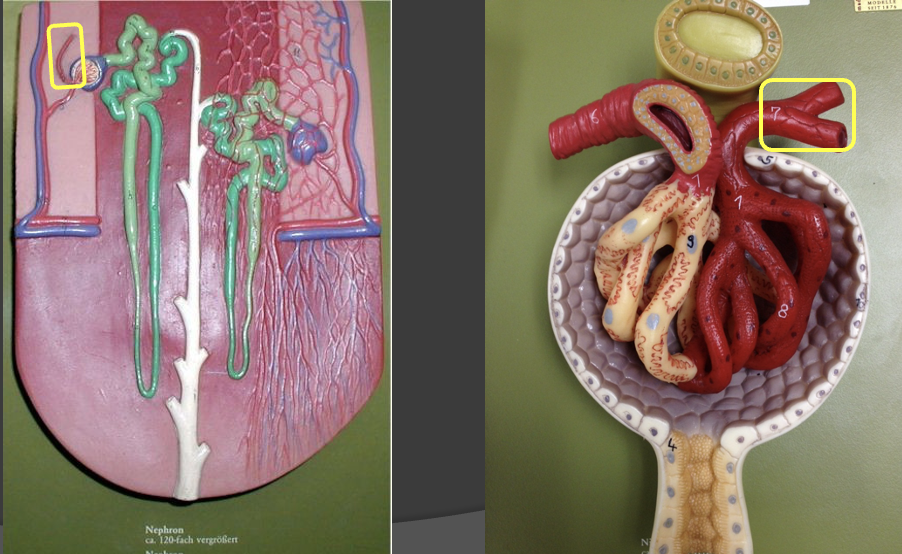
Efferent arteriole
blood exits glomerulus
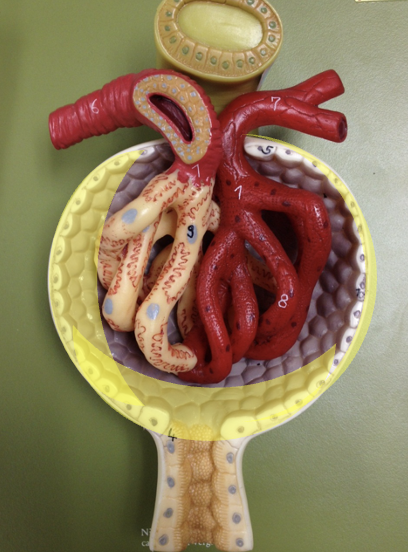
Glomerular capsule / Bowman’s capsule
Double walled epithelial cup that surrounds the glomerulus
Parietal layer (simple squamous cells)
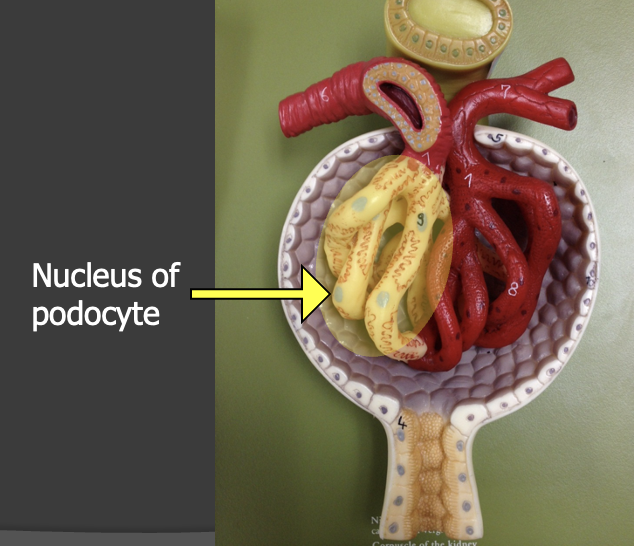
Visceral layer (podocytes)
Capsular space
Renal tubule
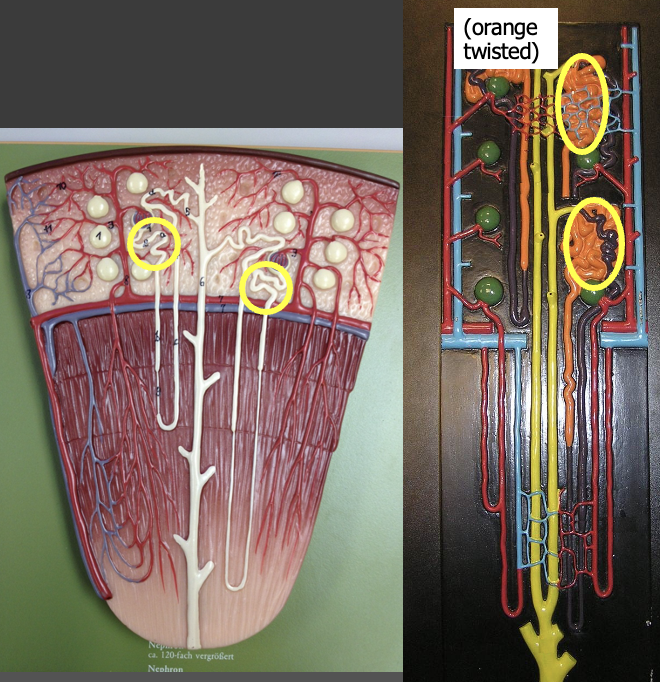
Proximal convoluted tubule
Portion of renal tubule that lies in the cortex and is attached to the glomerulus and coiled
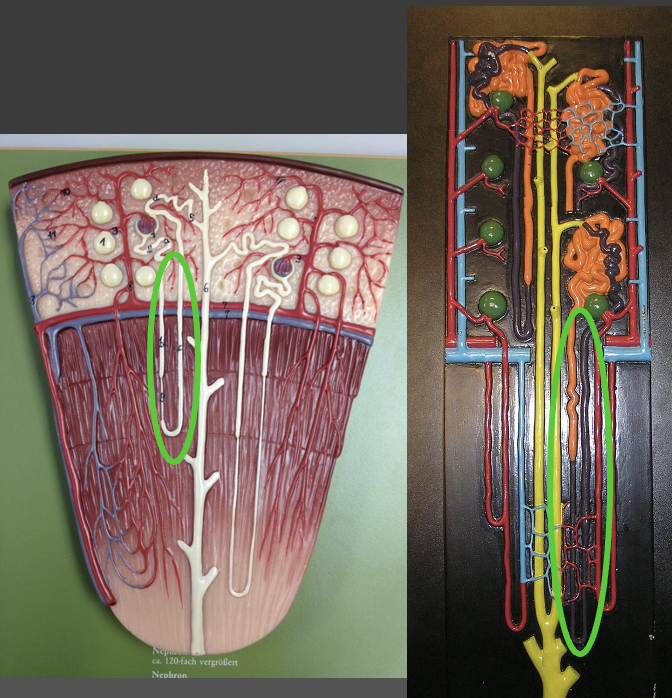
Loop of Henle
Also called a nephron loop
Extends into the medulla, makes a hairpin turn, and returns to the cortex
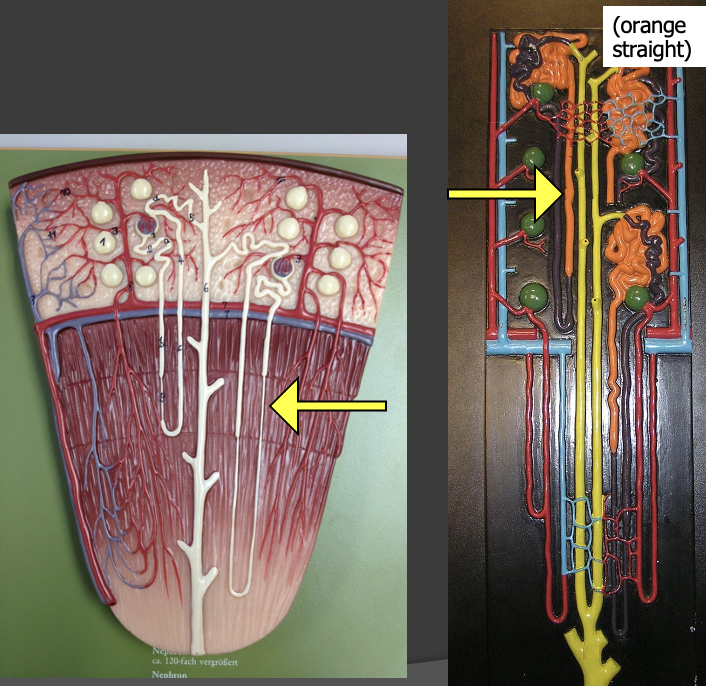
Descending limb
Portion of the nephron loop that descends from the PCT into the medulla
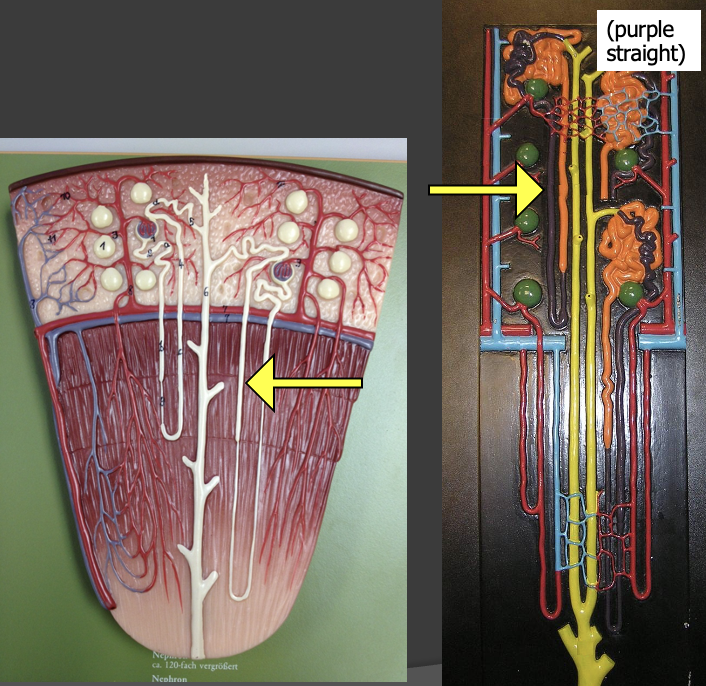
Ascending limb
Portion of the nephron loop that ascends from medulla and returns to the cortex, attaching to the DCT
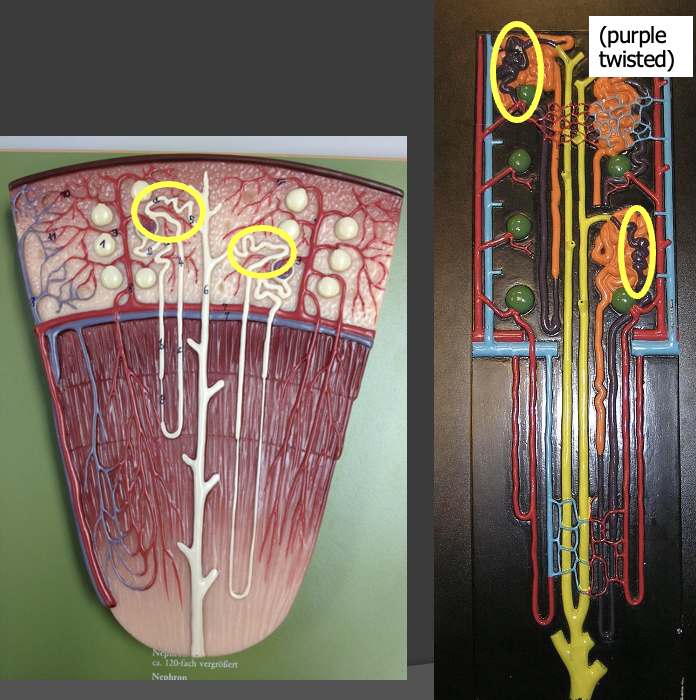
Distal convoluted tubule
Portion of renal tubule that lies in the cortex and is attached to the collecting duct and coiled
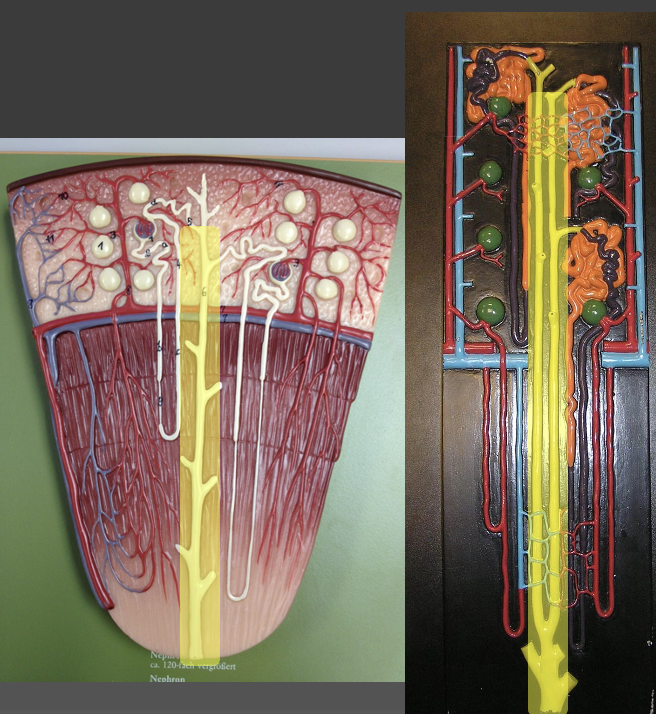
Collecting tubule (ducts)
Several DCTs drain into one collecting duct
Papillary ducts
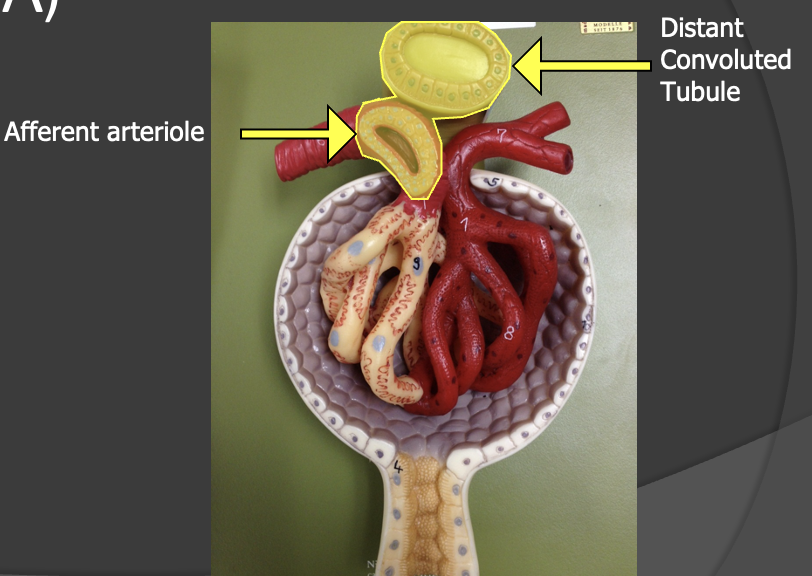
Juxtaglomerular apparatus (JGA) / juxtaglomerular complex
Regulates arterial blood pressure and the rate of blood filtration by the kidneys
Afferent arteriole with granular cells (smooth muscle cells)
Renal tubule (DCT or nephron loop) with macula densa cells
What do granular cells produce?
What is the function of macula densa cells?
Ureters
Urinary bladder
Rugae
Trigone
Detrusor muscle
Urethra
Prostatic (passes through prostate gland)
Membranous/intermediate (passes through urogenital diaphragm)
Spongy/penile (passes through corpus spongiosum of the penis)
External urethral orifice/meatus
Internal urethral sphincter
External urethral sphincter