Human A&P - Exam 3
 Call Kai
 Learn
Learn Practice Test
 Spaced Repetition
 Match
Match Flashcards
 Knowt Play
1/82

There's no tags or description
Looks like no tags are added yet.
Name | Mastery | Learn | Test | Matching | Spaced | Call with Kai |
|---|
No analytics yet
Send a link to your students to track their progress
83 Terms
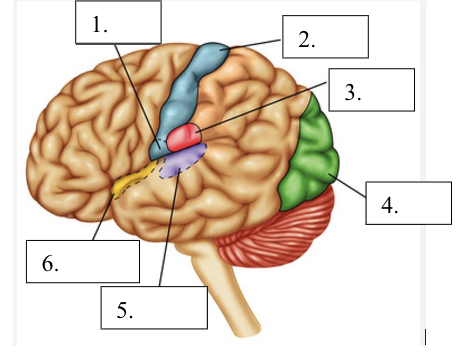
name the sensory 1
vestibular cortex
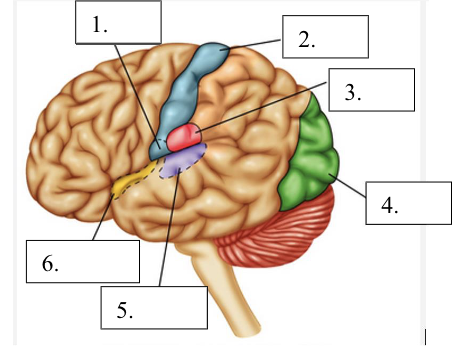
name of sensory 2
somatosensory cortex
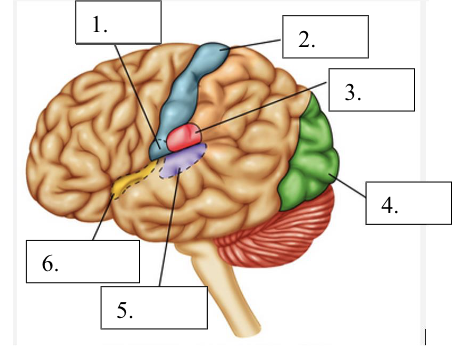
name of sensory 3
gustatory cortex (taste)
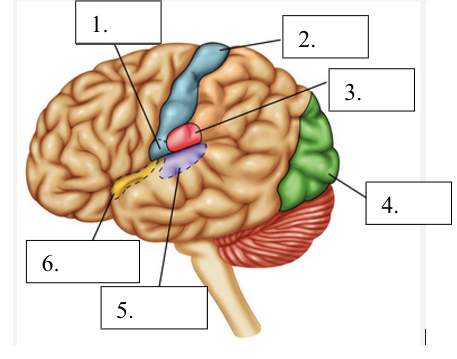
name of sensory 4
visual cortex
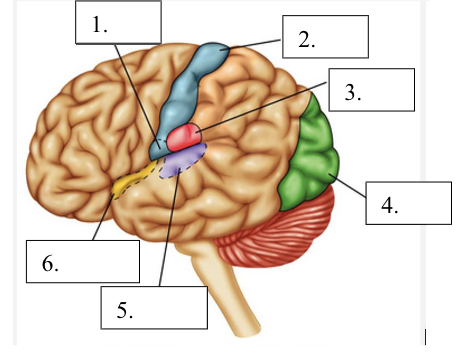
name of sensory 5
auditory cortex
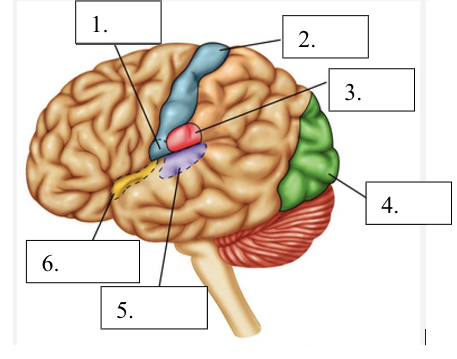
name of sensory 6
olfactory cortex
pairs of cranial nerves
12 paired sets
olfactory (I) nerve
smell; sensory
optic (II) nerve
vision; sensory
oculomotor (III) nerve
movement of eyeballs and eyelids; motor - smooth cardiac effectors and somatic
trochlear (IV) nerve
eyeball movement; both (“pulley”)
trigeminal (V) nerve
three branches; both - face and mouth, largest cranial nerve (eye, upper jaw, lower jaw)
abducens (VI) nerve
lateral movement of the eyeballs; motor
facial (VII) nerve
five branches; temporal, zygomatic, buccal, mandibular, cervical - both (face/neck)
auditory/vestibulocochlear (VIII) nerve
two branches; sensory - hearing/vestibular
glossopharyngeal (IX) nerve
tongue/throat; both
vagus (X) nerve
longest of the cranial nerve; both - extends into thoracic/upper abdominal regions
accessory/spinal (XI) nerve
posterior of the cranial nerve; motor - sternocleidomastoid/trapezius
hypoglossal (XIII) nerve
under the tongue; motor
longest cranial nerve
vagus (X) nerve
number of spinal nerves
31 pairs of mixed nerves that emerge from spinal cord
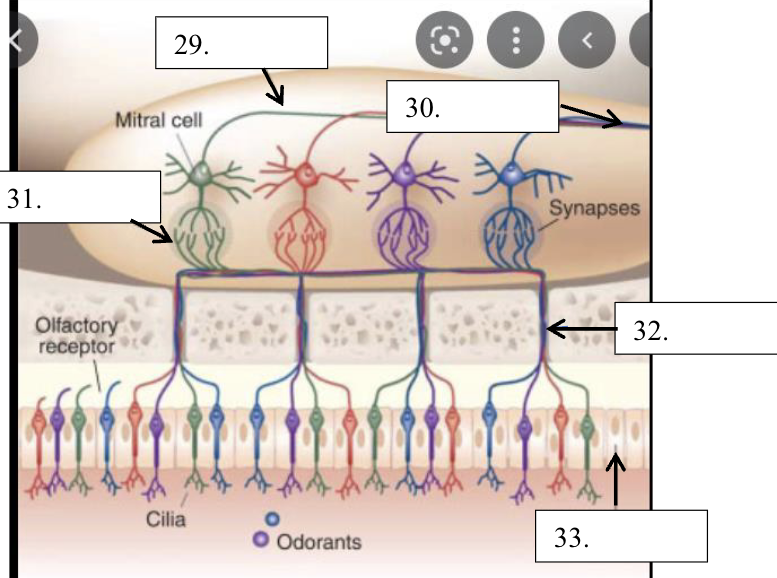
name of 29
olfactory bulb
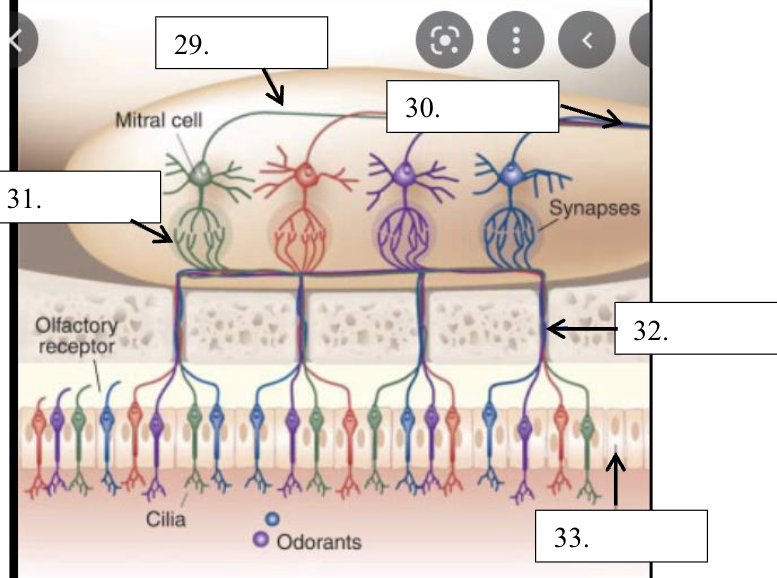
name of 30
axons
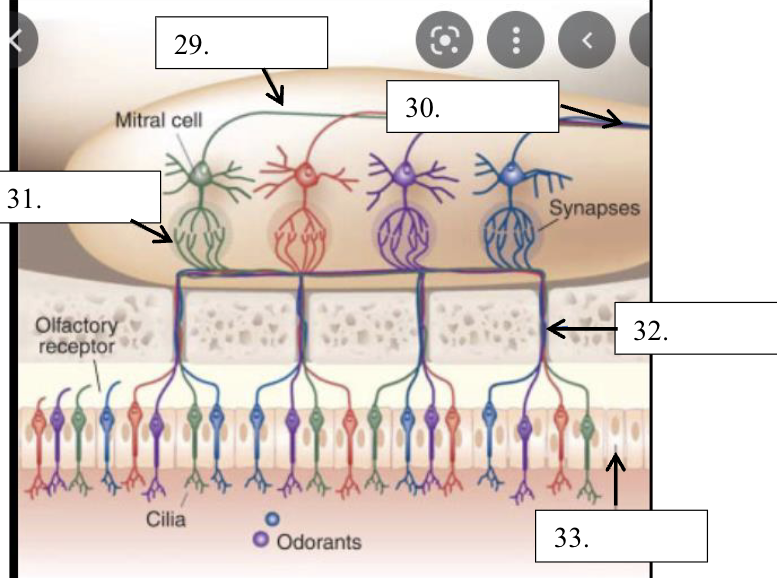
name of 31
glomerulus
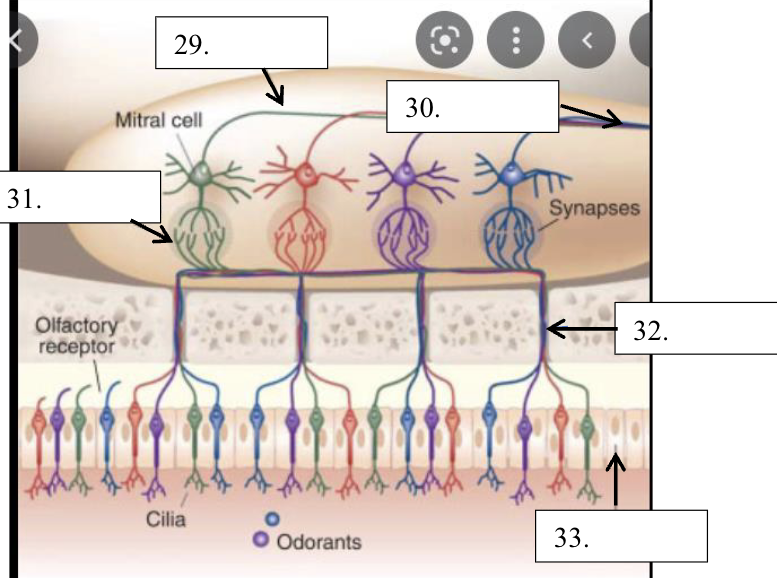
name of 32
synapses
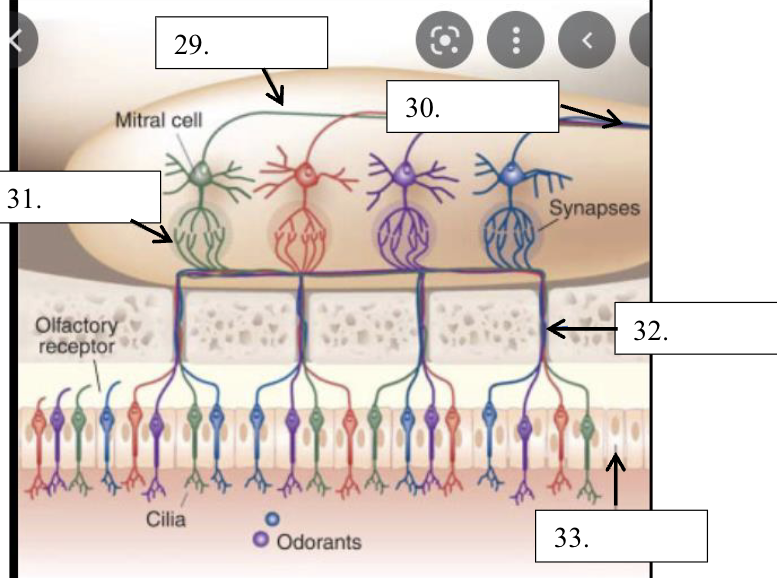
name of 33
olfactory epithelium
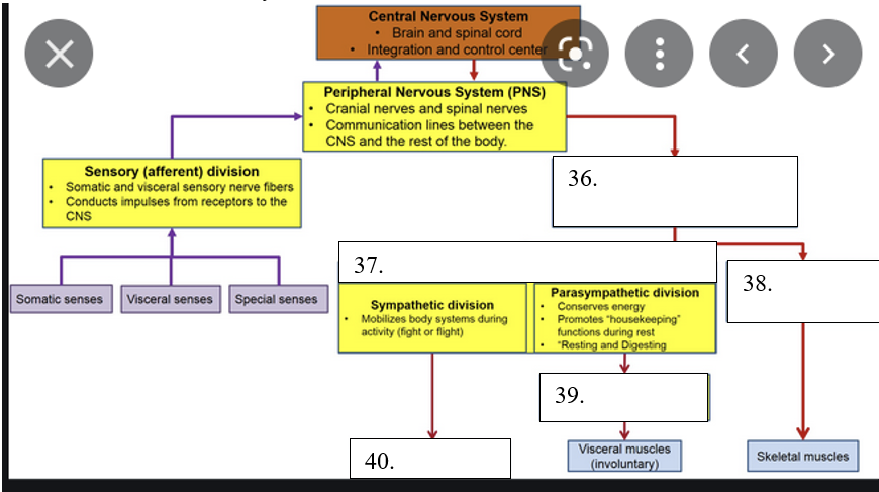
name of 36
motor (efferent) division
motor nerve fibers, conducts impulses from the CNS to the effectors (muscles and glands)
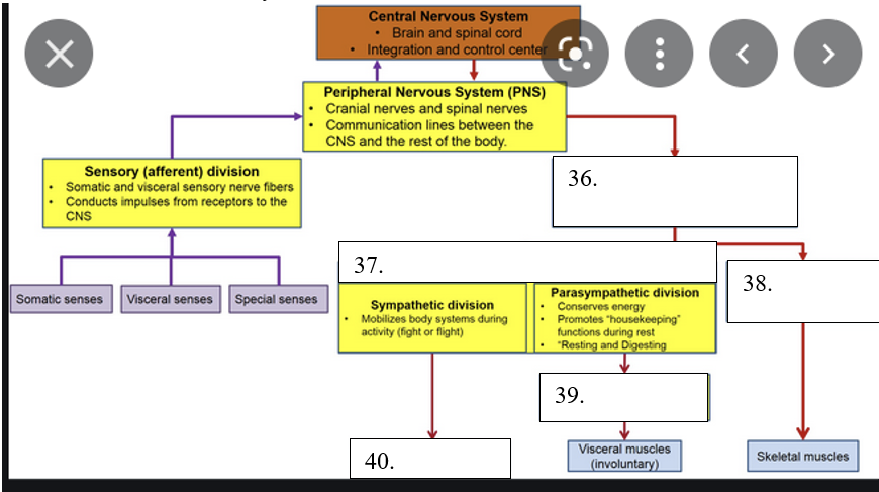
name of 37
autonomic nervous system (ANS)
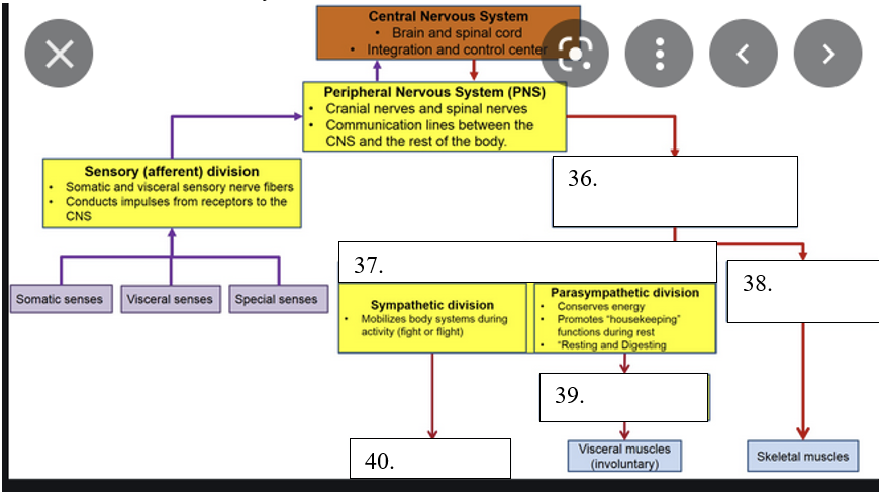
name of 38
somatic nervous system
somatic motor (voluntary)
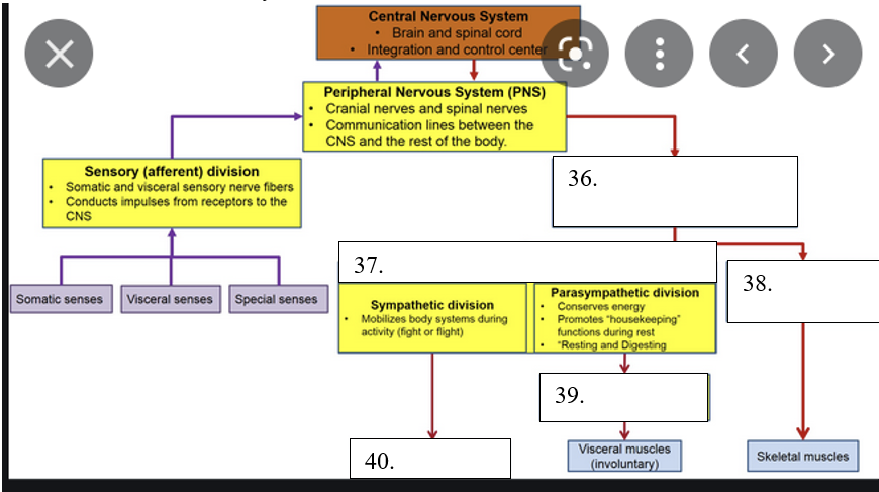
name of 39
enteric nervous system (GI Tract, Digestive)
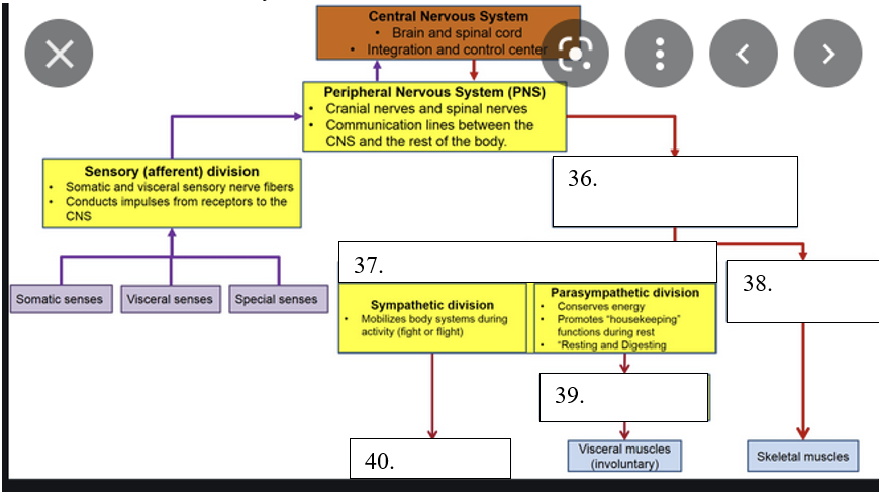
name of 40
cardiac muscles, smooth muscles, and glands
peripheral nervous system
consists of cranial nerves & spinal nerves
chemoreceptors
taste cells of taste buds
mechanoreceptors
noiceptors (pain)
free nerve endings that detect harmful stimuli, extremes in pain, temp, etc
photoreceptors
detect light; found in the retina of the eye
thermoreceptors
detect changes in temperatures
branches of trigeminal nerve
three (eye, upper/lower jaw)
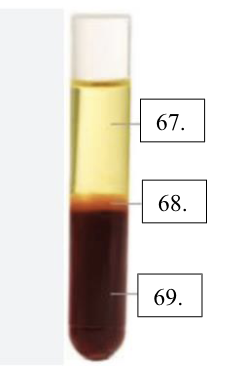
name 67
plasma - 55%
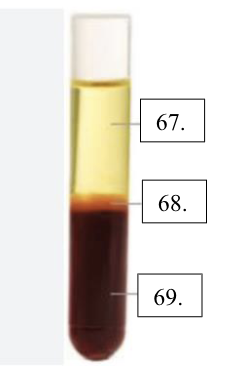
name 68
buffy coat
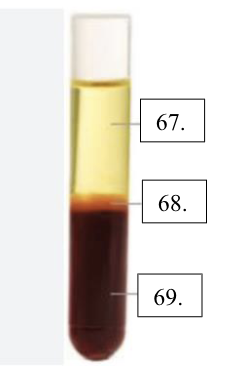
name 69
formed elements - 45%
basophils
0.5-1%
formed elements
45%
non-protein plasma solutes
plasma
55%
plasma proteins
what senses are apart of the nervous system
special senses
brainstem is made of what
three major regions (midbrain, pons, medulla oblongata)
most cranial nerves emerge from this part of the brain
special senses
more specialized in structure and localized in specific parts of the body
smell, taste, sight, hearing, balance
sense
the ability to perceive stimuli
sensation
the process initiated by stimulating sensory receptors
perception
the conscious awareness of those stimuli
general senses
have receptors disturbed over a large part of the body
somatic senses
provide sensory information about the body and the environment
superficial pain, touch, temperature
visceral senses
provide sensory information about various internal organs, involving deep pain and pressure
examples of general senses
examples of special senses
olfaction (smell), gustation (taste), vision (sight), auditory (hearing), equilibrium (balance)
papillae types
clusters of taste cells, taste buds, and/or touch receptors
filiform
filament shaped, most numerous, no taste buds/taste cells
vallate
largest, least numerous, have taste buds
fungiform
mushroom shaped, scattered, have taste buds
foliate
folds/sides of the tongue, contain most sensitive taste cells,
which tongue papillae lack taste buds
filiform
which tongue papillae have taste buds
vallate, fungiform, foliate
olfaction
primary 7 odors (musky, putrid, pungent, camphoraceous, ethereal, foral, peppermint)
camphoraceous
mothballs (naphtalene)
ethereal
volatile; ethers, solvents, dry cleaning fluid
floral
flowers
musky
perfumes
what can the upper respiratory tract perceive
olfaction
lifespan of erthrocyte
red blood cell, 120 days
sound wave/fluid wave vibrations converted into nerve impulses for hearing in inner ear
cochlea
tastant type that depolarizes cells by binding to hydrogen ions
sour
leukocyte contains faint-staining cytoplasmic granules, highly phagocytic in destroying bacterial invaders
neutrophils
leukocyte contains little to no cytoplasmic, large slightly curved nucleus, matures into macrophage
monocytes
yellow breakdown byproduct of hemoglobin metabolism produced when heme is broken down
bilirubin
ABO blood system
based on A/B antigens on RBC, Rh based on the presence/absence of Rh (D) antigen
acending tracts
carry sensory information upward from body to brain
transmit - touch, pressure, pain, temp, body position
descending tracts
carry motor commands downward from brain to muscles and glands, control voluntary/involuntary movements
outer ear
auricle (pinna), external auditory canal, tympanic membrane
middle ear
malleus, incus, stapes, oval window, auditory tube
inner ear
cochlea, organ of corti, vesibule, semicircular canals, round window, vestibulocochlear nerve
sound pathway
auricle, exter. auditory canal, tympanic membrane, malleus, incus, stapes, oval window, cochlea, organ of corti, vestibulocochlear nerve, brain