Circuits, Magnetism, Waves, and Sound
 Call Kai
 Learn
Learn Practice Test
 Spaced Repetition
 Match
Match Flashcards
 Knowt Play
1/24

There's no tags or description
Looks like no tags are added yet.
Name | Mastery | Learn | Test | Matching | Spaced | Call with Kai |
|---|
No analytics yet
Send a link to your students to track their progress
25 Terms
Parallel Resistors
-Same voltage, each get same voltage
-What current goes in must come out, I1=I2+I3 if R2=R3 then I2=I3
Series Resistors
-Each get part of voltage, add up to voltage of battery
-Different voltage, different R
-Same current
Important equation
V=IR
Power
P=IV=I²R=V²/R
Power output by battery: electrical energy
Power dissipated across resistors: thermal energy
Least power, smallest current, then smallest R
Magnetic fields and force equation
FB=qVBSin(theta)
Right hand rule criteria
Before during RHR:
Fb cannot be equal to 0
q>0, v>0, sin theta cannot be 0 or 180 degrees
Right hand rule
Thumb=V or current
Pointer=B or magnetic field
Middle=Force
“Very Beautiful Friends”
Left hand for negative charges!
Magnetic field
All charges move in circular motion
Magnetic field does no work, work is always = 0
Movement
Straight line just electrical field (+ to -)
Cycloid-both or some weird shape
Circular-B only
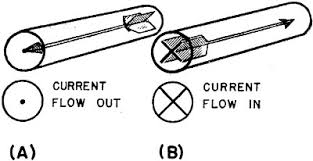
Other right hand rule
Thumb current, curl hands direction of magnetic field
Out of page vs into page
Out of page vs into page
Harmonic motion
F=-kx mass on a spring
F proportional to d
PE=1/2kx² PE most at +-A max!
Wspring=-deltaPEelastic
KEi+PEi=KEf+PEf
Period and frequency
f=1/T
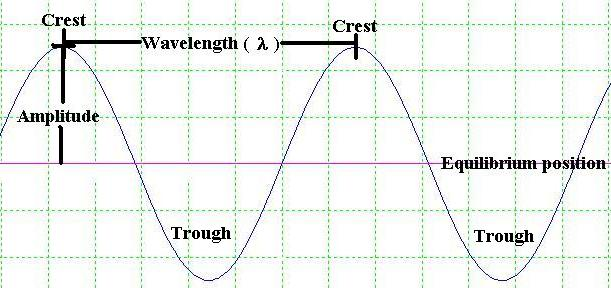
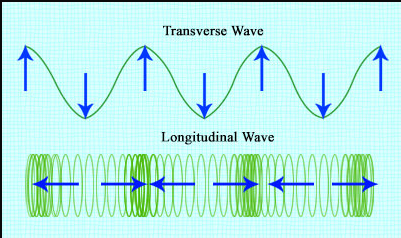
Transverse waves
Moving up and down
Waves on a string, electromagnetic waves
Longitudinal waves
Parallel
Sound waves
Equation
V=lambda(f)
Speed wave in medium
Depends on physical properties of wave
Speed constant in medium
Wave moving from one medium to another
f constant between mediums!!!
Numbers to know about waves
Speed of light in vacuum: 3 × 10^8 m/s
Speed of sounds in air: 350 m/s
Speed of sounds in water: 1500 m/s
Standing waves
Fn=nf
lambda=2L/n
Open-open both nodes
Closed-closed both end antinodes
All points on the string between any two adjacent nodes vibrate together—in phase—so the period of oscillation is independent of position.
Sound
I=power/area
Same as energy
I is proportional to 1/r²
I is proportional A²
Intensity/sound level
B=10log10(I/Io)
Io=10^-12
B in dB
***For every increase in I by factor of 10 add 10 to B, decrease subtract 10 from B
Example with sound intensity equation
Io=10
I=1000
1000/10=100/1 or 10²/10^0 = 2 factors of 10 gained so +20
-Decreases by 90 % so 10 % remaining 10/100 10^1/10² 1/10 so loss of 10 dB
-Increases factor of 30
10 +10 100 +20 1000 +30 so in between +10 and +20
Doppler shift
Moving source: V=lambda* f. Lambda decrease, f increases.
Moving observer: V=lambda * f. V increase, f increases.
Closer together, higher frequency
Doppler shift
fd=fs(V+-Vd/V-+Vs)
Use Top sign for Towards. Bottom sign-away.
D=detector
V+-Vd perspective of detector, detector moving away for example so -
V+-Vs perspective of source, source moving towards detector so -