PMOC Pharm Chem Topic 1
 Call Kai
 Learn
Learn Practice Test
 Spaced Repetition
 Match
Match Flashcards
 Knowt Play
1/42

There's no tags or description
Looks like no tags are added yet.
Name | Mastery | Learn | Test | Matching | Spaced | Call with Kai |
|---|
No analytics yet
Send a link to your students to track their progress
43 Terms
Pharmaceutical Chemistry
Focused on quality aspects of medicines and aims to assure fitness for the purpose of medicinal products.
Quantitative Structure-Activity Relationships
QSAR means
Structure-Activity Relationship
Relationship of how structural features of the molecule contribute to, or take away from, the desired biologic activity.
1.Drug discovery
2.Understanding mechanisms
3.Predictive Modeling
Importance of SAR
tertiary amine groups
Many compounds containing ______ exhibited activity as
muscle relaxants when converted to quaternary ammonium compounds.
morphine
Methylation of _______ can alter its pharmacokinetic and pharmacodynamic properties, potentially leading to muscle relaxant effects similar to those of tubocurarine.
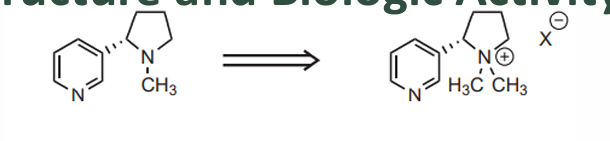
nicotine
Methylation can enhance the lipophilicity and receptor affinity, potentially converting _____ into a quaternary ammonium compound that exhibits muscle relaxant properties akin to
atropine
Methylating ________ can alter its pharmacological profile, possibly leading to muscle relaxant effects. However, it may also amplify its anticholinergic effects, which can complicate its use.
N-methylmorphine
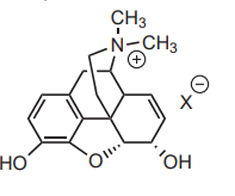
morphine
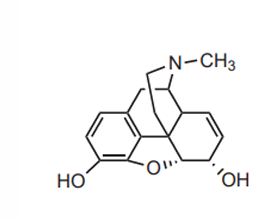
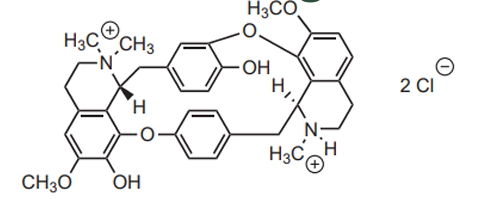
Tubocurarine
Nicotine ——> N-methylnicotine
Atropine → methylatropine
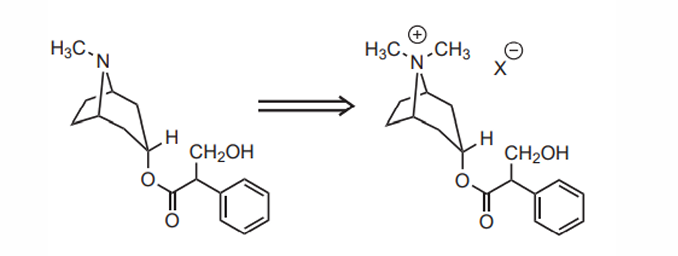
Acetylcholine
Natural neurotransmitter and activator of muscle contraction
Loewri and Navrati
Acetylcholine discovered by:
magic bullet
Selectivity of drug action via the concept of a _____ by Ehrlich
selective toxicity
Modified by Albert into ______
d-Tubocurarine
non-depolarizing competitive antagonist at nicotinic acetylcholine receptors, causing the relaxation of skeletal muscle.
Acetylcholine
binding of two molecules to receptors on the α-β and δ-α subunits causes opening of the channel, subsequent movement of potassium through the channel is associated with a graded depolarization causing muscle contraction
Acid-Base Properties
Have a direct effect on absorption, excretion, and compatibility with other drugs in solution.
Acid
any substance capable of donating a proton
Base
any substance capable of accepting a proton
pKa 2
strong acid; conjugate base has no meaningful basic properties in water
pKa 4 to 6
weak acid; weak conjugate base
very weak acid; conjugate base getting stronger
pKa 8 to 10
essentially no acidic properties in water; strong conjugate base
pKa 12
solubility
The ______of a drug molecule in water greatly affects the routes of administration that are available, as well as its absorption, distribution, and elimination.
Hydrogen bond formation
Ionization of one or more functional groups
Factors that affect water/fat solubility
F, O, N, S, Se
strongly electronegative atoms
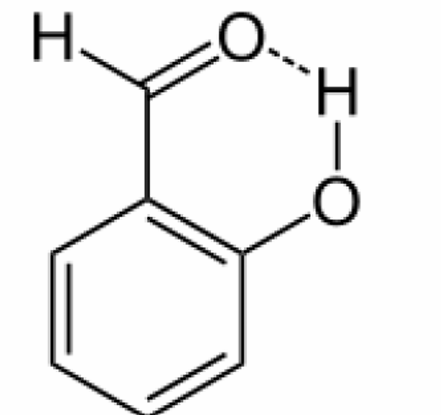
ortho-hydroxybenzaldehyde
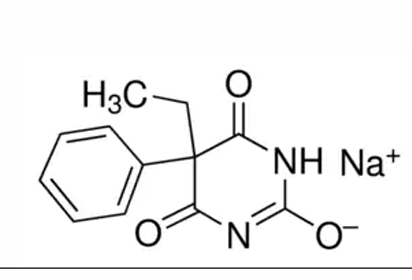
Sodium Phenobarbital
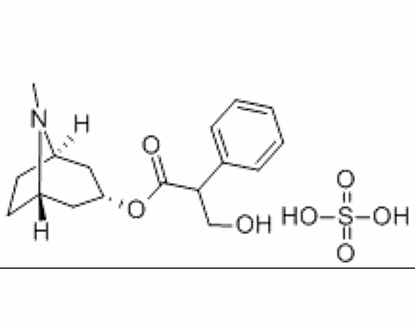
Atropine Sulfate
Isomers
These are compounds with the same molecular
formula and same molecular weight but different
structural formula, this differ in physical and
chemical properties
Stereoisomers
are molecules that contain the same number and kinds of atoms, the same arrangement of bonds, but different three-dimensional structures
Chirality
the ability of a drug to exist as optically active stereoisomers or enantiomers
Individual enantiomers
_______ may not have the same pharmacokinetic and pharmacodynamic activity.
Enantiomers
______ are mirror images of each other and non-superimposable
Diastereomers
______ are not mirror images of each other and non-superimposable
Isosteres
compounds or groups of atoms having the same number and arrangement of electrons
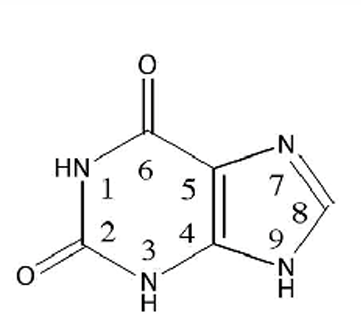
Xanthine
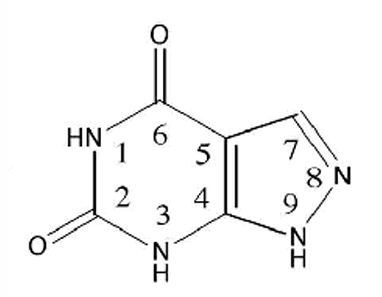
Alloxanthine
Alexander Crum Brown
Thomas Richard Fraser.
Which two scientists established the foundation for the relationship between molecular structure and biologic activity?
Methylation
What chemical process can convert Morphine from an analgesic into a muscle relaxant?