Immune System
 Call Kai
 Learn
Learn Practice Test
 Spaced Repetition
 Match
Match Flashcards
 Knowt Play
1/31

There's no tags or description
Looks like no tags are added yet.
Name | Mastery | Learn | Test | Matching | Spaced | Call with Kai |
|---|
No analytics yet
Send a link to your students to track their progress
32 Terms
Primary organs vs. Secondary organs
Primary organs are where immune cells are made and mature (Red Bone Marrow, Thymus), whereas Secondary organs are where immune cells circulate
Leukocytes - VISUAL
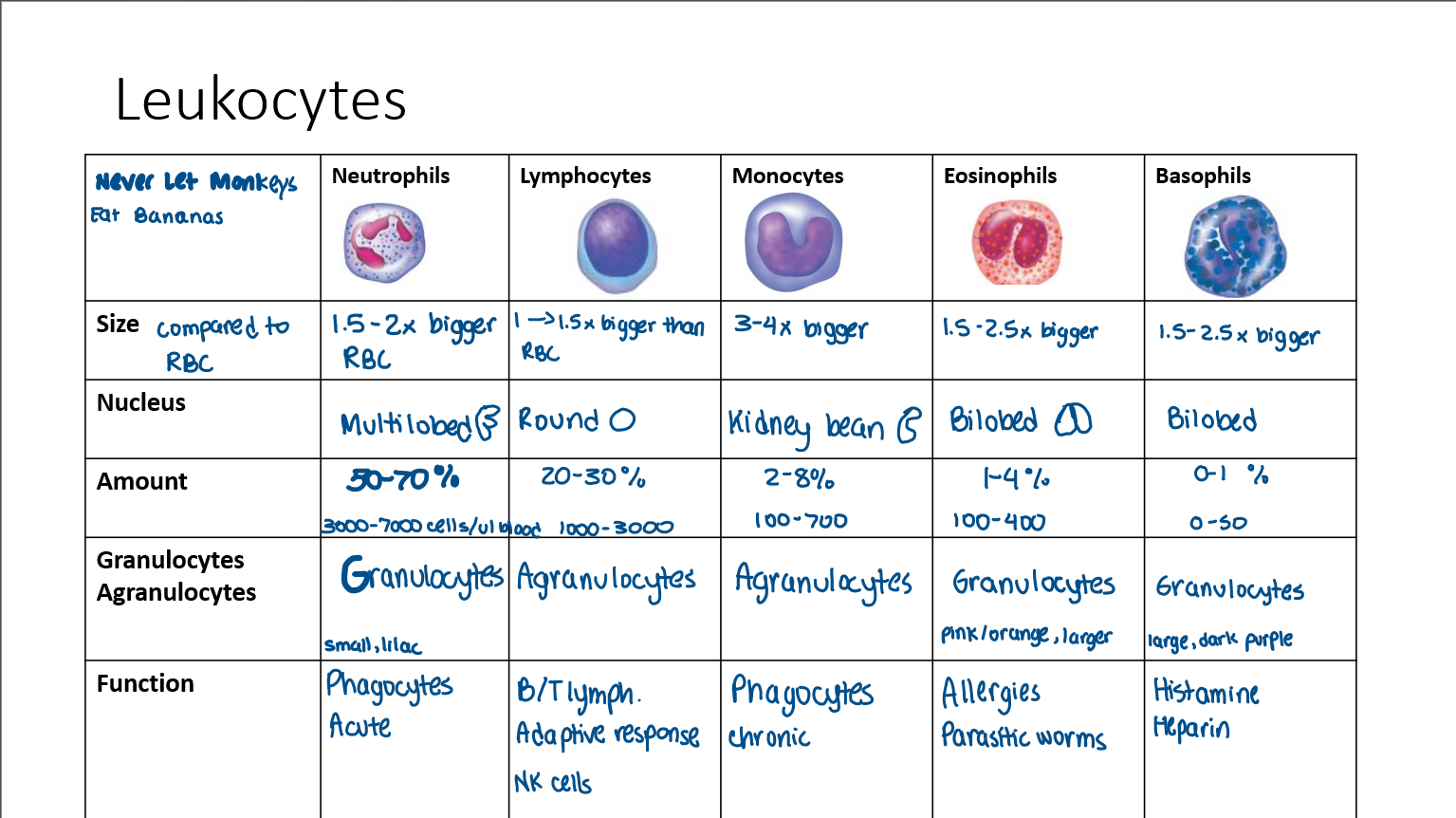
-PHILS are…
granulocytes
A macrophage is a monocyte that…
has left blood
5 factors/actions of the 2nd line defense (innate immunity)
Phagocytes
NK cells
Inflammation
Antimicrobial proteins (complement)
Fever
Adaptive immunity - Humoral
B cells
Plasma cells
Memory B
Adaptive immunity - Cell-mediated
CD4
Helper T cells (TH)
Regulatory T cells (TR)
Memory TH
CD8
Cytotoxic T cells (TC)
Memory TC
1st line - Skin surface barriers (5)
Hair: trap
Keratin: protein layer makes it difficult for pathogens to pass
Sweat, dermcidin: acidic, dermcidin —> increases ion absorption by pathogens —> causes them to lyse
Sebum: acidic
Defensins: increases water absorption into pathogens —> lyse
1st line - Mucus membrane barriers (5)
Chemical and physical features
Mucus —> thick substance prevent penetration by pathogens
Hairs —> trap
Cilia —> trap and move away
Acidic environment —> e.g. stomach, vagina
Lysozymes —> breakdown pathogens
2nd line - Phagocytes
Neutrophils, Monocytes (blood) & Macrophages (tissues)
Phagocytosis - vesicle fuses with lysosomes - lysosome digestive enzymes breakdown pathogens
2nd line - NK cells
Derived from lymphocytes
Detect abnormal cells
Release:
Perforins - makes hole in pathogen
Granzymes - enter pathogen and digest them
Inflammation (4 benefits, 5 signs, 3 processes)
Benefits: (4)
Flood with WBCs
Alert adaptive
Clean debris
Healing
Signs:
Heat
Redness
Swelling
Pain
Immobilization
Process:
Chemical release of histamine (baso, mast, prostaglandins, kinins)
Vasodilation (redness, heat) - increase blood flow
Phagocyte mobilization - chemical adhesion molecules (CAMS) on endothelium of capillary will stop neutrophils IN THEIR TRACKS TO RECUTE THEM - to enter tissue injury site
Antimicrobial proteins (complement)
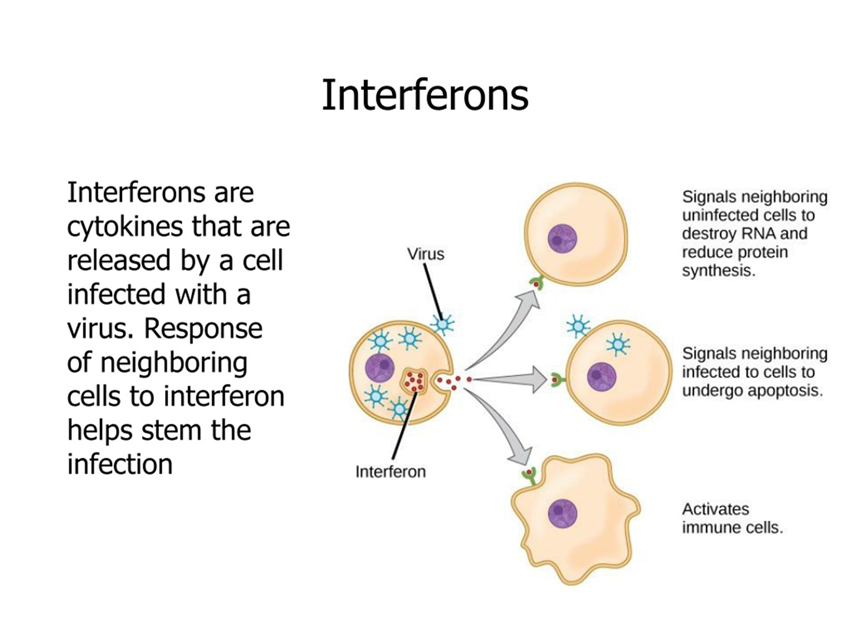
Interferons - stop viral replication
Complement proteins
Complement System (+3 functions)
20 plasma proteins
Activated by antibodies, lectins, spontaneously
Functions:
Enhance inflammation
Opsonization - tag antigens to stimulate phagocytosis
Make MAC (membrane attack complex) proteins enter pathogen and allows water to go in —> lyse
Fever (benefits & negative impact)
Monocytes, lymphocytes
Pyrogens released by leukocytes
Benefits of low-grade fever:
Zinc retention limits bacterial growth
Increased body temp. can increase metabolic rate
Negative impact:
High fever denatures proteins
Naive B cell immunocompetence
Have the ability to recognize a specific antigen and display a specific antigen receptor (membrane bound antibodies) on its plasma membranes
Recognize free antigen
Display receptors IgM or IgD
Naive B cell activation
Binds to an antigen
Cross linked formed (2 antigen binding sites are bound)
B cell activated to divide
Without Helper T, response is much slower
Divides into: few memory B cells, many plasma cells that will produce antibodies
Antibodies are also called… and are produced by…
immunoglobulins… plasma cells
Antigens
They are generally proteins
How are they recognized? By shape
Complete antigens:
- Reactive: with immune cells (lymphocytes) or antibodies
- Immunogenic: stimulate immune cells (lymphocytes) to divide
IgM
Monomer or pentamer (5x = makes it a potent agglutination agent, in blood, lymph)
1st to site (indicates current infection)
Also acts as a B cell receptor
IgA
Monomer or dimer (2x)
Secretions (sweat, milk, saliva, intestinal juice)
Helps stop pathogens from attaching to epithelial cell surface
IgD
Monomer
As a B cell receptor
IgG
Monomer (blood, lymph)
Most abundant secondary exposure
Cross placenta
IgE
Monomer (blood)
Allergic response
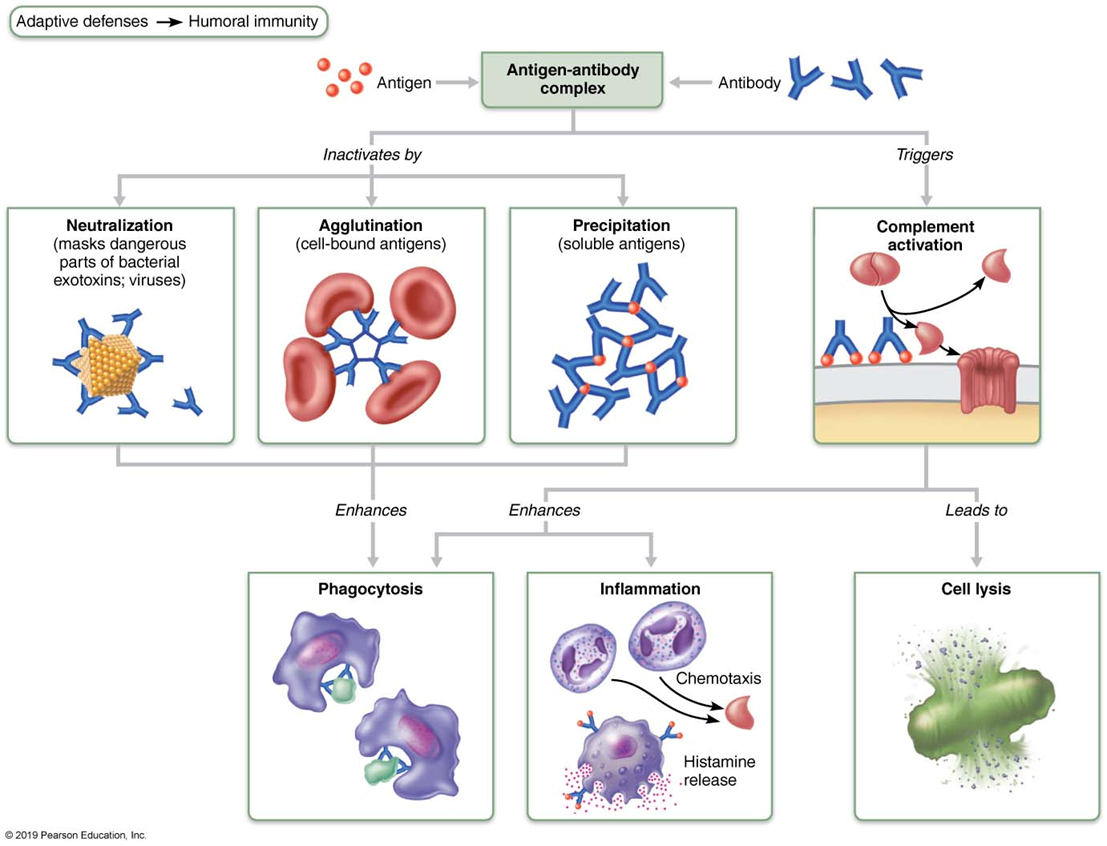
Antibody Mechanisms - PLAN
Precipitation: Clump antigens to promote phagocytosis (small pieces)
Lyse via Complement: by MAC —> activate complement to make MAC
Agglutination: clump to promote phagocytosis (cells)
Neutralization: block pathogen from releasing toxins or entering cells
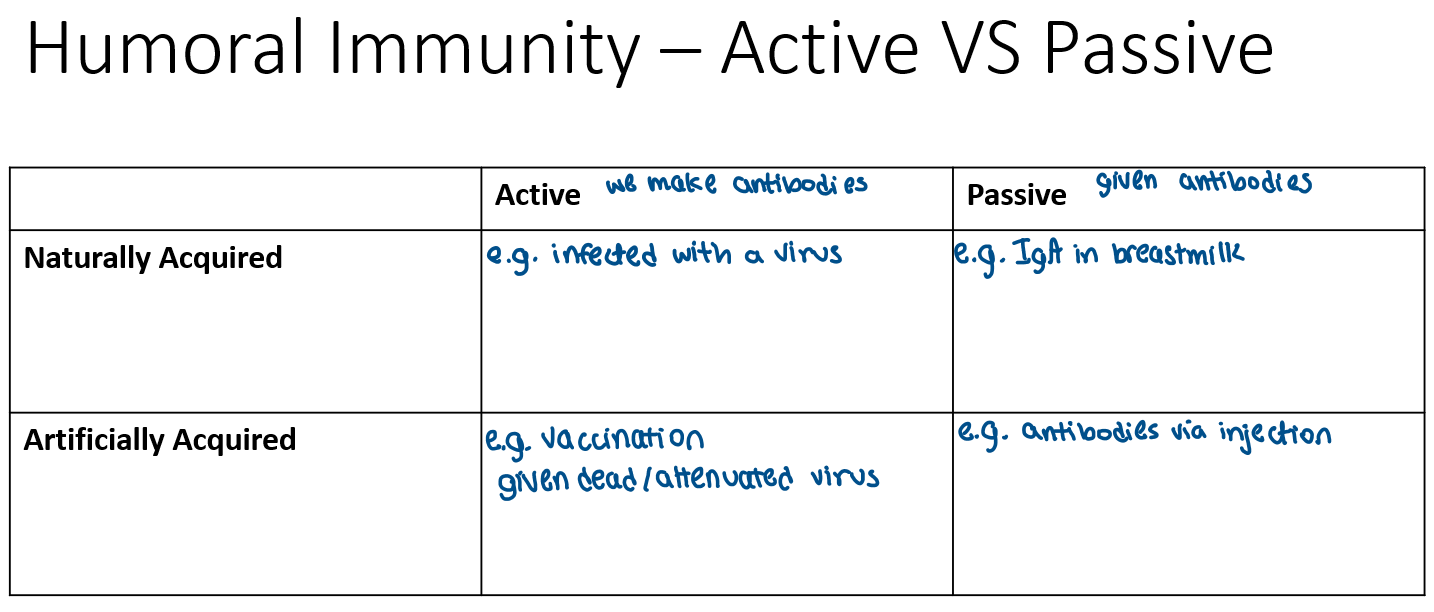
Humoral Immunity - Active vs Passive
Memory B Cells
Naive B cells divide into Plasma cells (antibodies) + Memory B cells (fewer, but circulate potentially lifetime)
1st exposure plasma 5-7 days to make antibodies
Future exposure 1-2 days and much more antibodies produced by memory cells
Cell-medicated immunity — TH, TR, TC
TH - activates B cells, TC, phagocytes
TR - dampen immune response (prevent autoimmune response)
TC - release perforins and granzymes to lyse infected cells
2 steps for immunocompetence:
Positive selection
T cell receptor must bind perfectly with major histocompatibility complete (MHC) (protein on cell membrane) on antigen presenting cell (APC). If yes, moves on to step 2. If no, apoptosis
Negative selection
T cell receptor must not bind perfectly (too strongly) to self-antigen on the MHC. If yes, it can leave and circulate the body. If it does bind —> apoptosis
(if it binds too strongly, risk of autoimmune - our cells attack our body)
Naive T cell Activation
Requires: Helper T
Examples of APCs: Dendritic, Macrophages, B cell
MHC2: APC
MHC1: Infected cell
Pathogen ingested by APC and foreign antigens are presented on MHC2 of APC
T cell receptor (TCR) on TH binds to MHC 2 on APC and CD4 acts as a co-receptor (in case, failsafe) and also binds
This stimulates TH to release cytokines (proteins, different types, to stimulate immune activity)
Cytokines stimulate TC to proliferate/divide and look for infected cells
T cell receptor on TC binds to MHC 1 on an infected cell and CD8 also binds
TC release perforins (poke a hole in infected cell) and granzymes (digest infected cell) to kill infected cell
Self-antigens
Self-antigens are bound to all cells
MHC1: on nucleated cell
MHC2: APC
APCs (3)
Macrophages, Dendritic cells, B cells