10. Sundarbans: global case study (Bangladesh)
 Call Kai
 Learn
Learn Practice Test
 Spaced Repetition
 Match
Match Flashcards
 Knowt Play
1/12

There's no tags or description
Looks like no tags are added yet.
Name | Mastery | Learn | Test | Matching | Spaced | Call with Kai |
|---|
No analytics yet
Send a link to your students to track their progress
13 Terms
What are the causes of flooding in the Sundarbans? (7)
1. Monsoon climate
2. Spring snow melt
3. Deforestation for fuel and grazing land so less evapotranspiration
4. Rivers silt up due to increased erosion which raises the river bed and reduces the capacity of the channel
5. 80% of the country is low lying which is only 1m above sea level and is on a huge floodplain
6. A lot of cyclones hit Bangladesh
7. Confluence of 3 main rivers (delta)
What is a delta?
Depositional landforms found at the mouth of a river where the river meets a body of water with lower velocity than the river. This causes clay and silt particles to clump together (flocculate) due to an electrostatic charge making the clay sink due to its increased weight. Calm seas also encourage the deposition of sediment. There are 3 beds (topset, foreset and bottomset) with the coarsest material at the top.
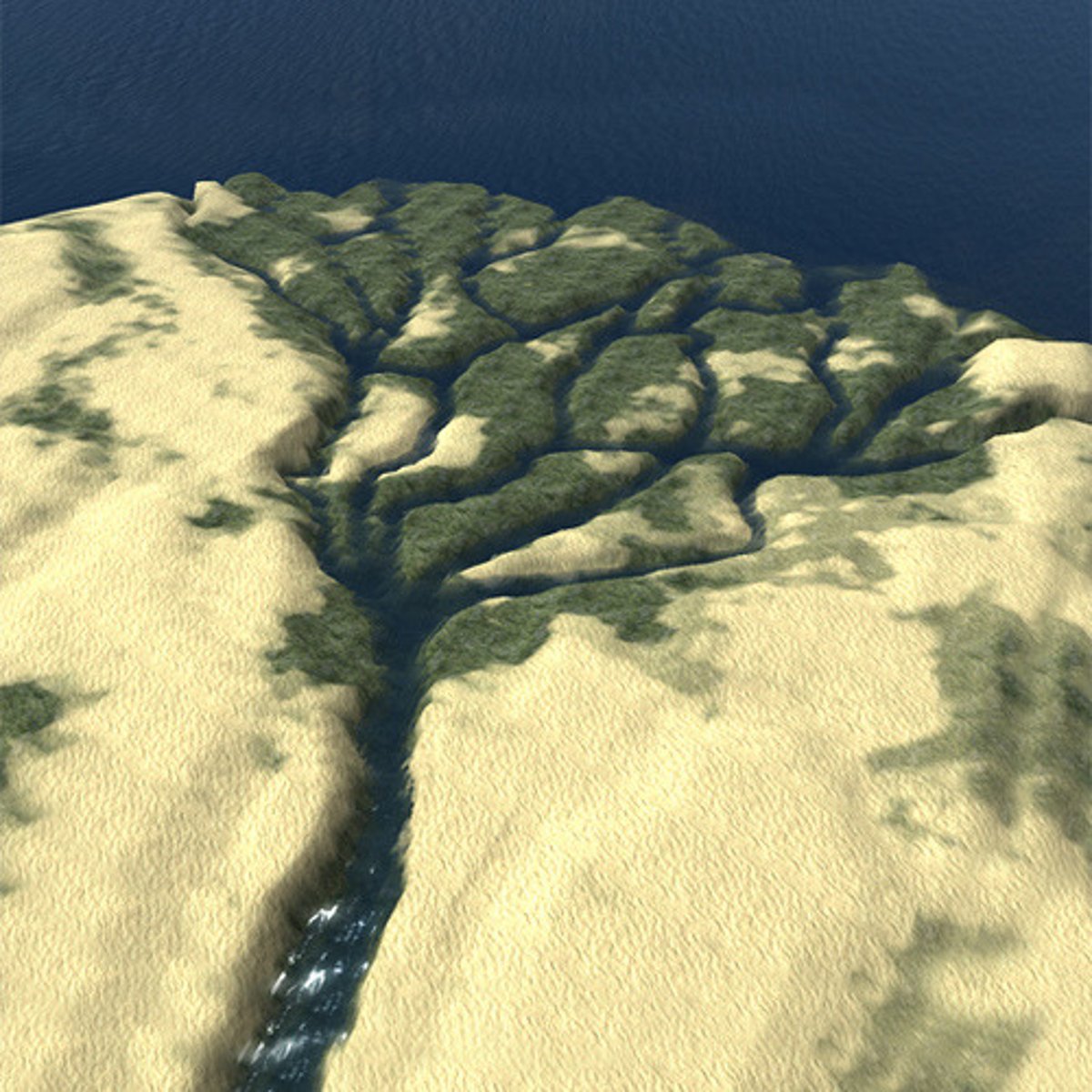
What are khals?
An extensive network of smaller channels which drains the land
What are chars?
Small sandy islands due to the deposition of sediment in rivers and the Bay of Bengal
Name 5 risks of living in the Sundarbans?
1. Lack of freshwater due to water being diverted for agricultural use and sea level rise which can contaminate the water (salinisation) this also reduces interception in vegetation
2. Loss of mangroves due to the growing population and deforestation meaning more farmland is needed
3. Only 20% of the houses have electricity so many residents won't receive flood warnings
4. Dangerous animals can attack humans eg: tigers and sharks 22 people per year die from the tigers
5. Global warming causing rising sea levels and lack of employment opportunities
Name 5 opportunities of living in the Sundarbans?
1. Lots of flat fertile land which is ideal for growing crops
2. Tourist income due to mangrove forests and mangroves can provide timber
3. Mangroves are a natural defence against flooding and erosion as they absorb excess water and their roots bind together
4. Cargo ships to transport goods
5. Medicinal plants which can be used to treat eg: malaria
What is one example of a flood in the Sundarbans?
The 1998 flood which inundated around 70% of the island due to snowmelt from the Himalayas and a heavier than average monsoon season. Continuous build-up of silt blocked the rivers.
What is an example of a cyclone in 2020?
The Amphan cyclone was in 2020 and was caused by warm sea surface temperature which damaged 28% of mangrove forest and cost $14 billion in damage as well as killing 103 people due to remoteness being an issue as people couldn't be notified. There was also a storm surge of 5m
How is the human risk of fishing creating issues?
Locals often use fine nets when fishing meaning they disturb naturally deposited clay/silt causing it to build up and block river currents
How are the Sundarbans resilient?
- the mangroves protect against storm surges
- good soil fertility provides nutritious foods
- mangrove forest has an economic value of $12,000 so they could provide resilience against poverty or sustainable economic development for the future
How are the Sundarbans mitigating risks?
- significant investment in cyclone shelters, schools, hospitals etc
- raising river embankments/artificial raised land
- afforestation
How are the Sundarbans adapting?
- USAID helped 30,000 farmers learn more new sustainable ways of farming such as growing salt tolerant rice crops
- different ways of fishing such as - brackish water culture fishery because it provides water optimal for eg: shrimp but parasites can't survive so it's easier to retain the amount of fish in the sea
What is the potential for sustainable development in the Sundarbans?
- eco-tourism
- micro loans in the community so people can grow their own businesses
- afforestation
- raising river embankments/artificial raised land
- recent investment to improve communications