Physiology (bios43)
0.0(0)
Studied by 2 people Call Kai
 Learn
Learn Practice Test
 Spaced Repetition
 Match
Match Flashcards
 Knowt Play
Card Sorting
1/101

Earn XP
Description and Tags
102 Terms
1
New cards
Physiology
Study of biological functions and processes
2
New cards
Pathophisiology
Body function in a diseased state
3
New cards
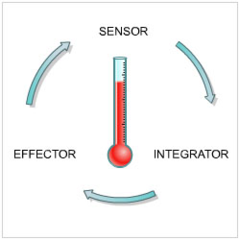
Homeostasis
Internal body conditions fluctuate but maintained within a narrow range or a set point
4
New cards
Sensors or receptors
Senses deviation from a set point
5
New cards
integrating center
Evaluates/interrogates info from sensors initiates proper output signal
6
New cards
Effector
Creates a response and corrects deviation
7
New cards
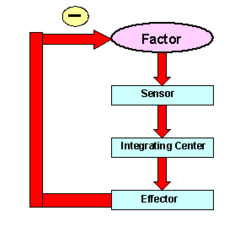
steps of negative feedback
Stimulus, sensor, integration, effector (opposes or removes stimulus)
8
New cards
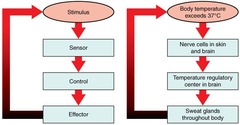
Steps of Feedback Loop
Stimulus,sensor,input signal, integrating, output signal, target and Responsive
9
New cards
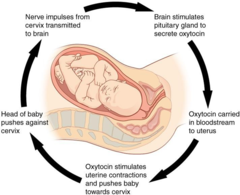
Steps of positive feedback
Stimulus, sensor, integration, effector (reinforces the stimulus)
10
New cards
Generate Hypothesis
Formulate a logical/ educated guess
11
New cards
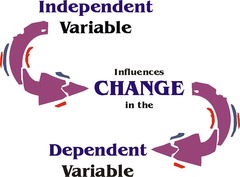
independent variable
Manipulated test condition
12
New cards
dependent variable
Observed result based on independent variable
13
New cards
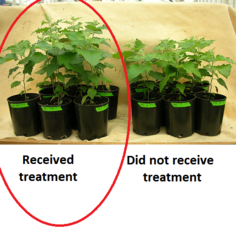
experimental group
receives test treatment
14
New cards
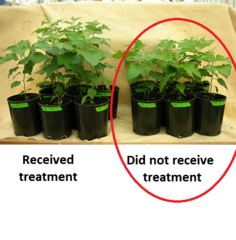
control group
the group that does not receive the test treatment.
15
New cards
X-axis (analyze data)
It is independent
16
New cards
Y-axis (analyze data)
It is dependent
17
New cards
Atoms
smallest unit of chemical elements
18
New cards
Cation
positively charged ion (lost electrons)
19
New cards
Anion
negatively charged ion (gained electrons)
20
New cards
covalent bonds
sharing of electrons
21
New cards
ionic bonds
Formed when one or more electrons are transferred from one atom to another
22
New cards
hydrogen bonds
weak attraction between a hydrogen atom and another atom
23
New cards
What is [OH-]=[H+]?
Neural; does not favor either sides
24
New cards
What is [OH-]>[H+]?
Basic; molecules absorbs protons
25
New cards
What is [H+]>[OH-]?
Acidic; molecule releases protons
26
New cards
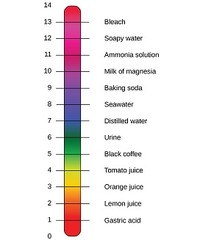
pH scale
Measures the protons in a solution 0-14
27
New cards
Buffers
Any substances that moderates changes in ph
28
New cards
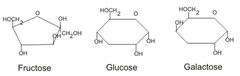
Monosaccharides
simple sugars (glucose, fructose, galactose)
29
New cards
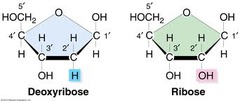
five carbon sugars (pentose)
forms the sugar phosphate backbone of RNA(ribose) and DNA(deoxyribose)
30
New cards
Disaccharidases
Peptidases
Peptidases
Dehydration synthesis; sucrose(table sugar),maltose and lactose
31
New cards
Polysaccharides
glycogen and starch
32
New cards
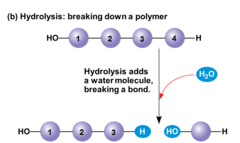
Hydrolysis
A chemical process that splits a molecule by adding water.
33
New cards
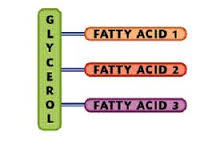
Triglycerides (fats)
composed of 1 glycerol + 3 fatty acids
34
New cards
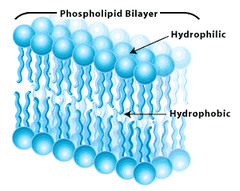
Phospholipids
A molecule that is a constituent of the inner bilayer of biological membranes, having a polar, hydrophilic head and a nonpolar, hydrophobic tail.
35
New cards
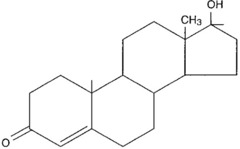
Steroids
Lipids molecules whose structure includes 4 linked carbon rings
36
New cards
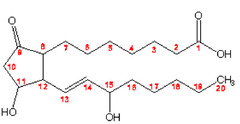
Eicosanoids
modified 20 carbon fatty acids
37
New cards
Proteins
Composed of 20 different amino acids
38
New cards
Dipeptide
Two amino acids bonded together by a peptide bond
39
New cards
oligopeptides
2-9 amino acids
40
New cards
Polypeptides
10-100 amino acids
41
New cards
Protein(#amino acids)?
>100 amino acids
42
New cards
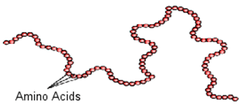
primary structure
linear sequence of amino acids
43
New cards
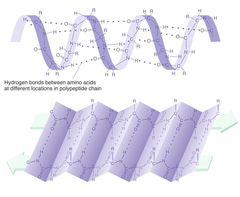
secondary structure
Sequence of amino acids, Alpha helix and Beta sheets
44
New cards
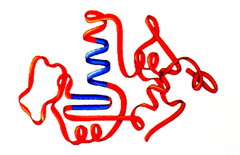
tertiary structure
Folding 2 structure into 3-D shape
45
New cards
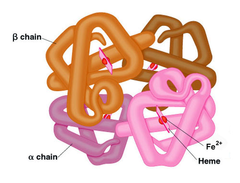
quaternary structure
Tertiary structure combined
46
New cards
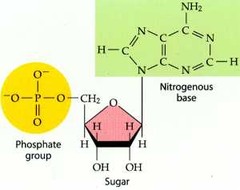
The subunits of nucleic acids are
nucleotides
47
New cards
nitrogenous base
An organic base that contains nitrogen, such as a purine or pyrimidine; a subunit of a nucleotide in DNA and RNA
48
New cards
Purine
have a double ring structure, Adenine and Guanine
49
New cards
Pyrimidine
have a single ring, Cytosine, Thymine and Uracil
50
New cards
In DNA, A pairs with
T (thymine)
51
New cards
In DNA, G pairs with
C (cytosine)
52
New cards
In RNA, A pairs with
U (uracil)
53
New cards
chemical rxns are
transformation of substances by forming/breaking covalent bonds
54
New cards
activaton energy
minimum amount of energy that must be supplied to initiate a chemical reaction
55
New cards
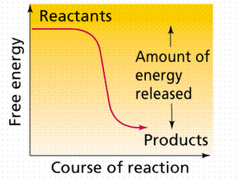
exergonic rxn
net release of bond energy
56
New cards
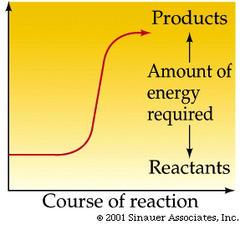
endergonic rxn
net input of bond energy
57
New cards
coupling rxn
energy released from exergonic rxn drives endergonic rxn
58
New cards
What does ATP stand for and what is it?
Adenosine triphosphate; high energy phosphate molecule required to provide energy for cellular function.
59
New cards
Enzymes
Catalysts for chemical reactions in living things
60
New cards
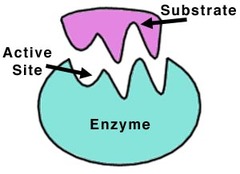
Specificity
substrates shape fits snuggly with enzyme's active site
61
New cards
Competition
substrates with similar structures compete for enzyme's active sites
62
New cards
Saturation
when
63
New cards
Isozymes
enzymes that catalyze the same reaction but under different conditions or in different tissues
64
New cards
proteolytic activation
converts inactive to active form by removing part of molecule
65
New cards
inorganic cofactors
ions permanently bound to enzyme
66
New cards
Coenzymes
organic cofactors
67
New cards
inhibitors
An agent that slows or interferes with a chemical action
68
New cards
Denaturation
loss of normal shape of a protein due to heat or other factor
69
New cards
Catabolism
Metabolic pathways that break down molecules, releasing energy.
70
New cards
Anabolism
Metabolic pathways that construct molecules, requiring energy.
71
New cards
End-product (feedback) inhibition
The inhibition of the first enzyme in a pathway by the end product of that pathway.
72
New cards
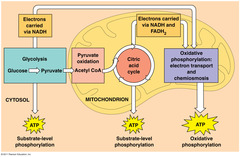
cellular respiration
Process that releases energy by breaking down glucose and other food molecules in the presence of oxygen
73
New cards
Glycolysis
first step in releasing the energy of glucose, in which a molecule of glucose is broken into two molecules of pyruvic acid
74
New cards
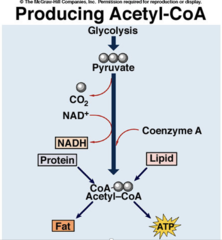
Pryruvate
This product of glycolysis is used and synthesized by many metabolic pathways. In energy generation, it can be either converted to lactate under anaerobic conditions, or broken down to water and carbon dioxide in the presence of oxygen, generating large amounts of ATP.
75
New cards
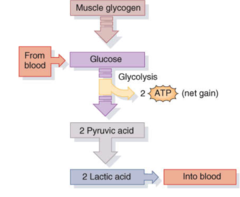
anaerobic respiration
Respiration that does not require oxygen, produces lactic acid
76
New cards
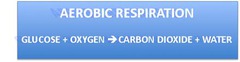
aerobic respiration
Respiration that requires oxygen, occurs in mitochondria
77
New cards
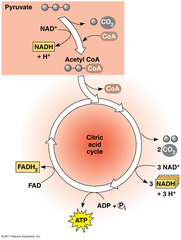
citric acid cycle
Completes the breakdown of glucose by oxidizing a derivative of pyruvate to carbon dioxide.
78
New cards
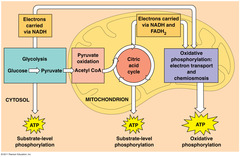
Electron Transport Chain (ETC)
A sequence of electron carrier molecules (membrane proteins) that shuttle electrons during the redox reactions that release energy used to make ATP.
79
New cards
steps of cellular respiration
glycolysis, pyruvate processing, citric acid cycle and electron transport chain
80
New cards
How many ATP are produced in glycolysis?
4 are formed, but 2 are used during glycolysis reactions, so net gain is 2.
81
New cards
How many ATP are produced in citric acid cycle?
2 ATP, 6 NADH, 2 FADH2
82
New cards
fed state metabolism
Insulin promotes glucose metabolism by cells
83
New cards
Glycogenesis
glucose to glycogen
84
New cards
Lipogenesis
the metabolic formation of fat
85
New cards
fasted state metabolism
glucagon promotes glucose release by cells
86
New cards
Glycogenolysis
breakdown of glycogen to glucose
87
New cards
protein metabolism
deaminates amino acids; forms urea; synthesizes plasma proteins; converts certain amino acids into other amino acids
88
New cards
Lipolysis
breakdown of fat
89
New cards
Steps of Lipolysis
Lipases,Glycerol, B-oxidation, and Acyl units
90
New cards
Gluconeogenesis
generates glucose from noncarbohydrate substrates
91
New cards
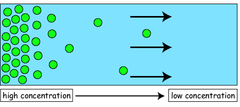
Diffusion
Uses kinetic energy of molecular movement and does not require an outside energy source
92
New cards
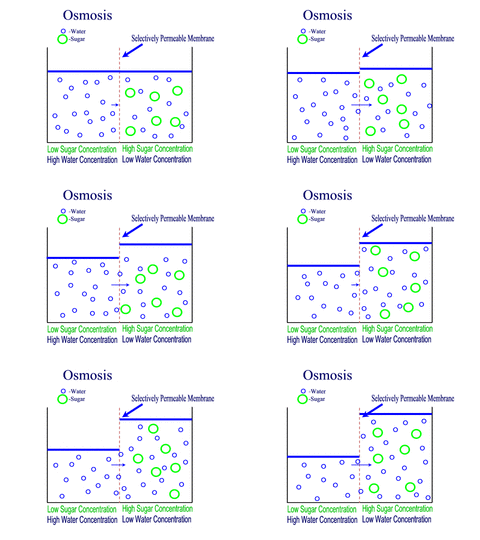
Osmosis
water movement across membrane in response to solute concentration gradient
93
New cards
vesicular transport
Materials move into or out of cell in vesicles
94
New cards
Phagocytosis
A type of endocytosis in which a cell engulfs large particles or whole cells
95
New cards
Endocytosis
process by which a cell takes material into the cell by infolding of the cell membrane
96
New cards
Pinocytosis
process by which a cell takes in liquid from the surrounding environment
97
New cards
receptor-mediated
substances bind to receptors in the membrane
98
New cards
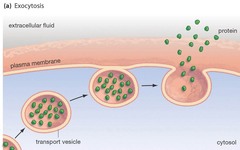
Exocytosis
Process by which a cell releases large amounts of material
99
New cards
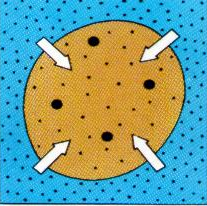
Hypotonic
Referring to a solution that, when surrounding a cell, will cause the cell to take up water cell gains water and swells
100
New cards
Tonicity
the ability of a surrounding solution to cause a cell to gain or lose water