Introduction to Endocrines
 Call Kai
 Learn
Learn Practice Test
 Spaced Repetition
 Match
Match Flashcards
 Knowt Play
1/128

There's no tags or description
Looks like no tags are added yet.
Name | Mastery | Learn | Test | Matching | Spaced | Call with Kai |
|---|
No analytics yet
Send a link to your students to track their progress
129 Terms
-brain
-neck
-within the viscera
-sex organs
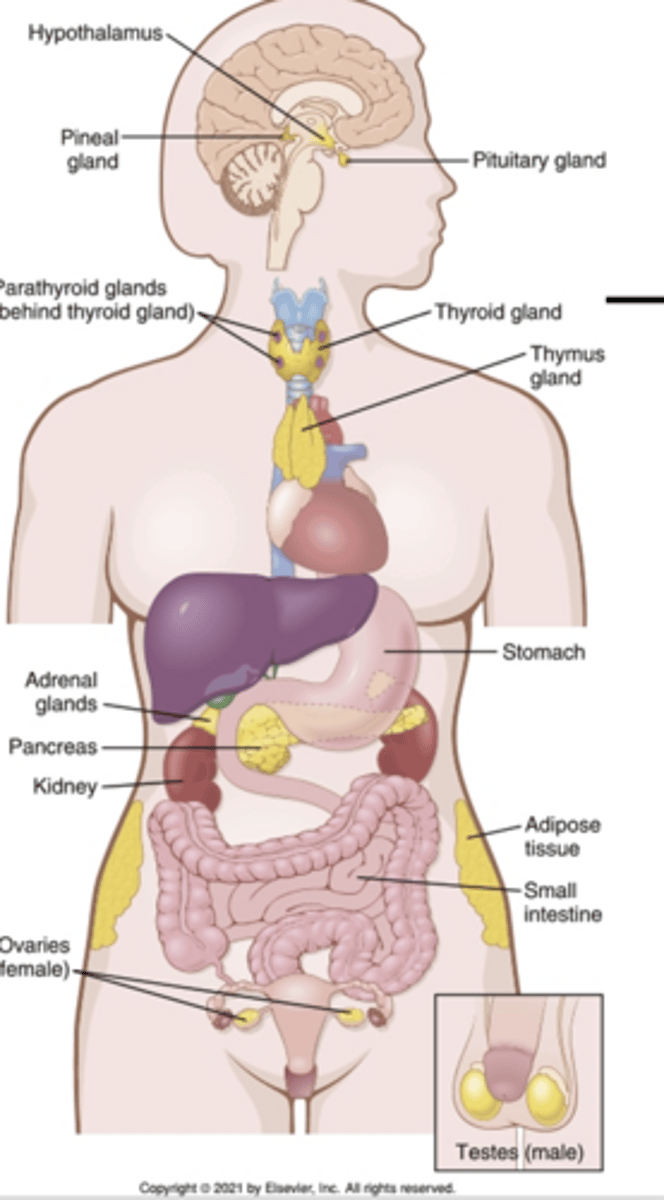
In what 4 places are endocrine glands/organs/tissue located?
-hypothalamus (water balance, hunger, body temp)
-pineal gland
-pituitary gland
What are the 3 main endocrine glands located in the brain?
-thyroid gland (BMR)
-parathyroid glands (Ca2+ homeostasis)
What are the 2 main endocrine glands located in the neck?
-adrenal glands
-pancreas
-stomach
-kidneys
-adipose tissue
-small intestine
What are the 6 main endocrine organs/tissues located within the viscera?
testes and ovaries secrete steroid hormones, testosterone and estrogen, respectively -> secondary sex characteristics and reproduction
What is the endocrine function of sex organs, and explain?
note the distribution of endocrine glands:
they work together, but function differently in the body
How do the endocrine and nervous system reflexes interact?
the endocrine system works in concert with the nervous system and helps to contribute to growth, development, reproduction, BP, behavior, and other physiological mechanisms
How does the endocrine system work with the nervous system?
when glucose levels drop, glucagon is released and when glucose levels are too high, insulin is released
How does blood glucose response depict the endocrine system as a reflex?
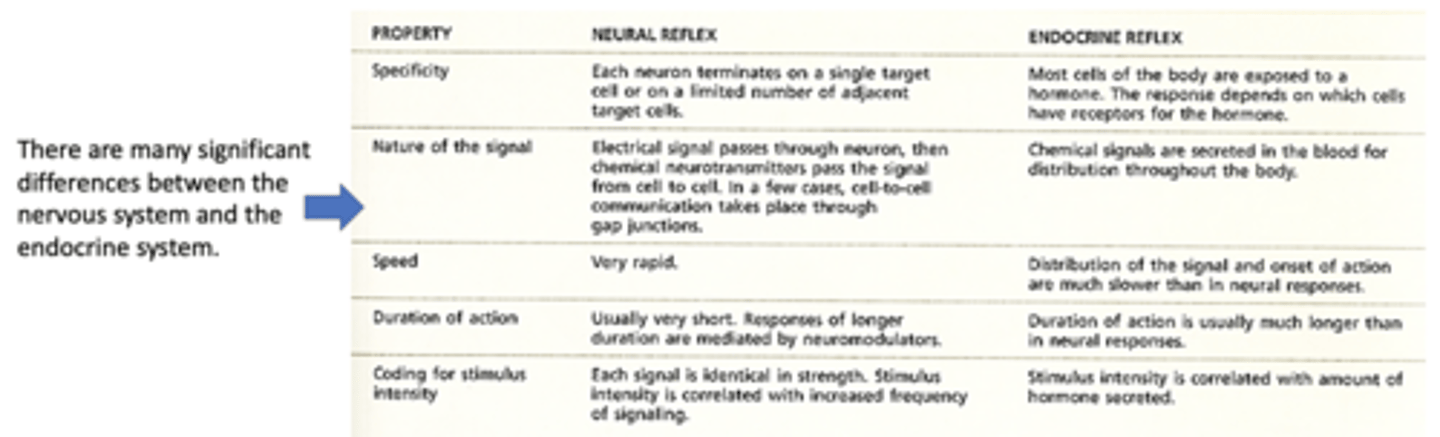
-specificity
-nature of the signal
-speed
-DOA
-coding for stimulus intensity
What are the 5 main properties where the nervous system and endocrine system are significantly different?
-neural reflex -> each neuron terminates on a single target cell or on a limited number of adjacent target cells
-endocrine reflex -> most of the cells of the body are exposed to a hormone, and the response depends on which cells have receptors for the hormone
How do the specificities of the neural reflex/spinal reflex and the endocrine reflex differ?
-neural reflex -> electrical signal passes through neuron, then chemical NTs pass the signal from cell to cell (in few cases, cell-to-cell communication takes place through gap junctions)
-endocrine reflex -> chemical signals are secreted in the blood for distribution throughout the body
How does the nature of the signal of the neural reflex/spinal reflex and the endocrine reflex differ?
-neural reflex -> very rapid
-endocrine reflex -> distribution of the signal and onset of action are much slower than in neural responses
How do the speeds of the neural reflex/spinal reflex and the endocrine reflex differ?
-neural reflex -> usually very short, responses of longer duration are mediated by neuromodulators
-endocrine reflex -> usually much longer than in neural responses
How do the DOAs of the neural reflex/spinal reflex and the endocrine reflex differ?
-neural reflex -> each signal is identical in strength, stimulus intensity is correlated with increased frequency of signaling
-endocrine reflex -> stimulus intensity is correlated with amount of hormone secreted
How do the codings for stimulus intensity of the neural reflex/spinal reflex and the endocrine reflex differ?
note the differences:
centered on the secretion of hormones typically into the bloodstream and their actions on target tissues
What is the basis of endocrine physiology?
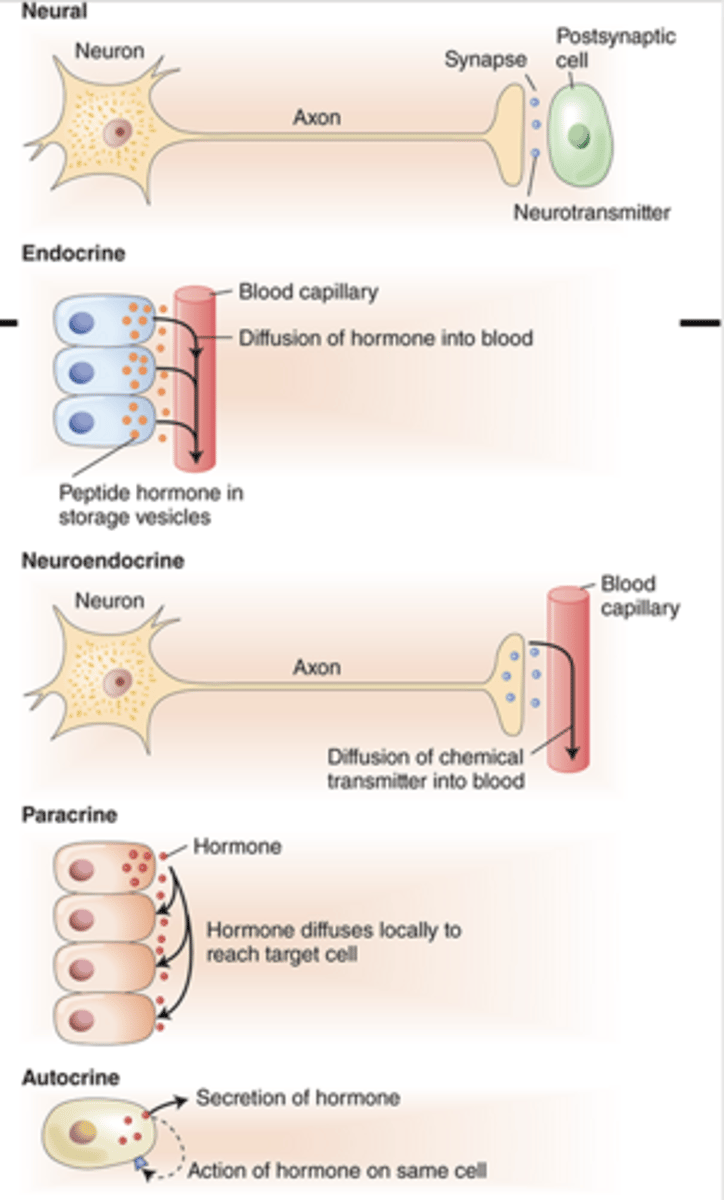
carried a long distance via the blood
What does endocrine mean?
diffuses a short distance in local ECF
What does paracrine mean?
acts at receptors on the cell that secreted it
What does autocrine mean?
released from neuron and is carried short or long distances
What does neuroendocrine mean?
endocrine cells typically found in glands
What are hormones synthesized and secreted by?
by excess or deficiency of a hormone or by defects in hormone receptors or downstream intracellular signaling
How may endocrine diseases develop?
certain cancers can secrete hormones in a loss-of-feedback manner (ex: pheochromocytoma, which overproduce noradrenaline and adrenaline)
How can malignancy affect the endocrine system?
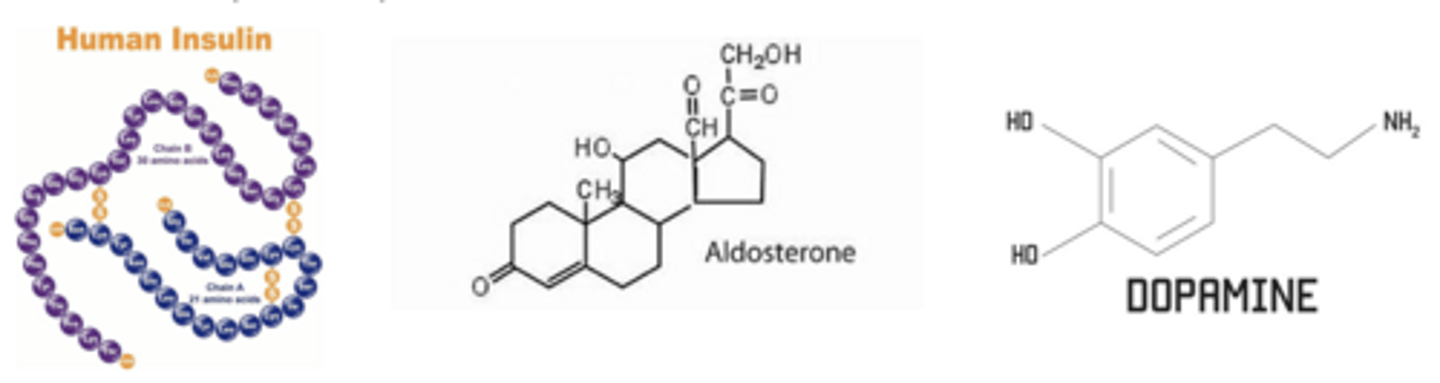
-peptides or proteins (most hormones, ex: insulin)
-steroids (ex: aldosterone, cortisol, sex hormones)
-amines, tyrosine-based (ex: dopamine, catecholamines, thyroid hormones, T3 & T4)
What are the 3 major groups of hormones?
cannot be stored, due to lipid-solubility; just released into circulation with no exocytosis pathway
What is the storage of steroid hormones like, and explain?
intracellular receptors; bind directly to the receptors at the nucleus to affect transcription and translation, giving them a long onset of action and long DOA
What are the receptors of steroid hormones like, and explain?
via Ca2+-mediated exocytosis
How are peptide hormones, like insulin, secreted?
the 3 major groups of hormones:
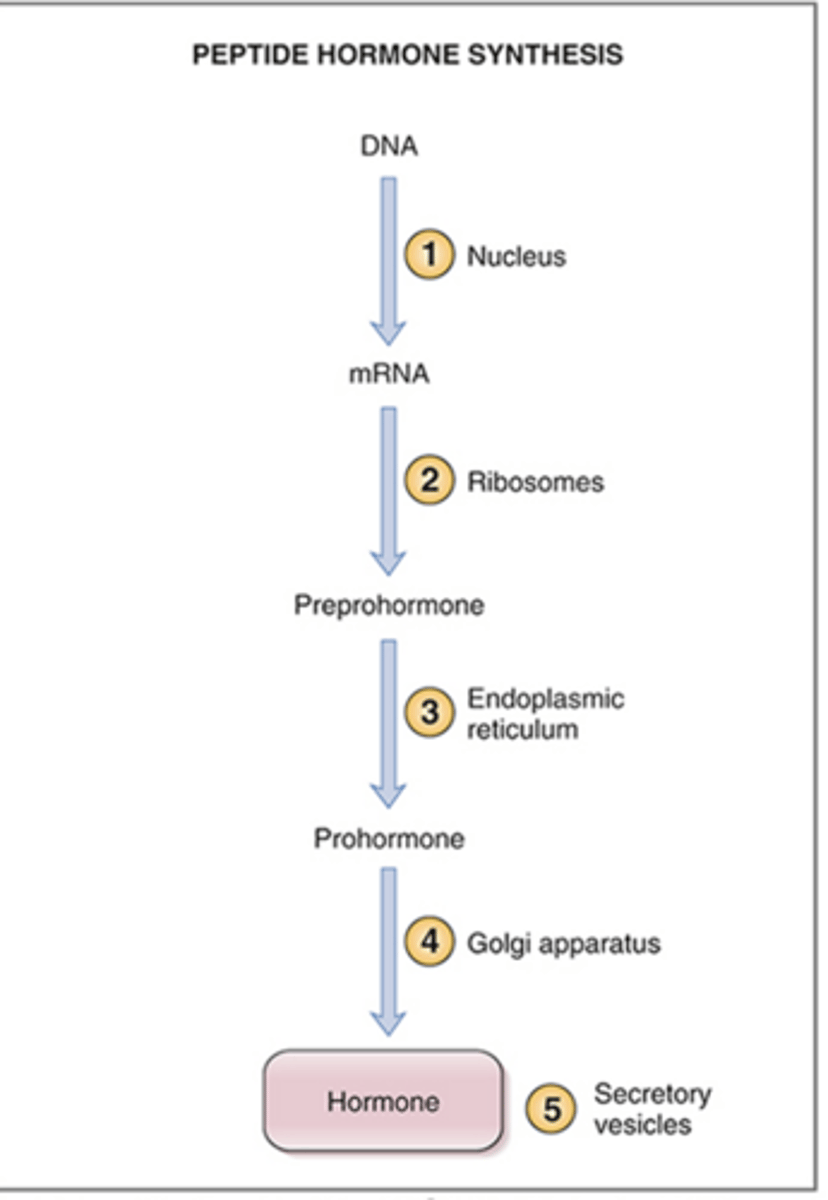
peptide hormones start with an mRNA, make a pre-prohormone, then a prohormone, and finally a hormone
(MUST undergo processing to function!)
How does peptide hormone synthesis proceed?
through recombinant DNA technology; because of gene sequencing data
How can almost all peptide hormones be made, and explain?
as replacement hormone therapy if endogenous hormone is dysfunctional or not made by the endocrine gland
How can peptide hormones made via recombinant DNA technology be used?
allows for proper processing, packaging of hormone, and proper folding in the ER
What is the function of the signal peptide in peptide hormone synthesis?
it will be cleaved after leaving the ER
What will eventually happen to the signal peptide?
it is transferred to the Golgi apparatus, processed, and hormone is packaged into secretory vesicles
What happens to the prohormone?
steps involved in the synthesis of peptide hormones:
-adrenal cortex
-gonads
-corpus luteum
-placenta
Via what 4 organs/tissues are steroid hormones synthesized and secreted?
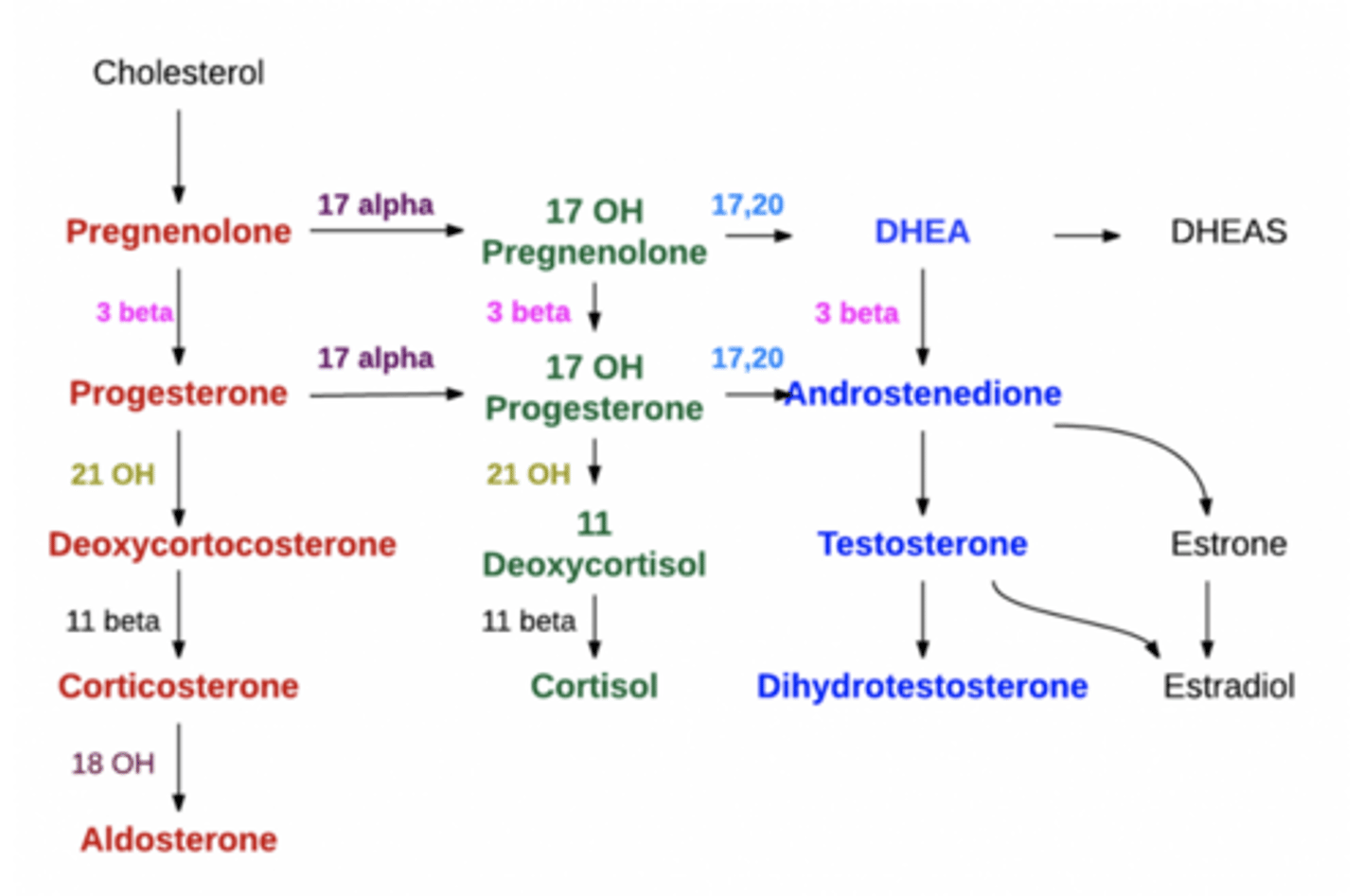
cholesterol
What are all steroid hormones derivatives of?
-deficiencies in any enzymes involved in conversion will affect a person's ability to produce these hormones
-low cholesterol levels will affect a person's ability to produce these hormones (ex: aldosterone)
What are 2 significant considerations about the derivation of steroid hormones from cholesterol?
steroid hormone synthesis, 1,25-dihydroxycholecalciferol (vitamin D3) is not depicted, but is also steroid hormone...note the enzymes involved in the conversion:
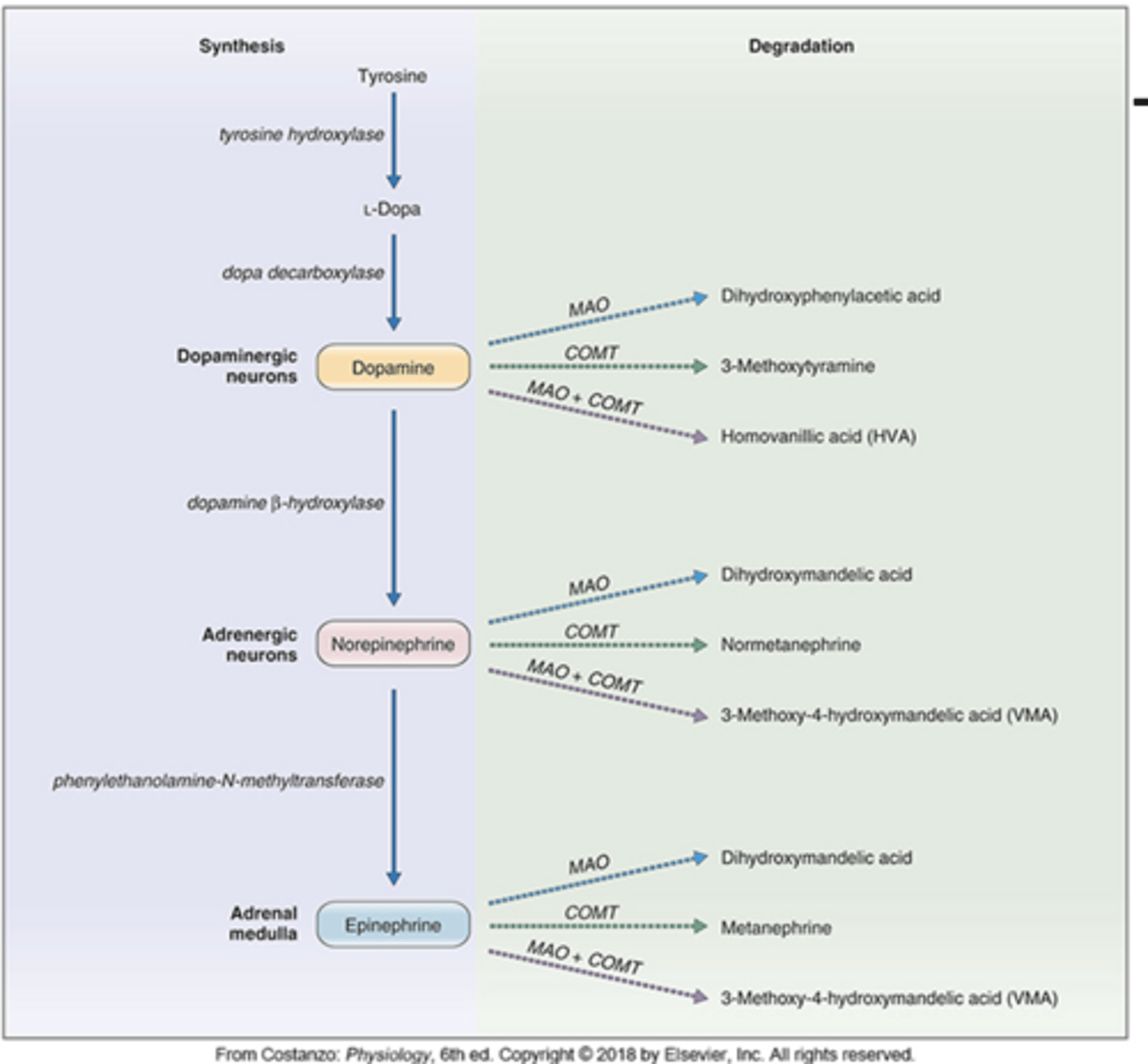
tyrosine
What are amine hormones derived from?
tyrosine hydroxylase
What is the rate-limiting enzyme involved in the conversion of tyrosine to amine hormones?
-catecholamines -> dopamine, epinephrine, norepinephrine
-thyroid hormones -> T3 & T4
What are the 2 main categories of amine hormones, and the hormones in each group?
*monoamine oxidase (MAO)
*catechol-O-methyltransferase
What 2 things are responsible for the degradation of catecholamines (amine hormones)?
synthesis and degradation of dopamine, norepinephrine, and epinephrine:
-neural mechanisms
-feedback mechanisms
What are the 2 ways in which regulation of hormone secretion can occur?
feedback mechanisms
Are neural mechanisms or feedback mechanisms more common?
-negative feedback
-positive feed-forward pathways
What are the 2 types of feedback?
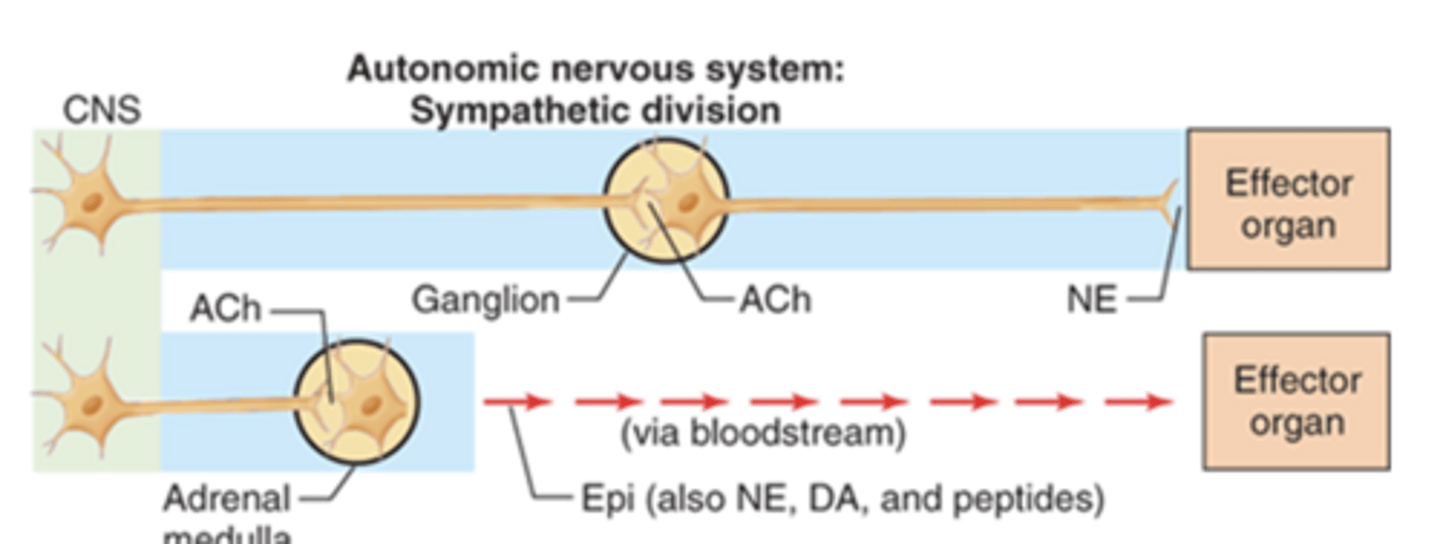
neural mechanism
Is catecholamine release an example of a neural or feedback mechanism?
adrenal medulla; due to stimulation of preganglionic nerve fiber (neural mechanism)
Where are catecholamines released from, and how?
regulation of hormone secretion:
T3 and T4 can inhibit the release of TSH or TRH (inhibit at the level of anterior pituitary and hypothalamus)
What are negative feedback pathways like in thyroid hormone release?
TRH can increase the release of TSH or T3/T4 downstream
What are positive feedback pathways like in thyroid hormone release?
negative feedback; gives hormone the ability to feedback and down-regulate its own production, which is important because hormones stay within a very narrow range
Is positive or negative feedback more common, and explain?
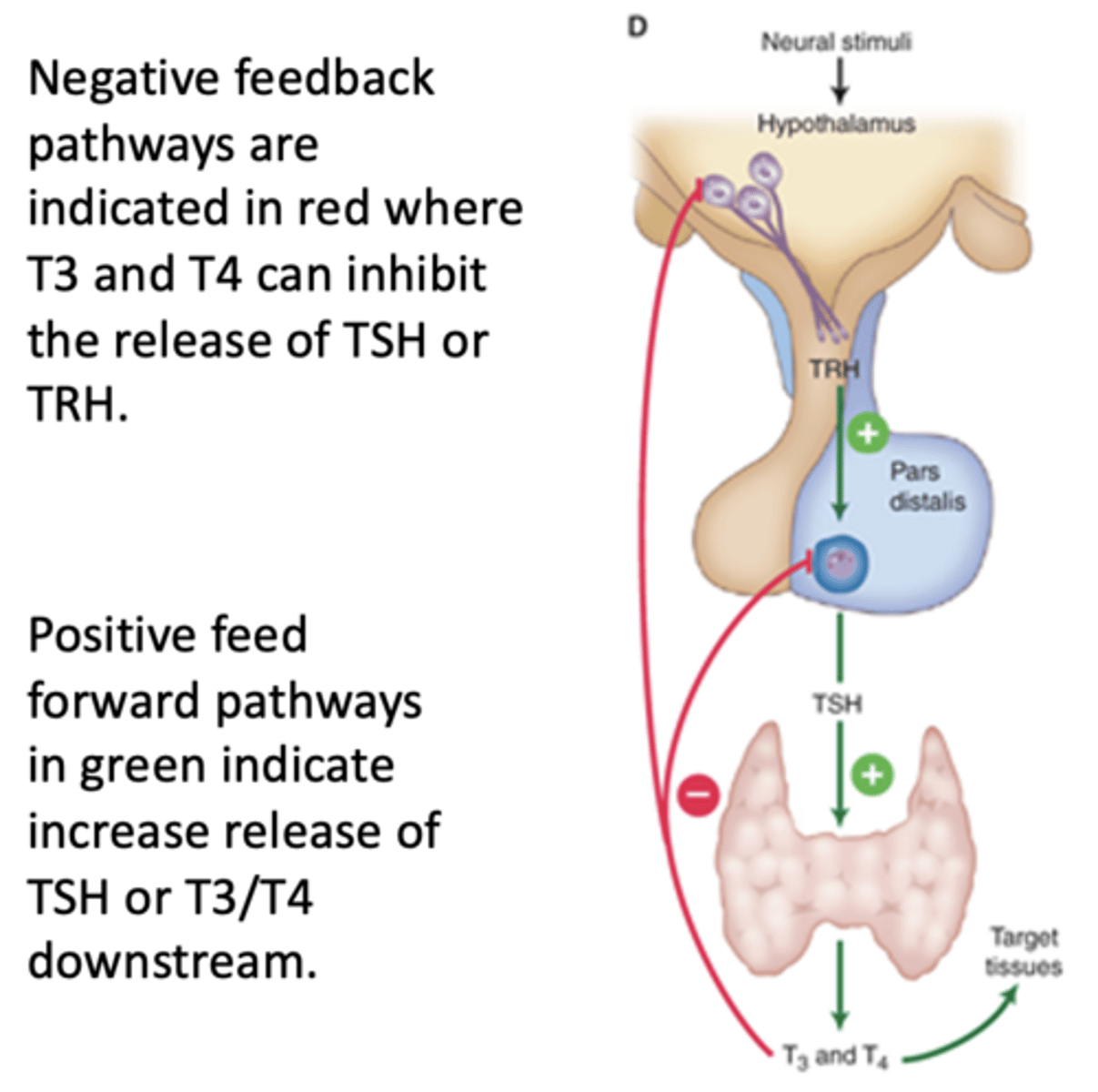
overactive thyroid -> elevations of T3/T4 but reductions in TRH and TSH
tumor/problem at level of the anterior pituitary -> elevations in TSH and TH
How can a clinician recognize an overactive thyroid versus a tumor/problem at the level of the anterior pituitary?
negative feedback loops are more common
How does the prevalence of negative and positive feedback loops compare?
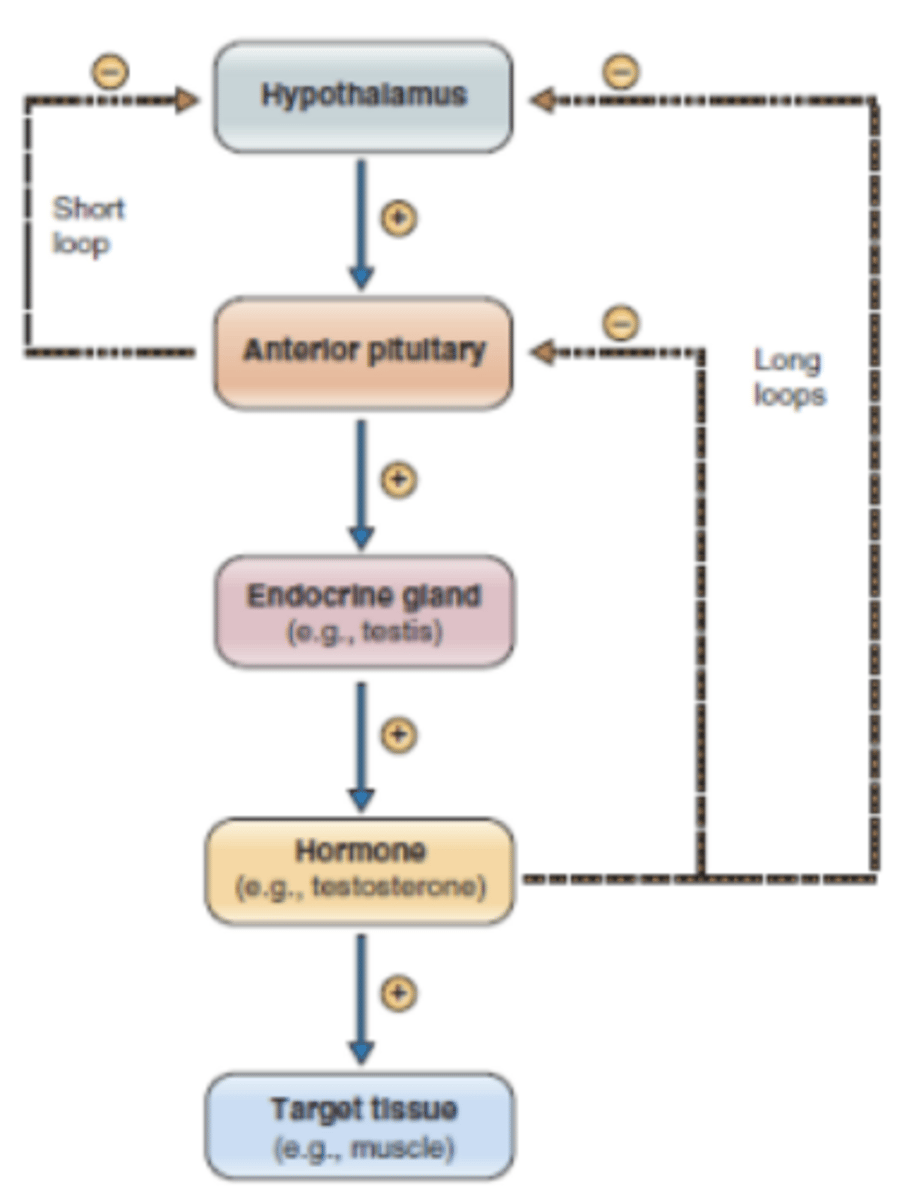
hormone action either directly or indirectly inhibits further secretion of the hormone
What happens in negative feedback loops?
*long-loop feedback
*short-loop feedback
*ultrashort-loop feedback
What are the 3 main types of negative feedback that utilize the hypothalamic-pituitary axis?
hormone feed back to the hypothalamic-pituitary axis (self-limiting)
What happens in long-loop feedback?
the anterior pituitary feed back on the hypothalamus-releasing hormone
What happens in short-loop feedback?
the hypothalamic-releasing hormone will inhibit its own secretion (ex: GHRH can feed back and inhibit its own secretion)
What happens in ultrashort-loop feedback?
yes; examples include insulin and parathyroid hormone
Are there negative feedback loops that do not involve the hypothalamic-pituitary axis, and explain?
insulin will get released during high-plasma glucose concentrations, but once plasma glucose is "sensed" as being low enough by the pancreas, then insulin secretion will get turned off
How does the negative feedback loop for insulin proceed?
negative feedback loops:
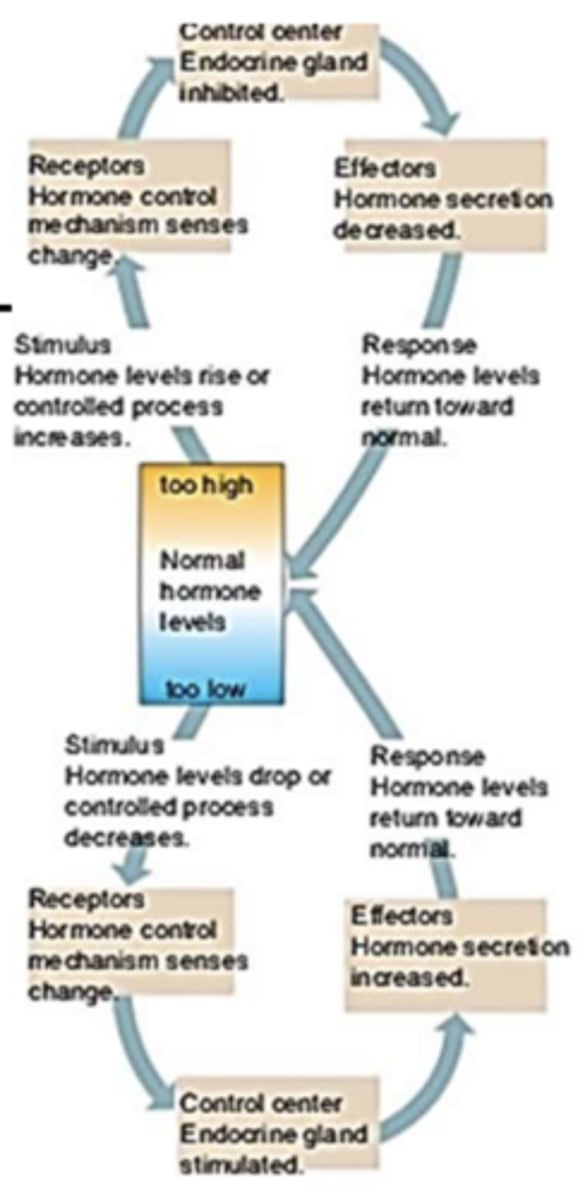
a setpoint -> references what is "normal"
What is required for negative feedback loops, and explain?
they have a "comparator" that compares the setpoint, environment, and feedback from certain sensors
(like a thermostat)
How do negative feedback loops use the setpoint to function?
it sends stimulatory or inhibitory signals via the controlling elements to re-establish a given setpoint
How does the comparator function?
setpoint for hormone levels:
they are uncommon
What is the prevalence of positive feedback loops like?
in explosive events
In what events do positive feedback loops occur?
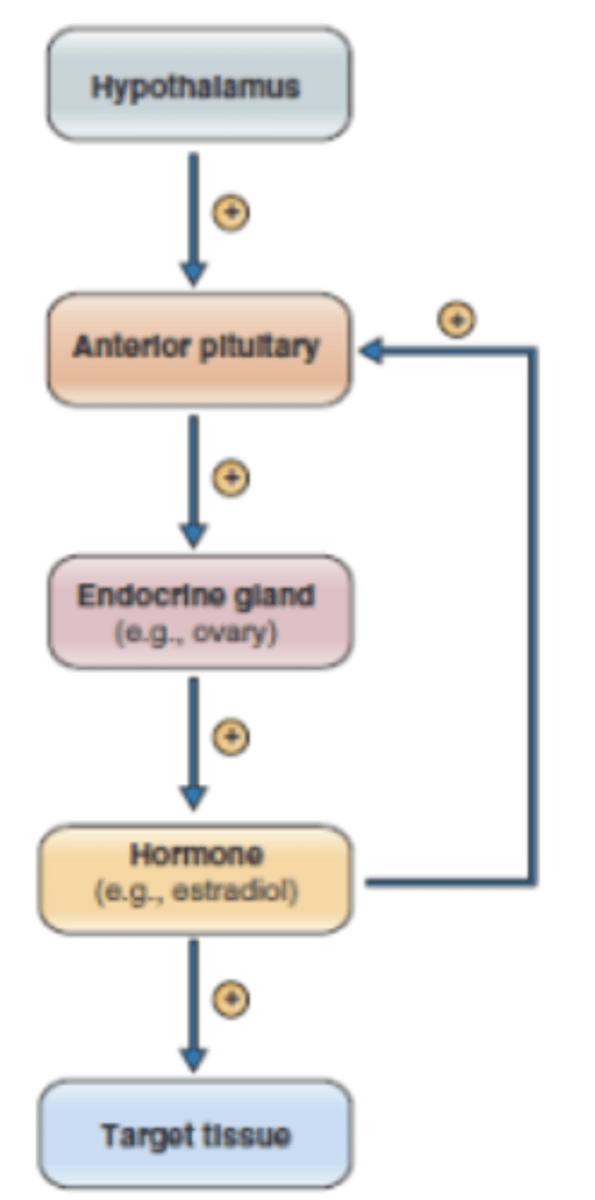
when secretion of a hormone feeds back and causes more secretion of the hormone (self-augmentation)
What occurs in positive feedback?
-childbirth -> oxytocin
-ovulation -> estrogen
What are 2 examples of explosive events where positive feedback occurs, and explain?
estrogen will be released by the ovaries during the midpoint of the menstrual cycle, which will feed back to the anterior pituitary and cause a large increase or burst in FSH and LH production -> will induce ovulation and help to further increase the production of estrogen
What is the feedback loop like for ovulation and estrogen?
positive feedback:
-seasonal changes
-various stages of development and aging
-diurnal cycle
-during sleep
Based on what 4 main factors can hormone secretion vary?
pulsatile release
What term describes the cyclic variations that occur with hormone release?
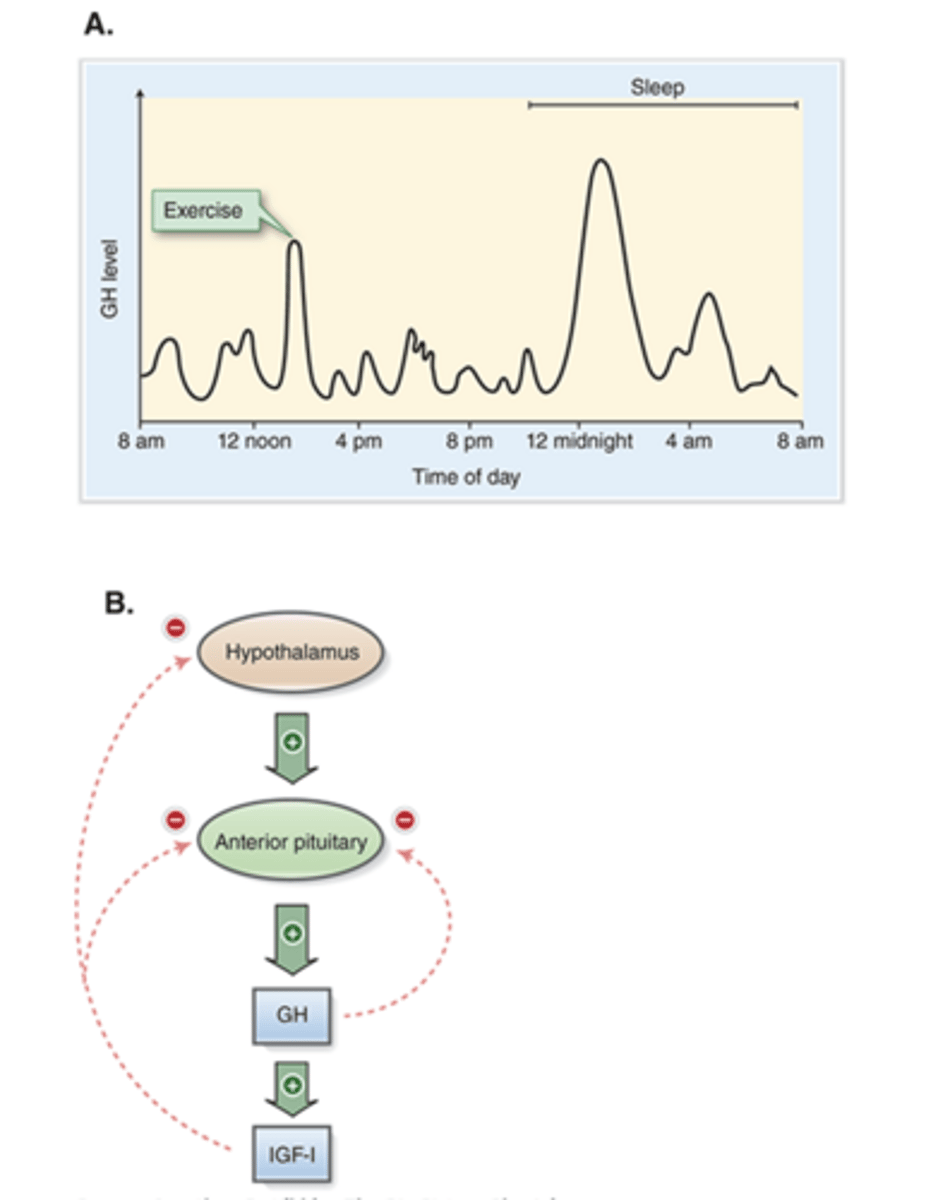
GH is increased during early period of sleep but is reduced in later stages of sleep AND GH release from anterior pituitary can also be increased by exercise
How does growth hormone (GH) illustrate cyclic variation in hormone release?
changes in neural pathways
What are the cyclic changes in hormone release thought to be due to?
cyclic variations can occur with hormone release (pulsatile release):
very low in the blood; regulation of receptors/signal amplification
What are hormone concentrations like in the blood, and explain?
within seconds after the adrenal gland is stimulated
How are some hormones, like NE and epinephrine, secreted?
hormones will induce action within a few seconds to minutes
What is the rate of action at which hormones, like NE and epinephrine, which are secreted within seconds after the adrenal gland is stimulated?
they may require months for a full effect
What are the rates of action of other hormones, like thyroxine (T4) or GH like?
small concentrations in the blood (microgram to picogram) -> secretion of hormones is also very small (micrograms to milligrams/day)
What are the concentrations of hormones like in the blood, and explain?
by receptors; receptors and the signal amplification cascades allow for these hormone concentrations to remain low in the blood and still have a great effect on tissue
How is the physiological response of hormones mediated, and explain?
they are dissolved in the blood and diffuse out of capillaries into the IF to the target tissue
How are water-soluble hormones, such as catecholamines, transported in the blood?
mainly bound to plasma proteins (cortisol binding globin/sex binding globin)
How are lipid-soluble hormones, such as steroids and thyroid hormones, transported in the blood?
they must dissociate from the plasma proteins in order to diffuse out of capillaries
What must happen to plasma-bound lipid-soluble hormones for them to travel to the tissue?
a "reservoir" of the hormones
What is created by the binding of hormones to plasma proteins?
will also decrease the clearance of the hormone
How will the binding of hormones to plasma proteins affect their clearance?
-rate of release (micrograms/day)
-rate of clearance (mL/min)
What are the 2 main parameters that control hormone secretion?
-metabolic degradation by the tissue/blood (ex: MAO, COMT)
-binding with the tissue (receptor interaction and endocytosis)
-excretion by the liver into the bile (ex: lipid-soluble, steroids)
-excretion by the kidneys into the urine (ex: water-soluble, catecholamines)
What are the 4 main ways by which hormones are cleared from the plasma?
can decrease the clearance of hormones -> will cause hormone concentrations to remain high
How can hormones be affected by dysfunction in the liver or kidney (metabolic organs), and explain?
when giving exogenous hormones (ex: oral contraceptives containing estrogen and progesterone)
When is decreased clearance due to dysfunction in the liver or kidney clinically relevant?
hormone receptors can be up- or down-regulated to influence a physiological response
How can a physiological response involve hormone receptors?
receptors must be present on tissue
What must happen for a hormone to have an effect?
blood supply to the target tissue -> since hormones are released into the systemic circulation
What is important for getting hormones to the target tissue, and explain?
-on the plasma membrane
-in the cytosol or nucleus
In what 2 main places can receptors be present?