Genes, inheritance pattern and human pattern
 View linked note
 Call Kai
 Learn
Learn Practice Test
 Spaced Repetition
 Match
Match Flashcards
 Knowt Play
1/39

There's no tags or description
Looks like no tags are added yet.
Name | Mastery | Learn | Test | Matching | Spaced | Call with Kai |
|---|
No analytics yet
Send a link to your students to track their progress
40 Terms
Monogenic Diseases
Diseases caused by mutations in a single gene.
Inheritance Patterns
Monogenic diseases can follow Mendelian inheritance patterns, meaning they can be inherited in dominant or recessive ways.
Cystic Fibrosis
A monogenic disease caused by mutations in the CFTR gene.
Sickle Cell Disease
A monogenic disease caused by a mutation in the HBB gene.
Multigenic Diseases
Diseases caused by the combined effects of mutations in multiple genes and environmental factors.
Inheritance of multigenic diseases
These diseases do not not follow simple Mendelian patterns; instead they involve intern actions between genetic and environmental factors
Diabetes
A multigenic disease where several genes contribute to the risk of developing type 2 diabetes.
Heart Disease
A multigenic disease influenced by multiple genes affecting cholesterol levels and blood pressure.
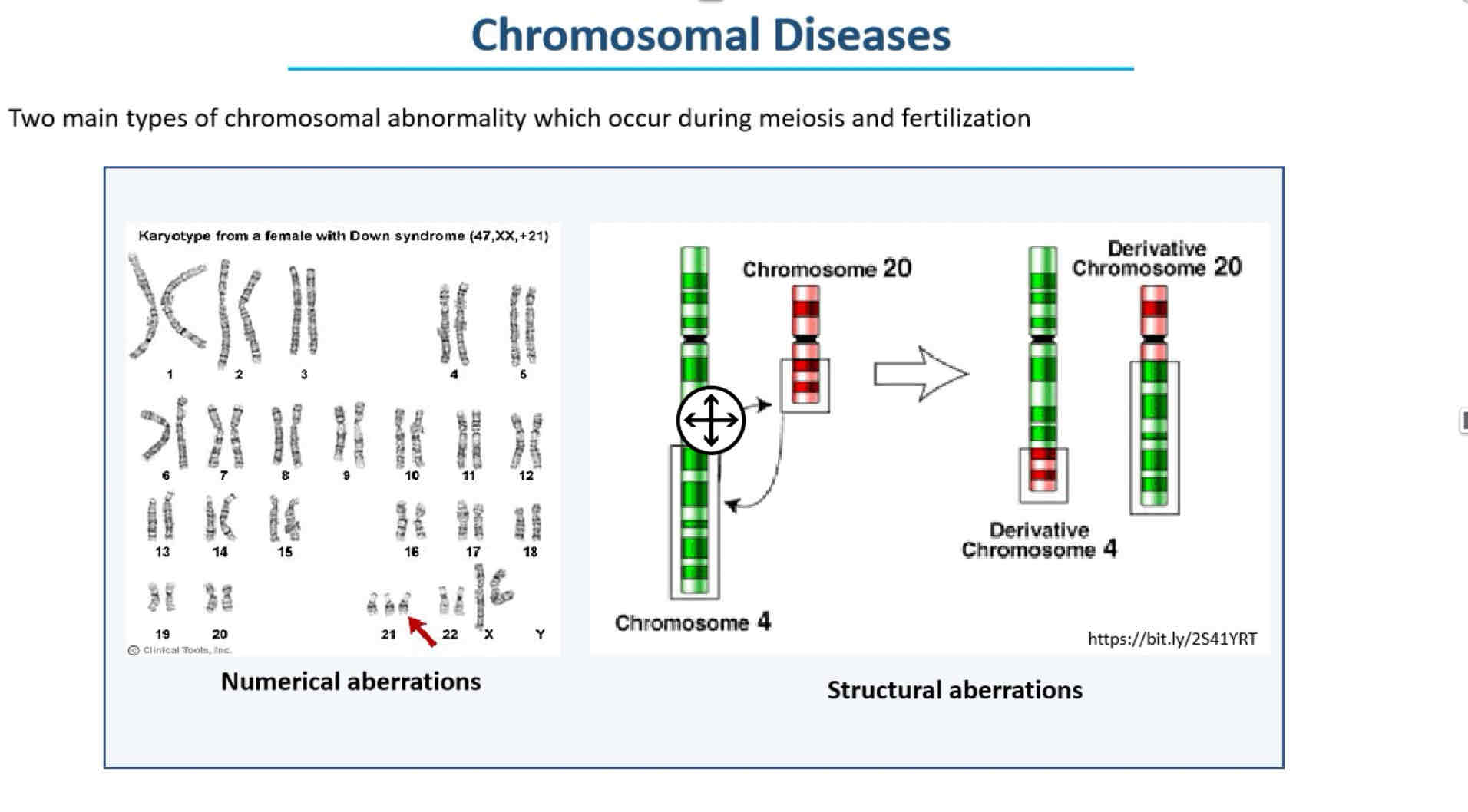
Chromosomal Diseases
Diseases arising from abnormalities in the structure or number of chromosomes.
Causes of chromosomal diseases
due to errors in cell division (such as nondisjunction, which leads to extra or missing chromosomes) or structural changes like deletions, duplications, or translocations of chromosome segments.
Down Syndrome
A chromosomal disease caused by an extra copy of chromosome 21 (trisomy 21).
Turner Syndrome
A chromosomal disorder resulting from a missing or incomplete X chromosome in females.
Triploidy
A condition where 3 complete sets of chromosomes (69 in total) instead of the usual two (46) - not compatible with life
Trisomy
A condition where there is an extra chromosome, resulting in three copies instead of the usual two.
Monosomy
A condition where a chromosome is missing, leaving only one copy instead of two. (Turner syndrome)
Structural Aberration
A chromosomal alteration involving a rearrangement of the chromosome structure, which can lead to genetic disorders.
Mosaicism
A condition where an individual has two or more populations of cells with different genetic makeup.
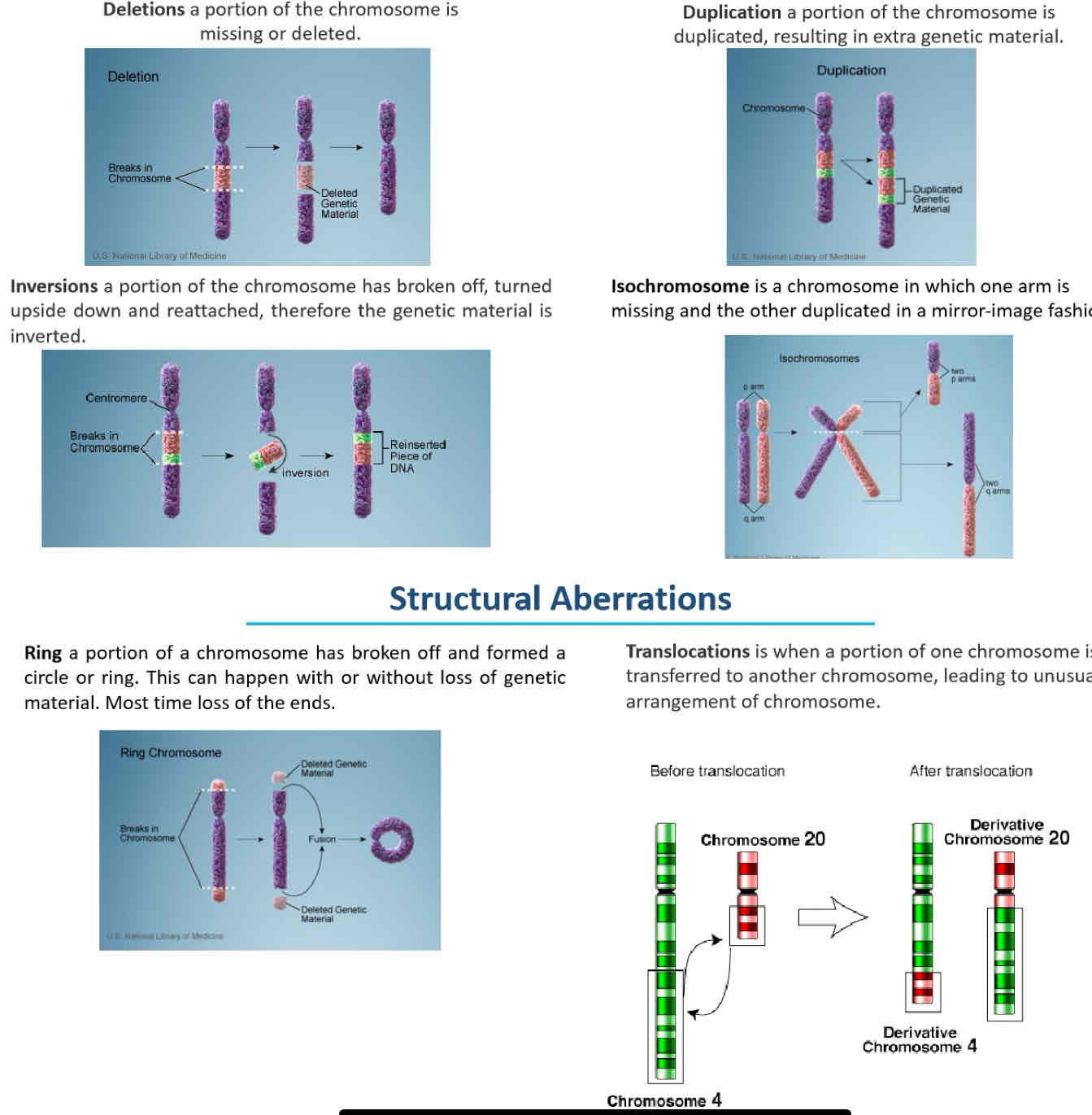
Deletion
A segment of a chromosome is lost, resulting in the loss of genetic material.
Duplication
A section of a chromosome is copied, resulting in extra genetic material.
Inversion
A chromosome segment is broken off, reversed, and reattached, changing the gene order.
Isochromosome
A chromosome that has lost one of its arms and replaced it with an exact copy of the other arm.
The various ways in which traits and genetic disorders are passed from parents to offspring, which can be categorized as Mendelian (simple dominance and recessiveness) or non-Mendelian (incomplete dominance, codominance, etc.).
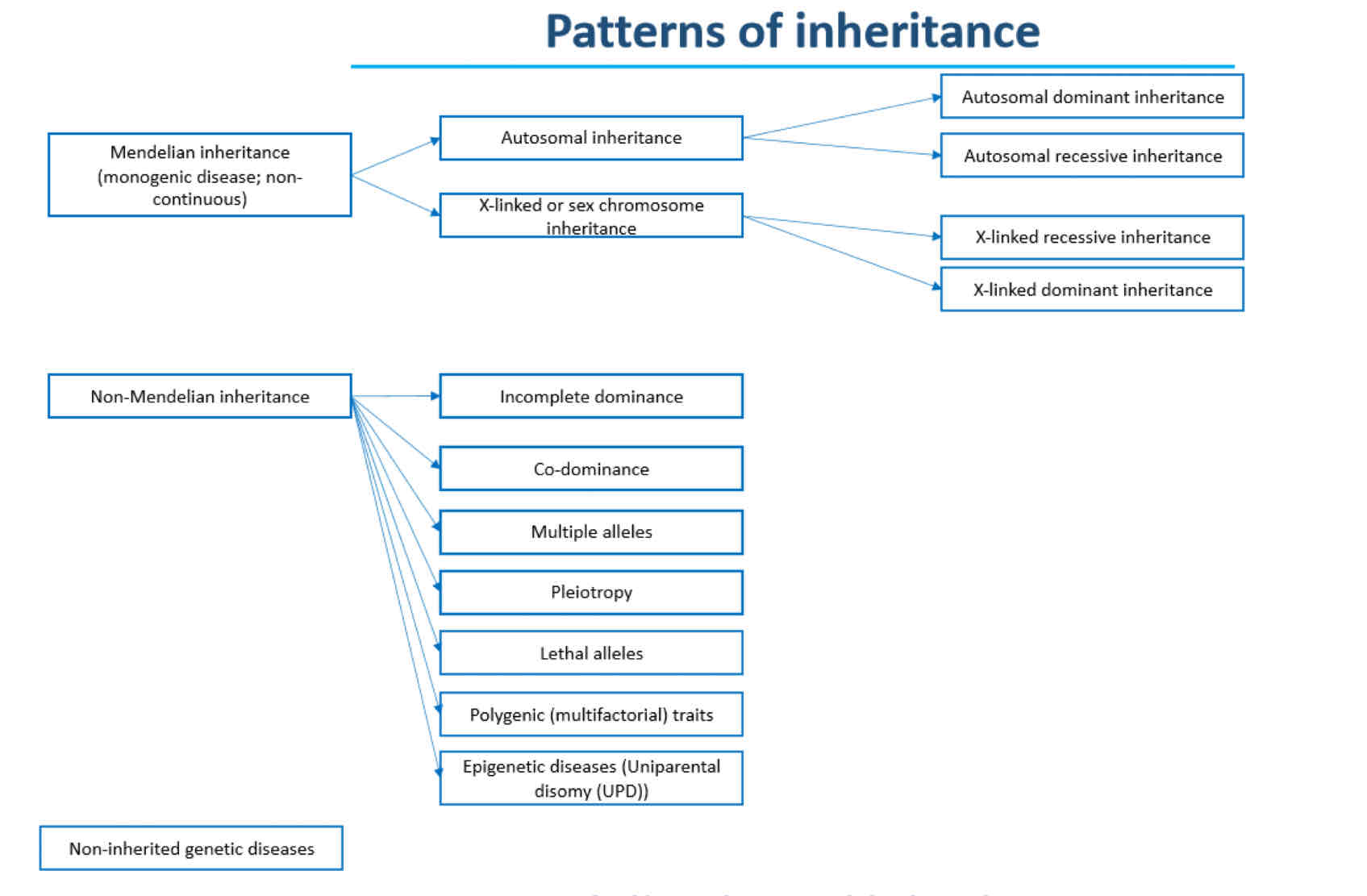
Ring Chromosomes
Chromosomes formed when the ends break and fuse together, often losing genes.
Translocations
Involve the transfer of a chromosome segment to a different chromosome.
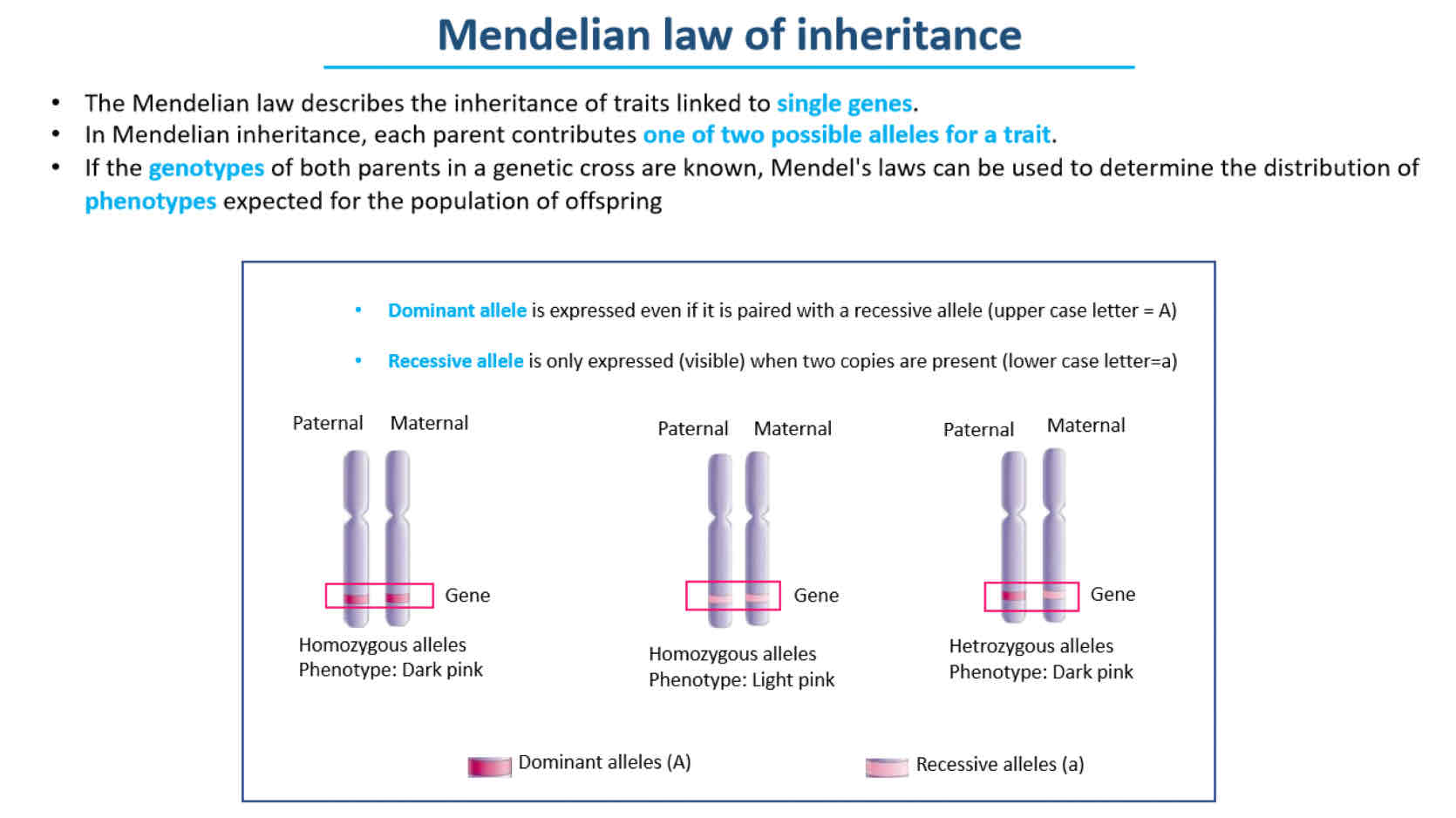
Mendelian Inheritance
Inheritance patterns that can be predicted based on Mendel's laws.
3 Mendelian law of inheritance
1) Law of Segregation: During the formation of gametes, the two alleles for a trait separate so that each gamete carries only one allele for each gene.
2) Law of Independent Assortment: Alleles for separate traits are passed independently of one another from parents to offspring, meaning the inheritance of one trait does not affect the inheritance of another.
3) Law of Dominance: In a heterozygote, one allele (the dominant allele) may mask the expression of another allele (the recessive allele), determining the phenotype.
What is autosomal inheritance?
Autosomal inheritance refers to the transmission of traits or genetic disorders that are determined by genes located on the autosomes (non-sex chromosomes), affecting both males and females equally.
Autosomal Recessive Disease
A genetic disorder that occurs when an individual has two copies of a recessive allele(2 mutant alleles) for a gene, which can result in the expression of the disease. Individuals with one copy of the recessive allele are typically carriers and do not show symptoms.
Fill in the blank: Autosomal dominant diseases require only ____ copy or copies of the dominant allele for the disease to be expressed.
one
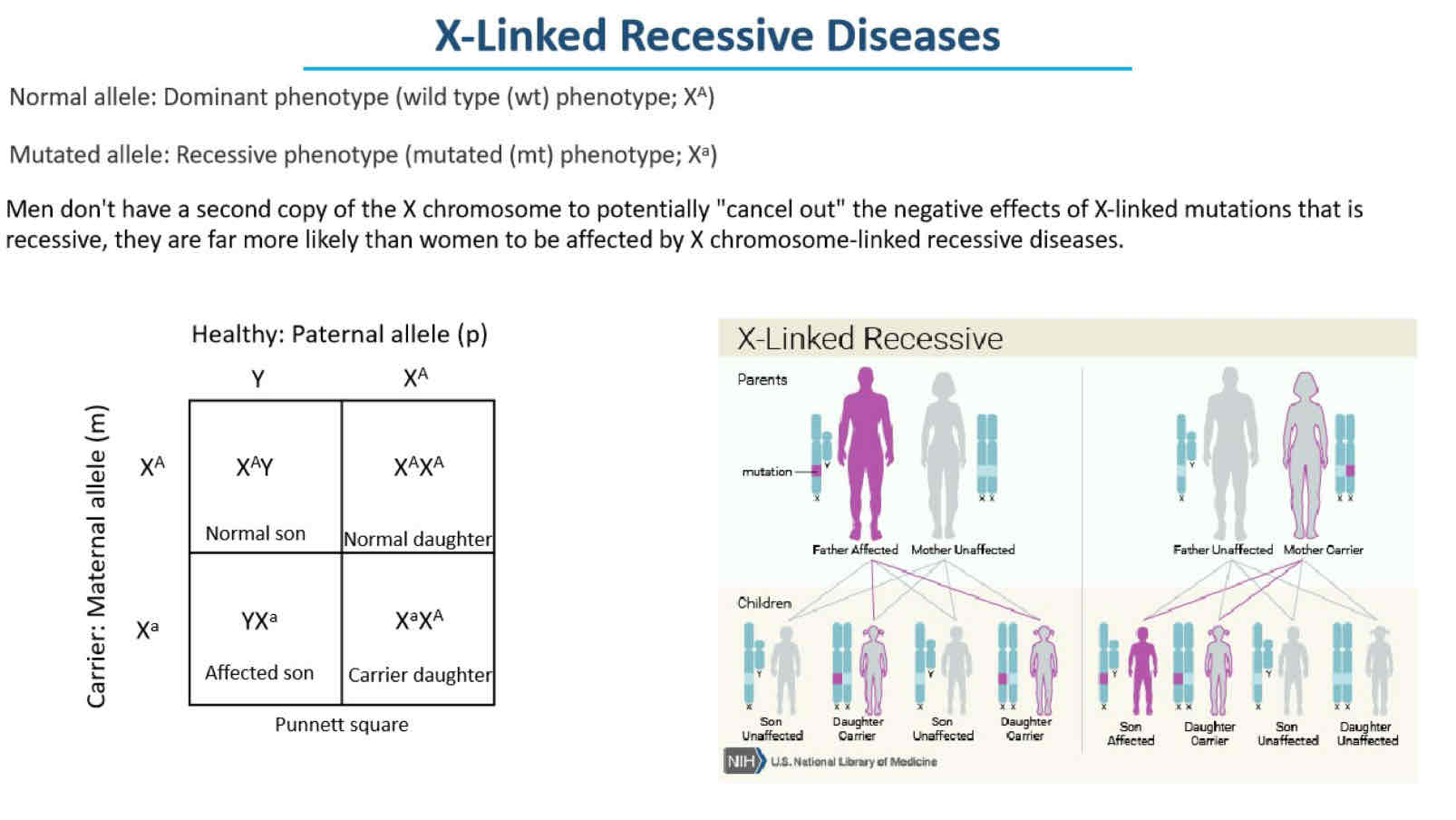
Fill in the blank: X-linked recessive diseases are more common in ____ because they have only one X chromosome.
Males
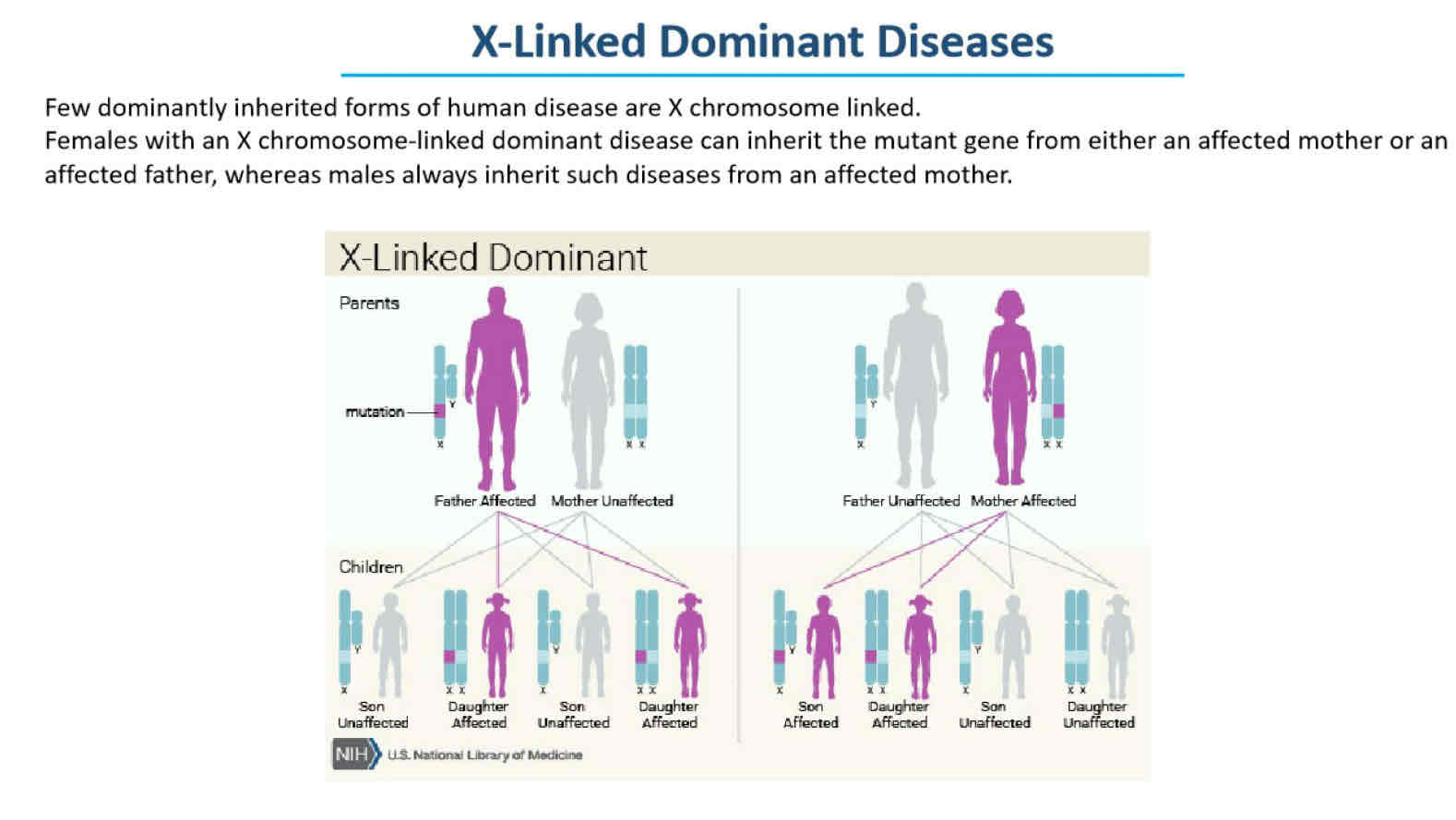
Fill in the blank: X-linked dominant diseases require at least ____ mutated gene on the allele of one X chromosome in females for the disease to be expressed.
One
Why do males always inherit X-linked dominant diseases from an affected mother?
Males inherit the X chromosome from their mother and the Y chromosome from their father.
Non-Mendelian Inheritance
Patterns of inheritance that do not follow the classical Mendelian laws of inheritance, including mechanisms such as incomplete dominance, codominance, and mitochondrial inheritance.
Fill in the blank: Incomplete dominance means that in a heterozygote, neither allele is completely dominant, resulting in a ____ phenotype that is a blend of both alleles.
intermediate
Fill in the blank: In codominance, both alleles in a heterozygote are fully expressed and _____, resulting in a ____ that shows traits of both alleles.
dominant - phenotype
Fill in the blank: In genetics, multiple alleles refer to a situation where a gene has more than ____ different alleles in a population.
2
Polygonic Inheritance
A pattern of inheritance where multiple genes contribute to a single trait like (height or skin colour), resulting in a range of phenotypes.
Fill in the blank: A lethal allele can cause the organism to die when present in ____ copies. Usually most common are ___
homozygous - embryonic
Fill in the blank: Pleiotropic inheritance occurs when a single gene influences multiple ____ traits.
phenotypic
Fill in the blank: A de novo mutation is a genetic alteration that is present for the first time in the individual and was not inherited from either parent. It arises from a spontaneous mutation in _______. This gives rise to _____
the germline or early development stage - non inherited genetic diseases