critical thinking & ethics
 Call Kai
 Learn
Learn Practice Test
 Spaced Repetition
 Match
Match Flashcards
 Knowt Play
1/118

There's no tags or description
Looks like no tags are added yet.
Name | Mastery | Learn | Test | Matching | Spaced | Call with Kai |
|---|
No analytics yet
Send a link to your students to track their progress
119 Terms
what is critical thinking?
Thinking about thinking!
Requires evaluating arguments that support the claims we are considering, and weighing them against those that support alternative views
what is the purpose of thinking critically?
to come to correct conclusions
A Belief vs a Claim
Belief: propositional, can be true or false
Claim: an belief/opinion expressed in a declarative sentence
Objective claim vs subjective claim
Objective: true or false, independent of personal feelings
Subjective: true or false based on personal feelings
relativism argues that…
there are no universal truths
what is an issue?
when you think critically about a claim and call it into question
what is an argument?
a claim backed by reasoning
what are biases?
common reasons for bad conclusions
Ex. external and internal influence
facts
our best understanding of something at a specific point in time
truth
A claim is true if it is free from error.
belief bias
evaluating reasoning by how believable its conclusion is
Example: Someone agrees with a weak argument for climate change because they already believe climate change is real, even though the argument itself is flawed.
confirmation bias
A tendency to attach more weight to considerations that support our views.
Example: A person who believes that vegan diets are healthiest only pays attention to studies supporting veganism and ignores studies showing nutrient deficiencies.
availability heuristic
Assigning a probability to an event based on how easily or frequently it is thought of.
Example: After seeing news reports about shark attacks, someone believes they are common, even though the statistical likelihood is extremely low.
false consensus effect
Assuming our opinions and those held by people around us are shared by society at large.
Example: A person who loves a TV show assumes “everyone watches it,” simply because their friend group does.
bandwagon effect
The tendency to align our beliefs with those of other people.
Example: Someone who didn’t care about a fashion trend starts wearing it because “everyone else at school is doing it.”
negativity bias
Attaching more weight to negative information than to positive information.
Example: Getting 10 compliments and 1 criticism but thinking about the criticism for the rest of the day.
loss aversion
Being more strongly motivated to avoid a loss than to accrue a gain.
Example: A person refuses to sell a stock at a small loss, hoping it rebounds, even though selling now would free up money for a better investment.
in-group bias
A set of cognitive biases that make us view people who belong to our group differently from people who don’t.
Example: A sports fan believes their own team’s players are more talented and hardworking than rival teams’ players even with similar stats.
fundamental attribution error
Having one understanding of the behavior of people in the in-group and another for people not in the in-group.
Example: If a friend shows up late, you assume “traffic was bad,” but if a stranger shows up late, you assume “they’re irresponsible.”
obedience to authority
A tendency to comply with instructions from an authority.
Example: Milgram’s electric shock experiment, where participants delivered shocks because a scientist in a lab coat told them to.
overconfidence effect
A cognitive bias that leads us to overestimate what percentage of our answers on a subject are correct.
Example: A student believes they know 90% of the answers on an exam but actually scores 60%.
better than average illusion
A self-deception cognitive bias that leads us to overestimate our own abilities relative to those of others.
Example: Most people rate themselves as above-average drivers, even though statistically that’s impossible.
clearspeed AI
AI being used in investigation of match fixing: uses voice analytics to predict who was lying or not
whats your opinion on the use of AI in sport. (no references needed) provide a claim, argument and counter argument
Claim: AI undermine the fundamental values of human autonomy, creativity, and fair play that define competitive sports
Argument: AI Erodes Human Creativity and Autonomy: Real-time recommendations shift decision-making authority from human coaches to algorithms, diminishing creative intuition and adaptive thinking.
Counter-argument: Coaches retain final authority and can override recommendations.
Cohersion (if you don’t use the recommendation the other team might use it)
If it goes wrong ppl just blame it on AI
conclusion: current implementation should not be permitted in competitive sports without significant regulatory restrictions. Ethical frameworks must address autonomy, privacy, accountability, and competitive balance concerns.
ethics
Ethics - from the Greek ethos, originally ,means character -- concerns questions of good, right, duty, obligation, virtue
the right answer is
the most defensible answer
ethical concerns at the individual level
Doping, Cheating, biased referring, bullying, racism, etc.
ethical concerns at the policy/institutional level
Discrimination, Segregation, Harmful, Violence, etc.
Aristotelian virtue ethics
The more you behave as a bad person, the more you become a bad person
Deontology
if lying is bad you can never lie even during certain circumstances
Utilitarianism
believes that the right decision is the one that maximizes happiness (utility) and reduces suffering.
Problem: who's happiness matters more? (minorities are likely to suffer)
existentialism
don’t be a hypocrite
The four principles of biomedical ethics
u“respect for autonomy (respecting the decision-making capacities of autonomous persons);
unon-maleficence (doing no harm);
ubeneficence (providing benefits and balancing benefits against risks and costs); and
ujustice (distributing benefits, risks and costs fairly).”
*on exam: given a case where you have to apply 2/4 of these principles
what is a game under formalism
To voluntarily attempt to overcome completely unnecessary obstacles
There is no meaning/purpose to playing a game
what is a sport under conventionalism
Conventionalists argue that an adequate account of sport must appeal to collectively agreed-upon norms called ‘conventions.’
what is sport under broad internalism (interpretivism)
sporting competition as a ‘mutually acceptable quest for excellence through challenge’ (Simon et al., 2015: 47)
what are the two parts of an argument
the premise (reason for accepting the conclusion) and the conclusion
why classifying arguments matter
•Helps us evaluate claims in sport, ethics, and everyday reasoning
•Allows us to distinguish proof from support
•Forms the base for spotting bias, fallacies, and poor reasoning
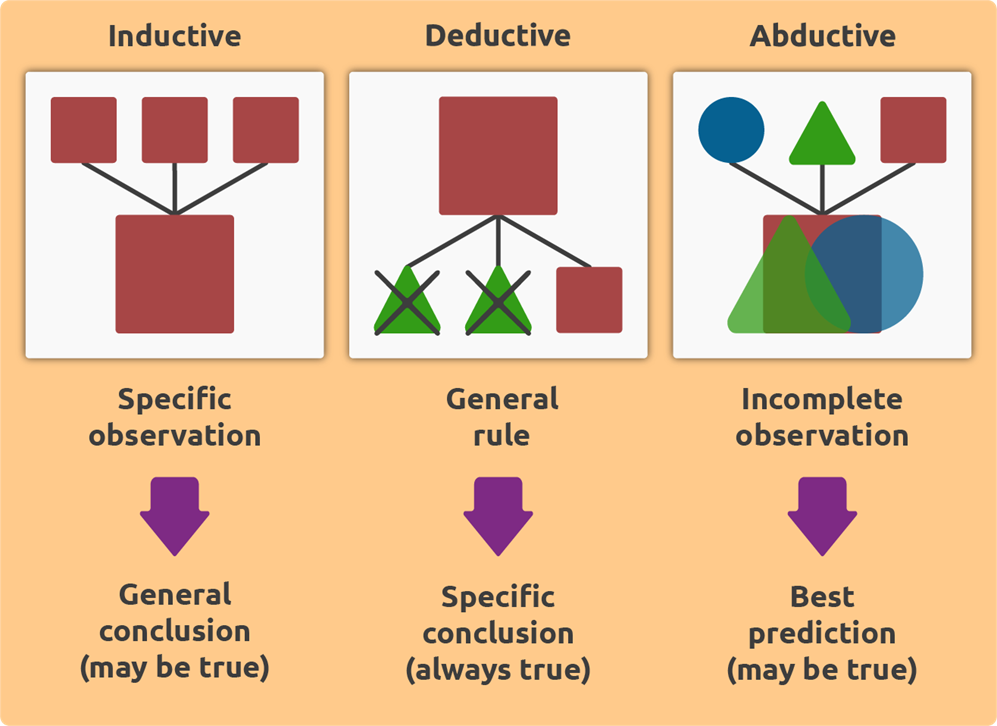
deductive argument
•a type of argument in which the premise or premises, if true, prove or demonstrate the conclusion.
compared in terms of validity and soundness
ex. All mammals give birth, humans are mammals, humans give birth
categorical reasoning (deductive reasoning)
•Uses quantifiers: all / no / some…
•Validity depends on category relationships
sequential reasoning (deductive reasoning)
•Uses operators: not / and / or / if–then
•Validity depends on logical form
what is validity
Validity: depends on form not truth (valid = statement makes sense)
A valid argument with true premises = sound (true)
Valid argument that is not sound: all Olympic sports are winter sports (makes sense logically, but it is not true)
inductive arguments
a type of argument where the premise supports the conclusion, but does not demonstrate or prove it.
compared in terms of strength and weakness
ex. If Alexandra rarely returns texts, it supports but does not prove that she probably rarely returns emails.
conclusions used as premises
•A statement can be both the conclusion of one argument and a premise in another argument.
Argument 1: “The assignment is too difficult → so we should extend the deadline.” If someone asks “Why is it too difficult?” → Argument 2: “Because most students scored very low.” Asking “Why did they score low?” can continue endlessly, so justification must reasonably stop.
unstated premises
u Unstated premises are common and usually assumed.
Arguments often contain unstated premises.
Example: “Bill can’t check out books.”
Unstated premise: Bill doesn’t have an ID.
unstated conclusions
uUnstated conclusions occur, but less often.
Arguments can also have unstated conclusions.
Example: “Stacy drives a Porsche.”
Unstated conclusion: She is rich or her parents are.
beyond a reasonable doubt
•In common law, the highest standard of proof is "beyond a reasonable doubt."
•Proof beyond a reasonable doubt is a lower standard than deductive demonstration, which corresponds more to "beyond any possible doubt."
Inference to the Best Explanation (abduction)
•an argument that explains the cause of something (seeks the simplest and most likely)
•used to determine the cause of something based on the best explanation or evidence available. (supports conclusions but doesn’t prove them)
ex. determining that sleeping on a certain mattress caused a backache
inductive vs deductive vs abductive
ethos
an appeal to the credibility or trustworthiness of the speaker or writer. It is an attempt to establish the speaker or writer as an authority on the subject and to gain the audience's trust.
pathos
an appeal to the audience's emotions. It is an attempt to create a connection with the audience and to evoke feelings such as sympathy, anger, or fear in order to persuade them.
logos
an appeal to reason or logic. It is an attempt to use facts, statistics, and evidence to make a logical argument and to persuade the audience through logical reasoning.
steps to understand an argument
1) Find the conclusion
2) Locate the reasons (Premises) for the conclusion.
3) Are they valid? Are they true?
Three-criteria test for banned substances
Needs to fulfil 2/3: performance enhancing, harmful to health, violates the spirit of sport
anti-doping position
Focuses on preserving fairness, safety, and traditional practice values but risks paternalistic control and lack of transparency.
pro-doping position
Emphasizes athlete autonomy and innovation, while facing challenges related to coercion and equitable access.
anti-anti doping position
Critiques governance flaws and promotes harm reduction and transparency, while addressing legitimacy and ethical challenges. (attacks the policy behind anti doping)
what are value judgments
•assess the merit, desirability, or praiseworthiness of actions or outcomes.
ex. “The coach's training methods are dangerous," "This athlete's technique is beautiful."
what are moral value judgments
concerns what ought to be done based on moral standards of care and welfare.
ex. “The coach should not have forced injured players to compete"
what is the consistency ethical reasoning principal?
If separate cases aren't different in any relevant way, they should be treated the same way.
This principle protects against bias and ensures ethical fairness in sports medicine.
ex. allowing a quarterback to return to play without concussion clearance but not another player
moral standards
general statements about whether acts of a certain type are morally acceptable.
ex. When a physical therapist says, "You shouldn't rush this ACL rehabilitation; reinjury would set you back months," the unstated general principle is: "Healthcare providers shouldn't recommend actions that risk patient harm for short-term gains."
outcome morality (consequentialism)
judges actions by their consequences—specifically, how much good or harm results.
Consequentialism forces us to quantify and compare outcomes.
ex. A strength coach implements an aggressive training program that increases injury risk by 15% but improves performance outcomes by 20%, leading to more athletic scholarships and career opportunities.
3 types of outcome morality
Moral Egoism: "I should implement this risky training protocol because it will enhance my reputation as a coach and lead to better job offers for me." The focus is entirely on the coach's welfare.
Moral Altruism: "I should avoid this protocol because it risks harming my athletes, regardless of how it affects my career." The focus is on others' welfare.
Utilitarianism: "I should implement this protocol only if the total benefit to all stakeholders (athletes, families, team, institution, sport) outweighs the total harm." This considers everyone affected.
rule morality
holds that ethical action must follow fundamental rules like the Golden Rule: "Treat others as you would want to be treated."
virtue morality
asks: "What would a person of excellent character do?"
Integrity (honoring medical judgment over external pressure), Courage (standing firm on ethical principles despite consequences), Compassion (genuinely caring for athlete welfare), Prudence (exercising wise judgment in complex situations), Justice (treating all athletes fairly), and Excellence (commitment to best practices).
moral relativism
holds that what's morally right is determined by what each society or culture thinks is right.
ex. In some wrestling or combat sports cultures, extreme weight cutting (losing 15-20 pounds before weigh-ins) is accepted practice. In other athletic cultures, this would be considered harmful and unethical.
moral subjectivism
Moral subjectivism holds that what's morally right is what an individual thinks is right.
ex. A personal trainer believes strongly that pushing clients beyond their comfort zone—even when clients ask to stop—is necessary for results and therefore morally justified. "My conscience tells me this is right," the trainer says.
legal reasoning - criminal vs civil
•Criminal: A strength coach is charged with reckless endangerment after an athlete suffers heat stroke during an outdoor conditioning session on a 98-degree day with no water breaks. Prosecutor must prove beyond reasonable doubt that the coach's actions violated laws designed to protect athlete welfare.
•Civil: The athlete's family sues the coach and institution for damages. They must prove by preponderance of evidence (more likely than not) that the coach's negligence caused harm and the institution is liable for inadequate supervision.
The principle of stare decisis
(stand by what's been decided) applies analogical reasoning to legal cases.
ex. If a court previously ruled that a football coach was liable for heat-related athlete deaths when failing to provide adequate hydration, similar cases should be decided the same way.
Legal Moralism
Make illegal whatever is immoral.
ex. Banning steroid use because cheating is morally wrong.
Harm Principle
Make illegal only what harms others.
ex. Requiring concussion protocols because failing to protect athletes causes brain damage.
Legal Paternalism
Make illegal what harms the individual themselves.
ex. Mandatory helmet laws for cyclists protect the rider from self-harm.
Offense Principle
Make illegal what deeply offends others. Prohibiting public indecency at sporting events.
aesthetic reasoning
involves making judgments within a framework integrating facts and values.
ex. When we watch Simone Biles perform gymnastics and say "That was beautiful," we're making an aesthetic judgment based on principles of artistic value.
aesthetic principles:
Meaning/Truth: Does the movement teach us something or convey truth about human capability?
2. Cultural Values: Does it express important cultural traditions (capoeira, traditional dance)?
3. Social Change: Does it challenge norms or promote social progress?
4. Pleasure: Does it produce pleasure in observers?
5. Valued Emotions: Does it evoke emotions we value (awe, inspiration, joy)?
6. Special Experiences: Does it create feelings of autonomy, flow, or transcendence?
7. Aesthetic Form: Does it possess special formal properties (symmetry, fluidity, power)?
8. Subjective Taste: Is it simply what pleases individual taste?
normative theory of sport
rhetorical triangle
ethos: credibility or trustworthiness of the speaker or writer.
pathos: emotions
logos: logical arguments
weakness that can affect credibility
Biased (Any type with examples),
• Cherry picking “given the IOC’s advocacy role for physical activity” as the Olympic Charter
stands for many other values as well.
• Rely heavily on one source
• Popular opinion is not a measure of rightness or wrongness
• Lack of scientific evidence (for Argument 1)
• Limited evidence for Argument 2 and 3
• Strawman fallacy
what is rhetoric
the art of persuasion
Four broad rhetorical techniques that demagogues persistently employ.
Otherizing: Dividing people into two groups—"us and them"—and portraying them as suspicious, dangerous, or repulsive.
Demonizing: Inducing loathing of someone or something by portraying the person or thing as evil.
Xenophobia: The fear or dislike of what is foreign or strange.
Fear and hate mongering: Stimulating an audience’s fear, resentment, and hatred.
What is Formalism in ethics?
the view that rule breaking, such as doping, is wrong as it goes against the established rules set by authorities.
What is Conventionalism in ethics?
holds that right or wrong is determined by the conventions of society; if conventions dictate that something is permissible, then it is considered right, regardless of the author's standpoint.
What is Broad Internalism?
suggests that the values surrounding actions, such as doping, determine morality; doping is viewed as wrong, contrary to the author's perspective.
What is Virtue Ethics (Aristotelian)?
focuses on moral values and the idea of achieving eudaimonia (human flourishing), thereby positing that doping is wrong as it contradicts virtuous conduct.
What is Deontology?
an ethical approach that emphasizes rule adherence; in this framework, doping is deemed wrong as it involves breaking established rules.
What is Utilitarianism?
evaluates actions based on their consequences, with the belief that actions promoting the greatest good for the majority can justify costs, including the dilemma of doping.
What is a euphemism?
makes expressions sound less negative. For example, 'sleeping around'.
What is a dysphemism?
makes expressions sound negative. For example, 'junk food'.
What is a weaseler?
wording used to protect a claim from criticism by weakening or qualifying it. For example, 'This may cure your problem.' (may, can, could)
What is a downplayer?
helps play down or diminish importance. For example, 'These self-appointed experts on environment are just trying to scare us.'
What is a stereotype?
refers to an idea about a group’s attributes that are usually simplified or exaggerated.
What is innuendo?
relies on neutral phrasing to insinuate something derogatory. For example, 'I didn't say Bush invaded Iraq to help his buddies in the oil industry. I just said his buddies have done very well since the invasion.'
What is a loaded question?
depend on unwarranted assumptions. For example, 'When did you stop cheating on your girlfriend?'
What is ridicule/sarcasm?
used in comments like, 'Obama made a great spontaneous speech last night. Good thing his teleprompter didn’t break down.'
What is hyperbole?
an extravagant overstatement or exaggeration. For example, 'Is Deborah generous? She’d give you her life savings if she thought you were in need.'
What are rhetorical definitions?
use rhetorically charged language to express or elicit an attitude about something. For example, 'An environmentalist is a tree-hugging extremist.'
What are rhetorical explanations?
disguise their real purpose, which is to express or elicit an attitude. For example, 'The reason environmentalists won’t let you cut down a tree is they want to put everyone out of work.'
What are rhetorical analogies and misleading comparisons?
use faulty reasoning. For example, 'A female smoker has a much better chance of surviving lung cancer than does a male, but that would not be a good reason for a female smoker not to quit.'
What is a proof surrogate?
suggests there is evidence or authority for a claim without actually citing such evidence or authority. For example, 'Clearly she shouldn’t have done that.'
What is repetition?
involves simply making the same point over and over at every opportunity. For example, people can become lulled into believing something simply because they’ve become used to hearing it.