Week 1 - Health Models & Frameworks
 Call Kai
 Learn
Learn Practice Test
 Spaced Repetition
 Match
Match Flashcards
 Knowt Play
1/22

There's no tags or description
Looks like no tags are added yet.
Name | Mastery | Learn | Test | Matching | Spaced | Call with Kai |
|---|
No analytics yet
Send a link to your students to track their progress
23 Terms
What are the three levels of healthcare?
Primary
Secondary
Tertiary
Primary care
The first contact of care which is accessible, essentials, and foundations to other levels of care which can include early-stage treatments. This includes GPS, physicians, and nurses.
Secondary care
This may require a referral from a primary health care (PHC provider) or assessment to access inpatient or outpatient hospital services. This care provided by various health and medical professionals.
Tertiary care
The most specialised level of care which requires a referral from a primary or secondary health care workers. This care is provided by specialist medical staff or health professionals with specialist knowledge, in regard to the patient’s condition.
What are six common ongoing challenges within Australia?
Chronic conditions adding to the burden of disease
Ageing population
Mental health disorders
Disparity in rural population health and rural services
Access to the appropriate disability housing and services
Cost of medical research and innovations
What are five notable statistics regarding mental health disorders in Australia?
1 in 5 Aussies aged 16-85 have experienced a mental disorder in their lifetime.
17% of those who experienced a mental disorder have experienced an anxiety disorder.
8% of those who experienced a mental disorder experienced an affective disorder.
3% of those who experienced a mental disorder have experienced a substance-use disorder.
1 in 7 children and adolescents aged 4-17 experienced a mental disorder.
What is the impact of the COVID-19 pandemic in Australia so far (4 points)?
Consults for chronic diseases fell
Decline in cancer screenings
Over 120,000 less non-urgent surgeries between 2019-2020 and 2020-2021
A rise in psychological distress
What are two strategies to address identified health challenges?
Medicare covering telehealth services for primary and secondary services.
Additional mental health services subsidies put in places (increasing from 10 to 20 sessions) over the pandemic.
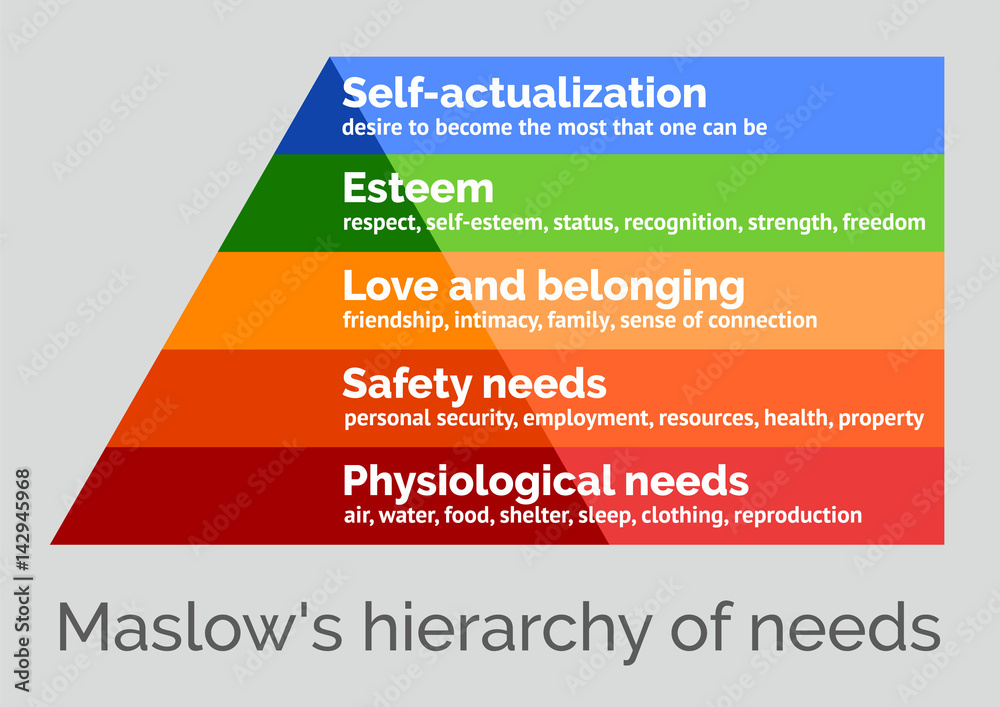
Maslow’s Hierarchy of Needs
A motivational theory proposed by Abraham Maslow comprising a five-tier model of human needs, often depicted as hierarchical levels within a pyramid. Needs lower down in the hierarchy must be satisfied before individuals can attend to needs higher up.
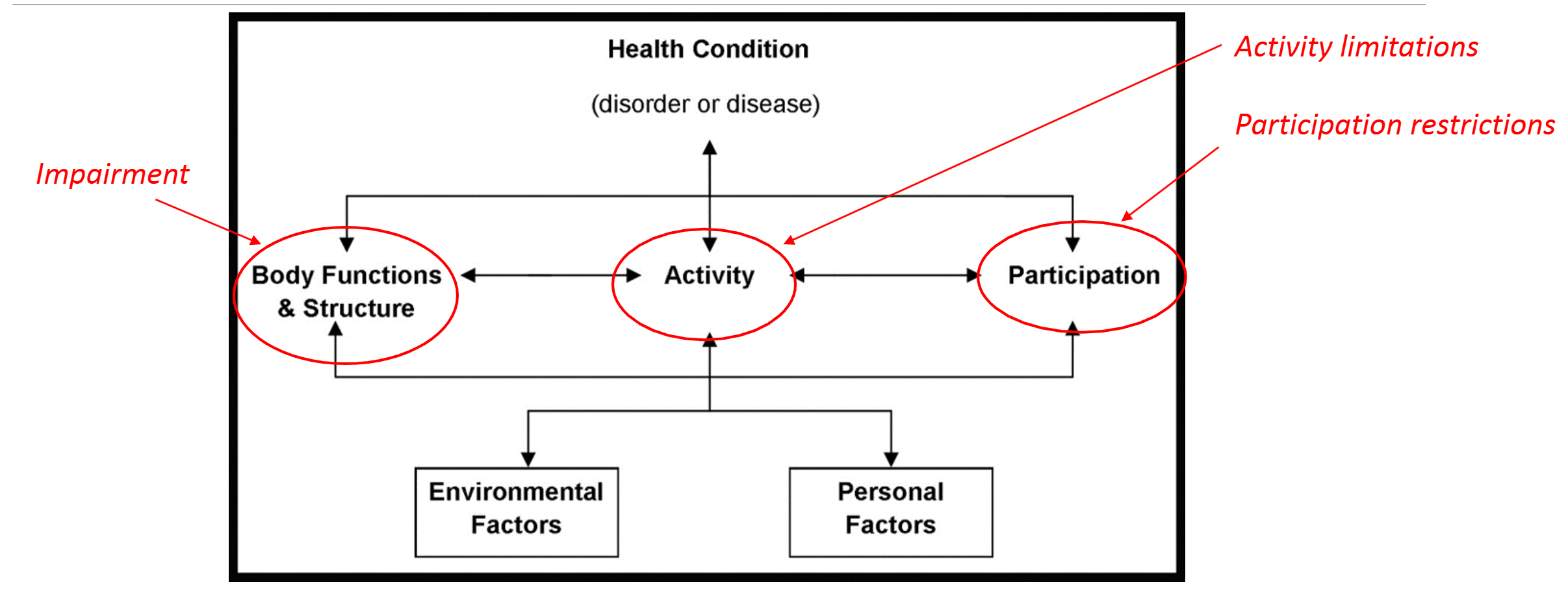
The International Classification of Functioning, Disability, and Health (ICF)
A WHO framework used for describing and measuring health and disability. This focuses on the holistic relationship between how someone's health condition and/or environmental and personal factors that impact body function and structures, activity, and participation and likewise.
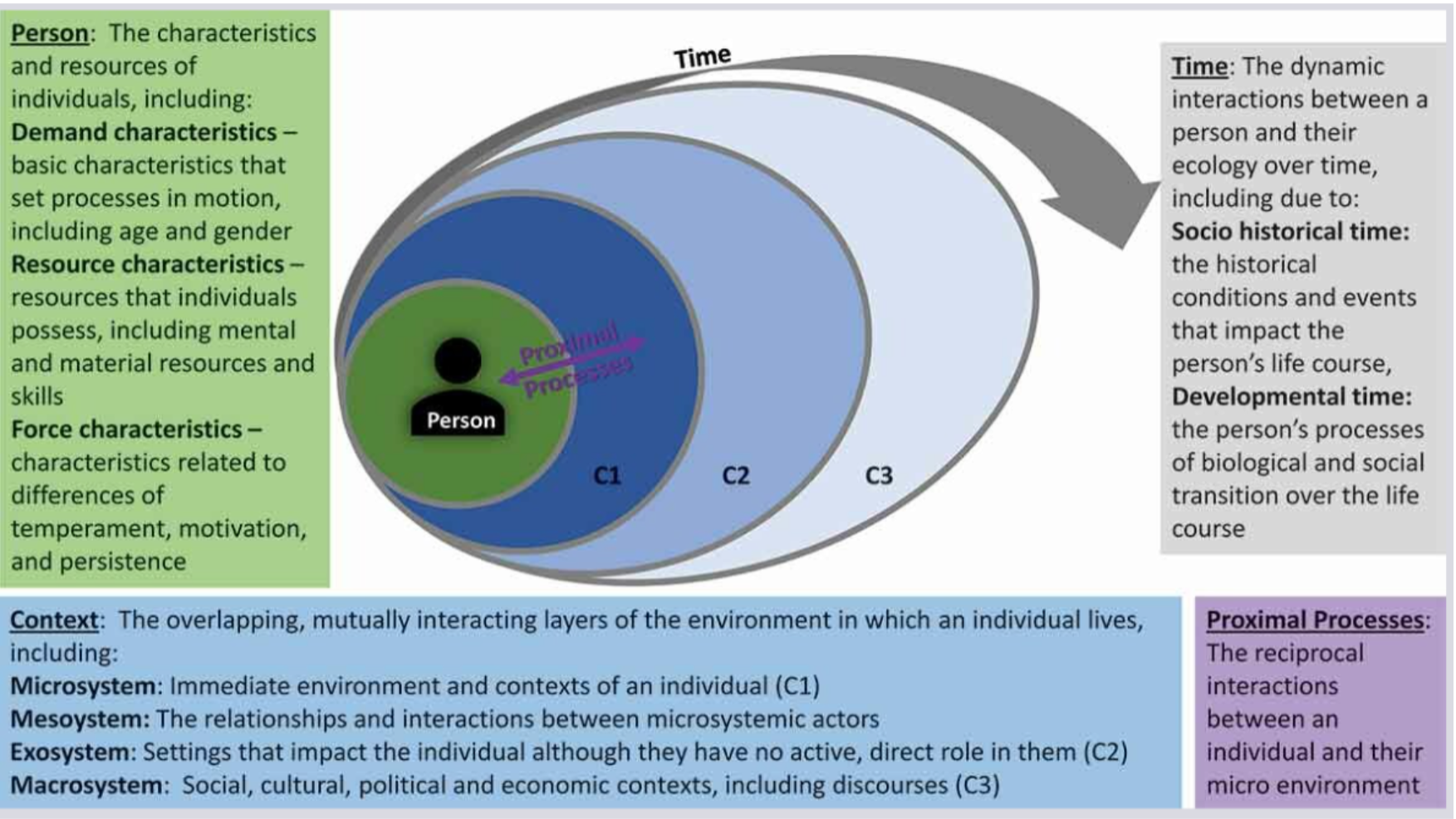
Bronfenbrenner’s Bioecological Model
A framework proposed by Urie Bronfenbrenner used to understand how human development is shaped by the interconnectedness of dynamic interactions in the environment around someone, which is split into five ecosystems that all have varying degrees of influence on a person.
What are the five ecosystems in the bioecological model?
Microsystem
Mesosystem
Ecosystem
Macrosystem
Chronosystem
Microsystem
Apart of the bioecological model which is the immediate environment and contexts of an individual.
Mesosystem
Apart of the bioecological model which are the relationships and interactions between microsystemic actors.
Ecosystem
Apart of the bioecological model which are the settings that impact the individual although they have no active, direct role in them.
Macrosystem
Apart of the bioecological model which are the social, cultural, political, and economic contexts, including discourses.
Chronosystem
Apart of the bioecological model which comprises of the individuals’ entire timeline and their experiences over their life.
What is ‘Systems Thinking’ and how it’s used to approach address population and complex health issues?
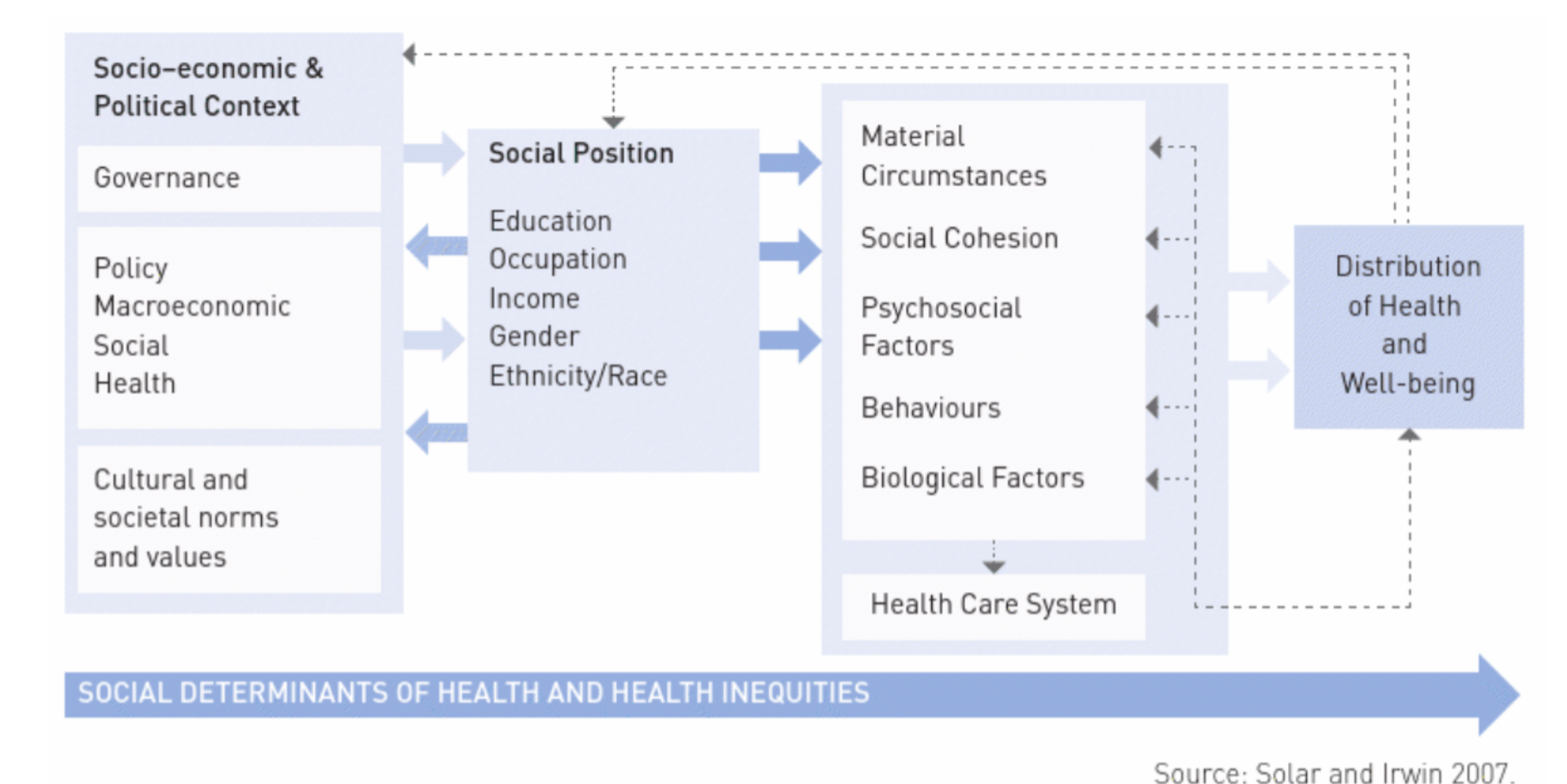
Social determinants of health (SDOH)
Defined as the non-medical factors that influence health outcomes, either positively or negatively.
What are occupational injustice and rights?
Occupational injustice refers to the limitation or denial to participate in meaningful occupations that can lead to negative impacts on one's health and wellbeing. Occupational rights are the inherent rights that anyone can participate in meaningful occupations.
What is the difference between occupational deprivation, alienation, and marginalisation?
Occupational deprivation is when an individual is unable to engage in an occupation due to external factors, alienation is a state of being disconnected or estranged from one’s occupations, and marginalisation is where an individual is excluded from participating in an occupation.
What underpins the collaborative systems thinking approach?
The Participatory Occupational Justice Framework (PJOF) facilitates social inclusion to address instances of occupation injustice, rather than a prescription for intervention.
What are the six non-linear processes used for this framework?
Raise consciousness of occupational injustice
Engage collaboratively with partners
Mediate agreement on a plan
Strategize resource funding
Support implementation and continuous evaluation
Inspire advocacy for sustainability or closure