Hinduism Exam 2 Study Guide
 Call Kai
 Learn
Learn Practice Test
 Spaced Repetition
 Match
Match Flashcards
 Knowt Play
1/111

There's no tags or description
Looks like no tags are added yet.
Name | Mastery | Learn | Test | Matching | Spaced | Call with Kai |
|---|
No analytics yet
Send a link to your students to track their progress
112 Terms
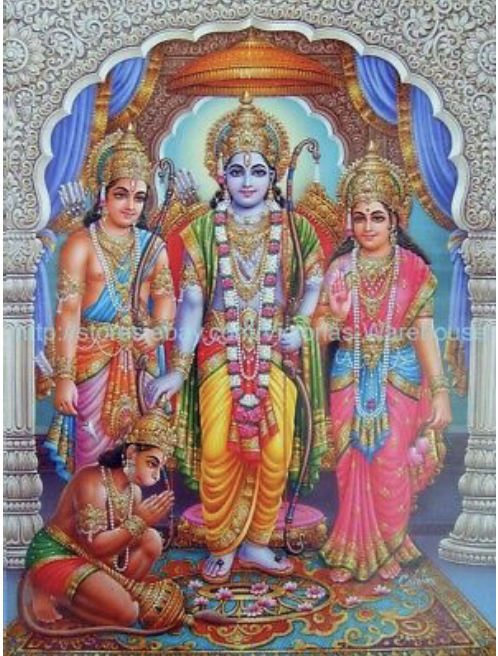
Who is pictured at the center of the three standing figures?
Rama
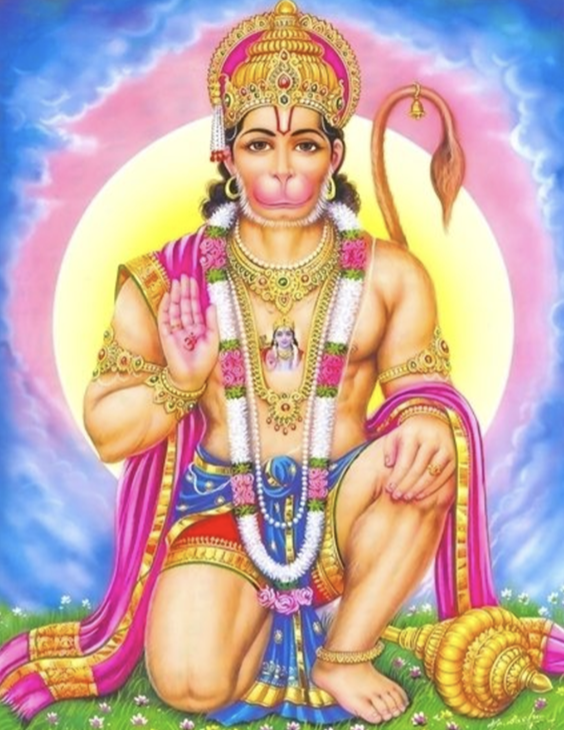
Name this ideal devotee and deity from the Rāmāyaṇa.
Hanuman
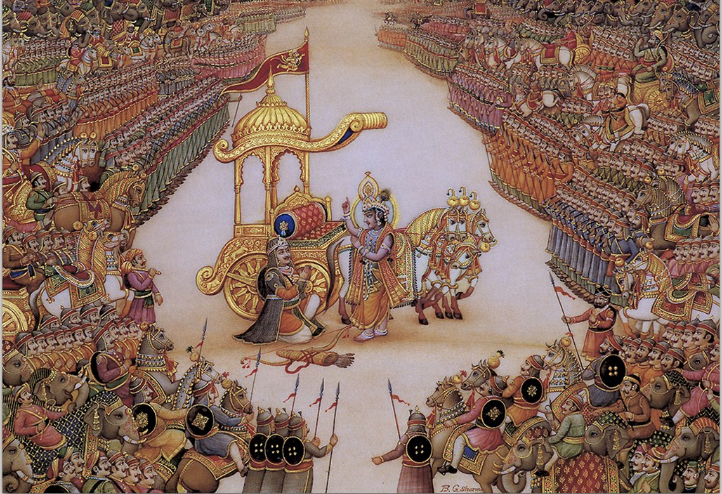
Who is pictured standing at the center of this image?
Krsna
The Bhagavad Gītā is a famous conversation between a Hindu god and a warrior. Which of the following are the two
characters in conversation?
Kṛṣṇa and Arjuna
Which of the following is not a central character of the Rāmāyaṇa?
Krsna
Which is not a shared aspect of the Rāmāyaṇa and the Mahābhārata?
They are considered heterodox teachings by the orthodox Hindu tradition
The two great Indian epics emerge historically at the end of the Vedic period.
True
In which of India's great epics is a queen abducted and held by a demon?
Rāmāyaṇa
Which of the epics is sometimes called the “fifth Veda?”
Mahābhārata
What was the 1992 Babri Masjid Incident?
A group of Hindus destroyed a mosque they said had been built on the site of Rāma's birthplace
In which epic do we find the Bhagavad Gītā?
Mahābhārata
As seen in the Rāmāyaṇa and the Mahābhārata, the epic literature both reveals and attempts to overcome a tension or conflict between the dharma of householders and the dharma of world renouncers.
True
Of the three ways of liberation described by Kṛṣṇa in the Bhagavad Gītā, which does he prefer and says is his most significant contribution to humanity?
The way of Bhakti
Which of the following is not specifically one of the three yogas of the Bhagavad Gītā?
The way of asceticism
What are the three yogas of the Bhagavad Gītā?
The way of knowledge, action, and loving deveotion
Which of the following is not a characteristic of Classical Hinduism?
The caste system is abolished
This popular religious movement of the 8th-10th centuries is said to be first to embody the Bhagavad Gītā's "way of devotion." It was inspired by male and female poet-saints from all castes who composed poems in local languages and lived as religious pilgrims
South Indian Bhakti Movement
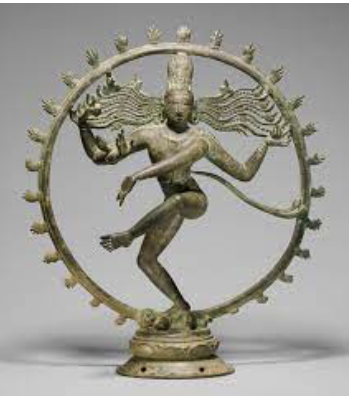
Who is this?
Śiva Naṭarāja
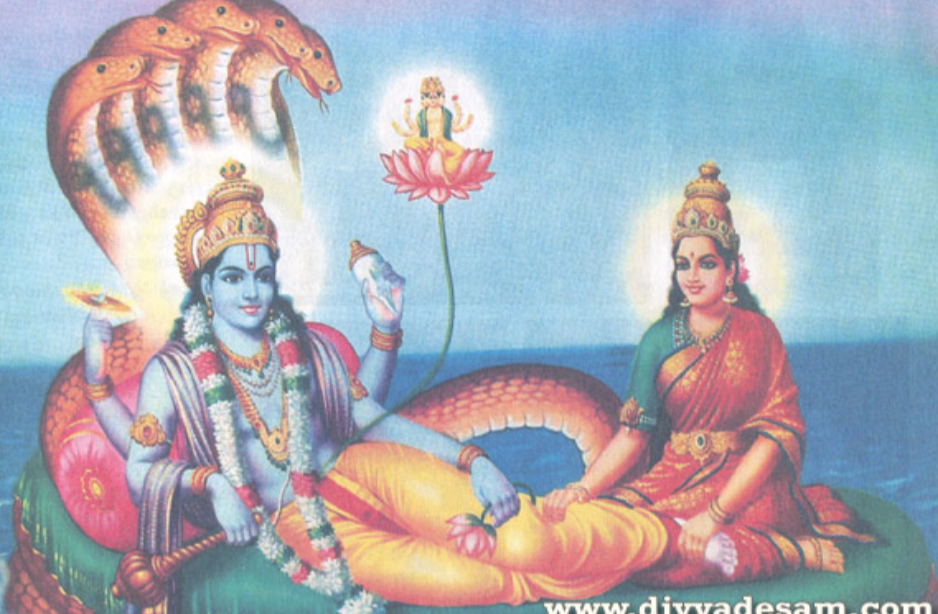
From left to right, name the three deities in this image.
Viṣṇu, Brahmā, and Śrī-Lakṣmī
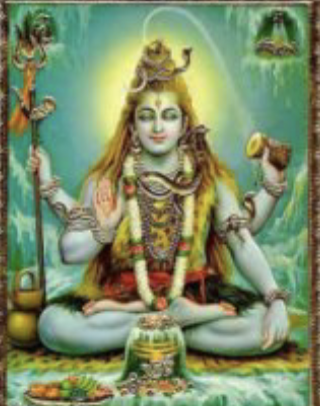
Who is this?
Siva
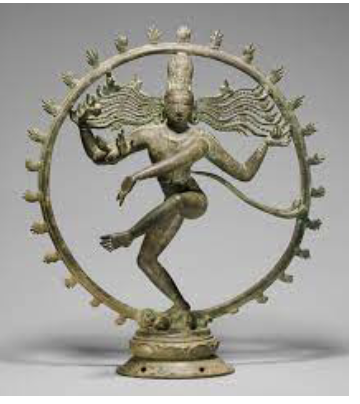
What object is this deity holding in his upper right hand?
the drum of creation
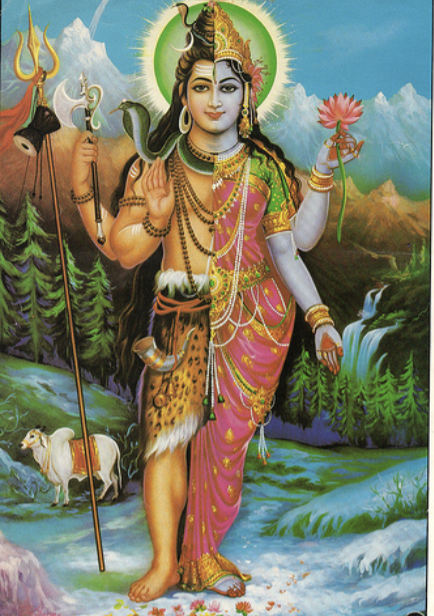
The above image is an example of "The Lord Who is Half Woman." Which two deities are pictured here?
Śiva and Pārvati
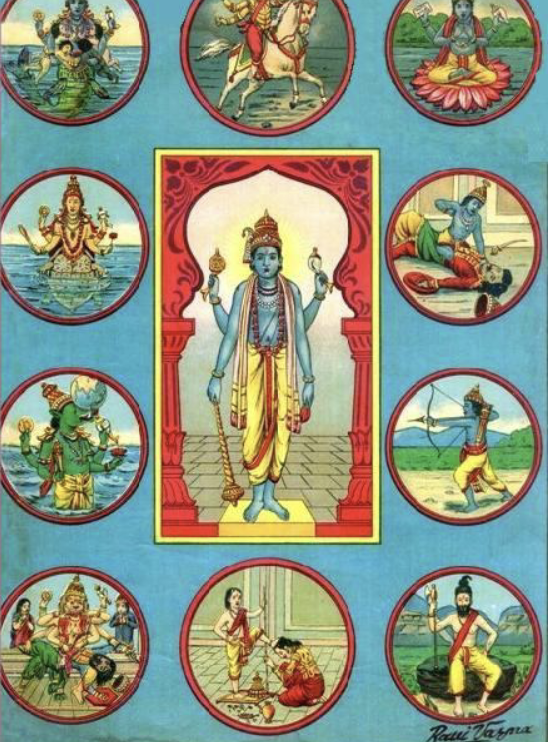
Which deity is pictured at the center of this image?
Visnu
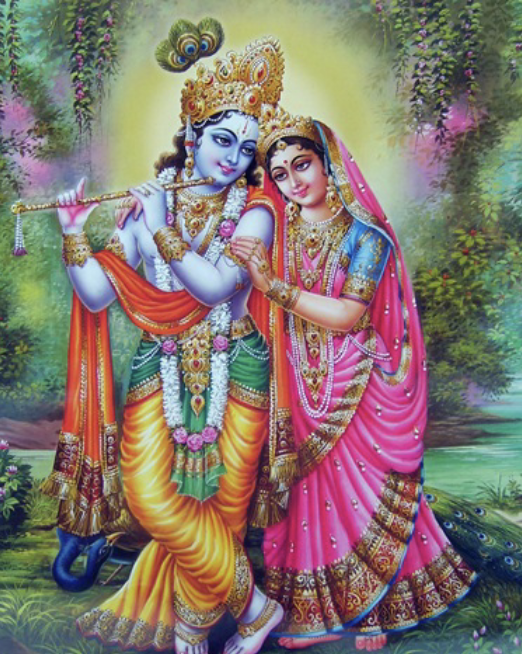
Who are these deities?
Kṛṣṇa and Rādhā
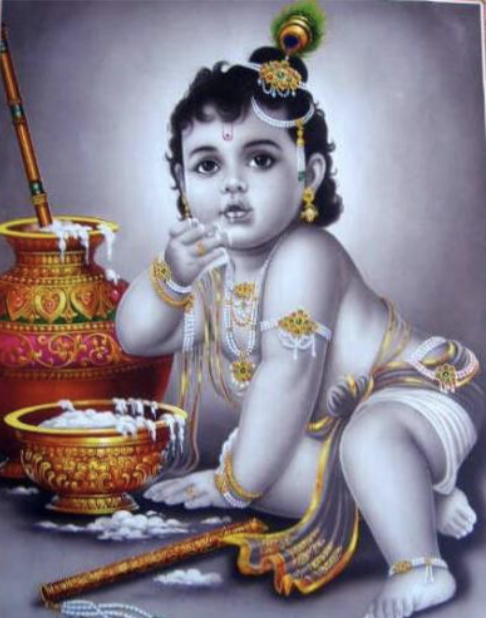
Which deity is pictured here?
Krsna
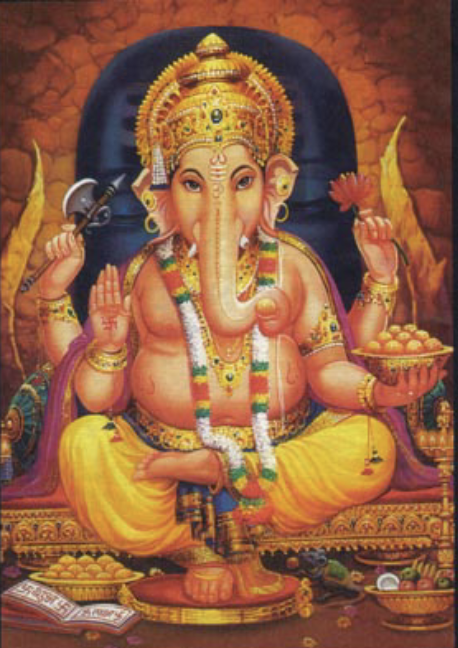
Who is this?
Ganesa
Whereas the Epics are mostly concerned with dharma, the Purāṇas are primarily concerned with bhakti.
True
What is often conjoined with the liṅga and represents the Goddess?
The yoni
This deity is sometimes represented as the “The Lord Who is Half Woman.”
Siva
What do the deities Satī and Pārvatī have in common?
they are both wives of Śiva
Which deity is associated with liṅga worship?
Siva
Gaṇeśa is considered the “remover of obstacles” and is often worshipped before other gods or goddesses.
True
Which deity is called the “Lord of the Dance,” with which they bring about the destruction of the cosmos?
Siva
The two great Indian Epics emerge in the Classical Era after the Vedic period. They are followed by the Purāṇas, which are collections of stories about most of the major gods and goddesses worshipped today
true
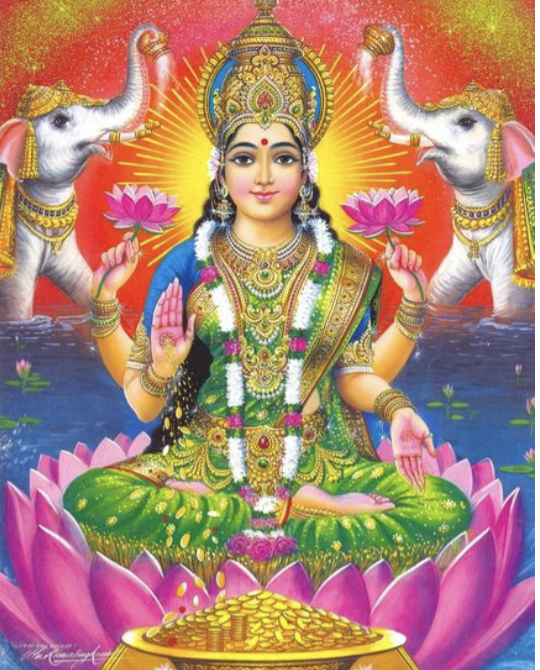
Which of the following is the above deity?
Śrī Lakṣmī
According to the trimūrti model, Viṣṇu is the Creator, Brahmā is the Preserver, and Śiva is the Destroyer.
FALSE-
Brahmā: The Creator
Viṣṇu: The Preserver/Maintainer
Śiva (Mahesh): The Destroyer/Transforme
According to Smārta Brahmins, which deity is not specifically listed as a deity worthy of worship?
Kṛṣṇa
Of the avataras of Vishnu, which is most associated with dharmic political rule?
Rāma
This deity is frequently referred to as the “The God of Ascetics.”
Siva
Krsṇa is associated with the cowherd women (gopīs) and his divine play (rāsa līlā) with them.
True
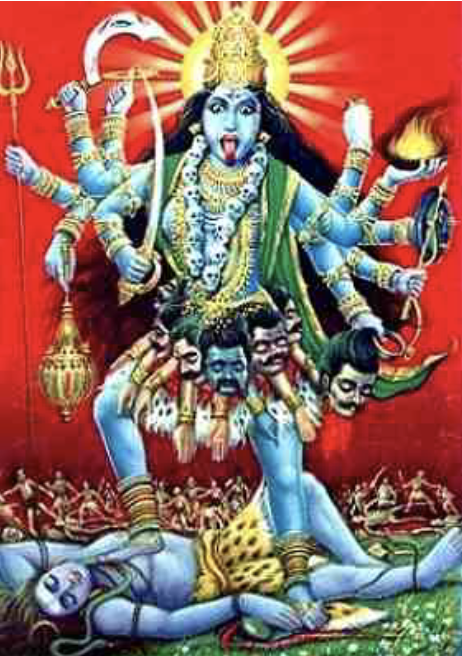
Which of the following is the standing deity?
Kali
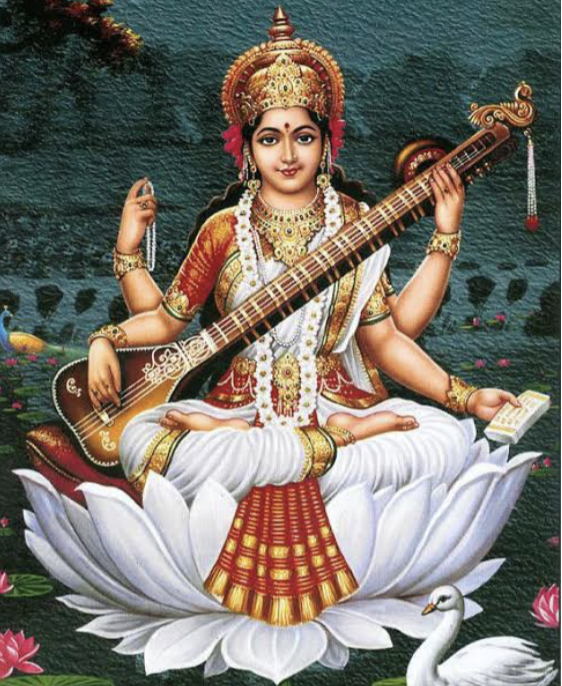
Which deity is represented in the above image
Sarasvatī
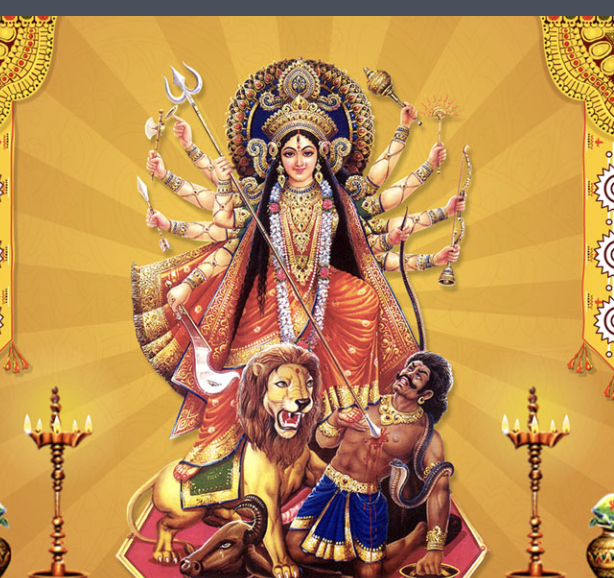
Name the goddess pictured
Durga
Our textbook notes there have been "three orthodoxies" in the history of Hinduism. Which of the following is not one of
the three?
An Indus Valley orthodoxy
Which of the following is the Sanskrit term for the basic rites of worship associated with bhakti religion?
Puja
Hindus “take” and “receive darśana” when they visit a temple. What does this phrase imply about their interaction with the divine?
they are going to see and be seen by the deity
This term refers to blessed or consecrated food that is eaten by devotees after it has been offered to and partaken of by
deities.
prasāda
One Upanisad suggests there are as many as this number of gods?
300 million
Which text assures devotees that any offering, no matter how simple or humble, when given with sincerity, will be accepted by the deity?
Bhagavad Gitā
This goddess is said to be both the cure for disease and the disease itself?
Śītalā
Which of these is not one of the typical, daily actions performed by a temple priest in “waking up” the deity?
fanning the deity
Considered a loving mother by her devotees, this goddess is associated with time, disorder, and death.
Kālī
This Sanskrit term means image or icon and refers to any representation of the divine.
mūrti
Śāktas are devotees of Devi (the Goddess) and her divine power (śakti).
True
When performing temple worship, which part of a devotee’s body is most frequently marked by a priest with colored powder, paste, or ashes?
Forehead
Of the daily rites performed by a temple priest, especially those in the morning and evening, which is considered the most important or high point and accompanied by a clamor of bells and noise?
the circling of flame before the image
Which of the following is not specifically one of the honor offerings to a deity in a standard five-part pūjā?
money
Who is the goddess of learning, speech, and the arts?
Sarasvatī
Often, the water used to bathe the deities in the morning is offered to visiting devotees as a blessing, which they drink or brush through their hair
True
Who is the Creator god with four heads, emerges from a lotus from Viṣṇu’s navel, and is associated with Sarasvatī?
Brahmā
Who is known as the Destroyer and transformer, ascetic and sexual, associated with liṅga, and the husband of Satī/Pārvatī?
Śiva
Who is the Preserver of the universe, depicted with blue skin and four arms, associated with Lakṣmī, and takes avatars like Kṛṣṇa and Rāma?
Viṣṇu
Who is the Avatar of Viṣṇu, characterized as a playful and loving god who plays the flute and is a central figure in the Bhagavad Gītā?
Kṛṣṇa
Who is the Avatar of Viṣṇu, considered an ideal king and hero of the Rāmāyaṇa, and is known for using a bow and arrow?
Rāma
Who is the monkey god devoted to Rāma, symbolizing strength and loyalty?
Hanumān
Who is the elephant-headed god known as the remover of obstacles and the son of Śiva and Pārvatī?
Gaṇeśa
Who is Śiva’s first wife, who commits suicide after being dishonored and is reborn as Pārvatī?
Satī
Who is known as Śiva’s wife (after Satī), a gentle mother goddess associated with Gaṇeśa and considered a form of Śakti?
Pārvatī
Who is the goddess of wealth and prosperity, associated with lotus and coins, and wife of Viṣṇu?
Śrī Lakṣmī
Who is the wife of Rāma and seen as the ideal wife figure central to the Rāmāyaṇa?
Sītā
Who is the lover of Kṛṣṇa, representing ideal devotion (bhakti)?
Rādhā
Who is the goddess of knowledge, speech, and arts, depicted holding a vina, and associated with learning?
Sarasvatī
Who is the fierce goddess of death and time, often shown with her tongue out and skulls, and associated with destruction and motherhood?
Kālī
Who is the warrior goddess that rides a lion and is known for defeating the buffalo demon Mahisha, embodying protective motherhood?
Durgā
Who is known as the Lord of the Dance, dancing in a ring of fire, symbolizing the destruction and creation of the universe?
Śiva (Naṭarāja)
Who is depicted lying on the serpent Ananta, with Lakṣmī by his side, from whom Brahmā emerges from a lotus?
Viṣṇu (Reclining)
Who is identified by being on Śiva, with her tongue out and surrounded by skulls?
Kālī
Who is depicted riding a lion and killing the buffalo demon?
Durgā
Who is characterized by holding an instrument (vina) and a calm white appearance?
Sarasvatī
Who is identified by blue skin, a flute, and often seen with gopīs or Rādhā?
Kṛṣṇa
Who is depicted with a bow and arrow, along with Sītā and Hanumān?
Rāma
Who is identified by being a monkey figure and devoted to Rāma?
Hanumān
Who is represented with a trident, snake, or ash body, or dancing in a fire circle?
Śiva
Who is identified by blue skin and with four arms, or reclining on a serpent?
Viṣṇu
Who is characterized by having an elephant head?
Gaṇeśa
Who is the Creator god with four heads, emerges from a lotus from Viṣṇu, and is associated with Sarasvatī?
Brahmā
Who is the Destroyer and transformer, depicted as an ascetic with a trident and snakes, associated with liṅga, and is the husband of Pārvatī?
Śiva
Who is the Preserver of the universe, depicted with blue skin and four arms, associated with Lakṣmī, and has avatars like Kṛṣṇa and Rāma?
Viṣṇu
Who is the Avatar of Viṣṇu, known for having blue skin and playing the flute, and is associated with Rādhā?
Kṛṣṇa
Who is the Avatar of Viṣṇu, characterized as an ideal king, known for using a bow and arrow, and is the husband of Sītā?
Rāma
Who is the monkey god, a devoted follower of Rāma, symbolizing strength and loyalty?
Hanumān
Who is the elephant-headed god known as the remover of obstacles and the son of Śiva and Pārvatī?
Gaṇeśa
Who is the first wife of Śiva, who dies and is reborn as Pārvatī?
Satī
Who is the wife of Śiva, considered a mother goddess and associated with Gaṇeśa?
Pārvatī
Who is the goddess of wealth, often depicted with lotus and coins, and is the wife of Viṣṇu?
Śrī Lakṣmī
Who is the wife of Rāma, seen as the ideal wife figure in the Rāmāyaṇa?
Sītā
Who is the lover of Kṛṣṇa, representing ideal devotion (bhakti)?
Rādhā
Who is the goddess of knowledge and arts, often depicted holding a musical instrument?
Sarasvatī
Who is the fierce goddess, often shown with her tongue out and skulls, who stands on Śiva?
Kālī
Who is the warrior goddess that rides a lion and is known for defeating the buffalo demon?
Durgā