Lab quiz 2 part two and small amount of three
 Call Kai
 Learn
Learn Practice Test
 Spaced Repetition
 Match
Match Flashcards
 Knowt Play
1/88

There's no tags or description
Looks like no tags are added yet.
Name | Mastery | Learn | Test | Matching | Spaced | Call with Kai |
|---|
No analytics yet
Send a link to your students to track their progress
89 Terms
“What is the purpose of respiration?”
To produce ATP (energy)
Aerobic respiration
Uses oxygen
-
-
Do all microbes use oxygen as terminal electron acceptor
No
Cytochrome oxidase Complex function
Transfers electrons to the terminal(final) electron acceptor(reciver)
what do you call Enzyme that transfers electrons to oxygen
Cytochrome oxidase complex
Very reactive charged molecule
Free radical
Other names for Free radical
Superoxide
What are free radicals and known fact?
It when electrons does not properly bind to oxygen , creating Reactive charged molecules that makes deadyly product and disrupt cellular processes
Is talked about in Antioxidants
Superoxide dismutase (SOD) (fix free radical)
Neutralizes oxygen radicals by converting them to hydrogen peroxide
Indicates organism is capable of dealing with oxidative stress(damage done by free radical)
Breaks down oxygen radicals and convert them into hydrogen peroxide
superoxide dismutase
Catalase and know facts
Converts Hydrogen Peroxide to Water and Oxygen
Indicates organism uses oxygen as a terminal electron acceptor
1.) Catalase will go right after/needs superoxide dismutase while superoxide dismutase dose not
Breaks hydrogen peroxide into water and oxygen
catalase
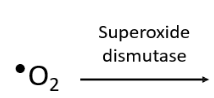
when there radical and then Superoxide dismutase (SOD). What is the next molecule?
H2O2 hydrogen peroxide
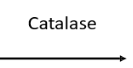
after the conversion of hydrogen peroxide and then then the processes of Catalse. What next molcue?
water and oxen (H20 and O2)
purpose of Oxidase test and procces
Purpose:
Detects cytochrome c oxidase.
Process:
-Drip oxidase reagent on colonies
-Results can take ~5 minutes
Oxidase Test: Positive
-Blue color change
- cytochrome c oxidase is present, which means cytochrome c oxidase transfers electrons to oxygen to end of the electron transfer chain
Oxidase Test: Negative
-Clear/ yellow color
- Cytochrome c oxidase is absent which means it cannot combine electrons with oxygen at the end of the electron transfer chain
Catalase test purpose and process
Purpose: Detects catalase
Process:
-Drip hydrogen peroxide on colonies
-Immediate results
Postive- Catalase test
-Bubbles
-Catalase is present, since catalase converts hydrogen peroxide into water and oxygen (O2) → (O2) contributes to gas production, which makes the bubbles
Negative- Catalase test
-no bubbles
-Catalase is not present, which means it do not break down hydrogen peroxide and dose not deal with oxidase stress with catalase
Why does hydrogen peroxide fizz on wounds?
Catalase in cells breaks it H2O2, making water and oxygen- O2 makes gas production to bubbles
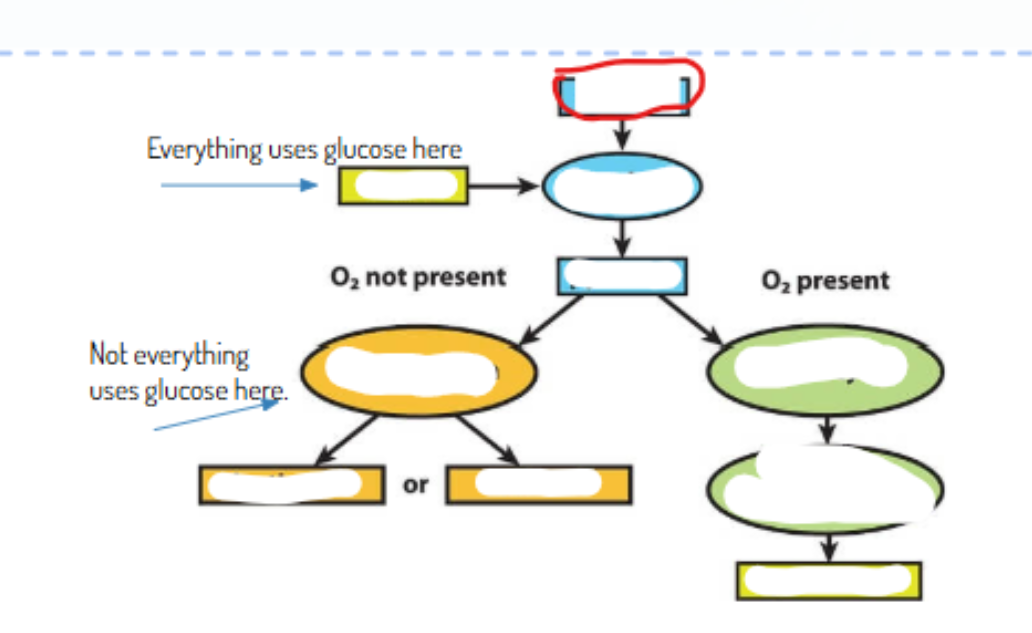
Glucose
Test Detects Cytochrome C Oxidase
Oxidase Test
Test detected catalase
Catalase Test
Glucose
Starting molecule used to make energy
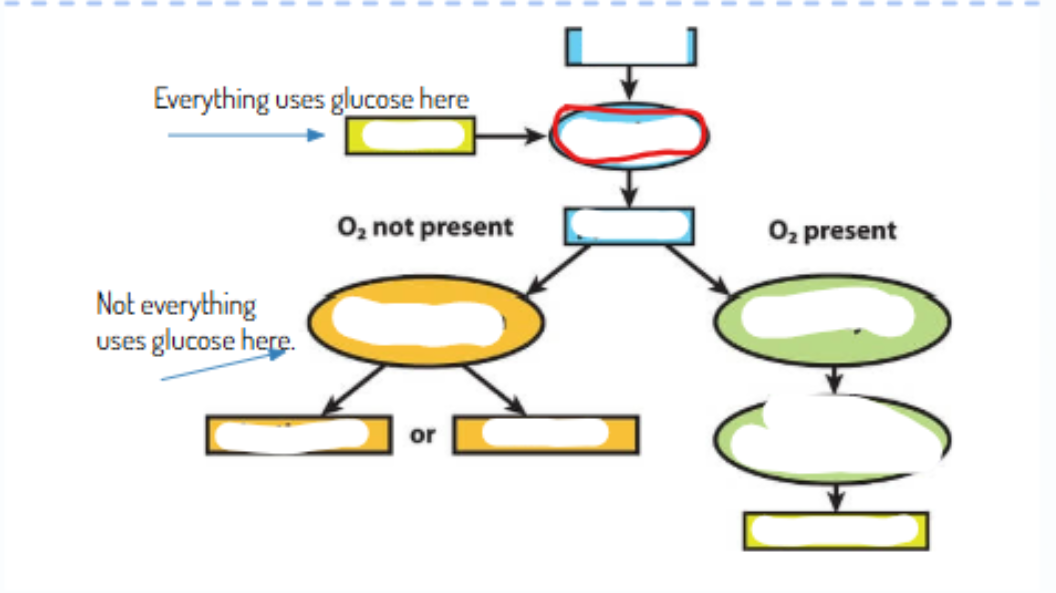
Glycolysis
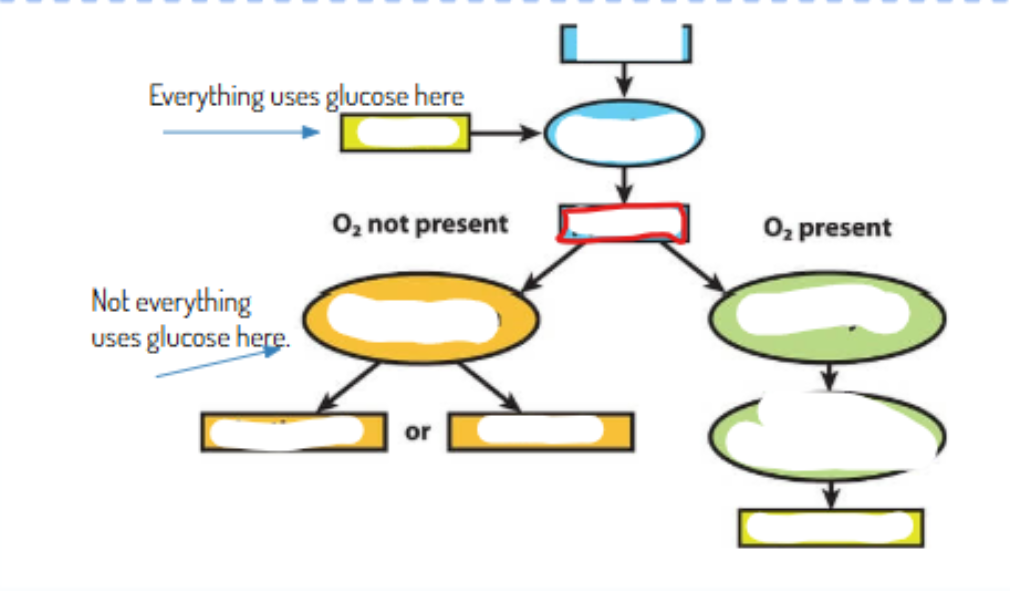
Pyruvate
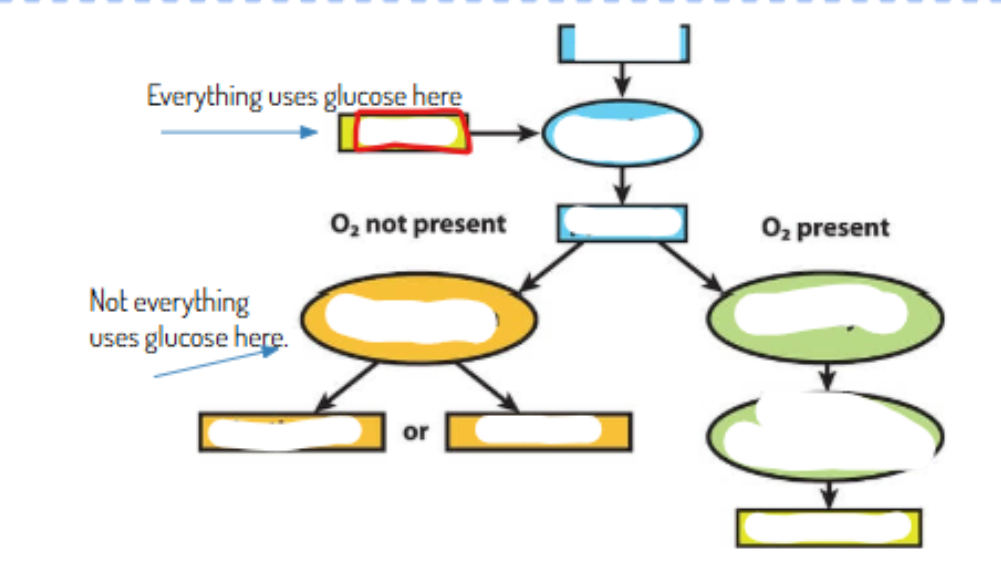
2 ATP (glycolysis made it)
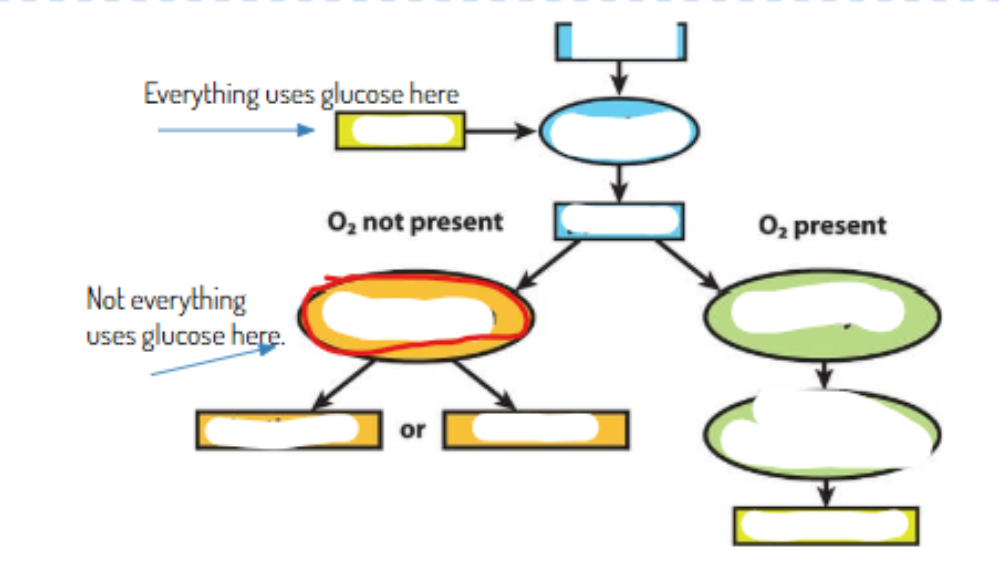
Fermentation (anaerobic “oxgen not present” and NOT EVERYTHING USE GLUCOSE)
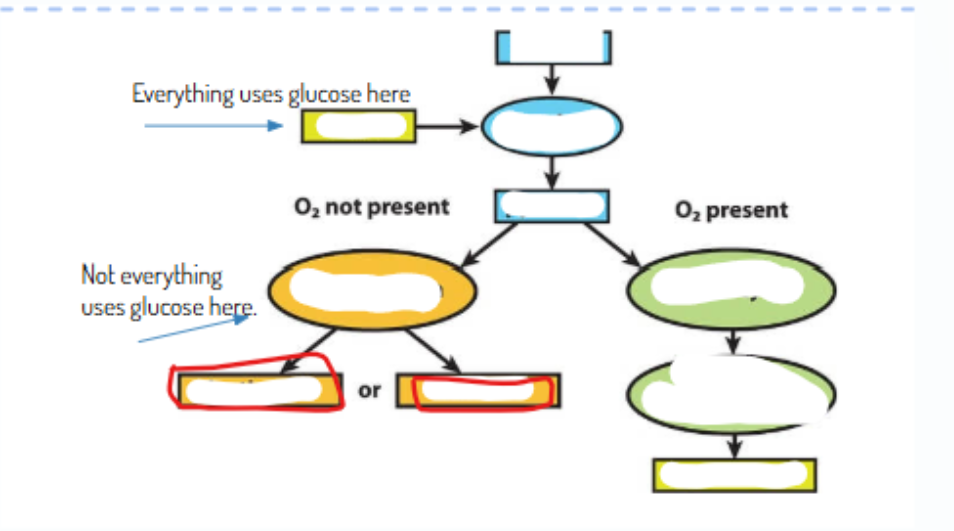
Lactic acid (left) or ethanol (Right)
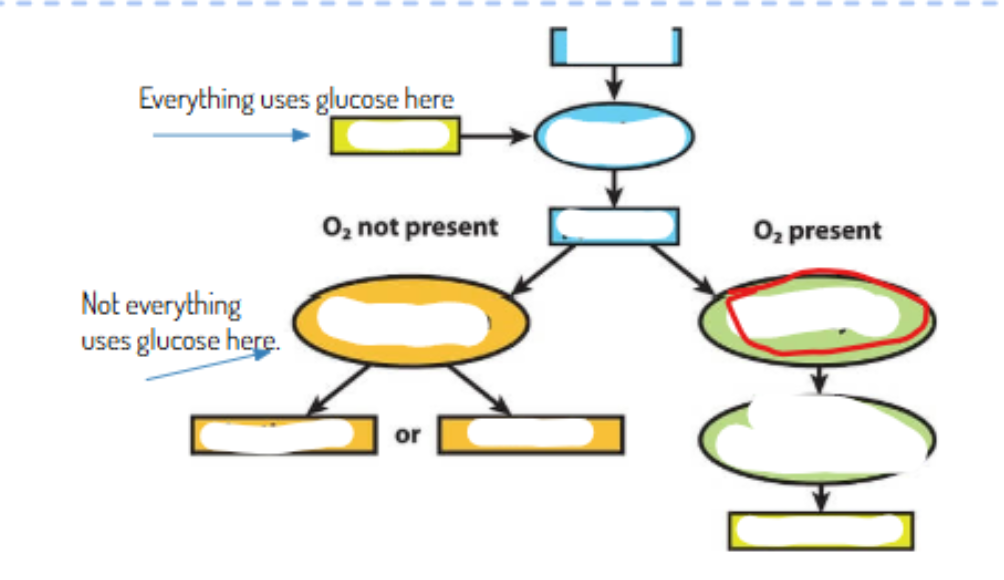
Krebs cycle (Oxgen is present- makes carries)
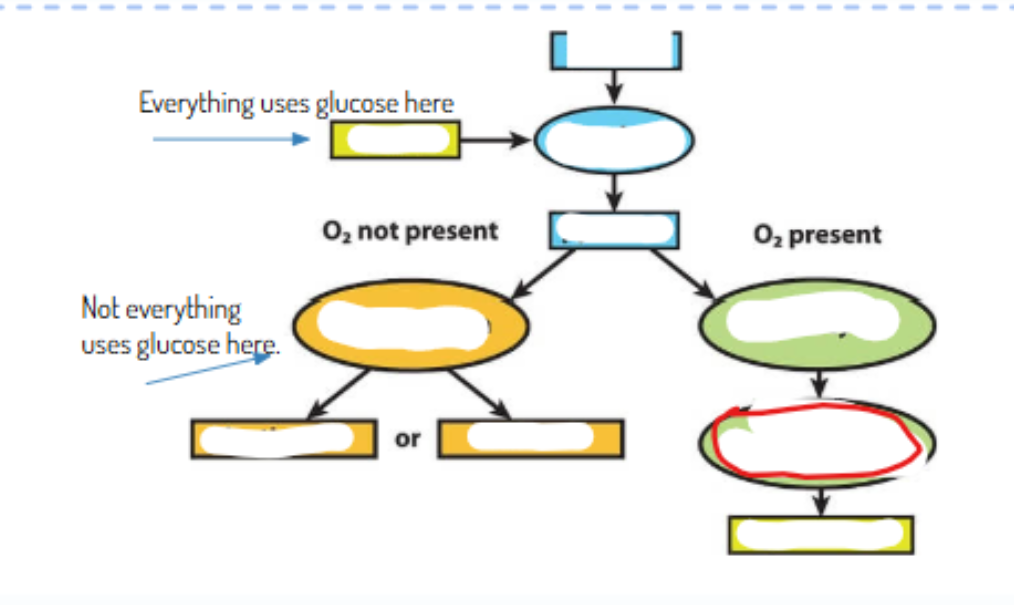
Electron transport chain (ETC) (Oxgen is present and final oxygenreciver)
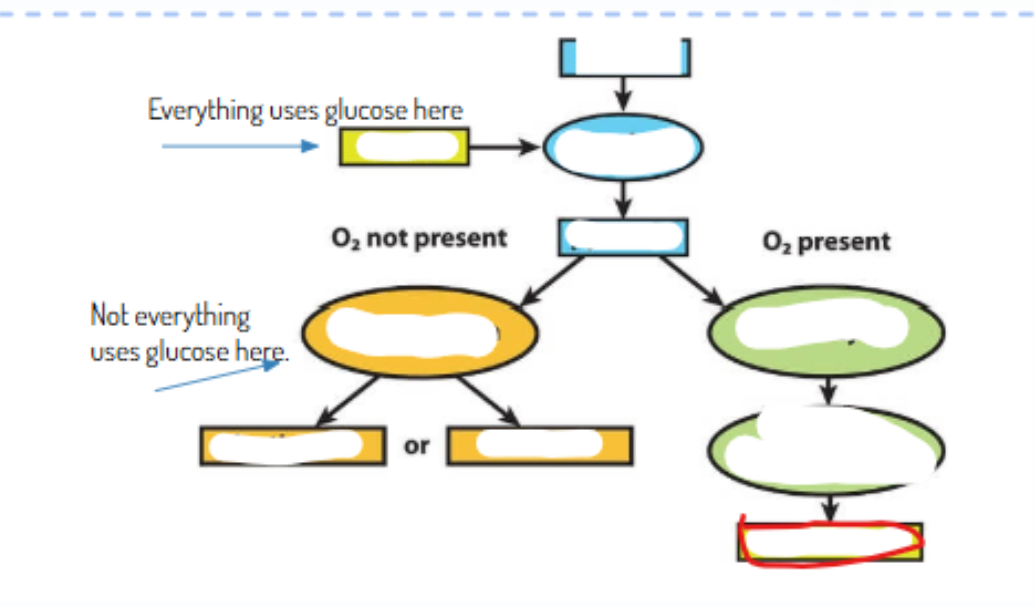
Up to 36 ATP
Anaerobic (is a Category): Fermentation (one type/process in the category)
Partial breakdown of sugars
-small amount of energy produced
-often in absence of oxygen
Aerobic (category): Respiration (one type in the category) process
Complete breakdown of sugars
-lots of energy produced
-often requires oxygen
What molecule enters fermentation or respiration?
Pyruvate
What is thioglycollate medium observed/used for
To observe bacterial growth based on oxygen, it also important to know that Different parts of the tube have different levels of oxygen present
Fluid Thioglycollate Medium
Viscous, but not solid (LIKE HONEY).
How; Sodium thioglycollate consumes Oxygen
permits growth of obligate anaerobes
Resazurin
A dye that indicates the presence of oxygen in thioglycollate medium
Resazurin: Reports on the presence of oxygen:
blue = oxidized
pink = partly oxidized
colorless = fully reduced
What does oxic mean?”
Oxygen present
“What does anoxic mean?
No oxygen
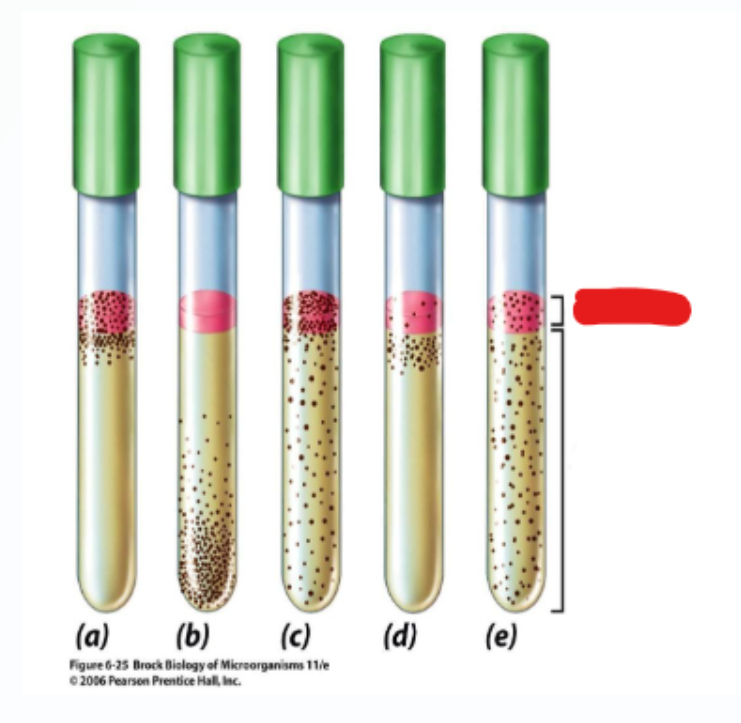
Oxic zone
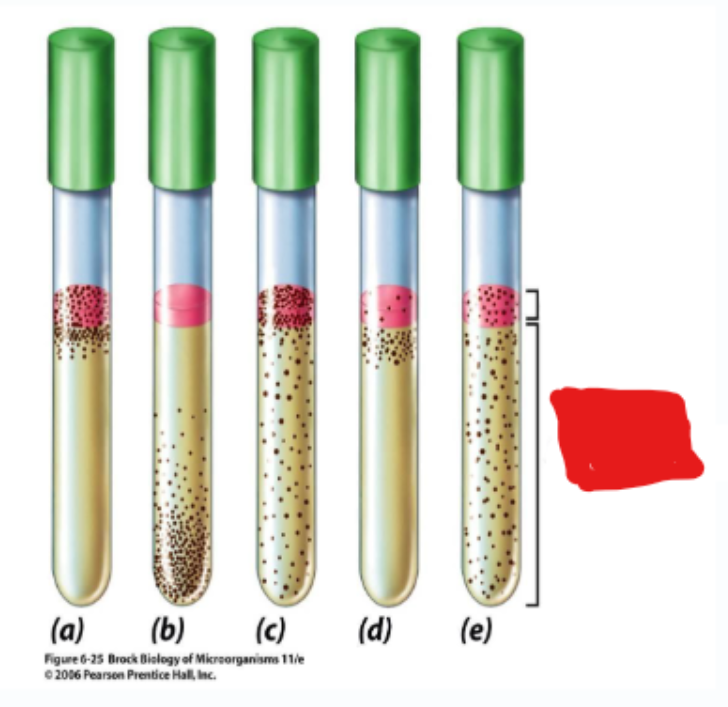
Anoxic zone
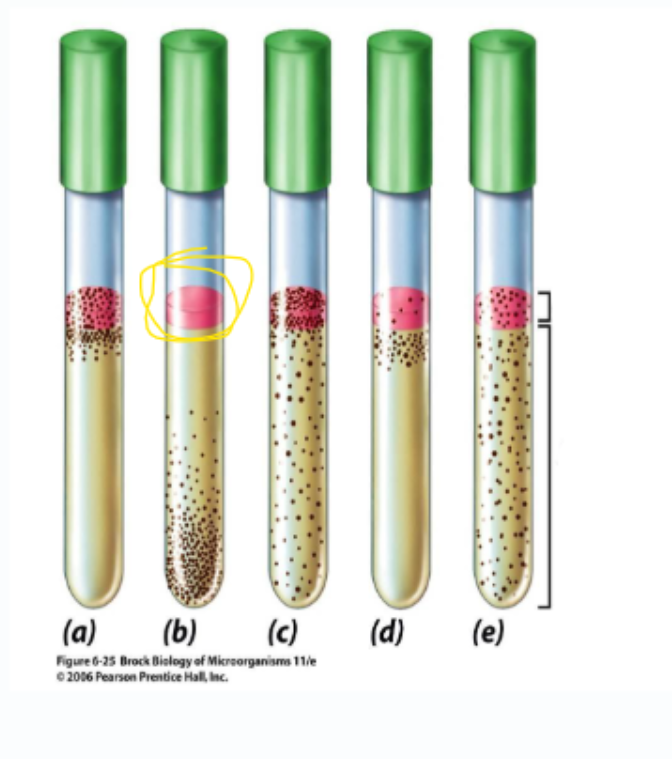
Pink region indicates media is thoroughly oxidized.
How do we grow and tell the difference between grow in response to oxygen?
Fluid Thioglycollate Medium (its a media)
what is culture
It when the bacteria GROWS in the media
(Not Culture → E. coli in a tube (not growing yet)
✅ Culture:→ E. coli growing on a plate )
Media
substances used to grow bacteria (broth, plates, slants, thioglycollate)
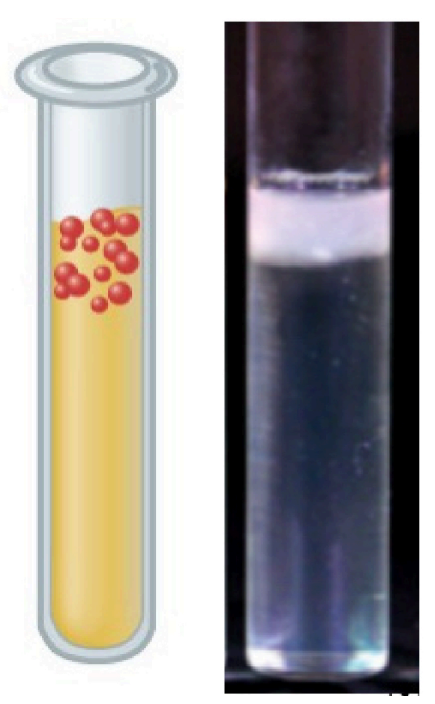
Obligate (strict) aerobes
Obligate (strict) aerobes
Cannot grow in the absence of oxygen because it requires oxygen for respiration
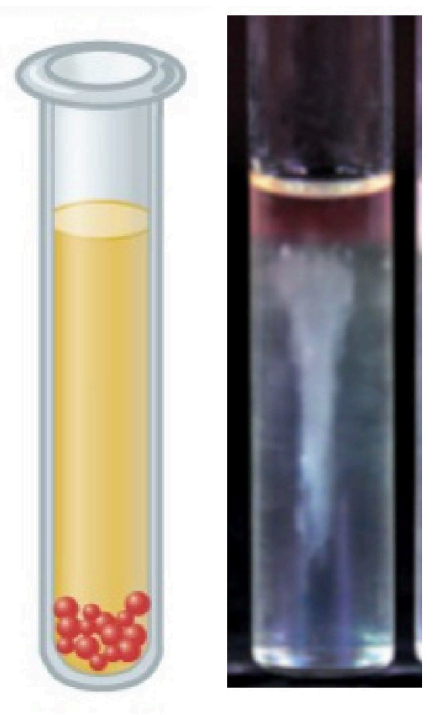
Obligate (strict) anaerobes
Obligate (strict) anaerobes
Is killed by the presence of oxgen
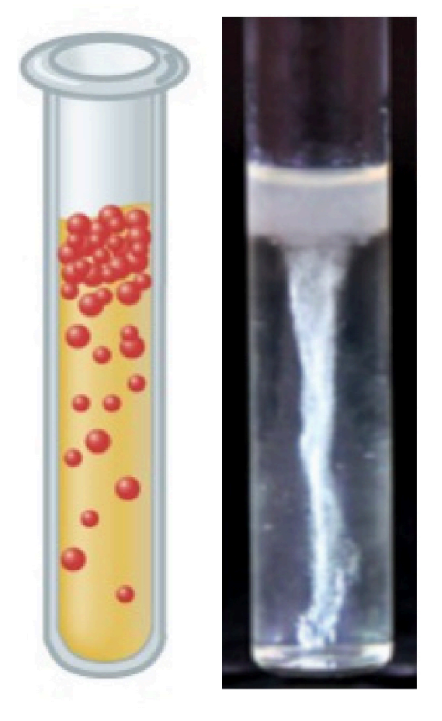
Facultative anaerobes
Facultative anaerobes
It can grow in the absence of oxygen, but it works better when oxygen is present
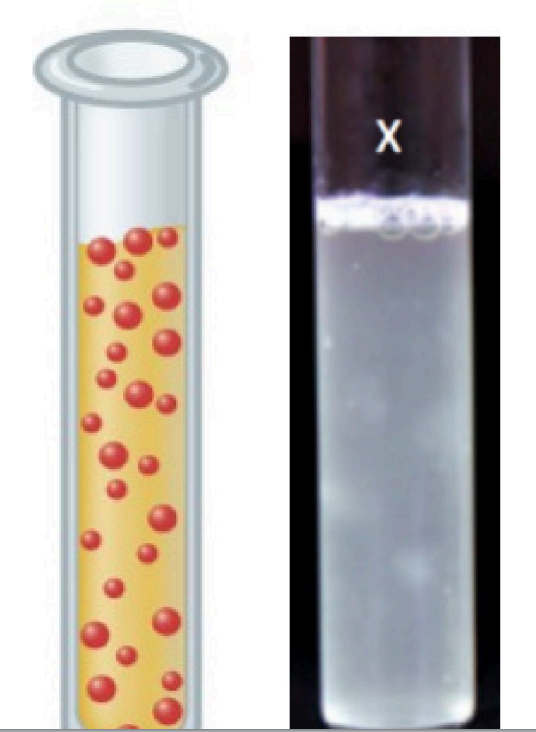
Aerotolerant anaerobes
Aerotolerant anaerobes
It does not use oxygen but can tolerate it
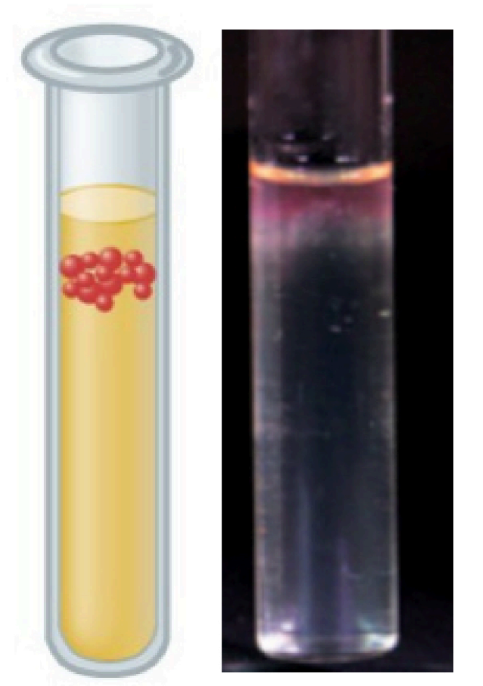
Microaerophiles
Microaerophiles
It only grows when oxygen is in low concentration
Which organism requires low levels of oxygen?”
Which bacteria grow best when oxygen is present at low concentrations?
Microaerophile
Which organism does not use oxygen but can tolerate its presence?”
Which bacteria grow in the presence of oxygen but do not require it?”
Aerotolerant anaerobe
When fermentation partially breaks down the foods what dose it produce
Waste products ( like lactic acid in homaltic fermination or heterolcatic fermination ehtonal/CO2)
definition of fermentation
eating food in the absence of oxygen
What do bacteria need to perform fermentation
-carbon source (food)
- Carbohydrates like: Sucrose, Lactose, Glucose
Types of Fermentation
Homolactic fermentation→ Utilizes lactose to produce one byproduct [ Produces ONE product (lactic acid)]
Heterolactic fermentation → Utilizes lactose to produce several byproducts [Produces MULTIPLE products]
What dose Hetero mean
Different
What dose Homo mean
Same
What products are made from Heterolactic fermentation
Carbon dioxide, ethanol, and lactic acid
What products are made from Homolactic fermentation
lactic acid
Why do bacteria stop growing over time in lactic acid fermentation?” and What happens as lactic acid accumulates(production of waste) during fermentation
1.) Too much lactic acid builds up
2.)when there to much lactic acid bacteria can tolater to a degree but once there to much the bacteria die
What causes the drop in bacterial population
acid accumulation
Homolactic Species/bacteria that produce only lactic acid
Lactobacilli
Heterolactic species/bacteria that produce multiple products
Leuconostoc
Streptococcus and Bifidobacterium
Which type produces only one product?
Homolactic fermentation
Which type produces multiple byproducts?
Heterolactic fermentation
What is selective media
fully inhibits one type of bacteria and allows the other to grow (example MRS agar “ a.k.a it like a plate)
What is differential media
Allows multiple bacteria types to grow but look different once they do (example Thioglycollate medium)
is deMan-Rogosa-Sharpe (MRS) Agar a SELECTIVE or DIFFERENTIAL MEDIA
SELECTIVE
WHat bacteria/specimen dose MRS agar allow to grow, and what does it not
It allows Lactobacillus and Leuconostoc, but bacteria like streptococcus are inhibited
what dose MRS agar stand for and what is pH level
1.) deMan-Rogosa-Sharpe (MRS) Agar
2.) 6-6.5 ( ideal for Lactobacillus)
WHat dose Ph stand for
potential of Hydrogen
What indicates an acidic solution?”
High H⁺ (hydrogen ion/proton))
What indicates a basic solution?”
High OH⁻ (hydroxide ion)
What is neutral pH?”
Equal H⁺ and OH⁻
high pH (8–14)
Basic (alkaline)
pH 7
Neutral
pH (0-6)
Acidic
How is pH determined
when H⁺ and OH⁻ come togather to from water (H2O), what is left over determines it
pH (formula)
pH = −log₁₀[H⁺]