MicroReview - Module 6 Aseptic Transfer
 Call Kai
 Learn
Learn Practice Test
 Spaced Repetition
 Match
Match Flashcards
 Knowt Play
1/13

There's no tags or description
Looks like no tags are added yet.
Name | Mastery | Learn | Test | Matching | Spaced | Call with Kai |
|---|
No analytics yet
Send a link to your students to track their progress
14 Terms
Define Aseptic technique
A set of procedures used to prevent contamination
List the procedures for Aseptic transfer
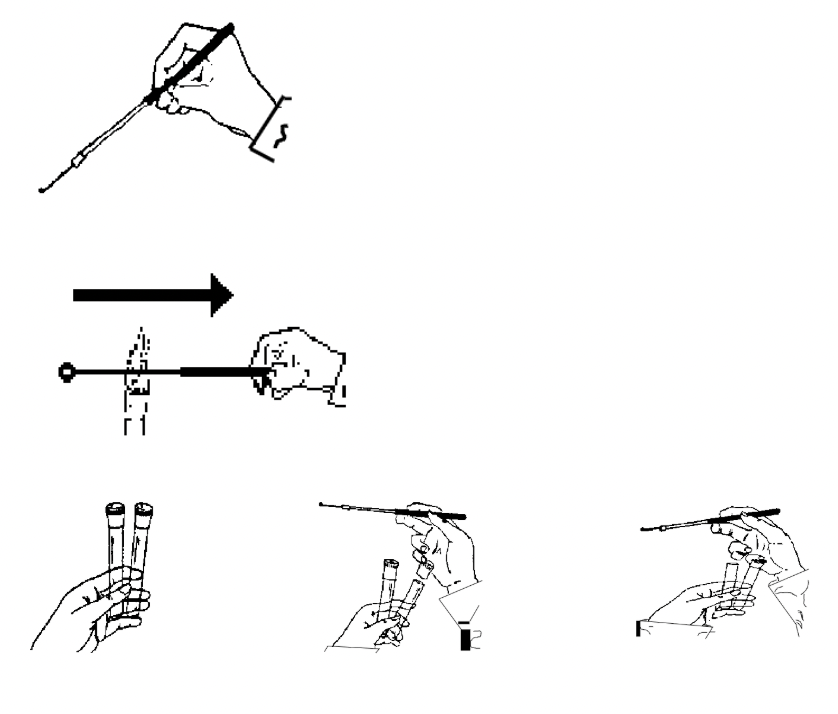
Light your bunsen burner
Flame the inoculating loop, moving it from base (until red hot) to loop until the entire wire is red hot
Cool the inoculation loop for about 30 seconds
Using your open hand, pick up the stock culture tube and fresh tube and hold them in a v-shape.
With your pinky, uncap the the tube nearest to your hand then the other without the edges touching your hand
Flame the top edges of the tube by rolling them into the fire.
Use your inoculating loop to obtain the microbe from the stock culture
Dip the end of the loop in broth
Flat surface up, touch the growth of the slanted agar to remove
Insert the inoculation loop and inoculum into the fresh tube
Re-flame the the rims of both tubes and re-cap the tubes
Re-flame the inoculation loop until red hot all over
Turn off the flame
Take the tube for incubation at 37 celsius
List three potential contaminants during aseptic transfer
Microbes are everywhere, thus contamination can come from anywhere. Three of which include:
The Air
Your hands
Your lab counter
Why do we flame our inoculating loop from base to loop instead of the other way?
It prevents microbes on the loop from splattering out into the air due to the heat.
Define Aseptic
Aseptic refers to lack of contamination.
What does the prefix ‘a-‘ or ‘an-‘ mean?
It indicates something without. The absence of something.
Example Anaerobic refers to something that deals with no oxygen.
How does one deliver microbes from broth and slanted agar?
For broth - Same as removing, simply dip the end of the loop into the broth
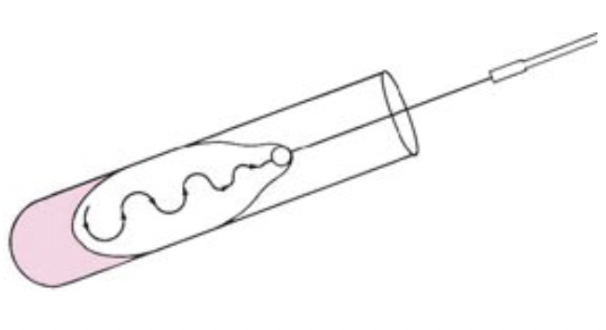
For slanted agar - Flat surface up, gently streak in a back and forth zig zag until the entire slanted surface is covered.
List the microorganisms used and the medium they were transferred to
Staphylococcus epidermidis transfer to broth
Escherichia coli transfer to broth
Neisseria sicca transfer to agar slant
Bacillus subtilis transfer to agar slant
List Koch’s Postulates. What are they?
A set of rules that dictate the causation of a disease.
The organism must be present in every case of the disease.
•The organism must be isolated in pure culture in the laboratory.
• The organism must be put into a susceptible host and cause the same disease.
• The organism must be re-isolated in pure culture and shown to be identical to the original organism.
Define Aseptic transfer
The term used to describe the process of transferring microbes without contamination
List the various culture types:
Stock culture - the term for a pure culture maintained and kept alive for the purpose of research
Pure/axenic culture - culture where only one organism is growing
Mixed culture - culture where multiple organisms is growing
Broth culture - Culture within a liquified media
Define Agar slant
Agar slant - the term for agar being solidified in a slant
What is TSA and TSB?
Trypticase Soy Agar (TSA) - a culture media used to isolate and cultivate microorganisms
Trypticase Soy broth (TSB) - the same thing but in broth form
List some of the tools we use in microbiology
Bunsen Burner
Inoculating loop
Tube rack