Entrepreneurship Lecture
 Call Kai
 Learn
Learn Practice Test
 Spaced Repetition
 Match
Match Flashcards
 Knowt Play
1/157

There's no tags or description
Looks like no tags are added yet.
Name | Mastery | Learn | Test | Matching | Spaced | Call with Kai |
|---|
No analytics yet
Send a link to your students to track their progress
158 Terms
Definition Entrepreneurship Gielnik
„ … the process of discovery, evaluation, and exploitation of opportunities; and the set of Individuals who …“
anything we start from scratch
high focus on the individual
characteristics Pre-Launch Phase
Discovering and Evaluating an Opportunity
identification of business opportunity
evaluation of business opportunity
intention to proceed further
characteristics Launch Phase
Exploiting an Opportunity
assembling resources
choosing legal form
protecting new products/servides
developing initial marketing plans and strategy
characteristics Post-Launch-Phase
Exploiting an Opportunity
managing the business
conducting negotiations
human resource management
Opportunities emerge from …
… a complex pattern of changing conditions in:
technology
economy
politics
society
demography
→ specific juxtaposition or confluence which did not exist previously
Classification of opportunities by …
Type
Characteristic
Mechanism
Role
opportunity classification Type
Classified by origin
Technological
Regulatory
Demographic
Socio-Cultural
Macroeconomic
Political
Natural-environmental
opportunity classification Characteristics
Influence actionability and market potiental
Scope (the larger the more promising)
spatial
temporal
sectoral
socio-demographic
Onset
predictability/suddenness
opportunity classification Mechanism
Specify the cause-effect relationship
Combination
Compression
Conservation
Enclosing
Expansion
Generation
Legitimation
Substitution
Uncertainty Reduction
opportunity classification Role
Situate effects by venture creation stage
Triggering
Shaping
Offer
Venture
Process
Outcome-enhancing
opportunity classification: mechanism Compression
Reduction in the amount of time required to perform an activity
opportunity classification: mechanism Conservation
Reduction in the amount of resources required to perform an activity
opportunity classification: mechanism (Resource) Expansion
Increase in the amount of resource that is accessible
opportunity classification: mechanism (Resource) Substitution
Replacement of one resource with another
opportunity classification: mechanism Combination
Coupling with external resources or artifacts to provide functionality
opportunity classification: mechanism Generation
Allowing the creation of new artifacts (devices, functionalities, business models)
opportunity classification: mechanism Uncertainty Reduction
Reduction in the perceived uncertainty of any business decision of buyers or sellers
opportunity classification: mechanism Legitimation
Increase in the legality or psychological/sociocultural acceptability of the venture or its offerings
opportunity classification: mechanism (Demand) Expansion
Increase in demand at a given price and given functionality
opportunity classification: mechanism (Demand) Substitution
Increase in demand that is due to making a focal venture‘s market offerings (perceived as) more needed/attractive (positive substitution) or to making competitive offerings perceived as less needed or attractive (negative substitution)
opportunity classification: mechanism Enclosing
Increase in a venture‘s ability to capture the loyalty of buyers and the value it creates
Importance of prior knowledge
individuals are not equally likely to recognize a given entrepreneurial opportunity
specific prior knowledge guides the cognitive process of interpreting new information
prior knowledge on markets, customers, and other products influences the individuals discovery of business opportunities
knowledge corridor
people’s prior knowledge determines whether or not and which business opportunity they will identify
experience in markets
… may be helpful to identify a specific opportunity
… may lead to being unreceptive for other opportunites
… may lead to discarding new information, strongly relying in past experiences
entrepreneurs who identify a set of market opportunites prior to first entry…
… derive performance benefits by doing so
the positive relationship between the number of market opportunities identified prior to first entry ...
… and new firm performance is nonlinear and subject to decreasing marginal return
escaping the knowledge corridor
entrepreneurial experience
active information search and external knowledge sourcing breadth
coachability
creativity techniques
experienced entrepreneurs posses…
… a refined and complex (mental) schemata to identify and evaluate business opportunities
lack of entrepreneurial experience can be made up for, by …
… active information search
coachability
degree to which an entrepreneur seeks, carefully considers and integrates feedback
analogical reasoning
applying the knowledge from one domain as a kind of model to help in understanding or developing ideas in another domain
conceptual combination
mentally combining different, opposing, previously unrelated concepts
creativity techniques
conceptual combination
analogical reasoning
morphological box
morphological box
breaking down the problem into its key dimensions
What is an opportunity?
end-state that can be actualized through action when the necessary conditions (are believed to) exist
behavioral patterns of innovative entrepreneurs
Questioning frequently, challenging the status quo
Observing the world around, everyday experiences to find new ideas
Experimenting with hypothesis-testing and an open mindset
Idea Networking, testing ideas with a netword of individuals, diverse in background and perspective
role of action in entrepreneurship
catalyst for associational thinking/pattern recognition
change the status quo
less susceptible to status quo bias
associational thinking
cognitive process of connecting concepts that appear to be unconnected
make connenctions across seemingly unrelated questions, problems, disciplines, fields or ideas
translate entrepreneurship flow model: cognitive bias → discovery behaviors → cognitive process to generate novel ideas
bias against status quo → questioning, observing, experimenting, idea networking → associational thinking → opportunity recognition
characteristics personal initiative (PI)
self-starting (starting from scratch)
future-oriented (proactive)
persistent (overcoming barriers)
firm performance is dependent on…
pre- and post-entry learning
action theory process model: antecedents and mediators
antecedents and outcomes of actions:
cognition (human capital, knowledge, cognitive biases)
motivation (self-efficiany, passion)
emotion (positive/negative affect, fear of failure)
action sequence of the opportunity development process:
goal setting → information seeking → action planning → execution/monitoring/feedback → goal setting
function as mediators, as they transmit the antecedents
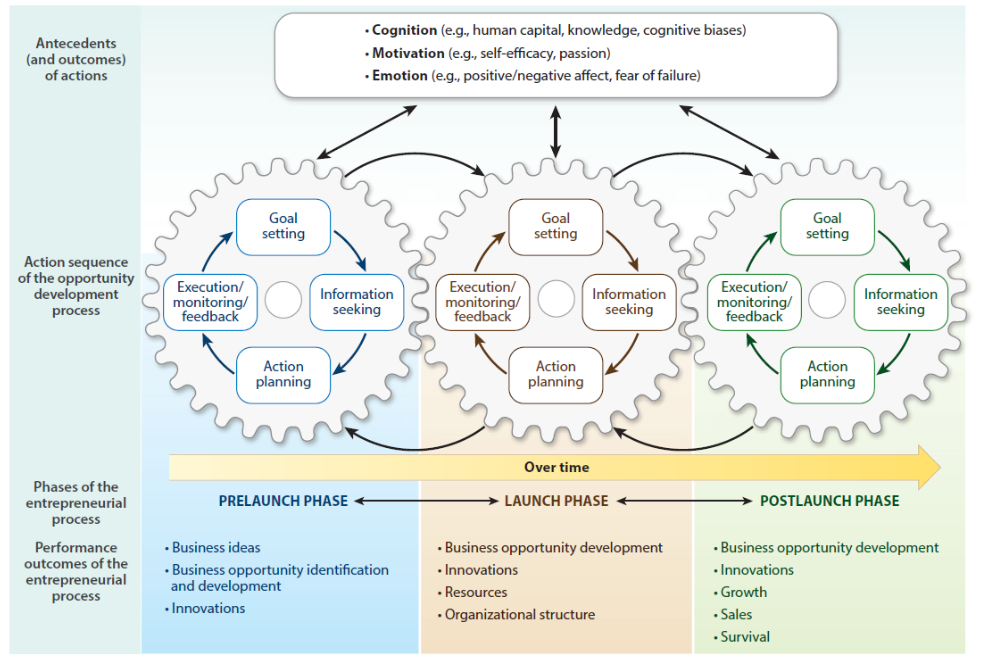
action theory process model performance outcomes in the prelaunch phase
business ideas
business opportunity identification
innovations
action theory process model performance outcomes in the launch phase
business oppportunity development
innovation
resources
organization structure
action theory process model performance outcomes in the postlaunch phase
business opportunity development
innovations
growth
sales
survival
criteria for opportunity evaluation feasibility analysis
product/service feasability: desirability and demand
industry/target market feasability: industry and target market attractiveness
organizational feasibility: management prowess and resource sufficiency
financial feasability: total start-up cash needed, financial performance of similar businesses, overall financial attractiveness of the proposed venture
criteria for opportunity evaluation First screen: strength of business idea (1)
score each with (-1), (0) or (+1)
extent to which the idea:
takes advantage of an environmental trend
solves a problem
addresses an unfilled gap in the marketplace
timeliness of entry to market
extent to which the idea “adds value” for its buyer or end user
extent to which the customer is satisfied by competing products that are already available
degree to which the idea requires customers to change their basic practices or behaviours
criteria for opportunity evaluation First screen: industry-related issues (2)
score each with (-1), (0) or (+1)
number of competitors
stage of industry life cycle
growth rate of industry
importantce of industry’s products and/or services to customers
industry operating margins
criteria for opportunity evaluation First screen: target market and customer-related issues (3)
score each with (-1), (0) or (+1)
identification of target marget for the proposed new venture
ability to create “barriers to entry” for potential competitors
purchaing power of customers
ease of making new customers aware of the new product or service
growth potential of target market
criteria for opportunity evaluation First screen: founder related issues (4)
score each with (-1), (0) or (+1)
founder’s experience in the industry
founder’s skills as they relate to the proposed new venture’s product or service
extent of the founder’s professional and social networks in the relevant industry
extent to which the proposed new venture meets the founder’s personal goals and aspirations
likelihood that a team can be put together to launch and grow the venture
criteria for opportunity evaluation First screen: financial issues (5)
initial capital investment
number of revenue drivers
time to break even
financial performance of similar businesses
ability to fund initial product/service development and/or inital start-up expenses from personal funds or via bootstrapping
criteria for opportunity evaluation First screen
strength of business idea
industry-related issues
target market and customer-related issues
founder-related issues
financial issues
strategic perspective
trying to predict which idea/opportunity will be succesful
uncertainty can lead to paralysis/inaction
state uncertainty
inability to predict how the environment changes
effect uncertainty
inability to predict how changes in the environment effect you
response uncertainty
lack of insight into response options given a changing environment and the inability to predict the consequences of a response choice
opportunity evaluation role of confidence
subjective (biased) perceptions have a crucial impact on new business creation
strongest covariate: individuals belief to have sufficient skills, knowledge and abilities to start a business
negative correlation of entrepreneurial confidence and approximate survival chances of business
entrepreneurs overestimate their own odds of success and underestimate the amount of risk
opportunity evaluation substantial overoptimism
nascent entrepreneurs’ overstimating the probability that their activity will result in an operating venture
forecasting through plans and financial projections increases this
opportunity evaluation optimal level of confidence
~ 65%
opportunity evaluation optimal ratio of positive and negative feedback
80 (+) / 20 (-)
opportunity evaluation high variability in percieved self-efficacy…
enables the ideal calibration of confidence
Dunning-Kruger-effect
cognitive bias: people with low skill or knowledge in a specific area tend to overstimate their competence
meta-cognition: combination of lack of expertise to perform well and lack of ability to accurately evaluate personal performance
above-average-effect
cognitive bias: people overestimate their own qualities and abilities relative to others (believe they are better than the average person)
naive optimism
unwavering belief that good outcomes are likely, ignoring risks, evidence or complexities
necessary naivety
beneficial, often strategic form of innocence or idealism allowing individuals to undertake challenging tasks without being paralyzed by risks or failures
escalation of commitment
behavioral phenomenon: continuous investment of resources into a failing course of action
definition entrepreneurship Schüßler
entrepreneurship is about assembling/organization-creation:
planning, coordinating, resources, people, ideas, establishing routines, structures and systems through ongoing interactions that are socially embedded and context-specific
cycles of entrepreneurial activity
organization creation
enactment ↻ selection ⇒ emergence
establishing routines
selection ↻ retention ⇒ newness
changing routines
newness ↻ emergence ⇒ transformation
entrepreneurship as a verb
bringing an organization into being
variance view entrepreneurship
focus on the differences between individual entrepreneurs and their outcomes
assumes that entrepreneurs are either succesful or unsuccesful
focus on traits, variables and variables between relationships
⇒ entrepreneurship as an act
process view entrepreneurship
focus in the underlying processes that drive entrepreneurial outcomes (e.g. learning, adaption, innovation)
recognizes that entrepreneurial outcomes and entrepreneurial individuals are shaped by a complex interplay of factors
focus on sequences, events and feedback loops
⇒ entrepreneurship as a journey
valley of death
space between opportunity discovery and product development
shift from invention to commercial innovation
organization variables (legal, supply chain, finance, …) begin to matter
shift in roles
idea journey
idea generation
need: cognitive flexibility
idea elaboration (evaluating idea’s potential)
need: support
[valley of death]
idea championing (convincing investors)
need: influence and legitimacy
idea implementation (producing a tangible outcome)
need: shared vision and understanding
five phases of growth model (Greiner)
each phase involves growth and a crisis
creativity; leadership
direction; autonomy
delegation; control
coordination; red tape
collaboration; variable
maturity increases throughout the stages
IPO
Börsengang
life cycle entrepreneurial firm: ideal type model (Picken)
startup: define and validate business concept
transition: lay the foundation for a scalable business
scaling: add resources to profitably scale the enterprise
exit: harvest the venture through IPO, private sale, merger or acquisition
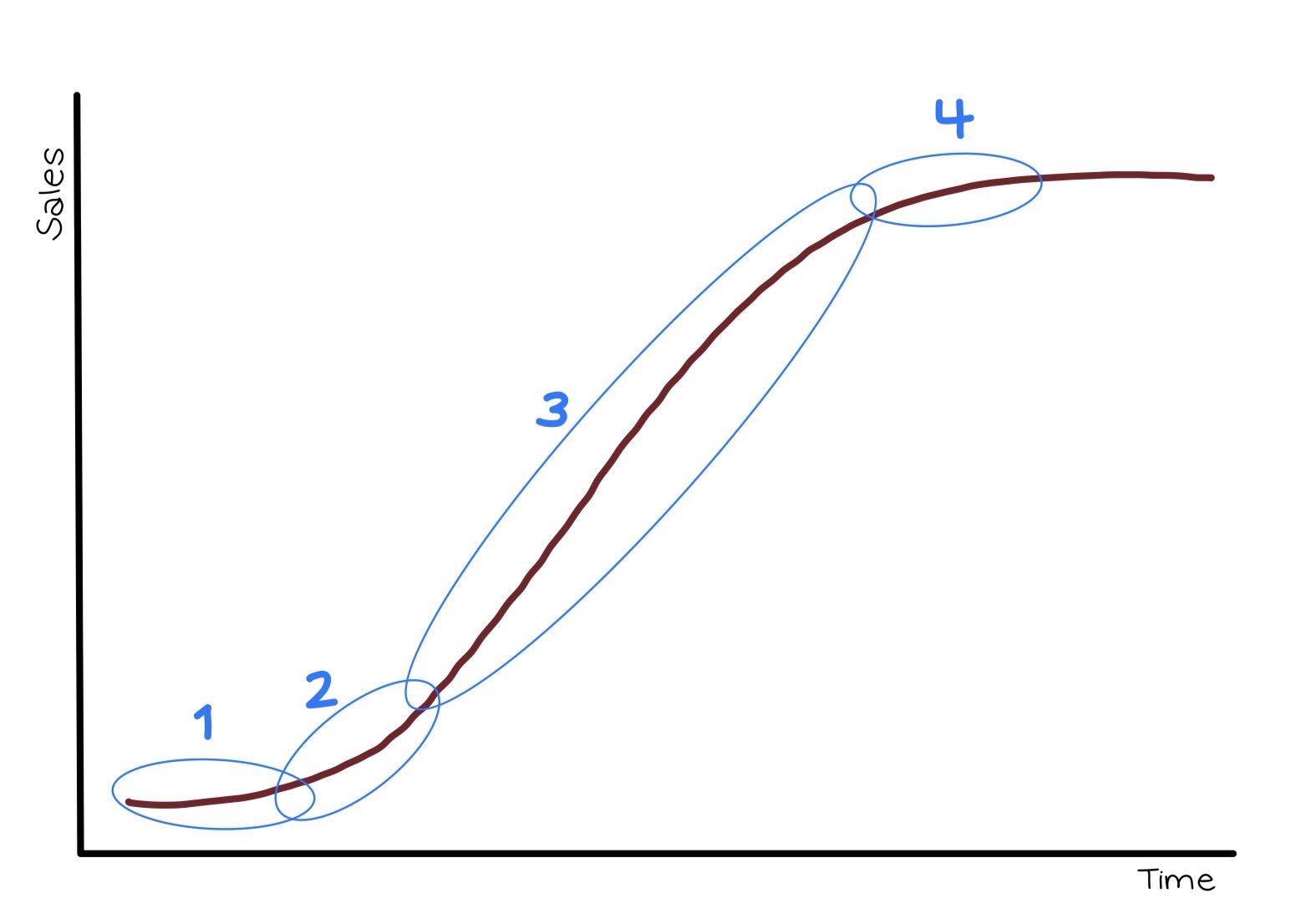
ideal type model: startup (1)
define and validate the business concept
understand the market opportunity, the offering, the business model and go-to-market strategy
organization: informal, loosely structured, founder-driven
ideal type model: transition (2)
lay the foundation for a scalable business
get the product-market fit and organizational structures in place
engage customers
organization: develop new organization capabilities, build repeatable processes and lay foundation for growth
ideal type model: scaling (3)
add resources to profitably scale the enterprise
leverage partnerships to grow the business within the framework of the validated business concept geographically/market segments
organization: professionalized functions
ideal type model: exit (4)
harvest the venture through IPO, private sale, merger or acquisition
realize returns for funders and investors through a succesful exit
eight transition challenges
setting a direction and maintaining focus
positioning products in an expanded market
maintaining customer/market responsiveness
building an organization and management team
developing effective processes and infrastructures
building financial capital
developing an appropriate culture
managing risks and vulnerabilities
growth ambitions: start-up
growth ambitions: yes
right business model: no
⇒ find a model
growth ambitions: scale-up
growth ambitions: yes
right business model: yes
⇒ scale the model
growth ambitions: shape-up
growth ambitions: no
right business model: no
⇒ reinvent the model
growth ambition: stand-up
deliberate strategic choice
growth ambitions: no
right business model: yes
⇒ secure the model
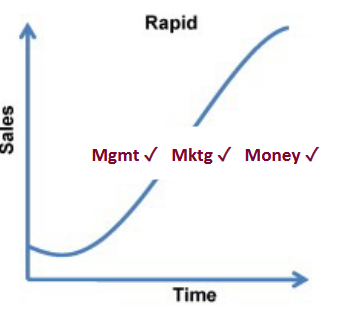
pathways of growth
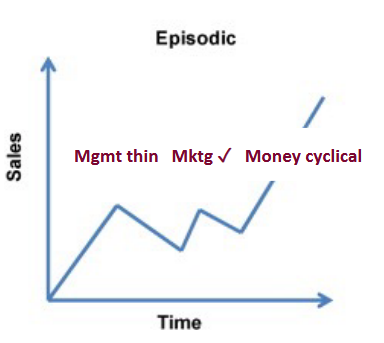
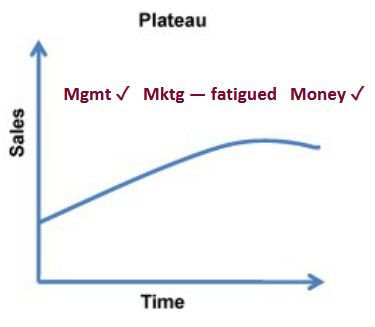
affected by:
management
marketing
money
rapid growth
incremental growth
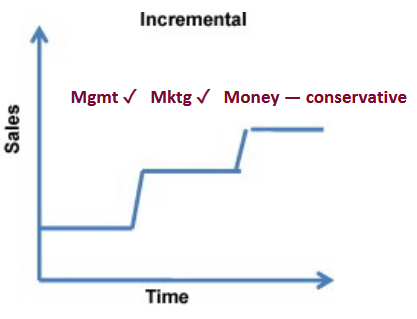
episodic growth
plateau growth
difference between growing and scaling
growing: increasing revenue with incrementally increasing costs
scaling: adding significant numbers of clients/customers/users, increasing revenue without necessarily expanding costs
⇒ scaling as a high-growth strategy, significant in digital economies
blitzscaling
measure when you need to grow really quickly
rapidly building out a company to serve a large (usually global market) with the goal of becoming the first mover at scale
resources entrepreneurs seek from their environment
cultural resources
social resources
material resources
cultural resources
positive attitude towards entrepreneurship
value of risk-taking
success stories
acceptance of failure
…
social resources
dense networks that provide…
risk capital
workforce
knowledge and expertise
mentorship
material resources
support organizations: universities, incubators, accelerators, …
political-institutional infrastructure
physical infrastructure
characterists Schumpetarian entrepreneurial venture
before the start: opportunity orientation
moment of venture creation: high-tech innovation
early life of a new venture: high growth aspirations
characterists non-Schumpetarian entrepreneurial venture
before the start: necessity orientation
moment of venture creation: low-tech or tech imitation
early life of a new venture: permanently small
definition institutions (North)
formal and informal “rules of the game”
provide economic agents with incentives and constrints
induce stable patterns of behaviour
formal institution
e.g. protection of private property, tax codes, social insurance systems, employment, protection legislation, competition policy, trade policies, capital market regulation, contract enforcement, law and order