(5) Energy Unit Study (REMASTERED)
 Call Kai
 Learn
Learn Practice Test
 Spaced Repetition
 Match
Match Flashcards
 Knowt Play
1/48

Earn XP
Description and Tags
for energy unit in biology
Name | Mastery | Learn | Test | Matching | Spaced | Call with Kai |
|---|
No analytics yet
Send a link to your students to track their progress
49 Terms
What’s the purpose of photosynthesis?
To convert solar energy into stored chemical energy (glucose)
Does photosynthesis require oxygen?
No
Where does photosynthesis occur in the cell?
Chloroplast
What are the reactants for photosynthesis?
Carbon dioxide = 6 CO₂
Water = 6 H₂O
Light
What are the products created during photosynthesis?
Glucose = C₆H₁₂O₆
Oxygen = 6 O₂
What type of cell/organism does photosynthesis?
Plants
Some protists (Euglena and algae)
Some bacteria (ex. Cyanobacteria but they don’t have chloroplasts)
How much ATP’s are produced during photosynthesis?
0
What is the purpose of aerobic respiration?
Stored chemical energy (glucose) is broken down to release usable energy (ATP)
Does aerobic respiration require oxygen?
Yes
Where does aerobic respiration occur in the cell?
Mitochondria
What are the reactants needed for aerobic respiration?
Glucose = C₆H₁₂O₆
Oxygen = 6 O₂
What are the products created during aerobic respiration?
Carbon dioxide = 6 CO₂
Water = 6 H₂O
36 ATP
What type of cell/organism does aerobic respiration?
All eukaryotes
Aerobic bacteria (no mitochondria)
What type of organisms can perform aerobic respiration? What organelle must these organisms contain?
Eukaryotes. They must contain mitochondria.
How much ATP are produced during aerobic respiration?
36
What is the purpose of lactic acid fermentation and alcoholic fermentation?
To convert some stored chemical energy(glucose) into a little ATP
Does either lactic acid fermentation or alcoholic fermentation require oxygen?
No
Where does both lactic acid fermentation or alcoholic fermentation occur in the cell?
Cytoplasm
What is the reactant for both lactic acid fermentation or alcoholic fermentation?
Glucose = C₆H₁₂O₆
What are the products created during lactic acid fermentation?
Lactic acid
2 ATP
What types of organisms/cells perform lactic acid fermentation?
Human muscles cells and some anaerobic bacteria
What are the products created during alcoholic fermentation?
Ethyl alcohol
Carbon dioxide = CO₂
ATP
What type of cell/organism does lactic acid fermentation?
Some anaerobic bacteria
Ex. Human muscle when low on oxygen
What type of cell/organism does alcoholic fermentation?
Some anaerobic bacteria
Ex. Yeast (unicellular fungi)
What is the amount of ATP produced for both lactic acid fermentation or alcoholic fermentation?
2
Chlorophyll
Green pigment that absorbs red and blue wavelengths of light; reflects green light; most abundant pigment is chlorophyll a and b.
Where in a plant can you find the most amount of chloroplast?
Leaf
Accessory pigments
Helps absorb additional wavelengths of light for more photosynthesis; ex. carotenoids (absorbs violet and blue-green light)
Equations for photosynthesis?
Word Equation:
Carbon dioxide + water + light ——> glucose + oxygen
Chemical Formula:
6 CO₂ + 6 H₂O + light ——> C₆H₁₂O₆ + 6O₂
What are some factors that affect photosynthesis?
Temperature
Light
Carbon Dioxide
How does temperature affect photosynthesis?
As the temperature increases, the rate of photosynthesis increases as well, until it reaches an optimal temperature, and then the rate decreases, due to the denaturing of the enzymes.
How does light affect photosynthesis?
As light intensity increases, so does the rate of photosynthesis and then the rate flatlines.
How does carbon dioxide affect photosynthesis?
As the CO₂ levels increases, so does the rate of photosynthesis and the rate flatlines.
What are the two main types of cellular respiration?
Aerobic respiration
Anaerobic respiration
Equations for aerobic respiration
Word Equation:
Glucose + oxygen ——> carbon dioxide + water + 36 ATP
Chemical Formula:
C₆H₁₂O₆ + 6 O₂ ——> 6 CO₂ + 6 H₂O + 36 ATP
Where does glucose and oxygen travel through into the cell through the cell membrane?
Oxygen travels through the phospholipids
Glucose travels through the protein channels since its a large molecule
What does ATP stand for?
Adenosine triphosphate
What 3 things are ATP’s composed of?
Adenine
Ribose
3 Phosphates
Function of ATP?
Energy-carrying molecule that fuels cellular processes, such as muscle cell contraction, beating of cilia and flagella.
Where is the most amount of energy stores in an ATP molecule?
The phosphate bonds
ATP-ADP Cycle
A process where ATP loses a phosphate bond and turns into ADP and turns back into ATP after gaining a phosphate bond.
Analogy for ATP and ADP?
ATP is like a rechargeable battery, and ADP is the same battery, but low in charge due to its missing phosphate group.
Two types of anaerobic respiration?
Lactic acid fermentation
Alcoholic fermentation
What is the word equation for lactic acid fermentation?
Word equation:
Glucose ——> lactic acid + 2 ATP
What is the word equation for alcoholic fermentation?
Word equation:
Glucose ——> Ethyl alcohol + carbon dioxide + 2 ATP
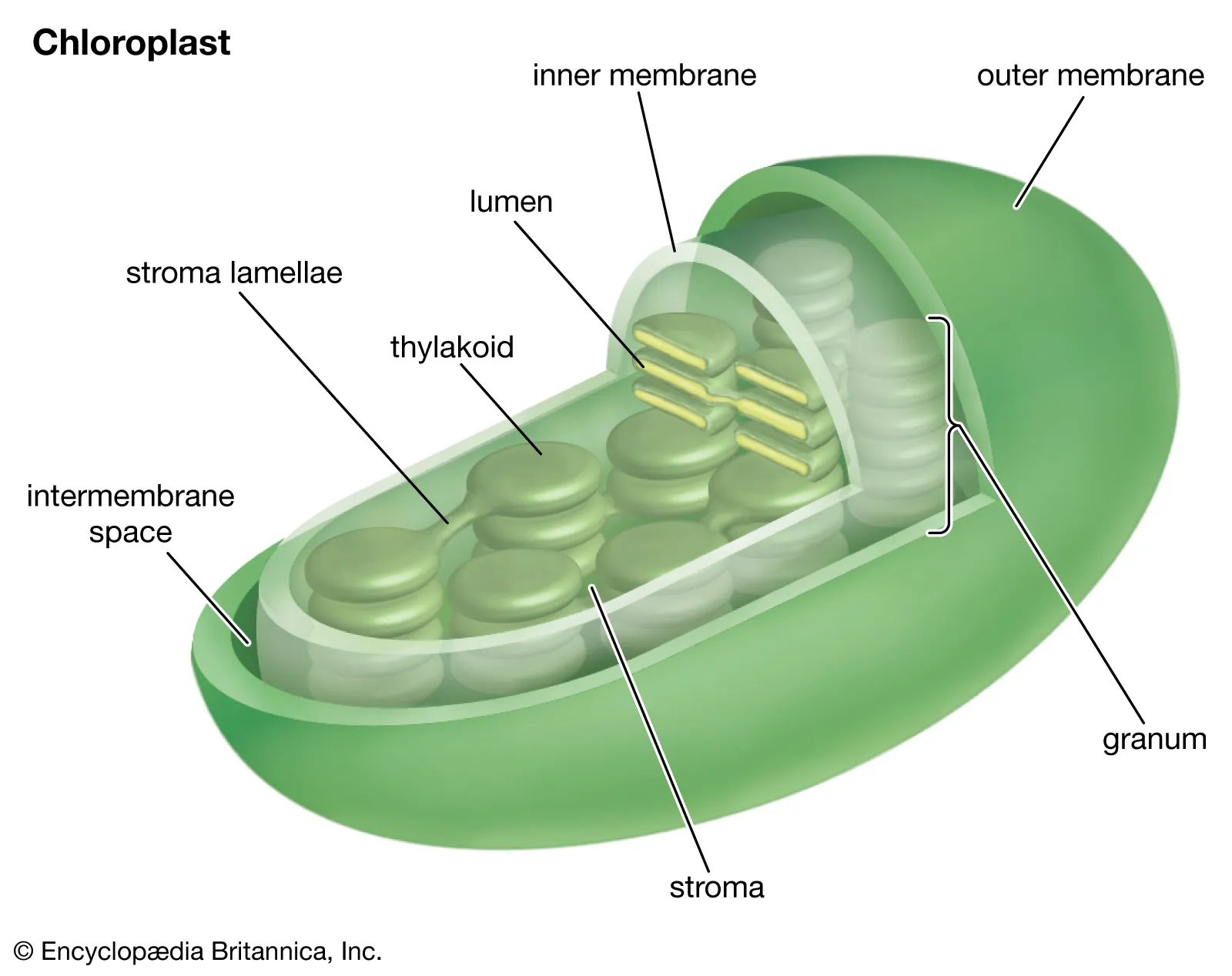
Parts of a chloroplast?
Outer membrane - self explanatory
Inner membrane - also self explanatory
Lamellae
Stroma
Thylakoid
Granum
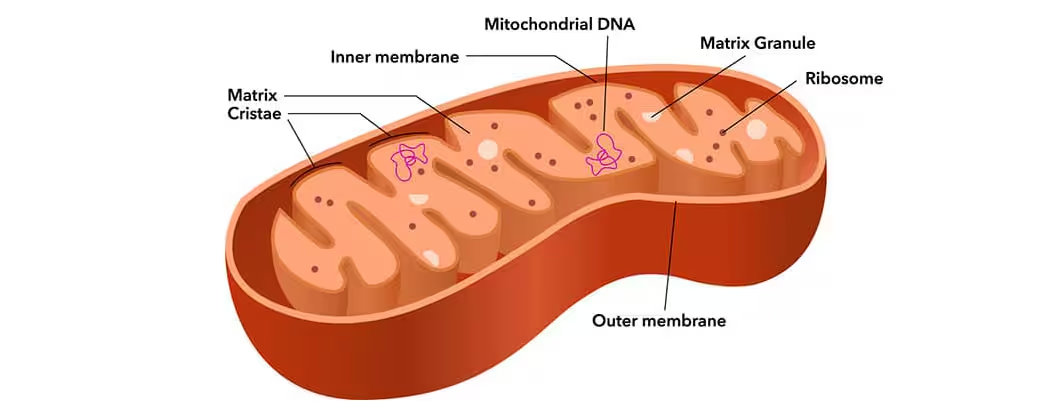
Parts of a mitochondria?
Outer membrane
Inner membrane
Cristae - The folds
Matrix - The very inside of the folds
DNA - The circular squiggly looking thingies
Ribosomes - The small dots
Why is the inner membrane of the mitochondria folded?
To have more surface area to make ATP.
How does the third phosphate in ATP reattach itself?
By breaking down glucose from food.