A(11) - Sensational Psych
 Call Kai
 Learn
Learn Practice Test
 Spaced Repetition
 Match
Match Flashcards
 Knowt Play
1/58

There's no tags or description
Looks like no tags are added yet.
Name | Mastery | Learn | Test | Matching | Spaced | Call with Kai |
|---|
No analytics yet
Send a link to your students to track their progress
59 Terms
Sensation
The process by which our sensory receptors and nervous system receive and represent stimulus energies from our environment.
Psychophysics
The branch of psych that studies how we perceive different stimuli such as light, sound, and touch.
sensory receptors
Cells that detect sensory stimuli and convert them into neural signals.
signal detection theory
signal detection theory
Detecting a stimulus depends on both the signal’s strength and your psychological state (alertness, expectations, motivation).
Example: You think you hear your phone buzz because you’re waiting for a text, even though it didn’t.
absolute threshold
The minimum amount of stimulation needed to detect a stimulus 50% of the time.
Example: The faintest sound you can hear in a quiet room.
difference threshold
the smallest change in a stimulus you can detect 50% of the time.
Example: Noticing when your friend slightly turns the volume up on the speaker.
weber’s law
To notice a difference, the change must be a constant proportion of the original stimulus.
Example: Adding 1 pound to a 5‑pound weight is noticeable, but adding 1 pound to a 50‑pound weight isn’t.
sensory adaptation
The process by which our sensitivity to a constant stimulus decreases over time, allowing us to focus on changes in our environment.
Example: Not noticing the smell of a room after being in it for a while.
sensory interaction
One sense can influence or enhance another.
Example: Food tastes bland when you have a stuffy nose.
synesthesia
A condition where stimulation of one sense automatically triggers another.
Example: Someone “sees” colors when they hear music
embodied cognition
The idea that the mind is influenced by the body’s actions, sensations, and posture.
Example: Holding a warm drink makes you judge someone as friendlier.
subliminal
Stimuli that occur below your absolute threshold, so you don’t consciously detect them.
Example: A quick flash of a word on a screen that you don’t consciously notice.
priming
Exposure to one stimulus unconsciously influences your response to another.
Example: Seeing the word “yellow” makes you recognize the word “banana” faster.
wavelength
The distance between peaks of a light wave that determines color.
hue
The color we experience based on wavelength.
intensity
The brightness of light determined by wave amplitude.
cornea
The eye’s clear outer layer that bends light to help focus.
pupil
The opening in the eye that lets light in.
larger in the dark, smaller in the light
iris
The colored muscle that controls pupil size.
retina
The light‑sensitive inner surface of the eye containing photoreceptors.
blind spot
The point where the optic nerve leaves the eye, with no receptors.
you dont notice it bc your brain fills in the gap
optic nerve
The nerve that carries neural signals from the eye to the brain.
lens
The transparent structure that focuses light onto the retina
accommodation
the lens changes shape to focus on objects at different distances.
nearsightedness
A condition where near objects are clear but far objects are blurry.
farsightedness
A condition where far objects are clear but near objects are blurry.
fovea
The retina’s center with the highest concentration of cones for sharp vision
Example: You use your fovea when reading tiny text.
photoreceptors
Cells in the retina (rods and cones) that convert light into neural signals.
Example: Photoreceptors begin the process of visual transduction.
transduction
Converting physical energy (light) into neural impulses.
Example: The retina transduces light into electrical signals.
rods
photoreceptors that detect black, white, and gray and work well in low light.
Example: Rods help you see shapes at night.
cones
Photoreceptors that detect color and fine detail in bright light.
Example: Cones help you read colorful signs during the day
trichromatic theory
Definition: The theory that we have three color receptors—red, green, and blue.
Example: Mixing red and green light makes yellow because those cones are activated.
opponent-process theory
Color vision works in opposing pairs (red–green, blue–yellow, black–white).
Example: Staring at something red makes you see a green afterimage.
feature detectors
Specialized neurons that respond to specific visual features like edges or movement.
Example: Feature detectors fire when you see a vertical line.
afterimages
Visual sensations that remain after a stimulus is removed.
Example: Staring at a blue square makes you see a yellow one afterward.
ganglion cells
Retinal cells that receive signals from bipolar cells and form the optic nerve.
Example: Ganglion cells bundle together to send visual info to the brain.
dichromatism
A form of color blindness where one of the three cone types is missing.
Example: Someone with red‑green color blindness is a dichromat.
monochromatism
Total color blindness—seeing only shades of gray.
Example: A monochromat cannot distinguish any hues.
prosopagnosia
A neurological disorder causing face blindness.
Example: Someone with prosopagnosia can’t recognize their friend’s face but knows their voice.
blindsight
The ability to respond to visual stimuli without conscious awareness due to cortical damage.
Example: A person with blindsight can navigate around obstacles they claim not to see.
how we see colors
Wavelength | Color (Hue) | Short wavelength → blue/violet | Blue = short waves |
Amplitude | Brightness (Intensity) | Large amplitude → bright | Electric blue = large amplitude |
parallel processing
The brain’s ability to process multiple aspects of a scene at once (color, motion, depth, form).
Example: When you look at a dog running, you process its color, shape, and movement simultaneously.
antisocial personality disorder
A mental health condition characterized by a disregard for other people’s rights, often resulting in harmful behavior.
Example: A person with antisocial personality disorder may lie, manipulate others, or engage in criminal activities without remorse.
can only treat symptoms
borderline personality disorder
A mental health disorder characterized by unstable moods, behavior, and relationships, often leading to emotional extremes.
Example: A person with borderline personality disorder may experience rapid changes in self-identity and intense emotional responses.
can only treat symptoms
histrionic personality disorder
A mental health condition characterized by excessive attention-seeking behavior, emotional overreaction, and a need for approval.
Example: Individuals may exhibit dramatic behavior and may be easily upset if they are not the center of attention.
can only treat symptoms
narcissistic personality disorder
A mental health condition characterized by an inflated sense of self-importance, a deep need for admiration, and a lack of empathy for others.
Example: Individuals may showcase grandiosity and react poorly to criticism.
can only treat symptoms
schizophrenia
A severe mental disorder characterized by distortions in thinking, perception, emotions, language, sense of self, and behavior
treated w antipsychotics
can experience psychosis (distorted perception & irrational ideas)
rumination disorder
individual regurgitates food they previously consumed and then re-chews/re-swallows it or spits it out again
pica disorder
consuming things that are not considered food
Gestalt Psychology
organizing bits & info into meaningful wholes
7 principles: Simplicity (Pragnanz), Patterning, Proximity, Similarity, Continuity, Closure, Figure & Ground
Simplicity
Law of Pragnanz (Gestalt)
objects can be perceived more than 1 way, dictated by experiences

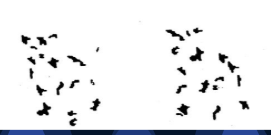
Patterning
(Gestalt)
our minds look for patterns in shape, form, or character
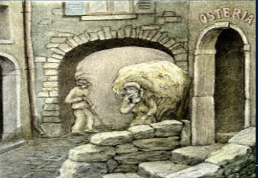
Proximity
(Gestalt)
items are perceived together bc of their relevant placement or location
similarity
(Gestalt)
elements are seen as belonging together bc of their similar characteristics

continuity
(Gestalt)
patterns are primed- course is maintained, like camouflage

closure
(Gestalt)
our mind fills in noticeable gaps w previous experiences
subjective contours → the lines our brains draw
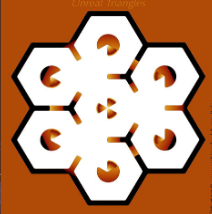
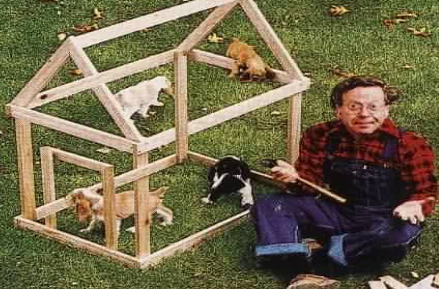
figure & ground
(Gestalt)
perceptual fields are broken into the foreground and background
visual cliff
babies develop depth perception as early as 3 (Eleanor Gibson)